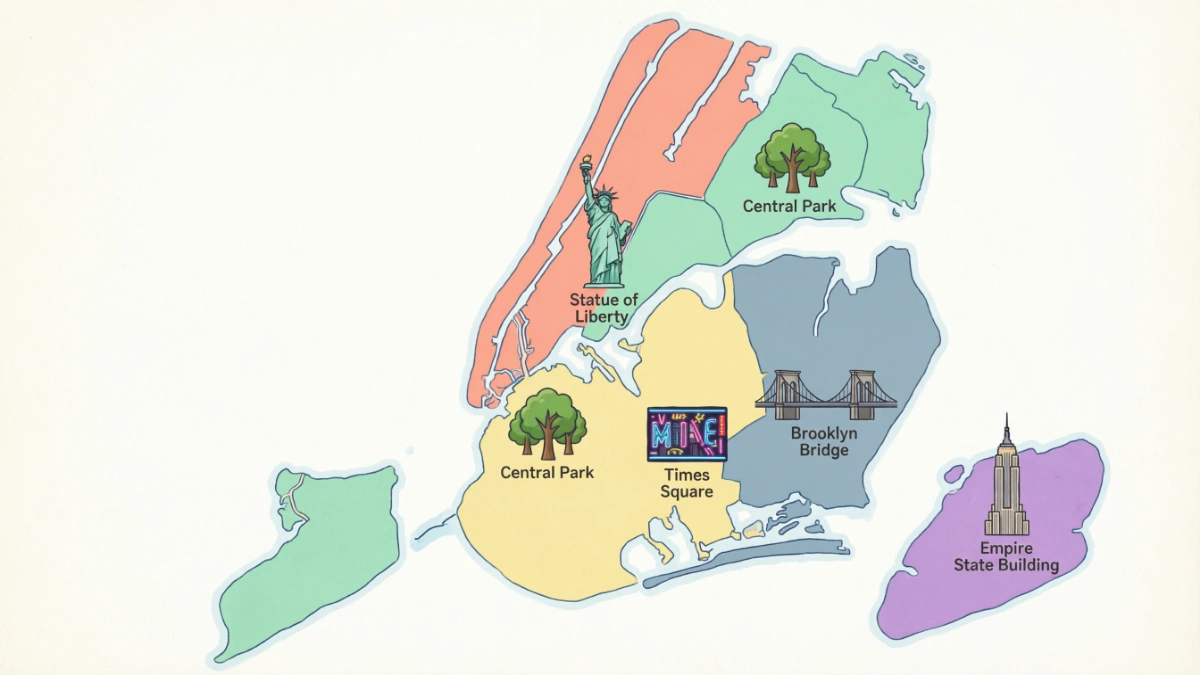
New York City can overwhelm even seasoned travelers before the trip even starts. Twenty-nine thousand streets, five boroughs, and a subway map that looks like a plate of spaghetti make it easy to waste a full vacation day just figuring out where things are.
This guide breaks down the city the way a local would explain it over coffee: borough by borough, neighborhood by neighborhood, with real answers to the questions every visitor searches before landing at JFK or LaGuardia. It also covers where to find a reliable map of NYC tourist destinations, which areas deserve your time, which ones are overrated, and how to move around without wasting money or hours.
Quick Answer:
A map of NYC tourist destinations typically covers five boroughs: Manhattan, Brooklyn, Queens, the Bronx, and Staten Island, with Manhattan holding most first-time-visitor icons like Times Square, Central Park, the Statue of Liberty, and the Empire State Building. Printable and PDF versions are available free from NYC’s official tourism site and the NYC subway map from the MTA.
Quick Facts Table
| Category | Details |
| Boroughs | Manhattan, Brooklyn, Queens, the Bronx, Staten Island |
| Best first-time base | Midtown or Downtown Manhattan |
| Main airports | JFK, LaGuardia (LGA), Newark (EWR, technically NJ) |
| Primary transit | MTA Subway + buses, running 24/7 |
| Tourist season peak | April–June, September–early November |
| Official map source | nyc.gov and NYCgo.com (free PDF downloads) |
Prices, hours, and transit fares change often; always confirm current details on official NYC and MTA sites before your trip.
Map of NYC Neighborhoods: How the City Is Organized
New York City has five boroughs, each with dozens of distinct neighborhoods, each with its own character, food, and pace. Manhattan attracts the most visitors and includes three main sections: Downtown, Midtown, and Uptown. Each section offers its own mix of popular attractions.
Manhattan runs from the Financial District at the southern tip up through Greenwich Village, Chelsea, Midtown, the Upper East and West Sides, and Harlem at the north end. Brooklyn sits across the East River and includes Williamsburg, DUMBO, and Park Slope. Queens is home to both major airports and diverse neighborhoods like Astoria and Flushing.
Understanding this layout before you arrive can save hours of backtracking because you can usually group attractions in the same neighborhood into a single walking loop.
NYC Map: Manhattan Breakdown
Manhattan is a narrow island roughly 13 miles long, and most first-time visitors spend 70–80% of their trip here. Streets run in a numbered grid above 14th Street, which makes navigation far easier than in the winding, older streets of Downtown Manhattan.
A simple mental map helps: Downtown (Wall Street, Statue of Liberty ferry, 9/11 Memorial) sits at the bottom, Midtown (Times Square, Empire State Building, Rockefeller Center) sits in the middle, and Uptown (Central Park, the Met, Upper East/West Sides) sits at the top. Knowing which section you’re in tells you roughly what’s nearby.
Map of NYC Boroughs and Long Island
Long Island technically begins east of Manhattan and includes Brooklyn and Queens as its westernmost sections, with Nassau and Suffolk counties stretching further east. Many visitors find it surprising that Brooklyn and Queens sit geographically on Long Island, even though they function culturally as New York City boroughs.
This matters for trip planning if you’re combining a city stay with a Long Island beach day; towns like Montauk or the Hamptons are reachable by Long Island Rail Road (LIRR) from Manhattan’s Penn Station, usually as a separate day trip rather than part of a core NYC itinerary.
Simple Map of NYC for First-Time Visitors
A simplified version of the city, stripped of subway lines and cross-streets, is often the most useful tool for a first trip. It just shows the five boroughs as shapes, with major landmarks marked as dots: Central Park, Times Square, the Statue of Liberty, Brooklyn Bridge, and the 9/11 Memorial.
Tourism apps and NYCgo.com both offer simplified digital maps you can screenshot for offline use, which helps in areas with weak cell signal, like inside subway stations or museum basements.
Where to Find a Map of NYC Tourist Destinations PDF
Free, official PDF maps are available directly from the NYC tourism board (NYCgo.com) and the MTA for subway navigation. These are more reliable than random third-party sites, which sometimes show outdated attraction hours or closed venues.
The NYCgo.com site offers a downloadable, printable NYC tourist map covering major landmarks by borough, useful for offline reference. The MTA’s official subway map PDF is also essential since it updates for planned service changes and weekend reroutes, which happen more often than most visitors expect.
Tip: Save the PDF to your phone’s photo gallery before your trip. Airport Wi-Fi and subway signals can be unreliable, so download offline copies to avoid wasting time re-downloading files underground.
Detailed Map of NYC Tourist Destinations by Borough
A detailed map breaks attractions down by borough so you’re not crisscrossing the city unnecessarily. Grouping by geography, rather than by “must-see” popularity alone, is the single biggest time-saver for first-time visitors.
Manhattan: Statue of Liberty & Ellis Island, 9/11 Memorial & Museum, Empire State Building, Times Square, Central Park, the Met, Broadway theaters. Brooklyn: Brooklyn Bridge, DUMBO waterfront, Brooklyn Museum, Prospect Park. Queens: Flushing Meadows-Corona Park, MoMA PS1, diverse food scenes in Astoria and Jackson Heights. The Bronx: Bronx Zoo, New York Botanical Garden, Yankee Stadium. Staten Island: Staten Island Ferry (free views of the Statue of Liberty), St. George neighborhood.
Top Tourist Attractions in New York City
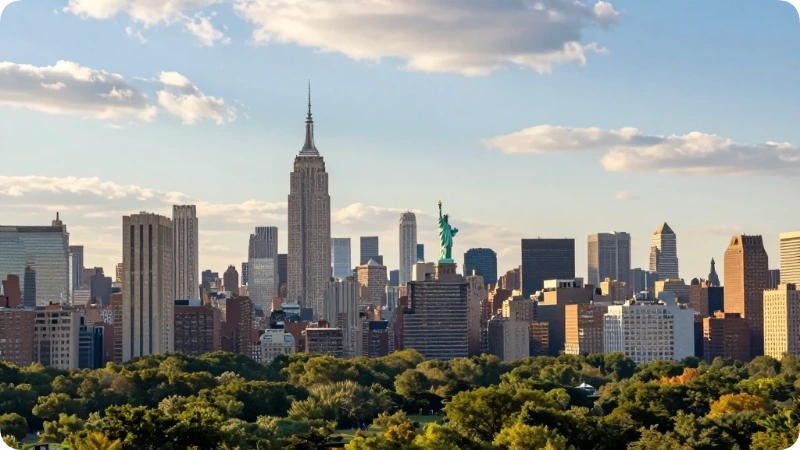
The top attractions in NYC combine iconic skyline views, world-class museums, and historic landmarks, with Central Park, Times Square, and the Statue of Liberty consistently ranking as the most visited. These sites anchor most first-time itineraries and are spread across Manhattan and the harbor.
Beyond the obvious names, the Metropolitan Museum of Art, the 9/11 Memorial & Museum, the Brooklyn Bridge, and Rockefeller Center round out a strong core list. Broadway shows and the High Line elevated park are also frequently ranked among visitor favorites.
Top 7 Tourist Attractions in New York City
- Statue of Liberty & Ellis Island
- Central Park
- Empire State Building
- Times Square
- Metropolitan Museum of Art
- 9/11 Memorial & Museum
- Brooklyn Bridge
What Should I Not Miss in NYC?
First-time visitors shouldn’t skip walking across the Brooklyn Bridge at sunrise or sunset, a stroll through Central Park’s less-crowded northern end, and at least one classic NYC food stop, whether that’s a bagel shop or a slice of pizza. These experiences capture the city’s texture better than any single landmark alone.
Also worth prioritizing: a Broadway or off-Broadway show, even a lesser-known one, and the Staten Island Ferry for a free, unobstructed view of the Statue of Liberty and Lower Manhattan skyline.
What Is the Prettiest Place in New York?
Many locals and repeat visitors point to Central Park’s Bow Bridge and the Conservatory Garden as some of the most photogenic spots in the city, especially in spring bloom or fall foliage. Brooklyn’s DUMBO waterfront, framed by the Manhattan Bridge, consistently ranks as a favorite spot for its stunning skyline views.
Prettiest Street in NYC
Many visitors and photographers single out Pomander Walk on the Upper West Side and the tree-lined blocks of Brooklyn Heights as some of the city’s most charming, film-set-like streets, alongside the cobblestones of DUMBO.
Hidden Gems: Places Tourists Never Visit
Tucked-away spots like the Cloisters museum in Fort Tryon Park, the Green-Wood Cemetery in Brooklyn, and the elevated walkways of Little Island near the Hudson River rarely make standard tourist itineraries despite offering some of the city’s best views and quiet moments.
Roosevelt Island’s aerial tram, the City Reliquary museum in Williamsburg, and the historic streets of Greenwich Village’s West Village pocket also stay largely under the radar, giving visitors a break from Midtown crowds.
What to Do in New York That Is Not Touristy
Skipping the landmark checklist for a day and instead wandering a neighborhood like Astoria, Queens, or Sunset Park, Brooklyn gives a far more local feel, with immigrant-owned restaurants, small parks, and street markets that reflect how residents actually live.
Local flea markets, neighborhood coffee shops away from Midtown, and a subway ride to the end of a line just to explore are all low-cost ways to experience the city beyond its postcard image.
How to Get Around NYC: Transport Options
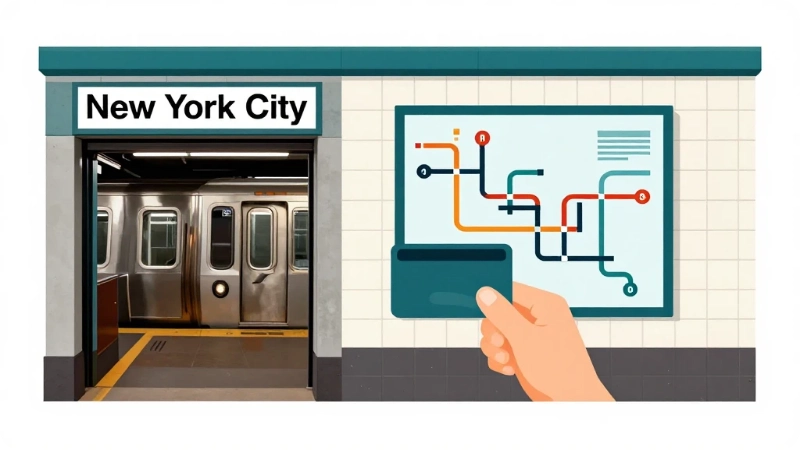
The subway is the fastest and cheapest way to cover long distances in NYC, running 24 hours a day across all five boroughs. Buses fill in gaps the subway doesn’t reach, while walking is often quickest for short Midtown or Downtown distances due to traffic congestion.
Rideshare apps and yellow cabs are convenient but considerably more expensive, especially during peak hours or bad weather. A rechargeable transit card, purchased at any station kiosk, works across subways and buses citywide.
What Is the Best Way to Travel Around New York City as a Tourist?
The subway is generally the best way to travel around NYC as a tourist, since it avoids street traffic and reaches nearly every borough and neighborhood cheaply and quickly. Walking is ideal for short hops within a single neighborhood, while rideshares work best for late-night trips or heavy luggage.
What Is the Safest Way to Travel Around New York City?
Millions of residents use New York City’s subway and buses every day, and both systems generally remain safe. Still, stay alert, avoid empty train cars late at night, and keep your valuables secure. Traveling in groups after midnight and using well-lit station entrances add an extra layer of caution.
Where to Stay: Best Areas for Tourists
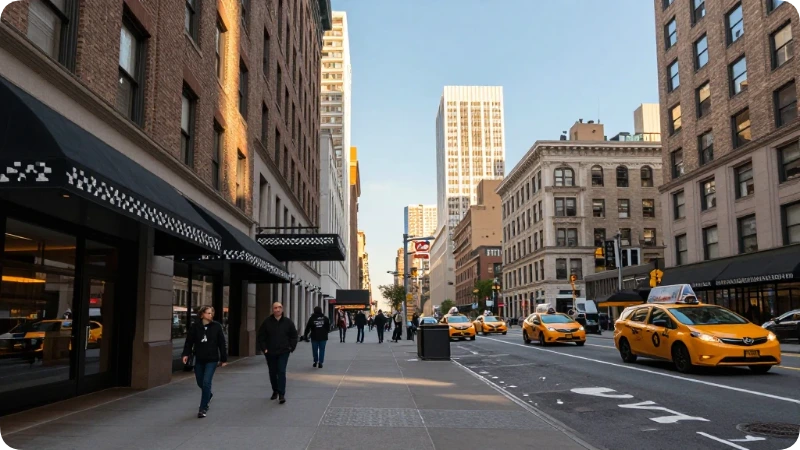
Midtown Manhattan puts you within walking distance of Times Square, Broadway, and easy subway access to nearly everywhere else, making it the most convenient base for first-time visitors despite higher prices. Downtown neighborhoods like the Financial District or Chelsea offer a quieter, still-central alternative.
What Is the Best Area for Tourists to Stay in New York?
Midtown Manhattan is widely considered the best area for first-time tourists due to its central location, dense hotel options, and proximity to major attractions and subway lines. Families and travelers wanting a calmer pace often prefer the Upper West Side, which sits just steps from Central Park.
What Is the Safest Part of NYC to Stay In?
Areas like the Upper East Side, Upper West Side, Murray Hill, and Battery Park City are consistently regarded as among the safest and most tourist-friendly neighborhoods, with strong foot traffic and proximity to transit. As with any large city, standard urban safety precautions still apply everywhere.
NYC Safety Tips for Tourists
New York City is generally safe for tourists who stick to well-traveled areas, stay aware of their surroundings, and take normal urban precautions like avoiding poorly lit streets late at night. Millions of tourists visit each year safely, and most heavily touristed neighborhoods have significant foot traffic and police presence.
Petty theft, like pickpocketing in crowded subway cars or tourist hotspots, is the most common concern rather than violent crime. Keep bags zipped and in front of you in crowds, and avoid displaying expensive electronics openly on the subway.
Is NYC Safe for Tourists Right Now?
NYC remains one of the most visited cities in the world, and its most tourist-heavy areas Midtown, Times Square, Central Park during daylight, and Lower Manhattan see heavy foot traffic and are considered safe with normal precautions. Safety conditions can shift, so it’s worth checking current advisories from the NYPD or U.S. State Department before travel, especially for late-night plans.
Where to Avoid as a Tourist in NYC?
Most tourist-relevant areas in Manhattan are safe, but isolated or unfamiliar blocks late at night, empty subway platforms after midnight, and poorly lit park areas after dark are generally best avoided. Locals also recommend against overpaying at unofficial “helpers” near attractions who offer unsolicited tours or tickets.
What to Wear in NYC to Not Look Like a Tourist
New Yorkers tend to favor dark, neutral, comfortable clothing with practical walking shoes over flashy branded gear or athletic wear worn as everyday outfits. Comfortable sneakers in black, white, or neutral tones blend in far better than bright running shoes.
Layering is essential given how quickly weather changes between subway heat, indoor air conditioning, and street temperature. A neutral jacket, comfortable walking shoes, and a crossbody bag read as “local” far more than logo-heavy travel gear.
What Is Everyone Wearing in NYC Right Now?
Current NYC street style leans toward minimalist, neutral-toned outfits think black, gray, and navy layers paired with clean sneakers or boots. Trends shift seasonally, so checking current NYC style content closer to your travel dates gives the most accurate picture.
What Is the 3-3-3 Rule for Clothes?
The 3-3-3 rule is a packing method where you bring 3 tops, 3 bottoms, and 3 pairs of shoes (or a similar 3-category split), mixing and matching to create multiple outfits from a small bag. It’s a popular strategy for city trips like NYC, where luggage space is limited, and outfits need to work across walking, dining, and weather changes.
NYC Etiquette: Do’s and Don’ts
Walking briskly, standing to the right on escalators, and letting subway passengers exit before boarding are unwritten rules locals expect visitors to follow. Blocking sidewalks to take photos or stopping suddenly in busy foot traffic are among the fastest ways to stand out as a tourist.
What Not to Do in New York as a Tourist
Avoid walking slowly in the center of a crowded sidewalk, standing on the left side of subway escalators, or asking for directions while blocking a busy entrance. Skipping the tip on restaurant bills (typically 18–20%) is also considered a significant etiquette mistake.
Do’s and Don’ts in NYC
Do: move with purpose on sidewalks, have your transit card ready before reaching the turnstile, and tip service staff appropriately. Don’t: stop abruptly for photos in high-traffic areas, jaywalk without checking both directions, or expect free tap water refills at every restaurant without asking.
Best Shopping Streets in NYC
Fifth Avenue in Midtown remains the most famous shopping corridor, home to flagship luxury stores, while SoHo offers a mix of designer boutiques and trendy streetwear brands in a walkable, historic setting. Both stretch far enough to fill a half-day of browsing.
Brooklyn’s Williamsburg neighborhood offers a more independent, vintage-focused shopping scene for travelers wanting to avoid chain stores, while the Lower East Side mixes emerging designers with longstanding local shops.
Best Free Things to Do in NYC
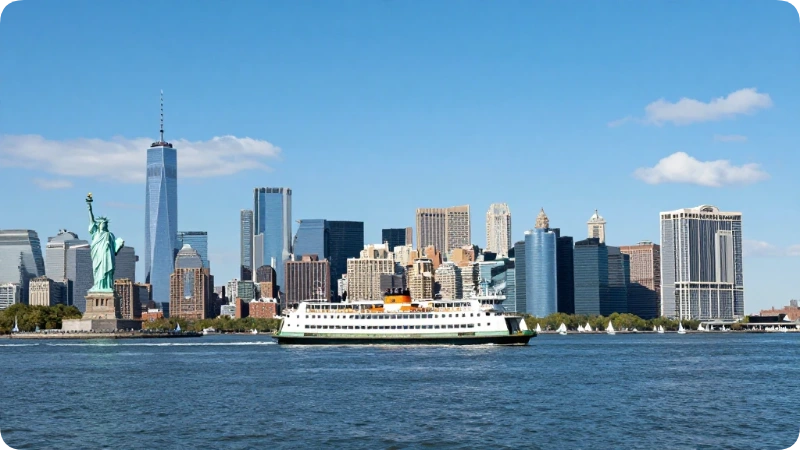
The Staten Island Ferry offers free Statue of Liberty views, Central Park is free to enter and explore, and many major museums, including the Met, operate on a pay-what-you-wish basis for NYC residents and a suggested donation for others (policies vary; verify current terms before visiting).
Walking the High Line, browsing the Brooklyn Flea (entry is typically free, though vendor prices vary), and people-watching in Washington Square Park round out a strong list of no-cost activities that still feel distinctly New York.
Must-Eat Food in New York
A classic New York-style slice of pizza, a bagel with cream cheese, and a hot dog from a street cart are the trio most associated with the city’s food identity. Beyond the classics, the diversity of immigrant-owned restaurants across Queens and Brooklyn offers some of the most authentic and varied food in the country.
Visitors also frequently recommend pastrami sandwiches from historic Jewish delis and cronuts or other specialty pastries for anyone who wants to experience NYC’s food culture beyond the basics.
Most Touristy Things to Do in NYC (And If They’re Worth It)
Times Square at midday, the Empire State Building observation deck during peak hours, and photo stops directly in front of the “Charging Bull” statue rank among the most crowded, classically touristy experiences in the city. IWhetherthey’re worth it depends on your priorities.
Worth it: the Empire State Building at sunset or early morning, when crowds thin and views are best. Often overrated: Times Square during the day, which many repeat visitors find overwhelming and better experienced briefly at night for the lights.
What Is the Lowest-Rated Attraction in New York City?
Attraction ratings change over time and differ across review platforms, so no single site consistently ranks as the “lowest-rated.” However, visitors often describe attractions with aggressive street vendors near major landmarks and overpriced tourist-trap restaurants around Times Square as disappointing. Checking recent reviews before booking any paid attraction is the safest approach.
Common Mistakes Tourists Make in NYC (And How to Fix Them)
Mistake 1: Trying to see too much in one day. NYC’s distances and subway transfer times add up quickly. Fix: group attractions by neighborhood and plan 3–4 major stops per day, not 8.
Mistake: Pumping the subway out of confusion. Many first-timers overspend on rideshares because the subway map looks intimidating. Fix: download the offline MTA map PDF and use a transit app for real-time directions.
Mistake 3: Eating exclusively in Times Square. Restaurants in the most touristy blocks are often overpriced and lower quality. Fix: Walk two or three blocks away from major landmarks for better food at lower prices.
Sample 3-Day NYC Itinerary
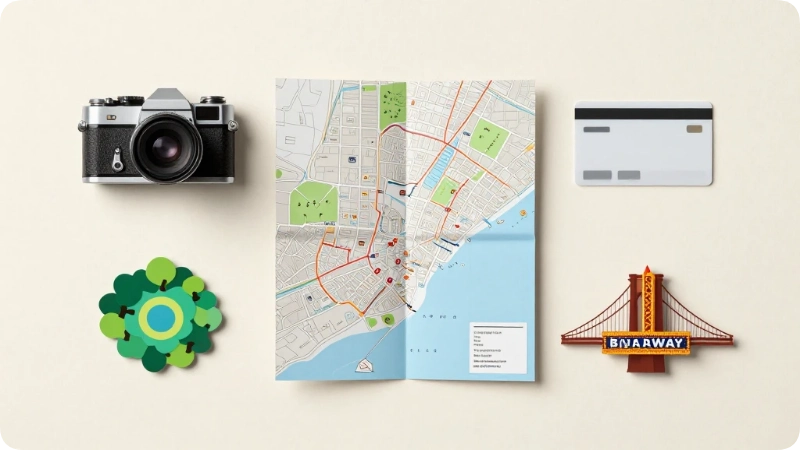
Day 1 (Downtown & Harbor): Start with the Statue of Liberty and Ellis Island ferry, then visit the 9/11 Memorial & Museum. Finish by walking across the Brooklyn Bridge into DUMBO for skyline views.
Day 2 (Midtown & Central Park): Visit the Empire State Building and Rockefeller Center before taking a relaxing walk through Central Park. End the day with a Broadway show.
Day 3 (Museums & Neighborhood Exploring): Explore the Metropolitan Museum of Art, then stroll through the Upper West Side or Upper East Side. Wrap up your trip with dinner in a local Queens or Brooklyn neighborhood away from the main tourist crowds.
FAQs
How many days do I need for NYC?
Most first-time visitors need at least 3–4 days to comfortably see major landmarks in Manhattan without rushing between neighborhoods.
Is New York City walkable for tourists?
Yes, Manhattan’s grid layout above 14th Street makes it very walkable, though the subway is faster for longer distances between boroughs.
Do I need cash in NYC or is a card enough?
Most businesses in NYC accept cards, but carrying some cash is useful for smaller vendors, street food carts, and tipping.
What is overrated in NYC?
Times Square during peak daytime hours is frequently cited by repeat visitors as overrated compared to its nighttime lights and energy.
What is underrated in NYC?
Neighborhood exploration in Brooklyn and Queens, along with lesser-known museums like the Cloisters, is widely considered underrated compared to Manhattan’s headline attractions.
Is the subway safe for tourists at night?
The subway runs 24/7 and is used safely by millions daily, though staying in well-populated cars and avoiding empty platforms late at night is a sensible precaution.
What’s the best month to visit NYC?
Spring (April–June) and fall (September–early November) offer mild weather and are widely considered the best shoulder seasons, avoiding summer humidity and winter cold.
How much should I budget per day in NYC?
Daily budgets vary widely based on hotel choice and dining habits; verify current average hotel, food, and attraction prices closer to your travel dates since NYC costs shift frequently.
Can I see NYC in one day?
A single day only allows time for one core area, such as Midtown or Downtown; seeing the whole city in one day isn’t realistic given travel time between boroughs.
Are NYC parks free to visit?
Yes, city parks including Central Park, Prospect Park, and the High Line are free to enter, though some individual attractions inside parks may charge separate fees.
What should first-time visitors book in advance?
Broadway shows, popular museum timed-entry tickets, and observation deck visits are worth booking ahead, especially during peak season, since walk-up availability can be limited.
Final Takeaways
A reliable map of NYC tourist destinations turns an overwhelming city into a series of manageable neighborhood loops. Group attractions by borough and area rather than chasing a scattered checklist, and the subway will get you almost anywhere faster and cheaper than a cab.
Three things to remember: prioritize Midtown or Downtown as your first-time base, download an offline transit map before you land, and balance iconic landmarks with at least one under-the-radar neighborhood for a fuller picture of the city.
New York rewards travelers who plan loosely but move confidently. Pull up an official map, pick your first neighborhood, and let the rest of the city reveal itself one block at a time.

Maya Lin inspires travelers to explore the globe with absolute confidence and independence. Armed with a background in digital media and a decade of independent solo travel experience, she knows exactly how to navigate unfamiliar cities smoothly and safely. For Travelmarse, Maya curates the solo travel and hidden-gem verticals. She reviews charming boutique hotels, designs smart neighborhood walking routes, and shares practical language-learning hacks, giving readers the exact tools they need to travel solo without the stress.