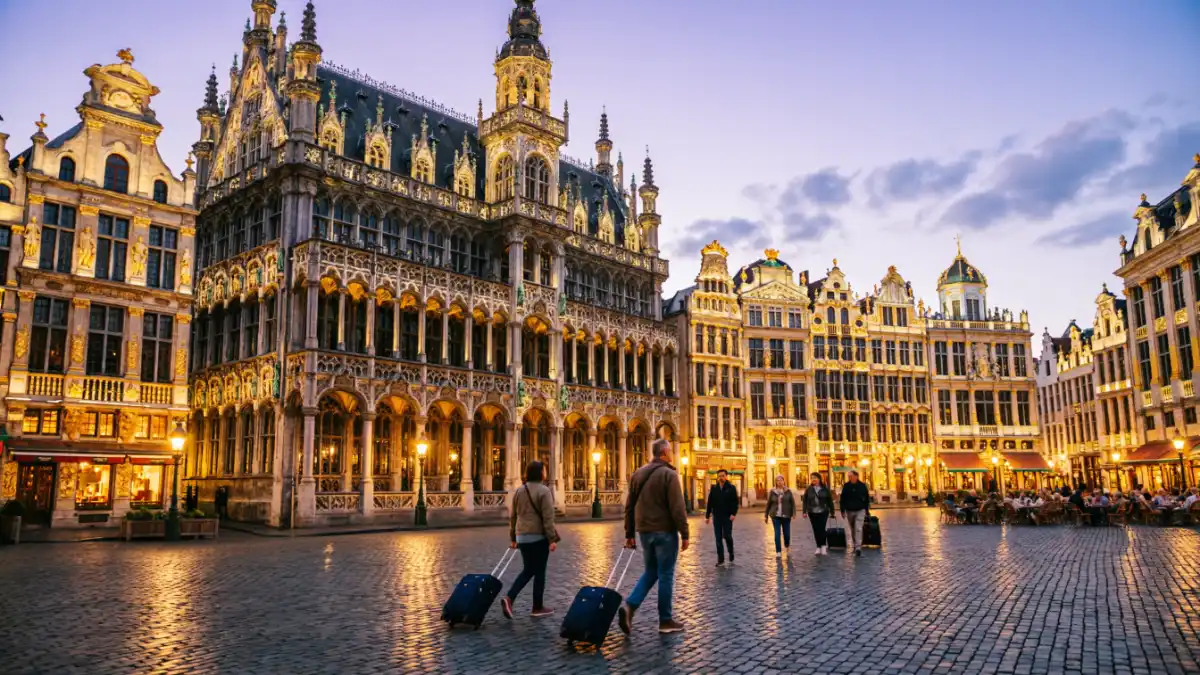
Standing in the wrong neighborhood after a long transatlantic flight can turn an exciting first night in Europe into a stressful scramble for a taxi. Picking where to stay in Brussels is one of the most important decisions you’ll make for your trip, because it shapes how much walking, transit, and stress you’ll deal with every single day.
Brussels isn’t one-size-fits-all. The historic core puts you steps from chocolate shops and the Grand Place, while quieter residential pockets offer better value and a more local feel.
This guide breaks down every major area, compares Brussels to nearby cities like Bruges and Ghent, and answers the real questions American travelers search for before booking.
By the end, you’ll know exactly which neighborhood fits your travel style, budget, and itinerary.
Quick Answer:
The best areas to stay in Brussels are the City Centre / Grand Place for first-time sightseeing, Sainte-Catherine for food and a local vibe, Ixelles/Saint-Gilles for nightlife and cafés, and near Brussels-Midi Station for easy Eurostar or day-trip access. Most visitors should base themselves within walking distance of the Grand Place.
Quick Facts Table
| Category | Details |
| Best overall area | City Centre / Grand Place |
| Best for nightlife | Saint-Gilles & Ixelles |
| Best for families | European Quarter or Sainte-Catherine |
| Best for train travelers | Near Brussels-Midi Station |
| Average hotel price | Budget: $80–120 / Mid-range: $130–220 / Luxury: $250+ (verify current rates before booking) |
| Main airport | Brussels Airport (Zaventem), served by Brussels Airlines, Delta, and United from the USA |
| Currency | Euro (€) |
| Recommended stay length | 2–4 nights |
Prices fluctuate seasonally, so always confirm current rates directly with hotels or booking platforms.
Best Time to Visit Brussels
The best months to visit Brussels are May, June, and September, when the weather is mild and crowds are lighter than peak summer. Winter brings festive Christmas markets but colder, damper conditions, while July and August are the busiest and most expensive months to book accommodation.
Spring (April–May): Mild temperatures, blooming Grand Place flower displays, moderate crowds.
Summer (June–August): Warmest weather, peak tourist season, highest hotel prices — book early.
Fall (September–October): Comfortable temperatures, fewer crowds, good hotel deals.
Winter (November–February): Christmas markets and lights, but cold, rainy days and shorter daylight hours.
Best Area to Stay in Brussels
The single best area to stay in Brussels is the City Centre, surrounding the Grand Place and Rue Neuve. This puts major landmarks, restaurants, and transit within a 10-minute walk, making it ideal for travelers who want to explore on foot without relying heavily on public transportation.
That said, “best” depends on your priorities. Foodies often prefer Sainte-Catherine, nightlife-focused travelers lean toward Saint-Gilles, and business travelers or those attending EU meetings usually choose the European Quarter near Schuman.
Who City Centre is best for: first-time visitors, walkers, and short 2–3-night trips. Who should avoid it: travelers seeking a quiet, purely residential stay or the lowest possible prices.
Where to Stay in Brussels for First-Timers
First-time visitors should stay in or near the Grand Place / City Centre, since it places every major landmark — the Grand Place, Manneken Pis, and Galeries Royales Saint-Hubert — within easy walking distance. This minimizes the learning curve of Brussels’ public transit system on your very first trip.
Sainte-Catherine is a strong runner-up for first-timers who want slightly lower prices and a more authentic, local food scene without sacrificing walkability.
Tip: Book a hotel within 800 meters of the Grand Place to avoid needing transit on your first jet-lagged day.
Where to Stay in Brussels City Centre
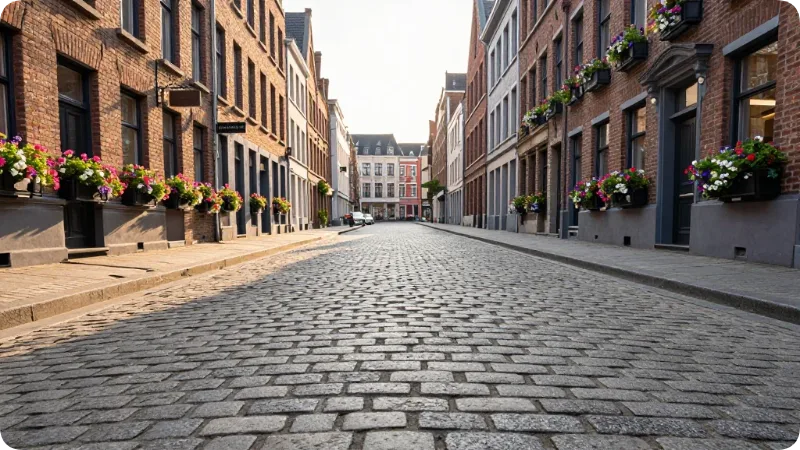
The City Centre (also called the Pentagon, referring to the ring of boulevards around the old town) is packed with historic hotels, boutique guesthouses, and easy access to trams and the metro. It’s the most convenient base for sightseeing but also the most touristy and, in peak season, the noisiest at night.
Streets closer to Rue des Bouchers are lively but can be loud, while areas near Place Sainte-Catherine or Place du Grand Sablon offer a calmer, more upscale version of the same central convenience.
Best for: short stays, walkers, culture-focused itineraries. Downside: higher prices and street noise near nightlife strips.
Where to Stay in Brussels Near Train Station

Travelers connecting to Eurostar, Thalys, or other European rail routes should consider staying near Brussels-Midi (Bruxelles-Midi) Station, the city’s main international rail hub. It’s a practical choice for one-night layovers but is a less charming, more industrial neighborhood after dark.
Alternatively, Brussels-Central Station sits right beside the Grand Place, offering convenient rail access without sacrificing the historic atmosphere — a better fit for most leisure travelers.
Tip: If you only need Midi Station for an early departure, book one night nearby rather than your whole trip, since the surrounding area has fewer dining options.
Where to Stay in Brussels with Family

Families generally do best in the European Quarter or Sainte-Catherine, both of which offer wider sidewalks, family-friendly restaurants, and easier stroller access than the cobblestoned, crowded core near the Grand Place. Apartment-style stays are also more available in these neighborhoods, which helps with kitchen access and extra space.
Look for accommodations near Parc du Cinquantenaire, a large green space with museums and open lawns that’s ideal for letting kids run around between sightseeing stops.
Practical tip: Reserve family rooms or apartments well in advance, since Brussels hotels often have limited multi-bed configurations.
Where to Stay in Brussels Map: Neighborhood Overview
Understanding Brussels’ layout helps immensely when choosing a base. The Pentagon (historic center) sits inside a ring road, with distinct neighborhoods branching outward: Sainte-Catherine to the northwest, Saint-Gilles and Ixelles to the south, the European Quarter to the east, and Brussels-Midi to the southwest.
| Neighborhood | Best For | Distance to Grand Place |
| Grand Place / City Centre | First-timers, sightseeing | 0–10 min walk |
| Sainte-Catherine | Food, local feel | 10–15 min walk |
| Saint-Gilles / Ixelles | Nightlife, cafés | 15–25 min walk / short tram |
| European Quarter | Families, business | 20–30 min walk/metro |
| Near Brussels-Midi | Train connections | 20 min walk / metro |
Most neighborhoods connect via Brussels’ metro, tram, and bus network (STIB/MIVB), making almost any area workable if you don’t mind a short transit ride.
Hotels in Brussels: Budget Breakdown
Brussels accommodation spans everything from hostel dorms to five-star luxury properties. As a general guide, budget travelers can expect roughly $80–120 per night, mid-range hotels fall around $130–220, and luxury properties often start at $250 and up — though these figures shift with season and demand, so always check current listings before booking.
Boutique guesthouses in Sainte-Catherine and Saint-Gilles often deliver better value than comparable hotels in the tourist-heavy center. Apartment rentals can also be cost-effective for stays of four nights or longer, especially for families.
Money-saving tip: Booking a few streets back from the Grand Place, rather than directly on it, can save 20–30% without adding meaningful walking distance.
Best Area to Stay in Brussels for Nightlife
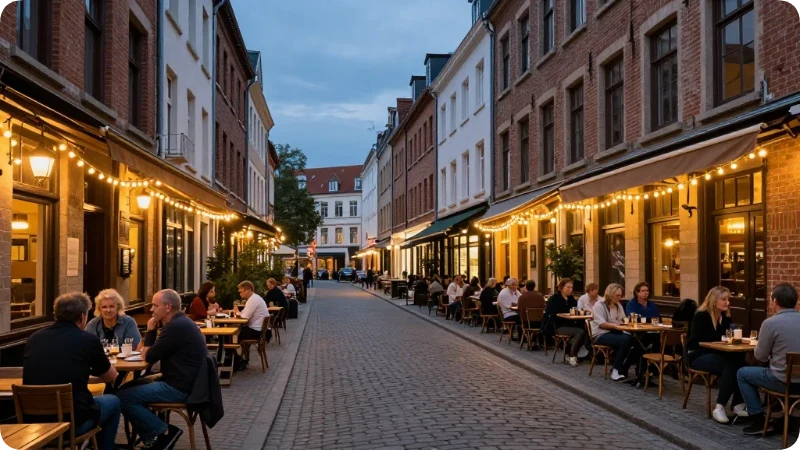
Saint-Gilles and Ixelles are the best areas for nightlife, known for their concentration of bars, live music venues, and late-night cafés around Place Flagey and Chatelain. The city center also has a livelier bar scene near Rue du Marché aux Fromages, though it leans more toward casual pub-crawl energy than the trendier scene further south.
For a mellower evening, Place Sainte-Catherine offers a relaxed strip of seafood restaurants and wine bars that stays lively without becoming rowdy.
Who should avoid nightlife areas: light sleepers and families should book at least a few streets away from Saint-Gilles’ busiest strips.
Safest Areas to Stay in Brussels
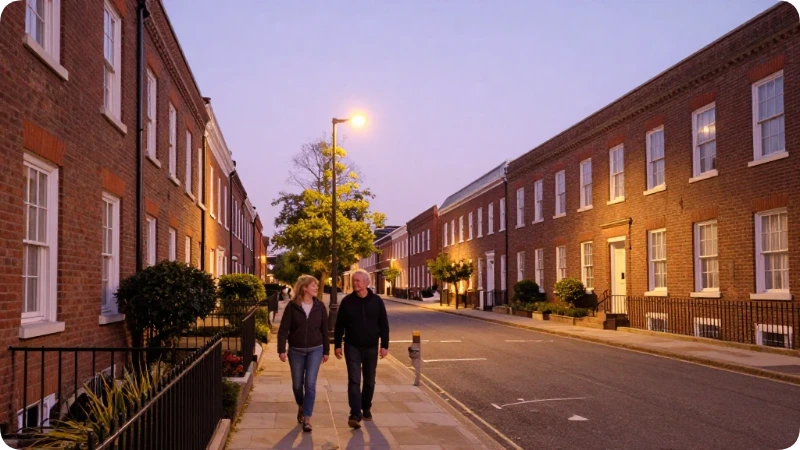
Brussels is generally a safe city for tourists, and the City Centre, Sainte-Catherine, European Quarter, and Uccle are widely considered among the safest areas to base yourself. As with most major European cities, petty theft and pickpocketing in crowded tourist zones are the primary concern rather than violent crime.
Standard precautions apply: stay aware in crowded plazas, avoid flashing valuables, and use registered taxis or rideshare apps at night. Always check current U.S. State Department travel advisories before your trip for the latest official guidance.
Where to Avoid in Brussels at Night
Certain pockets near Brussels-Midi Station and parts of Anneessens can feel quiet and less welcoming late at night, particularly for solo travelers unfamiliar with the area. This doesn’t mean these areas are unsafe outright, but they’re less lively and less lit than the central tourist zones after dark.
Practical fix: if your hotel is near Midi Station, plan to arrive and settle in before dark, and use rideshare apps for late-night returns.
Is Brussels a Walkable City?
Yes, Brussels is highly walkable, especially within the historic Pentagon where most major attractions sit within a 20-minute walk of each other. Cobblestone streets and some steep inclines near the Upper Town mean comfortable walking shoes are essential, and travelers with mobility concerns may prefer trams over walking in hillier sections.
For neighborhoods farther out, like Ixelles or the European Quarter, Brussels’ metro and tram network fills the gaps efficiently.
Is the Metro Free in Brussels?
No, the Brussels metro is not free; single tickets, day passes, and multi-ride cards are available through the STIB/MIVB transit authority. Visitors typically buy a 24-hour or 48-hour pass if they plan to use trams, buses, and the metro multiple times per day, since it’s more economical than single tickets.
Always confirm current fares directly on the official STIB/MIVB website, as pricing changes periodically.
Brussels or Bruges: Where Is Better to Stay?
Brussels suits travelers who want a bigger city with museums, EU landmarks, and a wider dining scene, while Bruges suits those chasing a compact, fairy-tale medieval atmosphere with canals and cobblestone lanes. Many American travelers base themselves in Brussels and take a day trip to Bruges (about an hour by train) rather than choosing one over the other entirely.
Choose Brussels if: you want variety, nightlife, and easy access to other European cities. Choose Bruges if: you want a slower, more romantic, postcard-perfect small-town experience.
Should I Stay in Brussels, Bruges, or Ghent?
For a first trip to Belgium, staying in Brussels and day-tripping to both Bruges and Ghent is the most efficient approach, since both cities are under 90 minutes away by train. Travelers with more time (7+ days) may prefer splitting nights between Brussels and Bruges or Ghent for a deeper, less rushed experience.
Ghent offers a middle ground: nearly as picturesque as Bruges but with fewer crowds and a livelier local, student-driven atmosphere.
What’s the Prettiest City in Belgium?
Bruges is widely considered the prettiest city in Belgium, thanks to its well-preserved medieval architecture, canals, and compact walkable core that feels frozen in time. Ghent is a close second, offering similar charm with a more authentic, less touristy edge.
Although Brussels is grand and architecturally striking around the Grand Place, it is primarily a working capital city rather than a storybook destination. Its greatest strengths are culture, history, and convenience rather than picture-perfect scenery.
Brussels or Antwerp: Which Should You Choose?
Brussels is the better choice for first-time visitors thanks to its central location, EU institutions, and international transit connections, while Antwerp appeals more to travelers interested in fashion, design, and a slightly more laid-back Flemish city vibe. Antwerp also has a notable diamond district and a striking central train station worth visiting even on a day trip.
Choose Antwerp if: you’re interested in fashion, architecture, and a quieter big-city feel. Choose Brussels if: you want maximum sightseeing efficiency and international connectivity.
Amsterdam or Brussels: Which Is Better to Visit?
Amsterdam tends to appeal more to travelers drawn to canals, cycling culture, and a younger nightlife scene, while Brussels appeals to those interested in EU history, chocolate and beer culture, and a central base for exploring Belgium and nearby France. Both cities are well connected by high-speed rail, making a combined trip realistic for travelers with 7+ days.
Cost-conscious travelers often find Brussels slightly more affordable than Amsterdam for comparable hotel quality, though this varies by season.
How Many Days Do You Need in Brussels?
Most travelers need 2 to 3 full days in Brussels to see the major sights — the Grand Place, Atomium, Royal Museums, and a chocolate or beer tasting — without feeling rushed. Add an extra day if you plan a day trip to Bruges, Ghent, or Antwerp.
Is 3 nights in Brussels enough? Yes, three nights comfortably covers the city’s core attractions plus one additional day trip, making it a popular length of stay for first-time visitors combining Brussels with the wider Belgium region.
Common Mistakes When Choosing Where to Stay in Brussels
Mistake 1: Booking too far from public transit. Fix: Stick to areas within a 10-minute walk of a metro or tram stop, especially outside the City Centre.
Mistake 2: Choosing a hotel directly on a nightlife strip without checking noise levels. Fix: Read recent reviews specifically mentioning street noise before booking near Rue des Bouchers or Saint-Gilles’ bar streets.
Mistake 3: Underestimating cobblestones and hills near the Upper Town. Fix: Pack sturdy, comfortable shoes regardless of which neighborhood you choose.
FAQs
Where to stay in Brussels for first-timers?
First-timers should stay near the Grand Place or in Sainte-Catherine, both offering walkable access to major landmarks, restaurants, and transit without needing to master the metro system right away.
Where to stay in Brussels city centre?
The area around the Grand Place, Rue Neuve, and Place Sainte-Catherine makes up the city centre, offering the highest concentration of hotels, shops, and sightseeing within a compact, walkable footprint.
What do Reddit travelers recommend for where to stay in Brussels?
Community discussions on Reddit’s travel forums commonly recommend Sainte-Catherine for food and value, the City Centre for convenience, and Saint-Gilles or Ixelles for a livelier, more local nightlife scene.
Where to stay in Brussels near the train station?
Travelers prioritizing rail access should look near Brussels-Central Station, which sits beside the Grand Place, or Brussels-Midi for direct Eurostar and Thalys connections, though Midi’s surrounding area is quieter at night.
Is Brussels safer than Paris?
Both cities carry similar general safety profiles for tourists, with petty theft in crowded areas being the primary concern in each. Always check current official travel advisories, since safety perceptions and incidents shift over time.
Where to stay in Belgium for the first time?
First-time visitors to Belgium typically base themselves in Brussels for its central rail connections, then take day trips to Bruges, Ghent, or Antwerp rather than switching hotels multiple times.
What is the best attraction in Brussels?
The Grand Place, a UNESCO World Heritage plaza lined with ornate guildhalls, is widely regarded as Brussels’ single best attraction, alongside the iconic Atomium and the whimsical Manneken Pis statue.
Is 3 nights in Brussels enough to see the highlights?
Yes, three nights is generally enough to see Brussels’ core highlights and fit in one nearby day trip, making it a practical length for travelers balancing Brussels with the rest of Belgium.
How many days do you actually need to enjoy Brussels without rushing?
Two to three full days let most travelers see the major sights at a relaxed pace, while a fourth day allows time for a day trip or a slower, more immersive visit to museums and neighborhoods beyond the center.
Conclusion
Choosing where to stay in Brussels comes down to three questions: how much walking you want to do, how central you need to be for train connections, and if nightlife or family-friendly quiet matters more.
The City Centre wins for most first-time visitors, Sainte-Catherine wins on food and value, and Saint-Gilles wins for nightlife.
Wherever you land, Brussels rewards travelers who base themselves near a metro or tram line and stay open to exploring on foot.
Start mapping your neighborhood shortlist now, confirm current hotel rates directly with providers, and get ready to enjoy one of Europe’s most underrated capital cities.

Ben Fogle believes that true adventure begins where the pavement ends. After spending years documenting extreme environments, rowing across oceans, and trekking through frozen landscapes, he mastered the art of wilderness travel. For Travelmarse, Ben constructs highly detailed guides on deep-nature packing lists, wildlife safety, and sustainable eco-tourism. He breaks down intimidating, rugged expeditions into clear, step-by-step roadmaps so everyday travelers can safely connect with the natural world.