Featured Snippet:
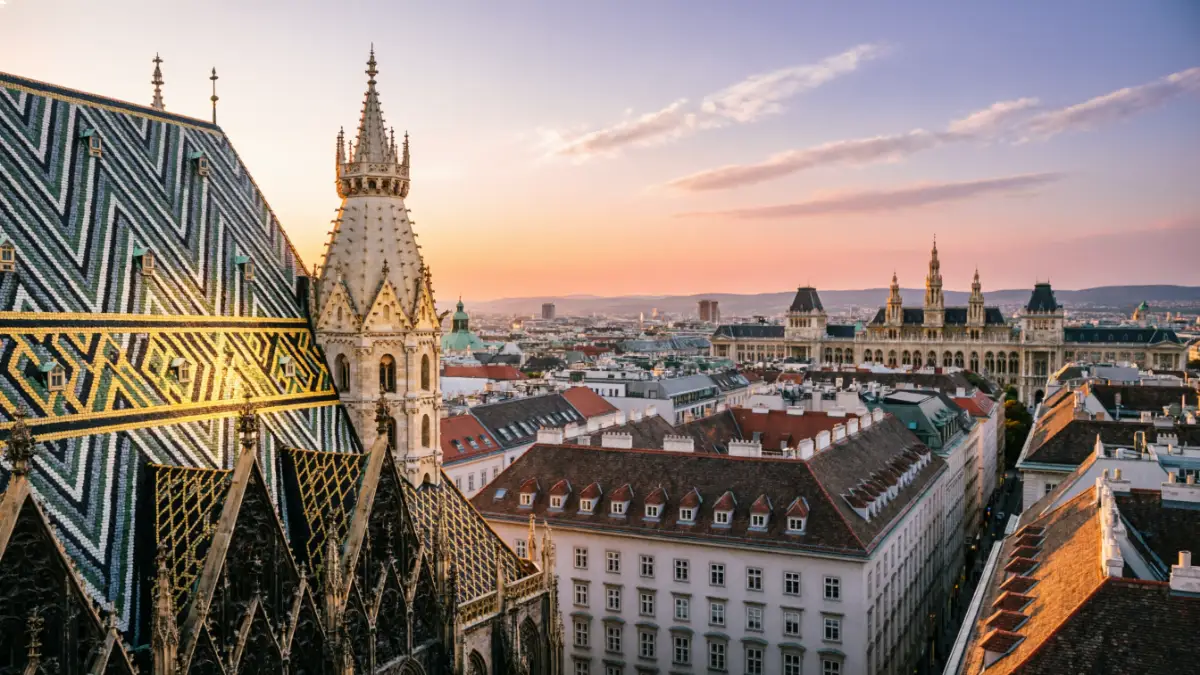
The best area to stay in Vienna is Innere Stadt (1st district) for first time visitors, thanks to its walkable location near St. Stephen’s Cathedral and the Hofburg. Budget travelers and repeat visitors often prefer Neubau (7th), Mariahilf (6th), or Leopoldstadt (2nd) for a livelier, more local feel.
Vienna welcomes millions of travelers every year, and for good reason but picking the right home base can quietly make or break a trip.
Book the wrong street and you’ll spend your vacation stuck on a tram instead of standing beneath Hofburg’s golden gates. Book the right one, and Vienna’s palaces, coffeehouses, and Danube parks unfold right outside your door.
This guide breaks down where to stay in Vienna by budget, travel style, and season, using real district data instead of vague hotel blog guesswork. If it’s your first trip or your fifth, you’ll find a neighborhood that fits plus honest notes on areas worth skipping.
Quick Facts Table
| Category | Details |
| Best overall area | Innere Stadt (1st district) |
| Best for budget travelers | Margareten (5th) or Favoriten (10th) |
| Best for families | Leopoldstadt (2nd) |
| Best for nightlife | Neubau (7th) / Mariahilf (6th) |
| Best for train access | Landstraße (3rd, near Hauptbahnhof) |
| Total districts | 23 |
| Getting around | U Bahn (5 lines), trams, buses |
| Average nightly rate (2026) | €30 50 hostels, €90 140 mid range, €250+ luxury |
| Safety ranking | Consistently ranked among the world’s safest capitals |
Prices and rankings shift with seasons and events always confirm current rates directly with hotels or booking platforms before you travel.
What Part of Vienna Is Best to Stay In?
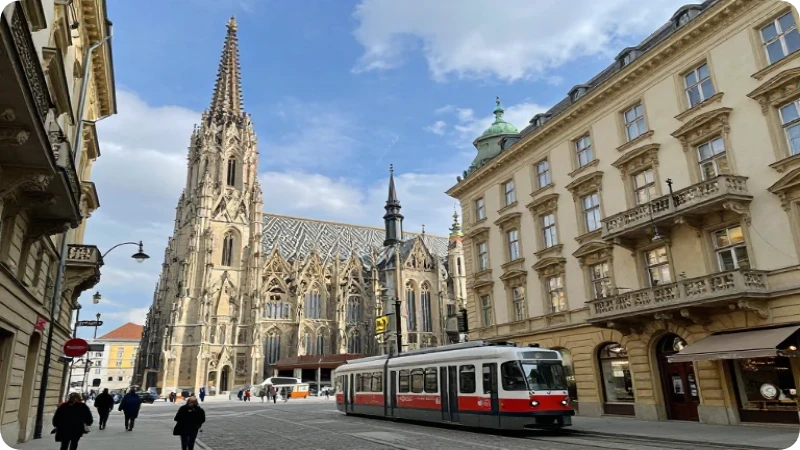
The 1st district, Innere Stadt, is best for most travelers because it sits inside the historic Ringstrasse, within walking distance of St. Stephen’s Cathedral, the State Opera, and the Hofburg Palace complex.
If a quieter, more residential feel appeals to you, the neighbouring 6th (Mariahilf) and 7th (Neubau) districts offer nearly the same access with better food, lower prices, and a younger energy. Both border Innere Stadt on foot or one tram stop away.
Travelers chasing green space and a local Viennese rhythm often lean toward Josefstadt (8th), Vienna’s smallest and one of its most elegant districts, known for quiet streets and classic coffeehouses.
Which District in Vienna Is Best for Tourists?
For sightseeing efficiency, Innere Stadt (1st district) wins nearly every major landmark sits inside or just outside the Ring. For a more balanced trip that mixes sightseeing with local life, Neubau (7th) is widely considered the most tourist friendly alternative.
Neubau blends proximity to the MuseumsQuartier with independent boutiques, wine bars, and the Spittelberg cobblestone quarter. It’s flat, walkable, and only 10 15 minutes from Stephansplatz by foot or tram.
Families and design forward travelers also gravitate toward Landstraße (3rd), home to the Belvedere Palace and Vienna’s diplomatic quarter, which tends to be quieter after dark.
Where to Stay in Vienna for First Time Visitors
First time visitors get the most value from Innere Stadt or its immediate border neighborhoods Wieden, Mariahilf, or Neubau since everything worth seeing is reachable on foot within 20 minutes.
Staying inside the Ring means no transit planning is required for major sights like the Hofburg, Albertina Museum, and Graben shopping street. The tradeoff is higher hotel prices and heavier tourist foot traffic near Stephansplatz.
A smart middle ground: book a hotel on the border of District 1 and District 6 or 7. You’ll pay less, sleep somewhere quieter, and still reach the cathedral in a 10 minute walk.
Best Neighborhoods in Vienna: A District by District Breakdown
Vienna has 23 districts, but only about six are genuinely worth a tourist’s attention. Here’s how they compare.
Innere Stadt (1st District)
Vienna’s historic core, packed with baroque architecture, the Hofburg, and St. Stephen’s Cathedral. Best for first timers who want everything within walking distance but expect the highest prices and busiest streets.
Mariahilf (6th District)
Often called Vienna’s coolest neighborhood. Home to the Naschmarkt food market, vintage shops, and easy access to both Innere Stadt and the Museum Quarter.
Neubau (7th District)
A hipster favorite with street art, indie galleries, and the charming Spittelberg quarter. Flat and walkable, with strong nightlife and café culture.
Leopoldstadt (2nd District)
Leafy and multicultural, bordering the Prater amusement park and Danube Canal. A top pick for families and travelers who want green space without leaving the city center.
Landstraße (3rd District)
Home to the Belvedere Palace and Vienna’s Hauptbahnhof (main train station). Quieter, more residential, and excellent value for the location.
Josefstadt (8th District)
Vienna’s smallest district is elegant, residential, and close to the university quarter. A favorite for repeat visitors who’ve already covered the major sights.
Where to Stay in Vienna with Family
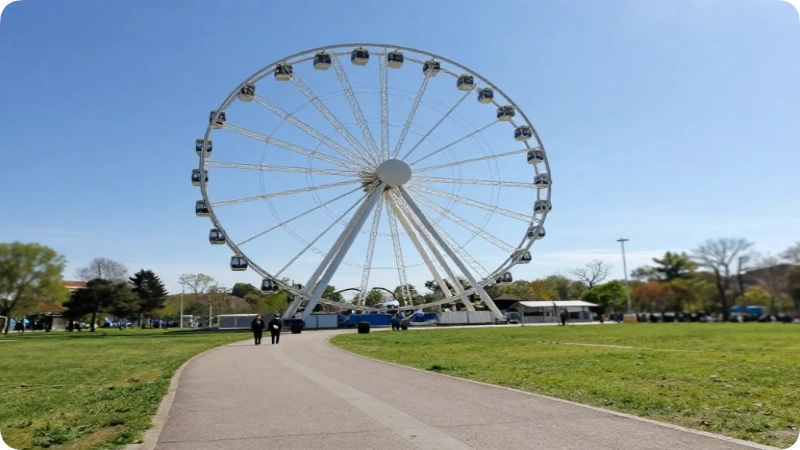
Families do best in Leopoldstadt (2nd district), thanks to its proximity to Prater Park’s Ferris wheel and green spaces, plus easy tram and U Bahn access to the city center without the crowds of Innere Stadt.
Landstraße (3rd) is another strong family option it’s calmer at night, close to the Belvedere Gardens, and near the Hauptbahnhof for easy day trips.
Look for apartment style hotels or serviced apartments in these areas; they typically offer kitchenettes and more space than a standard hotel room, which matters over a multi day family stay.
Where to Stay in Vienna on a Budget
Budget travelers get the most value in Margareten (5th) and Favoriten (10th), both a short tram ride from the center with noticeably lower nightly rates than Innere Stadt or Neubau.
Hostels cluster around Neubau and Wieden (4th), near Karlsplatz, offering easy walking access to major sights alongside cheaper food options and social atmospheres popular with solo travelers.
Money saving tip: Booking a room just outside the Ring but near a U Bahn station often saves 20 30% compared to an equivalent Innere Stadt hotel, with only a few extra minutes added to your commute.
Where to Stay in Vienna Near the Train Station
For Wien Hauptbahnhof (Vienna’s main train station), Landstraße (3rd district) and Favoriten (10th district) offer the closest, most convenient hotel clusters, with direct tram and U Bahn links into the center.
If arriving via Wien Westbahnhof (western regional and international trains), the Neubau (7th) and Mariahilf (6th) districts are within easy reach and offer a much livelier area to base yourself for the rest of your trip.
Both stations connect to the U Bahn network, so staying “near” a station matters less in Vienna than in many other European cities a 10 minute train ride rarely adds real hassle.
Where to Stay in Vienna for a Week
For stays of five nights or longer, consider splitting your trip: 3 4 nights in Innere Stadt or Neubau for sightseeing, followed by a few nights in Josefstadt or Leopoldstadt to experience a quieter, more residential side of the city.
A full week also justifies booking an apartment over a hotel Vienna has strong short term rental options in Neubau, Mariahilf, and Josefstadt that offer laundry access and kitchens, which cut down on dining costs significantly.
Longer stays are also the best opportunity to take day trips to Schönbrunn Palace, the Vienna Woods, or nearby towns like Melk, so a base with easy train or tram access matters more than being dead center.
Where to Stay in Vienna in December
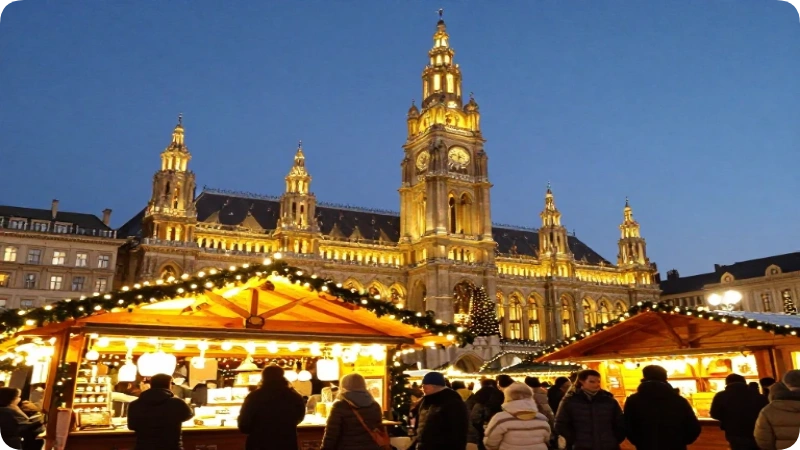
December is Vienna’s Christmas market season, and demand spikes hard around Rathausplatz, Am Hof, and Stephansplatz so book accommodation in or near Innere Stadt at least 2 3 months ahead if you want to walk to the markets each evening.
New Year’s Eve is an even bigger surge: Vienna’s Silvesterpfad street festival fills hotels across the center, and prices climb sharply. If flexibility matters more than proximity, Neubau or Josefstadt offer a calmer December base with markets still a short tram ride away.
Packing note: Vienna in December is cold and often damp pack layered wool or thermal clothing and waterproof boots for cobblestone streets.
Where to Avoid Staying in Vienna
Vienna is overall a very safe, low crime capital, but a handful of areas are worth deprioritizing for tourists not for danger, but for inconvenience and lack of atmosphere.
- Areas immediately around Praterstern station can feel rougher after dark and are better for transit than for basing your stay.
- Far flung outer districts (like parts of the 21st or 22nd) save money but add long commutes into the center, eating into sightseeing time.
- Industrial pockets near Wien Meidling station lack the walkable charm most visitors want from a Vienna stay.
None of these areas are unsafe in any serious sense. Vienna consistently ranks among the world’s most livable and safest capitals; they simply offer a less convenient, less scenic base for a short trip.
Where Is the Prettiest Part of Vienna?
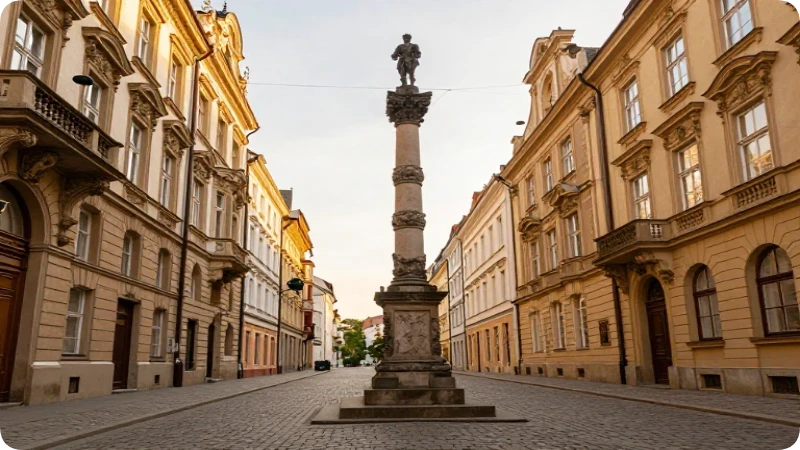
The Graben and Kohlmarkt streets in Innere Stadt are widely considered Vienna’s most beautiful, lined with baroque facades, the Plague Column, and views straight toward St. Stephen’s Cathedral.
For the coolest neighbourhood rather than the most classically beautiful one, Mariahilf (6th district) takes the title a mix of vintage shopping, the Naschmarkt, and a livelier café scene than the more formal Innere Stadt.
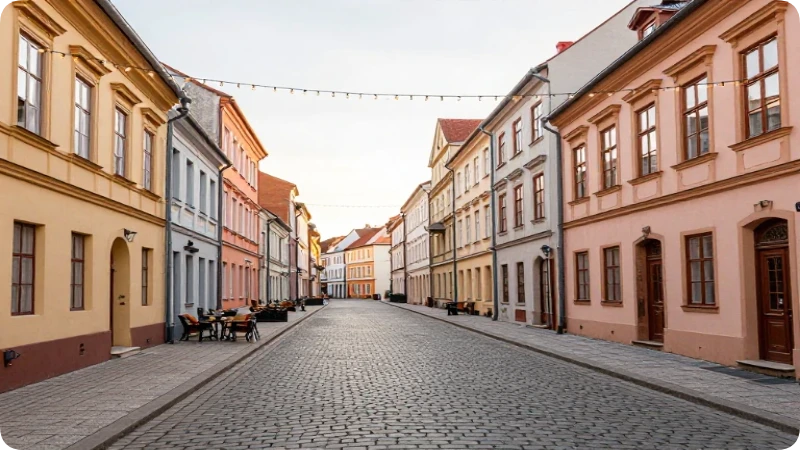
Photographers shouldn’t skip Spittelberg in Neubau, a cobblestone quarter of pastel 18th century houses that feels like a small village tucked inside the city.
Where to Base Yourself in Vienna: Quick Decision Guide
| Travel style | Best base | Why |
| First time visitor | Innere Stadt | Everything within walking distance |
| Budget traveler | Margareten / Favoriten | Lower rates, good transit links |
| Family with kids | Leopoldstadt | Prater park, green space, calmer streets |
| Nightlife & food | Neubau / Mariahilf | Bars, cafés, Naschmarkt |
| Repeat visitor | Josefstadt | Quiet, local, less touristy |
| Train traveler | Landstraße / Favoriten | Steps from Hauptbahnhof |
Bottom line: if in doubt, stay near the Ring Vienna’s compact center means even a “wrong” choice rarely means more than a 20 minute tram ride to fix it.
Best Time to Visit Vienna (and the Best Month to Go)
April, May, September, and October are generally the best months to visit Vienna, offering mild weather, thinner crowds, and hotel rates roughly 20 30% below the summer and Christmas peaks.
Seasonal Comparison Table
| Season | Months | Weather | Crowds | Pros | Cons |
| Peak | Jun Aug, Dec | Warm summers / cold December | Highest | Festivals, Christmas markets | Highest prices, heavy crowds |
| Shoulder | Apr May, Sep Oct | Mild, pleasant | Moderate | Best value, comfortable weather | Some rain possible |
| Off season | Jan Mar | Cold, occasionally snowy | Lowest | Opera season, lowest rates | Short daylight, cold streets |
Winter travelers chasing Christmas markets should budget for December crowds and prices, while those craving quiet, budget friendly museum time will do best in January or February.
Is Vienna a Walkable City for Tourists?
Yes, Vienna is one of Europe’s most walkable capitals, with a flat, compact Innere Stadt and pedestrian friendly streets connecting most major landmarks in under 20 minutes on foot.
Beyond the center, Vienna’s public transport picks up the slack: five U Bahn lines, dozens of tram routes, and extensive buses cover the entire city, meaning no neighborhood is ever more than a short ride from the sights.
Insider tip: a multi day transit pass (available at U Bahn stations) is often cheaper than several single tickets and removes the need to plan routes around walkability alone.
How Many Nights Are Enough in Vienna? (Is 3 Days Too Long?)
3 to 4 nights is the sweet spot for most first time visitors, covering the major museums, palaces, and a Danube or Prater excursion without feeling rushed.
Three days in Vienna is not too long, it’s close to ideal. It allows one day for Innere Stadt sightseeing, one for Schönbrunn Palace and gardens, and one for a neighborhood like Mariahilf or Leopoldstadt plus the Naschmarkt.
Travelers with 5+ nights should consider a day trip to the Vienna Woods, Wachau Valley, or Bratislava, which is under an hour away by train.
Budget Breakdown: How Much Money Is Needed for 3 Days in Vienna?
A realistic 3 day Vienna budget ranges from roughly €250 300 total for budget travelers to €600 900+ for a comfortable mid range trip, excluding international flights.
| Expense | Budget | Mid Range |
| Accommodation (3 nights) | €90 150 | €270 420 |
| Food & drink | €60 90 | €150 210 |
| Transit pass | €17 (3 day ticket) | €17 |
| Museums & attractions | €40 60 | €80 120 |
| Estimated total | €210 320 | €520 770 |
These figures are general estimates for planning purposes only always confirm current museum and transit pricing directly with official Vienna tourism resources before booking.
Is It Safe to Walk at Night in Vienna?
Yes, Vienna is widely regarded as one of the safest capital cities in the world for walking at night, consistently ranking near the top of global liveability and safety indices. Its safest districts after dark include Josefstadt (8th), Hietzing (13th), Wieden (4th), and Neubau (7th).
Standard big city precautions still apply: keep valuables secure, avoid poorly lit side streets near major train stations late at night, and use licensed taxis rather than unmarked cars.
Pickpocketing near crowded tourist spots is the most common issue reported, not violent crime a normal level of street awareness is enough to stay safe.
Food & Dining: Traditional Breakfast and What to Buy in Austria
A traditional Viennese breakfast typically includes fresh bread rolls (Semmeln), butter, jam, cold cuts, cheese, soft boiled eggs, and a Viennese style coffee such as a Melange best experienced at one of the city’s historic coffeehouses like Café Central or Café Sperl.
For souvenirs, Austria is famous for Mozartkugeln (chocolate marzipan candies), Viennese coffee blends, Riedel crystal glassware, and handcrafted items from the Naschmarkt or Christmas markets.
Food lovers shouldn’t skip Wiener Schnitzel, Sachertorte (the original at Hotel Sacher), and a stroll through the Naschmarkt for spices, cheeses, and street food stalls.
Vienna vs. Prague: Which Is Better to Visit?
There’s no single right answer Vienna suits travelers who want grand imperial architecture, classical music, and a polished, safe, walkable capital, while Prague appeals more to those chasing dramatic medieval charm and lower overall costs.
Vienna tends to be pricier but offers world class museums, opera, and a calmer pace. Prague is generally more affordable, with a livelier nightlife scene and a fairy tale old town aesthetic.
Many travelers combine both Vienna and Prague are roughly 4 hours apart by direct train, making a two city itinerary an easy add on for a longer Central Europe trip.
Common Mistakes to Avoid When Choosing Where to Stay
- Booking far from a U Bahn station to save money. The savings rarely outweigh the daily time lost commuting into the center.
- Assuming Innere Stadt is the only “real” option. Neubau, Mariahilf, and Josefstadt offer comparable access with better value and atmosphere.
- Ignoring event calendars. Christmas markets, New Year’s Eve, and major conferences can double hotel prices overnight check the calendar before booking.
Underrated alternative: Josefstadt is consistently overlooked despite offering nearly the same central access as Innere Stadt at a noticeably lower price point.
What Locals and Frequent Travelers Recommend
Community travel forums and repeat visitors tend to echo the same core advice: stay inside or just outside the Ring for a first trip, prioritize a district near a U Bahn line over one that looks central on a map, and don’t overpay for a room you’ll barely spend time in during a packed sightseeing schedule.
Frequent travelers also flag that Vienna’s flatness and transit coverage make “which side of town” matter far less than in cities like Rome or Paris comfort, price, and walkability to a subway stop matter more than exact proximity to Stephansplatz.
As with any crowdsourced advice, treat forum recommendations as a starting point rather than gospel, and cross check specific hotel suggestions against current reviews before booking.
Vienna Map: Where to Stay at a Glance
Picture Vienna as a wheel: Innere Stadt (1st) sits at the hub, ringed by the Ringstrasse boulevard. Districts 2 through 9 fan out immediately around it like spokes this inner ring is where nearly all recommended tourist accommodation is located.
| Direction from center | District | Best for |
| North/East | Leopoldstadt (2nd) | Families, Prater park |
| South/East | Landstraße (3rd) | Train access, Belvedere |
| South | Wieden (4th) / Margareten (5th) | Budget stays |
| South/West | Mariahilf (6th) | Shopping, Naschmarkt |
| West | Neubau (7th) | Nightlife, cafés |
| North/West | Josefstadt (8th) | Quiet, local charm |
Outer districts beyond this ring (10th and above) are generally reserved for budget stays with longer commute times, not first choice tourist bases.
FAQs
What part of Vienna is best to stay in?
Innere Stadt (1st district) is best for most tourists due to its central, walkable location near major landmarks. Budget conscious or repeat travelers often prefer Neubau or Mariahilf instead.
Is 3 days in Vienna too long?
No 3 days is close to ideal for a first visit. It allows time for the city center, Schönbrunn Palace, and one neighborhood exploration day without feeling rushed.
Which district in Vienna is best for tourists?
Innere Stadt (1st) is best for sightseeing efficiency, while Neubau (7th) offers a more balanced mix of tourist access and local atmosphere.
Is Vienna a walkable city for tourists?
Yes, Vienna’s flat, compact center makes it highly walkable, and its extensive U Bahn and tram network covers everywhere else.
How many nights are enough in Vienna?
3 to 4 nights covers the major sights comfortably; add extra nights for day trips to Schönbrunn, the Vienna Woods, or nearby cities like Bratislava.
Is Prague or Vienna better?
Neither is objectively better Vienna suits travelers wanting polished imperial elegance and museums, while Prague suits those seeking medieval charm and lower prices.
What is the best month to go to Vienna?
April, May, September, and October offer the best balance of mild weather, thinner crowds, and lower hotel rates.
Where to stay in Vienna for a week?
Split a week long stay between Innere Stadt or Neubau for sightseeing and Josefstadt or Leopoldstadt for a quieter, more local final few nights.
Where to stay in Vienna near the train station?
Landstraße and Favoriten sit closest to Wien Hauptbahnhof, while Neubau and Mariahilf are best for travelers arriving at Wien Westbahnhof.
Where to stay in Vienna on a budget?
Margareten (5th) and Favoriten (10th) offer the best value, with lower nightly rates and solid U Bahn access to the center.
Where to stay in Vienna in December?
Book Innere Stadt early for direct Christmas market access, or choose Neubau or Josefstadt for a calmer, more affordable December base.
Is it safe to walk at night in Vienna?
Yes, Vienna is consistently ranked among the world’s safest capitals, though standard precautions against pickpocketing near tourist crowds still apply.
Final Takeaways
Vienna rewards travellers who match their neighbourhood to their travel style rather than defaulting to the priciest central option. Innere Stadt remains the safest first time choice, Neubau and Mariahilf deliver the best value to atmosphere ratio, and Leopoldstadt stands out for families.
However packed the itinerary, Vienna’s compact layout and reliable transit mean no accommodation choice is ever truly “wrong” just closer to, or further from, a tram stop. Start with the decision table above, factor in your season and budget, and book with confidence.
Always double check current prices, opening hours, and travel requirements directly with official sources like the Vienna Tourist Board (wien.info) before finalizing a trip.

Ben Fogle believes that true adventure begins where the pavement ends. After spending years documenting extreme environments, rowing across oceans, and trekking through frozen landscapes, he mastered the art of wilderness travel. For Travelmarse, Ben constructs highly detailed guides on deep-nature packing lists, wildlife safety, and sustainable eco-tourism. He breaks down intimidating, rugged expeditions into clear, step-by-step roadmaps so everyday travelers can safely connect with the natural world.