Staring at a map of Tuscany and trying to pick one home base can feel harder than the flight over. Every hill town looks equally golden in photos, every guidebook insists its favorite village is “the real Tuscany,” and one wrong choice can mean hours lost on winding roads instead of afternoons spent over wine.
Choosing where to stay in Tuscany is really the first big decision that shapes the whole trip: how much you drive, how many towns you can reasonably see, and if mornings start with cappuccino in a piazza or with breakfast on a vineyard terrace.
This guide breaks Tuscany into its main lodging regions Florence, Siena, Chianti, Val d’Orcia, San Gimignano, the coast, and lesser-known pockets and matches each to the kind of trip it suits best. It also covers how long to stay, if you need a car, and the mistakes that trip up most first-time visitors before they even land in Italy.
Quick answer:
Base yourself in Florence for art and city energy, Siena for a smaller medieval feel with easy countryside access, the Chianti region for wine-country agriturismos, or San Gimignano/Val d’Orcia for the classic postcard hills. Most first-timers do best splitting their trip between one city and one rural stay.
Quick Facts Table
| Base Area | Best For | Car Needed? | Nearest Airport |
| Florence | First-timers, art, walkability | No | Florence (FLR), Pisa (PSA) |
| Siena | Medieval charm, quieter pace | Optional | Florence, Pisa |
| Chianti | Wine lovers, agriturismo stays | Yes | Florence |
| Val d’Orcia | Classic hill-town views, photography | Yes | Florence, Rome (FCO) |
| San Gimignano | Day-trippers, towers and views | Yes | Florence, Pisa |
| Tuscan Coast | Beach + countryside combo | Yes | Pisa |
Where Is the Best Area to Stay in Tuscany?
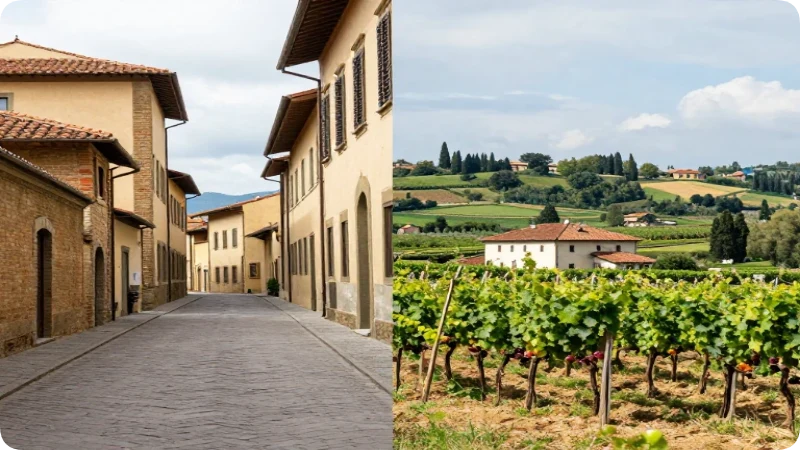
The best area to stay in Tuscany depends on your travel style: Florence suits travelers who want walkable culture and museums, Chianti or Val d’Orcia suit those chasing vineyard views and slow mornings, and Siena splits the difference with a smaller-city feel close to the countryside. There is no single “best”; only the best fit for your pace.
Travelers who want to feel plugged into daily Italian life, with cafés and gelato shops around every corner, tend to gravitate toward cities. Travelers dreaming of cypress-lined driveways and a pool overlooking vineyards want the countryside instead.
A common approach nd one worth considering is splitting a week between the two: three or four nights in a city, followed by three or four nights at a countryside agriturismo. 🍇
Should I Stay in Florence or Tuscany’s Countryside?
Stay in Florence if this is your first Italy trip, you’re relying on public transportation, or your itinerary includes major museums like the Uffizi and Accademia. Stay in the countryside if you have a rental car, want a slower pace, and prioritize scenery and food over sightseeing checklists.
Florence works as a base for day trips to Siena, San Gimignano, and Chianti, since regional trains and organized tours reach many towns without a car. The tradeoff is that you’re commuting into the countryside rather than waking up inside it.
The countryside, meanwhile, delivers the view most people picture when they imagine Tuscany, but it also means longer drives for dinner reservations and no late-night gelato walk right outside your door.
Is It Better to Stay in Florence or Siena?
Florence is better for first-time visitors focused on art, history, and world-class museums, while Siena is better for travelers who want a smaller, quieter medieval city that sits closer to the rolling countryside. Florence is roughly three to four times larger and has far more flights, trains, and tour options.
Siena’s compact historic core, centered on the shell-shaped Piazza del Campo, can be walked end to end in under 20 minutes. That makes it a calmer overnight base, especially for travelers who find Florence’s crowds around the Duomo overwhelming.
Florence, on the other hand, has unmatched depth: the Uffizi Gallery, Michelangelo’s David at the Accademia, the Ponte Vecchio, and a genuine international food and shopping scene that Siena doesn’t attempt to match.
Bottom line: if you can only pick one, Florence offers more to do; Siena offers more breathing room.
How Far Is Florence From Siena?
Florence and Siena sit about 70 km (43 miles) apart, roughly a one-hour drive or a 75–90 minute regional train ride. Direct trains run from Firenze Santa Maria Novella to Siena throughout the day, making Siena a realistic day trip or a separate overnight stop on a Tuscany itinerary.
Buses operated by Autolinee Toscane cover the same route in a similar time and often drop closer to Siena’s historic gates than the train station does, since Siena’s rail stop sits outside the old city walls.
Where Should I Base Myself in Tuscany for a First Trip?
First-time visitors should base themselves in Florence for 3–4 nights, then move to a countryside base in Chianti, Val d’Orcia, or Siena for 3–4 more nights. This combination covers major art and history without skipping the vineyard scenery Tuscany is famous for.
Trying to see everything from a single base usually backfires. Val d’Orcia is gorgeous but far from Florence’s museums; Florence is central but doesn’t feel like the countryside. Splitting the stay solves both problems.
For travelers with less than five days total, picking just one base- usually Florence- and doing focused day trips is the more realistic option.
What Is the Prettiest Area in Tuscany?
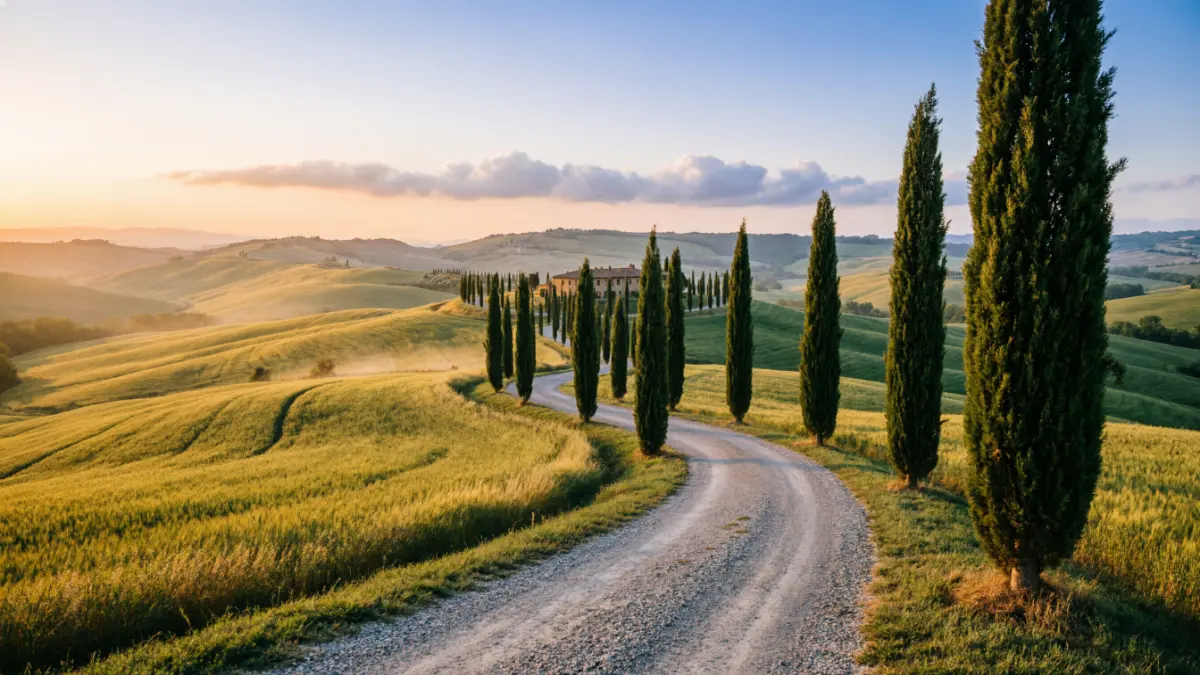
Most travelers and photographers point to Val d’Orcia, a UNESCO World Heritage landscape south of Siena known for cypress-lined roads, rolling wheat fields, and hill towns like Pienza and Montalcino. Chianti, with its vineyard-covered hills between Florence and Siena, is a close second for classic Tuscan scenery.
Val d’Orcia’s fame largely comes from a handful of iconic viewpoints; the winding cypress driveway near San Quirico d’Orcia is one of the most photographed roads in Italy. Staying nearby means catching that light at sunrise before tour buses arrive.
Chianti offers a gentler, greener version of the same beauty, dotted with stone farmhouses, olive groves, and family-run wineries that welcome overnight guests.
Where to Stay in Tuscany for Couples
Couples tend to do best in Chianti agriturismos or boutique hotels in Siena, both of which offer romantic settings without the crowds of central Florence. A countryside stay with a pool, vineyard view, and an in-house restaurant creates the slow, intimate pace many couples are after.
For a mix of romance and city energy, splitting time between a Florence boutique hotel and a Chianti farmhouse gives couples both an evening stroll along the Arno and a quiet dinner under string lights in the hills.
Where to Stay in Tuscany Without a Car
Travelers without a car should base themselves in Florence or Siena, both well connected by train and bus to smaller towns like San Gimignano, Pisa, and Lucca. Organized day tours from Florence also reach Chianti and Val d’Orcia for travelers who want the countryside experience without driving Italy’s narrow rural roads.
Renting a car isn’t required to enjoy Tuscany, but it does limit access to remote agriturismos, which are often several kilometers down unpaved roads with no bus service.
Best Area to Stay in Tuscany Countryside
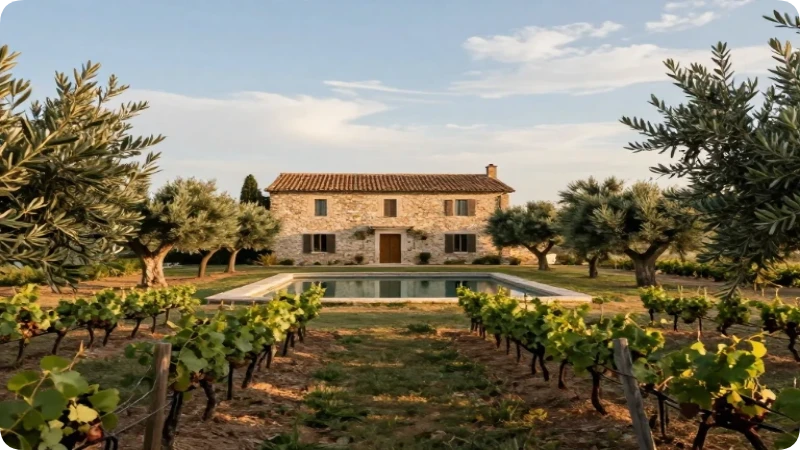
The most popular countryside bases are Chianti (wine, proximity to Florence and Siena), Val d’Orcia (dramatic hill-town scenery), and the area around San Gimignano (medieval towers, easy day-trip access). Each works well for travelers with a rental car who want at least three nights outside a city.
- Chianti best for wine tourism and central location between Florence and Siena.
- Val d’Orcia best for scenery, photography, and slower village life.
- Near San Gimignano best for travelers who want one dramatic hill town within walking distance.
Where to Stay in Tuscany for a Week
A week in Tuscany fits comfortably into two bases: Florence for the first half, then Chianti or Val d’Orcia for the second half. This structure avoids repacking every night while still covering the region’s biggest highlights: museums, hill towns, wine country, and at least one quiet countryside evening.
Sample 7-night split:
- Nights 1–3: Florence :Uffizi, Duomo, Ponte Vecchio, day trip to Pisa or Fiesole.
- Nights 4–5: Chianti wine tastings, Greve in Chianti, Radda in Chianti.
- Nights 6–7: Val d’Orcia or Siena , Pienza, Montalcino, Piazza del Campo.
Where to Stay in Tuscany for an Agriturismo Experience
Chianti and Val d’Orcia have the highest concentration of working farm stays, or agriturismi, many of which include home-cooked meals, wine tastings, and olive-oil tastings on-site. These stays typically require a car, since most sit down unpaved country roads outside town centers.
An agriturismo differs from a standard countryside hotel in that the property is a genuine working far expect fewer amenities than a resort, but a far more personal, food-focused experience. Booking directly with smaller family-run properties, rather than through large resort chains, tends to give the most authentic version of this stay.
Where to Stay Near Florence for Easy Access
For travelers who want countryside quiet with quick access to Florence’s museums, small towns just outside the city Fiesole, Settignano, and the northern edge of Chianti** offer 20–30 minute drives or bus rides into the historic center. This suits travelers who want to avoid Florence’s crowds and noise at night while keeping the city’s sights within easy reach.
Fiesole, perched in the hills above Florence, is a particularly good pick: it has its own Roman ruins and views over the Duomo, plus regular bus service straight into the city center.
What Is the Most Beautiful Village in Tuscany?
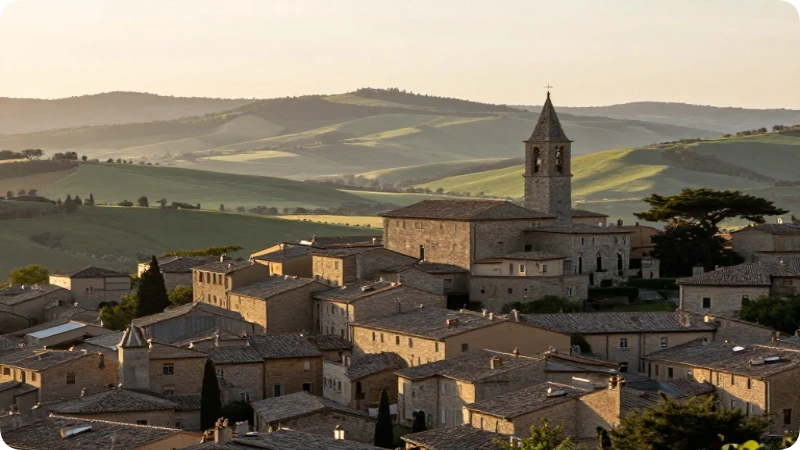
There’s no single official answer, but Pienza, San Gimignano, and Montepulciano are consistently ranked among Tuscany’s most beautiful villages. Pienza, a UNESCO World Heritage town rebuilt in the 15th century as an ideal Renaissance city, is especially loved for its harmonious architecture and sweeping Val d’Orcia views.
San Gimignano is famous for its medieval stone towers, once symbols of noble family wealth, that still rise dramatically over the surrounding hills. Montepulciano combines hilltop views with some of Tuscany’s best-known Vino Nobile wine cellars.
What Are the Top Three Cities in Tuscany?
The three cities most first-time visitors prioritize are Florence, Siena, and Pisa. Florence for Renaissance art, Siena for medieval architecture and its famous piazza, and Pisa for the Leaning Tower and its historic Field of Miracles. Lucca, with its intact Renaissance walls, is a strong fourth choice for travelers with extra time.
How Many Days Do You Need in Florence and Tuscany?
Plan for at least 5–7 days to see Florence properly and experience the Tuscan countryside without rushing. Roughly2–3 days in Florence and 3–4 days split between the countryside and one or two hill towns. Travelers with 10 days or more can add the coast, Lucca, or a slower pace through Val d’Orcia.
Is 7 days in Tuscany too much? No, 7 days is close to the ideal amount for a first visit, allowing time for both city sightseeing and a relaxed countryside stay without feeling rushed between towns.
Do You Need a Car in Tuscany?
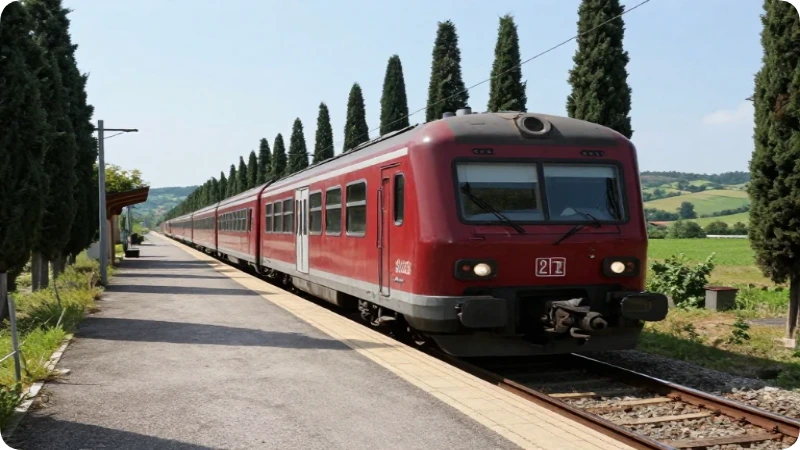
You do not need a car if you’re staying only in Florence, Siena, Pisa, or Lucca, since trains and buses connect these cities well. You do need a car to reach most countryside agriturismos, smaller hill towns, and scenic driving routes through Chianti and Val d’Orcia.
For travelers unsure about driving Italy’s narrow rural roads, a hybrid approach works well: use trains for the city portion of the trip, then rent a car only for the countryside leg.
Getting Around: Transport Options
| Method | Best For | Notes |
| Train | Florence, Siena, Pisa, Lucca | Frequent, affordable, no driving stress |
| Rental car | Chianti, Val d’Orcia, remote agriturismos | Required for most countryside stays |
| Organized day tours | Travelers without a car who still want countryside access | Convenient but less flexible on timing |
| Bus | Smaller towns and connections between cities | Slower but budget-friendly |
Verify current train and bus schedules directly through Trenitalia and Autolinee Toscane before your trip, since regional timetables shift seasonally.
Budget Breakdown by Area
- Florence: Highest lodging density and price range; budget hostels to luxury hotels both available.
- Siena: Generally slightly less expensive than central Florence for comparable quality.
- Chianti/Val d’Orcia agriturismi: Mid-range to upscale, often with meals included, which can offset dining costs elsewhere.
- San Gimignano: Higher prices in peak season due to its popularity as a day-trip destination.
Prices fluctuate by season, and always confirm current rates directly with accommodations or booking platforms before finalizing a budget.
Best Time to Visit Tuscany
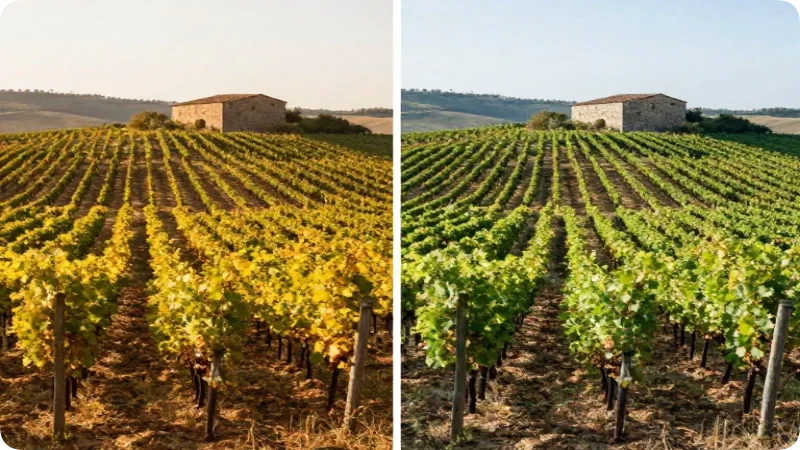
Late spring (April–June) and early fall (September–October) are the best times to visit Tuscany, offering warm days, manageable crowds, and the greenest countryside scenery. Peak summer (July–August) brings the highest temperatures and heaviest crowds, especially in Florence and San Gimignano.
| Season | Weather | Crowds | Pros | Cons |
| Spring (Apr–Jun) | Mild, occasional rain | Moderate | Green hills, wildflowers | Some rain days |
| Summer (Jul–Aug) | Hot, dry | Peak | Long daylight, festivals | Heat, crowds, higher prices |
| Fall (Sep–Oct) | Warm days, cool nights | Moderate | Harvest season, wine events | Shorter days |
| Winter (Nov–Mar) | Cold, some fog | Low | Few crowds, lower prices | Many rural stays close seasonally |
Common Mistakes When Choosing Where to Stay in Tuscany
- Booking a rural agriturismo without a car Many properties sit far from public transit; confirm transport before booking. Fix: book a car rental or confirm shuttle service in advance.
- Trying to cover the whole region from one base Tuscany is larger and hillier than it looks on a map. Fix: split longer trips across two bases.
- Underestimating Florence’s summer crowds Peak-season lines at the Uffizi and Accademia can eat hours of a day. Fix: book skip-the-line tickets in advance or visit in shoulder season.
Underrated Alternatives Worth Considering
- Lucca Walkable Renaissance walls and a quieter alternative to Pisa, often overlooked despite easy train access from Florence.
- Montepulciano Similar hill-town charm to Montalcino with fewer day-trippers.
- Maremma coast Combines beach time with countryside scenery, a less-visited pairing for travelers extending their trip.
Is Siena a Good Base for Tuscany?
Yes Siena is a strong base for travelers who want a smaller, walkable city with quick access to Chianti, Val d’Orcia, and San Gimignano, without needing to navigate Florence’s larger crowds. Its central location within the region makes many countryside day trips shorter than they would be from Florence.
Worth It, Overrated, and Underrated
Worth it: Splitting time between a city and the countryside is the single best way to experience both sides of Tuscany. Overrated: Trying to visit five hill towns in one day; the driving time undercuts the relaxed pace that makes them appealing. Underrated: Lucca and Montepulciano, both of which offer similar charm to more famous towns with noticeably fewer crowds.
FAQs
What is the best area to stay in Tuscany?
The best area depends on priorities: Florence for art and walkability, Siena for a smaller medieval city, and Chianti or Val d’Orcia for classic countryside scenery. Many travelers split their trip between a city and the countryside for the best of both.
Is it better to stay in Florence or Siena?
Florence offers more museums, restaurants, and transport options, making it better for first-timers. Siena offers a calmer, smaller-scale medieval experience closer to the countryside, appealing to travelers who prioritize atmosphere over sightseeing volume.
How far is Florence from Siena?
Florence and Siena are about 70 km (43 miles) apart, roughly a one-hour drive or a 75–90 minute train ride, with frequent daily train and bus connections.
Do you need a car in Tuscany?
You don’t need a car if staying only in cities like Florence, Siena, or Pisa, since trains connect them well. A car is necessary for most countryside agriturismos and scenic rural drives.
How many days do you need in Tuscany?
Most travelers need at least 5–7 days to comfortably see Florence and experience the countryside without rushing; 10+ days allows for a more relaxed pace and extra stops like the coast or Lucca.
What is the prettiest area in Tuscany?
Val d’Orcia is widely considered the prettiest area, known for its UNESCO-listed cypress-lined roads and rolling hills, with Chianti’s vineyard landscapes as a close second.
Can Tuscany be a day trip from Florence?
Yes, towns like Siena, San Gimignano, Pisa, and parts of Chianti are all reachable as day trips from Florence by train, bus, or organized tour, making Florence a practical single base for shorter visits.
Final Takeaways
Tuscany rewards travelers who match their base to their pace: Florence for culture and convenience, Siena for a quieter medieval alternative, and Chianti or Val d’Orcia for the countryside scenery that first drew most travelers to the region.
For trips of five days or more, splitting time between a city and the countryside consistently delivers the fullest picture of what Tuscany has to offer.
Whichever combination you choose, book countryside stays with enough lead time to secure a car rental, and always confirm current train schedules, opening hours, and entry requirements directly with official sources like Trenitalia, Autolinee Toscane, or your accommodation before departure; details like these can shift seasonally.
Pack for both cobblestone city walking and countryside dirt paths, and leave room in the itinerary for the kind of unplanned afternoon that ends up being the best part of the trip.

Stephen Fry brings an insatiable curiosity for history, language, and global heritage to the Travelmarse team. Having spent decades traveling the globe to study regional storytelling and ancient civilizations, he excels at uncovering the hidden narratives of modern destinations. Stephen anchors the cultural vertical on Travelmarse, where he writes deep-dive guides on architectural history, museum crawl strategies, and local customs. His vivid, engaging writing helps travelers look past the surface and truly understand the heritage of the places they visit.