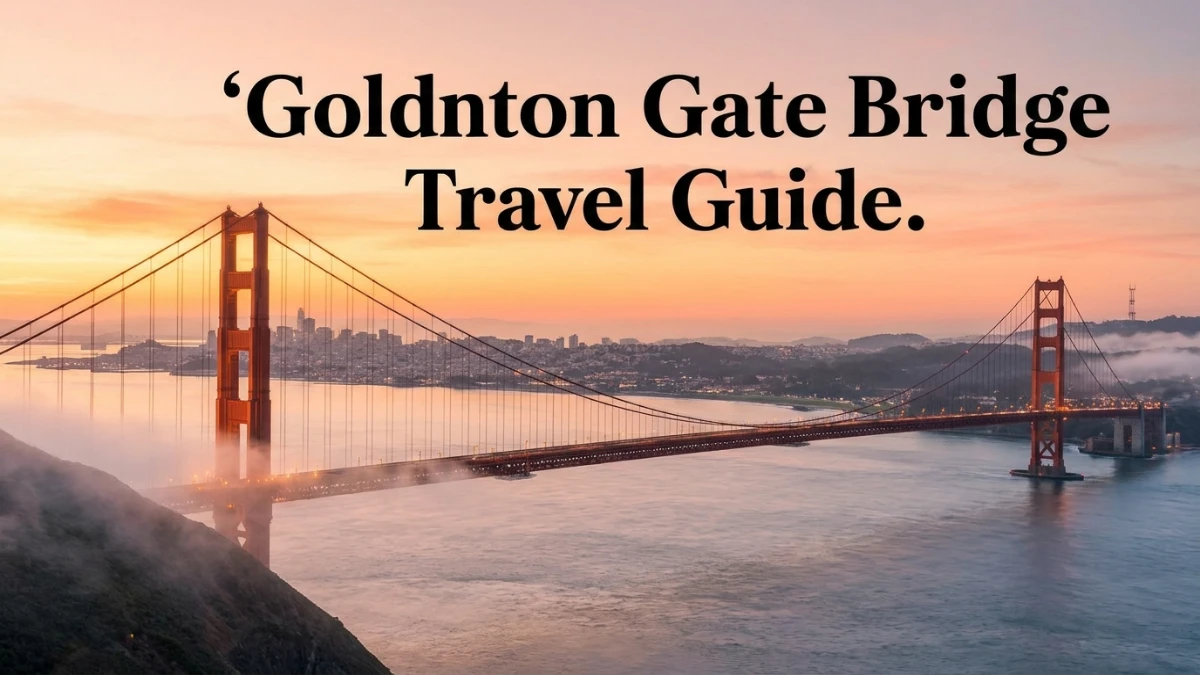
The best way to visit the Golden Gate Bridge is to take public transit or a rideshare to the Welcome Center in San Francisco, then walk the free 1.7-mile bridge sidewalk. Go in the morning for lighter crowds, wear layers for wind, and check pedestrian hours and parking rules before you leave.
You have seen it in movies, on postcards, and in thousands of photos. Then you arrive, and the fog rolls in, the parking lot is full, and the wind nearly steals your hat. Sound stressful? It does not have to be. Traveling to the
Golden Gate Bridge is easy once you know a few simple things. This guide gives you clear answers to the questions travelers ask most. You will learn how to get there, what it costs, when to walk, and where to find the best views.
We checked the latest tolls, hours, and parking rules from official sources. Prices and rules can change, so always confirm on the Golden Gate Bridge District website (goldengate.org) before your trip. Let’s start with the basics.
Feature Snippet:
The best way to visit the Golden Gate Bridge is to take public transportation or a rideshare to the Welcome Center, then walk the free 1.7-mile pedestrian sidewalk. Visit in the morning for smaller crowds, wear layers for strong winds, and check current pedestrian hours, parking rules, and tolls before you go. You can walk across the bridge for free, but vehicle tolls apply when driving southbound into San Francisco.
Golden Gate Bridge Facts
The Golden Gate Bridge is a red-orange suspension bridge that links San Francisco, California, with Marin County. It opened on May 27, 1937. Today, about 112,000 vehicles cross it each day, and millions of visitors come to see it.
| Quick Fact | Detail |
| Location | San Francisco Bay, California, USA |
| Opened | May 27, 1937 |
| Total length | About 1.7 miles (8,981 feet) |
| Main span | 4,200 feet |
| Tower height | 746 feet above the water |
| Color | International Orange |
| Walking | Free |
| Driving toll | Southbound only |
Golden Gate Bridge in Which Country?
The Golden Gate Bridge is in the United States of America. It sits on the West Coast, in the state of California. It crosses the Golden Gate Strait, a narrow channel where San Francisco Bay meets the Pacific Ocean.
Many visitors fly in from other countries just to see it. Because of this, it works as one of the best-known symbols of the USA.
In Which City Is the Golden Gate Bridge Located?
The Golden Gate Bridge is in San Francisco, California. The south end touches the city, near the Presidio Park. The north end reaches Marin County, close to the small town of Sausalito. U.S. Route 101 runs across it.
So you can start from either side. However, most first-time visitors begin in San Francisco because the Welcome Center and transit stops are there.
What City Is Closest to the Golden Gate Bridge?
San Francisco is the closest major city to the Golden Gate Bridge. On the north side, Sausalito is the nearest small town. Both are just minutes away by car, bus, or bike.
If you stay in San Francisco’s Marina District or near the Presidio, you can even walk or bike to the bridge. Sausalito also makes a lovely half-day trip after your crossing.
How Far Is Golden Gate Bridge?
The Golden Gate Bridge is about 6 miles from downtown San Francisco and roughly 20 miles from San Francisco International Airport (SFO). Drive time changes a lot with traffic, so allow extra time on weekends and holidays.
Note that “Golden Bridge” also names a different landmark in Vietnam, the hand-held Golden Bridge at Ba Na Hills near Da Nang. This guide covers the one in California.
Golden Gate Bridge Length
The bridge is about 1.7 miles (8,981 feet) long from end to end. The main span between the two towers is 4,200 feet. For nearly 30 years, it held the title of the longest suspension bridge main span in the world.
The two towers rise 746 feet above the water. Each main cable is about 36 inches thick. That is a lot of steel!
Golden Gate Bridge History
Builders began work on January 5, 1933, and the bridge opened on May 27, 1937. Engineers finished it on time and under its roughly $35 million budget, even during the Great Depression. Many people said a bridge here was impossible because of deep water, strong tides, and heavy fog.
Sadly, eleven workers died during construction. A safety net below the deck saved 19 men, who became known as the “Halfway to Hell Club.”
Who Built the Golden Gate Bridge?
Joseph Strauss served as chief engineer and led the project. However, other experts shaped the final design. Charles Ellis worked on the engineering math, Leon Moisseiff helped with the suspension design, and architect Irving Morrow gave the bridge its Art Deco style and its famous color.
Thousands of workers built it with their hands. Their teamwork turned a dream into a landmark.
Why Is It Called Golden Gate?
The name “Golden Gate” belongs to the strait, not to the bridge’s color. Explorer John C. Frémont named the channel in 1846. He compared it to the Golden Horn, a harbor in Istanbul, Turkey.
The bridge later took the name of the water below it. Its orange paint is a happy extra. The color also helps ships see it through fog.
Golden Gate Bridge Significance
The Golden Gate Bridge matters because it joined San Francisco to the northern Bay Area, helped the region grow, and became a symbol of American engineering. Before it opened, people crossed the strait by ferry.
Today, it also supports tourism, film, art, and local pride. Many people call it the face of San Francisco.
What Is Special About Golden Gate Bridge?
Three things make it special: its bold color, its graceful shape, and its setting. The International Orange paint stands out against blue water and gray fog. Its tall towers and long cables look both strong and light.
Best of all, the views are huge. You can see the city skyline, Alcatraz Island, the Marin Headlands, and the Pacific Ocean from one spot.
What Are 5 Facts About the Golden Gate Bridge?
Here are five quick facts you can share with your family:
- It opened on May 27, 1937.
- It is about 1.7 miles long.
- Its color is called International Orange, not gold.
- It was the world’s longest suspension main span until 1964.
- Walkers and bikers cross for free, while drivers pay a toll only when heading south.
What Happened at the Golden Gate Bridge in 1987?
On May 24, 1987, the bridge turned 50, and officials closed it to cars for a big walking celebration. Far more people showed up than expected. Estimates range from 250,000 to 300,000 people on the span.
The weight flattened the middle of the bridge’s usual arch. Engineers had planned for heavy loads, so the bridge stayed safe. Officials have not held a crowd walk like that since.
Who Owns the Golden Gate Bridge Today?
The Golden Gate Bridge, Highway and Transportation District owns and runs the bridge. It is a public agency, not a private company. The District collects tolls and uses them to pay for upkeep, painting, safety work, and bus and ferry service.
That is why the bridge’s tolls differ from the state-owned Bay Area bridges, which have their own toll schedule.
What Is the Cost of the Golden Gate Bridge?
There are two answers. Building the bridge cost about $35 million in the 1930s. For visitors, seeing the bridge costs nothing, but extras add up: parking, a toll if you drive south, tours, and food.
| Visitor Cost | Typical Price |
| Walking or biking across | Free |
| Welcome Center | Free to enter |
| Driving toll (FasTrak) | $10.25 |
| Southeast lot parking | Check posted rate |
| Boat tour | Varies by company |
Prices change often, so verify them on official sites.
How Much Does It Cost to Cross the Golden Gate Bridge in San Francisco?
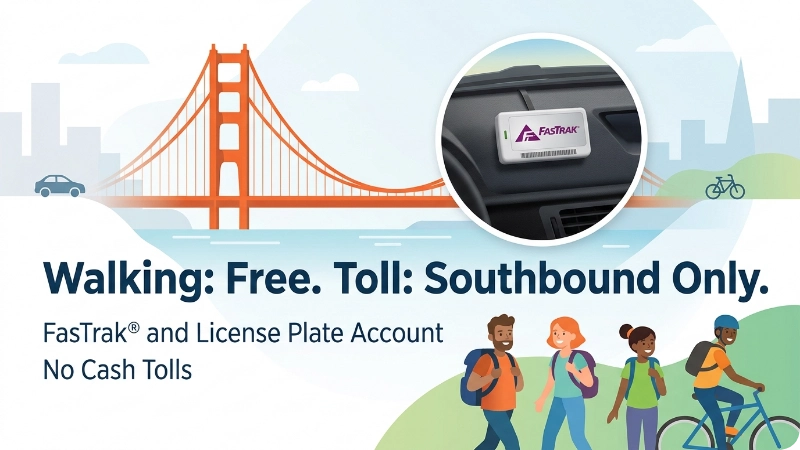
Since July 1, 2026, the two-axle car toll is $10.25 with FasTrak, $10.50 with a license plate account or one-time payment, and $11.25 by mailed invoice. Drivers pay only when heading south into San Francisco. Heading north is free.
The bridge is fully cashless, so no booth takes coins or bills. Rental car drivers should ask the rental company how it bills tolls, because some add service fees. More increases are planned for 2027 and 2028.
Is There a Ticket for Golden Gate Bridge?
No ticket is needed to see, visit, or walk the Golden Gate Bridge. The sidewalks, viewpoints, and Welcome Center are free. You only pay if you choose a paid extra, such as a guided tour, bike rental, or boat cruise.
Watch out for sellers who push “bridge tickets” near tourist spots. If a deal sounds odd, check the official website first.
How Much Is Entry to Golden Bridge?
Entry to the Golden Gate Bridge is free for people on foot or on bikes. Drivers pay the southbound toll only. If you mean the Golden Bridge in Vietnam, that site is inside the Ba Na Hills resort, which needs a paid ticket.
For the California bridge, save your money for views, snacks, and a good boat tour.
Is Walking on the Golden Gate Bridge Free?
Yes, walking on the Golden Gate Bridge is free. You do not need a pass, a ticket, or a reservation. Just show up during pedestrian hours, step onto the sidewalk, and enjoy.
You may still spend money on parking, a bus fare, or a rideshare to reach the start. Public transit and walking from nearby free spots can cut those costs.
Can You Still Walk Across the Golden Gate Bridge?
Yes, you can still walk across the Golden Gate Bridge. Walkers use the east sidewalk, which faces the city. Access can pause for maintenance, strong winds, or special events, so check the District’s alerts before you go.
People using wheelchairs and other mobility devices may use the sidewalk. Check current conditions first if access matters for your group.
Is the Golden Gate Bridge Walkable?
Yes, the bridge is very walkable. The path is wide, paved, and mostly flat, with railings and big views. However, it is also windy, noisy, and shaky when trucks pass.
Wear a jacket, hold your phone tightly, and keep hats and bags secure. Kids should stay close to a grown-up.
What Time Can You Walk Across the Golden Gate Bridge?
The east sidewalk opens at 5 a.m. every day. According to published schedules, from the first Sunday in November to the second Monday in March, it closes at 6:30 p.m. The rest of the year, it stays open until 9 p.m.
Because we are now on the winter schedule, plan to finish your walk before early evening. Always verify hours on goldengate.org.
How Long Does It Take to Walk the Entire Golden Gate Bridge?
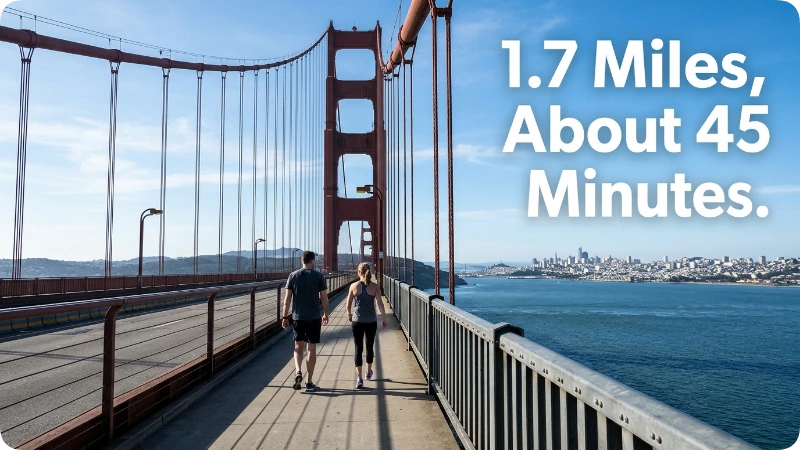
Walking one way takes about 30 to 45 minutes at a relaxed pace. The bridge is 1.7 miles long. If you stop for photos, reading signs, and wind breaks, plan on closer to an hour.
The walk from the Welcome Center to the start of the walkway adds about 5 to 10 minutes.
How Long Does It Take to Walk the Golden Gate Bridge There and Back?
A round trip is about 3.4 miles and usually takes 1.5 to 2 hours, including photo stops. Some travelers walk one way and then take a bus or rideshare back, which saves time and energy.
If your legs are tired, turn around at the first tower. The views are still great there.
How Do I Get on the Golden Gate Bridge?
On foot, start at the Welcome Center on the San Francisco end and follow signs to the east sidewalk. By car, take U.S. Route 101 or Highway 1 across the bridge. By bike, use the marked lanes and read the posted signs, because bike rules change by day and time.
On the north side, you can start from the Vista Point lot.
How Do I Get to Golden Bridge?
The easiest ways to reach the Golden Gate Bridge are Muni and Golden Gate Transit buses, a rideshare, a bike, a tour bus, or a short drive. From downtown San Francisco, public transit is simple and cheap. Check the 511 trip planner for current routes.
From SFO, you can ride BART downtown and switch to a bus. Alternatively, a rideshare takes you straight to the Welcome Center.
What Is the Best Way to Get to the Golden Gate Bridge?
Public transit or a rideshare is the best choice for most visitors. Parking is very limited, and the District often closes the Welcome Center and Vista Point lots on busy weekends and holidays, typically from 11 a.m. to 5 p.m.
If you must drive, arrive early and try the Presidio overflow lots. Some travelers also park near the Palace of Fine Arts and walk. Verify parking rules and rates the same day.
Golden Gate Bridge Welcome Center
The Welcome Center sits at the south end of the bridge. It is open daily from 9 a.m. to 6 p.m., except Thanksgiving and Christmas. Inside, you will find exhibits, a piece of original cable, a gift shop, and a café.
It is a good first stop. Restrooms are here and at the north Vista Point. Because hours can change, confirm before you go.
What Is the Best Way to Visit the Golden Gate Bridge?
The best plan has three steps: ride transit to the Welcome Center, walk the bridge toward Marin, and return by bus or rideshare. Start early for fewer crowds and clearer light.
Need a place to stay? The Marina District and Presidio are close, Fisherman’s Wharf is lively, and Sausalito feels calm. Book refundable rooms and tours when you can, and consider travel insurance for non-refundable flights or boat cruises.
Is It Worth Visiting the Golden Gate Bridge?
Yes, it is worth visiting, mainly because it is free and the views are famous for good reason. Most travelers need one to three hours. Fog can hide the bridge, so build some flexibility into your trip.
Worth it: the walk, sunrise or sunset photos, and Crissy Field. Overrated: crowded parking lots in peak hours. Underrated: Battery Spencer and Fort Point.
What Is the Best Time to See the Golden Gate Bridge?
September and October usually bring the clearest, warmest days. Summer often brings thick fog, which locals call Karl. Spring and early winter can be nice, though rain and wind come and go.
| Season | Weather | Pros | Cons |
| Spring | Mild, breezy | Fewer crowds | Some rain |
| Summer | Cool, foggy | Long days | Fog hides views |
| Fall | Warmest, clear | Best photos | Busy weekends |
| Winter | Cool, wet | Low crowds | Short walk hours |
What Is the Best Time of Day to See the Golden Gate Bridge?
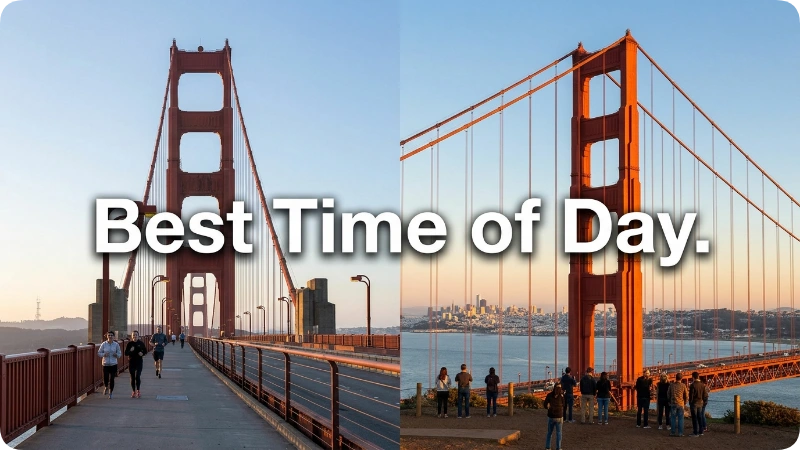
Early morning is best for most visitors. Crowds are small, the air is calm, and fog may lift by mid-morning. Sunset is the next best choice because the light glows warm on the towers.
Midday is often the busiest and windiest. Check the weather and webcams before you leave your hotel.
What Is the Best Viewpoint to See the Golden Gate Bridge?
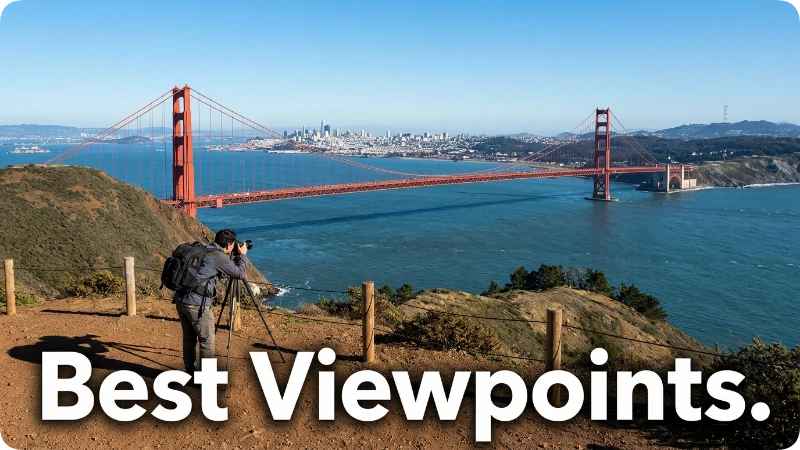
Battery Spencer, on the Marin side, is the most famous viewpoint. It shows the bridge with the city behind it. Other top spots include Fort Point, Crissy Field, Baker Beach, and the Presidio’s overlooks.
For a quiet view, try Lands End. For a classic walk-and-view, start at Crissy Field and follow the waterfront trail toward the bridge.
Golden Gate Bridge Photos
The best photos come from Battery Spencer, Fort Point, Baker Beach, and Crissy Field. Arrive at sunrise or sunset, bring a lens cloth for fog mist, and use a tripod only where allowed.
On the bridge itself, shoot between the cables for fun shapes. Keep your phone on a strap because of the wind. Never lean over the rail.
Golden Gate Bridge Boat Tour
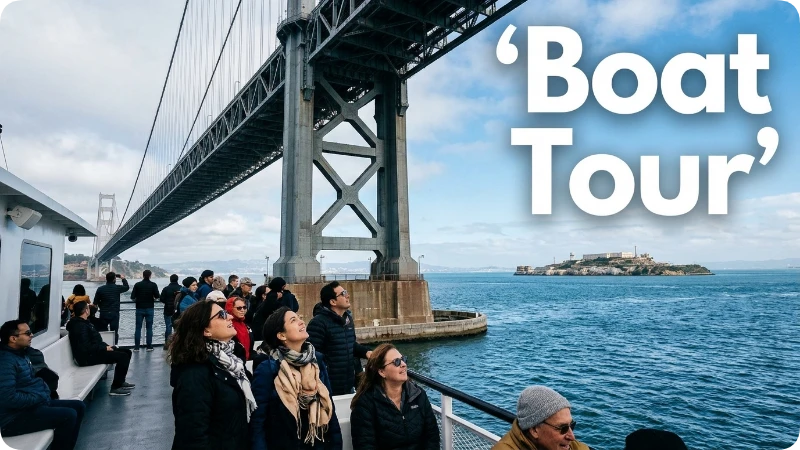
A Golden Gate Bridge boat tour is a bay cruise that goes under or near the bridge. Many cruises leave from Fisherman’s Wharf and last about an hour. You see the bridge from below and spot Alcatraz and the skyline.
Choose a morning time for calmer water. Bring layers, since it is chilly on deck. Compare tour companies, check cancellation rules, and verify prices directly with the operator.
What Is the Most Beautiful Bridge in the World?
There is no single answer, because beauty is personal. However, travelers often list the Golden Gate Bridge, the Sydney Harbour Bridge, Tower Bridge in London, the Brooklyn Bridge, and Japan’s Akashi Kaikyo Bridge.
Many people pick the Golden Gate Bridge because of its color and dramatic setting between hills, ocean, and city.
Common Mistakes to Avoid
Three mistakes cause most problems. Fixing them saves time and stress.
- Mistake 1: Driving without a parking plan. Fix: take transit, or arrive early and use overflow lots.
- Mistake 2: Wearing a T-shirt. Fix: pack layers, since wind and fog make it cold, even in summer.
- Mistake 3: Expecting a clear view all day. Fix: check the forecast, and keep a backup plan like Fort Point or a museum.
Underrated Alternatives
If crowds are too big, try these. Each offers great views with fewer people.
- Battery Spencer: a short climb, a classic skyline photo.
- Lands End Trail: quiet coastal paths with bridge peeks.
- Sausalito waterfront: a calm town with bay views and a ferry back to the city.
FAQs
Is the Golden Gate Bridge free to visit?
Yes, visiting the Golden Gate Bridge is free for walkers and bikers. Drivers pay a toll only when heading south into San Francisco. Parking, tours, and cruises cost extra. Check goldengate.org for current rates before your trip.
Can you drive across the Golden Gate Bridge as a tourist?
Yes, tourists can drive across the bridge on U.S. Route 101. The toll is cashless and southbound only. Rental car drivers should ask their company how tolls are billed, because fees may differ from the posted rate.
Is the Golden Gate Bridge dangerous to walk on?
Walking on the bridge is generally safe in normal conditions. Wind, fog, and cold are the main concerns. Stay on the east sidewalk, keep kids close, and follow posted signs. Officials may close access during bad weather.
How many days do you need in San Francisco to see the bridge?
You only need a few hours for the bridge itself. Add Crissy Field, Fort Point, and the Presidio for a half day. Most visitors spend two to three days in San Francisco to see the bridge plus other top sights.
Is there a good rainy-day plan near the Golden Gate Bridge?
Yes. Visit the Welcome Center first, then go to the nearby Presidio museums and cafés. You can also try the Palace of Fine Arts or the Exploratorium. If the sky clears, walk to Fort Point for views.
Conclusion
A trip to the Golden Gate Bridge does not have to be complicated or expensive. The bridge is free to walk, and public transportation, rideshares, and nearby viewpoints make it easy to reach without relying on a car. For the best experience, arrive in the morning, dress for changing weather, and allow enough time to walk the pedestrian sidewalk and enjoy the views.
Before you leave, check the latest pedestrian hours, parking rules, toll information, and transportation options because conditions can change. With a little planning, you can avoid crowded parking areas, strong wind surprises, and unnecessary costs.
Whether you are visiting San Francisco for the first time or returning for another photo, the Golden Gate Bridge is worth making time for. Plan, bring a jacket, and enjoy one of California’s most memorable landmarks from the bridge itself and the viewpoints around it.

Ben Fogle believes that true adventure begins where the pavement ends. After spending years documenting extreme environments, rowing across oceans, and trekking through frozen landscapes, he mastered the art of wilderness travel. For Travelmarse, Ben constructs highly detailed guides on deep-nature packing lists, wildlife safety, and sustainable eco-tourism. He breaks down intimidating, rugged expeditions into clear, step-by-step roadmaps so everyday travelers can safely connect with the natural world.










1 thought on “Golden Gate Bridge Travel Guide: Tolls, Walking, Views & Tours”