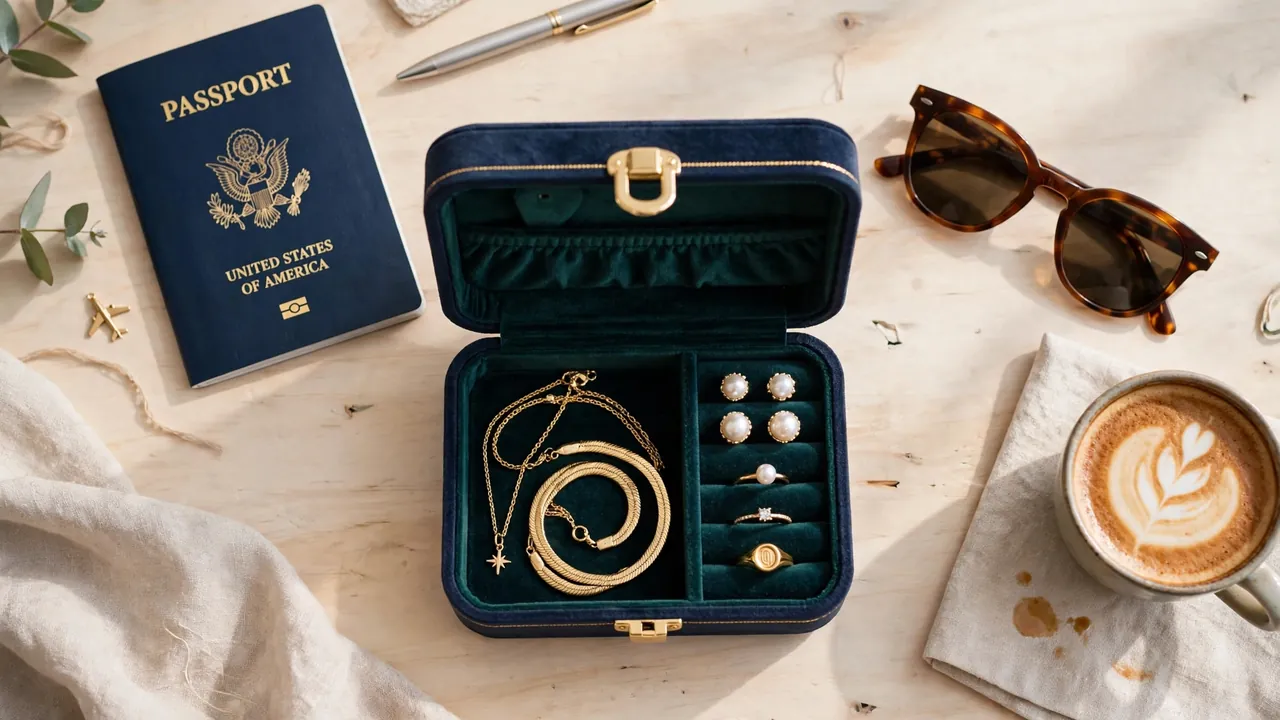
You unzip your bag at the hotel and find a tangled knot of chains. One earring is missing. A ring box cracked in the dark. Sound familiar?
Loose jewelry and travel do not mix. Bags get squished, tossed, and searched. Tiny pieces slip away fast.
A good travel jewelry case fixes most of these problems. It keeps each piece in its own spot, protects soft metals and stones, and fits in a purse or carry-on.
Featured Snippet:
A travel jewelry case is a small, padded organizer that keeps rings, necklaces, bracelets, and earrings safe on trips. The best ones have soft linings, secure closures, and separate slots. Choose a compact case, pack it in your carry-on, and keep it close at all times.
What Is a Travel Jewelry Case?
A travel jewelry case is a small, portable container made to hold jewelry safely on the go. Most have padded walls, soft lining, and slots for rings, hooks for necklaces, and holes for earrings. Cases come as zip pouches, hard boxes, rolls, or folding organizers.
Think of it as a mini jewelry box that fits in your hand. Unlike a bulky box at home, a travel version is light, slim, and built to survive bumps.
Most cases are made from leather, faux leather, velvet, or hard plastic. Each style offers a different mix of protection and space.
Why You Need a Travel Jewelry Case
A travel jewelry case protects your pieces from tangling, scratching, and loss. It also keeps everything in one place, so you can find what you need fast. For valuable or sentimental items, it adds a layer of safety that a loose pouch cannot match.
Here is what a case does for you:
- Stops tangles. Chains stay separate and smooth.
- Prevents scratches. Soft lining keeps gems and metal from rubbing together.
- Reduces loss. Small items like stud earrings stay in marked slots.
- Saves time. Packing and unpacking take minutes, not half an hour.
Experienced travelers also like the peace of mind. You know exactly what you brought and where it is.
Types of Travel Jewelry Cases
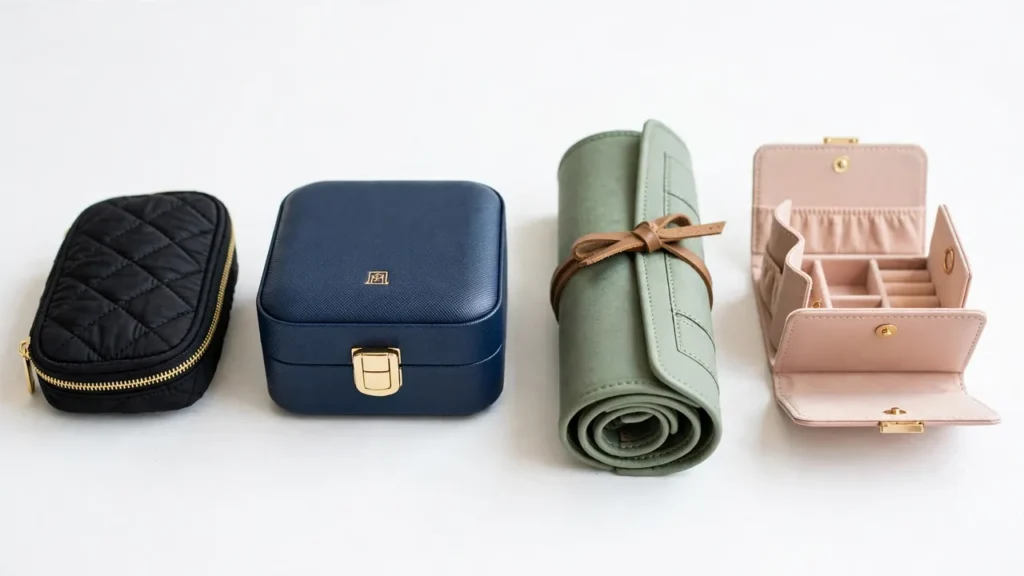
The main types are zip pouches, hard-shell boxes, roll-up organizers, folding cases, and multi-layer travel boxes. Each suits a different trip. Weekend travelers often pick a small pouch, while longer trips call for a bigger case with more compartments.
Zip pouches are soft and flat. They slide into any bag.
Hard-shell boxes protect against crushing. They work well in checked luggage or a full backpack.
Roll-up organizers have pockets for rings and a long panel for necklaces. They roll tight and save space.
Folding cases open like a book. Many include a mirror and a snap closure.
Multi-layer travel boxes hold more pieces. They suit longer trips, but they take up more room.
Travel Jewelry Case Comparison Table
A quick table helps you match a case to your trip. Soft pouches win on size, while hard boxes win on protection. Rolls and folding cases sit in the middle. Check the table below, then think about how many pieces you plan to bring.
| Case Type | Best For | Protection | Size |
|---|---|---|---|
| Zip pouch | Weekend trips | Medium | Very small |
| Hard-shell box | Checked bags, rough trips | High | Medium |
| Roll-up organizer | Long trips, necklaces | Medium | Small when rolled |
| Folding case | Business trips | Medium–High | Small–Medium |
| Multi-layer box | Weddings, long stays | High | Large |
How to Choose the Best Travel Jewelry Case
Pick a case based on how much jewelry you bring, how well it protects, and how easily it fits your bag. Look for a soft lining, a secure closure, and separate slots. Skip anything bulky if you only need a few pieces.
Use this checklist before you buy:
- Size: Does it fit your carry-on or purse?
- Compartments: Are there ring slots, earring holes, and necklace hooks?
- Closure: Zippers and snaps hold better than loose flaps.
- Lining: Velvet or microfiber prevents scratches.
- Weight: A light case saves room for other gear.
- Anti-tarnish features: Some cases use treated cloth to slow tarnish on silver.
Count your pieces first. Then add a little space for any souvenirs you pick up.
Best Materials for a Travel Jewelry Case
Leather and faux leather look sharp and wear well. Velvet and microfiber protect delicate pieces best on the inside. Hard plastic or metal shells add crush protection. Many top cases combine a tough outer shell with a soft lining.
Leather and faux leather resist wear and wipe clean easily. They feel nice, but real leather costs more.
Fabric (nylon or canvas) is light and flexible. It suits budget-minded travelers.
Hard shell gives the best protection against pressure.
Velvet lining is gentle on gold, pearls, and gemstones.
One honest drawback: soft cases can crush under heavy bags. Pack them on top, not at the bottom.
How to Pack Jewelry in a Travel Case
Pack jewelry by type. Fasten necklaces, close earring backs, and place rings in slots. Use small pouches inside the case for extra items. Keep heavy pieces apart from delicate ones so nothing scratches or bends.
Follow these steps:
- Clean each piece. Wipe off lotion and oils.
- Fasten chains. Close each clasp so chains hang straight.
- Thread necklaces through a straw for extra tangle control (a simple trick travelers love).
- Pair earrings. Slip them into one slot or a mini bag.
- Wrap pearls separately. Soft cloth protects them from harder gems.
- Take a photo. A quick picture of your case helps with insurance and with finding lost items.
Also, pack fewer pieces than you think you need. Pick items that go with many outfits.
TSA Rules for Jewelry in Carry-On and Checked Bags
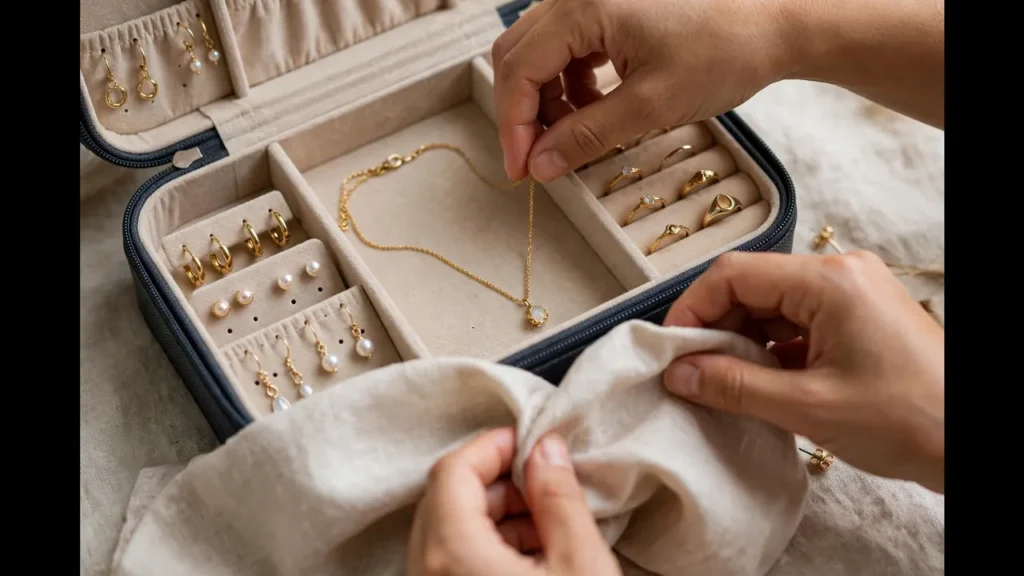
The TSA allows jewelry in both carry-on and checked luggage. However, the agency often advises travelers to keep valuables with them. Officers may ask you to remove some items at screening, so keep your case easy to reach.
Jewelry does not fall under the 3-1-1 liquids rule. Still, cleaning solutions do. Pack liquid cleaners in travel-size containers or leave them home.
Rules and screening steps can change. Check the TSA website (tsa.gov) before you fly, and read your airline’s baggage policy too.
Carry-On vs. Checked Bag: Where Should Jewelry Go?
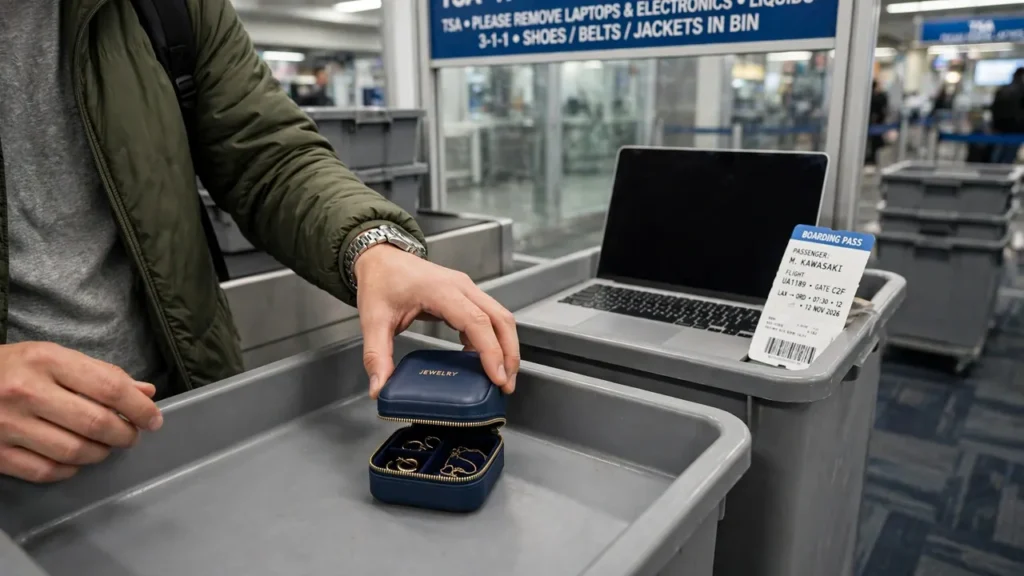
Carry-on is the safer place for jewelry. You keep the case in sight, and you avoid lost or delayed bags. Checked bags get handled many times and sometimes go missing. Airlines may also limit what they cover for valuables.
Here is a simple rule: if you would cry about losing it, carry it on.
Put your case in a personal item under the seat. That spot is easier to reach than an overhead bin. For costume jewelry or low-value pieces, a checked bag works, as long as you use a hard case.
Airport Security Tips for Jewelry
Wear less jewelry through the metal detector, and keep your case on top of your bag. Quiet pieces such as plain studs usually cause fewer alerts. Large bracelets, heavy belts, and layered chains can slow you down.
Try these tips:
- Skip big metal pieces on travel days.
- Place small items in your case before you reach the line.
- Keep a bin tray in mind. Drop watches and bracelets in the case, then place the case in your bag.
- Do a quick check after screening. Make sure you grabbed everything.
Many travelers lose items in the rush after security. Slow down for ten seconds. It pays off.
Jewelry Safety Tips for Hotels, Road Trips, and Cruises
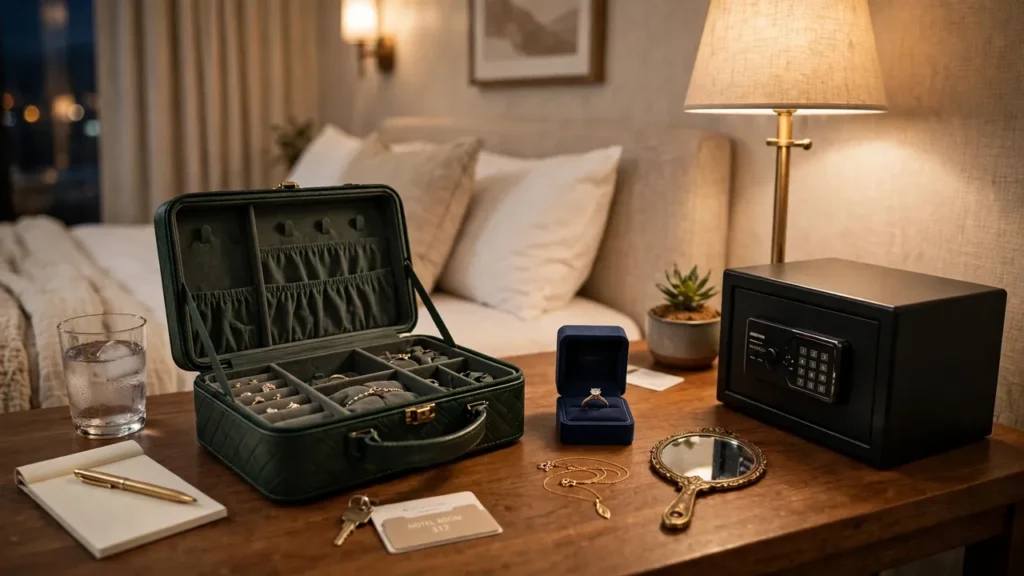
Never leave jewelry out in a hotel room, car, or cabin. Use the in-room safe if one exists. Otherwise, keep your case in your bag and out of sight. A plain-looking case also draws less attention than a fancy box.
Hotels: Lock your case in the room safe. Also, check the safe before you leave.
Road trips: Never leave valuables in a parked car, even for a short stop. Bring the case with you.
Cruises: Cabin safes are common, but sizes vary. A small case fits best.
Beaches and pools: Leave nice pieces behind. Sand and water can ruin both jewelry and cases.
Travel Insurance and Jewelry Coverage
Many travel insurance plans limit coverage for jewelry. Some exclude it unless you bought a rider or special add-on. Homeowners and renters policies may cover lost jewelry, but caps often apply. Read your policy carefully before you go.
Ask your provider three things:
- Does my policy cover jewelry away from home?
- What is the dollar limit per item?
- Do I need receipts or appraisals?
For high-value items, a separate jewelry policy may make sense. Always confirm details directly with your insurer, since terms change.
What to Pack by Trip Type
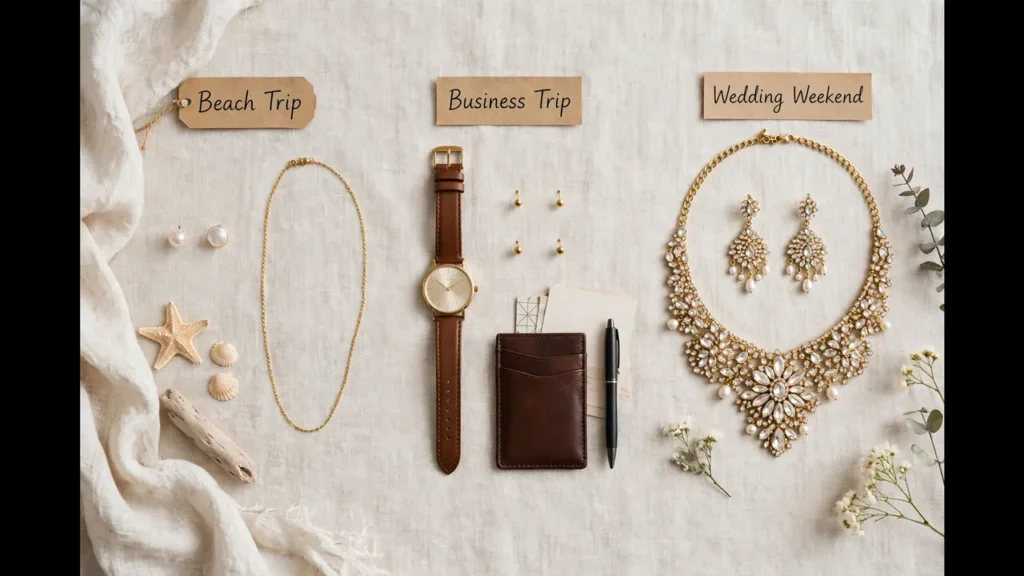
Match your jewelry to the trip. A beach trip needs less than a wedding weekend. Pack fewer, simpler pieces for outdoor adventures, and bring a larger case for formal events.
| Trip Type | What to Bring | Best Case |
|---|---|---|
| Beach vacation | Light studs, simple chain | Zip pouch |
| Business trip | Watch, small studs, one necklace | Folding case |
| Wedding weekend | Statement set, backup earrings | Multi-layer box |
| Hiking or camping | Almost none | Small pouch, or leave home |
| Cruise | Day and evening sets | Roll-up organizer |
Common Travel Jewelry Mistakes and How to Fix Them
The biggest mistakes are packing too much, using a loose bag, and checking valuables. Each one raises the chance of damage or loss. Luckily, the fixes are easy and cheap.
- Mistake: Packing too many pieces. Fix: Choose three to five items that mix and match.
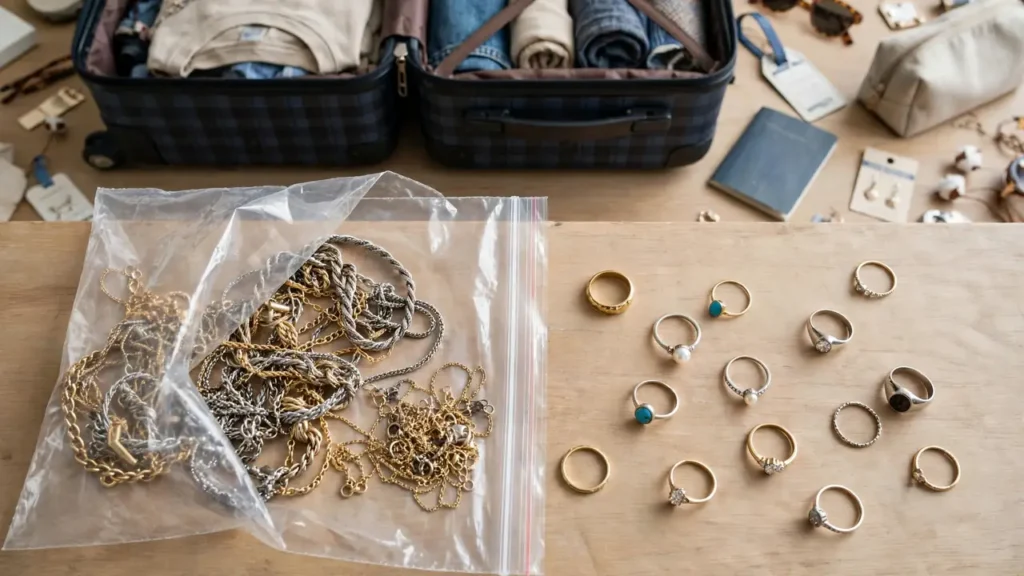
- Mistake: Tossing jewelry into a pocket or cosmetic bag. Fix: Use a case with slots.
- Mistake: Putting valuables in checked luggage. Fix: Carry them on, and keep them in your personal item.
Underrated Alternatives to a Travel Jewelry Case
If you do not want to buy a new case, a few household items work. They are not perfect, but they help in a pinch. Compare each one to a real case before you rely on it.
- Pill organizer. The small compartments suit earrings and rings.
- Contact lens case. It protects a single pair of earrings.
- Soft sunglass pouch. It holds a few chains in a pinch.
Still, a proper travel jewelry case does a better job on long trips. It offers padding, structure, and smarter storage.
Is a Travel Jewelry Case Worth It?
Yes, for most travelers. A case costs little compared with the value of what it protects. It saves time, reduces stress, and prevents damage. If you only bring one or two pieces, a simple pouch may be enough.
Honest drawbacks: Cases add a little weight. Cheap ones may have weak zippers. Also, no case stops theft by itself, so smart habits still matter.
Overrated: Oversized boxes with mirrors and many drawers.
Underrated: Slim roll-ups that hold more than they look like they can.
Budget and Booking Considerations
Travel jewelry cases come in many price ranges. Budget options work for short trips, while higher-quality ones last for years. Prices change often, so check current listings from trusted retailers before you buy.
To save money:
- Compare a few retailers.
- Read reviews that mention zippers and lining.
- Check return policies.
- Watch for seasonal sales before big travel periods.
If you book hotels or cruises, ask about in-room safes and their size. Pick a case that fits.
How to Clean and Care for Your Case
Wipe the outside with a soft damp cloth and let it dry fully. Brush the lining gently to remove dust. Store the case in a cool, dry place. Moisture and heat cause tarnish and mold, which harm both case and jewelry.
Do not use harsh chemicals on velvet or leather. Replace the case when the lining gets worn or the closure fails. A tired case no longer protects well.
FAQs
What is the best travel jewelry case for flying?
The best case for flying is small, padded, and easy to open. A zip-up folding case or roll-up organizer fits well in a personal item. Pick one with secure closures and separate slots so pieces stay safe during turbulence and security checks.
Can you bring a jewelry case on a plane?
Yes, you can bring a jewelry case on a plane. The TSA allows jewelry in carry-on and checked bags. Officers may open the case during screening. Rules can change, so check tsa.gov and your airline’s baggage page before you fly.
Should I put jewelry in a carry-on or checked bag?
Put jewelry in your carry-on. Keeping it with you lowers the risk of loss, theft, and damage. Checked bags get handled often and can go missing. If an item has high value or deep meaning, never check it.
How do I stop necklaces from tangling when I travel?
Fasten each clasp and store necklaces separately. Hang them on hooks, wrap them around a roll, or thread them through a drinking straw. Use one slot per chain. These simple steps keep delicate chains smooth and ready to wear.
How many pieces of jewelry should I pack?
Pack three to five versatile pieces for most trips. Choose items that match many outfits, such as studs, one chain, and a favorite ring. Fewer pieces mean less risk of loss and faster packing. Longer or formal trips may need a few more.
Is it safe to leave jewelry in a hotel safe?
Hotel safes add a layer of protection, but they are not perfect. Use the safe, and keep your case inside it. Check the safe before you check out. For very valuable items, keep them with you or leave them at home.
Does travel insurance cover lost jewelry?
Sometimes, but limits often apply. Many plans cap payouts or exclude jewelry unless you add extra coverage. Read your policy, ask about per-item limits, and keep receipts or photos. Confirm details with your insurer before you leave.
How do I clean a travel jewelry case?
Wipe the outside with a soft, damp cloth. Brush the lining lightly to remove dust. Let the case air-dry fully before closing it. Avoid strong cleaners, especially on velvet and leather, because they can damage the material.
What size travel jewelry case do I need?
Choose a size based on the number of pieces you pack. A palm-size pouch fits a few rings and earrings. A medium roll or folding case suits necklaces and bracelets too. Bigger boxes suit long trips or formal events.
Can I use a pill box as a jewelry case?
Yes, a pill box works in a pinch. Its small compartments hold rings and earrings well. However, it offers little padding and no space for long necklaces. For longer trips or valuable items, a real travel jewelry case protects better.
Are hard or soft travel jewelry cases better?
It depends on your trip. Hard cases protect better against crushing, which helps in busy bags. Soft cases are lighter and fit tight spaces. Many travelers choose a soft case for carry-ons and a hard case for rough trips.
Do jewelry cases set off airport metal detectors?
The case itself rarely does, but metal zippers or clasps can. The jewelry inside may also show up on scans. Place the case in your bag, wear fewer metal items through the detector, and follow officer instructions.
Conclusion
A travel jewelry case is a small tool with a big payoff. Here are the three key takeaways:
- Pick the right type. Match the case to your trip length and the number of pieces.
- Keep it close. Carry jewelry on, and use a hotel safe when possible.
- Check the details. Review TSA rules, airline policies, and your insurance before you go.
With the right case, you spend less time fixing tangles and more time enjoying the trip. Browse a few options, compare features, and pick one you trust. Your next adventure deserves jewelry that arrives in perfect shape.

Stephen Fry brings an insatiable curiosity for history, language, and global heritage to the Travelmarse team. Having spent decades traveling the globe to study regional storytelling and ancient civilizations, he excels at uncovering the hidden narratives of modern destinations. Stephen anchors the cultural vertical on Travelmarse, where he writes deep-dive guides on architectural history, museum crawl strategies, and local customs. His vivid, engaging writing helps travelers look past the surface and truly understand the heritage of the places they visit.







1 thought on “Travel Jewelry Case: Pack and Protect Jewelry on the Go”