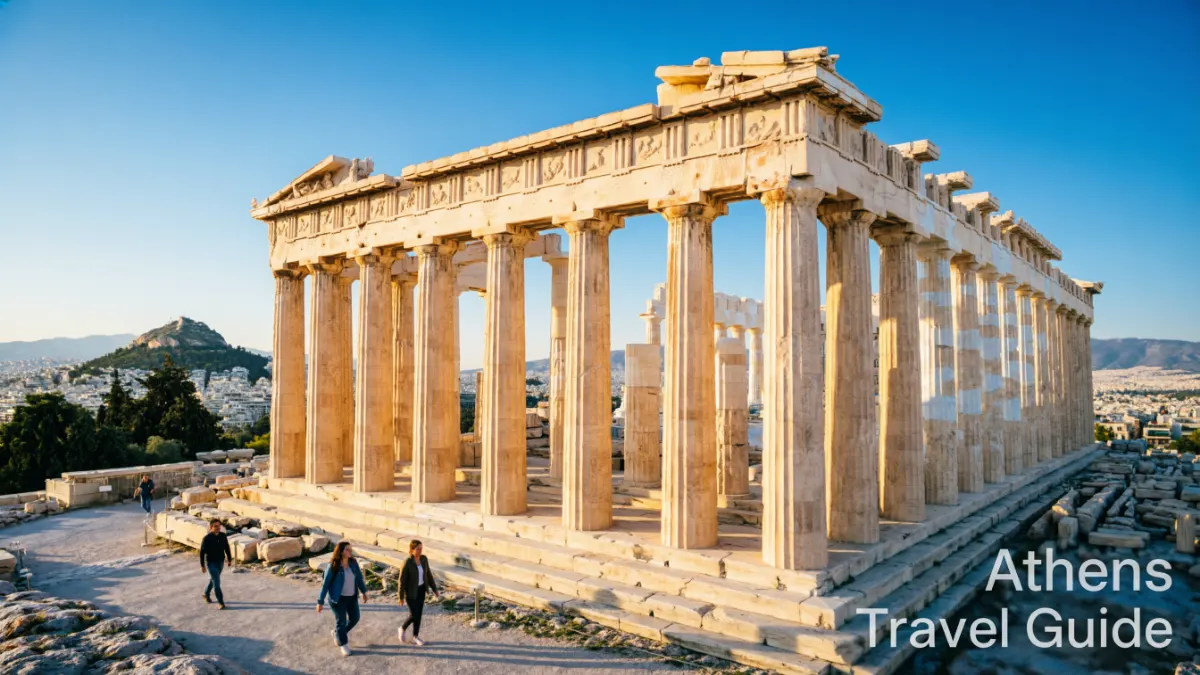
By the Travel Desk | Researched from official tourism and government sources. Prices and rules change, so verify before you book.
You have seen the photos. The Parthenon glows at sunset, and the streets look full of cafés. Then the planning starts, and it gets messy. Which month is best? Is it safe? Do you need a visa? Are packages worth it?
This guide for Athens travel answers those questions in plain words. It pulls together official sources, practical tips, and honest drawbacks. You will learn where to stay, how to get around, and what to skip. Each section stands alone, so jump to what you need.
Athens is old, loud, and full of life. It is also very doable for first-time visitors from the USA. Let’s make your trip simple.
Athens travel in short:
Plan 3 to 4 days, visit between April and June or September and October, and stay in Plaka, Koukaki, or Syntagma. Americans can enter Greece without a visa for up to 90 days. Book Acropolis tickets ahead, use the metro, and always verify prices and entry rules officially.
Athens Travel Packages: Are They Worth It?
Athens travel packages bundle flights, hotels, and sometimes tours into one price. They can save time and sometimes money, especially for first-time visitors. However, building your own trip often gives more freedom. Compare the package total against booking each part separately before you decide.
Packages work best when you want less planning. They can also help if you fly from a smaller US airport. Check what is included, such as airport transfers, breakfast, and tour tickets.
Watch for hidden costs like resort fees, city tax, and cancellation rules. Also ask about travel insurance. Greece charges a per-night climate resilience fee at hotels, and the amount depends on the season and hotel type, so verify it.
Athens Travel Itinerary: A Simple 3-Day Plan

A strong Athens itinerary groups sights by area. Spend Day 1 on the Acropolis and nearby museums, Day 2 on the Agora, markets, and food, and Day 3 on a day trip or neighborhoods. This keeps walking short and your days relaxed.
Day 1: Explore the Ancient Core
- Visit the Acropolis early, right when it opens.
- Next, see the Acropolis Museum.
- Then walk Plaka and Anafiotika.
- Watch the sunset from Areopagus Hill or Philopappos Hill.
Day 2: Discover the Agora, Markets, and Local Food
- Explore the Ancient Agora and the Temple of Hephaestus.
- Browse Monastiraki and the Central Market.
- Take a food tour or try a taverna in Psyrri.
Day 3: Choose Your Own Adventure
- Option A: Cape Sounion and the Temple of Poseidon.
- Option B: The National Archaeological Museum and Kolonaki.
- Option C: A day trip to Delphi or a nearby island.
If you have four days, add Lycabettus Hill and the Panathenaic Stadium.
Athens Travel Agency: Should You Use One?
An Athens travel agency can help if you want guided tours, group transfers, or a custom trip. It is optional, since Athens is easy to plan alone. Choose a licensed agency with clear reviews, written terms, and a clear refund policy.
In Greece, travel agencies need an operating license from the Ministry of Tourism. Ask to see it. You can also confirm details through the Greek National Tourism Organization at visitgreece.gr.
Pay by credit card for better dispute rights. Avoid anyone who demands full payment by wire transfer. Meanwhile, compare quotes from at least two agencies.
Athens Travel Guide PDF: Where to Find a Free One
The best free Athens travel guide PDF comes from official tourism sources. The Greek National Tourism Organization (visitgreece.gr) and the city’s official visitor site offer maps and brochures. Download them before your flight so you can read offline.
You can also save museum maps and metro maps as PDFs. Store them in your phone’s files app. That helps when Wi-Fi is weak.
Be careful with random PDF sites. Old guides may list outdated hours and prices. Check the date on every file you download.
Athens Travel Pass: Which Ticket Should You Buy?
The Athens transport system offers single-trip tickets (usually valid for 90 minutes), 24-hour passes, 5-day passes, and a 3-day tourist ticket that includes airport rides. Choose based on how many rides you expect. Most tourists do fine with a 24-hour pass or a few single rides.
Many central sights sit within walking distance, so you may not need much. A 90-minute ticket covers the metro, buses, trams, and trolleys during its validity. Contactless card payment is also being rolled out across the network.
Always validate paper tickets before you ride. Inspectors do check, and fines can be steep. Prices change, so check the Athens Urban Transport Organisation (OASA) or the Athens transit site.
Athens Travel Blog: How to Pick Trustworthy Advice
A good Athens travel blog shows real dates, clear sources, and honest drawbacks. Pick posts updated within the past year. Avoid posts that only praise everything or hide prices. Cross-check big facts, like opening hours, with official sites.
Blogs are great for restaurant ideas and neighborhood feel. They are weaker for rules, visas, and ticket prices. Use official sources for those.
Look for writers who mention mistakes, crowds, and heat. That honesty is a good sign.
Athens Travel Guides: Best Types for Different Trips
The best Athens travel guides match your style. Print books suit planners who like maps. Apps suit people who travel light. Official tourism sites give the most reliable rules and hours. Many travelers use all three.
- Printed books: Good for background, history, and walking routes.
- Mobile apps: Helpful for offline maps and metro times.
- Official sites: Best for tickets, museum hours, and safety updates.
- Local guides: Great for context at the Acropolis and Agora.
Therefore, mix them. Read a book at home, then rely on your phone on the ground.
Top 10 Places to Visit in Athens

The top 10 places to visit in Athens are the Acropolis, Parthenon, Acropolis Museum, Ancient Agora, Plaka, Monastiraki, Temple of Olympian Zeus, Panathenaic Stadium, National Archaeological Museum, and Mount Lycabettus. Together, they cover history, views, food, and local life.
- Acropolis and Parthenon: The headline sight. Go early or late.
- Acropolis Museum: Cool, modern, and great with kids.
- Ancient Agora: Walk where Socrates talked.
- Plaka: Pretty lanes, shops, and cafés.
- Monastiraki: Flea market, street food, and views.
- Temple of Olympian Zeus: Huge columns, fewer crowds.
- Panathenaic Stadium: The marble stadium of the first modern Olympics in 1896.
- National Archaeological Museum: One of the world’s top ancient art collections.
- Mount Lycabettus: The best city skyline at sunset.
- Syntagma Square: Watch the changing of the guard at the Parliament.
Best photo spots: Areopagus Hill, Philopappos Hill, Lycabettus, and the Anafiotika lanes.
What Is the Best Month to Go to Athens?

The best months to visit Athens are April, May, June, September, and October. Weather is warm but not extreme, and crowds are smaller than in July and August. Spring offers green hills. Autumn offers warm evenings and sea-warm swimming nearby.
Summer brings heat waves, with temperatures often above 95°F. Winter is mild but wetter, and some sights close earlier.
| Season | Weather | Crowds | Verdict |
| Spring (Apr–Jun) | Warm, sunny | Medium to high | Best overall |
| Summer (Jul–Aug) | Very hot | High | Go early or late |
| Fall (Sep–Oct) | Warm, pleasant | Medium | Excellent |
| Winter (Nov–Mar) | Cool, rainy | Low | Cheapest |
Flag: Check forecasts and heat alerts from the Hellenic National Meteorological Service before you go.
Is It Safe to Travel to Athens Right Now?
Athens is generally safe for tourists, and violent crime against visitors is uncommon. Pickpocketing is the main risk. Strikes and protests can also disrupt transport. Before you go, check the current U.S. State Department advisory at travel.state.gov, since conditions can change.
Pickpockets work in crowded metro cars, Monastiraki, and tourist spots. Keep your phone and wallet in front pockets or a zipped bag.
In summer, heat and wildfires are real concerns. Also, enroll in the State Department’s STEP program for alerts. Buy travel insurance that covers medical care and cancellations.
Is 3 Days Enough for Athens?
Yes, 3 days is enough to see Athens’ main highlights, including the Acropolis, key museums, and top neighborhoods. You will not see everything, but you can enjoy the best parts without rushing. It also leaves room for one half-day trip.
Three days work well if you start early each morning. You can walk between many sights in the old center. However, history lovers may want more time at museums.
If you also plan a day trip, add a fourth day. That keeps your trip relaxed.
Is Athens Worth Traveling To?
Yes, Athens is worth visiting for its ancient sites, food, and lively neighborhoods. It is also a great gateway to the islands. Some travelers find it crowded and gritty, so set expectations. It rewards people who enjoy history and street life.
Honest pros and cons:
- Pros: Famous landmarks, great food, walkable center, good value.
- Cons: Summer heat, graffiti, crowds at the Acropolis, uneven sidewalks.
Best for: History fans, food lovers, couples, and first-time Europe travelers. Maybe skip if: You want only beaches or quiet nature. Instead, go to the islands.
How Many Days in Athens Is Enough?
Three to four days is enough for most visitors. Two days cover the basics. Five days lets you add day trips like Delphi or Cape Sounion, plus slower meals and extra museums. Choose based on your pace and interests.
- 2 days: Acropolis, Agora, Plaka. Tight but possible.
- 3 days: Comfortable highlights.
- 4 days: Add a day trip or deeper museum time.
- 5+ days: Great for slow travel and island hopping.
Many US travelers combine Athens with an island such as Santorini or Naxos. Allow a day for ferries and travel time.
What Fruit Is Famous in Greece?

Greece is famous for olives, figs, oranges, pomegranates, and watermelon. Olives, technically a fruit, are the most iconic and appear in oils, salads, and snacks. Figs and sweet summer melons are also local favorites, especially from late summer.
You will see olives in nearly every meal. Kalamata olives are the best known. Fresh figs are a treat in late summer. Oranges grow around the Peloponnese and sell cheaply at markets.
Try the Central Market (Varvakios Agora) for fresh produce. Local spoon sweets, made from fruit, make good gifts.
Can Girls Wear Shorts in Greece?
Yes, women and girls can wear shorts in Athens and across Greece. Shorts are common in summer, especially in the city and at beaches. The one exception is religious sites, where you should cover your shoulders and knees out of respect.
Pack light fabrics, a scarf, or a thin cover-up. You can slip it on when you enter a church or monastery.
For the Acropolis, comfortable clothes matter more than style. Wear sturdy shoes with grip, since the marble is slippery. Also bring a hat and sunscreen.
Do I Need a Visa to Visit Greece?
No, US citizens do not need a visa for tourist stays up to 90 days in any 180 days in the Schengen Area, which includes Greece. Your passport must meet validity rules, usually valid for at least three months after you leave. Always confirm on official sites.
New EU border systems are changing entry. The Entry/Exit System (EES) collects fingerprints and photos at the border. A travel authorization called ETIAS is also planned for visa-exempt travelers. Launch dates can shift, so check the official EU and U.S. State Department pages before you fly.
Also, count your days if you are traveling around Europe. Schengen days add up across countries.
Are There Any Areas to Avoid in Athens?
Most tourist areas are fine, but use extra care around Omonia Square, parts of Metaxourgeio, and Exarcheia at night. These areas can feel rough after dark. Day visits are usually fine. When in doubt, take a taxi and stay alert.
Exarcheia has a political, artistic feel. Protests sometimes happen there. Therefore, skip it during demonstrations.
Three common tourist mistakes, and fixes:
- Visiting the Acropolis at noon. Fix: Go at opening time or late afternoon.
- Booking a hotel near Omonia just for price. Fix: Choose Plaka, Koukaki, or Syntagma.
- Using unmarked taxis. Fix: Use licensed yellow taxis or a ride-hailing app.
What Is Not Allowed to Bring to Greece?
You cannot bring in most meat, dairy, and certain plant products from outside the EU. Counterfeit goods, illegal drugs, and ancient artifacts are also banned. Travelers must declare cash of €10,000 or more. Check Greek customs and the TSA’s guidance for your return.
Also, never take antiquities, even small stones or pottery shards from archaeological sites. Greek law bans it, and penalties are serious.
For the flight home, the TSA allows liquids in 3.4 oz (100 ml) containers in carry-on bags. Pack olive oil and wine in checked luggage. Check CBP rules for food and alcohol allowances.
What Is Athens Most Famous For?
Athens is most famous for the Acropolis and the Parthenon. It is also known as the birthplace of democracy and home to ancient thinkers like Socrates, Plato, and Aristotle. Today, it is also famous for its food, nightlife, and old neighborhoods.
The city has more than 3,000 years of history. Sites like the Ancient Agora show where public life took place. Meanwhile, modern Athens offers street art, rooftop bars, and busy markets.
Overrated: Crowded gyro stands on the busiest tourist lanes. Underrated: The Temple of Olympian Zeus, Philopappos Hill, and the National Garden.
What Are the Best Areas to Stay in Athens?

The best areas to stay in Athens are Plaka, Koukaki, Syntagma, Monastiraki, and Kolonaki. Plaka is best for first-timers, and Koukaki offers great value near the Acropolis Museum. Syntagma suits transit access. Kolonaki feels upscale and calm.
| Area | Best For | Vibe |
| Plaka | First-timers | Pretty, touristy |
| Koukaki | Value, couples | Local, walkable |
| Syntagma | Transit, business | Central, busy |
| Monastiraki | Nightlife, shopping | Lively, loud |
| Kolonaki | Luxury, dining | Chic, quiet |
Tip: Rooms facing narrow lanes can be noisy. Ask for a quieter room. Many hotels also have rooftop views of the Acropolis, which are worth the small extra cost.
Which Is the Prettiest City in Greece?
Beauty is personal, but many travelers name Nafplio, Chania, Rhodes Old Town, and Thessaloniki as Greece’s prettiest cities. Athens is more famous than pretty. Still, it has charming corners, especially Plaka and Anafiotika, plus stunning hilltop views.
Three underrated alternatives to explore:
- Nafplio: A seaside town about two hours from Athens.
- Chania (Crete): Venetian harbor and old lanes.
- Thessaloniki: A foodie city in northern Greece.
If you want pure beauty, add an island. If you want history and energy, Athens wins.
Do’s and Don’ts in Athens
Do go early, carry water, and learn a few Greek words. Don’t climb on ancient ruins, ignore dress rules at churches, or expect dinner before 8 p.m. A little respect and flexibility go a long way in Greece.
Do:
- Say kalimera (good morning) and efharisto (thank you).
- Book Acropolis tickets in advance.
- Tip about 5–10% or round up at restaurants. Service is often included, so check the bill.
- Carry some cash for small shops.
Don’t:
- Climb on monuments or touch fragile stones.
- Flush toilet paper in some older buildings. Use the bins provided.
- Wear heels at the Acropolis.
- Drink in public in a rowdy way.
Money-saving tip: Eat where locals eat, away from the main square.
Is Athens Expensive for Tourists?
Athens is generally cheaper than many Western European capitals, though prices vary by season and hotel. Food and public transit are affordable. Hotels near the Acropolis cost more in summer. Plan your budget by choosing your travel style.
| Style | Daily Estimate (per person) |
| Budget | About 70–110 |
| Mid-range | About 130–220 |
| Luxury | $300 and up |
These are rough planning estimates, not official prices. Check current rates before booking.
Saving tips: Travel in shoulder season, walk often, and eat souvlaki or street food for lunch. Also look for combo tickets for multiple archaeological sites. Free entry days exist on certain dates, so check the Hellenic Ministry of Culture.
How to Get to Athens and Around
Most US travelers fly into Athens International Airport Eleftherios Venizelos (ATH), often via a European hub. From the airport, take the metro (Line 3), the suburban train, a bus, or a taxi. The metro ride into central Athens takes about 40 minutes.
Once in the city, the metro is fast and simple. Trams reach the coast. Taxis are affordable, and ride apps also work.
Time-saving tip: Avoid rush hour. Also check strike dates before travel, since transport strikes sometimes occur.
Athens Travel Tips: Packing, Etiquette, and Crowds
Pack comfortable walking shoes, sunscreen, a hat, a refillable bottle, and a light scarf. Dress modestly at churches. Greeks are warm but direct, and dinner runs late. Avoid peak hours at the Acropolis by arriving at opening time or late in the day.
- Footwear: Choose shoes with grip. Marble gets slippery.
- Adapter: Greece uses Type C and F plugs at 230V.
- Insurance: Consider travel insurance for medical and trip cancellation coverage.
- Accessibility: Some ancient sites have limited access. The Acropolis has an elevator for visitors with mobility needs, so check availability and reserve ahead.
- Family tip: Kids often enjoy the Acropolis Museum, the National Garden, and gelato breaks.
- Solo tip: Plaka and Koukaki feel comfortable. Stay in busy, well-lit areas at night.
Responsible travel: Respect closed areas, carry out your trash, and support small family shops.
FAQs
How much money do I need for a week in Athens?
Most travelers spend about $700 to $1,500 for a week, excluding flights, depending on hotel quality and activities. Budget travelers spend less by using public transit and eating casually. Prices vary by season, so check current rates before you book.
Can you drink tap water in Athens?
Tap water in Athens is generally considered safe to drink, but many visitors prefer bottled water because of the taste. Ask your hotel for advice. Carry a refillable bottle to cut plastic waste, and drink plenty of water in summer heat.
Do Athens restaurants accept US credit cards?
Most restaurants and shops in Athens accept Visa and Mastercard, especially contactless payments. Small cafés and street vendors may prefer cash. Carry some euros. Also tell your bank about travel, and choose a card with no foreign transaction fees.
Is Athens walkable for tourists?
Yes, the historic center is very walkable, and most major sights sit within a short distance. However, hills, stairs, and heat can be tiring. Use the metro for longer trips, and wear comfortable shoes for uneven marble and cobblestones.
Do people speak English in Athens?
Yes, English is widely spoken in tourist areas, hotels, and restaurants, especially among younger people. Learning a few Greek words, like kalimera and efharisto, earns warm smiles. Signs at major sites usually appear in both Greek and English.
Conclusion:
Three takeaways: First, spend 3 to 4 days and visit in spring or fall. Second, stay in Plaka, Koukaki, or Syntagma for easy walking. Third, book Acropolis tickets early and verify visa, ETIAS, and price details on official sites.
Athens rewards curious travelers. You can stand where philosophers once argued, then eat dinner under the same glowing hill. With a little planning, the city feels friendly and exciting.
Ready to build your trip? Compare flights, hotels, and tour options, and consider travel insurance for peace of mind. Then pack your walking shoes. The Parthenon is waiting.

Stephen Fry brings an insatiable curiosity for history, language, and global heritage to the Travelmarse team. Having spent decades traveling the globe to study regional storytelling and ancient civilizations, he excels at uncovering the hidden narratives of modern destinations. Stephen anchors the cultural vertical on Travelmarse, where he writes deep-dive guides on architectural history, museum crawl strategies, and local customs. His vivid, engaging writing helps travelers look past the surface and truly understand the heritage of the places they visit.