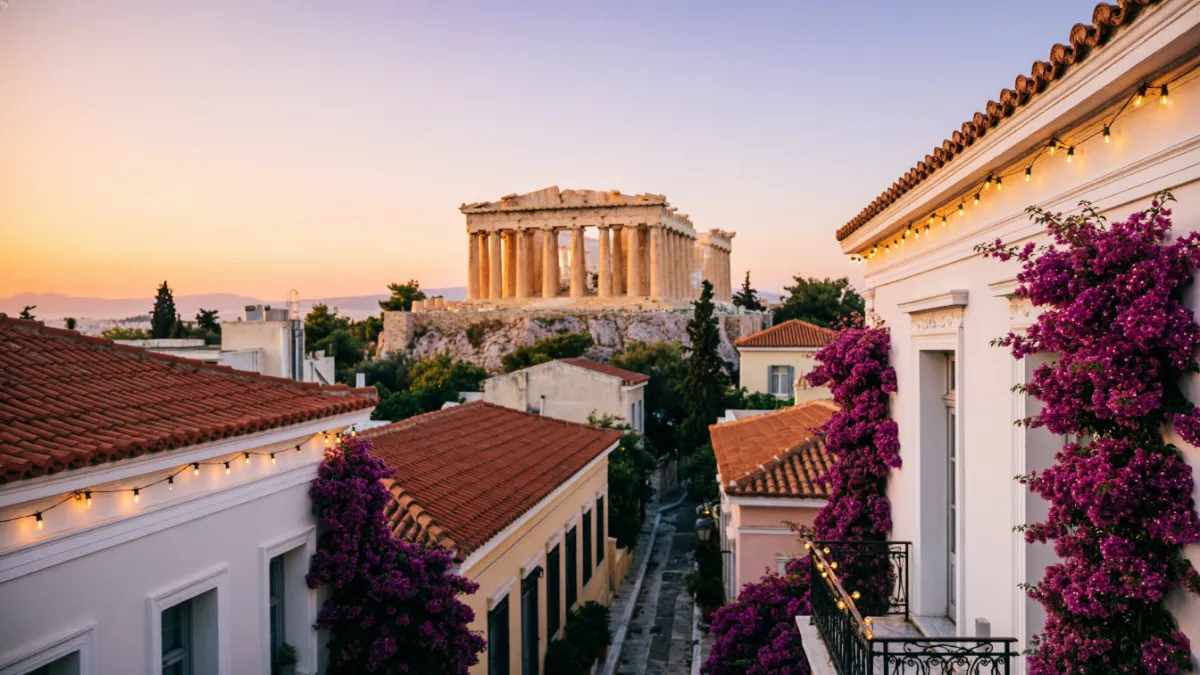
Quick answer:
Plaka and Syntagma suit first time visitors who want to walk to the Acropolis. Koukaki is best for value and views. Kolonaki fits luxury travellers. Solo travellers and families do best in Plaka, Syntagma, or Koukaki, while Omonia and parts of Exarchia are best avoided after dark.
Picking the wrong neighborhood can turn a Greek dream trip into a frustrating scramble between taxis, sketchy streets, and hotels that are nowhere near the sights you came to see. Athens is sprawling, and not every area is built for tourists.
This guide breaks down exactly where to stay in Athens, Greece, neighborhood by neighborhood, so you can book with confidence and spend your trip exploring the Acropolis instead of your phone’s map app.
Below, you’ll find the safest and most scenic areas, honest warnings about where not to sleep, budget comparisons, and answers to the exact questions travelers ask before landing in Greece.
Quick Facts Table
Athens accommodation varies widely by neighborhood, price, and proximity to the Acropolis. This table gives a fast overview before you dive into details.
| Neighborhood | Best For | Price Level | Walk to Acropolis |
| Plaka | First timers, charm | Mid High | 5 10 min |
| Syntagma | Central access, metro | Mid High | 10 15 min |
| Koukaki | Value + views | Low Mid | 10 15 min |
| Kolonaki | Luxury, upscale dining | High | 15 20 min |
| Monastiraki | Nightlife, markets | Mid | 5 10 min |
| Psiri | Trendy, foodie scene | Mid | 10 15 min |
| Thissio | Quiet, scenic | Mid | 10 min |
| Pangrati | Local, residential | Low Mid | 15 20 min |
| Omonia | Budget only, caution advised | Low | 15 20 min |
Prices and transit times shift with seasons and traffic, so confirm current rates directly with hotels or booking platforms before you travel.
Which Area in Athens Is Best to Stay?
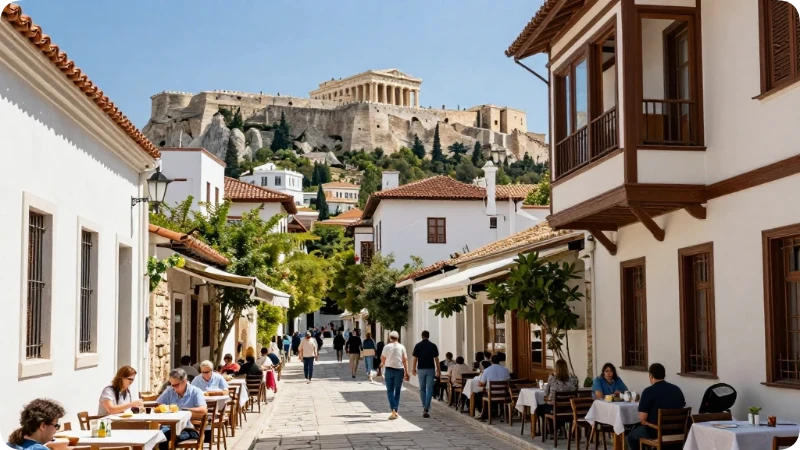
Plaka is widely considered the single best area to stay in Athens for most travelers because it sits directly beneath the Acropolis, is walkable, historic, and packed with restaurants. Koukaki runs a close second for travelers who want the same convenience at a lower price.
Plaka’s narrow, neoclassical streets make it feel like a village inside a capital city. You can walk to the Acropolis Museum, Syntagma Square, and Monastiraki in minutes.
If Plaka is fully booked or over budget, Koukaki delivers similar walkability with more modern hotels and better value, especially near the Acropoli metro station.
Where Do Most Tourists Stay in Athens?
Most first time visitors book hotels in Plaka, Syntagma, and Monastiraki because these three neighborhoods sit closest to the Acropolis, the Ancient Agora, and the main pedestrian shopping streets. This concentration also means more restaurants, tour pickup points, and English speaking staff.
Syntagma Square works especially well for travelers connecting from the airport, since the metro’s Blue Line runs directly there without transfers.
Booking in this triangle reduces taxi costs and lets you walk to nearly every major landmark on foot.
Plaka, Athens: Best for Charm and Walkability
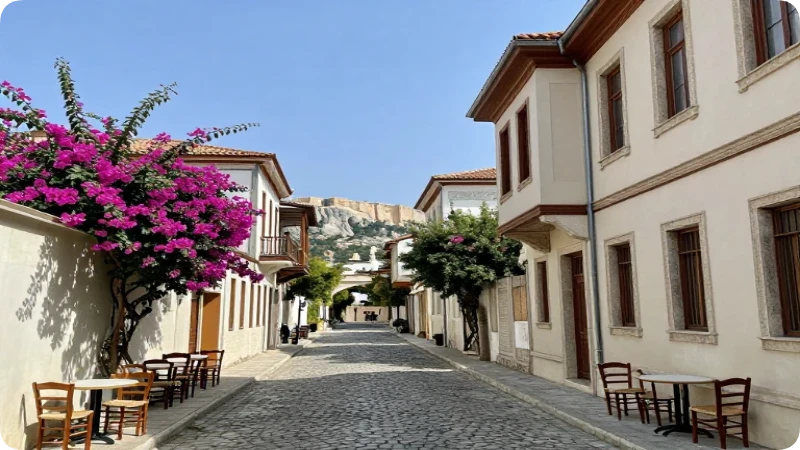
Plaka is Athens’ oldest neighborhood, known for pedestrian only lanes, bougainvillea draped balconies, and Acropolis views from rooftop bars. It’s the most tourist friendly base in the city and ideal for travelers prioritizing atmosphere over nightlife.
Pros: Walk to major ruins, charming architecture, low crime, plenty of tavernas. Cons: Higher prices, can feel crowded midday, limited late night nightlife.
Plaka is best for couples, first timers, families, and older travelers who want to minimize transit time.
Hotels in Plaka, Athens
Plaka’s hotel scene ranges from boutique neoclassical guesthouses to upscale rooftop view properties, with fewer large chain hotels than Syntagma. Rooms book up quickly in peak season (May September), so reserving 2 3 months ahead is wise.
Look for properties near Adrianou Street for the liveliest atmosphere, or quieter lanes near Anafiotika for a more residential feel with Acropolis glimpses.
Always confirm cancellation policies and verify current guest ratings directly on your booking platform, since availability and pricing shift seasonally.
Is It Better to Stay in Monastiraki or Plaka?
Plaka is better for a quieter, more scenic stay, while Monastiraki suits travelers who want nightlife, flea markets, and rooftop bars within walking distance. Both neighborhoods border each other and share similar proximity to the Acropolis.
Monastiraki gets louder at night thanks to street performers, bars, and the famous Sunday flea market, which can be a pro or a con depending on your travel style.
Light sleepers and families typically prefer Plaka; younger travelers and nightlife seekers often lean toward Monastiraki.
Best Place to Stay in Athens With a View of the Acropolis
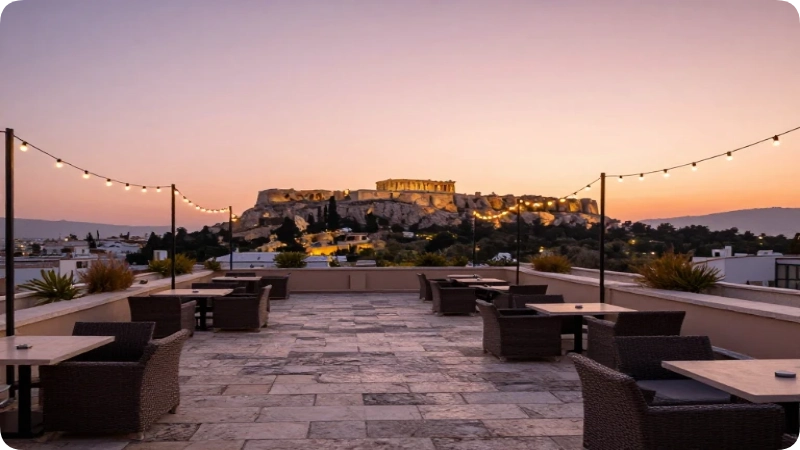
Koukaki and Plaka offer the highest concentration of hotels with rooftop bars and rooms facing the Acropolis directly. Makrygianni, the small district wedged between Koukaki and the Acropolis Museum, is especially popular for this reason.
Rooftop view rooms typically cost 20 40% more than standard rooms in the same hotel, so it’s worth asking specifically for an “Acropolis view” room when booking rather than assuming.
For the best photo results, book upper floor rooms and check listing photos for unobstructed sightlines, since nearby buildings can block views even in the same neighborhood.
Where to Stay in Athens, Greece for First Timers
First time visitors should prioritize Plaka, Syntagma, or Koukaki, since these areas combine walkability, safety, and proximity to major sights, reducing the learning curve of navigating a new city.
Staying centrally also means fewer costly taxi rides and easier access to hop on hop off bus stops and organized day tours to places like Delphi or Cape Sounio.
Avoid booking based on price alone if it’s your first visit; a slightly higher nightly rate in a central area often saves money overall through reduced transport costs.
Where Should I Stay in Greece for the First Time?
For a first trip to Greece overall, base yourself in central Athens for 2 3 nights, then consider pairing it with one island such as Santorini, Naxos, or Paros for contrast. Athens covers history and culture; the islands cover beaches and relaxation.
If your itinerary includes ferries, staying near Piraeus port for your final Athens night can simplify early morning departures.
Most first timers find that splitting time between Plaka (city) and one Cycladic island creates a balanced, classic Greece introduction.
Where to Stay in Athens for Solo Female Travelers
Solo female travelers generally report feeling safest in Plaka, Syntagma, Koukaki, and Kolonaki, thanks to steady foot traffic, well lit streets, and proximity to metro stations. These areas also have strong concentrations of well reviewed, centrally located accommodations.
Booking a hotel with 24 hour reception and reading recent solo traveler reviews adds an extra layer of confidence when arriving late at night.
As with any major city, standard precautions apply: avoid poorly lit side streets alone after midnight, and keep Omonia and parts of Exarchia off your solo walking route at night.
Where to Stay in Athens for One Night
If you only need one night, often before an early flight or ferry, Syntagma is the most practical choice thanks to direct metro access to the airport. Travelers heading to island ferries the next morning may prefer staying near Piraeus instead.
For a one night layover focused on sightseeing rather than transit, Plaka lets you fit in a sunset Acropolis view and dinner without wasting time on logistics.
Confirm your hotel’s distance to the relevant metro line before booking, since even short trips benefit from minimizing transfers with luggage.
Best Hotels to Stay in Athens, Greece
Rather than naming specific properties (since availability, ownership, and quality change frequently), focus on these criteria when comparing hotels: proximity to a metro station, recent guest reviews mentioning safety and cleanliness, rooftop or Acropolis facing rooms, and 24 hour front desk service.
Boutique hotels in Plaka and Koukaki consistently rank well for atmosphere, while Syntagma and Kolonaki host more international luxury chains.
Always check current ratings and photos on your preferred booking platform close to your travel dates, since renovations and ownership changes can shift quality year to year.
What Is the Prettiest Part of Athens?
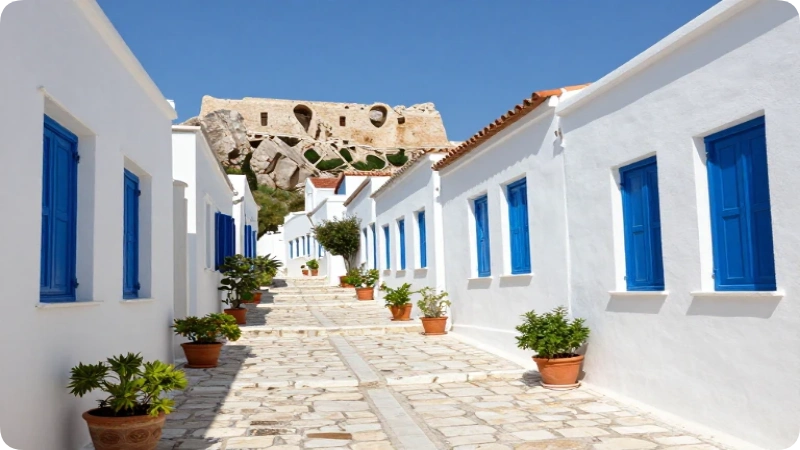
Plaka and Anafiotika, a tiny Cycladic style pocket tucked into Plaka’s hillside, are widely regarded as the prettiest parts of Athens. Anafiotika’s whitewashed houses and narrow stairways feel transported straight from a Greek island.
Thissio also ranks highly for its unobstructed Acropolis views and relaxed, tree lined streets facing the ancient Agora.
For the best photos, visit Anafiotika in the early morning before crowds arrive and the light is softest.
What Are the Safest Areas in Athens?
Plaka, Syntagma, Koukaki, Kolonaki, and Thissio are consistently rated the safest areas in Athens for tourists, thanks to steady foot traffic, tourist police presence, and well maintained streets. These neighborhoods also have the highest concentration of hotels.
Petty theft, like pickpocketing on the metro or near crowded landmarks, is the most common issue rather than violent crime, so standard city precautions apply.
Keeping valuables secure in crowded areas like Monastiraki Flea Market and the metro during rush hour is the most practical safety habit for visitors.
Is It Safe to Walk Around in Athens at Night?
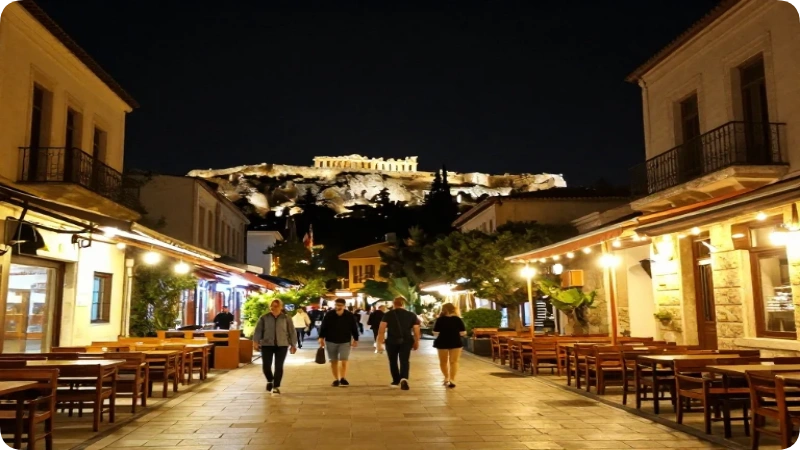
Central tourist neighborhoods like Plaka, Syntagma, and Koukaki are generally safe to walk at night, with restaurants, bars, and pedestrian traffic keeping streets active well past midnight. Athens overall has a lower violent crime rate than many major U.S. cities.
Exercise more caution in Omonia and parts of Exarchia at night, where street drug activity and occasional unrest have been reported in past years.
As always, stick to well lit main streets, avoid flashing valuables, and check the current U.S. State Department travel advisories before your trip for the latest safety updates.
Where to Stay and Avoid in Athens
Choosing the right base comes down to balancing walkability against budget, while avoiding a small number of areas that offer little upside for short stay tourists. Here’s a side by side comparison.
| Stay Here | Why | Avoid | Why |
| Plaka | Central, scenic, safe | Omonia | Higher crime reports, less tourist infrastructure |
| Koukaki | Value + Acropolis views | Parts of Exarchia | Occasional unrest, fewer amenities |
| Syntagma | Metro access | Far outer suburbs | Long commutes to sights |
| Kolonaki | Upscale, quiet | Industrial Piraeus backstreets | Not tourist oriented |
This table is a general guide; always cross check current neighborhood conditions and reviews before booking, since conditions can shift.
Where Not to Stay in Athens
Omonia Square and its immediate surrounding streets top the list of areas travelers are advised to avoid for overnight stays, due to a higher concentration of petty crime and a less polished tourist infrastructure compared to central neighborhoods.
Parts of Exarchia, known historically as an anarchist and student district, can also feel unwelcoming to tourists, particularly at night, despite its interesting street art and cafe culture during the day.
If a hotel’s low price seems unusually good for its listed neighborhood, cross check its exact address and recent reviews before booking, rather than relying on the map alone.
Where Not to Sleep in Athens
Beyond Omonia, avoid booking accommodations directly adjacent to Larissa Station or deep in Athens’ industrial outskirts near Piraeus’s cargo areas, where there’s little tourist activity after dark and limited walkable dining options.
These areas may look cost effective on paper, but the money saved is often offset by higher taxi costs and reduced walkability to the sights you actually came to see.
If your itinerary requires an early ferry, choose a hotel specifically near Piraeus’s passenger port rather than the broader Piraeus district, which includes less traveler friendly zones.
Where to Avoid Staying in Athens
In addition to Omonia and parts of Exarchia, be cautious of listings advertised as “near the center” that are actually a 30 40 minute walk from major sights. Always verify exact distances on a map rather than trusting marketing language alone.
Budget accommodations scattered along busy traffic arteries outside the historic center can also mean noisy rooms and a less authentic Athens experience.
Money saving tip: instead of booking further out for a lower price, look for smaller guesthouses in Koukaki or Pangrati, which offer central adjacent value without the safety trade offs of outer districts.
Budget Breakdown by Neighborhood
Athens accommodation spans a wide range, and neighborhood choice significantly affects nightly rates. Generally, Kolonaki and central Plaka run highest, while Pangrati and Koukaki offer the best value to location ratio.
- Budget friendly: Pangrati, parts of Koukaki, Psiri
- Mid range: Syntagma, Thissio, Monastiraki
- Higher end: Plaka (prime lanes), Kolonaki
Exact nightly rates fluctuate by season, event calendar, and demand, so compare current listings on your preferred booking platform rather than relying on fixed figures.
How Long Do You Need in Athens?
Most travelers need 2 to 3 full days in Athens to comfortably see the Acropolis, Acropolis Museum, Ancient Agora, Plaka, and take a day trip option, without feeling rushed.
Two days covers the essentials; three days allows time for a half day excursion to Cape Sounio or a more relaxed pace through the National Archaeological Museum.
If Athens is only a stopover before the islands, one full day plus an evening can still cover the Acropolis and Plaka, though it will feel condensed.
Is 4 Days in Athens Too Long?
Four days is not too long if you plan at least one day trip, such as Delphi, Cape Sounio, or the nearby Saronic islands like Aegina, since Athens’ core sights can be exhausted in about 2.5 days.
Without a day trip, four full days focused only on central Athens may feel slower paced than necessary for most travelers, though history enthusiasts often welcome the extra museum and neighborhood time.
Consider splitting a 4 day stay into 3 nights in Athens and using the 4th day for a nearby excursion to maximize the trip.
Which Month Is Best for a Greece Trip?
May, June, and late September are widely considered the best months for a Greece trip, offering warm weather without the peak July and August crowds and heat that can exceed 100°F (38°C) in Athens.
April and October serve as solid shoulder season alternatives, with milder temperatures and lower hotel prices, though some island ferries reduce their schedules outside peak months.
Confirm current ferry schedules and opening hours for attractions directly with official sources before finalizing shoulder season travel dates, since these can change year to year.
When Not to Go to Athens?
Late July and August are the least ideal months to visit Athens for many travelers, due to intense heat, peak crowds at the Acropolis, and inflated hotel prices during the European summer holiday rush.
Winter months (December February) bring cooler, rainier weather and shorter daylight hours, though they also mean thinner crowds and lower prices for travelers prioritizing budget over sunshine.
If visiting in August is unavoidable, book Acropolis tickets for early morning slots and choose accommodations with air conditioning confirmed in the listing.
What Are the Top 3 Places to Visit in Greece?
Beyond Athens, the three most visited destinations in Greece are typically Santorini, Mykonos, and Crete, each offering a distinct experience from dramatic caldera views to vibrant nightlife to expansive beaches and ancient sites.
Santorini suits travelers chasing iconic sunset views; Mykonos fits those wanting beach clubs and nightlife; Crete offers the most variety, combining beaches, mountains, and archaeological sites like Knossos.
Pairing Athens with one of these three islands is the most common itinerary structure for first time visitors to Greece.
How to Get There: Transport Options
Athens International Airport (ATH) connects to central Athens via the Metro Blue Line (about 40 minutes to Syntagma), the X95 airport bus, or licensed taxis, which charge a flat fare to central Athens.
The metro is generally the fastest and most reliable option outside of rush hour, while taxis offer door to door convenience for travelers with heavy luggage or late night arrivals.
Always use official taxi ranks or licensed ride hailing apps at the airport, and confirm current fares with the Athens airport authority’s website, since flat rates can be adjusted periodically.
Common Mistakes When Choosing Where to Stay
Mistake 1: Booking based on price alone without checking walking distance to the Acropolis. Fix: Prioritize neighborhoods within a 15 minute walk of major sights, even at a slightly higher rate.
Mistake 2: Assuming all “Athens center” listings are truly central. Fix: Cross check the exact address on a map before booking, not just the listed neighborhood name.
Mistake 3: Overlooking noise levels in nightlife heavy areas like Monastiraki or Psiri. Fix: Read recent reviews specifically mentioning noise, or request a room facing away from the street.
FAQs
What is the best area to stay in Athens for the Acropolis?
Plaka and Koukaki are the best areas for Acropolis proximity, both offering walking distances under 15 minutes and multiple hotels with rooftop views of the monument.
Is Athens walkable for tourists?
Yes, central Athens is highly walkable, with Plaka, Syntagma, Monastiraki, and Koukaki all connected by pedestrian friendly streets and a reliable metro system for longer distances.
Do I need a car in Athens?
No, a car is unnecessary and often impractical in central Athens due to traffic and limited parking; the metro, buses, and walking cover nearly all tourist needs.
How much does a hotel in Athens cost per night?
Rates vary widely by neighborhood and season, from budget guesthouses to luxury properties, so compare current listings on your preferred booking platform close to your travel dates for accurate pricing.
Is Athens expensive compared to other European capitals?
Athens is generally more affordable than Western European capitals like Paris or London, particularly for dining and mid range accommodations, though prices rise in peak summer months.
Can I use the metro from the airport to Plaka or Syntagma?
Yes, the Metro Blue Line runs directly from Athens International Airport to Syntagma Station, from which Plaka is a short walk, making it one of the simplest airport to hotel routes.
Are taxis safe and reliable in Athens?
Licensed taxis in Athens are generally safe and metered; use official taxi ranks or reputable ride hailing apps, and confirm the fare or meter is running to avoid overcharging.
What should I pack for a trip to Athens?
Pack comfortable walking shoes for uneven ancient stone streets, breathable clothing for summer heat, a light layer for evenings, and modest attire for visiting churches and monasteries.
Is Athens a good destination for families?
Yes, Plaka, Syntagma, and Koukaki all suit families well, offering short walking distances between sights, reducing the need for young children to endure long transit times.
Should I book accommodations in Athens in advance?
Yes, booking 2 3 months ahead is recommended for peak season (May September), since central neighborhoods like Plaka and Koukaki fill up quickly with limited room inventory.
What’s the difference between Plaka and Kolonaki?
Plaka is historic, pedestrian, and tourist oriented with Acropolis views, while Kolonaki is upscale, residential, and known for designer shopping and fine dining, appealing to travelers wanting a quieter luxury base.
Final Takeaways
Choosing where to stay in Athens comes down to three priorities: walkability to the Acropolis, safety after dark, and matching the neighborhood’s personality to your travel style. Plaka and Koukaki cover most first time visitors’ needs, Kolonaki suits luxury travelers, and Omonia and parts of Exarchia are best avoided for overnight stays.
Book central accommodations early, especially for peak season between May and September, and always verify exact addresses, current prices, and recent guest reviews before finalising your reservation.
Athens rewards travellers who stay close to its ancient heart. Pick a base within the historic centre, and the rest of your trip, from sunset views over the Acropolis to late night tavern as in Plaka, tends to fall into place.

Maya Lin inspires travelers to explore the globe with absolute confidence and independence. Armed with a background in digital media and a decade of independent solo travel experience, she knows exactly how to navigate unfamiliar cities smoothly and safely. For Travelmarse, Maya curates the solo travel and hidden-gem verticals. She reviews charming boutique hotels, designs smart neighborhood walking routes, and shares practical language-learning hacks, giving readers the exact tools they need to travel solo without the stress.