
Planning your first trip to Rome, Florence, or the Amalfi Coast shouldn’t feel like untangling a knot of government paperwork. Yet a quick Google search on Italy’s entry rules turns up outdated blog posts, conflicting ETIAS dates, and scam websites charging for authorizations that don’t even exist yet.
That confusion is exactly why this guide exists.
If you’re a US citizen planning a trip to Italy, the good news is simple: you do not need a traditional visa for short visits. But there are a few evolving rules, including the long-delayed ETIAS system, that every American traveler should understand before booking flights. This guide breaks down exactly what US passport holders need for Italy in 2026, what’s changing, and what you can safely ignore.
Quick Answer:
No, US citizens do not need a visa to visit Italy for tourism or business trips of up to 90 days within any 180 days. A valid US passport is all that’s required for entry today. Starting sometime after Q4 2026, travelers will also need a low-cost ETIAS travel authorization, though the EU has not yet confirmed the exact start date.
Quick Facts Table
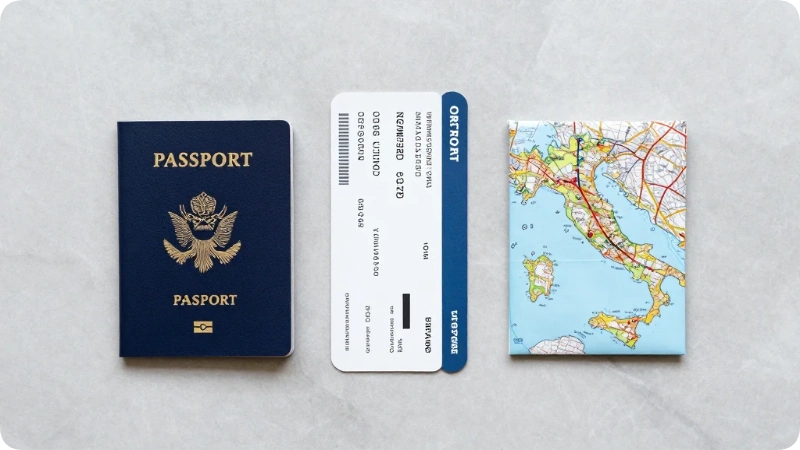
| Requirement | Details for US Citizens |
| Visa needed for tourism/business (under 90 days) | No |
| Maximum stay without a visa | 90 days within any 180 days |
| Passport validity required | At least 3 months beyond departure date (6 months recommended) |
| Blank passport pages | At least 2 |
| ETIAS required? | Not yet system has no confirmed launch date as of July 2026 |
| Visa needed for stays over 90 days or work/study | Yes, applied for in advance |
| Currency declaration | Required for €10,000+ cash |
Always confirm current requirements on travel.state.gov before booking, since entry rules can change with little notice.
Do US Citizens Need a Visa for Italy?
No. <cite index=”10-1″>Citizens of countries including the United States are not required to obtain a visa for short tourist or business visits to Italy of up to 90 days in aany 180 days</cite> This visa-free access is one of the most traveler-friendly arrangements in the world, and it applies if you’re spending a long weekend in Venice or a full three-month Italian road trip.
<cite index=”13-1″>Your passport must be valid for at least 3 months beyond your planned departure from the Schengen area, with two blank pages available for entry stamps.</cite> Border officials may also ask to see a return ticket or proof of accommodation, so keep printed or digital copies handy.
Do American Citizens Need a Visa for Europe?
Not for short visits to most of the continent. The same visa-free rule that applies to Italy extends across the entire Schengen Area, the 29-country zone that includes France, Germany, Spain, Greece, and Switzerland, among others.
<cite index=”12-1″>With a valid US passport, Americans can stay up to 90 days during any 180 days across Schengen countries, and must wait an additional 90 days before re-entering the zone.</cite> This is a shared allowance, not a per-country one, so time spent in Italy counts against the same 90 days you’d use in France or Portugal.
Non-Schengen European countries, like Ireland, the UK, and Bulgaria, have their own separate entry rules, so double-check if your itinerary includes a mix of destinations.
Which European Countries Are Visa-Free for US Citizens?
Nearly all of Western and Southern Europe falls under the Schengen visa waiver for Americans. <cite index=”15-1″>This visa-free access applies to citizens of the United States along with roughly 50 other nationalities, including the UK, Canada, Australia, Japan, and South Korea.</cite>
Popular visa-free Schengen destinations for US travelers include:
- Italy
- France
- Spain
- Germany
- Greece
- Portugal
- Switzerland
- Austria
- Netherlands
Outside the Schengen zone, countries like Ireland, Croatia, and the UK have their own visa-free allowances for US passport holders, typically also around 90 days, but tracked separately from your Schengen days.
What Is ETIAS and Do US Citizens Need It for Italy?
ETIAS (European Travel Information and Authorisation System) is an upcoming pre-travel screening requirement, not a visa. It’s closer in spirit to the US ESTA system used for the Visa Waiver Program.
Once active, US citizens will need to apply online, pay a small fee, and receive approval before flying to Italy or any other Schengen country. However, ETIAS is not yet operational. As of mid-2026, <cite index=”5-1″>the previously confirmed Q4 2026 launch window was quietly removed from the official EU travel authorization website following reports that the EU’s technical agency had concluded a 2026 launch was no longer feasible.</cite>
In plain terms: don’t pay for ETIAS anywhere right now, and don’t let your trip planning hinge on a specific 2026 date.
When Will ETIAS Start? (Latest 2026 Update)

This is the most-searched and most-confused part of the whole topic, so here’s where things actually stand.
<cite index=”5-1″>As of July 2026, the EU’s official ETIAS page states only that the system is not currently in operation and that no applications are being collected, with no revised launch date published.</cite> Several travel sites still advertise a confirmed “Q4 2026” start, but that target has been walked back by the EU itself.
What we know for certain:
- ETIAS is not open for applications right now, and no legitimate site is currently collecting them
- The system has been delayed multiple times since it was first proposed
- <cite index=”5-1″>A revised timeline is expected following the EU technical agency’s board meeting in September 2026, with a 2027 launch now considered the likely outcome</cite>
- The EU has committed to announcing the confirmed date several months in advance.
Bottom line: if you’re traveling to Italy any time in 2026, plan as if ETIAS does not apply to your trip. Bookmark the official EU travel authorization site for updates rather than relying on third-party countdown pages.
How Do I Get an ETIAS for Italy?
Since the system isn’t live yet, there’s nothing to apply for today, and any website charging you for an ETIAS application right now should be treated as a scam. Once the system does launch, the expected process will look like this:
- Visit the official EU ETIAS portal (only through the government-run domain)
- Enter passport details and basic personal information
- Answer a short series of security and health screening questions
- Pay the authorization fee online
- Receive approval, typically within minutes, though some applications may take longer.
Save this guide or check the official EU site directly closer to your travel dates rather than searching cold, since scam sites tend to rank aggressively for ETIAS-related searches.
How Much Does an ETIAS for Italy Cost?
The fee has been set at €20 (roughly $21–22 USD depending on exchange rates), though this hasn’t gone into effect since the system isn’t operational yet. Travelers under 18 or over 70 are expected to be exempt from the fee under current EU proposals. Because none of this is active yet, treat any site currently invoicing you for ETIAS as fraudulent.
Do Americans Need to Fill Out ETIAS?
Eventually, yes, but not today. Once ETIAS launches, it will apply to US citizens the same way it applies to other visa-exempt nationalities, since Americans currently enter Italy and the Schengen Area without a visa. Until an official launch date is confirmed and the portal opens, there is nothing for US travelers to fill out or pay for.
Is ESTA Necessary for US Citizens Traveling to Italy?
No, and this is a common point of confusion. ESTA is a US entry authorization for foreign visitors flying to the United States under the American Visa Waiver Program; it has nothing to do with US citizens traveling abroad. If you’re a US passport holder heading to Italy, ESTA simply doesn’t apply to your trip. The system you’d eventually need for Italy is ETIAS, not ESTA.
Do I Need a Visa to Go to Italy in 2026?
For the vast majority of American travelers- tourists, business visitors, and short-term visitors- the answer remains no throughout 2026. <cite index=”10-1″>As of the most recent updates, visa-exempt travelers, including U.S. citizens,s still do not need a traditional visa for stays of up to 90 days, though they remain subject to standard entry checks.</cite>
The exceptions are travelers planning to stay longer than 90 days, work in Italy, study for an extended period, or relocate. Those categories require a specific visa applied for through an Italian consulate before departure.
What Do I Need to Travel to Europe from the US in 2026?
Beyond the “no visa needed” headline, pack these essentials:
- Valid US passport with at least 3–6 months of remaining validity
- Two or more blank passport pages
- Return or onward travel ticket
- Proof of accommodation (hotel bookings or a rental confirmation)
- Proof of sufficient funds, if requested by a border officer
- Travel insurance not mandatory for entry, but strongly recommended given the cost of overseas medical care
- Awareness of the 90/180-day rule across the whole Schengen zone, not just Italy
<cite index=”11-1″>Since April 10, 2026, US citizens are also processed through the EU’s Entry/Exit System (EES) on arrival, which collects fingerprints, a facial image, and passport details digitally at the border; there’s no fee involved.</cite> First-time crossings can take a few extra minutes while this biometric data is captured, so build in some buffer time at passport control, especially during peak summer travel.
How Long Can US Citizens Stay in Italy Without a Visa?
Up to 90 days within any rolling 180-day period, nd this pool is shared across the entire Schengen Area, not reset by country. <cite index=”15-1″>If you spend two weeks in France, three weeks in Spain, and a month in Italy, all of those days draw from the same shared allowance.</cite>
Both your entry day and exit day count as full days toward that total, so it’s worth tracking your trip dates carefully,lly especially if you’re island-hopping or combining Italy with other European stops in one itinerary.
Italy Visa Requirements for US Citizens (Longer Stays)
If your plans go beyond a standard vacation, different rules apply:
| Purpose of Trip | Visa Required? |
| Tourism/business under 90 days | No |
| Stay longer than 90 days | Yes long-stay national visa |
| Studying in Italy | Yes student visa |
| Working in Italy | Yes work visa/permit |
| Retiring or relocating | Yes elective residency visa |
These longer-stay visas must be arranged through the Italian Consulate in your region of the US before you travel; they cannot be obtained after arrival, and a standard tourist entry cannot be extended into one of these categories from within the country.
Common Mistakes Americans Make When Planning Italy Travel
- Assuming ETIAS is already required. It isn’t yet; the current fee or application applies to US travelers.
- Cutting passport validity too close. Officials can deny boarding if you don’t meet the 3-month (ideally 6-month) rule.
- Miscounting Schengen days across multiple countries. A common error is resetting the day count per country instead of tracking it across the whole zone.
The fix: Check official government sources (travel.state.gov and the EU’s own travel authorization page) shortly before booking, keep your passport well within validity, and use a simple day tracker if your trip touches more than one Schengen country.
How Many Days Are Enough for Italy?
For a first trip covering the highlights Rome, Florence, and Venice- 10 days hits a comfortable pace without feeling rushed. Travelers wanting to add the Amalfi Coast, Tuscany’s countryside, or Sicily typically look at 12 to 16 days. Since US citizens have a full 90-day allowance to work with, there’s plenty of room to slow down and explore regions most visitors skip, from Puglia to the Dolomites.
Cheapest Month to Fly to Italy from the US
Airfare and hotel prices in Italy generally dip in late January through early March and again in November, outside of holiday weeks. Shoulder-season months April, May, September, and October offer a balance of lower prices, thinner crowds, and comfortable weather, making them a favorite among experienced travelers over the peak summer rush.
What Not to Do in Italy as an American

A few etiquette habits stand out to Italians as distinctly American:
- Ordering cappuccino after 11 a.m. It’s traditionally a morning-only drink in Italian culture.
- Asking for substitutions or extra sauce on pasta. Recipes are often treated as fixed, especially in smaller family-run restaurants.
- Tipping heavily. Service is typically included; a small rounding up is appreciated, but large American-style tips aren’t expected.
- Dressing too casually at churches. Shoulders and knees generally need to be covered to enter major sites like St. Peter’s Basilica.
- Speaking loudly in quiet public spaces. Italians tend to keep voices lower on trains and in restaurants than is typical in the US.
None of these are dealbreakers; they’re simply small adjustments that help American travelers blend in and get a warmer reception from locals.
Is Italy Visa-Free for US Citizens?
Yes, for the standard tourism and short business visits most Americans plan, Italy remains fully visa-free. The only near-term change on the horizon is ETIAS, and even that isn’t active yet. For now, a valid passport, a return ticket, and proof of accommodation are all that stand between you and a plate of fresh pasta in Trastevere.
FAQs
Do US citizens need a visa for Italy?
No. US citizens can visit Italy visa-free for tourism or business for up to 90 days within any 180 days, using only a valid US passport.
Do US citizens need ETIAS for Italy?
Not yet. ETIAS has no confirmed launch date as of July 2026, after the EU removed its previously announced Q4 2026 target. Once active, it will apply to US travelers, but there’s nothing to apply for currently.
Is ESTA necessary for US citizens visiting Italy?
No. ESTA applies only to foreign visitors entering the United States, not to Americans traveling abroad. US citizens heading to Italy don’t need ESTA at all.
How long can US citizens stay in Italy without a visa?
Up to 90 days within any rolling 180-day period, shared across the entire Schengen Area rather than reset per country.
What is the cheapest month to visit Italy?
Late January through early March, along with November, typically offer the lowest airfare and hotel prices, while April, May, September, and October balance good weather with smaller crowds.
Do US citizens need a visa for Greece?
No. The same Schengen visa-waiver rules that apply to Italy also apply to Greece, allowing US citizens up to 90 days visa-free within any 180 days.
What are common Italy visa rejection reasons?
This mainly applies to travelers who do need a visa, such as long-stay, work, or student visa applicants, nd common reasons include insufficient funds, incomplete documentation, or unclear travel purpose. It does not apply to short-term US tourist visits, which require no visa at all.
Do Americans need a visa for Europe in 2026?
No, not for short stays. US citizens can travel visa-free throughout the Schengen Area for up to 90 days within anany 180 dayshrough all of 2026.
When will ETIAS be required for Italy travel?
There’s no confirmed date yet. The EU pulled its earlier Q4 2026 target in mid-2026, with a 2027 launch now considered more likely, pending an official announcement.
What documents do I need to enter Italy as a US citizen?
A valid passport with at least 3 months’ remaining validity (6 months recommended), two blank pages, a return ticket, proof of accommodation, and, if asked, proof of sufficient funds.
Can I apply for ETIAS right now?
No. The ETIAS portal is not open, and any website currently charging for ETIAS applications is not legitimate. Rely only on official EU government sources for updates.
3 Key Takeaways
- US citizens do not need a visa for Italy for stays up to 90 days within any 180 days; a valid passport is enough.
- ETIAS is not yet active, and its once-confirmed Q4 2026 launch has been pulled from the EU’s official site, with 2027 now the likelier target.
- Longer stays, study, or work in Italy still require a proper visa arranged in advance through an Italian consulate.
Italy’s cobblestone streets, coastal towns, and centuries of history remain refreshingly easy to reach for American travelers: no visa office, no stacks of paperwork, just a passport and a plan. Keep an eye on official sources as ETIAS develops, pack smart, and start mapping out which regions of Italy deserve a spot on your itinerary.

Maya Lin inspires travelers to explore the globe with absolute confidence and independence. Armed with a background in digital media and a decade of independent solo travel experience, she knows exactly how to navigate unfamiliar cities smoothly and safely. For Travelmarse, Maya curates the solo travel and hidden-gem verticals. She reviews charming boutique hotels, designs smart neighborhood walking routes, and shares practical language-learning hacks, giving readers the exact tools they need to travel solo without the stress.