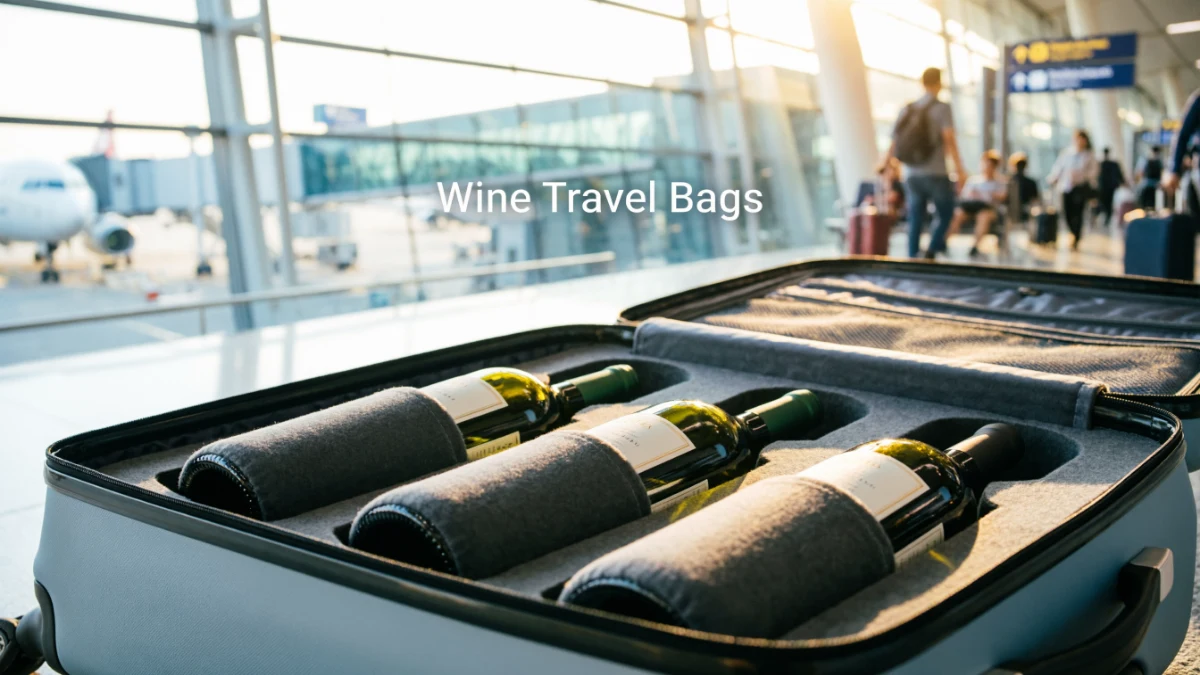
You found the perfect bottle in Napa Valley. Then panic hits. What if it breaks in your suitcase and ruins every shirt you own? Many travelers feel this fear. Some skip the bottle. Others gamble and lose.
The good news is simple. With the right wine travel bags and a few smart steps, you can carry wine home safely. This guide covers bags, packing, TSA rules, and cooling tips. It also answers the questions travelers ask most. Rules change, so always check TSA.gov and your airline before you fly.
Quick Answer:
The best wine travel bags are padded, leak-proof sleeves or hard-shell wine suitcases. Wrap each bottle, seal it in a waterproof bag, and place it in the center of your checked suitcase. Wine in carry-ons must follow TSA’s 3.4-ounce liquid rule, unless it is a sealed duty-free purchase.
Quick Facts Table
Here is a fast look at the key facts for flying with wine in the United States.
| Topic | Quick Answer |
| Carry-on wine | Only 3.4 oz (100 ml) or less, or sealed duty-free |
| Checked wine | Allowed; wine is under 24% alcohol |
| Best protection | Padded sleeve + waterproof bag |
| Best spot in bag | Center, wrapped in soft clothes |
| Check first | Airline, state, and customs rules |
Wine Travel Bags Pakistan
Wine travel bags are sold in Pakistan, but alcohol laws there are strict. Pakistan bans alcohol for Muslims, and non-Muslims need permits. Rules differ by region. Therefore, check Pakistani law and your airline before you pack any wine. This guide focuses on U.S. travel rules.
If you fly from the U.S. to Pakistan, wine may be illegal on arrival. Always read the destination’s customs rules first.
Best Wine Bags for Air Travel
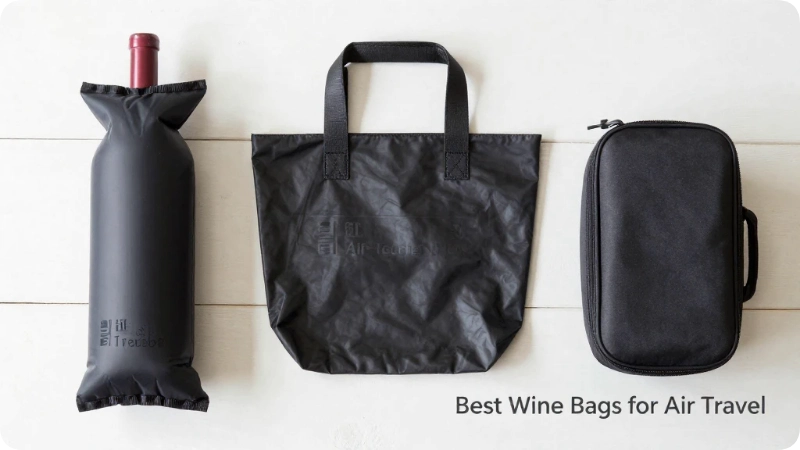
The best wine bags for air travel have thick padding, a leak-proof lining, and a strong seal. Look for inflatable sleeves, neoprene totes, or hard-shell cases. Each type protects bottles in a different way, so choose based on how many bottles you carry.
- Inflatable sleeves: Light and cheap. Examples include VinniBag and Wine Wings.
- Padded totes: Good for carry-on bags that hold empty or duty-free bottles.
- Hard-shell suitcases: Best for three or more bottles.
Wine Travel Bags Waterproof
Waterproof wine travel bags keep leaks off your clothes if a bottle breaks. The best ones use thick PVC or heavy-duty plastic with a zip or roll-top seal. Even so, a waterproof bag only catches spills. It does not stop breaks, so pair it with padding.
Tip: Double-bag each bottle. Use one waterproof sleeve first. Then add a zip-top bag for extra safety.
Wine Travel Bags Near Me
You can often find wine travel bags at luggage shops, kitchen stores, wineries, and big retailers like Target or Walmart. Online stores offer more choices. However, local shops let you test the fit and padding. Call ahead to check stock.
Many wineries in Napa Valley, Sonoma, and Willamette Valley also sell shipping sleeves at the tasting room. Ask when you buy.
Best Wine Travel Bags
The best wine travel bags match your trip. For one or two bottles, pick an inflatable or padded sleeve. For a wine tour, choose a rolling hard-shell case with foam slots. For daily outings, a soft insulated tote works well.
Before you buy, check three things: padding thickness, seal strength, and weight. Heavy cases can trigger airline overweight fees, so weigh your bag at home.
What Is the Best Wine Bag for Travel?
For most travelers, a padded, waterproof sleeve is the best wine bag for travel. It is light, affordable, and easy to pack. If you carry many bottles often, a hard-shell wine suitcase offers stronger protection.
In short, pick a sleeve for occasional trips. Choose a rolling case for wine lovers who buy by the case. Always read recent buyer reviews to spot weak seams.
What Is the Best Wine Travel Bag?
There is no single winner, because needs vary. A good wine travel bag has thick foam or air cushioning, a leak-proof liner, and a tight closure. Pick the style that fits your bottle count and budget.
- Budget: Reusable inflatable sleeve
- Mid-range: Neoprene padded tote
- Frequent buyers: Rolling wine case with foam inserts
Wine Bag for Air Travel
A wine bag for air travel should survive rough handling. Baggage handlers drop and stack suitcases, so your bottle needs cushioning on all sides. Choose a bag with thick padding at the bottom, since drops often hit there first.
Also, keep the bag’s size in mind. It should fit inside your suitcase without squeezing the bottle.
What Is the Best Way to Pack Wine for Travel?
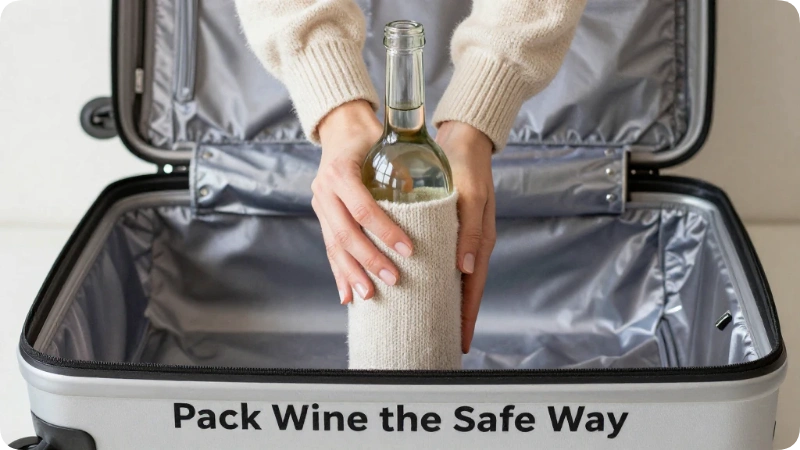
The best way to pack wine is to wrap it, seal it, and cushion it. Put the bottle in a waterproof sleeve. Then wrap it in soft clothes and place it in the center of your suitcase, away from the edges.
- Check that the cork or cap is tight.
- Slide the bottle into a leak-proof bag.
- Wrap it in a sweater or towel.
- Place it in the middle of the suitcase.
- Fill the space with clothes so it cannot shift.
Can I Bring a 750ml Bottle of Wine on a Plane?
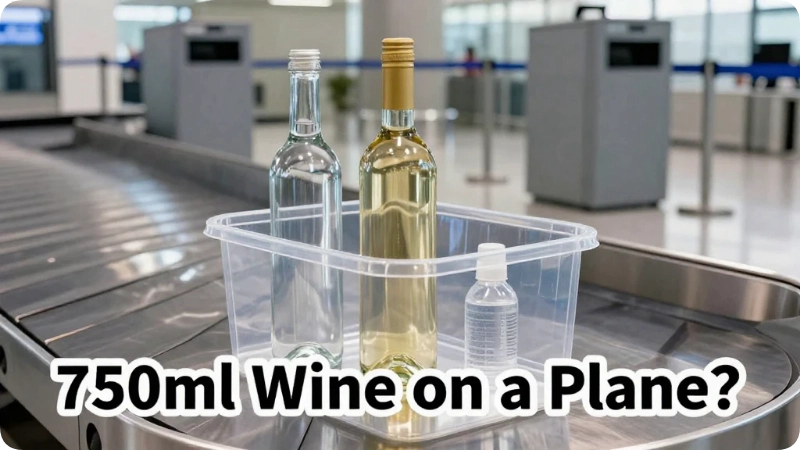
Yes, but usually only in checked luggage. A standard 750 ml wine bottle is much larger than the 3.4-ounce (100 ml) carry-on limit set by the TSA. Therefore, it will not pass security in your carry-on unless it is a sealed duty-free purchase.
Plan to check it. Alternatively, buy wine after security or ship it home from the winery.
What Is the Best Suitcase for Carrying Wine?
The best suitcase for carrying wine is a hard-shell case with foam slots or a padded wine-specific suitcase. These cases hold bottles upright and absorb shocks. Many also have waterproof liners.
If you prefer your regular suitcase, choose a hard-shell model. Soft bags crush more easily. Add a wine sleeve for each bottle.
Will Wine Burst in Checked Luggage?
Wine rarely bursts from air pressure, because cargo holds are pressurized. Most broken bottles come from impact or poor packing. Freezing can also crack a bottle, though this is uncommon since cargo areas are usually temperature-controlled.
So, focus on cushioning. Wrap each bottle well and avoid placing it near the suitcase edge.
How to Bring Wine in Luggage?
To bring wine in luggage, pack it in your checked bag with padding and a waterproof layer. Keep it sealed and unopened. Also, check the rules for your airline, your destination state, and customs if you cross borders.
Keep your receipt handy. If you return from abroad, you must declare alcohol to U.S. Customs and Border Protection (CBP). Adults 21 and older have a duty-free allowance, which can change. Verify at cbp.gov.
What Is the 20 Minute Wine Rule?
The 20-minute wine rule is a serving tip. Put red wine in the fridge for about 20 minutes before drinking. Take white wine out of the fridge about 20 minutes early. This brings each wine closer to its best temperature.
It is not an airline rule. However, it helps after your trip, when you finally open that bottle you carried home.
Can I Take Bottles of Wine in My Checked Luggage?
Yes. The TSA allows wine in checked bags. Wine is usually below 24% alcohol, so federal limits on quantity do not apply. However, airlines may set their own weight limits and fees.
For drinks above 24% alcohol, limits are stricter. Per the TSA, you may pack up to 5 liters of stronger alcohol in checked bags, and it must be in retail packaging.
Can I Carry Wine in Hand Baggage?
You can carry wine in hand baggage only if it is 3.4 ounces or less, or if it is a sealed duty-free purchase in a tamper-evident bag. Standard bottles are too large for security checkpoints.
Therefore, most travelers check their wine. If you buy at the airport past security, you can carry it onto the plane.
Can I Put Two Bottles of Wine in My Checked Bag?
Yes, you can pack two bottles in a checked bag. Wrap them separately so they cannot knock together. Place them on opposite sides of the suitcase, centered, and surround them with clothes.
Never pack two bottles touching. Glass on glass is the most common reason for breaks.
How Many Bottles of Wine Can I Put in My Luggage?
The TSA does not limit wine bottles in checked bags. However, your suitcase weight limit does. Most airlines charge fees above 50 pounds, and a full bottle weighs roughly 2.5 to 3 pounds.
So, most travelers pack two to six bottles. Weigh your bag at home, and check state and customs rules for large amounts.
How to Keep Wine Safe in Checked Luggage?
To keep wine safe in checked luggage, use padding, a waterproof layer, and a snug fit. Pack the bottle in the middle of your suitcase and add soft items around it. Then close the bag firmly so nothing shifts.
Also consider a hard-shell suitcase and a luggage strap. Add a “Fragile” tag, though handlers may not always follow it.
What Are the Best Cases of Wine to Buy?
The best wine cases come from wineries you love or trusted retailers. Look for cases of 6 or 12 bottles with sturdy cardboard dividers. Many wine clubs and wineries also offer shipping, which can be safer than flying.
Top-selling brands change each year and depend on the source. Popular names often include Barefoot, Yellow Tail, Josh Cellars, and Kendall-Jackson. Taste, price, and your meal matter most.
What Are the Top 10 Wine Brands?
Top wine brands vary by year and by whether you count sales or ratings. Widely known names include Barefoot, Yellow Tail, Gallo, Woodbridge, Apothic, Josh Cellars, Kendall-Jackson, Meiomi, La Crema, and Cupcake. Check current industry reports for exact rankings.
For travel, wineries often sell bottles you cannot find at home. Those make memorable souvenirs.
How to Keep Wine Cool While Traveling?
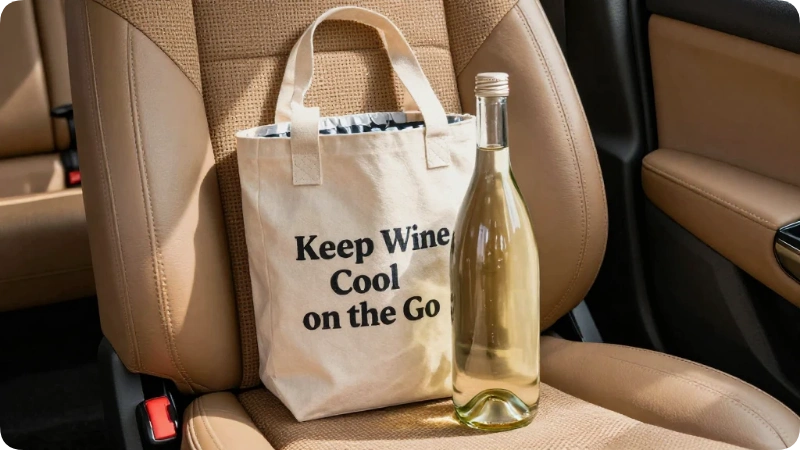
To keep wine cool while traveling, use an insulated wine tote with a reusable gel pack. Avoid leaving bottles in a hot car, since heat can spoil wine quickly. Keep wine in the cabin of your car, not the trunk.
On long trips, store bottles in a hotel fridge. Never freeze them, because frozen wine can push out the cork.
Can I Fly With an Unopened Bottle of Wine in My Carry-On?
No, not in a regular carry-on if the bottle is over 3.4 ounces. The TSA liquid rule applies, even to unopened bottles. The only common exception is a sealed duty-free bottle in a tamper-evident bag.
If you connect to another flight, check the rules first. Do not open the sealed bag until you reach your final stop.
What Is the Best Wine Bottle Protector for Air Travel?
The best wine bottle protector for air travel is a thick, inflatable or foam sleeve with a waterproof liner. It cushions the bottle and traps leaks. Hard-shell cases protect even more, but they add weight and cost.
For extra safety, add a layer of soft clothing. Always test the seal before you pack.
Will Alcohol Burst in Checked Luggage?
Alcohol rarely bursts because of flight pressure. Bottles usually break from hard hits or loose packing. Cargo holds are pressurized, so air changes are mild. Still, strong spirits in thin glass need careful padding.
Seal every cap with tape or plastic wrap. Then place the bottle in a leak-proof bag.
Why Should You Not Tie a Ribbon on Your Luggage?
Ribbons can snag in baggage belts and tear off. They may also cause damage, and airlines often do not cover items added to a bag. A ribbon can even make your suitcase harder to spot among similar ones.
Instead, use a bright luggage strap, a sturdy tag, or a colorful handle wrap.
Can I Put Glass Bottles in My Checked Luggage?
Yes, glass bottles are allowed in checked luggage. However, glass breaks easily, so wrap each bottle well. Use bubble wrap, clothing, or a padded sleeve. Keep bottles away from the suitcase walls.
Make sure caps are tight. For liquids over 3.4 ounces, checked bags are the right choice.
Is Wine Allowed in Hand Luggage?
Wine is allowed in hand luggage only in small amounts or as a sealed duty-free item. The TSA limits liquids in carry-ons to 3.4 ounces each, packed in one quart-size bag.
To be safe, check bigger bottles. Airline policies and international rules may differ, so verify them before you travel.
Can I Take Two Bottles of Wine in My Checked Luggage?
Yes, two bottles are fine in checked luggage under TSA rules. Pack them far apart and wrap each one on its own. Add soft items between them.
If you travel abroad, check customs limits. Some countries tax or limit alcohol over a set amount.
Can I Pack Alcohol in My Checked Bag?
Yes, you can pack alcohol in a checked bag if it is in unopened retail packaging. Drinks under 24% alcohol, like most wine, have no TSA quantity limit. Stronger drinks are limited to 5 liters per person.
Drinks above 70% alcohol are banned from both carry-on and checked bags. Always confirm current rules at TSA.gov.
Common Wine Packing Mistakes and Fixes
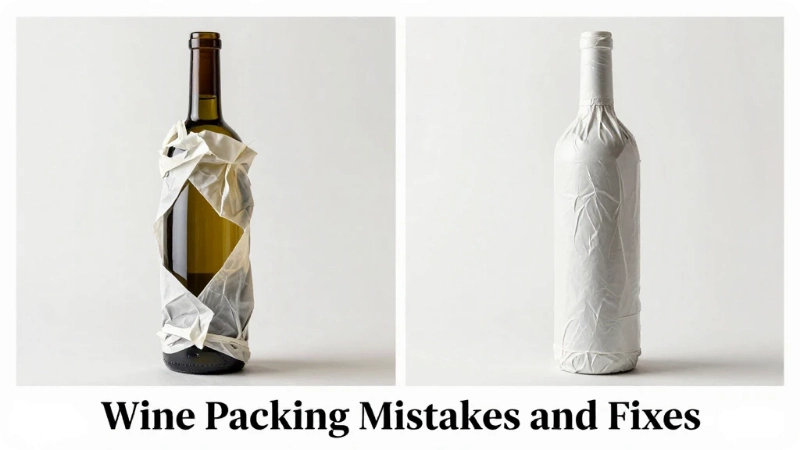
The most common mistakes are packing bottles near the edge, skipping a waterproof bag, and leaving gaps. Fix them by centering the bottle, using a sealed sleeve, and filling space with clothes.
- Mistake: Bottles touching each other. Fix: Wrap and separate them.
- Mistake: Loose caps. Fix: Tighten and tape them.
- Mistake: Overweight bags. Fix: Weigh your suitcase at home.
FAQs
Do I need travel insurance for wine I carry home?
Travel insurance may cover damaged checked bags, but many plans exclude breakable or fragile items. Read your policy closely. Airlines also often exclude fragile items from claims, so pack carefully and keep your receipts.
Is it better to ship wine home than fly with it?
Shipping can be safer for large amounts. Many wineries ship in protective boxes. However, state laws limit alcohol shipping, and some require an adult signature. Compare shipping costs against checked-bag fees before you decide.
Can I drink my own wine on the plane?
No. Federal rules ban drinking alcohol on a flight unless the airline serves it. Keep your bottle sealed in checked luggage. Enjoy it at your hotel or at home.
How should I carry wine on a road trip?
Lay bottles on their sides in a padded box inside the cabin of the car. Keep them out of direct sun and away from a hot trunk. Add a cooler bag with gel packs on hot days.
What should I do if a bottle breaks in my suitcase?
Take photos right away. Report the damage to the airline’s baggage desk before leaving the airport. Then wash clothes soon, because red wine stains set quickly. Keep your receipts for any claim.
Conclusion
Carrying wine home does not have to be risky. Keep these three takeaways in mind:
- Check wine; do not carry it on unless it is a sealed duty-free bottle.
- Use padding plus a waterproof layer for every bottle.
- Verify rules with the TSA, your airline, and customs before you fly.
With a good wine travel bag, your souvenirs arrive safe, and your clothes stay dry. If you like wine regions, plan your next trip around one, such as Napa Valley, Sonoma, or the Finger Lakes. Compare bag options, review airline baggage fees, and consider travel insurance. Then raise a glass to the memories you packed.
URL Slug: wine-travel-bags
Meta Description: Find the best wine travel bags and learn how to pack wine safely, follow TSA rules, and fly home with your favorite bottles. (139 chars)
Image Prompts
Feature Image: A bright, realistic photo of an open hard-shell suitcase with three wine bottles in padded sleeves, an airport terminal in the soft background, warm natural light, and the title “Wine Travel Bags” in clean white text.
H2: Best Wine Bags for Air Travel: A flat-lay photo of an inflatable wine sleeve, a neoprene tote, and a hard-shell wine case on a white table, with the text “Best Wine Bags for Air Travel.”
H2: What Is the Best Way to Pack Wine for Travel?: A step-by-step photo of a hand wrapping a wine bottle in a sweater and placing it in the center of an open suitcase, with the text “Pack Wine the Safe Way.”
H2: Can I Bring a 750ml Bottle of Wine on a Plane?: A photo of a TSA-style security checkpoint with a 750 ml wine bottle next to a small 3.4 oz travel bottle, with the text “750ml Wine on a Plane?”
H2: How to Keep Wine Cool While Traveling?: A photo of an insulated wine tote with a gel pack and chilled bottle on a sunny car seat, with the text “Keep Wine Cool on the Go.”
H2: Common Wine Packing Mistakes and Fixes: A split-screen photo showing a poorly packed bottle on the left and a well-wrapped bottle on the right, with the text “Wine Packing Mistakes and Fixes.”

Stephen Fry brings an insatiable curiosity for history, language, and global heritage to the Travelmarse team. Having spent decades traveling the globe to study regional storytelling and ancient civilizations, he excels at uncovering the hidden narratives of modern destinations. Stephen anchors the cultural vertical on Travelmarse, where he writes deep-dive guides on architectural history, museum crawl strategies, and local customs. His vivid, engaging writing helps travelers look past the surface and truly understand the heritage of the places they visit.