A sunburned first day of vacation ruins more trips than lost luggage ever will, and the fastest way to get there is packing the wrong size sunscreen for airplane travel. Travelers at a TSA checkpoint with a full 8-ounce bottle of SPF 50 often watch it get tossed straight into the bin, along with the money they spent. That single mistake is avoidable with a little planning.
This guide explains what size sunscreen is allowed for airplane travel, how the TSA 3-1-1 rule applies to lotions and sprays, and which travel-size sunscreen actually performs well on the beach, not just at security. It also covers packing tricks, container options, pricing, and where to buy travel-size sunscreen before a flight.
By the end, packing sunscreen for a flight will feel as routine as packing a toothbrush.
Featured Snippet:
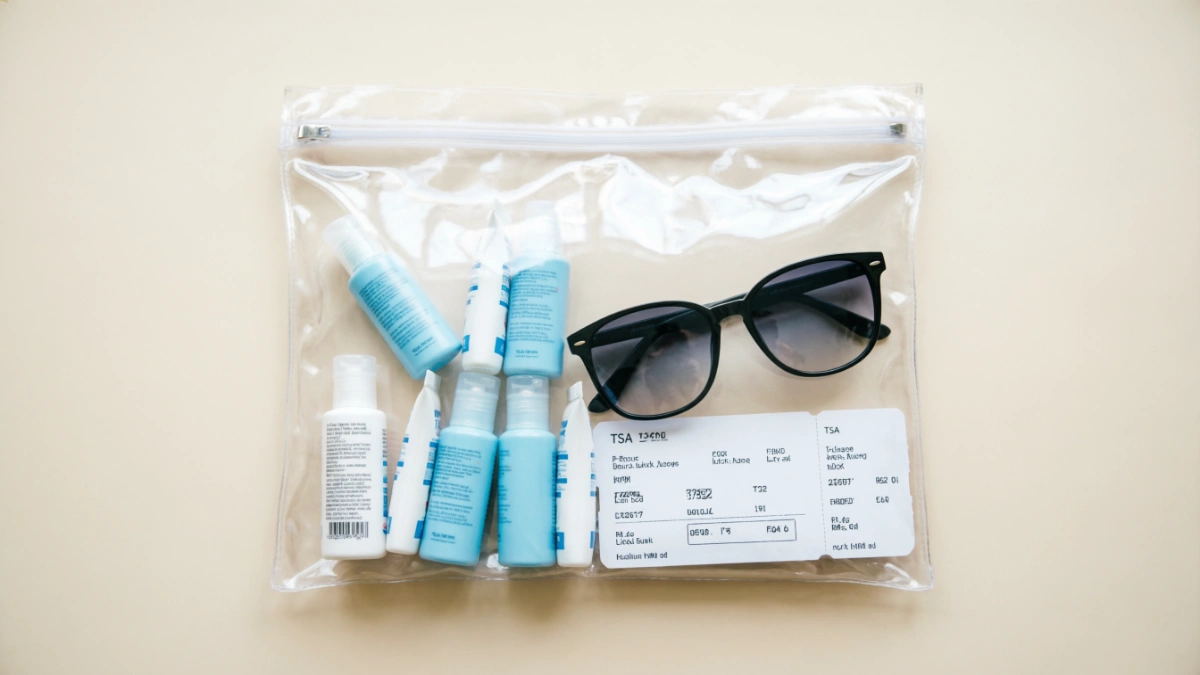
TSA allows travel-size sunscreen for airplane carry-on bags up to 3.4 ounces (100 ml) per container under the 3-1-1 rule, and all containers must fit in one quart-size clear bag. Sunscreen sticks and full-size lotion bottles can go in checked luggage without any size limit.
What Size Sunscreen Can You Take on a Flight?
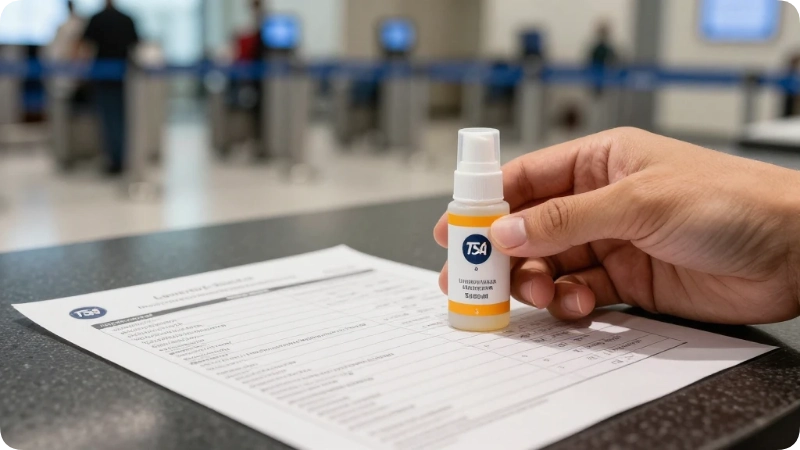
Sunscreen counts as a liquid, gel, cream, or aerosol under TSA rules, so each container in a carry-on bag must hold 3.4 ounces (100 ml) or less. This applies if the sunscreen is a lotion, a spray, or a gel formula, and it applies no matter how much product is actually left inside the bottle.
TSA measures the container size printed on the label, not the amount of sunscreen remaining. A half-empty 6-ounce bottle is still treated as a 6-ounce container and will not pass through carry-on screening. This is the single most common mistake travelers make with sunscreen.
Quick answer: 3.4 oz / 100 ml is the maximum size sunscreen for airplane carry-on bags, and it must fit inside a single quart-size, clear, resealable bag along with other liquids.
What Is Travel Size Sunscreen?
Travel-size sunscreen is any sunscreen product packaged in a container of 3.4 ounces (100 ml) or smaller, specifically designed to meet airline carry-on liquid limits. It typically comes in lotion, spray, gel, or stick form and is sold in dedicated mini bottles or as part of travel toiletry kits.
Brands sell these small sizes because full-size sunscreen bottles almost always exceed the 3.4-ounce carry-on limit. Travel-size sunscreen lets flyers keep sun protection in their carry-on instead of checking a bag or buying sunscreen after landing.
Sunscreen sticks are a useful exception worth noting here, since solid sunscreen sticks are not classified as liquids and generally have no size restriction in carry-on bags.
TSA Liquid Rules: The 3-1-1 Rule Explained
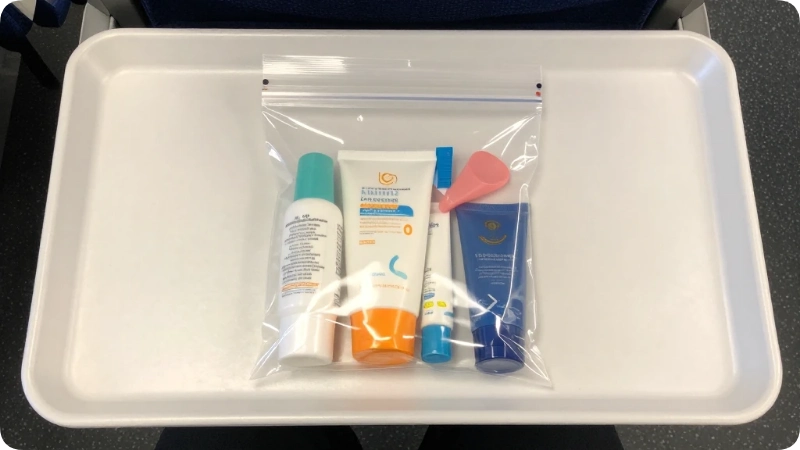
The 3-1-1 rule means each liquid container holds 3.4 ounces or less, all containers fit in one quart-size bag, and each traveler carries just one such bag through security. Sunscreen, shampoo, and perfume are all treated identically under this rule.
So, can you take 200 ml sun cream in hand luggage? No. A 200 ml bottle exceeds the 100 ml limit and must go in checked luggage instead, or be left behind.
The same math applies elsewhere travelers commonly ask about:
- Can I carry 200 ml of shampoo in flight? No, it must be checked or replaced with a 100 ml or smaller bottle.
- Can I take two 100 ml bottles of perfume in hand luggage? Yes, as long as both fit together inside the single quart-size bag along with any other liquids.
- What toiletries are not allowed on a plane? Full-size liquid toiletries over 3.4 oz, along with flammable aerosols, are not allowed in carry-ons; solid toiletries like bar soap, deodorant sticks, and sunscreen sticks are exempt from the liquid rule entirely.
Duty-free liquids bought after security are typically exempt from the 100 ml rule if sealed in a tamper-evident bag with the receipt visible, though this depends on the connecting airport, so it’s worth confirming with TSA.gov or the airline before relying on it.
Is Sunscreen Spray Allowed on a Flight?
Yes, sunscreen spray is allowed in both carry-on and checked luggage. For carry-ons, aerosol sunscreen must be 3.4 ounces or smaller. This follows the same liquid rule as lotion. Checked bags can hold larger aerosol cans, generally up to 18 ounces under U.S. Department of Transportation rules for personal-care aerosols.
Should aerosol sunscreen go in a checked bag? Larger cans over 3.4 ounces should go in checked luggage instead of your carry-on. Carry-on aerosols must follow the same 3.4-ounce limit as lotions. Pack aerosol cans upright and cushion them in your checked bag. Pressure changes during flight can sometimes cause weak caps to leak.
Pump sprays without propellant are treated as regular liquids and follow the standard 3-1-1 rule with no extra restrictions beyond the size cap.
Can I Pack Sunscreen in My Checked Bag or Suitcase?
Yes, full-size sunscreen bottles of any volume are allowed in checked luggage, since the 3.4-ounce limit only applies to carry-on bags. This is the easiest workaround for travelers who don’t want to buy multiple small bottles.
A few packing habits help prevent a sunscreen explosion mid-flight:
- Squeeze out excess air from the bottle before closing the cap tightly.
- Place the bottle inside a resealable plastic bag as a backup barrier.
- Pack it upright in the center of the suitcase, surrounded by soft clothing.
Cargo holds are pressurized but not identically to the cabin, and temperature swings on the tarmac can cause plastic bottles to expand slightly, which is the usual cause of leaks.
How to Pack Sunscreen for Travel
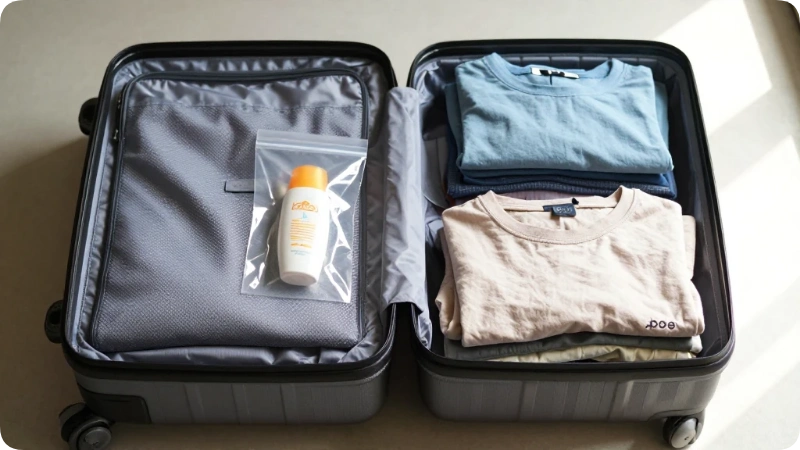
Pack sunscreen for travel by placing any container of 3.4 oz or less in the carry-on quart bag, and packing full-size bottles in checked luggage inside a sealed plastic bag for leak protection. This two-tier approach covers both short trips and longer beach vacations.
For carry-on-only travelers, decanting sunscreen into a small reusable travel bottle is often the most economical option. It also reduces waste compared to repeatedly buying single-use travel sizes.
A useful checklist for packing sunscreen for a flight:
- Keep the quart bag easily accessible for screening.
- Label decanted bottles so security and hotel staff know the contents.
- Pack a backup stick sunscreen, since sticks bypass the liquid rule entirely.
- Store the main supply in checked luggage if traveling with family-size bottles.
Where Do You Put Sunscreen When Flying?
Travel-size sunscreen belongs inside the clear quart-size liquids bag in a carry-on, positioned near the top of the bag for quick access during security screening. Keeping it accessible avoids digging through a packed bag while a line builds up behind you.
Full-size sunscreen should go in checked luggage instead of your carry-on. Place it in an outer pocket or sealed bag to prevent leaks. At most U.S. airports, travelers may need to remove their liquids bag during X-ray screening. However, newer CT scanners at some major airports allow liquids to remain inside your carry-on.
What Are the Best Travel Containers for Sunscreen?
The best travel containers for sunscreen are leak-proof silicone travel bottles with a secure flip-top or screw cap, sized at 2 to 3 ounces to stay comfortably under the TSA limit. Silicone bottles flex without cracking and are easier to squeeze out completely than rigid plastic.
| Container Type | Best For | TSA-Friendly Size |
| Silicone squeeze bottle | Lotion sunscreen | 2–3 oz |
| Fine-mist travel spray bottle | Spray or gel sunscreen | 2–3 oz |
| Solid sunscreen stick | Face and reapplication | No liquid limit |
| Original mini travel-size bottle | Brand-name SPF products | 1–3 oz |
Look for a cap with a locking mechanism, since standard flip-tops can pop open under cabin pressure changes and stain the inside of a bag.
How Big Is 50 ml Sunscreen?
Fifty milliliters of sunscreen is about 1.7 fluid ounces, roughly the size of a small trial-size lotion bottle, and well under the 100 ml TSA carry-on limit. It typically provides 15 to 25 full-body applications for an average adult, depending on how generously it’s applied.
For context, dermatologists recommend about one ounce, roughly a shot glass full, to cover an adult body for a single application. That means a 50 ml (1.7 oz) bottle covers roughly one to two full-body applications, making it best suited for a short trip or as a backup bottle.
How Long Will 20 ml of Sunscreen Last?
Twenty milliliters of sunscreen lasts for about one full-body application, or up to five face-only applications, since a full adult body application uses roughly 30 ml (one ounce). This makes 20 ml bottles more practical as a short day-trip size than a full vacation supply.
Frequent reapplication matters more than bottle size for actual sun protection. The American Academy of Dermatology recommends reapplying sunscreen every two hours outdoors, and immediately after swimming or heavy sweating, regardless of how much is left in the bottle.
How to Choose the Right Travel Size Sunscreen
Choosing the right travel-size sunscreen depends on SPF level, formula type, and destination climate. A Florida beach trip needs different protection than a Colorado ski trip. Both destinations can expose you to high levels of UV radiation.
Key factors to weigh:
- SPF level: SPF 30 is the dermatologist-recommended minimum; SPF 50 or higher suits intense sun, high altitude, or fair skin.
- Formula: Lotions rub in fully and suit sensitive skin; sprays apply quickly but should be rubbed in for even coverage; sticks work well for the face and reapplication over makeup.
- Water resistance: Look for “water resistant (80 minutes)” wording for beach, pool, or sweaty activities.
- Broad-spectrum protection: Choose sunscreen labeled “broad-spectrum” to guard against both UVA and UVB rays.
- Skin sensitivity: Mineral sunscreens with zinc oxide or titanium dioxide tend to suit sensitive or acne-prone skin better than chemical formulas.
Best Travel-Size Sunscreen Brands and Types
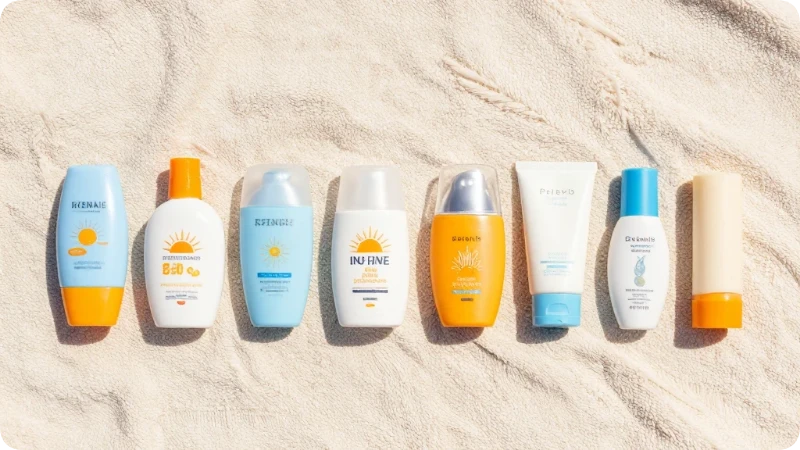
The best travel-size sunscreen for airplane travel comes from established brands offering trial-size or travel-size versions of their full-size lotions, typically in SPF 30, 50, 70, or 100 strengths. Look for brands with a long track record of dermatologist recommendations rather than newer, unproven formulas.
Widely available options in U.S. drugstores and travel sections include:
- Neutrogena Ultra Sheer, a lightweight, non-greasy lotion available in travel-size bottles.
- Coppertone Sport, a sweat-resistant option popular for active travelers.
- Banana Boat offers both spray and lotion travel sizes at accessible price points.
- La Roche-Posay Anthelios is a mineral-friendly option often recommended for sensitive skin.
- Sun Bum is known for pleasant scent and travel-size spray bottles.
Travel Size Sunscreen SPF 50
SPF 50 travel-size sunscreen blocks about 98% of UVB rays and is a strong general-purpose choice for beach, hiking, and city travel in sunny climates. It’s the most commonly stocked SPF strength in travel-size drugstore sections.
Travel Size Sunscreen SPF 100
SPF 100 travel-size sunscreen blocks slightly more UVB radiation than SPF 50, reaching about 99% protection. It can suit travelers with very fair skin or a history of sunburn. It may also help during extended exposure in tropical or high-altitude destinations. However, the difference between SPF 50 and SPF 100 is smaller than the numbers suggest. Regular reapplication matters more than relying on a higher SPF alone.
Travel Size Sunscreen SPF 70
SPF 70 travel size sunscreen sits between SPF 50 and SPF 100, offering strong protection for travelers who want extra margin without the thicker feel some SPF 100 formulas have. It’s a solid middle-ground pick for family beach vacations.
Travel Size Sunscreen Spray
Travel size sunscreen spray applies quickly to large areas like the back and legs, making it popular for families and travelers in a hurry, though it must still meet the 3.4 oz TSA limit for carry-on bags. Rubbing sprayed sunscreen in by hand improves even coverage, since spray alone can leave thin or missed spots.
Travel Size Sunscreen Bulk
Travel size sunscreen bulk packs, usually multi-packs of six to twelve mini bottles, suit families, group trips, or frequent flyers who want to avoid repurchasing sunscreen every trip. Buying in bulk from a warehouse retailer or online often costs less per ounce than single travel-size bottles bought at an airport kiosk.
Top Sunscreens for Travel: A Side-by-Side Comparison
| SPF Level | Best For | UVB Blocked (approx.) | Reapply Every |
| SPF 30 | Everyday city travel, cloudy climates | 97% | 2 hours |
| SPF 50 | Beach, hiking, general vacation use | 98% | 2 hours |
| SPF 70 | Fair skin, extended outdoor days | 98.5% | 2 hours |
| SPF 100 | High altitude, tropical sun, sunburn-prone skin | 99% | 2 hours |
No sunscreen blocks 100% of UV rays, and reapplication frequency matters more than SPF number once above SPF 30, according to dermatology guidance from the American Academy of Dermatology.
What’s the Best Travel-Sized Sunscreen? Top Picks by Need
There’s no single best travel-size sunscreen for every traveler, but the right pick depends on skin type, activity, and destination sun intensity. Below are traveler-scenario picks rather than one universal winner, since a face-focused city traveler and a beach-bound family need different formulas.
- Best overall: A broad-spectrum SPF 50 lotion in a 3-ounce travel bottle, since it balances protection and TSA compliance.
- Best for sensitive skin: A mineral sunscreen with zinc oxide, which tends to cause less irritation than chemical formulas.
- Best for quick application: A spray sunscreen rubbed in thoroughly by hand.
- Best for the face: A stick sunscreen, since it avoids the liquid rule entirely and travels mess-free.
- Best for extended outdoor days: SPF 70 or SPF 100 for travelers who sunburn easily or plan long hikes.
How Much Does Travel Size Sunscreen Cost?
Travel-size sunscreen typically costs between $4 and $12 per bottle at U.S. drugstores, depending on brand and SPF level, with premium or dermatologist-recommended brands landing at the higher end. Prices at airport kiosks and hotel gift shops tend to run noticeably higher than the same product at a chain drugstore.
Buying a multi-pack online or at a warehouse club before the trip is usually the most budget-friendly route, since per-ounce costs drop with bulk packaging. Prices change frequently, so it’s worth checking current listings at a retailer like Target, Walgreens, or Amazon before a trip rather than relying on older price references.
How to Use Travel Size Sunscreen
Apply travel-size sunscreen generously about 15 to 30 minutes before sun exposure, using roughly one ounce for a full adult body, and reapply every two hours or immediately after swimming or sweating. Skipping the initial waiting period is one of the most common reasons sunscreen seems to “fail” on the first day of a trip.
Because travel bottles are small, rationing product too tightly is a frequent mistake. It’s better to pack a second small bottle, or a solid stick as backup, than to under-apply sunscreen to make one bottle last the whole trip.
Common Mistakes Travelers Make with Sunscreen and Flights
- Packing a full-size bottle in carry-on out of habit. Fix: check bottle size before leaving home, or move it to checked luggage.
- Assuming spray sunscreen is exempt from the liquid rule. Fix: treat aerosol and pump sprays the same as lotion under the 3.4 oz limit.
- Under-applying travel-size sunscreen to stretch a small bottle. Fix: pack a backup stick or a second mini bottle instead of rationing.
Where Can You Buy Travel Size Sunscreen?
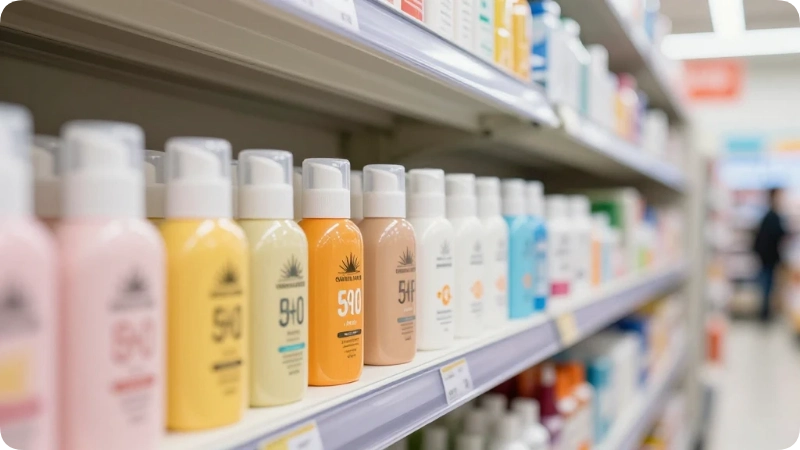
Travel size sunscreen is sold at U.S. drugstores such as CVS, Walgreens, and Target, as well as airport shops, gift shops at hotels, and online retailers offering multi-packs. Drugstores generally offer the widest brand selection at the lowest prices compared to airport convenience stores.
Travelers connecting through or visiting other countries, including Pakistan, will often find local pharmacy chains and supermarkets stocking smaller SPF bottles suited for carry-on travel, though brand availability and SPF labeling standards can differ from the U.S. market. It’s worth checking product labels carefully when buying sunscreen abroad, since SPF testing standards are not identical worldwide.
FAQs
What size sunscreen can I take on a plane?
Sunscreen in a carry-on bag must be 3.4 ounces (100 ml) or smaller per container, fitting inside one quart-size clear bag. Full-size bottles of any volume are allowed in checked luggage instead.
Can I bring a full-size sunscreen bottle on a plane?
Not in a carry-on; a full-size bottle over 3.4 oz must go in checked luggage. It can also be left at home and replaced with a travel-size version bought locally at the destination.
Is sunscreen spray allowed on a flight?
Yes, sunscreen spray is allowed in both carry-on and checked bags, but carry-on aerosol or pump sprays must be 3.4 ounces or smaller. Larger spray cans should be packed in checked luggage instead.
How much sunscreen can I bring to the airport?
There’s no total limit on sunscreen brought to the airport, only a per-container limit of 3.4 oz for carry-on bags. Any amount of sunscreen can be packed in checked luggage without size restriction.
Can I pack sunscreen in my checked bag?
Yes, sunscreen of any size and format, including full-size bottles and large aerosol cans, is allowed in checked luggage. Sealing the bottle in a plastic bag helps prevent leaks from pressure and temperature changes.
What is the best travel-size sunscreen for a beach vacation?
A broad-spectrum, water-resistant SPF 50 lotion in a 3-ounce bottle is a strong general pick for beach vacations. Travelers with fair or sunburn-prone skin may prefer SPF 70 or SPF 100 for extra margin.
How do I keep sunscreen from leaking in my suitcase?
Squeeze excess air out of the bottle, tighten the cap fully, and seal it inside a resealable plastic bag before packing. Placing the bottle upright in the center of the suitcase, cushioned by clothing, adds extra protection.
Can I bring sunscreen sticks on a plane without restriction?
Yes, solid sunscreen sticks are not classified as liquids under TSA rules and have no size limit in carry-on bags. This makes sticks a convenient backup to liquid sunscreen for face touch-ups during a flight or layover.
Do I need to declare sunscreen at TSA screening?
No, standard travel-size sunscreen under 3.4 oz does not need to be declared separately and simply goes through screening inside the quart-size liquids bag. Only medically necessary liquids exceeding the standard limit need to be declared to an officer.
Does sunscreen expire, and does that matter for travel?
Yes, most sunscreen has a shelf life of about two to three years, and expired sunscreen loses effectiveness even if the texture looks normal. Checking the expiration date printed on the bottle before a trip avoids relying on sunscreen that no longer protects properly.
Is mineral or chemical sunscreen better for air travel?
Both formulas meet the same TSA size rules, so the choice comes down to skin type rather than travel regulations. Mineral sunscreen with zinc oxide tends to suit sensitive skin better, while chemical sunscreen often feels lighter under makeup.
Conclusion
Packing sunscreen for a flight really comes down to three things: keep any carry-on bottle at 3.4 oz or under, move full-size bottles to checked luggage, and pack a backup stick for the face. Getting the size right at security means one less thing to worry about before takeoff, and getting the SPF and formula right means an actual sunburn-free vacation once landed.
Before heading to the airport, double-check current TSA guidelines at TSA.gov, since checkpoint procedures and CT scanner rollouts continue to evolve at different airports across the country. A little prep now means a smoother line through security and better-protected skin waiting on the other side.

Ben Fogle believes that true adventure begins where the pavement ends. After spending years documenting extreme environments, rowing across oceans, and trekking through frozen landscapes, he mastered the art of wilderness travel. For Travelmarse, Ben constructs highly detailed guides on deep-nature packing lists, wildlife safety, and sustainable eco-tourism. He breaks down intimidating, rugged expeditions into clear, step-by-step roadmaps so everyday travelers can safely connect with the natural world.