Nothing derails a trip faster than a leaking shampoo bottle inside a favorite bag, or standing at TSA with a confiscated lotion. A well-packed travel hygiene kit solves both problems before they start. It saves space, protects your belongings, and keeps you ready for anything from a weekend getaway to a two-week international trip.
This guide walks through exactly what belongs in a modern hygiene kit, how to stay within airline and TSA limits, and how to choose a bag that actually holds up to years of travel. Along the way, you’ll find packing lists for men, women, carry-on-only flyers, and international travelers plus the mistakes that trip up even experienced packers.
Featured Snippet:
A travel hygiene kit is a compact bag holding travel-size toiletries toothbrush, toothpaste, deodorant, soap, shampoo, and a razor sized to meet TSA’s 3-1-1 liquid rule (3.4 oz containers, one quart bag). A good kit weighs under 2 lbs, fits in a carry-on, and covers 5–7 days without checked luggage.
What Is a Travel Hygiene Kit?
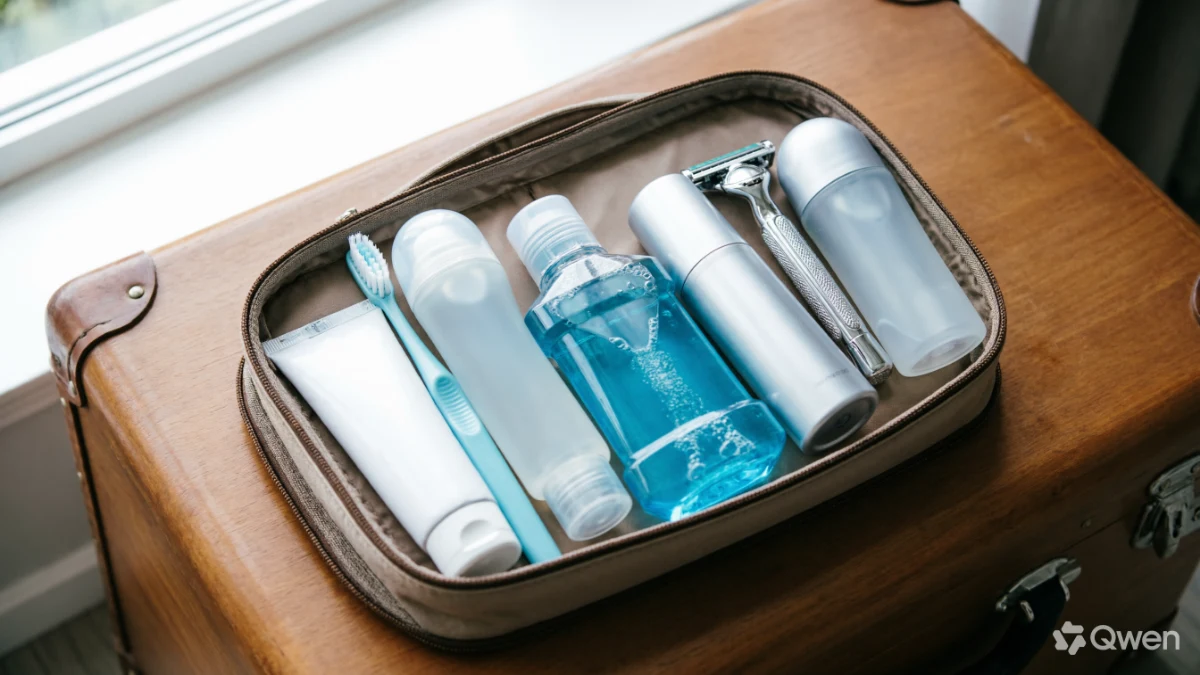
A travel hygiene kit, sometimes called a toiletry kit or travel amenities bag, is a small, organized pouch that holds personal care items in travel-friendly sizes. It typically includes oral care, skincare, hair care, and grooming tools in a compartment-based bag.
The purpose is threefold: convenience, hygiene, and compliance. A dedicated kit means you’re never digging through a suitcase for toothpaste, your other clothes stay dry and clean, and your liquids automatically stay within airline security limits.
Most kits fall into one of three styles: a flat fold-out bag (best for organization), a hanging toiletry bag (best for hotel bathrooms with limited counter space), or a minimalist pouch (best for carry-on-only travelers).
Quick Facts Table
| Detail | Standard Guidance |
| Ideal kit weight | Under 2 lbs (0.9 kg) |
| TSA liquid limit | 3.4 oz (100 ml) per container |
| TSA bag limit | 1 quart-size clear bag, per passenger |
| Best kit size | 8–10 inches for weekend trips; 10–12 inches for 1–2 weeks |
| Average cost | $15–$45 for a durable bag; $10–$30 to fill it with minis |
| Best material | Water-resistant nylon or polyester with a wipeable lining |
Prices and rules change; always confirm current limits at tsa.gov before you fly.
What Should Be in a Travel Hygiene Kit?
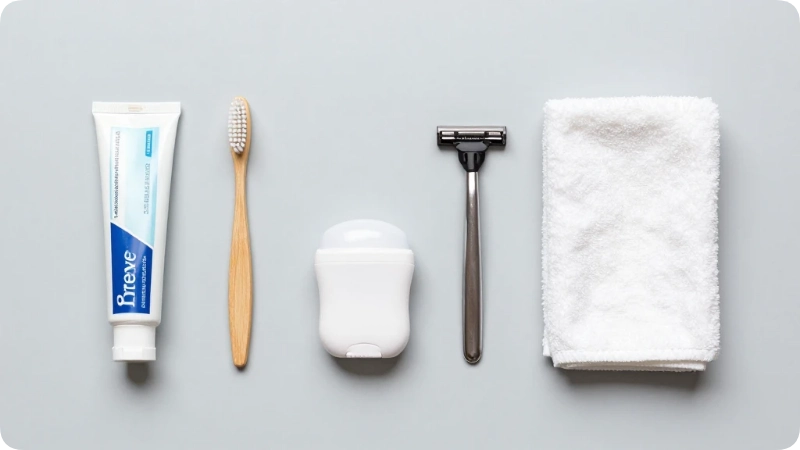
At minimum, a travel hygiene kit should cover oral care, skin care, hair care, and basic grooming in TSA-compliant sizes. That means a toothbrush and travel toothpaste, deodorant, a razor, travel-size soap or body wash, a small comb or brush, and any daily medication.
Build your kit in four categories so nothing gets forgotten:
- Oral care: toothbrush (with cap), travel toothpaste, floss, mouthwash tablets
- Skin & hair: face wash, moisturizer, sunscreen, shampoo bar or 3 oz bottle, hairbrush
- Grooming: razor, deodorant, nail clippers, tweezers
- Health & extras: hand sanitizer, contact lens solution, prescription meds, feminine hygiene products
Pack heavier or breakable items (glass bottles, aerosol cans) toward the bottom or center of the bag, cushioned by soft items like a washcloth.
What Are 10 Must-Have Travel Essentials?
Beyond hygiene items, ten essentials round out a smart carry-on: travel documents, a phone charger, a reusable water bottle, headphones, a light jacket, a portable charger, snacks, earplugs or a sleep mask, a spare outfit, and a small first-aid kit.
These items sit alongside not inside your hygiene kit, but they follow the same logic: compact, dual-purpose, and easy to grab in a hurry. Keeping documents and chargers in the same daypack as your hygiene kit means one bag holds everything you’d need if checked luggage were ever delayed.
What Toiletries Should I Pack for Travel?
The most practical toiletries for travel are ones with dual uses and leak-resistant packaging: a 2-in-1 shampoo-conditioner, solid deodorant, a multipurpose balm, and toothpaste tablets instead of a tube. These cut down on both weight and the number of items TSA needs to inspect.
Skip full-size bottles entirely. Instead:
- Decant liquids into 3 oz silicone travel bottles
- Choose solid bar versions of shampoo, conditioner, and soap where possible
- Bring sunscreen in stick form to avoid the liquids bag altogether
- Pack a multipurpose balm for lips, cuticles, and dry skin
How to Carry Body Wash for Travel?
The easiest way to carry body wash is as a bar soap or in a leak-proof 3 oz silicone squeeze bottle sealed inside a quart bag. Bar soap avoids TSA’s liquid rule entirely and lasts longer per ounce than bottled wash.
If you prefer liquid body wash, decant it rather than buying pre-made travel sizes it’s cheaper long term and lets you keep using a product you already like. Store it upright in a separate zip pouch inside your kit so a slow leak never reaches your clothes.
Can Body Lotion Go in Hand Luggage?
Yes, body lotion is allowed in hand luggage as long as the container holds 3.4 oz (100 ml) or less and fits inside your one-quart liquids bag, following TSA’s standard 3-1-1 rule. Every liquid in a carry-on must sit in a container of 3.4 ounces or less, and all such containers must fit inside a single quart-size resealable bag, with one bag allowed per passenger.
Full-size lotion bottles must go in checked luggage instead. If you only have a full-size bottle, transfer a small amount into a travel container rather than checking a bag just for lotion.
What Toiletries Are Not Allowed on a Plane?
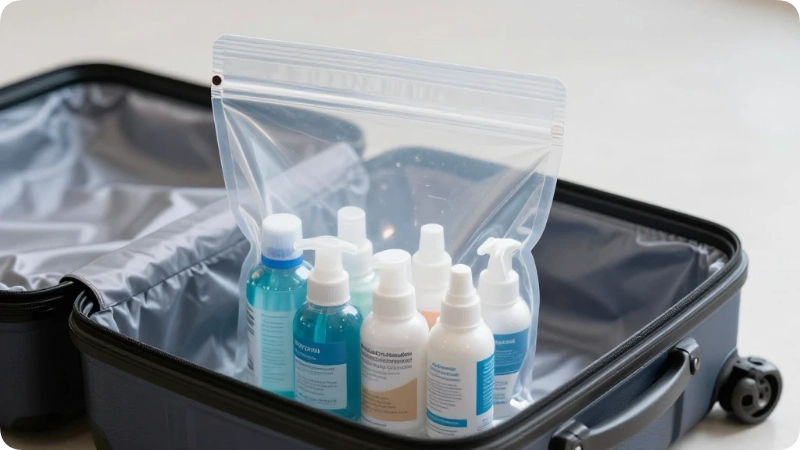
Liquids, gels, aerosols, creams, and pastes over 3.4 oz are not allowed in carry-on bags and must go in checked luggage instead. TSA treats anything spreadable, pourable, pumpable, squeezable, or scoopable as a liquid, which is why items like large lotion tubs or oversized deodorant sticks sometimes get flagged.
A few categories are fully banned from any carry-on:
- Flammable aerosols (some hairsprays, certain sunscreens)
- Straight razors and razor blades not in a cartridge
- Full-size pressurized canisters (like large dry shampoo cans)
Exceptions exist for medically necessary liquids over 3.4 oz, and for baby formula, breast milk, and toddler food, which are exempt from the 3.4-ounce cap when declared at the checkpoint. Rules can shift by airport, so it’s worth checking TSA’s official liquids page before a trip.
What Is the 5-4-3-2-1 Packing Rule?
The 5-4-3-2-1 packing rule is a carry-on-only framework: 5 tops, 4 bottoms, 3 pairs of shoes, 2 accessories or hats, and 1 swimsuit or extra layer, built around a week-long trip that mixes and matches.
| Number | Category | Example |
| 5 | Tops | T-shirts, blouses |
| 4 | Bottoms | Pants, shorts, a skirt |
| 3 | Shoes | Sneakers, sandals, dress shoes |
| 2 | Accessories | Hat, scarf, jewelry |
| 1 | Extra layer | Swimsuit or light jacket |
Your hygiene kit sits outside this rule but follows the same mindset: pack the fewest items that still cover every daily need.
How to Minimize and Organize Toiletries for Travel?
Minimizing toiletries means switching to multi-use, solid, or single-dose products, while organizing means grouping items by category in clear, labeled pouches inside the main kit. Together, these two habits are what separate a 2 lb hygiene kit from one that weighs 6 lbs.
Practical steps:
- Audit your current kit and remove anything unused on your last three trips
- Replace liquids with solids or powders where a good version exists
- Use small, clear zip pouches for oral care, skincare, and grooming separately
- Keep a “ready” kit permanently packed, and simply restock it after each trip
This last habit alone saves the most time you never repack from scratch.
Toiletry Kit for Men vs. Travel Kit for Women: What’s Different?
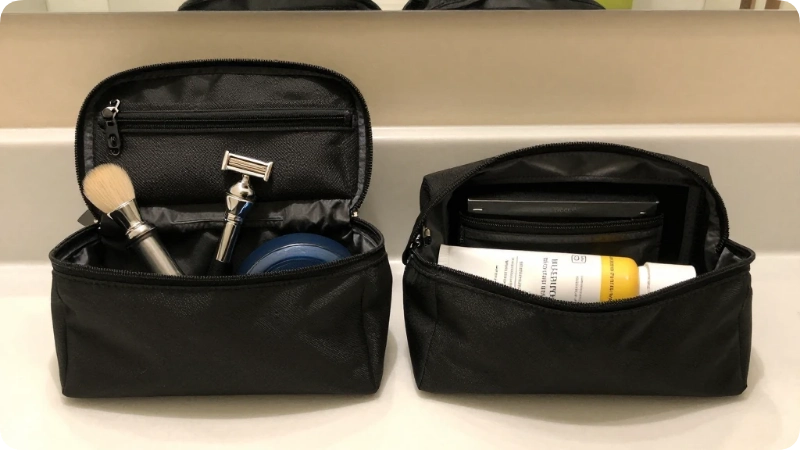
A toiletry kit for men typically prioritizes shaving supplies, deodorant, and a compact grooming case, while a travel kit for women usually needs more space for skincare steps, makeup, and feminine hygiene products, plus a hanging hook for hotel mirrors.
| Feature | Toiletry Kit for Men | Travel Kit for Women |
| Common core items | Razor, shaving cream, deodorant, cologne | Makeup remover, moisturizer, feminine hygiene items |
| Typical size | Compact, single-compartment | Multi-compartment with a mirror pocket |
| Popular style | Hanging dopp kit | Fold-out or hanging cosmetic bag |
| Average price range | $15–$35 | $20–$45 |
Neither is one-size-fits-all a hygiene bag for men built for a business trip looks different from one built for a camping trip, and the same is true for women’s kits. Choose based on trip length and activity, not gender labels alone.
Best Toiletries Bags & Travel Amenities Bags: Buying Guide
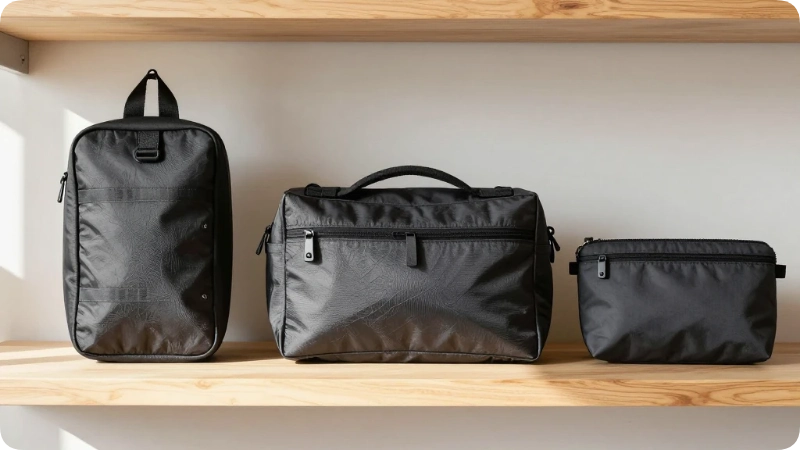
The best travel amenities bag balances size, water resistance, and internal organization look for a wipeable lining, a hook for hanging, and separate compartments so a leak in one pocket doesn’t reach everything else.
When you’re ready to buy a toiletry bag, compare these factors:
- Material: water-resistant nylon or polyester outlasts canvas
- Closure: a zippered top prevents spills better than a drawstring
- Compartments: at least two, ideally three (liquids, tools, extras)
- Hanging hook: genuinely useful in small hotel or Airbnb bathrooms
- Size match: a bag too large just tempts you to overpack
Budget breakdown: basic pouches start around $10–$15, mid-range hanging kits with multiple compartments run $20–$35, and premium leather or structured cases can reach $50–$80. For most travelers, a $20–$30 mid-range bag offers the best durability-to-price ratio.
What Are 13 Essential Items for Carry-On Luggage?
A well-packed carry-on covers documents, electronics, comfort, and hygiene in thirteen core items: ID or passport, boarding pass, wallet, phone and charger, headphones, a light jacket, a travel pillow, medication, a reusable water bottle, snacks, a book or e-reader, a spare outfit, and your hygiene kit.
Keep your passport, boarding pass, and wallet in one dedicated pocket you check before every checkpoint misplacing these causes more delays than anything liquid-related.
What Can I Pack in My 7 kg Hand Luggage?
A 7 kg hand luggage allowance is common on many international and budget carriers, and it comfortably fits a compact hygiene kit, one change of clothes, a light jacket, electronics, and a few snacks, once you weigh the empty bag first.
To stay under the limit:
- Weigh your empty bag; subtract that from 7 kg for your real packing budget
- Wear your bulkiest shoes and jacket on the plane instead of packing them
- Choose a lightweight hygiene kit with solid toiletries instead of liquids
- Skip a second electronic device if a phone can cover the same task
This limit is especially common on routes through South Asia and the Gulf, so travelers flying to or from Pakistan on regional carriers should double-check their specific airline’s cabin baggage policy before packing.
What to Pack for a 7-Day Trip?
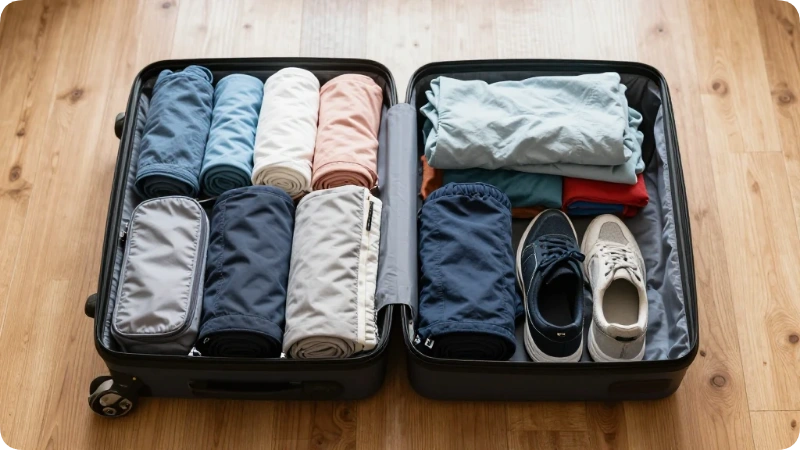
A 7-day trip needs roughly 5–7 tops, 3–4 bottoms, one pair of versatile shoes, a light layer, sleepwear, and a hygiene kit sized for a week meaning full-size solid toiletries rather than single-use minis, since minis run out mid-trip.
Sample 7-day hygiene kit:
- Toothbrush, travel toothpaste, floss
- Shampoo bar and conditioner bar
- Deodorant (full stick, not mini)
- Razor and shaving cream
- Sunscreen stick
- Multipurpose balm
- 7-day pill organizer for any medication
Do laundry once mid-trip and you can pack clothes for 4–5 days instead of 7, freeing up space for souvenirs.
What Should I Pack for International Travel?
International travel adds a layer beyond domestic packing: your passport, any required visa documents, a plug adapter, travel insurance details, a copy of prescriptions, and toiletries that meet both TSA and destination-country rules for liquids and medication.
A few often-missed items:
- A physical and digital copy of your passport, stored separately
- A universal plug adapter matched to your destination’s voltage
- Proof of travel insurance, especially for trips outside the US
- A printed copy of any prescription, since not all medications translate the same way across borders
If you’re traveling with toiletries bought in Pakistan or another market with different packaging standards, check that container sizes still meet the 3.4 oz TSA limit for your return flight, since bottle sizes abroad don’t always match US travel-size norms.
Most Forgotten Packing Items And Common Mistakes
The most frequently forgotten item when packing for vacation is a phone charger, closely followed by sunscreen and a spare pair of glasses or contacts. Building a repeatable checklist is the single best fix for this pattern.
Three common mistakes, and how to fix them:
- Packing full-size bottles “just in case.” Fix: keep a permanent set of travel-size containers you refill before every trip.
- Forgetting to check expiration dates on sunscreen or medication. Fix: check your kit twice a year, not just before a trip.
- Leaving toiletries loose instead of bagged. Fix: use a labeled quart bag even on trips where TSA screening feels unlikely to matter spills happen at altitude regardless.
Why Not Wear Jeans on a Plane?
Jeans aren’t banned on planes, but they’re a common comfort mistake because thick denim doesn’t stretch, traps heat, and gets uncomfortable during long security lines or multi-hour flights. Lightweight, breathable pants or joggers move through security faster and feel better on a 4+ hour flight.
If jeans are your preferred travel style, choose a stretch-denim pair and pack a lightweight layer for temperature swings on board.
Safety Tips for Packing Toiletries on International Trips
Keep prescription medication in its original labeled packaging, carry a doctor’s note for controlled substances, and never pack essential medication in checked luggage in case bags are delayed. These habits matter more on international routes, where replacing a specific product isn’t always possible.
It’s also worth photographing the contents of your hygiene kit before a long trip if a bag is lost or confiscated at customs, you’ll have a clear reference for replacement or insurance claims.
Must-Have Travel Essentials for 2026
Heading into 2026, the standout hygiene-kit upgrades are solid-format toiletries (shampoo bars, toothpaste tablets, deodorant bars), reusable silicone travel bottles, and compact UV sanitizer devices for phones and small items all driven by airlines tightening baggage weight enforcement.
One genuine 2026 shift worth knowing: as of May 1, 2026, American and Delta allow two power banks per passenger while Southwest allows one, and none permit charging a power bank mid-flight. Pack spare batteries and power banks in your carry-on only, never in checked luggage.
FAQs
What are the basic daily toiletry needs?
The basic daily toiletry needs are a toothbrush, toothpaste, deodorant, soap or body wash, and a hairbrush or comb. Add sunscreen and moisturizer for daytime protection, and anything prescribed by a doctor for ongoing health needs.
What are good travel toiletries?
Good travel toiletries are compact, leak-resistant, and multi-purpose: solid shampoo bars, toothpaste tablets, a 2-in-1 wash, and stick sunscreen. These reduce both weight and the risk of a spill ruining your bag.
How to pack wisely for travel?
Pack wisely by listing everything you actually used on your last trip, removing what you didn’t touch, and organizing what’s left by category in separate small pouches. Roll clothing instead of folding to save space and reduce wrinkles.
What to pack before travelling?
Before traveling, confirm your ID or passport is valid, pack a hygiene kit with TSA-compliant liquids, charge all electronics, and check the weather at your destination so you pack the right layers.
How long should a travel hygiene kit last before repacking?
A well-built hygiene kit should last 5–7 days of daily use before any item needs replacing, assuming standard travel-size containers. Longer trips call for full-size solid toiletries instead of minis that run out early.
Is it worth buying a dedicated toiletry bag instead of a ziplock bag?
Yes, for anyone who travels more than a couple of times a year. A structured bag with compartments prevents leaks from spreading and saves repacking time on every trip, while a ziplock bag is a fine short-term stand-in for occasional flyers.
What’s the most overrated toiletry to pack, and what’s underrated?
Overrated: a full skincare routine identical to your home routine most travelers skip steps once they’re busy sightseeing. Underrated: a multipurpose balm, which handles lips, cuticles, and minor scrapes in one small tin.
Conclusion
A great travel hygiene kit comes down to three things: TSA-compliant sizing, a durable organized bag, and a packing list trimmed to what you’ll actually use. Get those right, and you’ll spend less time repacking before every trip and less time worrying at security.
If you’re building a hygiene bag for men for a business trip or a travel kit for women for a two-week vacation, the same rule holds pack for the trip you’re taking, not every trip you might ever take. Start with the checklist above, adjust it after your next trip, and you’ll have a kit that’s ready before you even think to pack it.

Ben Fogle believes that true adventure begins where the pavement ends. After spending years documenting extreme environments, rowing across oceans, and trekking through frozen landscapes, he mastered the art of wilderness travel. For Travelmarse, Ben constructs highly detailed guides on deep-nature packing lists, wildlife safety, and sustainable eco-tourism. He breaks down intimidating, rugged expeditions into clear, step-by-step roadmaps so everyday travelers can safely connect with the natural world.