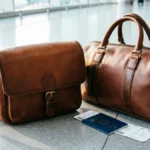
The best travel journals combine durable covers, acid-free paper, and a format that fits your travel style. Whether that’s a classic Moleskine, a refillable leather journal, or a guided prompt-based book. Top picks for 2026 include Moleskine’s Passion Travel Journal, Wanderlust Designs’ refillable leather journals, and Rhodia’s Webnotebook for durability on the road.
A blank notebook rarely captures what a phone camera misses: the smell of street food in Hanoi, the stranger who gave you directions in broken English, the way jet lag felt at 4 a.m. Photos fade into camera rolls nobody scrolls back through, and that’s the real pain point behind the search for the best travel journals: travelers want a way to hold onto memories that a screen can’t replicate.
This guide walks through the top travel journal picks for men, women, adults, and Reddit-approved favorites, plus how to start one, creative prompts to fill it, journal apps worth trying, and answers to nearly every question travelers ask about journaling on the road. Consequently, whether this is a first trip journal or a tenth, there’s a format below that fits.
Quick Facts Table: Travel Journals at a Glance
| Journal Type | Best For | Typical Price Range* | Key Feature |
| Moleskine Passion Travel Journal | Structured planners | $25–$35 | Pre-printed prompts and maps |
| Refillable Leather Journal | Long-term travelers | $30–$60 | Reusable cover, swappable inserts |
| Rhodia Webnotebook | Durability seekers | $20–$30 | Rounded corners, elastic closure |
| Guided Prompt Journal | Beginners | $15–$25 | Fill-in-the-blank structure |
| Digital Journal App | Minimalists | Free–$5/month | Photo + location tagging |
*Prices change often; always check current listings before buying.
What Is the Best Travel Journal?
The best travel journal is the one a traveler will actually use every day, not the one with the most features. For most people, that means a compact, durable notebook with thick paper that resists ink bleed, such as the Moleskine Passion Travel Journal or a Leuchtturm1917 dotted notebook.
Frequent flyers often prefer refillable journals so a single cover lasts for years. Meanwhile, beginners tend to succeed more with guided, prompt-based journals because blank pages can feel intimidating on day one.
Best Travel Journals on Reddit: What Real Travelers Recommend
Reddit travel communities consistently recommend the Moleskine Passion Travel Journal, Field Notes notebooks, and refillable leather journals from small Etsy sellers. Threads on r/travel and r/journaling favor function over flash: lightweight, water-resistant, and small enough for a daypack.
A recurring tip from these communities: buy a journal with an elastic band or zip closure. Loose pages and ticket stubs fall out easily without one.
Best Travel Journals for Men
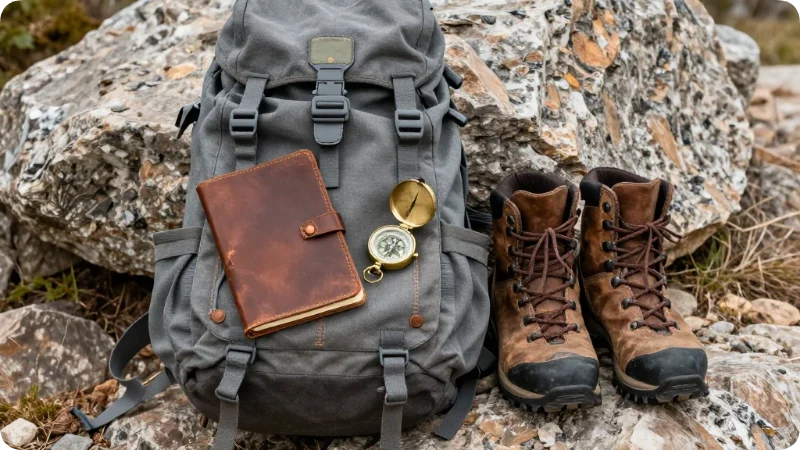
Men’s travel journals tend to favor minimalist leather covers, muted colors, and rugged, tear-resistant paper. Popular choices include the Rhodia Webnotebook, Baron Fig Confidant, and refillable distressed-leather journals that age well with use.
A slim profile matters too, since many men prefer a journal that fits in a jacket pocket rather than a bag.
Best Travel Journals for Women

Women’s travel journals often lean toward guided formats with prompts, pocket organizers for tickets and photos, and customizable covers. The Moleskine Passion Travel Journal and personalized leather journals from independent makers rank among the most gifted options.
Many women travelers also prioritize a built-in pen loop and a ribbon bookmark, small details that add convenience without adding bulk.
Best Travel Journals for Adults
Adult travelers generally prefer journals without childish designs, clean covers, quality paper, and enough space for both writing and taped-in mementos. A dot-grid or blank-page layout works better for adults than lined pages, since it allows sketches, maps, and pasted ticket stubs alongside text.
Adults juggling work trips and vacations often choose a slim, professional-looking cover that doubles as a meeting notebook.
Personalised Travel Journals: Worth the Upgrade?
Personalised travel journals with a name, initials, or custom quote embossed on the cover are worth it mainly as gifts or for travelers who want a keepsake, not necessarily for durability. The personalization rarely improves paper quality or function.
However, a monogrammed leather journal does make a memorable graduation, honeymoon, or retirement gift, which is why they remain popular on gifting sites.
Moleskine Travel Journal: Still Worth Buying?
Yes, the Moleskine Passion Travel Journal remains a strong pick in 2026 thanks to its structured prompts, world maps, and durable hardcover. It’s especially useful for travelers who want a bit of guidance rather than a blank page.
The main drawback: Moleskine paper isn’t the thickest, so heavy ink or watercolor sketches may bleed through. A blotting sheet or thicker fountain pen ink helps.
Best Refillable Travel Journal Options
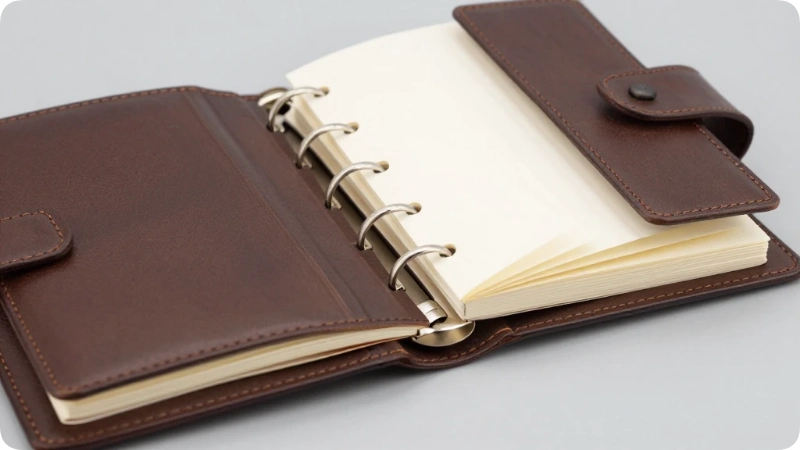
Refillable travel journals like those from Wanderlust Designs, Midori Traveler’s Notebook, and Von Baer let travelers swap in new paper inserts without replacing the cover. This makes them more sustainable and cost-effective over multiple trips.
They also allow travelers to mix insert types: one for writing, one for sketching, one for taped-in ephemera like boarding passes and postcards.
What Is a Good Travel Book Journal?
A good travel book journal blends a personal diary with reference sections, packing lists, budget trackers, and space for reviews of places visited. Books like “Wanderlust: A Travel Journal” or “My Travel Journal for Kids and Adults” combine structure with room for personal reflection.
This hybrid format suits travelers who want more than a blank notebook but less rigidity than a full daily planner.
What Are 7 Types of Journals?
The seven common journal types are: travel journals, gratitude journals, bullet journals, dream journals, food journals, fitness journals, and reflective diaries. Each serves a different purpose; for example, a bullet journal organizes tasks, while a gratitude journal focuses on daily positive reflection.
Travel journals often borrow elements from several of these, blending itinerary tracking with personal reflection and even food logs from meals abroad.
Which Type of Journal Is Best?
The best journal type depends entirely on the goal: bullet journals suit organizers, guided journals suit beginners, and blank dot-grid journals suit creative travelers who sketch or collage. There’s no universal “best” only the best fit for a specific habit.
Travelers who journal inconsistently at home often do better with a guided travel journal, since built-in prompts remove the guesswork.
Are Travel Journals Worth It?
Yes, travel journals are generally worth it because they preserve details photos miss smells, conversations, and emotions and they hold up as keepsakes for decades. Unlike a phone gallery, a journal doesn’t need battery power or an app update to stay readable.
The main downside is the extra weight and the discipline required to write consistently, which is why many travelers pair a journal with a simple daily 5-minute habit rather than long entries.
What’s the Difference Between a Regular Journal and a Travel Journal?
A regular journal is typically used at home for daily reflection, while a travel journal is built for portability and durability: smaller size, tougher paper, and pockets for tickets or maps. Travel journals also often include destination-specific prompts, such as “best local dish tried today.”
In short, function drives the difference more than content.
How to Begin a Travel Journal
Start a travel journal by writing the date, location, and one sentence about how the day felt before adding details. This simple structure removes the pressure of a “perfect” entry and builds a consistent habit fast.
- Keep the journal accessible (bag, not suitcase)
- Write for five minutes daily, even mid-trip
- Tape in one small memento per entry
- Don’t worry about grammar or neat handwriting
How Do I Write a Travel Journal?
Write a travel journal entry by covering four things: where you were, what happened, how it felt, and one detail worth remembering. This keeps entries short enough to maintain daily, rather than becoming a chore.
Adding a quick sketch, a taped ticket stub, or a pressed flower alongside the text also adds texture that plain writing can’t.
How Can I Create My Own Travel Journal?
Create a DIY travel journal using any sturdy blank notebook, a pen loop, and a simple template: date, location, weather, highlight of the day, and a lesson learned. This costs less than branded travel journals and allows full customization.
Adding a pocket folder (even a taped envelope) inside the back cover gives a place to store receipts and photos until they’re glued in later.
Creative Ideas for a Travel Journal
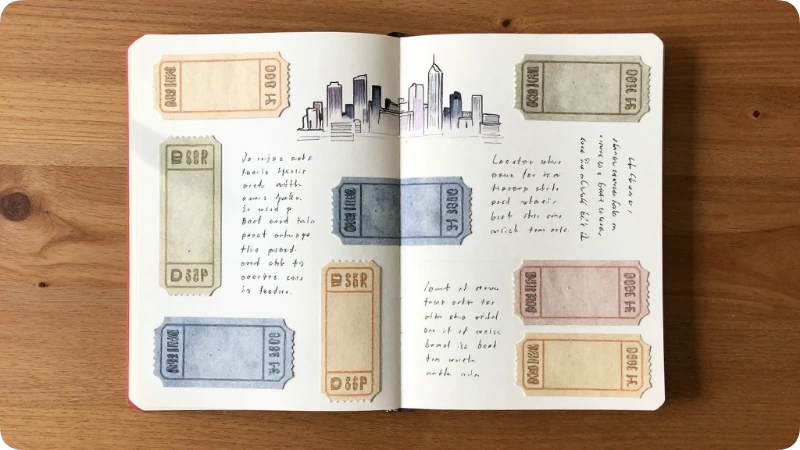
Creative travel journal ideas include ticket-stub collages, watercolor sketches of skylines, pressed leaves or flowers, restaurant napkin doodles, and “map with a pin” pages marking each stop. These additions turn a plain notebook into a scrapbook-diary hybrid.
Other popular ideas: a “local phrase of the day” page, a food-tasting scorecard, and a running list of “would return” versus “wouldn’t return” spots.
Can You Provide an Example of a Travel Journal Entry?
A simple example: “Day 4 Lisbon. Rained most of the morning, so we ducked into a tiny café near Alfama. The owner taught us a Portuguese card game. Highlight: pastéis de nata still warm from the oven.” Short, specific entries like this age better than vague summaries.
Specific sensory details smells, sounds, small conversations are what make old journal entries feel vivid years later.
What Are 5 Journal Entries? (Sample Formats)
Five common travel journal entry formats include: a daily recap, a “best and worst” list, a local-food review, a people-met log, and a budget/expense note. Rotating between formats keeps journaling from feeling repetitive on longer trips.
Mixing formats also makes the journal more useful later; food log doubles as restaurant recommendations for future trips.
What Are the Top 5 Journals? (By Category)
By category, top-rated journals include: Moleskine Passion Travel Journal (guided), Leuchtturm1917 (dot-grid), Rhodia Webnotebook (durability), Midori Traveler’s Notebook (refillable), and Baron Fig Confidant (minimalist). Each excels in a different niche rather than competing head-to-head.
Choosing among them comes down to writing style: guided prompts, blank sketching space, or a rugged daily-use notebook.
Is There a Good Travel Journal App? Best Apps Compared
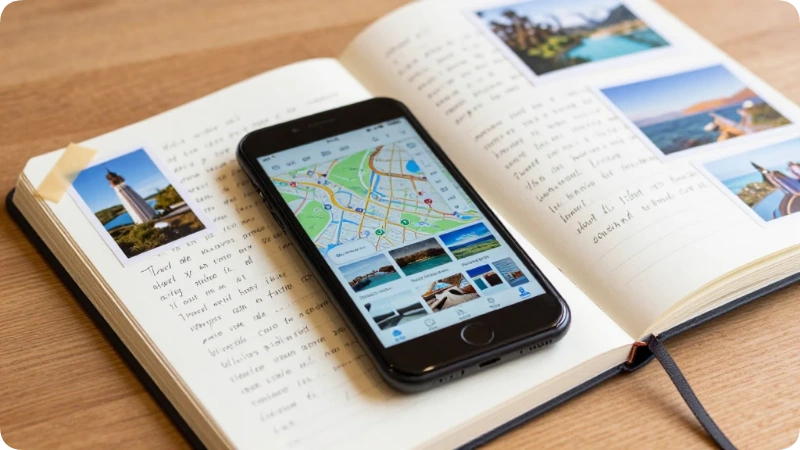
Yes, One, Journey, and Polarsteps rank among the top travel journal apps, each combining photo storage, location tagging, and cloud backup. Apps suit travelers who prefer typing over handwriting or want automatic map tracking.
The tradeoff: apps depend on battery life and internet access, while a paper journal never runs out of charge.
What Is the #1 Travel App?
Among general travel apps (not journals specifically), Google Maps remains the most widely used for navigation, while Polarsteps leads specifically for trip journaling and route-mapping. The “best” app ultimately depends on the traveler’s core need: navigation, booking, or memory-keeping.
For journaling specifically, Polarsteps stands out for automatically mapping each stop using phone GPS data.
Why Do People Avoid Journaling?
Most people avoid journaling because of perfectionism, fear of “bad” handwriting or “boring” entries, plus the simple friction of remembering to do it daily. Time pressure while traveling makes this worse.
The fix that works for most beginners: lower the bar. A single sentence per day counts as journaling, and consistency matters more than length.
What Are the Top 10 Travel Books of All Time?
Frequently cited “top travel books of all time” include “Into the Wild” by Jon Krakauer, “Wild” by Cheryl Strayed, “The Alchemist” by Paulo Coelho, “Eat, Pray, Love” by Elizabeth Gilbert, and “On the Road” by Jack Kerouac. Rankings vary by source, but these titles appear across most “best travel books” lists.
These books often inspire the reflective, story-driven style many travelers try to bring into their own journals.
What Are 5 Books Everyone Should Read? (Travel Edition)
For travel-minded readers, five frequently recommended titles are “Into Thin Air,” “A Walk in the Woods,” “Vagabonding” by Rolf Potts, “The Geography of Bliss,” and “Notes from a Small Island.” Each blends narrative storytelling with practical travel insight.
Reading a mix of adventure and humor-driven travel writing tends to spark more varied journal entries too.
What Are the Top Travel Publications?
Leading travel publications include National Geographic Traveler, Condé Nast Traveler, Travel + Leisure, Lonely Planet, and AFAR. These outlets combine destination guides with long-form storytelling that inspires personal trip journaling.
Many travelers use these publications for pre-trip research, then journal their own experience against those expectations afterward.
What Are the Top 10 Travel Blogs?
Well-known travel blogs include Nomadic Matt, The Blonde Abroad, Legal Nomads, Adventurous Kate, Expert Vagabond, and A Dangerous Business. These sites blend practical trip-planning advice with personal storytelling, similar in spirit to a public travel journal.
Reading blog-style trip recaps can also offer format ideas for a personal paper journal.
Who Is the Most Famous Travel Blogger?
Matthew Kepnes, known as “Nomadic Matt,” is widely regarded as one of the most recognized travel bloggers, known for budget-travel guides built from over a decade of personal trip logs. His long-running blog began essentially as a public travel journal.
Other highly recognized names include Gary Arndt of Everything Everywhere and Kiersten Rich of The Blonde Abroad.
What Are the Top 10 Best Travel Websites?
Commonly ranked top travel websites include Google Flights, Booking.com, TripAdvisor, Lonely Planet, Skyscanner, Airbnb, Rome2Rio, and the U.S. State Department’s travel advisory site. These cover booking, planning, and safety research in one list.
For safety and entry requirement updates specifically, the U.S. Department of State and CDC travel health pages remain the most reliable sources; always verify details there before departure.
Why Is Gen Z Obsessed With Traveling?
Gen Z travels heavily due to social media influence, remote work flexibility, and a stated preference for “experiences over things” in multiple consumer surveys. Platforms like TikTok and Instagram turn destinations into viral must-see spots almost overnight.
This same generation has also driven renewed interest in analog travel journaling as a way to disconnect from constant screen time while still documenting a trip.
What Personality Type Likes to Travel Most?
Research on personality and travel generally points to high-openness individuals, a Big Five trait linked to curiosity and novelty-seeking, as the most likely to travel frequently. Extraversion also correlates with a preference for social, group-based trips.
That said, introverts often travel just as often; they simply tend to prefer solo or slow travel over group tours, which pairs especially well with quiet journaling time.
What Age Is Hardest to Travel With?
Toddlers, roughly ages 1 to 3, are widely considered the hardest age group to travel with due to unpredictable naps, limited patience for flights, and higher meltdown risk in new environments. Infants under six months and teenagers are generally considered easier by comparison.
Families traveling with toddlers often find a simple shared journal; even a few doodles from the child become a treasured keepsake later.
What Are Your Top 10 Travel Tips?
Ten practical travel tips: pack light, book flights on weekdays, arrive at the airport early, keep a digital copy of documents, notify your bank before departure, learn a few local phrases, carry a portable charger, buy travel insurance, keep cash in small bills, and journal daily. These basics apply across nearly every destination and trip length.
Travel insurance in particular is worth researching before booking, since coverage for trip cancellation and medical emergencies abroad varies widely by provider.
What Are the 2026 Travel Trends?
2026 travel trends point toward slower, longer trips, increased solo travel, a rise in “quiet travel” to less-crowded destinations, and continued growth in digital detox experiences. Analog habits like paper journaling are part of this broader digital-detox trend.
Sustainability-focused travel and multigenerational family trips also continue trending upward, according to multiple industry travel surveys.
FAQs
How much should I spend on a travel journal?
Most quality travel journals fall between $15 and $40. Spending more usually buys a refillable leather cover rather than better core function, so budget-conscious travelers can start with a simple $15–$20 notebook.
Can I start a travel journal in the middle of a trip?
Yes, there’s no rule requiring a journal to start on day one. Simply date the first entry and, if desired, add a quick recap paragraph summarizing the days already traveled before continuing forward.
What size travel journal is best for carry-on travel?
A5 (roughly 5.8 x 8.3 inches) works well for most travelers as it’s compact enough for a daypack, yet large enough to write comfortably. Pocket-sized A6 journals suit ultralight packers.
Do digital travel journals count as “real” journaling?
Yes. A digital journal app captures the same reflection and memory-keeping benefits as paper, with added perks like automatic location tagging. The format matters far less than the consistency of use.
How do I keep a travel journal safe from loss or damage?
Use a resealable plastic bag or a dedicated journal pouch inside the daypack, avoid packing it in checked luggage, and photograph completed pages periodically as a backup in case the physical journal is lost.
Conclusion
The right travel journal isn’t the fanciest one on the shelf; it’s the one you actually open at the end of a long travel day. A five-minute nightly habit, whether in a $15 notebook or a refillable leather journal, captures far more than a camera roll ever will.
Key takeaways: choose durability and portability over flashy features, start small with a simple daily format, and don’t wait for the “perfect” trip to begin. Grab a notebook,r a journaling app, book the next trip, and let the first page start with just one honest sentence about today.

Ben Fogle believes that true adventure begins where the pavement ends. After spending years documenting extreme environments, rowing across oceans, and trekking through frozen landscapes, he mastered the art of wilderness travel. For Travelmarse, Ben constructs highly detailed guides on deep-nature packing lists, wildlife safety, and sustainable eco-tourism. He breaks down intimidating, rugged expeditions into clear, step-by-step roadmaps so everyday travelers can safely connect with the natural world.