
Booking a flight to a country you’ve never set foot in is thrilling and a little nerve-wracking. Somewhere between googling “do I need a visa” and packing the wrong adapter, most travelers ask the same basic question: what does travel abroad actually mean, and what do I need to do differently?
This guide breaks the phrase down in plain English, covers how many countries you can visit without extra paperwork, what’s changing in international travel rules for 2026, and how to pick the right destination for your budget, goals, or student plans. No jargon, no fluff just the practical answers travelers actually search for.
Featured Snippet:
“Travel abroad” means leaving your home country to visit a foreign nation, usually across an ocean or border, for tourism, study, work, or family. It requires a valid passport and often a visa, and it puts you under a different country’s laws, currency, and customs until you return home.
What Does “Travel Abroad” Mean?
Travel abroad means leaving your home country to visit or stay in another country, crossing an international border by air, sea, or land. It’s the opposite of domestic travel, which stays inside your own country’s borders.
For a U.S. citizen, traveling abroad could mean a weekend in Toronto, a semester in Spain, or a two-week trip through Southeast Asia. The defining feature isn’t distance; it’s the border crossing itself, which brings a different government, currency, language, and legal system into play.
This is also the meaning behind the search “what does travel abroad mean in english” in everyday English, “abroad” simply means “in or to a foreign country,” and “travel abroad” is the verb phrase for doing so.
What Counts as Traveling Abroad?
Any trip that takes you across an international border counts as traveling abroad, whether it’s a two-hour flight to Mexico or a 20-hour journey to Australia. Distance, purpose, and length of stay don’t change the classification.
So this covers:
- A day trip across the Canadian or Mexican border
- A cruise that stops in international waters or foreign ports
- A study-abroad semester
- A short business trip to another country
It does not include travel between U.S. states, territories reached without a passport check (though Puerto Rico and the U.S. Virgin Islands are U.S. territories, not “abroad” in the legal sense), or trips that stay entirely within domestic borders.
Where Does the Word “Abroad” Come From?
“Abroad” comes from Old English and Old French roots meaning “widely” or “at large,” combining the prefix “a-” (meaning “on” or “in”) with “broad.” Historically, i t meant “in a broad or open space,” and over centuries it narrowed to specifically mean “outside one’s own country.”
By the 16th century, English speakers were using “abroad” the way we do now to describe being somewhere beyond national borders. It’s one of those words that quietly shifted meaning over hundreds of years without anyone voting on it.
Abroad Example: What It Looks Like in Real Life
A simple abroad example: an American flying from Chicago to Rome for a two-week vacation is traveling abroad becausethey’re leaving U.S. soil and entering Italy, a foreign country with its own passport control, currency (the euro), and laws.
A few more everyday examples:
- A college student spending a semester in Japan through a study-abroad program
- A retiree taking a river cruise through Germany and Austria
- A remote worker relocating temporarily to Portugal on a digital nomad visa
- A family driving from Texas into Mexico for a weekend trip
Each example shares the same core ingredient: crossing into another nation’s territory.
Other Ways to Say “Travel Abroad” (Synonyms)
Common synonyms for “travel abroad” include “go overseas,” “travel internationally,” “go out of the country,” and “travel to a foreign country.” In British English, “go abroad” is the more typical phrasing, while Americans often say “travel internationally” or “go overseas.”
| Phrase | Common Usage |
| Travel abroad | Neutral, widely used in the U.S. and U.K. |
| Go overseas | Common in the U.S., especially for military or work relocation |
| Travel internationally | Common in official/government/airline contexts |
| Go out of the country | Casual, everyday American English |
| Travel to a foreign country | Formal or legal documents |
So if you were searching for “another word for abroad” or “another name for abroad,” any of the phrases above work interchangeably in most conversations.
“I Am Going Abroad” What This Phrase Means
“I am going abroad” simply means “I am going to travel to another country.” It’s a common, grammatically correct way of announcing international travel plans, regardless of the specific destination.
You’ll often hear this phrase from students (“I’m going abroad next semester”), workers relocating temporarily, or anyone packing for an international trip. It doesn’t specify which country, which is part of its usefulness. The related search “travelling abroad” refers to the general activity or experience of international travel, not a single event.
“Travel Abroad” in Other Languages
In Arabic, “travel abroad” is typically translated as “السفر إلى الخارج” (as-safar ila al-kharij), which literally means “travel to the outside.” Many languages build the phrase the same way English does, combining “travel” with a word meaning “outside” or “foreign.”
If you’re learning a language before a trip, it helps to know this phrase early, since it appears on visa forms, immigration paperwork, and travel apps in most countries.
“Abroad” vs. a.. Specific Country: Which Country Is “Abroad”?
“Abroad” isn’t a specific country; it refers to any country other than your own. For a U.S. citizen, “abroad” could mean Canada, France, Kenya, or Vietnam. The word describes a relationship (foreign vs. home), not a fixed place.
This answers a cluster of related searches:
- “Abroad which country” There’so single answer; it depends entirely on where you’re traveling from and to.
- “Which city is abroad?” Any city located outside your home country counts, from Paris to Bangkok.
- “How many countries are abroad?” From a U.S. perspective, all 195 recognized countries in the world (except the U.S. itself) are technically “abroad.”
How Many Countries Can You Travel To?
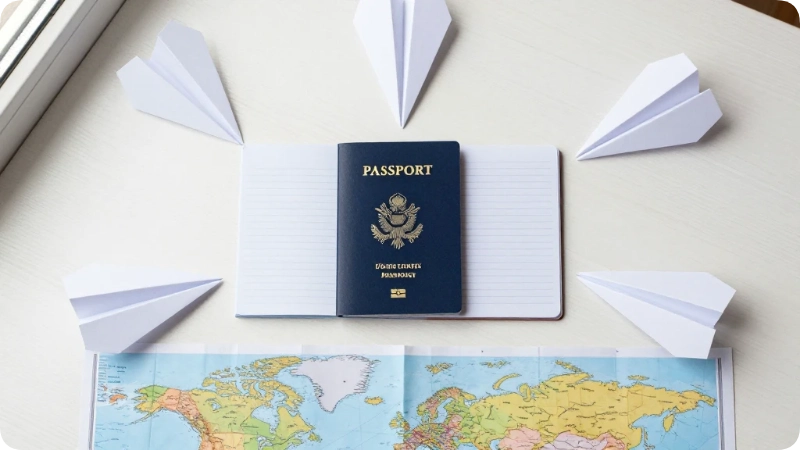
As a U.S. passport holder, you can travel to nearly every country in the world, though the process differs by destination: some require no visa, some need an online authorization, and some require an in-person visa application. The exact “visa-free” count varies by source and changes as policies update, generally landing somewhere in the 140–188 country range depending on how visa-on-arrival and eTA/eVisa destinations are counted.
Sources differ becausevisa-free ” isis defineinconsistentlyly; y some count only true no-paperwork entry, others fold in visa-on-arrival and electronic travel authorizations (eTAs) as “visa-free” too. That’s why the U.S. passport is variously ranked between 7th and 10th globally depending on the index used.
Bottom line: always check the official U.S. State Department’s travel guidance, which covers visa entry requirements, electronic travel authorizations, and passport requirements for each country, since these figures shift throughout the year.
Visa-Free Travel: Which Countries Allow It, and Which Don’t?
Most of Western Europe, much of the Americas, and many Asian and Caribbean nations allow U.S. citizens to enter visa-free for short tourist stays, typically 30 to 90 days. A smaller group of countries, including several in the Middle East, Central Asia, and parts of Africa, require a visa obtained in advance.
Some quick examples of countries with straightforward, visa-free (or near visa-free) entry for Americans: most of Europe, the UK, Mexico, Japan, Singapore, the Caribbean, and most of South America.
On the flip side, a handful of countries currently require U.S. citizens to secure a visa before arrival, and a few s, such as Burkina Faso, Mali, Niger, and North Korea, don’t permit entry to U.S. passport holders at all under normal circumstances.
Important 2026 note: Europe is rolling out two new systems that Americans should know about. Since October 2025, U.S. citizens have needed to go through the EU’s new Entry and Exit System when traveling to European countries, which collects fingerprints, a facial image, and passport details digitally for stays up to 90 days within 180 days. Separately, the ETIAS pre-travel authorization is expected to launch in 2026, requiring U.S. travelers to get online pre-authorization before entering the Schengen Zone, for a fee of about €7 valid for three years. This is not a visa, more like a quick background-check clearance, but it is a new step in the process.
Because these rules shift, treat any specific visa list (including this one) as a starting point, then confirm on the destination country’s official immigration site or travel.state.gov before booking.
What Are the New Rules on Traveling Abroad in 2026?
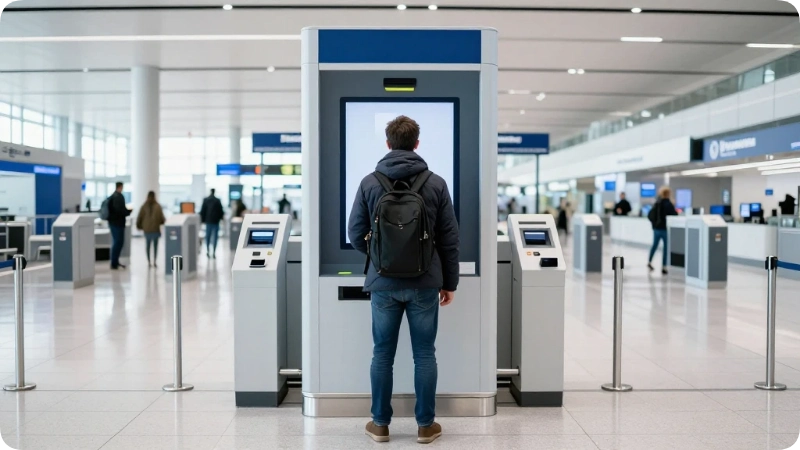
The biggest 2026 changes for U.S. travelers involve Europe’s new biometric entry system and upcoming online travel authorization, along with a general call for increased vigilance worldwide. The State Department issued a worldwide caution in March 2026, urging American citizens to exercise increased vigilance when traveling abroad due to elevated global security risks.
Practically, this means:
- Expect fingerprint and facial scans at many European borders under the EU’s Entry/Exit System.
- Expect to eventually apply for ETIAS online before Schengen-area trips.
- Expect more individual country advisories to be updated frequently. Europe continues to have the largest concentration of low-risk, Level 1 destinations, with countries like Austria and Liechtenstein recently receiving refreshed Level 1 advisories.
- Check your passport’s expiration date well in advance; many countries still require at least six months of remaining validity.
These are evolving policies, so verify current requirements directly with the U.S. Department of State and the destination country’s embassy before you travel.
What Are the Restrictions on International Travel Right Now?
There is no blanket ban on international travel for U.S. citizens, but certain countries carry Level 3 (“Reconsider Travel”) or Level 4 (“Do Not Travel”) advisories due to conflict, crime, or unstable conditions. These restrictions are destination-specific, not global.
As of recent State Department updates, Ukraine, Russia, and Belarus are rated Level 4 due to Russia’s ongoing war in Ukraine, arbitrary law enforcement, wrongful detentions, and limited U.S. consular support, with travelers strongly urged to avoid the region. Other countries carry Level 3 advisories for elevated crime or security concerns.
Before booking anywhere, check the specific country page on travel.state.gov; advisory levels are updated regularly and can change with little notice.
Is It Safe to Travel to Europe Right Now?

Yes, most of Europe remains one of the safest regions in the world for American travelers, though a few countries carry increased-caution advisories for pickpocketing, unrest, or localized risks. Europe continues to offer broadly low-risk options and remains one of the regions with the largest concentration of Level 1, “Exercise Normal Precautions” destinations.
That said, a few specific examples worth knowing:
- In July 2026, officials issued a Level 2 advisory urging Americans to exercise increased caution in Belgium due to crime, terrorism, and unrest, noting that petty crime like pickpocketing is common in popular tourist locations.
- Some Western European countries sit at Level 2 (“Exercise Increased Caution”) alongside destinations with much higher crime rates, which can be more about a mix of risk factors than day-to-day danger for tourists.
Practical safety tips for Europe:
- Keep valuables out of sight on public transit and near major train stations.
- Use hotel safes for passports and extra cash.
- Check your specific destination’s advisory level the week before you fly, not months in advance.
Why Do People Travel Abroad?
People travel abroad for tourism, education, work, family connections, and personal growth, each motivation shaping how they plan the trip. Understanding your “why” helps you choose the right destination, budget, and length of stay.
Common reasons include:
- Tourism and leisure: sightseeing, food, culture, relaxation
- Study abroad: free programs, semester exchanges, language immersion
- Work relocation: project assignments, remote work visas, digital nomad programs
- Family and heritage visiting relatives or exploring ancestry
- Personal growth building independence, language skills, and global perspective
Most travelers combine more than one motivation; a student studying abroad, for example, is usually also sightseeing and building independence at the same time.
Which Country Is Best for Going Abroad? (It Depends on Your Goal)
There’s no single “best” country to travel abroad to; the right choice depends on your budget, interests, safety comfort level, and purpose of travel (tourism, study, or work). A beach-focused traveler and a graduate student will reasonably pick very different destinations.
| Traveler Type | Good Starting Points | Why |
| First-time international traveler | Canada, Mexico, UK, Ireland | English-friendly, short flights, familiar infrastructure |
| Budget traveler | Vietnam, Colombia, Indonesia, Turkey | Lower daily costs for lodging and food |
| Culture and history lover | Italy, Japan, Morocco, Portugal | Deep historical sites, strong tourism infrastructure |
| Adventure traveler | New Zealand, Iceland, Peru, Nepal | Nature, hiking, outdoor activity access |
| Student | UK, Australia, Germany, Spain | Established international student programs |
If you’re weighing “which country is best for going abroad,” start with your budget and comfort level, not a “top 10” list th. The country is the one that matches what you actually want out of the trip.
Best Countries for Studying Abroad in 2026

Popular study-abroad destinations in 2026 continue to include the United Kingdom, Australia, Canada, Germany, and Spain, chosen for strong universities, established international-student support, and (in some cases) lower or no tuition for certain programs. The right pick depends on language preference, budget, and field of study.
- Germany many public universities charge little to no tuition for international students, though living costs and German-language requirements vary by program.
- UK globally ranked universities and one-year master’s programs, but higher tuition and living costs.
- Canada offers strong post-study work visa pathways for international graduates.
- Australia is popular for research programs and a relatively straightforward student visa process.
If you’re a Pakistani student researching options, all of the above accept applications from Pakistani nationals, but each has different visa, English-proficiency (IELTS/TOEFL), and financial-proof requirements. Always confirm current rules directly with the university’s international office and the destination country’s visa authority, since these requirements change often.
Which Abroad Country Is the Cheapest?
Southeast Asian countries like Vietnam, Cambodia, and Indonesia, along with parts of South Asia and Central America, are consistently among the most affordable places to travel or live abroad, thanks to lower costs for accommodation, food, and local transportation compared to Western Europe or North America.
For studying abroad specifically, countries with low or no public-university tuition, such as Germany, Norway, and some programs in Poland or Hungary, are often cited as the “cheapest” options for international students, even though living costs still apply.
A caution: “cheapest” isn’t the same as “best value.” Factor in flight costs, visa fees, health insurance, and safety before choosing based on price alone.
What’s the Cheapest but Safest Country to Visit?
Countries like Vietnam, Portugal, Mexico (in well-traveled tourist regions), and parts of Eastern Europe are frequently recommended for offering both affordability and a generally low risk profile for tourists, according to State Department advisory patterns and typical daily-cost comparisons.
That balance shifts constantly with currency exchange rates and local conditions, so cross-check:
- The current State Department advisory level for the country
- Recent exchange rates, since a “cheap” country can become expensive if your currency weakens
- Traveler reviews from the past few months, not older guides
Which Job Is Best to Settle Abroad?
Careers in IT, healthcare (especially nursing), engineering, teaching English, and skilled trades tend to have the most established visa pathways for settling abroad, because many countries maintain labor-shortage lists that fast-track work visas in these fields.
- IT and software roles are in high demand across Canada, Germany, Australia, and the UK
- Nursing and healthcare are often on skills-shortage or fast-track visa lists in Canada, the UK, and Gulf countries
- Teaching English is a common entry point for settling in East Asia, the Middle East, or parts of Europe
- Skilled trades (welding, electrical, construction) are in demand in Canada and Australia’s points-based immigration systems
Because immigration and work-visa policy change frequently, verify current shortage-occupation lists directly on each country’s official immigration website before making relocation plans.
Which Country Do People Love Pakistan Most?
Countries with historically strong cultural, religious, and diplomatic ties to Pakistan, including Turkey, China, and several Gulf nations like Saudi Arabia and the UAE, are frequently cited for warm public sentiment toward Pakistanis, based on diplomatic relationships, shared cultural or religious connections, and large expatriate Pakistani communities.
Public sentiment is hard to measure precisely and shifts with current events, so treat this as a general pattern rather than a fixed ranking.
Common Mistakes First-Time International Travelers Make
The most common mistakes when traveling abroad are skipping travel insurance, assuming a debit card works everywhere, and not checking passport validity rules a, f which are easy to fix with a bit of planning.
- Mistake: Assuming no visa is needed without checking. Fix: Confirm entry requirements on the country’s official visa page or travel.state.gov before booking flights.
- Mistake: Letting your passport get close to expiration. Fix: Renew if you have less than six months of validity left s; some countries require this buffer.
- Mistake: Skipping travel insurance to save money. Fix: A basic policy covering medical emergencies and trip interruption is inexpensive compared to an uninsured hospital bill abroad.
Quick Facts Table: Travel Abroad Basics for U.S. Citizens
| Question | Quick Answer |
| What does “travel abroad” mean? | Leaving your home country to visit another nation |
| Do I need a passport? | Yes, for virtually all international travel |
| Do I always need a visa? | No, any countries allow visa-free entry for short stays |
| How many countries can Americans visit visa-free? | Roughly 140–188, depending on the source and how it’s counted |
| What’s changing in Europe for 2026? | New biometric Entry/Exit System and upcoming ETIAS authorization |
| Where can I check current rules? | travel.state.gov and the destination country’s official visa site |
FAQs
What does “travel abroad” mean?
Travel abroad means leaving your home country to visit or stay in a foreign country, crossing an international border by plane, boat, or land. It’s the general term for any international trip, regardless of destination or purpose.
Does “abroad” mean another country?
Yes. “Abroad” specifically refers to any country other than your own; it’s a relative term, not a fixed place, so what counts as “abroad” depends on where you’re starting from.
What counts as traveling abroad?
Any trip that crosses an international border counts, including short day trips across a nearby border, study-abroad semesters, work travel, and vacations, regardless of length or purpose.
How many countries are you allowed to travel to?
As a U.S. passport holder, you can generally travel to nearly all recognized countries, though entry requirements (visa-free, visa-on-arrival, or advance visa) vary widely and change over time; always verify current rules officially before booking.
What is another word for “travel abroad”?
Common alternatives include “go overseas,” “travel internationally,” and “go out of the country.” All describe the same basic activity of international travel.
Is Pakistan the cheapest country to visit?
Pakistan is generally considered an affordable destination compared to Western Europe or North America, though “cheapest” varies by traveler origin, exchange rates, and current safety advisories; always check the latest State Department guidance first.
Which country gives an easy visa for Pakistani citizens?
Countries with simplified visa-on-arrival or e-visa systems for Pakistani passport holders have varied over time and depend on current bilateral agreements. Check the specific country’s official immigration portal for up-to-date requirements, since these change frequently.
Why do people travel abroad?
People travel abroad for tourism, education, work opportunities, visiting family, and personal growth. Most trips combine more than one of these motivations at once.
What’s the difference between an eTA, an eVisa, and visa-on-arrival?
An eTA is a quick, low-cost pre-screening (not a real visa); an eVisa is a full visa application processed online before you travel; visa-on-arrival means you apply and pay for your visa physically at the border or airport.
Do I need six months of passport validity to travel abroad?
Many countries require at least six months of remaining passport validity beyond your travel dates, though the exact rule varies by destination. Check your specific country’s entry requirements before you fly.
How is “travel abroad” different from “travel internationally”?
The two phrases mean essentially the same thing. “Travel abroad” is more casual and common in everyday speech, while “travel internationally” appears more often in official, airline, or government contexts.
Conclusion
Traveling abroad simply means stepping outside your home country’s borders, but that one word carries a passport check, a currency swap, and a new set of rules to learn. Three things to remember: confirm your destination’s entry requirements before booking, keep your passport valid well past your trip dates, and check the current State Department advisory for wherever you’re headed.
International travel rules shift constantly, from Europe’s new biometric border checks to changing visa-free lists; treat any guide, including this one, as a starting point and verify the latest details directly with official sources before you fly. The world is genuinely more reachable than most people assume; a little homework upfront is what makes the trip abroad smooth instead of stressful.

Maya Lin inspires travelers to explore the globe with absolute confidence and independence. Armed with a background in digital media and a decade of independent solo travel experience, she knows exactly how to navigate unfamiliar cities smoothly and safely. For Travelmarse, Maya curates the solo travel and hidden-gem verticals. She reviews charming boutique hotels, designs smart neighborhood walking routes, and shares practical language-learning hacks, giving readers the exact tools they need to travel solo without the stress.