
Standing at airport check-in with a Tokyo flight booked and a nagging feeling you forgot a form is a familiar kind of travel stress. Visa paperwork has derailed more than one dream trip, and Japan’s growing popularity means outdated blog posts and conflicting forum threads only add to the confusion.
Here’s the short version: if you hold a US passport, you do not need to apply for a visa before your trip. That single fact surprises many first-time travelers who assume every international trip requires pre-approval.
This guide breaks down exactly what US citizens need to enter Japan in 2026, how long you can stay, what the upcoming JESTA system actually means for your travel plans, and the practical budget and packing details that turn a good trip into a great one. Official rules can shift, so this guide also points you to where to double-check before you fly.
Featured Snippet:
No. US citizens do not need a visa for Japan for tourism, business meetings, or transit stays of up to 90 days. Thanks to a decades-old visa waiver arrangement, a valid US passport and proof of onward travel are enough. A future digital entry check called JESTA is planned but is not required for 2026 travel.
Quick Facts: Japan Visa Requirements for US Citizens
Here’s a fast reference for anyone short on time before booking flights.
| Requirement | Details for US Citizens |
| Visa needed for tourism/business (≤90 days) | No |
| Maximum visa-free stay | 90 days |
| Passport validity rule | Valid for the length of your stay |
| Entry fee | $0 (currently) |
| Pre-arrival paperwork | Visit Japan Web (optional but recommended) |
| Future requirement | JESTA electronic authorization, expected 2027–2028 |
| Governing agreement | US–Japan visa waiver arrangement |
| Re-entry needed for work/study | Yes, separate visa required |
Always confirm current details on the Ministry of Foreign Affairs of Japan or your nearest Japanese consulate before departure, since entry rules can change with little notice.
Is Japan Visa-Free for US Passport Holders?
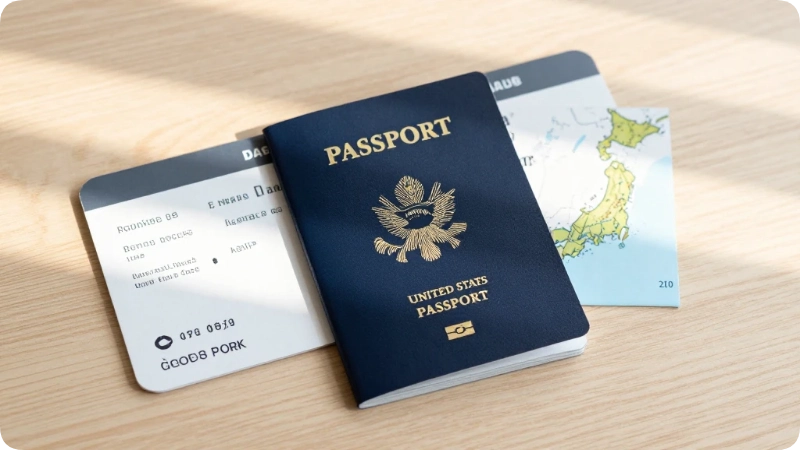
Yes, Japan is visa-free for US passport holders traveling for tourism, short business trips, or visiting family and friends. This exemption allows a stay of up to 90 days per visit without applying for any advance documentation, making Japan one of the more accessible major destinations for American travelers.
The arrangement has been in place for decades and covers the vast majority of American visitors, from first-time tourists to frequent business travelers. It does not, however, cover working, studying long-term, or living in Japan, which require a separate visa category entirely.
What Is Required to Enter Japan as a US Citizen?
Entering Japan as a US citizen requires a valid US passport, a return or onward flight ticket, and completed arrival paperwork, either on paper or through the Visit Japan Web portal. No visa application, interview, or advance fee is currently part of the process for short stays.
Here’s the practical checklist most travelers actually need:
- A valid US passport some airlines and immigration officers still prefer six months of remaining validity, even though Japan’s official rule only requires validity through your stay
- Proof of onward or return travel, such as a flight itinerary
- A completed arrival card and customs declaration, ideally done in advance through Visit Japan Web
- Contact details for your accommodation in Japan, in case you’re asked
- Occasionally, proof of sufficient funds, though this is rarely checked for typical tourist stays
Border officers can, in theory, ask about your accommodation or financial means, so keeping a hotel confirmation email handy is a simple safeguard.
Do US Citizens Need a Visa for Japan in 2026?
No, US citizens still do not need a visa for Japan in 2026. The visa waiver program remains fully in effect this year, and the planned JESTA electronic travel authorization has not yet launched, so American travelers can continue entering visa-free with just a passport.
Some travel sites have circulated confusing headlines suggesting JESTA is already mandatory. As of mid-2026, that is inaccurate. Japan’s Immigration Services Agency was still finalizing the JESTA portal, fee, and validity period, with a realistic rollout expected around 2027 or 2028. Rules can move faster than expected, though, so it’s worth checking the Ministry of Foreign Affairs website close to your travel date.
What Is JESTA, and Will US Citizens Need a QR Code to Enter Japan?
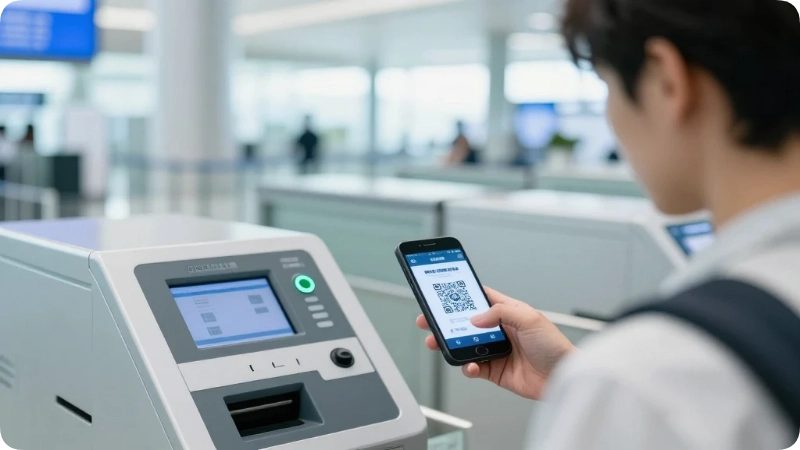
JESTA (Japan Electronic System for Travel Authorization) is a planned online pre-screening program for visa-exempt visitors, similar to the US ESTA or Canada’s eTA. It is not yet required for entry, and separately, the Visit Japan Web QR code is an optional but recommended digital tool that speeds up immigration and customs on arrival.
It helps to keep these two systems straight, since they’re often confused:
- JESTA is a future government security screening requirement, likely arriving in 2027–2028, expected to cost roughly ¥2,000–3,000 and require approval before you fly.
- Visit Japan Web is a current, optional portal where you can pre-fill immigration and customs forms and generate a QR code that speeds up the airport process. It is not mandatory, but it noticeably cuts wait times at Narita, Haneda, and Kansai airports.
Bottom line: you do not need a QR code to legally enter Japan today, but using Visit Japan Web in advance makes arrival smoother. JESTA is worth bookmarking for future trips, not something to worry about for a 2026 booking.
How Long Can US Citizens Stay in Japan Without a Visa?
US citizens can stay in Japan for up to 90 days per visit without a visa, under the “Temporary Visitor” status stamped into their passport on arrival. This 90-day window covers tourism, short business trips, and visiting friends or relatives.
A few points worth knowing:
- The 90 days count from your date of arrival, not from when you booked
- Overstaying, even by a day, can lead to fines, detention, or future entry bans
- If you need longer than 90 days, you must apply for an appropriate visa in advance; extensions from visa-free status are not simple to obtain
- Multiple visits are allowed, but immigration officers may ask questions if you appear to be using back-to-back visa-free stays to effectively live in Japan.
Which Countries Can Enter Japan Without a Visa?
More than 70 countries and regions currently have visa-free access to Japan, including the United States, Canada, the United Kingdom, Australia, most of the European Union, South Korea, Singapore, Taiwan, Hong Kong, Brazil, and Argentina. Most citizens of these countries receive a 90-day stay.
Countries whose citizens generally still need a visa for Japan include India, China, Russia, the Philippines, Vietnam, Pakistan, Bangladesh, and most nations across Africa and the Middle East. If you’re traveling with a companion who holds a different passport, it’s worth checking their specific requirement separately, since the rules genuinely vary by nationality.
Japan Visa for US Green Card Holders
A US green card alone does not grant visa-free entry to Japan; the visa exemption applies based on citizenship and passport, not residency status. Green card holders who are not US citizens need to check Japan’s visa requirement for their actual country of citizenship.
This trips up a surprising number of travelers. A US permanent resident who is, say, a citizen of India or China cannot rely on the US visa waiver just because they live in the United States. The requirement follows the passport in hand, not the visa or green card stamped inside a US travel document.
Do US Citizens Need a Visa for South Korea?
No, US citizens do not need a visa for South Korea for tourism stays of up to 90 days, similar to Japan’s policy. Short-term visa-exempt entry has been extended into 2026, though South Korea’s K-ETA electronic authorization may apply depending on current exemption status, so it’s worth a quick check before departure.
If Japan and South Korea are both on your itinerary, the good news is that neither currently requires a traditional visa for Americans, which makes a combined Northeast Asia trip relatively simple to plan.
Do US Citizens Need a Visa for China?
Yes, in most cases US citizens still need a visa to enter mainland China for tourism, since the US is not on China’s unilateral visa-free list. Exceptions exist for short visa-free transit stays of up to 240 hours at select ports, and a 30-day visa-free option for Hainan Island through a registered tour group.
This is a useful contrast for travelers weighing a Japan-only trip against a Japan-and-China itinerary: Japan requires no advance paperwork for Americans, while China generally does, unless your trip fits one of the narrow transit or Hainan exceptions.
How Much Does a Japan Visa Cost for US Citizens?
There is currently no cost for US citizens to enter Japan, since no visa is required for tourism or short business stays. The only related expense on the horizon is the future JESTA authorization, expected to carry a modest fee once it launches.
For travelers who do need an actual Japanese visa, such as for long-term study, work, or family reunification, fees vary by visa category and are set by the Japanese consulate processing the application. Those planning anything beyond a 90-day tourist stay should confirm current fees directly with their nearest Japanese embassy or consulate.
Is It Hard to Get a Japanese Visa?
For the vast majority of American tourists, this question doesn’t apply, since no visa is needed at all. For US citizens who do require a visa, such as for long-term study, work transfers, or spouse visas, the process is generally straightforward with complete documentation, though processing can take one to several weeks.
Common Japan visa rejection reasons, for those applying to longer-stay categories, include incomplete financial documentation, unclear purpose of stay, a sponsor letter that doesn’t match the application, or previous immigration violations. Working with the receiving institution or employer in Japan to prepare paperwork correctly is the best way to avoid delays.
How to Live in Japan as a US Citizen
Living in Japan long-term as a US citizen requires a specific visa category matched to your purpose, such as a work visa, student visa, spouse visa, or one of Japan’s newer digital nomad or highly skilled professional visas. Tourist visa-free status cannot be used or extended for residency.
Common pathways include:
- Work visa, sponsored by a Japanese employer
- Student visa, tied to enrollment at a Japanese institution
- Spouse or dependent visa, for family of Japanese nationals or residents
- Digital nomad visa, a newer option for remote workers meeting income requirements
- Working holiday visa, available to eligible younger travelers for a limited period
Each pathway has its own income, sponsorship, and documentation requirements, so early research through the Japanese consulate is essential.
Can a US Citizen Live in Japan Permanently?
Yes, a US citizen can pursue permanent residency in Japan, but it typically requires several years of continuous legal residence under a qualifying visa, a clean record, and a stable source of income before applying for permanent residency status. It is not something available directly from tourist status.
Dual citizenship is a separate consideration. Japan generally does not recognize dual nationality for adults, so US citizens who later naturalize as Japanese citizens are typically required to formally choose one nationality. This is worth researching carefully with an immigration specialist if long-term settlement is the goal.
How Much Money Do You Need to Visit Japan?
A realistic budget for Japan ranges from about $150–$250 per day per person for mid-range travel, covering accommodation, food, local transport, and some activities, with budget travelers spending less and luxury travelers considerably more. Exact costs depend heavily on city choice, season, and travel style.
Here’s how that breaks down for common trip lengths:
| Trip Length | Budget Travel | Mid-Range Travel | Comfortable Travel |
| 7 days | ~$900–$1,200 | ~$1,400–$1,800 | $2,500+ |
| 10 days | ~$1,300–$1,700 | ~$2,000–$2,600 | $3,500+ |
| 2 weeks | ~$1,800–$2,400 | ~$2,800–$3,600 | $5,000+ |
Is $3,000 enough for a week in Japan? Yes, $3,000 for one week comfortably covers mid-range to upper mid-range travel for one person, including flights from the US in many cases, especially outside peak cherry blossom or autumn foliage season. Is $5,000 enough for two weeks? For a single traveler on a mid-range budget, generally yes, though it leaves less room for shopping, splurge dinners, or last-minute activities.
There’s no official minimum bank balance required for tourist entry, since Japan does not require a visa application or bank statement for US citizens. That said, having accessible funds for your actual trip length is a practical necessity, not just a paperwork formality.
How Much Is a Meal in Japan?
A casual meal in Japan, such as ramen, a convenience store bento, or a set lunch, typically costs $6–$12, while a mid-range restaurant dinner runs $15–$30 per person, and high-end sushi or kaiseki dining can run well beyond $80 per person.
Food is one of the more flexible parts of a Japan budget. Convenience stores like 7-Eleven and Lawson offer surprisingly good, affordable meals, while department store basement food halls (depachika) are a favorite mid-range option among experienced travelers.
What Is the Best Time to Visit Japan?
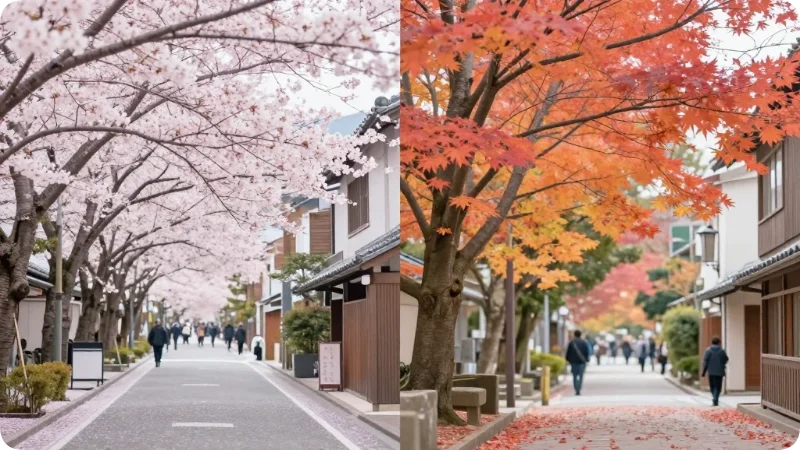
Spring (March–May) and autumn (September–November) are widely considered the best times to visit Japan, thanks to mild temperatures, cherry blossoms in spring, and vivid foliage in autumn. Both seasons are also the busiest and most expensive.
| Season | Weather | Crowd Level | Notes |
| Spring (Mar–May) | Mild, cherry blossoms | Very high | Book flights and hotels early |
| Summer (Jun–Aug) | Hot, humid, rainy start | Moderate | Festival season, but sticky heat |
| Autumn (Sep–Nov) | Mild, fall foliage | Very high | Comparable to spring in popularity |
| Winter (Dec–Feb) | Cold, snow in north | Lower | Best for ski trips and quieter cities |
What’s the cheapest month to visit Japan? January (after New Year holidays) and June are generally the most budget-friendly months, since they fall outside peak cherry blossom and autumn foliage demand, with lower flight and hotel prices as a result.
How Long Should I Visit Japan For?
Ten to fourteen days is generally the sweet spot for a first trip to Japan, allowing time for Tokyo, Kyoto or Osaka, and at least one slower-paced day trip, without feeling rushed. Shorter trips of 5–7 days work well for a single-region focus, such as Tokyo alone.
Travelers with only 90 days of visa-free eligibility per visit have plenty of room here, since even an ambitious three-week itinerary fits comfortably within the visa waiver window.
Can I Use My Phone in Japan?
Yes, US phones generally work in Japan if they are unlocked and support local networks. Most travelers choose pocket Wi-Fi or buy a local eSIM or SIM card when they arrive for affordable data access. Major airports offer SIM and pocket Wi-Fi counters right past immigration.
An eSIM purchased before departure is often the simplest option, since it activates the moment you land and avoids airport queues entirely.
What Not to Bring to Japan
Japan restricts or bans certain over-the-counter and prescription medications commonly used in the US, including some allergy and ADHD medicines. Check Japan’s customs rules before packing your medications to avoid problems at the border. Avoid bringing large amounts of cash beyond reasonable travel needs, and skip bulky luggage given Japan’s compact hotel rooms and train storage.
A quick pre-trip check with Japan customs or your prescribing doctor can prevent a genuinely stressful situation at the airport.
Is Japan the Strongest Passport?
No, the United States passport does not currently rank as the world’s strongest, although it remains one of the most powerful passports, offering visa-free or visa-on-arrival access to well over 180 destinations. Interestingly, Japan consistently ranks among the countries with the world’s strongest passports.
For US travelers, this ranking detail is more of a fun fact than a practical concern, since American passport holders already enjoy broad visa-free access, including to Japan.
Common Mistakes US Travelers Make with Japan Entry
- Assuming a visa is required and paying a third-party “visa service” unnecessarily. Fix: confirm directly on the Ministry of Foreign Affairs of Japan site before paying anyone for visa help.
- Forgetting to check passport validity against the full trip length. Fix: renew early if your passport expires close to your return date.
- Skipping Visit Japan Web and facing long arrival lines. Fix: complete the arrival card and customs form online a few days before departure.
FAQs
Do Americans need a visa for Japan in 2026?
No, Americans do not need a visa for Japan in 2026 for stays up to 90 days. The visa waiver arrangement remains active, and the planned JESTA system has not launched yet, so a valid passport is currently sufficient for entry.
Is Japan visa-free for Pakistan?
No, Pakistani passport holders generally need a visa to enter Japan, since Pakistan is not on Japan’s visa-exemption list. Applicants typically apply through the Japanese embassy or a visa application center before traveling.
Can I go to Japan with just my US passport?
Yes, a valid US passport alone is sufficient for tourism or short business entry into Japan, along with proof of onward travel. No additional visa document is required for stays up to 90 days.
What is the new Japan visa fee for 2026?
There is no new visa fee for US citizens in 2026, since tourist entry remains visa-free and free of charge. The only fee on the horizon is the future JESTA authorization, expected to launch around 2027–2028 at an estimated modest cost.
Is 2 lakh enough for a Japan trip?
This budget question usually applies to travelers converting Indian rupees rather than US dollars. Roughly $2,400 (about 2 lakh INR) can cover a modest 7–10-day trip for one person if you book flights early and choose budget to mid-range accommodation.
What’s overrated and underrated for first-time Japan visitors?
Many first-time visitors overrate extremely packed, single-day multi-city itineraries because they sacrifice depth for checklist travel. Returning travelers often underrate
slower-paced neighborhoods, regional cities, and one unhurried day at each stop.
Is Japan worth the trip for US travelers?
Yes, most travelers find Japan well worth visiting because it combines efficient transport, a distinctive food culture, and visa-free entry, which removes one of the biggest planning hurdles for many international travelers.
Final Takeaways Before You Book
Japan remains one of the most accessible major destinations for American travelers: no visa, no advance fee, and a generous 90-day window to explore. The main things worth double-checking before departure are passport validity, an optional Visit Japan Web registration, and any updates on the future JESTA system as your travel date approaches.
If it’s a week in Tokyo or a slower two-week loop through Kyoto and beyond, the entry process shouldn’t be the hard part of the trip.
Start with flights and a rough itinerary, keep an eye on official updates from Japan’s Ministry of Foreign Affairs, and let the planning energy go toward ramen shops and temple visits instead of paperwork.
Entry requirements, fees, and travel authorization systems can change. Always verify current details on the Ministry of Foreign Affairs of Japan, the nearest Japanese consulate, or Visit Japan Web before finalizing travel plans.

Ben Fogle believes that true adventure begins where the pavement ends. After spending years documenting extreme environments, rowing across oceans, and trekking through frozen landscapes, he mastered the art of wilderness travel. For Travelmarse, Ben constructs highly detailed guides on deep-nature packing lists, wildlife safety, and sustainable eco-tourism. He breaks down intimidating, rugged expeditions into clear, step-by-step roadmaps so everyday travelers can safely connect with the natural world.