
Standing in the passport line at Charles de Gaulle with a croissant-shaped knot in your stomach, wondering if you filled out the right form, is not how anyone wants to start a Paris vacation.
Confusing headlines about ETIAS, new border scanners, and shifting 2026 rules have left a lot of American travelers second-guessing a trip that used to be refreshingly simple.
The truth is, whether US citizens need a visa for France has a short, reassuring answer, but the surrounding details passport validity, the 90/180 rule, ETIAS timing, and long-stay visas are exactly where trips get derailed if you skip them.
This guide walks through every document, deadline, and rule change so you can book your flight to Paris, Nice, or Lyon with confidence instead of guesswork.
Quick Answer:
No. US citizens do not need a visa to visit France for tourism, business, or family visits of up to 90 days within any 180 days; a valid passport is enough. Starting in the last quarter of 2026, travelers will also need to complete a low-cost ETIAS travel authorization before departure, but this is not a visa.
Quick Facts: France Visa Requirements for US Citizens
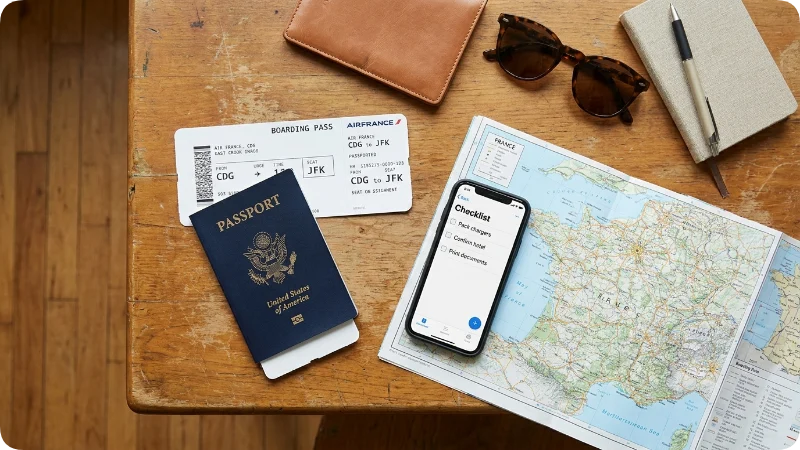
U.S citizens traveling to France for short tourist or business stays do not need a visa, only a valid US passport and, from late 2026 onward, an ETIAS authorization. Here’s the requirement snapshot at a glance.
| Requirement | Details |
| Visa needed for tourism (under 90 days) | No |
| Passport validity required | Valid for the duration of your stay; 3+ months beyond departure recommended |
| Maximum stay without a visa | 90 days within any 180-day period (Schengen Area-wide) |
| ETIAS required | Yes, starting last quarter of 2026 (not a visa) |
| ETIAS cost | About €20 (roughly $23 USD) |
| Long-stay visa (over 90 days, work, study) | Yes, required in advance |
| Border system in effect now | EES (Entry/Exit System), fully operational since April 10, 2026 |
Prices, launch dates, and border procedures can shift with little notice, so always confirm details on the French Ministry for Europe and Foreign Affairs site or the official EU ETIAS portal before you fly.
Do I Need a Visa to Go to France in 2026?
No, US citizens still do not need a visa to enter France in 2026 for stays of 90 days or less. France is part of the Schengen Area, and the United States remains on the visa-exemption list for short-term tourism and business travel.
What has changed for 2026 isn’t the visa requirement itself; it’s the paperwork layered around it. The EU’s new Entry/Exit System (EES) became fully operational on April 10, 2026, replacing manual passport stamps with fingerprint and facial-image registration at the border. Later in 2026, ETIAS will add a pre-travel online authorization step. Neither of these is a visa, but both are now part of “what Americans need to enter France.”
Do US Citizens Need a Schengen Visa?
US citizens do not need a Schengen visa for short visits. A Schengen visa is only required for travelers whose home country isn’t on the EU’s visa-exemption list, and the United States has long-standing visa-free access for stays under 90 days.
The confusion usually comes from mixing up “Schengen visa” with “Schengen rules.” Even though Americans skip the visa application, they’re still bound by Schengen regulations; most importantly, the 90/180-day stay limit that applies across all 29 member countries, not just France.
Is France Visa-Free for US Citizens?

Yes, in the sense that there’s no visa fee at all for short tourist or business stays, because no visa is required. The only cost on the horizon is the ETIAS authorization fee, which will run about €20 (roughly $23) once the system launches in late 2026.
That fee is dramatically lower than typical visa costs, and it covers travel to all 30 ETIAS-participating European countries for up to three years, not just a single trip to France. Travelers age 70 and older, and those under 18, are exempt from paying it.
What Documents Do I Need to Travel to France From the USA?
American travelers need a valid US passport, proof of onward or return travel, and, depending on your visa, proof of sufficient funds or accommodation details if asked by a border officer. From late 2026, an approved ETIAS will join this list.
Your practical document checklist:
- Valid US passport (many airlines and French border agents prefer at least 3–6 months of remaining validity, even though France’s minimum is technically “valid for your stay”)
- Return or onward flight ticket
- Proof of accommodation (hotel confirmation, Airbnb booking, or invitation letter)
- Travel insurance details (not legally mandatory for tourists, but strongly recommended)
- ETIAS confirmation, once the system is live
It’s smart to carry printed and digital copies of your passport photo page, plus your accommodation and return-flight confirmations, in case a border agent asks.
Who Needs an ETIAS to Visit France? Do I Need One?
Anyone from a visa-exempt country, including all US passport holders, will need an ETIAS to enter France and the rest of the Schengen Area once the system launches. ETIAS is a travel authorization, similar to the US ESTA program, not a visa.
Every traveler, regardless of age, will need their own approved ETIAS linked to their passport. The one exception: dual citizens who hold an EU passport and travel on that document instead of their US passport won’t need one.
Do Americans Need to Fill Out ETIAS in 2026?

No.t immediately for every trip. ETIAS is scheduled to begin operating in the last quarter of 2026, and the EU says it will announce the exact launch date at least six months in advance.
Until that date arrives, US travelers can still enter France with just a passport.
Even after launch, there’s built-in flexibility: a planned six-month transitional period will allow Americans to cross the border without ETIAS as long as they meet all other entry conditions, followed by a six-month grace period for first-time entries after the transition ends. Still, airlines and immigration authorities recommend applying as soon as it’s available rather than waiting.
What Date Will ETIAS Start? When Should I Apply?
The EU officially targets ETIAS for the last quarter of 2026 (October–December), though it has repeatedly pushed the launch back from earlier target years, so treat this as a planned window rather than a locked date. The EU plans to announce the exact launch date roughly six months in advance.
Once the portal opens, plan to apply at least a few days before departure, though most approvals process within minutes. If your application needs manual review, it can take longer, so applying a few weeks ahead rather than at the airport gate is the safer habit to build.
Can I Get an ETIAS Now? How Do I Apply?
No, ETIAS applications aren’t open yet as of mid-2026, and the official portal and mobile app will only go live once the system launches. Be cautious of third-party websites currently advertising “ETIAS applications” and charging processing fees; these are not official channels.
When the real portal opens, the process will involve entering your passport details, basic personal information, travel plans, and a short health-and-security questionnaire, then paying the roughly €20 fee by card. Only apply through the official EU ETIAS website or app once announced.
What Are the New Rules for Entering France? (EES Explained)

The biggest practical change for 2026 travelers isn’t a visa; it’s the Entry/Exit System (EES), a biometric border-registration program that replaced manual passport stamping and became fully operational across the Schengen Area, including France, on April 10, 2026.
At major French airports Paris-Charles de Gaulle, Orly, Lyon, Marseille, Nice, Toulouse, Bordeaux, and Nantes n-EU travelers now have fingerprints and a facial photo captured on their first crossing. The system automatically tracks how many days you’ve used toward your 90/180-day limit, removing the old ambiguity of faded ink stamps. There’s nothing to complete in advance for EES; it happens at the border itself.
Visa to France From US With a Green Card
If you’re a US green card holder (lawful permanent resident) but not a US citizen, your visa requirement depends on your actual citizenship, not your US residency. A green card alone does not grant visa-free entry to France; you’ll need to check the Schengen visa rules for your home country’s passport.
Some green card holders travel on a passport from a visa-exempt country and enter freely like US citizens; others may need to apply for a Schengen visa in advance. If you’re unsure, the safest move is to confirm directly with the French consulate serving your area before booking flights.
How to Get a French Visa as a US Citizen (Long Stays)
US citizens only need a visa if they’re staying longer than 90 days or coming for reasons like long-term work, study, or family reunification. In that case, you’ll apply for a long-stay visa (visa de long séjour) through the French consulate with jurisdiction over your US state of residence.
Typical long-stay visa steps:
- Determine the correct visa category (student, work, family, retiree, etc.)
- Book an appointment through France-Visas or your regional consulate
- Gather supporting documents: proof of income, housing, insurance, and purpose of stay
- Attend your in-person interview
- Await processing, then collect your visa before departure
Long-stay visa processing can take several weeks, so apply well ahead of your intended move date and double-check requirements on the official France-Visas government portal, since categories and paperwork shift periodically.
How Long Does It Take to Get a Schengen Visa for US Citizens?
Most US citizens never need to apply for a short-stay Schengen visa, since tourism and business trips under 90 days are visa-free. For the rare cases requiring one or for long-stay national visas, processing commonly takes several weeks from the appointment date, though times vary by consulate and season.
Applying at least a month before travel is a reasonable buffer, and applying earlier during busy summer travel months is even safer, since appointment slots and processing can back up.
Is It Easier to Get a Schengen Visa With a US Visa?
This question typically applies to travelers who are not US citizens but hold a valid US visa. Some Schengen countries offer simplified or expedited visa processing for applicants who already hold a valid US, UK, or Schengen visa, since it can serve as supporting evidence of travel history; this isn’t a guarantee and varies by consulate.
For US citizens specifically, this question doesn’t apply, since no Schengen visa is needed for short stays in the first place.
Do Americans Need a Visa for Europe?
It depends on the country and length of stay, but for most of Western and Central Europe, including all 29 Schengen Area members plus Schengen-associated states, US citizens can travel visa-free for up to 90 days in aany 180 days A handful of non-Schengen European countries have their own separate entry rules.
Which Countries Are Visa-Free for US Citizens Traveling to Europe?
US passport holders can currently enter the following Schengen and Schengen-associated countries without a visa for short stays: Austria, Belgium, Bulgaria, Croatia, Cyprus, Czech Republic, Denmark, Estonia, Finland, France, Germany, Greece, Hungary, Iceland, Italy, Latvia, Liechtenstein, Lithuania, Luxembourg, Malta, Netherlands, Norway, Poland, Portugal, Romania, Slovakia, Slovenia, Spain, Sweden, and Switzerland.
This 90/180-day limit is shared across all of these countries combined, ot per country, so a week in Paris and a week in Rome both count against the same running total.
Is France Friendly to Americans? Is It Safe to Travel Right Now?

France remains one of the most-visited countries in the world for American tourists, and everyday safety concerns are similar to those in any major Western destination: petty theft and pickpocketing in crowded tourist areas rather than widespread danger. Standard travel precautions apply in Paris, Nice, and other major cities.
before you depart, as regional alerts, strikes, and localized incidents can change with little notice. France is currently under a Level 2: Exercise Increased Caution advisory due to terrorism and civil unrest, rather than the lowest advisory level.
Which part of France is safest? Smaller cities, rural regions like the Dordogne or Alsace, and well-touristed areas with visible police presence tend to see the fewest incidents. Even in Paris, sticking to well-lit, populated areas at night and keeping bags zipped and in front of you drastically reduces risk.
3 Common Mistakes US Travelers Make and How to Fix Them
Mistake 1: Assuming a passport with under 3 mmonths’validity is fine. France’s official rule only requires validity through your stay, but airlines often enforce stricter 3–6 month buffers. Fix: Renew early if you’re within six months of expiration.
Mistake 2: Not tracking Schengen days across multiple countries. Travelers combine a France trip with Italy or Spain and accidentally overstay the shared 90-day limit. Fix: Use a Schengen day calculator before finalizing multi-country itineraries.
Mistake 3: Ignoring ETIAS once it launches. Assuming “no visa needed” still means “no paperwork needed” after the 2026 rollout. Fix: Bookmark the official ETIAS site now and apply as soon as your travel dates are confirmed once it opens.
What Not to Do as an American in France
Avoid loud public conversations in tourist restaurants, skipping a polite “Bonjour” before asking questions in shops, or expecting service to move at a rushed American pace. French social norms lean more formal and unhurried. A little French vocabulary and patience go a long way toward warmer interactions.
Alternatives and Underrated Add-Ons Worth Considering
If you’re building a longer European itinerary around your France trip, a few underrated options pair well: Portugal for a slower, budget-friendly coastal stretch, Slovenia for dramatically fewer crowds than neighboring Italy, and the French regions of Alsace or the Dordogne Valley for a quieter counterpoint to Paris. All fall under the same visa-free, and soon ETIAS-covered, framework.
FAQs
Do US citizens need an ETIAS to travel to France in 2026?
Not until the system launches, expected in the last quarter of 2026. Until then, a valid passport is sufficient for stays under 90 days, and airlines will confirm requirements closer to the official rollout date.
Can US citizens enter France without a visa?
Yes, US citizens can enter France without a visa for tourism or business stays of up to 90 days within any 180 days, using only a valid passport.
What is the 90/180-day rule for France and the Schengen Area?
It limits visa-exempt travelers to 90 total days within any rolling 180-day period across all Schengen countries combined, not per individual country, and is tracked automatically now through the EES border system.
Do Americans need an ESTA to visit France?
No. ESTA is specifically for travel to the United States. Americans visiting France don’t need ESTA; the comparable requirement coming to Europe is called ETIAS.
Is ETIAS in effect for US citizens right now?
No, as of mid-2026, ETIAS has not launched. It remains scheduled for the last quarter of 2026, with the exact date to be confirmed roughly six months in advance by the EU.
What is the prettiest city in France to visit?
Beauty is subjective, but Paris, Annecy, Strasbourg, and Colmar are consistently ranked among visitors’ favorites for their architecture, canals, and old-town charm.
Which is safer, Spain or France?
Both are generally very safe for tourists with comparable advisory ratings; petty crime in busy tourist zones is the main concern in either country rather than serious violent crime.
Do I have to pay a $250 fee to enter the USA?
This fee doesn’t apply to your France trip. It refers to a new US “Visa Integrity Fee” charged to foreign nationals applying for certain US nonimmigrant visas; it has no bearing on US citizens traveling abroad or returning home.
Which European countries are currently accepting US citizens?
Essentially all of them. There are no widespread bans on US tourists in Europe; the practical question is simply which countries require a visa versus visa-free entry, and the vast majority, including all Schengen members, remain visa-free for Americans.
How much does ETIAS cost and how long is it valid?
ETIAS will cost about €20 (roughly $23) and remain valid for three years or until your passport expires, whichever comes first, covering multiple trips across all participating countries.
Do I need travel insurance to enter France as a tourist?
It isn’t legally required for short tourist stays on a US passport, though it’s strongly recommended, and it becomes mandatory when applying for certain long-stay or Schengen visa categories.
The Bottom Line
France remains genuinely simple to visit as a US citizen: no visa, no advance paperwork, just a valid passport for stays under 90 days. The real 2026 shift is procedural: the EES biometric check now happens automatically at the border, and ETIAS will add one quick, inexpensive online step before departure once it launches later in the year.
Track your Schengen days if you’re combining countries, keep your passport comfortably valid, and check official government sources close to your travel dates since launch timelines can shift.
Bookmark the official France-Visas and EU ETIAS pages now, so you’re first in line ot caught off guard the moment applications open, and start planning that Paris itinerary you’ve been putting off.

Ben Fogle believes that true adventure begins where the pavement ends. After spending years documenting extreme environments, rowing across oceans, and trekking through frozen landscapes, he mastered the art of wilderness travel. For Travelmarse, Ben constructs highly detailed guides on deep-nature packing lists, wildlife safety, and sustainable eco-tourism. He breaks down intimidating, rugged expeditions into clear, step-by-step roadmaps so everyday travelers can safely connect with the natural world.