Picking a place to sleep in a city you’ve never visited is stressful. Book the wrong neighborhood in Osaka, and you could spend your trip stuck on trains instead of eating takoyaki on a riverside boardwalk. Osaka’s train map looks like a plate of spaghetti, and every travel forum seems to recommend a different district.
This guide breaks down where to stay in Osaka, Japan by budget, travel style, and priority, whether that’s nightlife, family comfort, quiet streets, or being two stops from the airport. You’ll also get honest answers on which areas to skip, how many days you actually need, and if Osaka or Kyoto deserves your hotel budget.
Featured Snippet;
The best areas to stay in Osaka are Namba (nightlife, food, first-timers), Umeda (Osaka Station, shopping, easy airport access), Shinsaibashi (boutique shopping, walkable to Dotonbori), and Tennoji (budget-friendly, close to Kyoto and Nara). Most travelers choose Namba or Umeda for the best mix of transit access and attractions.
Quick Facts Table
| Category | Details |
| Best overall area | Namba / Dotonbori |
| Best for shopping | Shinsaibashi / Umeda |
| Best for budget travelers | Tennoji, Shin-Osaka |
| Best for families | Umeda, Namba (family suites) |
| Best for business travelers | Umeda / Osaka Station |
| Airport access | Namba (Nankai Line to Kansai Airport) |
| Recommended stay length | 2–4 nights |
| Main train hubs | Osaka Station, Namba Station, Shin-Osaka Station |
Always confirm current train schedules and fares on the official JR West and Osaka Metro websites before your trip, as routes and prices can change.
Best Time to Visit Osaka
Osaka has four distinct seasons, and timing your trip well affects both hotel prices and comfort. Spring (March–April) and autumn (October–November) are the most popular seasons thanks to cherry blossoms and mild temperatures, which means higher hotel rates and bigger crowds.
Summer (July–August) is hot and humid, often considered the least comfortable stretch for walking-heavy sightseeing. Winter (December–February) is the coldest period, with January typically the chilliest month, but it’s also one of the more affordable times to visit since crowds thin out.
Which month to avoid Osaka: Late July through August is generally avoided due to intense heat, humidity, and the risk of typhoons. Early January can also be busy and pricier around New Year’s holidays despite the cold.
Cheapest month to travel to Osaka: Many travelers find late January, February, and June (outside the rainy peak) offer lower hotel rates and thinner crowds, though prices shift year to year, so it’s worth comparing rates directly before booking.
Where to Stay in Osaka: Neighborhoods at a Glance
| Neighborhood | Best For | Vibe | Nearest Major Station |
| Namba | First-timers, nightlife, food | Lively, energetic | Namba Station |
| Umeda | Business, shopping, families | Modern, polished | Osaka Station |
| Shinsaibashi | Shopping, boutique stays | Trendy, walkable | Shinsaibashi Station |
| Tennoji | Budget travel, day trips | Local, relaxed | Tennoji Station |
| Shin-Osaka | Bullet train travelers | Practical, quiet | Shin-Osaka Station |
Namba: Osaka’s Most Popular Base for First-Timers
Namba is consistently the top answer to “where to stay in Osaka Japan for first timers,” and for good reason. It sits at the center of Osaka’s most famous food and entertainment strip, within walking distance of Dotonbori, Shinsaibashi, and America-mura.
Staying in Namba means you can walk back from dinner instead of catching a last train. It also connects directly to Kansai International Airport via the Nankai Line’s Rapi:t express, making it one of the most convenient bases for travelers arriving with luggage.
Why Namba and Dotonbori Are So Famous
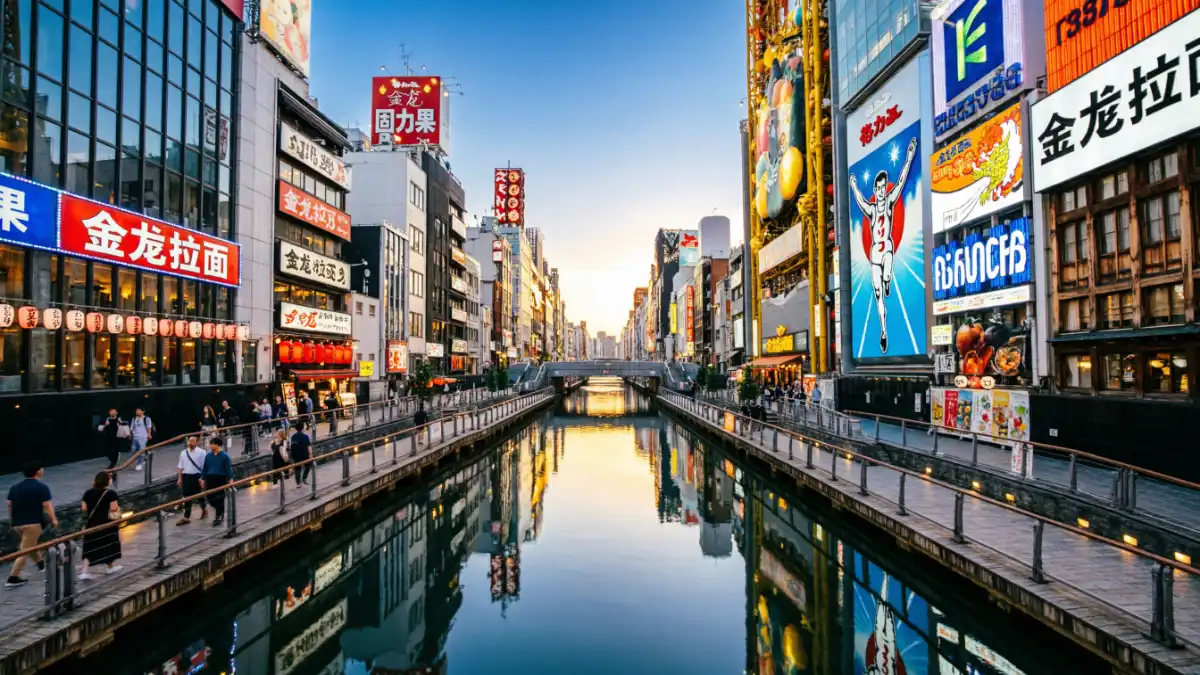
Dotonbori is famous for its neon signage, oversized moving billboards (like the Glico Running Man), and the sheer density of street food stalls lining the canal. It became Osaka’s unofficial symbol of “kuidaore” culture, a local phrase roughly meaning to eat until you drop. The area’s photogenic chaos and 24-hour energy are what draw both domestic and international visitors.
Umeda (Osaka Station Area): Best for Shopping and Business Travelers
Umeda, built around Osaka Station and JR Osaka Station, is Osaka’s other major hub. It’s packed with department stores, observation decks like the Umeda Sky Building, and direct train and bus links to Kansai and Itami airports.
This area tends to feel more polished and less chaotic than Namba, which makes it a strong pick for business travelers, families wanting quieter evenings, and anyone prioritizing easy luggage transfers on arrival and departure days.
Is Osaka Namba and Osaka Station the Same?
No. Osaka Station (also called Umeda) and Namba Station are two separate major hubs roughly 15–20 minutes apart by train, located in different parts of the city. Osaka Station serves the northern city center, while Namba anchors the southern entertainment district; they are often referred to as “Kita” (north) and “Minami” (south).
Is It Better to Stay Near Namba or Umeda?
Both are excellent, and the right pick depends on your travel style. Namba suits travelers who want to be surrounded by nightlife, street food, and walkable attractions after dark. Umeda suits travelers who prefer a calmer base with strong shopping, easy airport transfers, and quick access to day trips north of the city.
Is Umeda Close to Namba?
Yes, Umeda and Namba are connected by both the Osaka Metro Midosuji Line and JR lines, with a direct trip typically taking around 15 minutes. This means staying in either area still puts the other within easy reach, so neither choice locks you out of the other district’s attractions.
Shinsaibashi: The Nicest Area for Shopping and Boutique Stays
If you’re looking for the nicest area in Osaka with a slightly more upscale, walkable feel, Shinsaibashi is a strong contender. It sits directly between Namba and Umeda, home to a long covered shopping arcade, designer boutiques, and a growing number of stylish boutique hotels.
Shinsaibashi offers the same walkability to Dotonbori as Namba but with a slightly calmer, more residential edge once you step off the main arcade.
Tennoji: Best Budget-Friendly Area Near a Major Station
Tennoji is one of the best-value neighborhoods in Osaka, anchored by a major train station with direct JR lines toward Kyoto, Nara, and Wakayama. It’s home to Tennoji Zoo, Shitennoji Temple, and the Abeno Harukas skyscraper, one of Japan’s tallest buildings.
Hotel rates here are often noticeably lower than Namba or Umeda, making it a smart base for travelers planning day trips or watching their budget without sacrificing train access.
Where to Stay in Osaka for Families
Families generally do best in Umeda or Namba, both of which offer larger hotel rooms, family suites, and easy access to kid-friendly attractions like the Osaka Aquarium (Kaiyukan) and Universal Studios Japan. Look for hotels advertising connecting rooms or family suites, since standard Japanese hotel rooms can run smaller than typical U.S. hotel rooms.
Staying near a major JR or subway station also matters more with kids in tow, since it cuts down on transfers and walking time with strollers or tired legs.
Which Station Is Best to Stay Near in Osaka?
For most travelers, Namba Station or Osaka (Umeda) Station are the top picks, since both connect to multiple subway lines, JR lines, and airport routes. Shin-Osaka Station is worth prioritizing specifically if you’re taking the Shinkansen (bullet train) to or from cities like Tokyo, Kyoto, or Hiroshima, since it’s the only station in Osaka served by the bullet train network.
Where to Avoid Staying in Osaka
A few areas are worth approaching carefully, not because they’re unsafe, but because they’re inconvenient or don’t match typical traveler needs.
- Far outer suburbs with limited train frequency, which can add significant commute time to and from the city center.
- Nishinari Ward (particularly around Kamagasaki), which has a reputation as one of Osaka’s more run-down districts and isn’t geared toward tourists.
- Areas with no direct subway or JR access, since Osaka’s efficient rail network is central to getting around affordably.
If a listing looks unusually cheap for its location, check its distance from the nearest station rather than just its neighborhood name.
How Many Days Should You Stay in Osaka?
2 to 4 nights is generally enough for most first-time visitors to cover Dotonbori, Osaka Castle, Umeda, and a food tour, with a day left over for Universal Studios Japan or a nearby day trip. Travelers using Osaka as a base for Kyoto, Nara, or Kobe day trips often extend to 4–5 nights to reduce daily backtracking.
If you’re short on time, 2 full days can still cover the highlights, but you’ll likely need to prioritize either theme parks or cultural sites rather than both.
Is It Better to Stay in Osaka or Kyoto?
This depends on your priorities. Osaka offers better nightlife, shopping, modern hotels, and generally more competitive hotel rates, plus a more central rail hub for day trips across the Kansai region. Kyoto offers a quieter, more traditional atmosphere with easier access to temples, shrines, and geisha districts, but hotel availability can be tighter and rates higher during peak seasons.
Many travelers choose to split their trip, basing themselves in Osaka and visiting Kyoto as a day trip (or vice versa), since the two cities are connected by train in well under an hour.
Are Hotels Cheaper in Osaka or Kyoto?
Osaka hotels are often more affordable than comparable Kyoto properties, particularly during cherry blossom and autumn foliage seasons when Kyoto sees heavier demand. Rates fluctuate constantly, though, so comparing both cities for your exact travel dates is the only reliable way to confirm current pricing.
What Is the Main Tourist Area of Osaka?
The Namba–Dotonbori–Shinsaibashi corridor is widely considered Osaka’s main tourist area, packed with restaurants, shopping arcades, and the city’s most photographed street scenes. Osaka Castle Park and the Umeda business district round out the city’s other major visitor hubs.
Is Osaka Walkable for Tourists?
Yes, Osaka is highly walkable, especially in districts like Namba, Dotonbori, and Shinsaibashi, where covered shopping arcades let visitors walk comfortably even in rain or heat.
For longer distances between neighborhoods, the Osaka Metro is fast, clean, and easy for English-speaking visitors to navigate.
How to Get Around Osaka as a Tourist
Most visitors rely on a combination of the Osaka Metro, JR Loop Line, and walking. You can load a prepaid IC transit card, such as ICOCA, and use it on most trains and buses across the region, making fare payments simple. Travelers usually choose taxis and rideshare services for late-night trips or luggage-heavy transfers instead of everyday sightseeing.
Top Things to Do in Osaka
- Dotonbori canal-side street food, neon signage, and Osaka’s most iconic photo spots.
- Osaka Castle historic castle grounds with expansive park space, especially scenic during cherry blossom season.
- Universal Studios Japan: one of Asia’s most visited theme parks, popular for its Nintendo and Harry Potter zones.
Beyond the top three attractions, many travelers consider the Osaka Aquarium (Kaiyukan) and Shitennoji Temple underrated stops because they attract smaller crowds than the city’s headline sights.
Must-Try Foods in Osaka: Takoyaki:
People often call Osaka “Japan’s kitchen,” and first-time visitors should not miss a few signature dishes:
- Octopus-filled batter balls, best eaten fresh and hot from a street stall.
- Okonomiyaki: a savory grilled pancake often called “Osaka’s soul food.”
- Kushikatsu:u breaded, deep-fried skewers, traditionally eaten in the Shinsekai district.
Many travelers recommend trying all three during a food-focused evening walk through Dotonbori on your first night.
Is It Safe to Walk at Night in Osaka?
Osaka is generally considered very safe for walking at night, even in busy entertainment districts like Dotonbori, and violent crime against tourists is rare. As with any major city, standard precautions apply: stay aware in crowded nightlife areas, especially around bars in Dotonbori and Shinsaibashi late at night, and keep valuables secured.
For official, up-to-date safety guidance, U.S. travelers can check the U.S. Department of State’s Japan travel page before departure.
What Are the Negatives of Osaka?
No destination is perfect, and an honest look at Osaka includes a few real drawbacks:
- Crowds in Dotonbori and Shinsaibashi can feel overwhelming during peak evening hours and holiday periods.
- Language barriers exist outside major tourist zones, though signage in central areas is generally bilingual.
- Smaller hotel rooms are standard compared to typical U.S. hotel sizes, which can surprise families or travelers with a lot of luggage.
None of these are dealbreakers for most visitors, but they’re worth planning around.
Common Mistakes First-Time Visitors Make
- Booking a hotel far from a train station to save mone thee extra walking and transfer time often outweighs the savings. Fix: prioritize proximity to Namba, Umeda, or Tennoji stations.
- Underestimating how small standard rooms are: many travelers book based on U.S. hotel expectations. Fix: check room square footage/meters before booking, not just photos.
- Trying to see Osaka, Kyoto, and Nara in one rushed day leads to exhausting, backtracking-heavy travel. Fix: dedicate a full day to each city rather than combining them.
Budget Breakdown: What Affects Hotel Costs by Area
Hotel pricing in Osaka varies by proximity to stations, season, and neighborhood reputation rather than a fixed citywide rate. Generally speaking:
- Namba and Umeda tend to sit at the higher end due to demand and central location.
- Shinsaibashi offers a mix of boutique and mid-range options.
- Tennoji and Shin-Osaka typically offer more budget-friendly rates for similar quality, given slightly longer commutes to Dotonbori.
Because rates shift with season and demand, it’s best to compare live pricing across booking platforms for your specific travel dates rather than relying on fixed figures.
FAQs
What is the nicest area in Osaka?
Many travelers consider Shinsaibashi and Umeda the nicest areas because they offer polished shopping streets, boutique hotels, and a slightly calmer atmosphere than the lively energy of Dotonbori while remaining within walking distance of major attractions.
Which month is the coldest in Osaka?
January is typically the coldest month in Osaka, with average daytime temperatures hovering near freezing in the early mornings and evenings. Pack layers if visiting during winter, since indoor heating varies by building.
What should you not miss in Osaka?
Most repeat visitors consider Dotonbori’s canal walk, Osaka Castle, and a dedicated street-food evening must-do experiences.
Universal Studios Japan is also a top priority for travelers with an extra day to spare.
Where to go in Osaka for first timers?
First-time visitors typically start in Dotonbori and Shinsaibashi for food and shopping, then branch out to Osaka Castle and Umeda’s observation decks for skyline views. Universal Studios Japan is a common add-on for a full extra day.
Are people nicer in Osaka or Tokyo?
Osaka has a well-known reputation for being more outgoing and casually friendly than Tokyo’s more reserved, formal social style, and both cities generally welcome tourists.
This is a cultural generalization rather than a strict rule, and individual experiences vary.
Is it worth staying in Osaka overnight if visiting Kyoto?
Yes, many travelers base themselves in Osaka overnight and day-trip into Kyoto, since Osaka often has more competitive hotel rates and a more central rail position for reaching Nara, Kobe, and Kyoto alike.
Do I need to book Osaka hotels far in advance?
Booking 2–3 months ahead is commonly recommended for spring and autumn travel, when cherry blossom and foliage seasons drive up demand. Winter and early summer typically allow more flexibility for last-minute bookings.
How far is Namba from Kansai Airport?
Namba connects to Kansai International Airport via the Nankai Line’s Rapi:t limited express, which is one of the more direct rail links between the airport and central Osaka. Exact travel times and fares should be confirmed on the Nankai Railway or the airport’s official site, since schedules can change.
Is Universal Studios Japan close to Namba or Umeda?
Universal Studios Japan is closer to Umeda than Namba, reachable via a short JR and shuttle connection from Osaka Station, making Umeda a slightly more convenient base for travelers prioritizing the park.
What’s overrated in Osaka, and what’s underrated?
Some travelers find the crowded photo spots directly on Dotonbori’s main bridge overrated once the initial novelty wears off. Meanwhile, many travelers recommend quieter neighborhoods like Tennoji and the Shitennoji Temple grounds for their relaxed atmosphere, which offers a calmer contrast to the city’s busiest districts.
Do I need travel insurance for a trip to Osaka?
Travel insurance isn’t legally required for U.S. citizens visiting Japan, but many travelers buy coverage to protect against trip interruptions, lost luggage, and medical emergencies abroad. Compare policies directly with providers, since coverage details and costs vary.
Final Takeaways
Osaka rewards travelers who match their neighborhood to their travel style: Namba for round-the-clock food and energy, Umeda for polish and easy transfers, and Tennoji for budget-conscious day-trippers. Whichever base you choose, Osaka’s train network keeps every other district within easy reach.
Before booking, double-check current hotel rates, seasonal weather, and train schedules directly with official sources, since prices and routes shift throughout the year. With the right neighborhood as your home base, Osaka’s mix of neon streets, castle grounds, and unmatched street food is easy to explore at your own pace.

Ben Fogle believes that true adventure begins where the pavement ends. After spending years documenting extreme environments, rowing across oceans, and trekking through frozen landscapes, he mastered the art of wilderness travel. For Travelmarse, Ben constructs highly detailed guides on deep-nature packing lists, wildlife safety, and sustainable eco-tourism. He breaks down intimidating, rugged expeditions into clear, step-by-step roadmaps so everyday travelers can safely connect with the natural world.