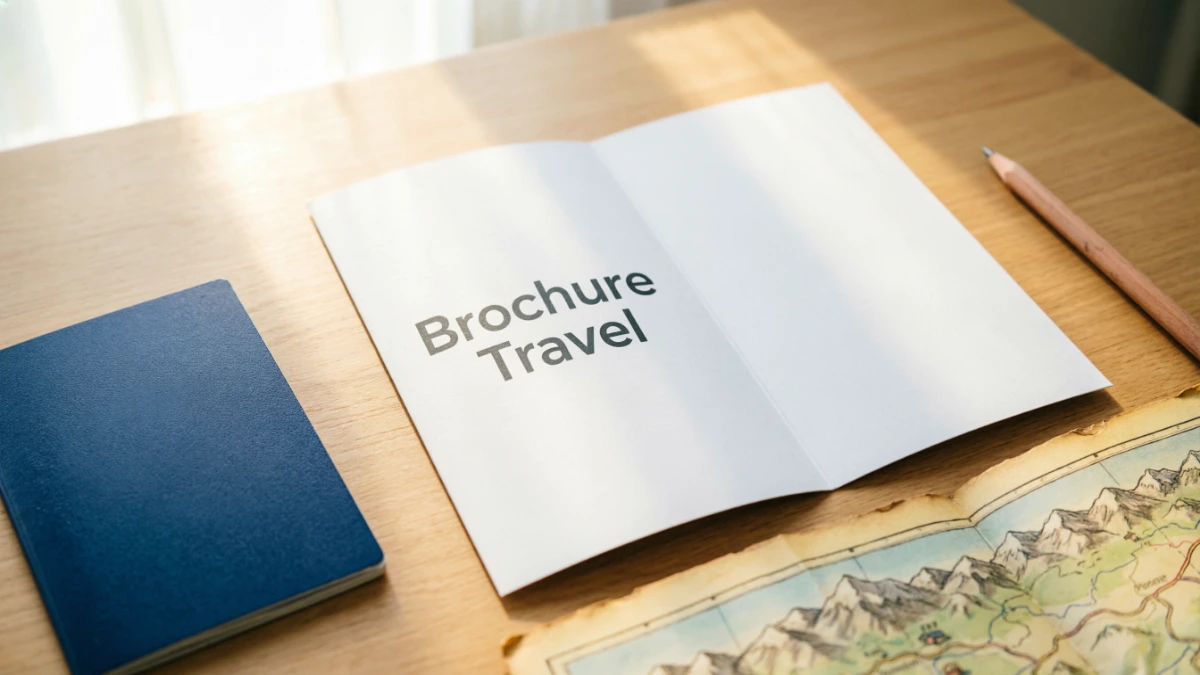
Brochure travel means using a folded paper or digital guide that shows a place, trip, or tour package. A good travel brochure has a bold cover, clear photos, short facts, a map, costs to verify, and contact details. Most people use a tri-fold layout, which gives six panels on one sheet.
Picture this: your teacher hands out a school project, or you want to sell a dream trip to your family. You open a blank page and freeze. What goes where? How do you fold it? Brochure travel can feel confusing at first, but it does not have to be.
A travel brochure is a small, folded guide that sells a place in a few seconds. Visitor centers hand them out. Tour companies print them. Students make them for class. This guide answers the 26 most common questions people ask about them.
You will learn what goes inside, where to find free examples, how to fold one, and how to build your own step by step. Each answer stands alone, so jump to the part you need. By the end, you will have a clear plan, simple tools, and real ideas to start today.
Featured Snippet:
A travel brochure is a folded paper or digital guide that promotes a destination, tour, or travel package. It typically includes attractive photos, key attractions, travel tips, maps, prices, and contact details. A tri-fold brochure is a popular choice because it offers six panels for clear, organized information.
Travel Brochure School Project: What Teachers Want to See
A travel brochure school project asks you to pick a place and teach readers about it in a small, folded guide. Teachers usually look for accurate facts, neat design, clear writing, and a few sources. Always read your rubric first, because page size, topic, and word limits change from class to class.
Next, pick a place you can research easily. Then check your facts on trusted sites, such as NPS.gov for national parks or a state tourism board for cities and regions. Finally, list your sources on the back panel and use your own words. Copying text from a website can cost you points.
Travel Brochure Examples: What Good Ones Look Like
Good travel brochure examples share a few traits: one strong cover photo, short blocks of text, a simple map, and a clear next step. You can study three common types to get ideas before you design your own.
- Park brochures: The National Park Service gives out folded park guides with maps and safety tips.
- City visitor guides: State and city tourism offices list sights, events, and food.
- Tour and package brochures: Travel companies show what a trip includes, with dates and booking steps.
As you look, ask yourself what grabs your eye first. Then copy the idea, not the words or photos.
Brochure Travel PDF: Download, Save, and Share
A brochure travel PDF is a digital copy that keeps the same layout on every phone, tablet, and computer. It is the easiest way to share or print a brochure. You can export a PDF from Canva, Google Docs, Microsoft Word, or PowerPoint.
Before you save, zoom in and check spelling, photos, and page order. Also check the file size, since large PDFs can be slow to email. When you print, choose actual size or 100 percent so the folds line up. Many park and tourism sites offer free PDF brochures you can read offline.
Travel Brochure Examples for Students
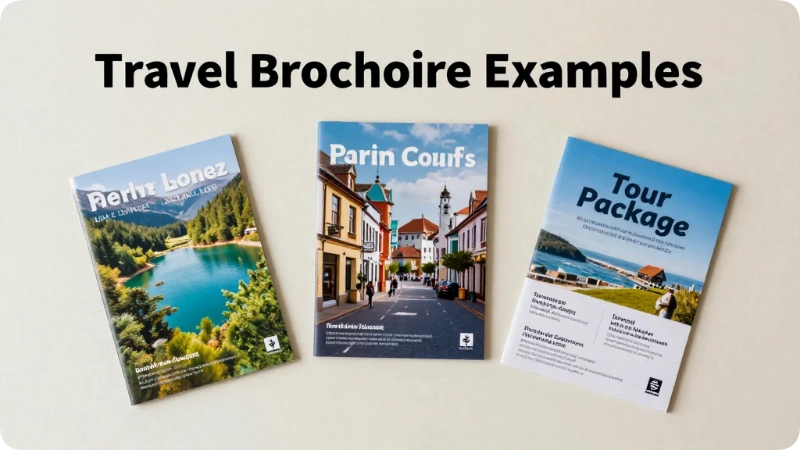
Students often do best with a place they know or can research fast. Strong travel brochure examples for students include a national park, a famous city, a country from a class unit, or your own hometown. Each one gives you plenty of facts, photos, and maps to use.
Here is a simple student layout:
- Front cover: Title and one big photo.
- Inside left: Welcome and fast facts.
- Inside middle: Top sights.
- Inside right: Food and culture.
- Back panel: Map, tips, and sources.
- Flap panel: Best time to visit and a call to action.
Travel Brochure School Project PDF: Submitting Your Work
Many teachers now ask for a travel brochure school project PDF instead of a paper copy. Export both sides of your brochure in the right order. Name the file clearly, such as LastName_Brochure_Paris.pdf, so your teacher finds it fast.
However, rules differ by school. Ask if you should upload a single file, a two-page file, or both a PDF and a printed copy. Also make sure photo credits and sources show up in the PDF. If you plan to print, test one copy first to see if the folds land in the right place.
How to Make a Travel Brochure
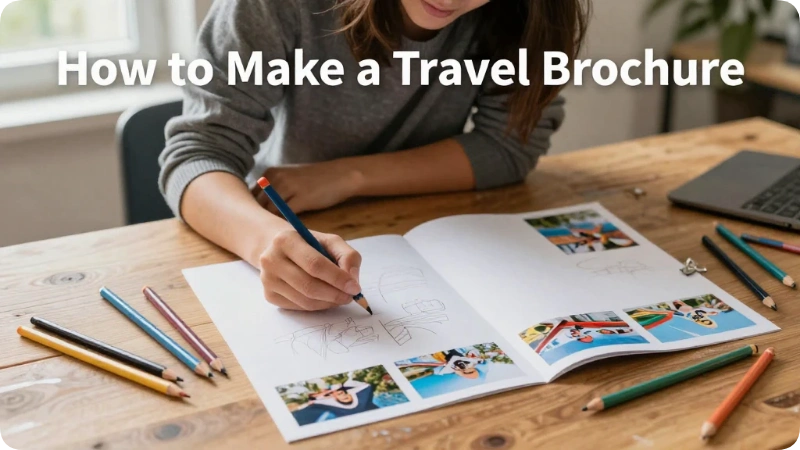
To make a travel brochure, pick a place, gather facts and photos, choose a tri-fold template, write short text for each panel, add a map, proofread, and then print or export. Most students finish in one to three work sessions.
- Pick a destination and decide who the readers are, such as families or hikers.
- Research using trusted sources like NPS.gov, state tourism boards, and airport or city sites.
- Plan six panels on paper first.
- Choose a template in Canva, Word, or Google Docs.
- Write short text and add photos you have the right to use.
- Add a map and contact or booking details.
- Proofread twice, then print or export a PDF.
Brochure Travel Package: What a Package Brochure Should Include
A brochure travel package shows a bundled trip, which often mixes flights, hotels, tours, and meals. The best package brochures state clearly what is included, what costs extra, and what the traveler must do next. Honest details build trust and cut down on surprise fees.
A good package brochure lists dates, trip length, group size, a day-by-day outline, and a contact for booking. It also explains cancellation rules and mentions travel insurance. Prices, hours, and policies change often, so tell readers to verify details with the official provider before they book.
How to Write a Travel Brochure?
To write a travel brochure, use short sentences, active verbs, and one clear idea per panel. Start with a strong headline, then share facts that help the reader decide. End with a simple call to action, such as visit a website or call to book.
Also use words that help readers picture the place. Write misty mountain trails instead of nice views. Next, keep each panel to about 40 to 60 words. Finally, read the text out loud. If you stumble, cut the sentence and try again.
What Is in a Travel Brochure?
A travel brochure usually holds a cover, a welcome message, top attractions, a map, places to stay and eat, helpful tips, cost notes, and contact details. Some also add hours, seasons, and photo credits. Together, these parts help a reader plan a trip fast.
Here is a quick checklist:
- Catchy title and cover photo
- Short welcome or summary
- Top sights and activities
- Map with key stops
- Food, lodging, and transport notes
- Best time to visit
- Safety and packing tips
- Contact details and call to action
Where Can I Find Travel Brochures?
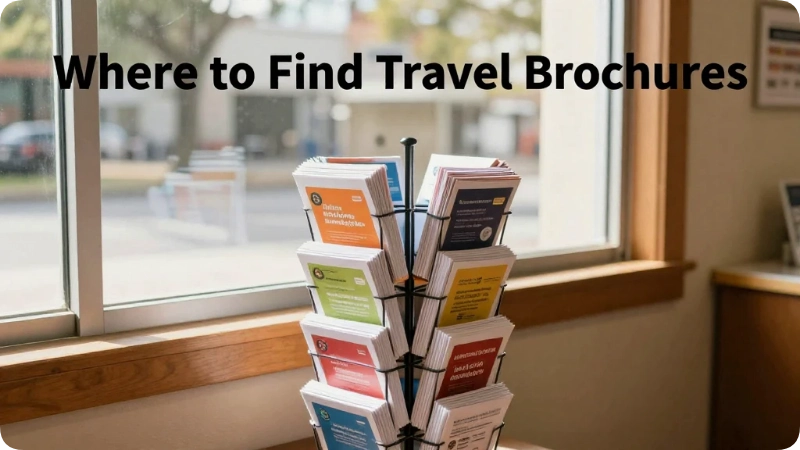
You can find travel brochures at visitor centers, state welcome centers, national park entrances, airports, hotel lobbies, libraries, and travel agencies. Most are free. Many tourism offices also post PDF versions online, so you can browse from home.
For trusted examples, start with NPS.gov, which hosts park maps and guides. Then check your state tourism board website for official visitor guides. Some tourism boards will also mail a free guide on request. Because rules and stock change, call ahead or check the website before you visit in person.
How Can I Create My Own Travel Brochure?
You can create your own travel brochure with a free design app, a word processor, or just paper, markers, and printed photos. Pick the tool that matches your skill level and time. Then follow the same simple steps: plan, write, design, check, and print.
| Option | Best For | Skill Level |
| Canva | Fast, colorful designs | Beginner |
| Google Docs | Easy sharing | Beginner |
| Microsoft Word | Built-in templates | Beginner |
| PowerPoint | Photo-heavy layouts | Beginner to medium |
| Paper and markers | Hand-drawn projects | Any |
Features and plans change, so check each tool’s current options.
How to Write a Brochure?
To write a brochure, start with one goal and one audience. Then lead with the biggest benefit, back it up with a few facts, and finish with a call to action. Every panel should answer a question the reader has.
A popular method is to grab attention, build interest, create desire, and then ask for action. For travel, that looks like this: a stunning cover, a few fun facts, a picture of the reader enjoying the trip, and a booking or website prompt. Keep your tone friendly, honest, and easy to read.
How to Write a Travel Plan?
To write a travel plan, set your dates and budget, pick your destination, book transport and lodging, list daily activities, and add backup options. Then save key documents in one place. A good plan keeps stress low and surprises fun.
Follow these steps:
- Choose dates, budget, and who is going.
- Compare flights, drives, or trains.
- Book lodging near your main plans.
- List one to three activities per day.
- Add a rainy-day backup.
- Check ID rules. TSA has said REAL ID enforcement began on May 7, 2025, so verify what you need on TSA.gov.
- Consider travel insurance and read the policy terms.
Can ChatGPT Make a Brochure?
Yes, AI chatbots like ChatGPT can write brochure text, suggest headlines, and outline each panel. Most chat tools do not replace a full design app, so many people paste the text into Canva, Word, or Google Docs for layout.
However, always check the facts. AI can make mistakes with dates, prices, and place details. For a school project, also ask your teacher if AI help is allowed. When it is, tell the reader what you used and confirm every fact with an official source.
Can You Give Me an Example of a Travel Brochure?
Yes. Here is a short sample for Grand Canyon National Park in Arizona. Use it as a model, then swap in your own place and facts.
Cover: Grand Canyon: Stand at the Edge of Wonder
Welcome: Peer into a canyon more than a mile deep. Watch the colors shift from sunrise to sunset.
Top Sights: Walk the Rim Trail. Catch sunrise at a South Rim viewpoint. Join a ranger program.
Tips: Bring water, wear sturdy shoes, and check NPS.gov for current conditions, shuttle details, and closures.
Call to Action: Plan your visit at NPS.gov.
How Can I Create a Brochure?
To create a brochure, set a goal, pick a size and fold, write short text, add images, and proofread. Then print at home, use a local print shop, or share a PDF. The process works for travel, schools, clubs, and small businesses.
First, sketch the layout on a sheet of paper. Next, drop your words and photos into a template. After that, print one test copy and fold it. If the text hides in a fold, adjust it. Finally, make your full set of copies.
What Are Different Types of Travel?
Common types of travel include leisure, business, adventure, cultural, family, solo, group, luxury, budget, and eco-friendly travel. Each type has different needs, so a good brochure speaks to one type at a time.
- Leisure: Relaxing trips such as beach or resort stays.
- Business: Work trips with meetings or conferences.
- Adventure: Hiking, rafting, and other active trips.
- Cultural: Museums, food, history, and festivals.
- Family and solo: Trips shaped by group size and safety needs.
- Road trips: Driving trips with scenic stops.
- Responsible travel: Trips that protect nature and local communities.
What Are Some Good Titles for a Travel Brochure?
Good travel brochure titles are short, vivid, and tied to the place. Aim for three to seven words that promise a feeling or a result. Use the destination name so readers know the topic right away.
Try these ideas:
- Discover the Magic of [Place]
- [Place]: Your Next Big Adventure
- Escape to [Place]
- Little Town, Big Memories
- Explore [Place] Like a Local
- Sun, Sand, and [Place]
- Trails, Views, and Fresh Air
Finally, say your title out loud. If it sounds fun and clear, keep it.
Which Is the Best Travel Guide?
The best travel guide depends on your trip. Lonely Planet, Rick Steves, Fodor’s, Frommer’s, Moon, and DK Eyewitness are popular guidebook brands. For national parks, official NPS.gov pages are a strong first stop.
Choose by style. Rick Steves leans practical for Europe. DK Eyewitness uses many images. Moon focuses on many US road-trip regions. Also check the publication date, since hours, prices, and openings change. Pair a guidebook with the official tourism site for current details.
Can AI Create Brochures?
Yes, AI can create brochures. Many design tools now offer AI features that suggest layouts, write text, and make images. You describe the trip, and the tool builds a first draft in minutes.
Still, treat AI as a helper, not a final editor. It can invent facts, mix up places, or create photos that do not match the real destination. Always verify details, label AI images if your school or site requires it, and make sure you have the right to use every picture.
What Makes a Good Travel Brochure?
A good travel brochure has a clear goal, a strong cover, honest facts, balanced text and photos, easy-to-read fonts, and a clear next step. It answers the reader’s biggest questions without extra clutter.
Avoid these three common mistakes:
- Too much text. Fix it by cutting each panel to the most useful facts.
- Blurry or random photos. Fix it by using sharp images that match the place.
- No call to action. Fix it by ending with a website, phone number, or booking step.
Honest drawbacks help too. If a trail is crowded in summer, say so and suggest an early start.
How to Make a Brochure Simple?
To make a brochure simple, use a ready-made template, three colors, two fonts, and one photo per panel. Keep text short and leave space so the page feels calm and easy to scan.
Also use these quick rules:
- Write no more than about 50 words per panel.
- Use big headings and small paragraphs.
- Align text and photos in neat rows.
- Pick a dark font on a light background.
- Cut anything that does not help the reader.
Is a Brochure 2 Pages?
Not always, but a standard tri-fold brochure uses one sheet printed on two sides. That gives you two pages (front and back) and six panels. Other brochures use a single fold, a Z-fold, or several pages like a booklet.
Here is a quick comparison:
| Fold Type | Panels | Sheet Sides |
| Bi-fold | 4 | 2 |
| Tri-fold | 6 | 2 |
| Z-fold | 6 | 2 |
| Booklet | 8 or more | Several |
Check your assignment, because some teachers ask for a set number of panels.
Can You Give Me an Example of a Brochure?
Yes. Here is a made-up example for a small local business. It shows how a brochure can sell a service in only a few lines.
Cover: Sunset Bike Tours: See the Town on Two Wheels
Inside: Join a friendly guide for an easy evening ride. We supply bikes and helmets. Stops include a bakery, a river view, and a historic square.
Details: Rides run about two hours. Check the website for dates, prices, and weather updates.
Call to Action: Book online or call today.
This business is fictional. Use the format, but write your own facts.
How to Fold a Travel Brochure?
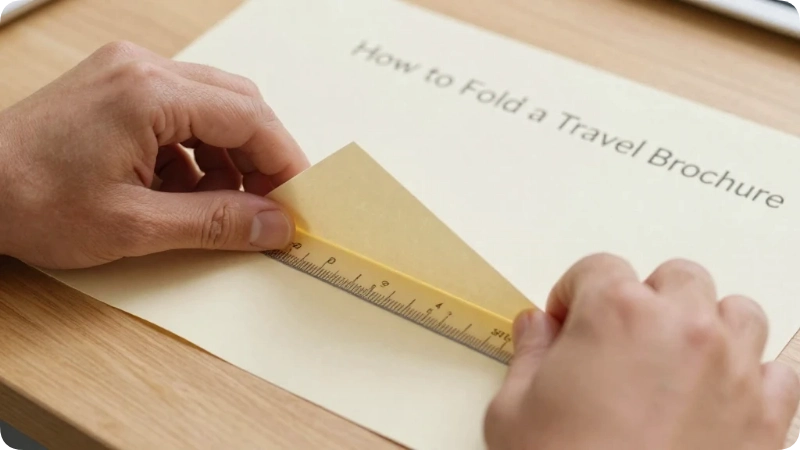
To fold a travel brochure into thirds, lay the sheet flat with the inside facing up. Fold one outer panel toward the center, then fold the other outer panel over it. Press each crease firmly with a ruler edge.
For a clean fit, make the inside flap panel slightly narrower than the other two to prevent bulging. With a Z-fold, arrange the panels in an accordion pattern. A bi-fold simply requires folding the sheet in half.
The text contains 3 consecutive sentences starting with the same word.
Resolve this. Test with one copy before you print the whole batch.
FAQs
These quick answers cover a few more questions people ask about brochure travel.
Do travel brochures still matter in the digital age?
Yes, travel brochures still matter. Printed guides work offline, sit in hotel lobbies and visitor centers, and are easy to hand to a group. Digital PDFs add reach and convenience. Many travelers use both: a paper map for the trip and a phone for updates.
What size is a standard travel brochure?
A standard tri-fold brochure starts as a letter-size sheet, 8.5 by 11 inches. After folding, each panel is about 3.7 inches wide. Other sizes exist, so check your assignment or printer specs before you design.
How many words should a travel brochure have?
There is no fixed number, but short works best. A school tri-fold often lands between 250 and 400 words total, with about 40 to 60 words per panel. Always follow your teacher’s rubric first.
What fonts and colors work best for a travel brochure?
Choose two fonts at most: one bold font for headings and one clean font for body text. Pick colors that match the place, such as blues for beaches or greens for forests. Make sure text stays easy to read against the background.
Should a travel brochure include prices?
Only include prices if you can verify them. If you do, label them as starting prices and add the date. Because costs change often, tell readers to confirm rates and policies with the official provider before booking.
Conclusion
Brochure travel works because it turns a big place into a small, easy guide. Remember these three takeaways: keep the text short, check every fact with a trusted source, and end with a clear next step.
Whether you are finishing a school project or planning a real trip, a simple brochure helps you think clearly and share your ideas. Start with one place, sketch six panels, and build from there. Your next great adventure may begin on a single folded page.

Maya Lin inspires travelers to explore the globe with absolute confidence and independence. Armed with a background in digital media and a decade of independent solo travel experience, she knows exactly how to navigate unfamiliar cities smoothly and safely. For Travelmarse, Maya curates the solo travel and hidden-gem verticals. She reviews charming boutique hotels, designs smart neighborhood walking routes, and shares practical language-learning hacks, giving readers the exact tools they need to travel solo without the stress.