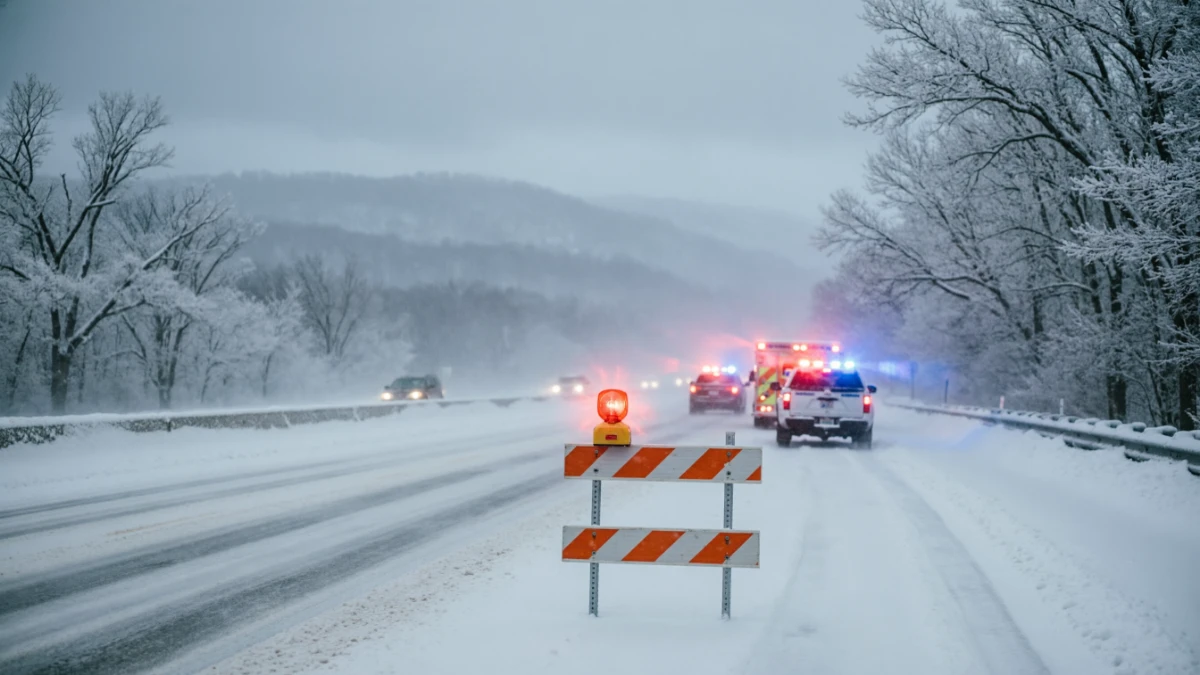
A sudden lake-effect snowband can turn a routine drive through Erie or Niagara County into a life-threatening situation within an hour. That is exactly why Western New York has one of the most active winter travel-ban systems in the country, and why so many travelers, truckers, and residents search “travel ban WNY” the moment gray clouds roll in off Lake Erie.
This guide breaks down exactly what a WNY travel ban means, how the advisory-versus-ban system works county by county, where to check live status, and what to do if you are caught mid-trip when one is announced. It also clears up a common mix-up: the local snow-driving ban is completely separate from the federal U.S. entry travel ban, and this guide covers both so you know which one actually applies to you.
Because conditions change by the hour during winter storms, treat the explanations below as a reference guide, not a live status check; always verify current conditions through the official sources linked throughout.
Featured Snippet:
A Western New York (WNY) travel ban is an emergency driving restriction issued by the Governor, a county executive, or a local mayor during severe lake-effect snow or blizzard conditions. Bans range from a “Travel Advisory” (avoid unnecessary trips) to a full “Travel Ban” (roads legally closed to all but emergency vehicles). Status changes by county and even by town, so always confirm live conditions through 511NY, your county’s emergency alert page, or local news before heading out.
Quick Facts: WNY Travel Bans at a Glance
Western New York’s driving restrictions follow a tiered system that most Erie, Niagara, and Wyoming county residents recognize by color on local maps.
| Restriction Level | What It Means | Who Can Drive |
| Travel Advisory | Roads open, but conditions are hazardous (poor visibility, drifting snow, ice) | Everyone, but non-essential trips are discouraged |
| Travel Ban (Not Recommended / Level 1-2) | Officials strongly discourage driving; some local roads may close | Residents may drive at their own risk in most areas |
| Full Travel Ban (Level 3 / Roads Closed) | Roads are officially closed | Only police, fire, EMS, utility crews, and approved essential workers |
This structure is why one town can be under a full ban while a neighboring town, just a few miles away, is only under an advisory; lake-effect snow bands are narrow and hyper-local.
Is There a Travel Ban in Buffalo Today?
There is no way for any article to answer “today” accurately for every reader, because travel bans are issued and lifted in real time based on hour-to-hour weather. As of this guide’s most recent update, no winter storm was active, and travel bans are a cold-weather issue that typically runs from November through April.
To check the actual current status, use these live sources rather than any blog post:
- 511NY (511ny.org or dial 511) for real-time road and Thruway conditions
- Erie County’s official alerts page and social media for county-wide bans
- The National Weather Service Buffalo office for active winter storm warnings
- Your city or town’s website for hyper-local closures
If you’re traveling during winter months, bookmark these before you go, not after the snow starts.
Travel Ban Buffalo
The travel ban Buffalo situation depends on current weather, road conditions, and emergency restrictions issued by local authorities. A travel ban may restrict driving on certain roads or throughout affected areas when conditions become dangerous.
If you are planning to travel in Buffalo, check the latest official travel alerts before leaving. Conditions can change quickly during heavy snow, high winds, flooding, or other emergencies.
What Should You Check Before Traveling in Buffalo?
Before driving, check:
- Whether a travel ban or travel advisory is currently active
- Which roads or areas are affected
- Whether the restriction applies to all vehicles or specific vehicle types
- Current road and weather conditions
- Whether officials have lifted or changed the restriction
A Buffalo travel ban is a local transportation restriction. It should not be confused with a U.S. immigration or border-entry ban. If you are traveling between Buffalo and Canada, check border and road conditions separately.
For the latest information, use official local alerts and New York 511 rather than relying on older social media posts or previous storm updates.
Buffalo Travel Ban Update Today: Erie County
Erie County is the jurisdiction most often associated with WNY travel bans, largely because Buffalo and its southern suburbs sit directly in the Lake Erie snowbelt. Bans here are typically declared by the Erie County Executive and can apply county-wide or to specific towns like Hamburg, Orchard Park, West Seneca, Cheektowaga, or the City of Lackawanna.
During a full Erie County travel ban, only essential workers approved through the county’s Essential Employee Exemption Portal may legally drive. Non-essential drivers caught on banned roads can face a Class B misdemeanor and fines. Bans are frequently lifted town-by-town as plows clear roads, so the situation can look like a patchwork map rather than one uniform status.
NY Travel Ban Today: Statewide Overview
Beyond Erie County, the Governor’s office can declare travel bans that affect the entire New York State Thruway system, particularly for commercial vehicles. During major lake-effect or nor’easter events, you may see separate restrictions for passenger vehicles, commercial trucks, and tandem trailers, each with different start times.
Statewide Thruway restrictions are managed through the New York State Thruway Authority and posted at 511NY. A right-lane-only restriction for trucks is often the first step, followed by a full commercial ban, and finally a passenger vehicle ban if conditions worsen. Checking 511NY gives you the single clearest picture of what’s active anywhere in the state right now.
Buffalo Travel Ban Map: How to Read It
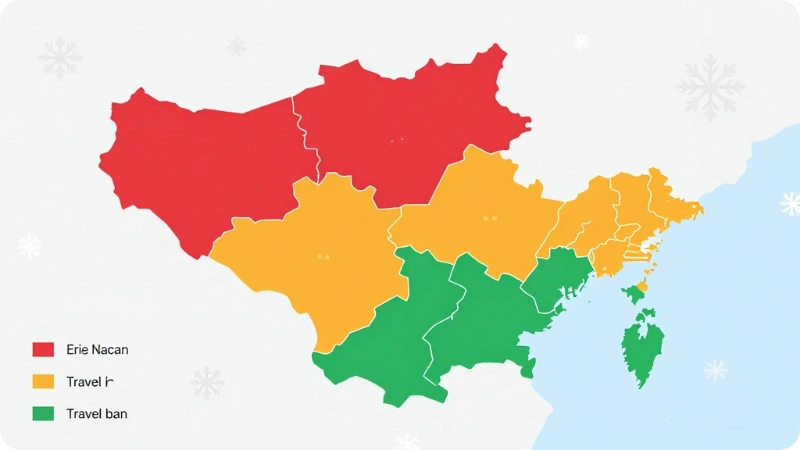
Local outlets and county emergency offices often publish color-coded maps during active storms, usually red for full travel bans, orange or yellow for advisories, and green or unmarked for normal conditions. These maps are typically shared on the county’s official X (Twitter) account, Facebook page, or emergency management website within the first hour of any ban being issued.
When reading one of these maps, pay attention to three things: which specific towns are shaded, whether the ban applies to passenger or commercial vehicles (or both), and the timestamp, since maps can be an hour or more out of date during fast-moving storms. Always cross-check a shared map image against the county’s live text alerts before trusting it.
Travel Ban in Erie County: Levels Explained
Erie County and its towns generally use three practical categories, most clearly defined by neighboring Genesee County’s sheriff’s office:
- Travel Advisory Roads are not closed. No unnecessary travel is advised due to poor visibility, slippery roads, or blowing snow, but you won’t be cited for driving.
- Road Closings Specific roads are physically impassable or barricaded due to an accident, drifting snow, or poor visibility. Driving on a closed road can result in a citation.
- Travel Ban Roads are officially closed except for emergency travel (police, fire, ambulance, essential medical staff). Non-emergency travelers can be cited.
Understanding these three tiers helps you interpret news alerts correctly instead of assuming any storm warning automatically means the roads are illegal to drive on.
Travel Ban Update Erie County
The travel ban update Erie County status can change as weather and road conditions develop. During severe weather, officials may issue a travel ban, modify an existing restriction, or lift the ban when conditions improve.
Travelers should check the latest official information before driving because a restriction that was active earlier may change later in the day.
What Does the Erie County Travel Ban Update Mean?
An Erie County travel restriction may affect:
- Roads in specific communities or areas
- Certain types of vehicles
- Travel during dangerous weather conditions
- Access to roads affected by snow, flooding, ice, or other hazards
The exact restriction depends on the official order or advisory in effect at that time. Travelers should therefore check the current notice rather than assume that the same restriction applies throughout Erie County.
How to Check the Latest Erie County Travel Ban Update
Before starting your trip, check current information from Erie County emergency-alert services and New York 511. These sources can provide updates about travel restrictions, road conditions, and other emergency information.
If you are traveling through Buffalo, Niagara County, or another part of Western New York, also check the specific location you plan to visit. Conditions can differ between communities even when the same storm affects the wider region.
Remember that an Erie County travel ban is a local travel restriction. It is different from a U.S. border or immigration ban and does not by itself mean that someone is prohibited from entering the United States.
Travel Ban in Niagara County: What to Know
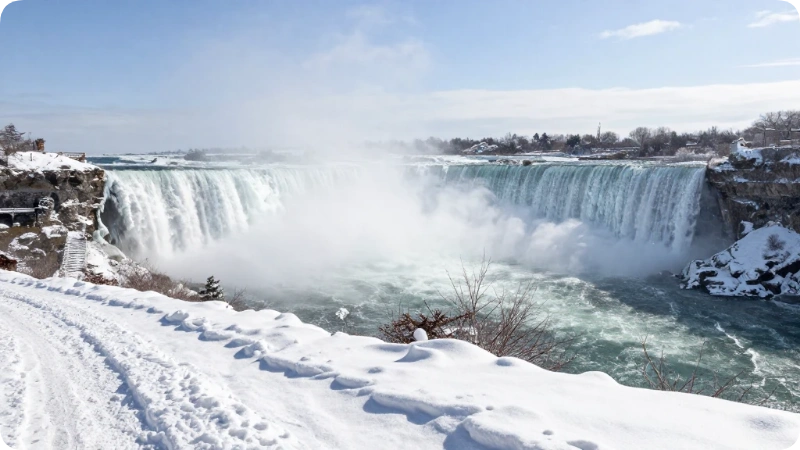
Niagara County, home to Niagara Falls, sits in a slightly different lake-effect pattern than Erie County since it draws snow off Lake Ontario as well as Lake Erie spillover. Travel bans here are declared independently by the county and by individual cities like Niagara Falls and North Tonawanda.
During major regional storms, bridges connecting to Canada, including the Rainbow Bridge, Lewiston-Queenston Bridge, and Peace Bridge, are occasionally closed separately from general road bans. If your trip involves crossing into Canada, check the Niagara Falls Bridge Commission and NITTEC (Niagara International Transportation Technology Coalition) directly, since bridge status doesn’t always match county road status.
Travel Advisory for Wyoming County, NY
Wyoming County, a rural county southeast of Buffalo, uses the same Travel Advisory and Travel Ban terminology as its neighbors. Advisories here are typically issued based on poor visibility, slippery roads, and drifting snow across the county’s open farmland, which is especially prone to whiteout conditions in high winds.
The county publishes weather advisories directly on its official website, and because Wyoming County is more rural, response times for plows can be longer than in urban Erie County. If you’re passing through on Route 20A or the Thruway corridor nearby, treat any advisory here seriously even if nearby Buffalo looks clear.
Has the Travel Ban Been Lifted?
Travel bans are lifted the same way they’re issued: by official announcement from the county executive, mayor, or Governor’s office, usually town-by-town as plows finish clearing priority roads. There is no fixed timetable; a ban can lift in a few hours or last more than a day during a major blizzard.
The clearest sign a ban has lifted is an official statement naming the specific towns affected, similar to past announcements that individually named towns like Colden, Concord, and Springville as restrictions ended while the ban remained active elsewhere. Don’t assume a ban is over just because the snow has stopped falling; roads still need to be cleared and inspected first.
Is There a Travel Ban in NY? Common Points of Confusion
“Travel ban” gets searched for a few genuinely different situations in New York, and mixing them up can send you down the wrong information path:
- Winter driving bans (this guide’s main focus): local, weather-based, temporary.
- Federal U.S. entry travel bans: a separate immigration policy restricting entry from specific countries (covered below).
- General travel advisories: informal warnings about weather, health, or road conditions that don’t carry legal force.
If you searched “travel ban” hoping to find out if you personally are restricted from entering the U.S., the section below on the federal policy is the one you need, not the winter storm information above.
Federal U.S. Travel Ban: What’s Actually Current
Separately from any WNY snowstorm, the United States has an active federal travel restriction affecting entry for nationals of dozens of countries. Under a presidential proclamation that took effect January 1, 2026, entry is fully or partially restricted for nationals of dozens of countries, expanding an earlier policy that began in mid-2025. Because the exact list, the count of countries, and each country’s status can change with limited notice, the safest number to quote is “check today” rather than any fixed figure; verify the current list directly at travel.state.gov or the Federal Register rather than trusting any single blog’s number, including this one.
A few practical points worth knowing:
- The federal entry ban is a completely different legal mechanism from a WNY snow-driving ban; one restricts who can enter the U.S. from abroad, the other restricts driving on local roads during storms.
- Existing valid visas issued before a proclamation’s effective date generally remain valid, but travelers can face extra screening.
- If a specific country, including destinations travelers commonly ask about, is on the list changes over time, so confirm directly with the State Department rather than relying on secondhand lists.
How Do I Check If I Have a Travel Ban?
If your question is about the federal entry restriction rather than local road conditions, check your status through:
- The U.S. Department of State’s CEAC portal, if you’ve applied for a visa.
- Travel.state.gov’s travel advisory and proclamation pages for the current country list.
- A licensed immigration attorney, especially if you hold a valid visa issued before a policy changed, since exemptions and grandfathering rules are legally technical.
For local road-related “bans,” the answer is simpler: check 511NY or your county’s alert page, since there’s no personal “ban status” to look up re; restrictions apply to roads and towns, not individuals.
Is It Safe to Visit NY Right Now?
Outside of active severe-weather events, Western New York is a safe, welcoming destination that draws visitors year-round for Niagara Falls, Buffalo’s waterfront, and its food scene. Safety concerns are almost always weather-specific rather than ongoing, tied to lake-effect snow season roughly from November through early April.
If you’re planning a trip outside those months, normal travel precautions apply, and there’s no regional ban or advisory to plan around. If you’re traveling during winter, build flexibility into your itinerary and monitor the National Weather Service forecast for Buffalo in the days before you go.
What Is Happening in Buffalo Right Now?
For the most current news on weather, road conditions, or local events in Buffalo, check the National Weather Service Buffalo office, 511NY, and local outlets like WIVB, WGRZ, or WKBW directly, since conditions and headlines change throughout the day. This guide focuses on the lasting facts about how the travel-ban system works rather than a live news feed, which no static article can accurately provide.
How Much Snow Does Buffalo Get?
Buffalo averages roughly 92-95 inches of snow per year, making it one of the snowiest major cities in the United States, though it typically ranks behind Syracuse (around 114-128 inches annually) and Rochester (around 89-100 inches) in the informal upstate “Golden Snowball” rivalry. Buffalo’s reputation comes less from its yearly average and more from dramatic single events, like the historic Blizzard of 1977 and the multi-day lake-effect storms of recent winters that dropped several feet in under 48 hours.
That reputation is part of why Buffalo travel bans make national news even when other snowbelt cities quietly deal with more total inches per season. Buffalo’s storms tend to be sudden and intense rather than steady.
What County Is Buffalo, NY In?
Buffalo is the county seat of Erie County, located in the far western part of New York State along the eastern shore of Lake Erie. It sits roughly 20 miles south of Niagara Falls and about an hour from the Pennsylvania border, making it a natural gateway between the Great Lakes region and the rest of Upstate New York.
Nearby Cities Within 30-45 Minutes of Buffalo
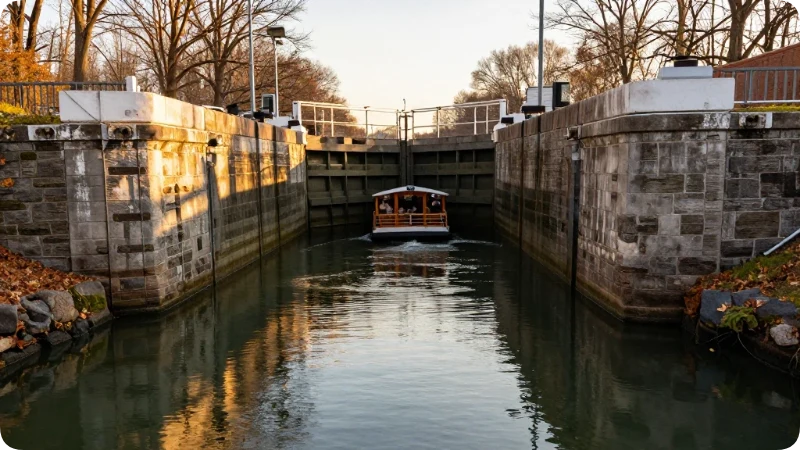
Travelers based in Buffalo have several easy day-trip options nearby, including:
- Niagara Falls, NY about 25-30 minutes north, home to the American and Bridal Veil Falls
- Lockport, NY roughly 35 minutes northeast, known for its historic Erie Canal locks
- Lackawanna and Hamburg just south of Buffalo along the lakeshore
- East Aurora about 30 minutes southeast, a charming village known for antique shops and Fisher-Price’s origins
These short drives make Buffalo a practical home base for exploring the wider region when winter conditions allow.
What Is Buffalo, NY Famous For?

Buffalo is best known as the birthplace of the Buffalo wing, invented at the Anchor Bar in 1964, along with its passionate NFL fanbase (the Buffalo Bills), its Frederick Law Olmsted-designed park system, and its proximity to Niagara Falls. The city’s revitalized waterfront, grain elevator district, and growing food and craft-beer scene have also made it a popular underrated destination pick in recent years.
Is Buffalo, NY Run Down? Addressing the Myth
Like many former manufacturing hubs, Buffalo experienced decades of population and industrial decline after the steel and grain industries contracted in the mid-to-late 20th century, and some neighborhoods still show that history. However, downtown Buffalo, the Elmwood Village, Canalside, and the Larkin District have seen substantial investment and revitalization over the past 15 years, and most visitor-facing areas are well-maintained and considered safe for tourists.
As with any mid-sized American city, conditions vary significantly by neighborhood, so it’s worth checking current visitor guides for specific areas rather than relying on outdated impressions.
Common Mistakes Travelers Make During a WNY Travel Ban
- Assuming the whole region is affected equally: Take-effect bans can leave one town buried while a town 10 minutes away sees barely a flurry. Always check your specific town, not just “Buffalo” generally.
- Relying on an old map or screenshot: travel-ban maps can be an hour or more out of date. Confirm with the official county page before driving.
- Not knowing the essential-worker rules, some travelers assume any “important” reason qualifies them to drive during a full ban; only officially approved essential workers and emergency responders are exempt.
Underrated Alternatives for a WNY Trip Timed Around Winter Weather
- Visit in shoulder season (late September-early November or April-May) for milder weather with fewer crowds and lower hotel rates than summer.
- Base yourself near downtown Buffalo rather than outlying suburbs, since ban-affected outer towns often clear later than the city core.
- Build a flexible 4-5 day window instead of a tight 2-day trip during winter months, so a single storm day doesn’t derail your whole itinerary.
Sample 3-Day Itinerary for Buffalo (No Ban in Effect)
Day 1: Start in downtown Buffalo with a visit to Canalside and the waterfront, then enjoy a classic wing dinner at a local spot.
Day 2: Take a day trip to Niagara Falls State Park. Ride the Maid of the Mist and explore Cave of the Winds.
Day 3: Finish with an architecture walk through Buffalo’s park system, followed by shopping and coffee in Elmwood Village.
This pacing works well most of the year, but during winter months, keep an extra flexible half-day buffer in case a storm alters road conditions.
Budget Tips: Is $1,000 Enough for a Few Days in New York?
This is typically asked about New York City rather than Buffalo, and the honest answer is: it can work, but it’s tight, since NYC hotel and meal prices run high. In Buffalo and the broader WNY region, $1,000 comfortably covers 3-4 days including a mid-range hotel, meals, and attraction tickets like Niagara Falls tours, since costs are meaningfully lower than in Manhattan.
Travel Insurance and Winter Trip Planning
Given how quickly a lake-effect storm can disrupt flights, rental car pickups, or hotel check-ins, travel insurance with a winter-weather or trip-delay clause is worth considering for any WNY visit scheduled between November and April. Check if your policy covers weather-related cancellations specifically, since some basic plans exclude “known” seasonal weather events.
Booking refundable hotel rates and flexible rental car reservations during winter months is a simpler, no-cost alternative if you’d rather not purchase a separate policy.
FAQs
Is there a travel ban in Buffalo right now?
There’s no way to answer this for every date; travel bans are issued and lifted in real time during active winter storms. Check 511NY, Erie County’s alert page, or the National Weather Service Buffalo office for the current status before you drive.
What’s the difference between a travel advisory and a travel ban?
A travel advisory means roads are open but hazardous, and non-essential trips are discouraged. A travel ban means roads are officially closed to everyone except emergency responders and approved essential workers.
Can I get a ticket for driving during a WNY travel ban?
Yes. Non-essential drivers caught on roads during an active, officially declared travel ban can be cited, and in Erie County this has historically been treated as a Class B misdemeanor with fines.
Does a WNY travel ban affect flights out of Buffalo Niagara International Airport?
A road travel ban doesn’t automatically ground flights, but the severe storms that trigger bans frequently cause flight delays and cancellations too. Always check directly with your airline in addition to road-condition sources.
Is the federal U.S. travel ban the same as a Buffalo travel ban?
No. The federal travel ban restricts entry to the U.S. for nationals of specific countries under a presidential proclamation, while a Buffalo or WNY travel ban is a temporary local driving restriction during severe winter weather. They’re unrelated policies.
When does travel-ban season typically start and end in Western New York?
Lake-effect snow season in WNY generally runs from November through early April, though the heaviest, most disruptive storms most often occur in November-January when the Great Lakes are still relatively warm.
How long do WNY travel bans usually last?
Duration varies widely; some advisories lift within a few hours, while major blizzards have kept full bans in place for a day or more, being reassessed and lifted town-by-town as plows finish clearing priority roads.
Do travel bans apply to pedestrians, or only vehicles?
Travel bans specifically restrict vehicle traffic on public roads. However, officials also strongly discourage unnecessary outdoor activity on foot during the same storms, since whiteout conditions and extreme cold pose serious risks to pedestrians too.
Will my hotel reservation be affected if a travel ban is issued during my stay?
Most hotels will honor existing reservations and won’t require you to leave during a travel ban, since driving out could itself be unsafe or illegal. Contact your specific hotel directly for their storm policy, and expect on-site restaurants or services to be limited.
Are Uber and Lyft available during a travel ban in Buffalo?
Rideshare availability typically drops sharply or stops entirely during a full travel ban, since drivers are also barred from non-essential travel. Don’t count on rideshare as a backup plan once a ban is officially in effect.
Can I still visit Niagara Falls if there’s a travel ban in Erie County?
Not necessarily. Niagara County issues its own bans independently, so check Niagara County’s status separately rather than assuming Erie County’s ban automatically applies there too.
What should I keep in my car during WNY winter travel, ban or not?
Officials recommend keeping blankets, a shovel, flashlight, extra batteries, warm clothing, and a phone charger in your vehicle throughout the winter months, in case you’re caught in sudden lake-effect conditions between checkpoints.
Final Takeaways
A Western New York travel ban is a serious, fast-changing safety measure, not a permanent condition. The three practical things to remember are: check official real-time sources like 511NY and your specific county’s page before driving, understand that advisories and full bans are different legal statuses with different rules, and never confuse the local snow-driving ban with the separate federal entry travel ban, which is a completely different policy.
Outside of active winter storms, Buffalo and the surrounding region remain an approachable, budget-friendly, and increasingly popular destination, from Niagara Falls day trips to the city’s revitalized waterfront. Plan your visit with a little flexibility during snow season, lean on official alert channels rather than static articles for real-time status, and Western New York’s mix of natural wonders and Rust Belt charm is well worth the trip.

Ben Fogle believes that true adventure begins where the pavement ends. After spending years documenting extreme environments, rowing across oceans, and trekking through frozen landscapes, he mastered the art of wilderness travel. For Travelmarse, Ben constructs highly detailed guides on deep-nature packing lists, wildlife safety, and sustainable eco-tourism. He breaks down intimidating, rugged expeditions into clear, step-by-step roadmaps so everyday travelers can safely connect with the natural world.