Travel should be comfortable, accessible, and enjoyable for everyone. But for seniors, people with disabilities, those recovering from surgery, or anyone with limited mobility, a simple hotel shower can become one of the biggest challenges during a trip.
Slippery surfaces, unfamiliar bathroom layouts, and a lack of support can increase the risk of falls and make daily routines stressful.
That is where a travel shower chair can make a huge difference. Lightweight, portable, and designed for safety, these chairs provide stability and confidence while bathing away from home.
If you’re planning a weekend getaway, a family vacation, a cruise, or a long-term road trip, choosing the right travel shower chair can help you stay independent and comfortable wherever you go.
In this guide, you’ll learn how travel shower chairs work, the features that matter most, TSA and airline travel considerations, packing tips, accessible hotel advice, and how to choose the best model for your needs. By the end, you’ll have everything you need to travel more safely and confidently.
What You Need to Know Right Now
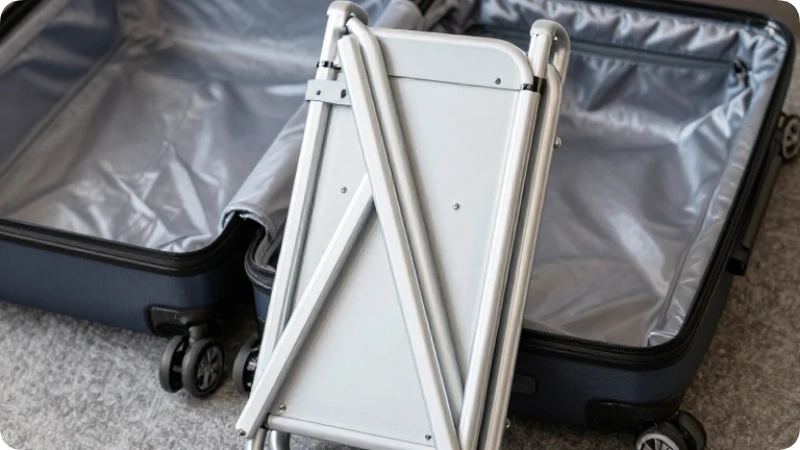
A travel shower chair folds flat or breaks into compact pieces so it fits inside checked luggage or a carry-on bag.
Most weigh between 4 and 9 pounds and support 250 to 400 pounds. Look for aluminum or reinforced plastic frames with non-slip rubber feet. TSA allows shower chairs in both carry-on and checked bags without restriction.
Why Every Traveler Who Needs One Should Pack a Travel Shower Chair
Picture this: you’ve just landed after a six-hour flight, your knees are stiff, your back aches, and the hotel shower has no grab bar and a slick porcelain floor. You make do, hold the wall, and hope for the best. For millions of Americans roughly 61 million adults living with a disability according to the CDC that scenario is not just uncomfortable. It is genuinely dangerous.
Falls in the bathroom are one of the leading causes of travel-related injury for older adults and people with limited mobility. Yet most travelers either don’t know portable shower chairs exist or assume they’re too bulky to bring along. This guide changes that. It covers every key detail: how to choose a travel shower chair, how to pack it, what TSA rules say, and how to find the right fit for your body, your trip, and your budget. Whether you’re planning a road trip through the Smoky Mountains, a cruise out of Miami, or a family beach vacation in the Florida Panhandle, this guide has you covered.
What Makes a Shower Chair “Travel-Friendly”?
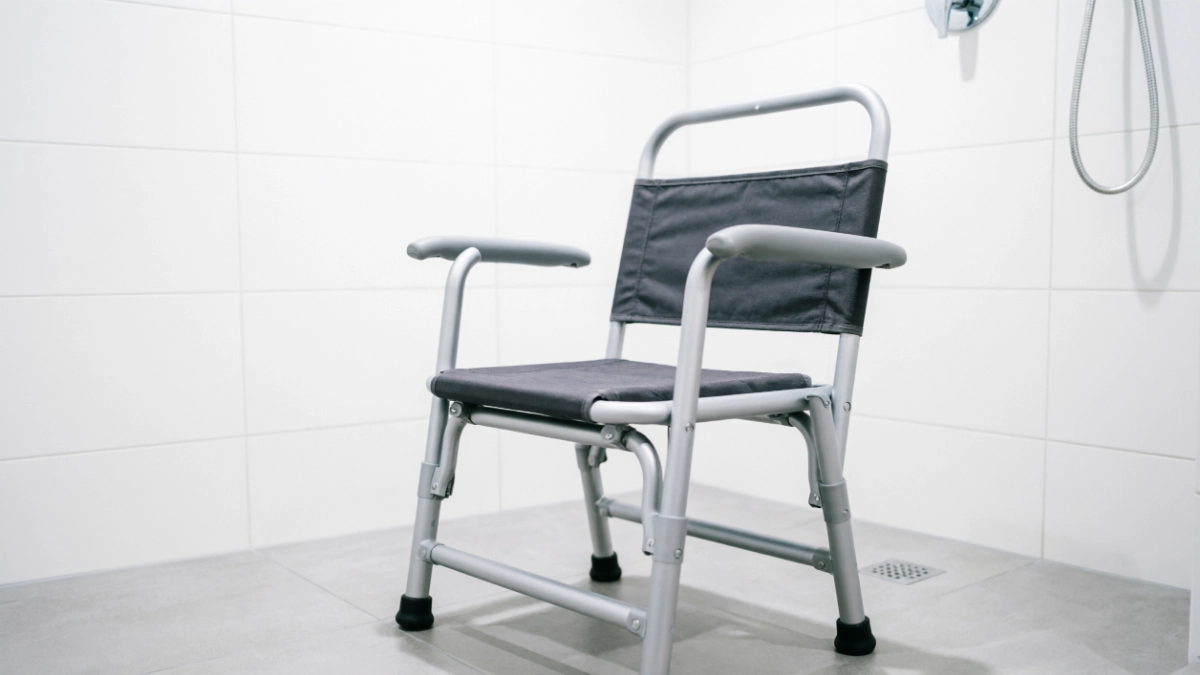
A travel shower chair is specifically designed for portability, and that design detail separates it from standard bathroom shower benches. Standard shower chairs are heavy, wide, and meant to stay in one place.
A true travel model does three things well: it folds or disassembles quickly, it weighs little enough to carry without strain, and it fits inside luggage or a travel bag.
Most travel shower chairs on the market weigh between 4 and 9 pounds. Folding aluminum frames are the most popular because aluminum resists rust, which matters in a wet environment, and the material stays light without sacrificing strength.
Some models also use high-grade reinforced polypropylene plastic, which works well for travelers who prioritize a lower price point.
The seat itself matters as much as the frame. Slatted seats allow water to drain through, which reduces the risk of the seat becoming slippery.
Padded seats offer more comfort for longer showers but can hold moisture, so they need to dry fully between uses. Non-slip rubber feet are non-negotiable look for caps that cover each leg tip completely.
Who Actually Needs a Travel Shower Chair?
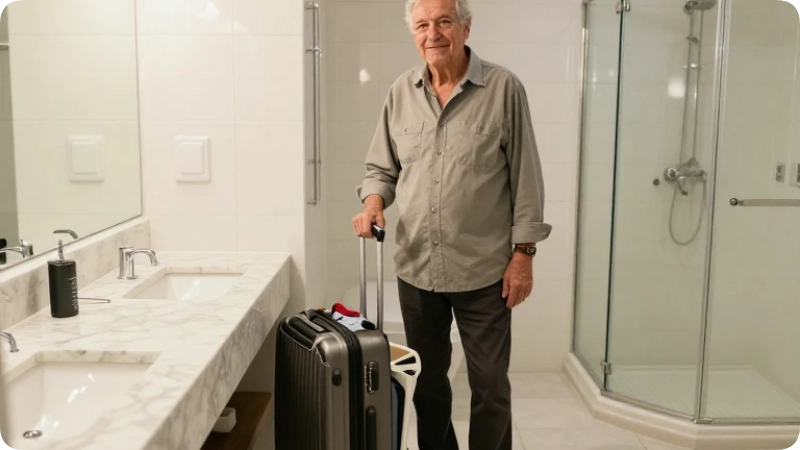
More people benefit from portable shower chairs than most would expect. The obvious users are seniors and people with permanent physical disabilities, but the practical list is much broader.
Post-surgery travelers recovering from hip replacements, knee replacements, or spinal procedures often need sitting support for months. Pregnant travelers in their second or third trimester frequently find standing showers tiring and risky.
People with multiple sclerosis, Parkinson’s disease, or chronic fatigue syndrome benefit from seated bathing even when they function well in other settings. Athletes recovering from injuries use them during away competitions. Even people with vertigo or inner ear conditions find a shower seat dramatically reduces fall risk.
The Americans with Disabilities Act (ADA) requires accessible shower features in many hotels, but compliance is uneven in practice. Smaller boutique hotels, historic properties, and international-style vacation rentals often lack roll-in showers or built-in seating. Bringing your own chair removes that uncertainty entirely.
Types of Travel Shower Chairs: A Side-by-Side Comparison
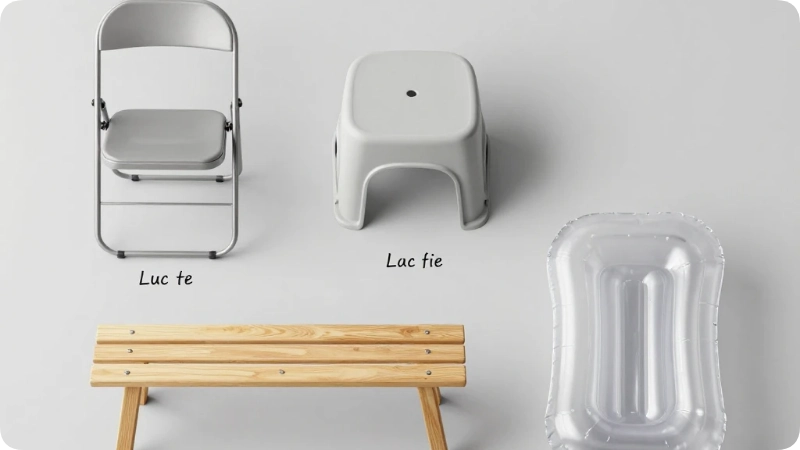
| Type | Best For | Weight | Folds? | Price Range |
| Folding aluminum chair | Most travelers | 5–7 lbs | Yes | $30–$80 |
| Transport/rolling shower chair | Wheelchair users | 15–22 lbs | Partial | $100–$300 |
| Teak travel bench | Comfort-focused | 6–10 lbs | No | $60–$150 |
| Shower stool (backless) | Active seniors, short showers | 3–5 lbs | Some | $20–$60 |
| Inflatable shower seat | Ultralight packers | Under 1 lb | N/A | $25–$50 |
Folding aluminum chairs are the most versatile option for most travelers. They support higher weight limits, assemble in under a minute, and fit into checked luggage easily. Rolling shower chairs are better suited for travelers who use a manual wheelchair full-time and need seamless transitions, though they’re heavier and harder to pack. Teak benches look beautiful and feel luxurious but don’t fold, making them practical mainly for road trips or cruise staterooms. Inflatable models are a creative ultralight option but work best as a backup rather than a primary solution.
Key Features to Look for Before You Buy
Weight capacity is the first number to check. Most standard travel shower chairs hold 250 to 300 pounds, but bariatric models go up to 400, 500, or even 600 pounds. Always choose a chair rated at least 50 pounds above your body weight to give the frame a comfortable safety margin.
Seat height adjustment is another critical feature. Most travel shower chairs offer height settings between 13 and 19 inches from the floor. Taller travelers need the higher end of that range; shorter travelers and children need the lower settings. If the chair can’t reach a comfortable height, it creates strain instead of relieving it.
Look at the leg tips closely before purchasing. Rubber caps that flare outward at the bottom grip wet tile and fiberglass shower floors better than narrow cylindrical caps. Some premium models use suction-style feet that actively grip the surface.
Armrests matter for users who need help lowering into and rising from a seated position. Swing-away armrests let you transfer from a wheelchair side-on, which is a significant functional difference. If armrests are not needed for transfers, a backless stool may work fine and packs more compactly.
TSA Rules and Air Travel with a Shower Chair
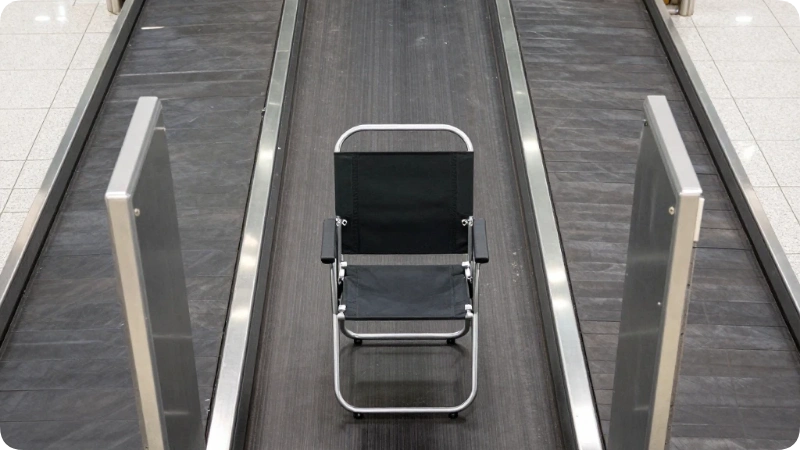
The Transportation Security Administration (TSA) does not restrict shower chairs in carry-on or checked baggage. A folding shower chair is treated like any other piece of mobility or medical equipment. According to TSA guidelines, passengers may bring mobility aids and medical devices through security checkpoints, though all items go through standard X-ray screening.
If the chair folds small enough typically under 22 x 14 x 9 inches it can go in an overhead bin. Most folding models measure around 18 x 14 x 4 inches when collapsed, putting them well within carry-on size limits for most major U.S. airlines including American, Delta, and United. Always check your specific airline’s carry-on dimension policy before flying, as policies change. The TSA’s official website at tsa.gov is the authoritative source for current screening rules.
If traveling with a rolling shower chair or a heavier bariatric model, check it as a standard piece of luggage or, in some cases, as a mobility aid. Airlines are required under the Air Carrier Access Act to transport manual wheelchairs and other mobility equipment free of charge when they are assistive devices. It is worth calling your airline directly to clarify whether a shower chair qualifies under that policy on your specific booking.
How to Pack a Travel Shower Chair Without Wasting Space
Packing a travel shower chair efficiently takes about two minutes once you’ve done it once. Start by folding or disassembling the chair according to its specific design most folding aluminum models collapse by releasing a central locking mechanism and folding the legs inward.
Wrap the folded frame in a thin microfiber towel or a reusable dry bag to protect it from scratching luggage contents and to keep it clean. Place it flat along the back or base of your suitcase, where it acts almost like a rigid frame, protecting other items. Smaller components like rubber foot caps or adjustment pins go into a small zip pouch inside a shoe or toiletry bag.
For carry-on-only travelers, a backless stool weighing 3 to 5 pounds fits into most 20-inch carry-on suitcases with room to spare. If you’re checking a bag, a standard folding chair fits easily inside a 25-inch or 28-inch checked bag alongside clothing.
One overlooked tip: rinse and dry the chair thoroughly before packing it for the return flight. Wet metal or plastic packed inside a sealed suitcase creates the conditions for mildew growth, especially during longer return journeys or layovers.
Best Hotels and Accommodations for Travelers Who Use Shower Chairs
Accessible accommodations have improved significantly in recent years, but quality still varies widely. Large hotel chains including Marriott, Hilton, and Hyatt properties typically offer ADA-compliant rooms with roll-in showers, fold-down shower seats, and grab bars. When booking, always call the property directly rather than relying solely on the accessibility filter on a booking platform the information in online listings is not always current or accurate.
Vacation rental platforms like Vrbo and Airbnb have added accessibility filters to their search tools, but the best practice is still to message the host and ask specific questions: Is the shower threshold roll-in accessible? Are there grab bars? How wide is the bathroom door? A host who responds clearly and quickly is a good sign. One who gives vague answers may not have the detailed knowledge you need.
Cruise ships are generally strong on accessibility. Major lines including Royal Caribbean, Carnival, and Norwegian have dedicated accessible staterooms with roll-in showers, shower chairs, and raised toilet seats available on request. Request these accommodations at the time of booking not at embarkation because accessible staterooms fill up early.
RV travel gives you the most control over your bathing setup. Compact travel shower chairs designed for RV wet baths are available specifically for narrow shower stalls. These models have shorter profiles and lighter builds tailored for camper van and Class B motorhome bathrooms.
Using a Travel Shower Chair Safely in Any Hotel Room
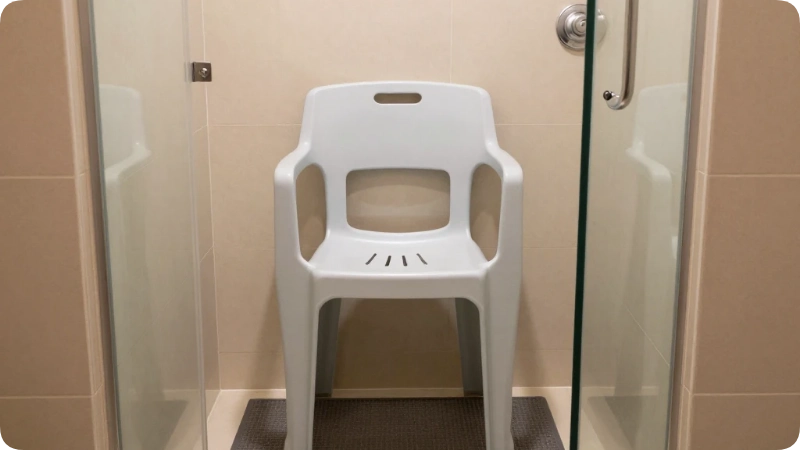
Setting up correctly matters as much as having the right chair. Before placing the chair in the shower, run the water briefly and let the floor get wet so you can see where water pools. Place the chair legs away from standing water when possible, or choose a position where all four feet rest on a textured or non-slip surface.
Test the chair’s stability before sitting by pressing down firmly on the center of the seat and rocking it side to side. All four feet should stay in contact with the floor. If one leg is shorter than the others due to uneven tile grout, use the height-adjustment feature to compensate.
A portable suction grab bar is worth packing alongside the chair. Many hotels have smooth tile walls with nothing to grip during transfers. A quality suction grab bar from brands like Drive Medical or Moen attaches to smooth wall tile and provides a meaningful steadying point. Test any suction bar aggressively before trusting body weight on it push and pull in every direction before use.
Keep a non-slip bath mat in front of the shower entry for the transfer in and out. The mat prevents the most common fall moment: stepping from a wet shower floor to a potentially damp bathroom floor.
Top Destinations in the USA Where Accessible Travel Planning Matters Most
Some destinations require more advance planning than others for travelers using mobility aids or shower chairs.
National Parks are a mixed experience. Accessible lodging near parks like the Grand Canyon (Arizona), Zion (Utah), and Great Smoky Mountains (Tennessee/North Carolina) exists but books up extremely early. The National Park Service (NPS) maintains accessibility guides on nps.gov for every major park, covering accessible lodging, trails, and visitor center facilities. These guides are a reliable starting point but should be supplemented with direct calls to park lodges.
New York City is among the most accessible urban destinations in the country. Most major hotels comply fully with ADA requirements, and the city’s infrastructure supports mobility aids well. However, many older boutique hotels in neighborhoods like the West Village or Brooklyn have narrow bathrooms and may not accommodate a shower chair setup comfortably call ahead.
New Orleans presents specific challenges. The French Quarter contains many historic buildings with narrow doorways and unrenovated bathrooms. Properties outside the Quarter, especially in the Garden District and CBD, tend to offer more accessible accommodations.
Orlando, Florida, is one of the most accessible tourist destinations in the United States. Walt Disney World and Universal Orlando both have extensive accessibility programs, and the region’s hotel inventory is enormous enough to find ADA rooms with relatively little advance planning.
5 Insider Tips for Traveling with a Shower Chair
First, photograph your hotel bathroom on check-in before unpacking. If the shower is smaller than expected or the floor is uneven, you’ll have documentation if you need to request a room change.
Second, pack a small roll of plumber’s tape in your toiletry bag. Many folding shower chairs have adjustable legs that can loosen slightly with repeated use. A single wrap of plumber’s tape around the adjustment pin threads adds just enough friction to keep them locked at your chosen height.
Third, contact your destination hotel’s concierge not just the front desk when arranging accessibility accommodations. Concierge staff tend to have more detailed knowledge of specific room features and more authority to arrange room assignments in advance.
Fourth, membership in AARP, AAA, or disability advocacy organizations sometimes comes with access to curated accessible travel booking services that have pre-vetted accommodation details. These are worth exploring before booking independently.
Fifth, use the AccessAble or Wheelmap apps to research accessibility features at specific hotels, restaurants, and attractions in your destination city. Both platforms rely on user-submitted data and are more granular than general booking platforms.
3 Common Mistakes Travelers Make (and How to Fix Them)
The first mistake is buying a chair based on price alone without checking the weight capacity. A chair rated for 250 pounds at its listed capacity often performs noticeably differently when used repeatedly with any weight near that maximum. Spending $20 more for a 350-pound capacity model significantly extends the chair’s reliable lifespan and safety margin.
The second mistake is waiting until arrival to discover the hotel shower is incompatible. Some hotel showers particularly European-style wet baths found in boutique U.S. hotels have curved floors or unusual drain placements where a standard four-leg chair cannot sit stably. Calling ahead and describing the chair eliminates this problem.
The third mistake is underestimating airline policies for gate-checking. If you plan to carry a folding shower chair as a personal item, measure it carefully and confirm it meets both carry-on and personal item policies for your airline. Policies vary between carriers, and being forced to check an item at the gate can add unexpected fees.
Budget Breakdown: What a Travel Shower Chair Setup Costs
| Item | Budget Option | Mid-Range Option | Premium Option |
| Folding shower chair | $25–$40 | $50–$80 | $100–$200 |
| Portable suction grab bar | $20–$35 | $40–$65 | $80–$120 |
| Non-slip bath mat | $10–$20 | $25–$40 | $45–$70 |
| Carry bag or dry bag | $8–$15 | $18–$30 | $35–$60 |
| Full setup total | $63–$110 | $133–$215 | $260–$450 |
A reliable, functional travel setup costs most travelers between $75 and $150. Premium options from medical-grade brands like Drive Medical, Medline, and Carex add durability, improved ergonomics, and higher weight limits. All prices listed are approximate and change frequently verify current pricing at retail before purchasing.
Frequently Asked Questions
Can you bring a shower chair on a plane?
Yes. TSA allows shower chairs in both carry-on and checked bags. Folding models that collapse to under 22 x 14 x 9 inches typically fit in an overhead bin. Larger or rolling models should be checked. If the chair qualifies as an assistive mobility device, federal law requires airlines to transport it without charging a fee. Always verify your airline’s specific policy before travel.
What is the lightest travel shower chair available?
The lightest options are backless shower stools, which can weigh as little as 3 pounds, and inflatable shower seats, which weigh under 1 pound. Standard folding chairs with backs and armrests start around 5 to 6 pounds. Weight varies by material aluminum frames are lighter than steel, and plastic seats weigh less than padded options. Always check the manufacturer’s listed weight before purchasing.
How do I keep a travel shower chair from sliding on hotel tile?
Use a chair with wide rubber feet caps rather than narrow tips. Adding a thin non-slip mat under the chair provides extra grip on very smooth tile. Never use a suction-cup base shower chair on a textured or grout-heavy tile floor, as the suction won’t seal properly. Testing the chair’s stability before sitting is always the safest first step.
Are travel shower chairs covered by insurance or Medicare?
Medicare Part B may cover a shower chair or bath bench if a physician prescribes it as durable medical equipment (DME) for a medical condition. Coverage is subject to deductibles, co-pays, and supplier network requirements. Private insurance coverage varies significantly by plan. Contact your insurance provider directly for current coverage details, as policies change.
What size shower chair works best in an RV or camper van?
Compact shower stools or backless stools work best in RV wet baths, which are typically 24 x 24 to 32 x 32 inches. Look for stools with a seat width under 14 inches and adjustable legs that go as low as 13 inches from the floor. Some brands specifically market RV shower stools with smaller footprints suited to compact spaces.
Can a travel shower chair be used outdoors or at the beach?
Yes. Aluminum and plastic travel shower chairs can be used at outdoor shower stations at beaches, campgrounds, and RV parks. Rinse salt and sand off thoroughly after each outdoor use and dry the chair before packing. Avoid leaving aluminum frames in standing saltwater for extended periods, as prolonged exposure can cause surface corrosion even on treated frames.
Is a travel shower chair the same as a transfer bench?
No. A shower chair sits entirely inside the shower stall. A transfer bench straddles the shower threshold with two legs inside and two outside, allowing a user to slide across the seat into the shower without having to step over the threshold. Transfer benches are larger and less portable but better suited for travelers who cannot step over any shower lip at all. Both are allowed on flights under TSA guidelines.
The Final Word on Travel Shower Chairs
Three things stand out after a thorough look at travel shower chairs: they cost far less than most people expect, they pack more easily than almost anyone imagines, and they deliver peace of mind that makes every trip better.
A $60 folding aluminum chair with rubber feet and height-adjustable legs covers the needs of most travelers reliably and lasts for years of consistent use.
Call your hotel before arrival, bring a suction grab bar as backup, and dry the chair before packing it for the return trip.
Those three habits solve most of the problems that can arise. With the right chair in your luggage, destinations that once felt uncertain become genuinely comfortable and the adventure itself gets to stay front and center where it belongs.

Ben Fogle believes that true adventure begins where the pavement ends. After spending years documenting extreme environments, rowing across oceans, and trekking through frozen landscapes, he mastered the art of wilderness travel. For Travelmarse, Ben constructs highly detailed guides on deep-nature packing lists, wildlife safety, and sustainable eco-tourism. He breaks down intimidating, rugged expeditions into clear, step-by-step roadmaps so everyday travelers can safely connect with the natural world.