Turkey’s Most Beautiful Destinations offer one of the most jaw-dropping travel experiences on earth ancient ruins older than Rome, coastlines that rival the Greek islands, surreal volcanic landscapes, and a food culture that will completely change how you think about breakfast.
For American travellers, Turkey’s Most Beautiful Destinations provide incredible value, delivering world-class experiences at a fraction of the cost of many European countries.
Yet many travelers still overlook Turkey’s Most Beautiful Destinations. Some assume Turkey is difficult to visit, too far away, or unsafe. In reality, exploring Turkey’s Most Beautiful Destinations is easier than most people expect.
The truth is that Istanbul is just a direct flight from New York, visa requirements are straightforward, and many of Turkey’s Most Beautiful Destinations, including Cappadocia, Bodrum, and the Aegean Coast, welcome millions of visitors every year.
These famous Turkey’s Most Beautiful Destinations are known for their hospitality, tourism infrastructure, and unforgettable scenery.
Interest in Turkey’s Most Beautiful Destinations continues to grow among American travelers. From historic cities to coastal escapes, Turkey’s Most Beautiful Destinations appeal to every type of visitor.
Adventure seekers can explore Turkey’s Most Beautiful Destinations filled with mountains and hiking trails, while history lovers can discover Turkey’s Most Beautiful Destinations packed with ancient ruins and archaeological treasures.
This guide highlights Turkey’s Most Beautiful Destinations, from world-famous landmarks to hidden gems that many tourists never find. Whether you’re planning a 10 day getaway or a three-week adventure, Turkey’s Most Beautiful Destinations offer something for every budget and travel style.
Luxury resorts, charming villages, vibrant cities, and breathtaking natural wonders all contribute to why Turkey’s Most Beautiful Destinations rank among the world’s most rewarding places to visit.
Turkey at a Glance: Quick Facts for U.S. Travelers
| Category | Details |
| Official Name | Republic of Türkiye |
| Capital | Ankara |
| Currency | Turkish Lira (TRY) |
| Language | Turkish |
| Time Zone | UTC+3 (7 hours ahead of Eastern) |
| Visa for Americans | Visa-free up to 90 days (tourist/business) |
| Electricity | 220V / Type C & F plugs (bring adapter) |
| Flight from NYC | ~10–11 hours direct |
| Budget Traveler Daily Cost | ~$50–70/day |
| Mid-Range Daily Cost | ~$100–150/day |
| Best Months to Visit | April–May and September–October |
Always verify entry requirements and travel advisories before departure. Check the U.S. Department of State at travel.state.gov and the official Turkish e-visa portal at evisa.gov.tr for the most current information.
Best Time to Visit Turkey
The sweet spot for visiting Turkey is April through May or September through October. Temperatures sit in the comfortable 60–75°F range, crowds thin out compared to summer, and prices for hotels and tours drop noticeably. Spring also brings wildflowers across Cappadocia’s valleys and warm enough water for early Aegean swims.
Summer (June–August) is peak season. The coasts buzz with life, but Istanbul can feel brutally hot at 95°F+, and popular spots like Pamukkale turn into elbow-to-elbow affairs. Hotel prices spike significantly in July and August, especially along the Turkish Riviera.
Winter (December–February) is quiet and cold, but Istanbul still has considerable charm museums without queues, cozy teahouses, and dramatic fog over the Bosphorus. Cappadocia actually gets snow, which creates an utterly magical backdrop for hot air balloon rides (when weather permits).
Seasonal Comparison
| Season | Months | Weather | Crowds | Price Level | Best For |
| Spring | April–May | 60–75°F | Moderate | Mid | Sightseeing, hiking, Aegean coast |
| Summer | June–August | 85–100°F | Peak | High | Beach holidays, nightlife |
| Autumn | Sep–October | 65–80°F | Moderate | Mid | All-around best season |
| Winter | Nov–March | 35–55°F | Low | Budget | Istanbul, Cappadocia snow, culture |
Do Americans Need a Visa for Turkey?
Good news: most U.S. passport holders can enter Turkey visa-free for up to 90 days within any 180-day period, for tourism or brief business travel. Your passport must be valid for at least six months beyond your arrival date. You do not need to pay a fee or fill out an application for a standard tourist visit.
That said, some travelers from other countries may still need a Turkish e-Visa. If that applies to anyone in your group, the official application site is evisa.gov.tr. The process is entirely online and typically takes under 10 minutes. Always confirm the latest requirements with the Turkish Ministry of Foreign Affairs and the U.S. Embassy in Ankara before you travel, as policies can and do change.
Important note: Turkey has a zero-tolerance policy for social media posts or comments deemed critical of the government. Be mindful of what you post publicly while traveling in the country.
How to Get to Turkey from the USA
Flying is the only practical option for Americans, and it’s more straightforward than you might think.
Turkish Airlines operates direct flights from New York (JFK) and a growing number of other U.S. cities to Istanbul Airport (IST) one of the largest airports in the world. IST is a major global hub, so connections from cities like Chicago, Los Angeles, Miami, and Houston are convenient with just one stop.
Other airlines including United, American, Delta, and several European carriers offer connecting service through European hubs such as Frankfurt, Amsterdam, and London.
- Typical flight time (NYC to Istanbul): 10–11 hours direct
- Connecting flights: 13–18 hours total depending on layover
- Book 3–4 months in advance for the best fares
- Turkish Airlines has a strong safety record and is rated among the top airlines globally
Istanbul Airport (IST) is the primary international entry point. The airport is modern, efficient, and well-connected to the city by metro and bus. A second airport, Sabiha Gökçen (SAW), serves the Asian side of Istanbul and handles many budget airline routes within Europe and Turkey.
Getting Around Turkey
Turkey’s internal transport network is surprisingly good, and once you arrive, moving between destinations is easier than most first-timers expect.
Domestic flights are cheap and fast. Turkish Airlines and budget carriers like Pegasus Airlines and SunExpress connect Istanbul to Cappadocia, Izmir, Bodrum, Antalya, and other destinations for as little as $30–60 one way if booked ahead. This is the best option for covering large distances.
Intercity buses run between almost every city in the country. Operators like Flixbus Turkey, Metro Turizm, and Pamukkale Turizm offer comfortable overnight routes that save on accommodation costs. Istanbul to Cappadocia by bus takes about 10–12 hours.
High-speed trains connect Istanbul to Ankara in about 4 hours via the YHT system. Rail coverage is still expanding but works well for that central corridor.
Car rental is worth considering along the Aegean and Mediterranean coasts, where the scenery between stops is half the pleasure. Roads are generally good, and driving gives you flexibility that buses and tours simply can’t match. International driver’s licenses are recommended; confirm requirements with your rental company.
Within Istanbul, the metro, tram, and Istanbulkart transit card make getting around the city cheap and easy.
Istanbul: The Unmissable Starting Point
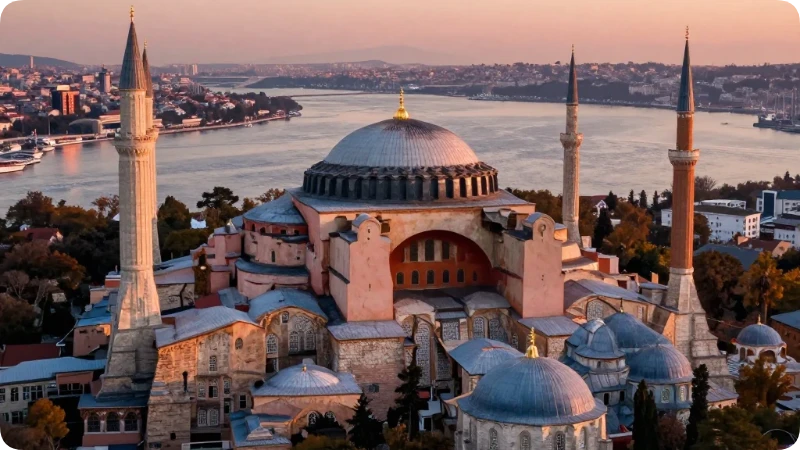
Istanbul is the cultural heart of Turkey and, for most American travelers, the obvious place to begin. It’s also one of the most extraordinary cities on earth a metropolis that literally straddles two continents, where a 15-minute ferry ride takes you from Europe to Asia.
The city sees upward of 16 million visitors per year, yet it never quite feels like it has given itself over entirely to tourists. Neighborhoods like Karaköy and Kadıköy hum with local coffee shops, galleries, and street markets that have nothing to do with tourism itineraries.
Top things to do in Istanbul:
- Hagia Sophia Originally a 6th-century Byzantine cathedral, later an Ottoman mosque, now an active mosque open to visitors. The interior scale is genuinely staggering.
- Topkapi Palace The opulent seat of Ottoman sultans for 400 years. Budget at least half a day; the Harem section requires a separate ticket and is worth it.
- Grand Bazaar One of the world’s largest and oldest covered markets, with over 4,000 shops. Go to browse, not necessarily to buy; prices here are tourist-inflated.
- Spice Bazaar (Egyptian Bazaar) Smaller, more atmospheric, and a better spot to actually pick up saffron, Turkish tea, and dried fruits at reasonable prices.
- Bosphorus ferry Skip the pricey tourist cruises and take the public Şehir Hatları ferry instead. A $1 ride gives you stunning views of both continents and the city skyline.
- Süleymaniye Mosque Less crowded than the Blue Mosque but arguably more beautiful. Dress modestly; free entry.
Insider tip: The Blue Mosque (Sultan Ahmed Mosque) is iconic, but it’s closed to visitors during prayer times, which happen five times daily. Check the schedule before you walk over, or you may arrive to a locked door.
Cappadocia: Turkey’s Most Iconic Landscape
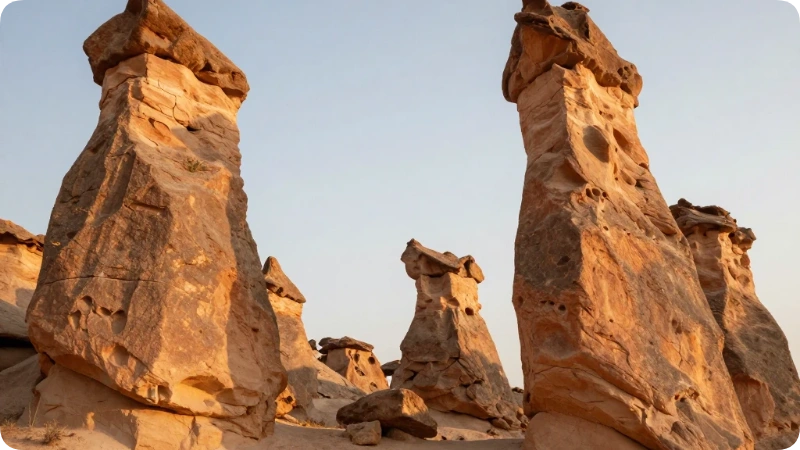
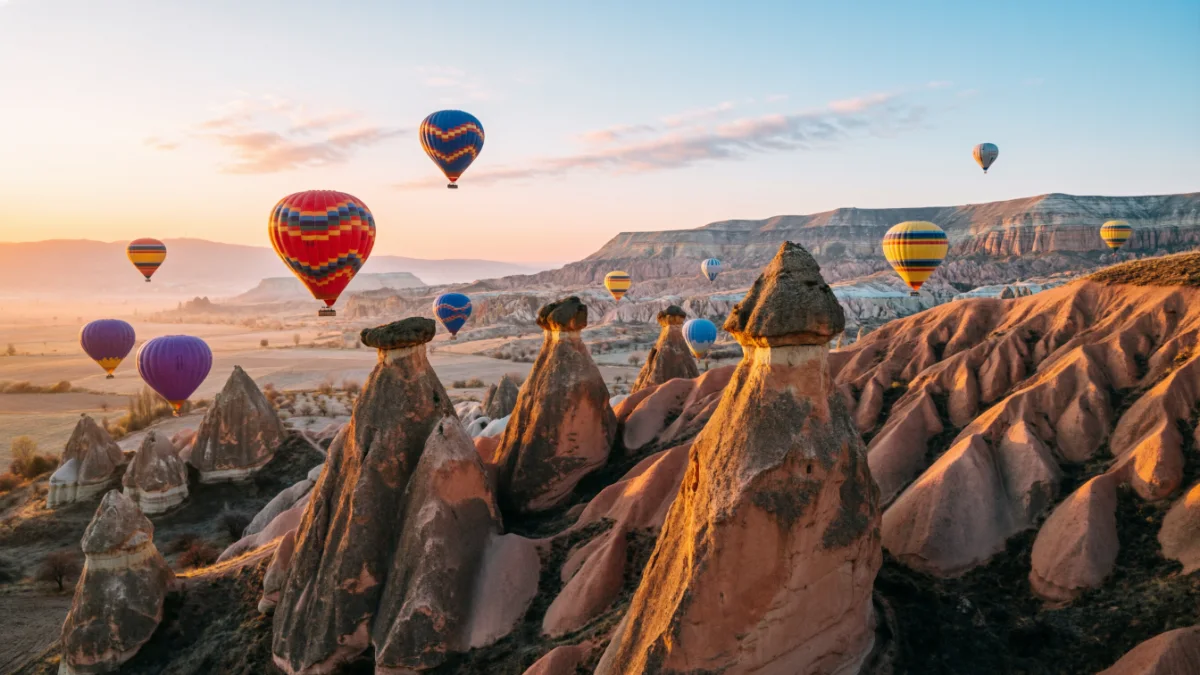
Cappadocia is famous for its unique volcanic rock formations, shaped by erosion over millions of years. For centuries, people have carved homes, churches, and monasteries into these soft stone pillars.
The region is best known for its hot air balloon rides. At sunrise, hundreds of balloons float above the valleys, creating one of Turkey’s most unforgettable sights. Flights usually cost $150–250 per person and depend on weather conditions, so book with a trusted operator and avoid scheduling your ride on your final day.
Other highlights include the Göreme Open Air Museum, a UNESCO site filled with rock-cut churches and ancient frescoes, and the remarkable Derinkuyu Underground City, which extends deep below the ground. Nature lovers can explore the Red and Rose Valleys, where colorful rock formations glow in the afternoon light. Staying in a cave hotel is also a unique experience, offering modern comfort inside historic rock dwellings.
For a quieter adventure, visit Ihlara Valley, a scenic canyon about 90 minutes from Göreme. Its riverside trails and hidden Byzantine cave churches attract far fewer visitors, making it one of Cappadocia’s best-kept secrets.
Ephesus and the Aegean Coast: Ancient History at Its Best
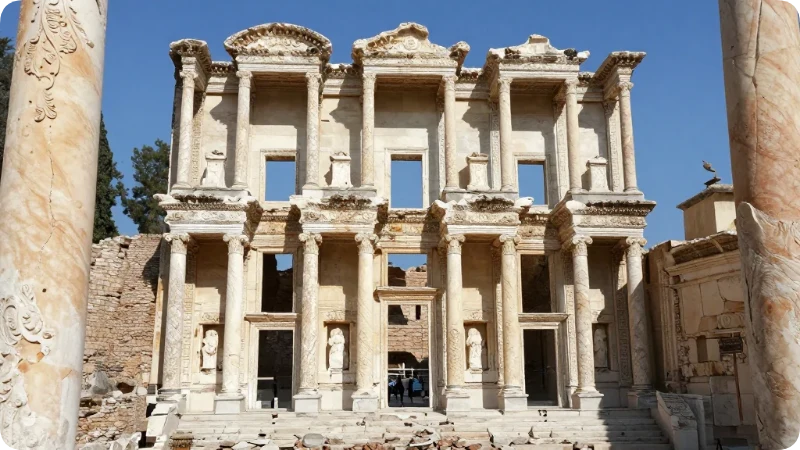
The ancient city of Ephesus, near the modern town of Selçuk, is one of the best-preserved Greco-Roman cities anywhere in the Mediterranean world. At its peak, it was home to 250,000 people and served as the Roman capital of Asia Minor. Walking down the marble-paved Curetes Street past the Library of Celsus a two-story facade that looks like it was built last century is a genuinely moving experience.
Practical tips for Ephesus:
- Visit early morning or late afternoon to avoid peak heat and tour-group crowds. Mid-morning, the site is swarming.
- The site has two entrances; most tour buses use the lower (southern) gate, so entering from the upper gate means you walk downhill with thinner crowds at first.
- Nearby attractions include the House of the Virgin Mary (believed by some to be where Mary spent her final years), the Basilica of St. John, and the Ephesus Archaeological Museum in Selçuk.
The broader Aegean Coast stretches northward through beautiful towns like Çeşme (famous for its beaches and thermal springs), Alaçatı (a boutique village of stone houses, windsurfing, and excellent restaurants), and the port city of Izmir Turkey’s third-largest city and an underrated urban destination with a lively waterfront promenade called the Kordon.
Alaçatı deserves special mention as a hidden gem for American visitors. Most tourists pass through Izmir without stopping, and almost none make the 50-mile side trip to Alaçatı. The town is gorgeous: cobblestone alleys, bougainvillea-draped stone houses converted into boutique hotels, a world-class windsurfing beach, and some of the best food on Turkey’s western coast.
Pamukkale: The Cotton Castle of Turkey
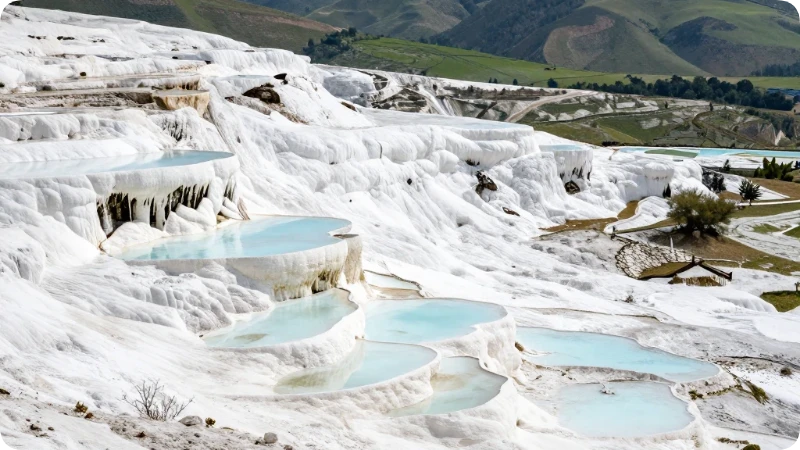
Pamukkale translates literally to “cotton castle,” and the name fits. The site consists of bright white terraced mineral pools formed by calcium-rich thermal water cascading down a hillside over thousands of years. The result looks like a frozen waterfall or a field of snow in the middle of a sun-baked landscape.
Visitors can walk barefoot through the shallow thermal pools the water is warm and the experience is genuinely surreal. Photography here is spectacular in the early morning before the terraces fill with people.
At the top of the travertines sits Hierapolis, an ancient Greco-Roman spa city whose ruins include a well-preserved theater, a vast necropolis, and the Antique Pool a thermal swimming pool where you actually swim among submerged Roman columns. The Antique Pool has an entry fee but is worth every dollar for the sheer strangeness of it.
Getting there: Fly into Denizli Çardak Airport (DNZ) or take an overnight bus from Istanbul or Izmir. Pamukkale makes a good stop between the Aegean coast and the Mediterranean.
The Turkish Riviera: Bodrum, Antalya, and Fethiye
Turkey’s Mediterranean coast often called the Turquoise Coast or the Turkish Riviera runs for roughly 1,000 miles of coves, beaches, ancient ruins, and sailing waters. It’s where Turkey goes for its own vacations, and the infrastructure for travelers is excellent.
Bodrum is the most internationally known of the coastal resorts, especially among Europeans. It sits on a peninsula jutting into the Aegean, with a stunning Crusader castle at its center and a harbor lined with traditional wooden gulets (sailing boats). The nightlife is lively; the beaches are crowded in July and August. For a quieter version of Bodrum, explore the small villages on the peninsula’s northern shore.
Antalya serves as the gateway to the broader Turkish Riviera and has a genuinely lovely old town (Kaleiçi) with Roman walls, a harbor, and a maze of narrow streets. Day trips from Antalya reach the spectacular ruins of Perge, Aspendos (home to an extraordinarily well-preserved 2nd-century Roman theater), and the waterfall at Düden.
Fethiye is quieter and more laid-back than Bodrum and makes an excellent base for exploring one of Turkey’s most dramatic stretches of coast. The famous Blue Lagoon at Ölüdeniz a sheltered cove with impossibly turquoise water is a 15-minute drive away. The ghost village of Kayaköy, a deserted Greek village abandoned in the 1920s population exchange, sits just outside Fethiye and is one of the most eerie and moving places in the country.
Insider tip: Instead of staying in Fethiye proper, consider booking a few nights on a gulet a traditional wooden sailing boat. Multi-day “Blue Voyage” yacht charters are a Turkish institution and surprisingly affordable when split among a group. You’ll anchor in hidden coves, swim off the boat, and sleep under the stars.
Ankara: The Overlooked Capital
Most travelers fly through Ankara on the way to somewhere else and never give it a second look. That’s a mistake worth correcting if you have an extra day or two.
Ankara is Turkey’s capital and second-largest city, and it has a completely different feel from Istanbul more European, more administrative, but with genuine cultural depth. The Museum of Anatolian Civilizations is widely considered one of the finest archaeology museums in the world, housing artifacts from Neolithic, Hittite, Phrygian, and Urartian civilizations that predate ancient Greece. Anıtkabir, the mausoleum of Atatürk (modern Turkey’s founder), is architecturally grand and historically essential to understanding the country.
The hilltop neighborhood of Hamamönü has been beautifully restored to its Ottoman-era character, with traditional wooden houses, handicraft shops, and tea gardens that see almost no foreign tourists.
Mardin and the Southeast: Turkey’s Most Atmospheric City (With Important Caveats)
⚠️ Safety Note: As of March 2026, the U.S. Department of State has issued a Level 4 “Do Not Travel” advisory for Southeast Turkey, specifically citing risk of terrorism and armed conflict related to regional instability. Americans in the southeast are strongly encouraged to depart. Always consult the official travel advisory at travel.state.gov before planning any trip to this region.
With that essential caveat clearly stated: Mardin, a hilltop city in southeastern Turkey built from honey-colored limestone, is one of the most visually stunning places in the country. Its labyrinthine old city, a mix of Arab, Syrian Christian, Kurdish, and Turkish cultures, was unlike anywhere else in Turkey. For travelers who visit when safety conditions permit in the future, it remains extraordinary.
Turkish Food: What to Eat and Where

Turkish cuisine is one of the world’s great food traditions, and eating well in Turkey requires almost no effort. Street food is excellent, restaurant portions are generous, and the ingredients fresh vegetables, olive oil, legumes, grilled meats, seafood are outstanding.
Things to eat no matter where you are:
- Turkish breakfast (kahvaltı) The meal that changes people. A spread of cheeses, olives, tomatoes, cucumbers, eggs, honey, clotted cream (kaymak), jams, and fresh bread that bears no resemblance to what most Americans call breakfast.
- Lahmacun A thin, crispy flatbread topped with minced meat and herbs, rolled up with fresh parsley and lemon. Cheap, fast, and addictive.
- Meze Small shared dishes, similar to tapas, typically served with rakı (anise-flavored spirit). Classics include hummus, muhammara, haydari (yogurt with herbs), and stuffed vine leaves.
- Balık ekmek Grilled fish in bread, sold from boats near Istanbul’s Galata Bridge. One of the great street food experiences in any city.
- Baklava The real thing, made with good pistachios and fresh clarified butter, bears little resemblance to the soggy supermarket version. In Gaziantep (Turkey’s food capital), it reaches a level of obsession.
- Turkish tea (çay) Served in small tulip-shaped glasses everywhere, all day, constantly. Refusing tea is mildly unusual. Accepting it and sitting down is how you have real conversations.
Dining tip: Avoid restaurants that have menus with photos plastered outside and a tout trying to drag you in from the street. Walk half a block in any direction and the food will be better and cheaper.
Culture and Etiquette Tips for Americans
Turkey is a Muslim-majority country with strong secular traditions in many urban areas, and navigating cultural expectations is straightforward with a little awareness.
- Mosques: Remove shoes before entering. Women should cover their hair, shoulders, and knees. Men should avoid shorts. Many major mosques have scarves and wraps available at the entrance for visitors. Avoid visiting during prayer times if possible.
- Modest dress in conservative areas: Istanbul and coastal resorts are generally relaxed. In smaller towns and religious sites, dress more conservatively out of respect.
- Bargaining: Expected and enjoyable in bazaars and markets. Do not bargain at restaurants or established stores with fixed prices.
- Tipping: Not mandatory but appreciated. Around 10% at sit-down restaurants is standard. Tipping taxi drivers is not traditional but welcomed.
- Greetings: Turks are warm and hospitable. Accepting an invitation for tea is an act of friendship. You are not obligated to buy anything if a shopkeeper invites you in for a glass.
- Social media caution: Turkish law treats public criticism of the government, national institutions, and Atatürk very seriously. Keep your political opinions off public social media while in the country.
Safety Tips for American Travelers in Turkey
Turkey’s most popular tourist regions Istanbul, Cappadocia, the Aegean coast, and the Mediterranean coast are generally safe for American travelers and receive millions of international visitors annually. That said, the current security situation requires careful attention.
Current advisory status (as of June 2026):
- Turkey overall carries a Level 2: Exercise Increased Caution advisory from the U.S. Department of State.
- Southeast Turkey carries a Level 4: Do Not Travel advisory due to terrorism risk and armed conflict.
- Americans in Southeast Turkey are strongly encouraged to depart. The U.S. Consulate General Adana has suspended services.
Always check the current advisory at travel.state.gov before and shortly before your trip, as conditions change.
Practical safety steps:
- Enroll in the Smart Traveler Enrollment Program (STEP) at step.state.gov it’s free and lets the embassy contact you in an emergency.
- Keep a photo of your passport stored separately from the original.
- Use licensed, metered taxis or ride-hailing apps rather than unmarked cabs, especially at airports.
- Avoid large crowds and public demonstrations. Turkey has strict laws against unauthorized protests.
- Purchase travel insurance that includes medical evacuation before you leave. Turkey has good hospitals in major cities, but rural medical care is limited and medical costs abroad add up fast.
- Stay informed through local English-language news sources and the U.S. Embassy in Ankara’s official alerts.
Three Mistakes American Travelers Make in Turkey (and How to Fix Them)
1. Trying to see too much in too little time. Turkey is enormous roughly the size of Texas and distances are deceptive on a map. Trying to fit Istanbul, Cappadocia, Ephesus, Pamukkale, and the coast into 7 days means spending most of your trip in transit. Fix: Choose two or three regions and go deep rather than trying to check every destination.
2. Skipping Cappadocia because it seems expensive. The balloon rides are pricey, but almost everything else in Cappadocia is remarkably affordable. Cave hotels can be found for $60–80 per night, hiking the valleys is free, and food is cheap. Fix: Budget for the balloon as a splurge and keep everything else modest.
3. Only exchanging money at airport kiosks. Airport exchange desks offer notoriously poor rates. Fix: Withdraw Turkish lira from ATMs in the city (bank ATMs give better rates), or use a no-foreign-transaction-fee credit card for most purchases. Inform your bank before traveling.
Sample 10-Day Turkey Itinerary
This itinerary covers Turkey’s most iconic regions without feeling rushed.
Days 1–3: Istanbul Arrive, recover from jet lag, explore Sultanahmet (Hagia Sophia, Topkapi Palace, Grand Bazaar), take a Bosphorus ferry, eat everything. Day 3: cross to the Asian side Kadıköy market and the Moda neighborhood offer a completely different side of the city.
Days 4–5: Cappadocia Fly from Istanbul to Kayseri or Nevşehir (~1 hour). Hot air balloon ride on Day 4 morning (book weeks in advance). Göreme Open Air Museum, valley hikes, cave hotel overnight.
Days 6–7: Pamukkale and Hierapolis Fly or take an overnight bus to Denizli. Walk the thermal terraces barefoot, swim in the Antique Pool, explore Hierapolis ruins.
Days 8–10: Aegean Coast Drive or take a bus to Selçuk for Ephesus (morning visit). Then head to Alaçatı or Çeşme for beach time, fresh seafood, and a slow final two days before flying home from Izmir (ADB) or back to Istanbul.
Where to Stay in Turkey: Options for Every Budget
Budget ($30–60/night): Hostels and guesthouses are plentiful in Istanbul’s Sultanahmet and Beyoğlu districts, and in Göreme in Cappadocia. Many are clean, well-located, and run by genuinely welcoming owners. Look for options on Booking.com or Hostelworld and filter for recent reviews.
Mid-range ($80–150/night): Boutique hotels are a Turkish specialty. Istanbul has stunning options in converted Ottoman mansions; Cappadocia has cave suites; the Aegean coast has stone houses converted into small hotels. This is arguably the best value bracket in Turkish tourism.
Luxury ($200+/night): Turkey’s luxury hotel scene has exploded. The Four Seasons Istanbul at Sultanahmet occupies a former prison and is genuinely extraordinary. Cappadocia has high-end cave resorts. Bodrum and coastal resorts have international-standard beach hotels.
Book popular Cappadocia cave hotels months in advance, especially for spring and autumn. These fill up far earlier than their star ratings might suggest.
Budget Breakdown for Americans
| Category | Budget Traveler | Mid-Range | Luxury |
| Accommodation (per night) | $25–50 | $80–150 | $200–500 |
| Food (per day) | $15–25 | $30–50 | $60–100+ |
| Local transport (per day) | $5–10 | $15–25 | $30+ |
| Activities (per day) | $10–20 | $25–50 | $100+ |
| Daily total (approx.) | $55–105 | $150–275 | $390+ |
Note: All prices are approximate estimates and subject to change with exchange rates and seasonal fluctuation. Verify current costs before traveling.
Frequently Asked Questions
Is Turkey safe for American tourists right now?
Most popular tourist regions Istanbul, Cappadocia, the Aegean coast, and Mediterranean coast are generally safe and receive millions of international visitors each year. However, the U.S. State Department currently rates Turkey as Level 2 (Exercise Increased Caution) overall, with a Level 4 (Do Not Travel) advisory for Southeast Turkey specifically. Avoid the southeast entirely and check travel.state.gov for the latest advisory before your trip.
Do Americans need a visa to visit Turkey?
Most U.S. passport holders do not need a visa for tourist visits up to 90 days within a 180-day period. Your passport must be valid for at least six months beyond your arrival date. Requirements can change, so verify with the Turkish Ministry of Foreign Affairs and the U.S. Embassy before you travel.
How many days do you need in Turkey?
Ten to fourteen days is the sweet spot for a first visit. That allows three days in Istanbul, two in Cappadocia, two to three along the Aegean coast, and a day or two for travel. A full three weeks lets you add the Mediterranean coast, Pamukkale, and deeper exploration of each region.
What is the best time of year to visit Turkey?
April through May and September through October are widely considered the best months. Temperatures are comfortable, crowds are thinner than in summer, and prices are lower than peak season. Summer works well for beach-focused trips but is hot in cities and crowded at coastal resorts.
Is Turkey expensive for Americans?
Turkey is excellent value for American travelers. The Turkish lira has weakened considerably against the dollar in recent years, meaning your money goes significantly further than in Western Europe. A full mid-range day good hotel, restaurant meals, and an activity typically costs $100–$150 per person.
What should Americans know about Turkish culture before visiting?
Turkey is a Muslim-majority country with a strong secular tradition, particularly in cities and tourist areas. Dress modestly at religious sites, accept tea when offered (it’s a gesture of hospitality), and be aware that public criticism of the government or national institutions carries legal risk. Turkish people are famously warm and welcoming to foreign guests.
What is the best way to get from Istanbul to Cappadocia?
Flying is the fastest and most practical option flights from Istanbul to Kayseri (ASR) or Nevşehir (NAV) take about 1.5 hours and can cost as little as $40–80 on budget carriers like Pegasus Airlines if booked in advance. Overnight buses are a budget-friendly alternative at about 10–12 hours. High-speed rail does not currently connect the two destinations directly.
Final Thoughts: Why Turkey Should Be on Every American’s Travel List
Three things stay with almost everyone who visits Turkey: the scale of its history, the warmth of its people, and the sheer variety of experiences packed into a single country.
You can spend a morning at a 6th-century Byzantine cathedral, eat lunch in a bazaar that has been operating for 500 years, and watch the sunset from a beach that rivals anything in the Mediterranean all in the same day, in the same city.
Turkey rewards preparation. Know the current travel advisory, keep your itinerary focused rather than frantic, and give yourself permission to slow down in places that deserve more than a half-day.
The country has a way of pulling people back. There’s a reason American tourism hit record levels in 2025 and keeps climbing.
Check your passport validity, bookmark travel.state.gov, and start mapping out your route. Turkey is one of the most extraordinary countries you’ll ever visit.

Maya Lin inspires travelers to explore the globe with absolute confidence and independence. Armed with a background in digital media and a decade of independent solo travel experience, she knows exactly how to navigate unfamiliar cities smoothly and safely. For Travelmarse, Maya curates the solo travel and hidden-gem verticals. She reviews charming boutique hotels, designs smart neighborhood walking routes, and shares practical language-learning hacks, giving readers the exact tools they need to travel solo without the stress.