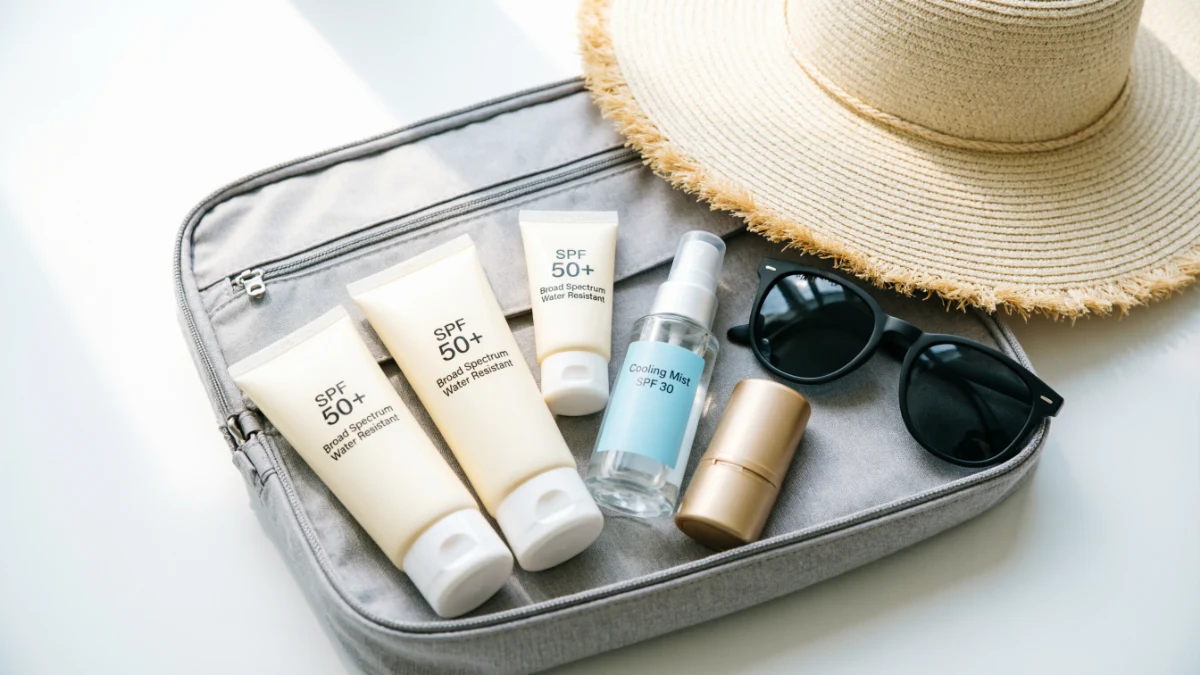
A travel size SPF is any sunscreen in a container of 3.4 oz (100ml) or less, small enough to clear TSA carry on rules without being checked.
The best travel sunscreens balance broad spectrum SPF 30 or higher protection, lightweight formulas that work under makeup or on active skin, and packaging that survives being tossed in a bag for weeks.
Quick Facts: Travel Size SPF at a Glance
| Factor | Details |
| TSA carry on limit | 3.4 oz / 100ml max per container |
| Minimum recommended SPF | SPF 30 (blocks ~97% of UVB rays) |
| Reapplication frequency | Every 2 hours, or after swimming/sweating |
| Checked bag limit | No liquid size restriction |
| Shelf life (opened) | 6–12 months for most formulas |
| Key label terms | Broad spectrum, water resistant, PA+++ |
Why Every Traveler Needs a Dedicated Travel Size SPF
Packing sunscreen feels like a chore until the first day you forget it and come home looking like a lobster. Travel exposes skin to more UV radiation than a typical workday at home, especially at altitude on flights, near water, or in high elevation destinations like Denver, Se dona, or the Rocky Mountain National Park area. According to the Skin Cancer Foundation, UV radiation increases roughly 4 5% for every 1,000 feet of elevation gained, meaning a hike above 10,000 feet hits your skin significantly harder than a beach day at sea level.
The problem most travelers face isn’t knowing sunscreen matters. It’s finding a travel size SPF that actually works one that fits the TSA 3 1 1 rule, doesn’t explode in a hot bag, and feels good enough that you’ll use it daily. This guide covers every angle: TSA rules, the best formulas for different skin types and climates, packing strategies, and mistakes that can cost you a ruined vacation.
TSA Rules for Sunscreen in Carry On Bags
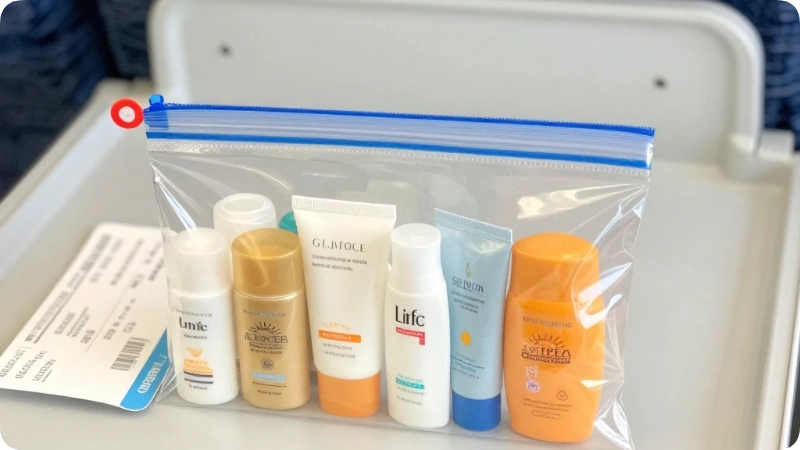
The TSA’s 3 1 1 rule is the single most important thing to understand before packing sunscreen. Each liquid, gel, or cream must be 3.4 oz (100ml) or less, packed in a single quart sized clear zip top bag, with one bag allowed per passenger. Sunscreen counts as a liquid regardless of If it’s a lotion, spray, gel, or cream formula.
Stick sunscreens are treated differently. The TSA generally allows solid sticks in carry on bags without counting them toward your liquids bag, though agents have discretion to inspect them. Mineral powder SPFs also typically bypass the liquid rule. If you want to bring a full size bottle, it must go in a checked bag there’s no size restriction there.
The TSA website (tsa.gov) confirms sunscreen is permitted in both carry on and checked bags. Always verify current rules before you fly, since policy details can shift.
Insider Tip 1: Buy a set of refillable silicone travel bottles (30–50ml each) and decant your full size sunscreen before packing. You’ll save money versus buying travel sizes and get to keep using your preferred formula.
SPF 30 vs. SPF 50: What You Actually Need on a Trip
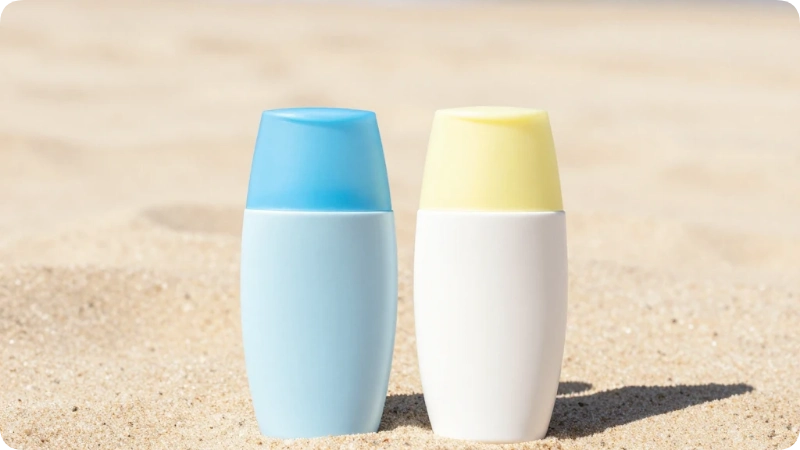
SPF 30 blocks approximately 97% of UVB rays, while SPF 50 blocks roughly 98%. That 1% difference sounds small but matters more when you’re spending six hours on a boat in the Florida Keys or hiking in full sun. For everyday city travel with moderate sun exposure, SPF 30 is sufficient. For beach vacations, ski trips, tropical destinations, or full days outdoors, SPF 50 or higher makes a real difference over repeated days of exposure.
The FDA requires broad spectrum labeling on any sunscreen that also protects against UVA rays. UVA rays cause aging and contribute to skin cancer but don’t produce the sunburn signal that tells you you’re overexposing. Always choose a broad spectrum formula, especially for travel to tropical or high altitude destinations where UVA exposure is intense.
Best Travel Size SPF Formulas by Skin Type
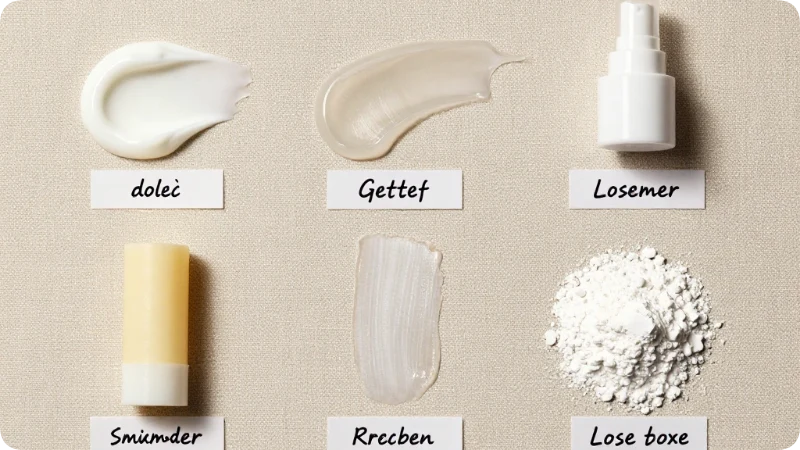
Different skin types need different sunscreen formulas, and choosing the wrong one is why many travelers stop reapplying. A heavy, greasy SPF on oily skin feels unbearable by noon. A thin mist formula on very dry skin won’t provide enough moisture.
For oily or acne prone skin: Look for oil free, non comedogenic formulas in gel or fluid textures. Niche brands like EltaMD UV Clear SPF 46 (1 oz travel size available) and La Roche Posay Anthelios Clear Skin SPF 60 both come in sizes under 3.4 oz and are widely respected by dermatologists.
For dry or sensitive skin: Cream based or hydrating mineral formulas work best. CeraVe Hydrating Sunscreen SPF 30 and Neutrogena Sensitive Skin SPF 60 both offer travel friendly sizes with added moisturizing ingredients.
For darker skin tones: Many mineral sunscreens leave a white cast that looks unflattering on medium and dark skin. Tinted mineral formulas or chemical filters like avobenzone avoid this. Black Girl Sunscreen SPF 30 comes in a 3 oz bottle and leaves no white cast.
For active travel: Water resistant sport formulas are essential for hiking, kayaking, surfing, or any trip where you’ll sweat heavily. The FDA allows the “water resistant” label for formulas tested to hold for either 40 or 80 minutes of water exposure, so check the label.
3 Hidden Gem Travel Size SPF Products Most Travelers Miss
Most travelers default to whatever’s on the shelf at the airport CVS. These three lesser known products earn loyalty from frequent travelers who’ve tested a lot of options.
Supergoop! PLAY Everyday Lotion SPF 50 (2.4 oz): This formula sits in a sweet spot between sunscreen and moisturizer. It layers cleanly under makeup and doesn’t pill, which is a genuine problem with many sunscreens layered under foundation on travel days. The 2.4 oz size passes TSA rules comfortably.
Blue Lizard Sensitive Mineral Sunscreen SPF 30+: Originally developed in Australia where UV standards are among the strictest in the world, Blue Lizard uses a clean mineral formula with no chemical filters. The cap turns pink in UV light a clever reminder to apply. Travel sizes are easy to find online and at Target.
Vacation Classic Whip SPF 30: A whipped, mousse like texture that absorbs quickly and smells faintly of vacation rather than sunscreen chemicals. The novelty wears off fast, but the formula genuinely performs and comes in a 1 oz travel size that fits easily in any bag.
Spray vs. Stick vs. Lotion: Which Travel SPF Format Wins?

Each format solves a different travel problem. Spray sunscreens are fast to apply, but the FDA and dermatologists caution against inhaling spray formulas a real concern in a car or small hotel room. They’re also more affected by wind when you apply outdoors, which means coverage can be uneven. For travel, sprays work best as a reapplication tool rather than first application.
Stick sunscreens are the most travel friendly format in terms of TSA compliance and leak prevention. They’re ideal for face reapplication over makeup, ear tips, and the back of the neck. The coverage per ounce is lower than lotion, so they work best as a supplement to a base lotion applied in the morning.
Lotion remains the gold standard for coverage. Applied correctly (about a nickel sized amount for the face, a shot glass worth for the body), lotion gives the most reliable broad spectrum protection. For a full body beach day, carry a lotion. For a city trip where you mainly need face protection, a stick or fluid formula is more practical.
Packing Sunscreen Without Leaks or Explosions
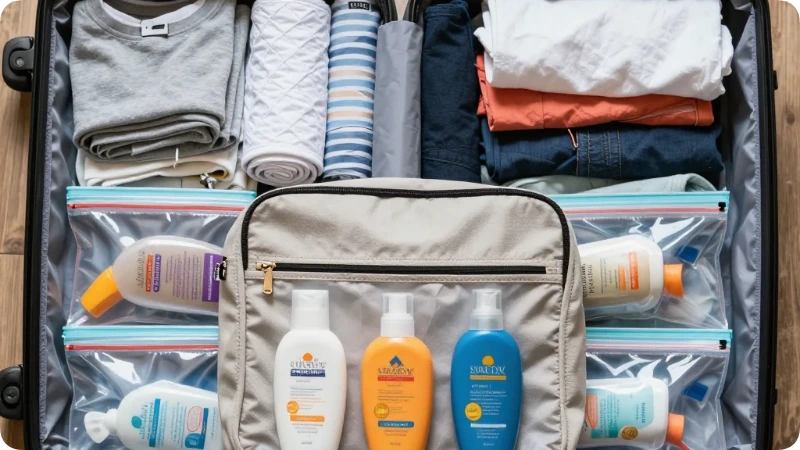
Cabin pressure and temperature changes create genuine pressure differences that can cause full or near full tubes to burst or leak. This ruins clothing, toiletry bags, and sometimes nearby electronics.
Follow these steps to pack sunscreen without disaster:
- Leave air space. Don’t fill refillable bottles more than 80% full the remaining space absorbs pressure changes.
- Wrap in a plastic bag. Even if a bottle claims to be leak proof, pack sunscreen in a sealed zip top bag inside your toiletry kit.
- Keep sunscreen in your carry on during checked luggage trips to cold weather destinations. Cargo holds can freeze, and frozen then thawed formulas sometimes separate.
- For checked bags, put sunscreen in the center of your bag surrounded by soft clothing the most pressure protected spot.
- Travel size squeeze tubes are more reliable than pump bottles in luggage.
Insider Tip 2: If you’re traveling internationally, buy sunscreen locally at your destination. Many countries particularly Japan, South Korea, and much of Europe have access to UV filter technologies not yet approved by the FDA. Japanese sunscreens in particular are legendary among skincare travelers for their lightweight textures and high protection.
Packing Checklist: Travel Size SPF Essentials
Before you zip that bag, run through this list:
- Travel size SPF 30+ broad spectrum sunscreen (3.4 oz or less for carry on)
- Lip balm with SPF (lips burn and are often forgotten)
- SPF stick for face reapplication over makeup
- Travel size after sun lotion or aloe vera gel
- Protective clothing a UPF 50 shirt covers more skin than any SPF
- Wide brim hat rated UPF 50 (compact packable versions available)
- UV blocking sunglasses (look for 99–100% UV400 protection)
Atomizer vs. Full Bottle: SPF Format Comparison
| Format | TSA Carry On | Leak Risk | Coverage | Best For |
| Lotion (travel size) | Yes (≤3.4oz) | Medium | Excellent | Full body application |
| Stick | Yes (solid) | Very low | Good | Face, targeted spots |
| Spray (travel size) | Yes (≤3.4oz) | Low | Variable | Reapplication |
| Powder SPF | Yes (solid) | None | Light | Over makeup |
| Full size lotion | Checked bag only | Low in checked | Excellent | Long beach trips |
3 Common Sunscreen Mistakes Travelers Make (and How to Fix Them)
Mistake 1: Applying sunscreen once and calling it done. SPF degrades with UV exposure, sweating, and swimming. The American Academy of Dermatology recommends reapplying every two hours during sun exposure, or immediately after toweling off from water. Fix: Set a phone alarm for every two hours when you’re outdoors. Pack a stick or spray specifically for reapplication because lotion over a sweaty face isn’t pleasant.
Mistake 2: Skipping SPF on cloudy days or in winter. Up to 80% of UV rays penetrate cloud cover, according to the Skin Cancer Foundation. A snowy ski trip in Colorado or a foggy morning in San Francisco still delivers significant UV exposure. Fix: Apply SPF 30+ every morning as a non negotiable habit, regardless of weather.
Mistake 3: Using sunscreen past its expiration date. Many travelers dig out a tube from last year’s beach trip without checking the date. Expired sunscreen loses its efficacy the active ingredients degrade. The FDA requires sunscreens to maintain their stated SPF for at least three years. Fix: Check the expiration date before every trip and replace any opened bottles you can’t date confidently.
3 Underrated Alternatives to Traditional Travel Size SPF
SPF moisturizer as a base layer: Brands like Aveeno Positively Radiant SPF 30 Daily Moisturizer and CeraVe AM Facial Moisturizing Lotion SPF 30 combine your morning moisturizer and SPF step into one product. For urban travel with limited outdoor time, this cuts packing by one item.
UPF clothing as your primary sun defense: A UPF 50 shirt physically blocks UV rays more reliably than any sunscreen, since it doesn’t degrade, doesn’t need reapplication, and can’t be sweated off. Brands like Coolibar, Columbia PFG, and Patagonia offer travel friendly, packable UPF garments. Use sunscreen for exposed skin only.
Mineral powder SPF for on the go touch ups: Products like Colorescience Sunforgettable Total Protection Brush On Shield SPF 50 brush over makeup with zero mess and bypass TSA liquid rules entirely. It’s not a replacement for morning lotion SPF, but it makes midday reapplication practical in a way that traditional sunscreens don’t.
Sun Protection for International Travel: What Changes
The FDA regulates sunscreen as an over the counter drug in the United States, which means the active ingredient list and SPF testing standards differ from other countries. Some UV filters approved in Europe, Australia, and Asia like Tinosorb S, Tinosorb M, and Mexoryl SX offer broader UVA coverage and are not yet available in U.S. sold sunscreens. Travelers who discover Japanese or Korean sunscreens often never go back.
The U.S. Customs and Border Protection (CBP) allows travelers to bring personal use quantities of sunscreen back from international trips without duty concerns in most cases. Always declare items when in doubt and verify current CBP rules at cbp.gov before bringing large quantities home.
Insider Tip 3: In tropical or coastal destinations, choose reef safe sunscreen containing zinc oxide or titanium dioxide and avoiding oxybenzone and octinoxate. Hawaii, the U.S. Virgin Islands, and several Caribbean destinations have banned oxybenzone containing sunscreens to protect coral reefs. Using reef safe formulas regardless of destination is both responsible and increasingly mandated.
Best Destinations Where Your Travel Size SPF Works Hardest
Understanding where UV exposure peaks helps you calibrate how seriously to pack sun protection.
Hawaii: Year round high UV index, reflective water, and trade winds that mask how intense the sun feels. The National Weather Service regularly records UV Index values of 10 or above on Oahu and Maui. SPF 50+ and reapplication every 90 minutes is appropriate here.
Colorado and Utah: High elevation dramatically increases UV exposure. Destinations like Rocky Mountain National Park (9,000–14,000 feet), Arches National Park, and Zion National Park combine intense sun with minimal shade. Hikers routinely underestimate UV risk on desert and alpine trails.
Florida Keys and Gulf Coast: Prolonged water and beach time, high reflectivity from white sand and water, and long sunny days make this one of the higher UV risk domestic destinations. The Florida Department of Health consistently ranks Florida among the highest states for skin cancer incidence.
Desert Southwest: Sedona, Scottsdale, Albuquerque, and Las Vegas share dry desert air that offers no humidity based UV scattering, combined with reflective rock and sand. The clear skies feel beautiful and deliver UV radiation relentlessly.
Insider Tips for Smarter Sun Protection While Traveling
Insider Tip 4: Apply sunscreen 15–30 minutes before sun exposure, not as you walk out the door. Chemical SPF filters need time to bind to skin and activate. Mineral formulas (zinc and titanium) work immediately, which is one reason they’re preferred for children and travelers who forget to prep in advance.
Insider Tip 5: Keep one dedicated travel pouch for all your SPF products lip balm, lotion, stick, and after sun so you never dig through a bag in a hotel room. A small clear zip pouch works double duty as your TSA liquids bag. Dedicated organization means you use it consistently instead of leaving it buried at the bottom of your suitcase.
FAQs
Can I bring full size sunscreen on a plane?
Full size sunscreen in containers over 3.4 oz is not allowed in carry on bags under TSA’s 3 1 1 rule. It can travel in checked luggage without size restriction. For carry on, use containers of 3.4 oz or less. Stick sunscreens are generally exempt from the liquid limit. Always check tsa.gov for current rules before flying.
What SPF should I use on a beach vacation?
SPF 50 broad spectrum is the practical choice for beach vacations with prolonged sun exposure, swimming, and high UV conditions. SPF 30 blocks 97% of UVB rays; SPF 50 blocks roughly 98%. The difference matters across multiple days of high UV exposure. Choose a water resistant formula rated for 80 minutes if you’ll be swimming or sweating heavily.
Is spray sunscreen allowed in carry on bags?
Yes, aerosol and spray sunscreens are allowed in carry on bags as long as they meet the 3.4 oz limit and fit in your quart sized liquids bag. The FAA does restrict certain aerosols in checked bags for flammability reasons, but consumer sunscreen sprays are generally permitted. Verify with your airline and check faa.gov for current aerosol rules.
Does sunscreen expire?
The FDA requires sunscreens to remain effective for at least three years, and most include an expiration date. Expired sunscreen degrades and may offer significantly less protection than labeled. Heat accelerates degradation, so sunscreen stored in a hot car or bag loses efficacy faster. Check dates before every trip.
What does broad spectrum mean on sunscreen?
Broad spectrum means the sunscreen protects against both UVA and UVB rays. UVB rays cause sunburn; UVA rays penetrate deeper into skin, cause aging, and contribute to skin cancer risk. The FDA requires evidence of UVA protection before a sunscreen can carry the broad spectrum label. Always choose broad spectrum, regardless of SPF number.
Can I buy sunscreen when I arrive at my destination?
Yes, and for longer trips this is often the smarter choice. Destination sunscreen eliminates liquid packing hassle and, for international trips, gives you access to formulas with UV filters not available in the U.S. Local drugstores, convenience stores, and resort shops all typically stock sunscreen. Prices at resort destinations skew high, so buying at a local pharmacy saves money.
How much sunscreen do I actually need for a trip?
A full body application for an average adult requires about one ounce (a shot glass worth) per application. A 3 oz travel bottle provides roughly three full body applications. For a week long beach trip with daily full body coverage and regular reapplication, plan on one to two full size bottles in checked luggage, supplemented by travel sizes for carry on and day bag use.
The Bottom Line on Travel Size SPF
Protecting your skin while traveling isn’t complicated, but it does require intention. Three things matter most: choosing a broad spectrum SPF 30 or higher formula that you’ll actually enjoy using, understanding the TSA rules so your sunscreen makes it through security, and committing to reapplication rather than treating one morning application as complete protection.
Pack a travel size SPF in your day bag every single day not just beach days.
The destinations that cause the worst sun damage are often the ones where sun protection feels least urgent: a long city walk in San Francisco, a spring hiking day in Zion, a ski trip in Park City.
UV radiation doesn’t announce itself, and travel puts you outdoors more than a typical week at home.
Browse options that match your skin type, check TSA rules before you pack, and remember that the best travel size SPF is the one you’ll consistently reach for and reapply.
Your skin will thank you years after the trip photos are faded.

Stephen Fry brings an insatiable curiosity for history, language, and global heritage to the Travelmarse team. Having spent decades traveling the globe to study regional storytelling and ancient civilizations, he excels at uncovering the hidden narratives of modern destinations. Stephen anchors the cultural vertical on Travelmarse, where he writes deep-dive guides on architectural history, museum crawl strategies, and local customs. His vivid, engaging writing helps travelers look past the surface and truly understand the heritage of the places they visit.