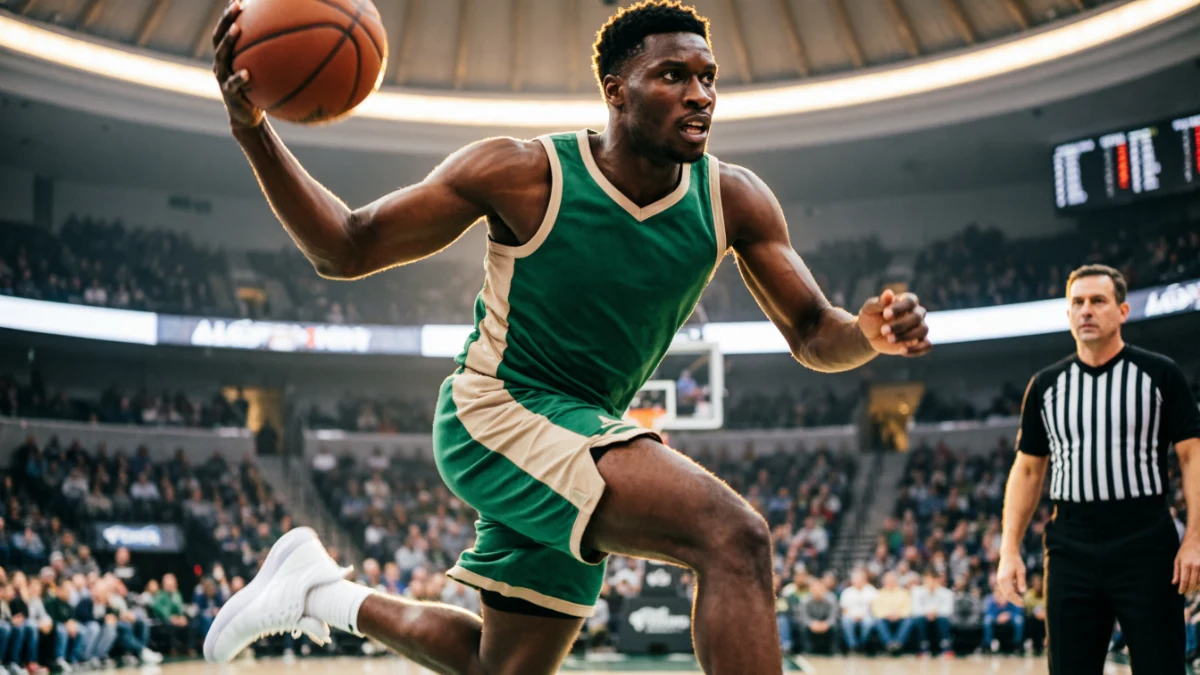
You see the clip, and you pause it. Did he take three steps? Four? Then the comments explode. Giannis travel is one of the most debated topics in basketball. Fans share slow-motion videos, refs get blamed, and nobody agrees.
The problem is simple. Most fans never read the rulebook, and the rule itself is tricky. Giannis’side breaks it down in plain words. You will learn what counts as a travel, why Giannis draws so many “no-call” debates, and how to judge any clip yourself.
Featured Snippet:
Giannis travel means fans claim that Giannis Antetokounmpo took too many steps without dribbling. The NBA lets a player take two steps after gathering the ball. Giannis has long strides and a quick gather, so many steps look illegal but are legal. Still, referees do miss some real violations.
Giannis Travel No Call: Why Fans Keep Asking
A “Giannis travel no call” is a play where fans think he took too many steps, but the referee let play continue. Most of these plays follow one pattern. He gathers the ball early, then takes two huge strides to the rim. Because each stride covers so much ground, it looks like extra steps.
Here are the usual reasons fans see a travel that the NBA does not:
- The gather step. The step where he catches or controls the ball does not always count.
- Long strides. Giannis stands about 6 feet 11 inches. His steps cover more floor than most players’ steps.
- Speed. At full speed, the human eye misses footwork.
- Camera angles. A side view can hide which foot touched first.
Keep in mind that refs also make mistakes. Some no-calls are wrong, and some are right. Therefore, the best habit is to check the footwork frame by frame before you decide.
Giannis Non Travel: When It Looks Like a Travel but Isn’t
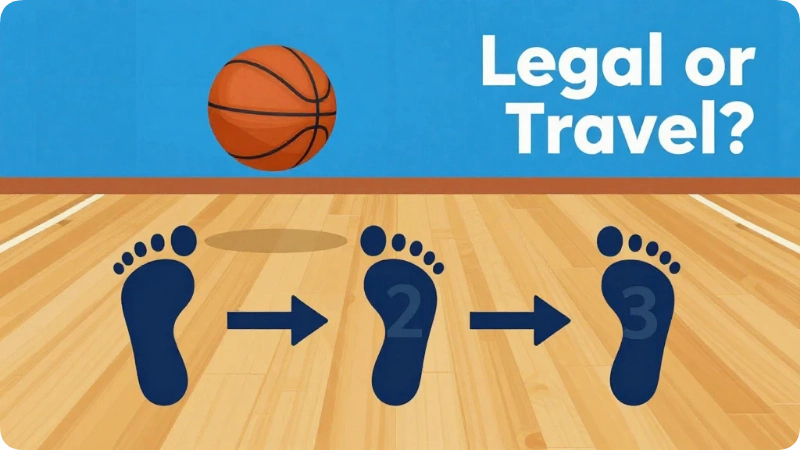
A “non travel” is a play that looks like a violation but follows the rules. Giannis makes many of these. He uses the legal gather, the Euro step, and a clean pivot. All non-travel moves fool the eye.
Look at these common legal moves, non-travel
- Gather, then two steps. This is the standard, legal path to the rim.
- Euro step. He takes step one in one direction and step two in another. It looks odd, but it is legal if the count stays at two.
- Pivot foot turns. He can spin on one foot as long as it does not slide or lift early.
| Move | Legal? | What to Check |
| Gather + 2 steps | Yes | Did he end the dribble first? |
| Euro step | Yes | Only two steps after the gather |
| Pivot foot slide | No | Does the planted foot move? |
| Three steps, then shot | No | Count each foot touch |
As a result, many “obvious travels” fall apart once you slow the video down.
Giannis Antetokounmpo: The Player Behind the Debate
Giannis Antetokounmpo is a Greek-Nigerian forward the Milwaukee Bucks drafted 15th overall in 2013. He grew up in Athens, Greece, and became one of the NBA’s biggest stars. He won two MVP awards (2019 and 2020) and the 2021 NBA championship with Finals MVP honors, according to NBA records.
His size and speed create the travel talk. He covers the court in just a few strides, so fans see him take “too many” steps. In addition, he often drives from the three-point line, which gives him a long runway. A long runway means more chances for fans to count steps.
His nickname, “the Greek Freak,” fits. Few players his size move so fast. Because he is so unusual, his footwork gets more attention than most.
Rosters and teams can change, so check NBA.com for his current team and stats.
NBA Travel: What the Rule Really Says
NBA travel is a violation when a player moves a pivot foot illegally or takes too many steps while holding the ball. The league’s official rulebook, Rule 10, covers it. In simple terms, a player who gathers the ball may take two steps before passing or shooting.
Here is the rule in plain language:
- A player who stops dribbling must keep one foot planted as a pivot.
- A player moving with the ball may take two steps after the gather.
- A player cannot drag or slide the pivot foot.
- A player cannot take a third step before the ball leaves the hands.
The “gather” is the key part. It is the moment a player gains control of the ball. The NBA has explained that this moment does not count as a step. Rule wording and officiating notes can change, so read the current rule on official.nba.com before you argue.
Giannis Handles: Dribble Skills of a Big Man
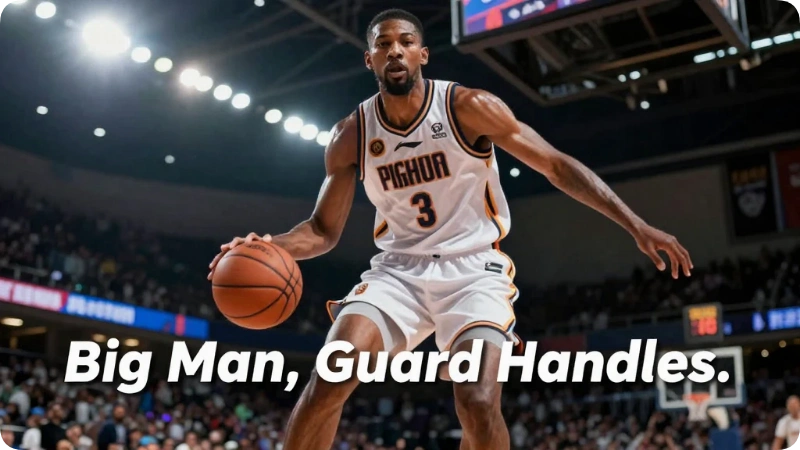
“Giannis handles” is a common search because he dribbles like a guard even though he stands 6 feet 11 inches. He pushes the ball up the court, changes pace, and attacks off the dribble. Few forwards his size do this.
His handle has three strengths:
- Long dribbles. He takes big, controlled dribbles that cover lots of space.
- Change of speed. He slows down, then bursts forward.
- Protected ball. He uses his long arms to shield the ball from defenders.
However, these long dribbles also feed the travel debate. A long dribble leads to a long gather. Then a long gather leads to a long first step. As a result, the final two steps seem to start from far away.
So are his handles worth the hype? Yes. They are a big reason defenders struggle to stop him in transition.
NBA Traveling Not Called: Why Refs Miss Some
Refs miss traveling because the NBA moves fast and the footwork happens in a blink. Three officials watch ten players. Each one must also track fouls, out-of-bounds, and contact. Therefore, small footwork errors slip by.
There are a few other reasons:
- Angles. A ref may stand behind the play and not see the pivot foot.
- Priority. Officials often watch contact and fouls first.
- Game flow. Many refs avoid “ticky-tack” calls that stop the game.
- Judgment. The gather step creates real gray areas.
The league also reviews calls. The NBA publishes Last Two Minute Reports for close games, which show whether late calls were right. Still, traveling is not a normal replay challenge item, so a missed call usually stays missed. Check the NBA’s current replay rules, since they change.
LeBron Half Court Travel: Why Clips Go Viral
“LeBron half court travel” searches come from viral videos that show LeBron James moving at midcourt. Fans claim he carries the ball or takes extra steps. Like the Giannis clips, these plays spark debate because the footwork is fast and the camera angle matters.
Half-court plays are tricky for a few reasons:
- Players often catch the ball while moving.
- The gather can happen mid-stride.
- Long outlet passes lead to quick catches and quick dribbles.
Many star players get this kind of attention. Social media clips remove context, and slow motion makes any move look worse. For example, a clip may skip the moment the player gathered the ball. Without that, the steps look like too many.
Be fair when you judge. Review the full possession, not just the last two seconds.
NBA Travelling Video: How to Watch and Judge Clips
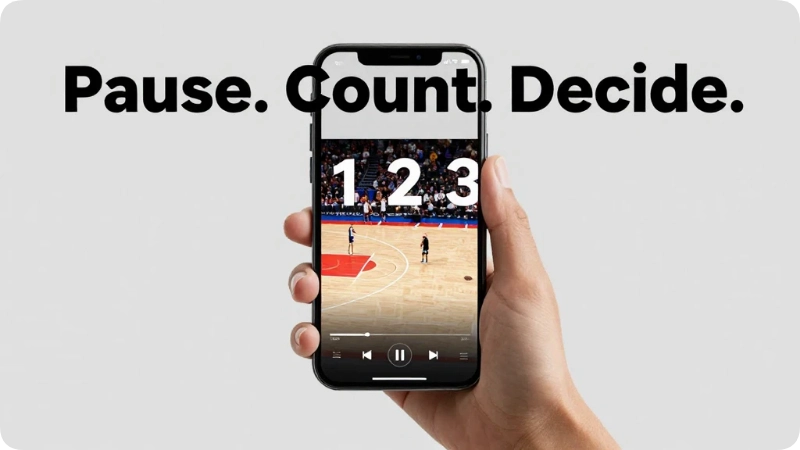
An NBA travelling video is any clip that shows a possible traveling violation, often in slow motion. To judge it fairly, count the steps after the gather, watch the pivot foot, and view the play from more than one angle.
Follow these steps:
- Find the gather. Pause when the player first controls the ball with both hands, or ends the dribble.
- Count the steps. Count each time a foot touches the floor after that.
- Watch the pivot. Check whether the planted foot slides or lifts too early.
- Check the release. Did the ball leave his hands before a third step?
- Use two angles. One camera can lie.
Official sources are best. NBA.com, the NBA YouTube channel, and the rulebook give you reliable context. Fan clips are fun, but they often leave out key moments.
Common Mistakes Fans Make When Judging Travel
Most fans make the same three errors when they call a travel. Fixing them makes your analysis much better.
Mistake 1: Counting the gather as a step.
Fix: Find the moment of control first, then count.
Mistake 2: Trusting one angle.
Fix: Look at a second view before you decide.
Mistake 3: Judging from a short clip.
Fix: Watch the full possession so you see how the player got the ball.
Two more tips save time. First, slow the video to 0.25x speed. Second, read the actual rule instead of memes.
Giannis Travel: Worth the Debate?
Yes, but with balance. The debate is fun and teaches you real rules. However, it can turn into a blame game. Most Giannis plays that fans call travels are legal. Some are not. Both things can be true.
What is overrated? Hot takes from one blurry clip. What is underrated? The skill it takes to stay legal at that speed and size.
It takes about five minutes to learn the rule well. After that, every clip is easier to read.
FAQs
Does Giannis Antetokounmpo travel a lot?
Fans say he does, but most of his steps follow NBA rules. He uses a legal gather and two long strides. Because his steps cover so much floor, they look like extra steps. Refs do miss a few real violations, so both sides have some points.
How many steps can you take in the NBA?
A player may take two steps after gathering the ball. The gather itself does not count as a step. Then the player must shoot or pass before a third step. A player who dribbles first can also take two steps once the dribble ends. Check the official rulebook for updates.
What is the Euro step, and is it legal?
The Euro step is a move where a player takes one step in one direction, then a second step in another. It is legal as long as the player takes only two steps after the gather. It confuses defenders and fans, so people often call it a travel.
What is a gather step in basketball?
The gather step is the moment a player gains control of the ball after dribbling or catching a pass. The NBA does not count this moment as one of the two steps. This rule is the main reason many “extra step” plays are actually legal.
Why do refs not call traveling more often?
Refs watch many things at once, including fouls and contact. Fast footwork is hard to see, and the gather creates gray areas. Many officials also let small violations go to keep the game moving. As a result, some real travels are missed.
Can the NBA review a traveling call?
Traveling is generally not a reviewable play during live games. Coaches usually cannot challenge it. The league does publish Last Two Minute Reports for close games. Rules for replay can change, so check NBA.com for the current list.
Is Giannis the only player people say travels?
No. Fans have said it about many stars, including LeBron James, James Harden, and others. Any player who drives fast, gathers early, and takes long steps will draw this talk. Giannis gets extra attention because of his size and speed.
Why does Giannis get so many travel no-calls?
He starts his drives from far away, uses long strides, and gathers the ball early. These habits make his steps hard to count. Many of those plays are legal. Some are not, and refs miss them like any other play.
How can I tell if a play is a real travel?
Find the gather first. Then count steps after it. If the player takes more than two before shooting or passing, it is a travel. Also, watch the pivot foot. If it slides or lifts early, that is a violation too.
What does “carrying the ball” mean?
Carrying, also called palming, happens when a player turns and steps the hand under the ball while dribbling. It is a different violation from traveling. Fans often mix them up, especially in viral clips. Both can look similar, but the rulebook treats them separately.
Do college and international rules differ from the NBA?
Yes, they can. FIBA (international) and NCAA rules have their own wording for steps and gathers. A move legal in the NBA might be judged differently elsewhere. Giannis played in Greece before the NBA, so fans sometimes compare the rule sets.
Where can I watch full NBA games and highlights safely?
Use the NBA App, NBA League Pass, NBA.com, or the official NBA YouTube channel. These are licensed sources. Prices and plans change, so check official pages before you subscribe. Official sources also give full context, which helps with travel debates.
Conclusion
Here are the three big takeaways:
- Giannis travel talk comes from long strides and a quick gather, not always from rule-breaking.
- The NBA rule allows two steps after the gather, and the gather itself does not count.
- Fair judging needs full clips, two angles, and the actual rulebook.
Now you can watch any clip with sharper eyes. Next time a viral video pops up, pause it, find the gather, and count. You might surprise your friends in the group chat.
Keep exploring the game, and keep asking good questions. The more you learn the rules, the more you will enjoy every drive to the rim.

Stephen Fry brings an insatiable curiosity for history, language, and global heritage to the Travelmarse team. Having spent decades traveling the globe to study regional storytelling and ancient civilizations, he excels at uncovering the hidden narratives of modern destinations. Stephen anchors the cultural vertical on Travelmarse, where he writes deep-dive guides on architectural history, museum crawl strategies, and local customs. His vivid, engaging writing helps travelers look past the surface and truly understand the heritage of the places they visit.











1 thought on “Did Giannis Travel? NBA Traveling Rule Explained”