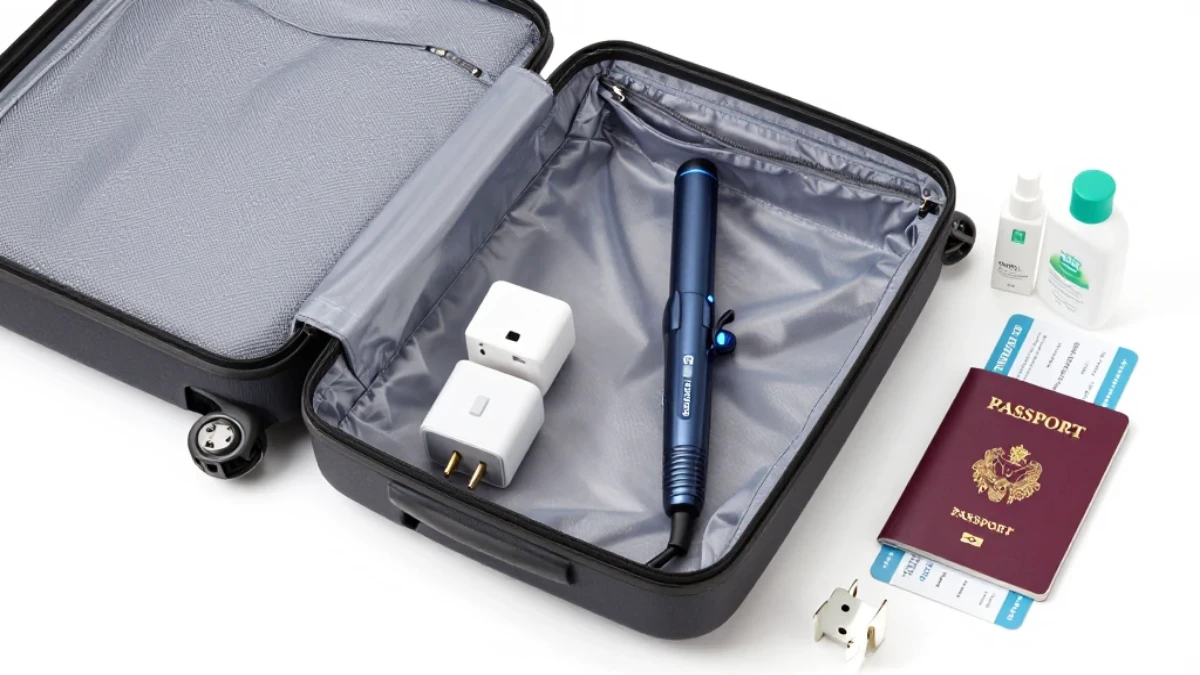
A dual voltage travel curling iron automatically adjusts between 100V and 240V, so it works safely in the USA, Europe, Asia, and beyond without a separate voltage converter. Look for a label reading “100 240V” on the barrel or handle.
Pair it with the correct plug adapter for your destination, and you’re ready to style hair anywhere on the planet.
Packing for an international trip brings a familiar moment of panic: will your favorite curling iron survive the outlet in your hotel room, or will it spark, smoke, or simply die on day one?
Thousands of travelers learn the hard way that a curling iron built for 120V American outlets can’t handle the 220 240V current common across Europe, Asia, Africa, and Australia. A single mistake can ruin a $150 styling tool minutes before a big event.
The good news is that a travel curling iron dual voltage model solves this problem completely, letting you pack once and style confidently in nearly any country.
This guide walks through how dual voltage technology works, how to check your current tool, what TSA actually allows, and how to pack smart so your hair routine never gets derailed by a foreign outlet.
What Does “Dual Voltage” Actually Mean?
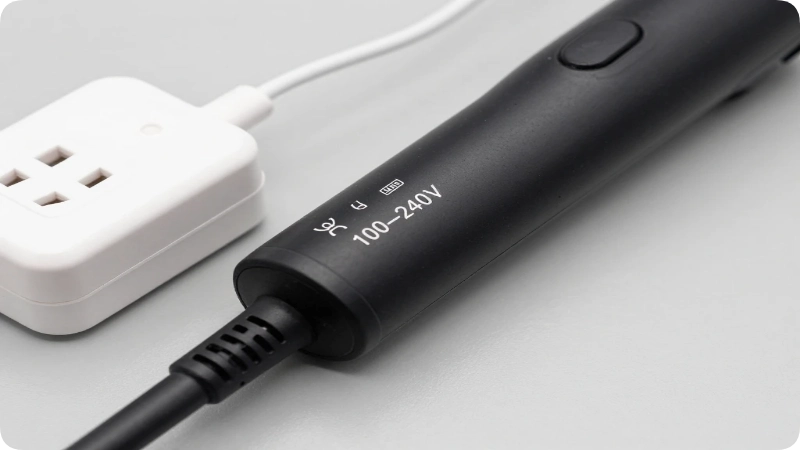
Dual voltage means the internal components of the curling iron can safely accept both 110 120V (used in the United States, Canada, and parts of the Caribbean) and 220 240V (used across most of Europe, Asia, Africa, and Australia).
The iron detects the incoming current and adjusts automatically, so no manual switching is required. This differs from “dual” plug kits, which only swap the plug shape, not the voltage capacity.
Most higher end travel styling tools now include this feature because international travel has become so common. It’s worth noting that dual voltage refers strictly to electrical compatibility, not the physical plug shape, which is a separate issue solved with a plug adapter.
Quick Facts Table: Dual Voltage vs. Single Voltage Curling Irons
| Feature | Dual Voltage (100 240V) | Single Voltage (120V only) |
| Works in the USA | Yes | Yes |
| Works in Europe/Asia/Africa | Yes, safely | No requires a converter |
| Needs a plug adapter abroad | Yes (shape only) | Yes (shape only) |
| Needs a voltage converter | No | Yes, and it’s often heavy |
| Risk of damage overseas | Low | High without a converter |
| Best for frequent international travel | Yes | Not recommended |
How to Tell If Your Curling Iron Is Dual Voltage
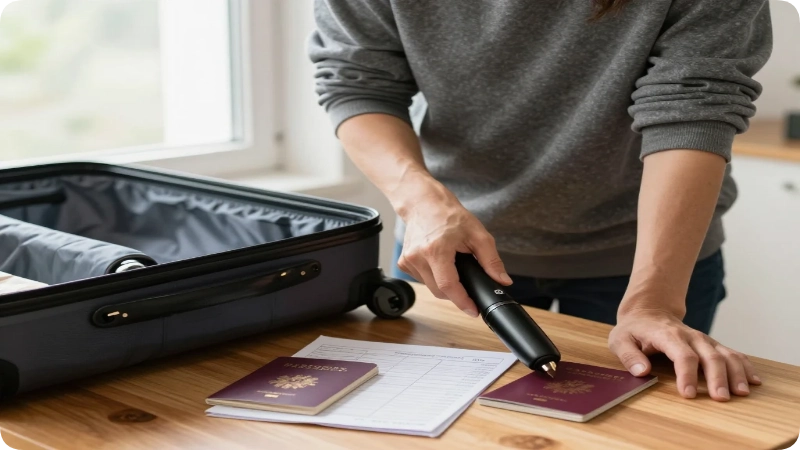
Check the barrel, handle, or the plug itself for a printed voltage range; dual voltage tools display something like “AC 100 240V, 50/60Hz.” If the label only lists one number, such as “120V,” the tool is single voltage and unsafe to plug into a foreign outlet without a converter. When in doubt, check the manufacturer’s website or the original packaging insert, since labels can fade over time.
A few practical checks:
- Look near the base of the cord where it meets the barrel.
- Check the original box or instruction manual if you still have it.
- Search the model number on the brand’s official site before you fly.
- Contact customer support if the label is worn or missing.
Single Voltage vs. Dual Voltage vs. Voltage Converter: Which Should You Choose?
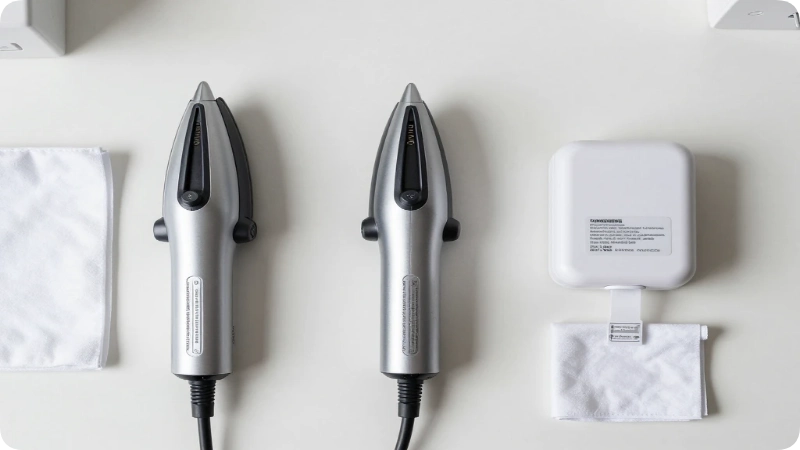
For most international travellers, buying a dedicated dual voltage travel curling iron is simpler, safer, and lighter than carrying a bulky voltage converter with a single voltage tool. Converters add weight to a carry on, can overheat with high wattage styling tools, and sometimes fail to fully protect delicate electronics. Dual voltage tools eliminate that risk entirely.
| Option | Best For | Drawback |
| Dual voltage curling iron | Frequent international travelers | Slightly pricier upfront |
| Single voltage + converter | Occasional trips, tight budget | Heavy, bulky, converter can fail |
| Single voltage, no converter | Domestic USA travel only | Will damage the tool abroad |
If you travel internationally more than once a year, a dual voltage tool typically pays for itself by avoiding the cost of replacing a fried appliance in a foreign country.
How to Use a Dual Voltage Curling Iron Abroad Safely
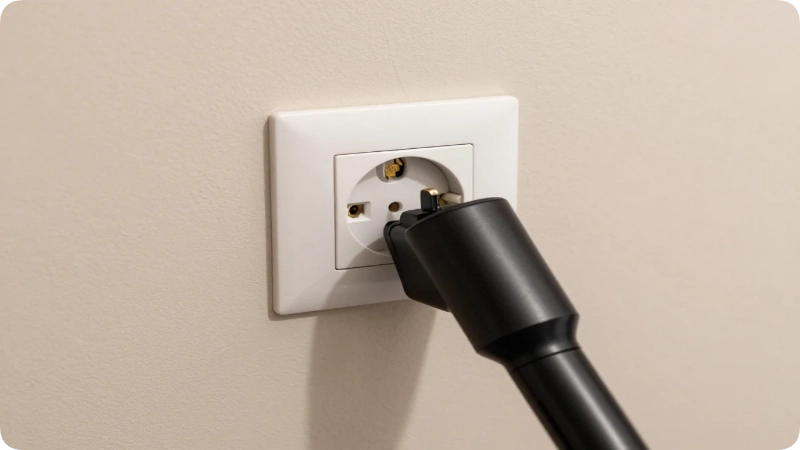
Even with a dual voltage tool, you still need the correct plug adapter for your destination country, since voltage compatibility and plug shape are two separate issues. Plug the adapter into the wall first, then insert your curling iron’s plug into the adapter, and allow a few extra seconds for the tool to reach full heat, since international outlets sometimes deliver slightly less consistent current than U.S. outlets.
Insider tip: Many hotel bathrooms in Europe and the UK use lower wattage outlets specifically for shavers, which can underpower a curling iron. Use the main room outlet near the desk or mirror instead, not the one directly above the bathroom sink.
TSA Rules for Traveling With a Curling Iron
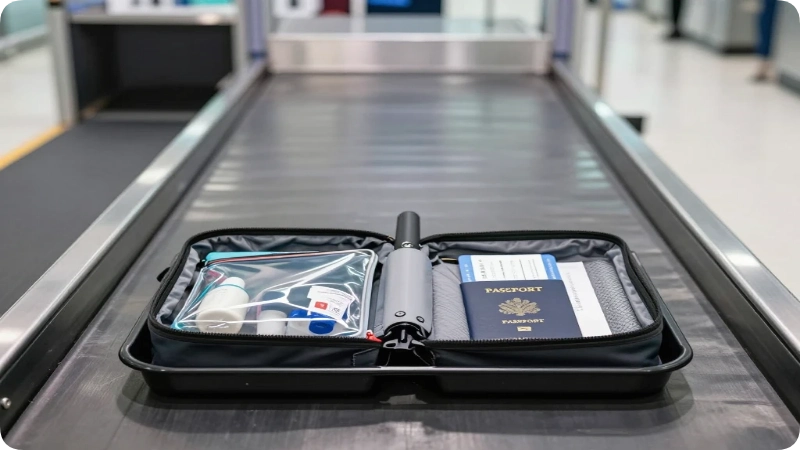
According to the Transportation Security Administration, <cite index=”4 1″>standard corded electric curling irons are not restricted and can be packed in either carry on or checked baggage.</cite> The rules change for cordless models: as of the TSA’s 2025 policy update, <cite index=”6 1,8 1″>cordless curling irons powered by lithium batteries or gas and butane cartridges are only allowed in carry on bags, must have a safety cover over the heating element, and spare gas cartridges are banned entirely from both carry on and checked luggage.</cite>
Key TSA takeaways for 2026:
- Corded electric curling irons: allowed in carry on or checked bags, no restrictions.
- Cordless (lithium or gas powered) curling irons: carry on only, one per passenger.
- A safety cover is required on the heating element of cordless models.
- Spare butane or gas cartridges are never allowed, in either bag type.
- Let the iron cool completely before packing it in any bag.
Because policies can shift, always verify current rules on the official TSA website before you fly, especially if you’re traveling with a cordless or butane powered styling tool.
Plug Adapters vs. Voltage Converters: What You Actually Need
A plug adapter changes the physical shape of your plug to fit a foreign outlet, while a voltage converter changes the actual electrical current; dual voltage tools only need the former. Confusing the two is one of the most common travel mistakes, since a plug adapter alone will not protect a single voltage appliance from a voltage mismatch.
Common plug types by region:
- Europe (most countries): Type C or Type E/F, two round pins.
- United Kingdom, Ireland, Hong Kong: Type G, three rectangular pins.
- Japan: Type A, similar to U.S. outlets but check voltage (100V).
- Australia, New Zealand: Type I, angled flat pins.
A universal travel adapter that covers all four of these plug families is generally the most practical purchase for travelers who visit multiple regions.
Packing Advice for Travel Curling Irons
Wrap the barrel in a heat resistant silicone sleeve or pouch before packing, and place it near the top of your bag for easy access and faster security screening. Allow at least 15 20 minutes of cooling time after use, since packing a hot barrel against clothing is one of the leading causes of scorched fabric and melted pouches reported by travelers.
Packing checklist:
- Let the iron cool fully (unplugged, resting on a heat safe surface).
- Wrap the barrel in a silicone heat resistant sleeve.
- Coil the cord loosely to avoid stress on the wiring.
- Place it in a padded travel case or dedicated pouch.
- Pack near the top of carry on for quick TSA access.
Common Mistakes Travelers Make With Voltage and How to Fix Them
The most frequent mistake is assuming a plug adapter alone makes a single voltage curling iron safe to use abroad, when in reality mismatched voltage can cause smoking, melting, or an electrical fire. A second common error is buying a “universal” adapter kit without checking If it includes actual voltage conversion, since most budget kits only handle plug shape.
Three mistakes and fixes:
- Mistake: Plugging a 120V only iron into a 230V outlet with just an adapter. Fix: Confirm the voltage label before departure; buy dual voltage or a converter rated for your tool’s wattage.
- Mistake: Assuming all of Europe uses the same plug type. Fix: Check plug type by specific country the UK differs from mainland Europe.
- Mistake: Packing a hot iron immediately after styling. Fix: Build in 15 20 minutes of cooling time before packing.
Budget Breakdown: What to Expect to Spend
Dual voltage travel curling irons are generally priced similarly to or slightly above comparable single voltage models, since the added circuitry is a modest manufacturing cost. Budget travelers can expect entry level dual voltage barrels at the lower end of the styling tool market, while professional grade ceramic or titanium barrels sit at the higher end. Prices and models change frequently, so check current listings from major retailers before buying.
Factors that affect price:
- Barrel material (ceramic, tourmaline, titanium)
- Barrel size and styling versatility
- Brand reputation and warranty length
- Cordless vs. corded functionality
Alternatives to Bringing a Curling Iron
If you’d rather avoid the voltage question entirely, consider heatless styling methods, hotel provided tools, or renting styling equipment at your destination. Heatless curlers, foam rollers, and braiding techniques create curls overnight without any electricity at all, which also protects hair from repeated heat damage on long trips.
- Heatless curling rods or foam rollers: zero voltage concerns, gentle on hair.
- Hotel provided hairdryers or straighteners: check with the front desk before packing your own.
- Local salon blowouts: a fun way to experience local beauty culture while on the road.
Safety Tips When Using Heat Tools Abroad
Always test the curling iron on a low heat setting for the first minute in a new country, since even dual voltage tools can behave slightly differently on unfamiliar current. Never leave a heated styling tool unattended on a hotel bed, wooden surface, or bathmat, and always unplug it immediately after use.
- Use a heat resistant mat under the barrel at all times.
- Avoid overloading a single outlet with multiple devices simultaneously.
- Keep the tool away from the bathtub or sink water sources.
- Unplug before leaving the room, even for a few minutes.
Family and Solo Travel Tips
Solo travelers benefit most from lightweight, compact dual voltage barrels that double as a single multi purpose tool, since packing space is often limited. Families traveling with teens may want to designate one shared dual voltage tool rather than packing multiple single voltage irons, which reduces both luggage weight and voltage related risk.
Underrated and Overrated: What Travelers Should Know
A fully dual voltage curling iron is genuinely underrated by first time international travelers, many of whom only discover the voltage issue after a tool fails abroad. On the other hand, bulky standalone voltage converters are often overrated as a fix, since they add luggage weight and don’t always perform reliably with high wattage heating elements.
Is it worth it? For anyone flying internationally more than once, yes a dual voltage tool removes a recurring travel headache. How long is needed to adjust? Simply allow an extra minute of heat up time in a new country the first time you use it.
FAQs
Can I use my regular curling iron in Europe with just a plug adapter?
No, not unless the label shows “100 240V.” A plug adapter only changes the plug shape, not the electrical current, so a single voltage 120V iron can be damaged or become a fire risk on Europe’s 220 240V outlets.
Are cordless curling irons allowed on international flights?
Yes, but with restrictions. <cite index=”4 1″>Cordless curling irons with lithium batteries or gas cartridges are only allowed in carry on bags, with a safety cover over the heating element</cite>, and spare cartridges are prohibited in any bag.
Do dual voltage curling irons need a different plug adapter for every country?
Yes, plug shape still varies by region even when voltage is universal. Pack a universal travel adapter that covers Type C, G, A, and I plugs for broad coverage across Europe, the UK, Asia, and Australia.
Will a dual voltage iron heat up as fast as it does at home?
Generally yes, though outlets with lower amperage in some countries may add a few extra seconds to reach full heat. This is normal and not a sign of malfunction.
Can I pack a corded curling iron in checked luggage?
Yes. <cite index=”4 1″>Corded electric curling irons and hair straighteners are not restricted by TSA and may be packed in either carry on or checked bags.</cite>
What happens if I plug a single voltage iron into the wrong outlet?
It can overheat, smoke, trip the circuit, or permanently damage the internal components. Always confirm voltage compatibility before plugging in any electrical appliance abroad.
Is it cheaper to buy a dual voltage iron or use a converter?
For frequent travelers, a dual voltage iron is usually more cost effective long term, since converters add weight, can fail, and don’t eliminate all risk the way true dual voltage circuitry does.
Final Takeaways
A genuine dual voltage curling iron one labeled 100 240V removes the single biggest risk of styling hair on international trips: frying your tool on the wrong outlet.
Pairing it with the correct plug adapter, understanding current TSA rules for corded and cordless tools, and giving your iron a few extra seconds to heat up in a new country covers nearly every scenario you’ll encounter.
Before your next trip, double check your curling iron’s voltage label, pack a universal adapter, and verify the latest TSA guidance, since airline and security policies can change.
With the right tool packed, your hair routine can travel just as smoothly as you do no matter which time zone you wake up in.

Maya Lin inspires travelers to explore the globe with absolute confidence and independence. Armed with a background in digital media and a decade of independent solo travel experience, she knows exactly how to navigate unfamiliar cities smoothly and safely. For Travelmarse, Maya curates the solo travel and hidden-gem verticals. She reviews charming boutique hotels, designs smart neighborhood walking routes, and shares practical language-learning hacks, giving readers the exact tools they need to travel solo without the stress.