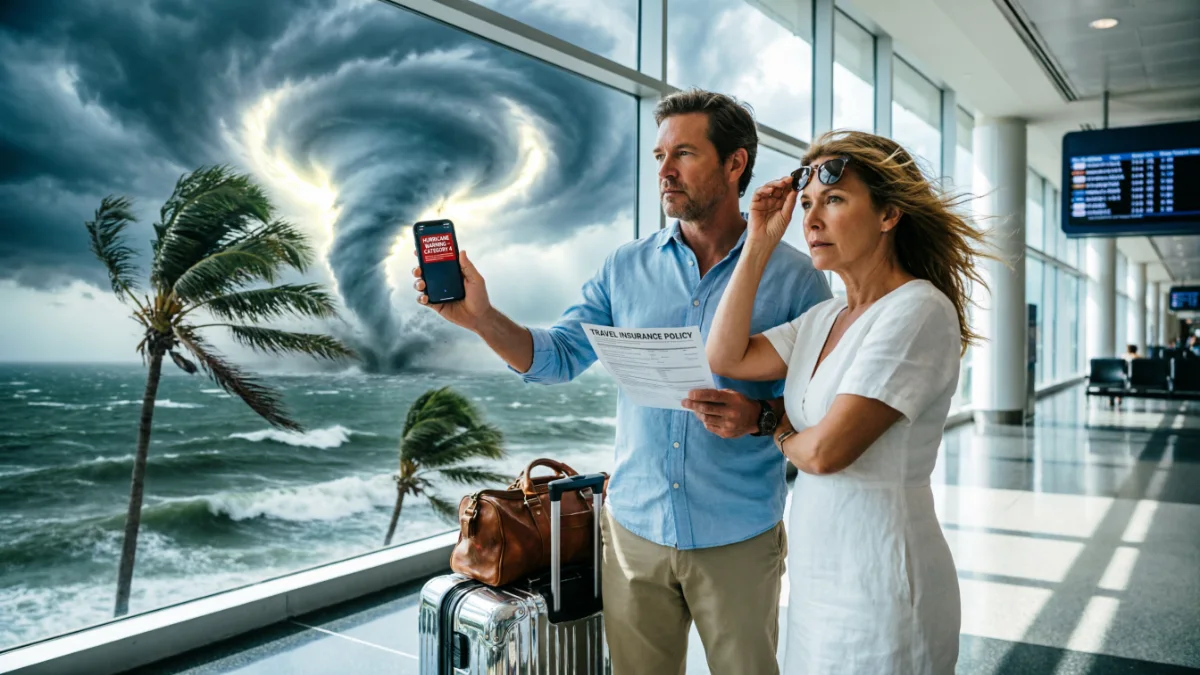
There’s a particular kind of dread that hits when you check the weather app a week before a beach vacation and see a swirl of clouds forming somewhere off the coast of Africa. Will it fizzle out, or will it grow into the storm that wrecks the trip you’ve been saving for all year?
That uncertainty is exactly why travel insurance hurricane coverage matters so much for anyone booking a summer or fall trip to Florida, the Gulf Coast, the Caribbean, or Hawaii. The catch that trips up most travellers isn’t If hurricanes are covered it’s when you bought the policy relative to when the storm got its name.
This guide breaks down exactly how hurricane travel insurance works in 2026, what it does and doesn’t pay for, and the smartest way to time your purchase so a distant tropical wave never turns into a total financial loss.
Quick answer:
Travel insurance covers hurricane-related trip cancellations, interruptions, and delays only if you buy your policy before the storm is officially named. Once a hurricane or tropical storm receives a name, it becomes a “known event.” Any policy purchased afterwards will exclude claims related to that storm. In that situation, Cancel For Any Reason (CFAR) coverage may be the only fallback option.
Quick Facts: Hurricane Travel Insurance at a Glance
| Detail | What You Should Know |
| Atlantic hurricane season | June 1 November 30 |
| Peak activity | August through October |
| Average storms per season | About 14 named storms, 7 hurricanes, 3 major hurricanes |
| Coverage cutoff | Must buy before a storm is named |
| CFAR purchase window | 14 21 days after your first trip deposit |
| CFAR reimbursement | Typically 50 75% of prepaid, non refundable costs |
| Standard trip delay reimbursement | Kicks in after a set delay window, often 6 12 hours |
| High risk destinations | Florida, the Carolinas, the Gulf Coast, the Caribbean, Mexico, Hawaii |
Coverage details, dollar limits, and time windows vary by insurer and plan always confirm specifics in your policy’s certificate of insurance.
Why “Named Storm” Timing Is the Whole Game
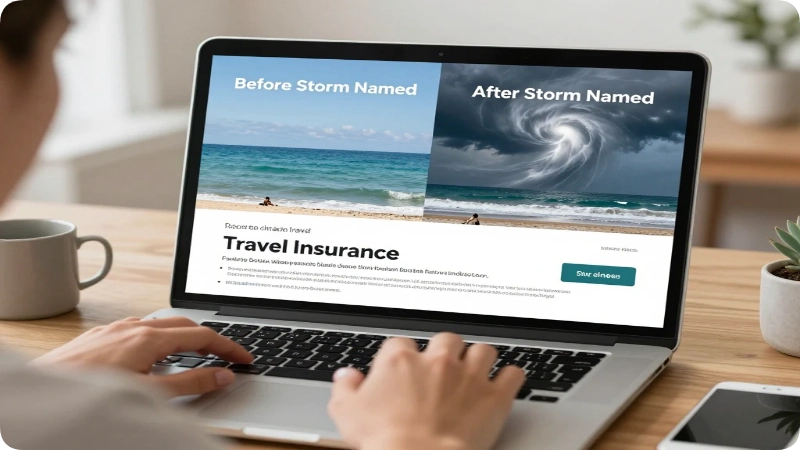
Here’s the rule that catches even experienced travelers off guard: travel insurance is built to protect against unforeseen events. The moment the National Hurricane Center assigns a storm a name say, “Hurricane Marco” it’s no longer unforeseen. It’s a known, trackable risk.
That means if you try to buy a new policy after Marco already has a name, any cancellation, delay, or interruption connected to that specific storm won’t be covered. It doesn’t matter if Marco is still 1,000 miles away and might never come near your destination the exclusion applies the moment the storm is named, not when it actually threatens your trip.
The safest move is to purchase your policy the same day you put down your first non refundable deposit, If that’s a flight, a cruise cabin, or a resort reservation. That single decision determines If you’re protected months later when the season heats up.
What Standard Hurricane Travel Insurance Actually Covers
A policy bought before a storm is named generally treats hurricanes as a covered reason under Trip Cancellation, Trip Interruption, and Travel Delay benefits. In practice, that can include:
- A hurricane warning or watch issued for your destination before departure
- Mandatory evacuation orders at your departure city or destination
- Your airline or cruise line canceling or significantly delaying service because of the storm
- Your destination accommodations becoming uninhabitable due to storm damage
- Your home becoming uninhabitable, preventing you from traveling at all
- Extra hotel, meal, or transportation costs if you’re stuck waiting out a weather delay
Each benefit works a little differently. Trip cancellation reimburses prepaid costs if you cancel before you leave. Trip interruption covers the unused portion of your trip plus the added cost of getting home early. Travel delay reimburses reasonable expenses think a hotel room or meals while you wait for flights to resume, though most plans require a minimum delay (commonly several hours) before benefits kick in.
The Difference Between a “Watch,” a “Warning,” and Actual Damage
Some plans only pay out once NOAA issues a formal hurricane warning for your destination, typically within a set window (often 24 to 72 hours) of your scheduled arrival. Others require actual, documented property damage or a government ordered evacuation. Reading this fine print before you buy tells you exactly how much protection you’re really getting.
What Hurricane Travel Insurance Does NOT Cover
This is where a lot of claims get denied, and it’s worth memorizing:
- Storms already named before you bought the policy. Once named, it’s a known peril and excluded from any new plan.
- Fear of travel. Simply feeling nervous about a forecast, without an official warning or disruption, isn’t a covered reason to cancel under standard trip cancellation benefits.
- Loss of enjoyment. If the storm passes offshore and just leaves your trip rainy and gray but your hotel and flights are otherwise fine, that’s typically not reimbursable.
- Minor inconveniences. A closed golf course or a room change away from an oceanview isn’t the same as “uninhabitable” accommodations in most policy definitions.
Common mistake: Travelers wait until a storm shows up in the 10 day forecast, then rush to buy a policy only to find out the storm was named the day before. The fix is simple: buy your policy at the time of your first deposit, not when the weather looks scary.
Cancel For Any Reason (CFAR): The Backup Plan for Late Bookers
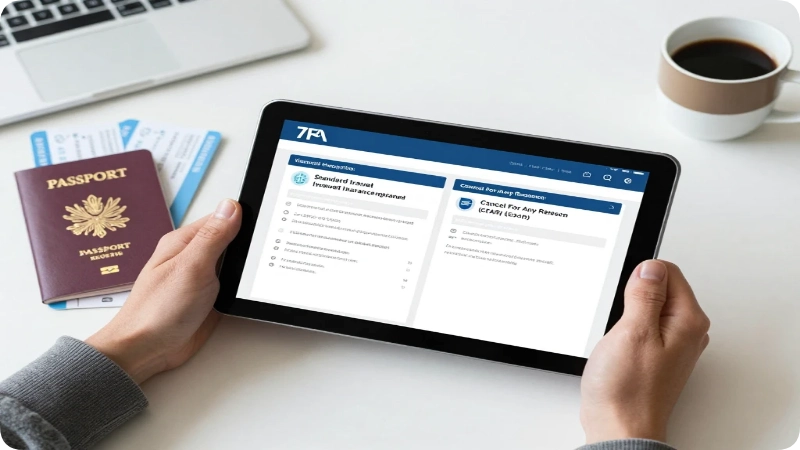
If you missed the window to buy standard coverage before a storm was named, CFAR is generally your only remaining option for flexibility.
CFAR is an optional upgrade added to a comprehensive travel insurance plan that lets you cancel your trip for literally any reason including simple anxiety about an approaching storm that hasn’t yet triggered an official warning.
A few things to know:
- Purchase window: You typically must add CFAR within 14 to 21 days of your first trip deposit; it can’t be added later, even if you already have a standard policy.
- Reimbursement: CFAR usually pays back 50% to 75% of your prepaid, non refundable trip costs, not the full amount.
- Cancellation deadline: Most CFAR plans require you to cancel at least 48 hours before your scheduled departure.
- Cost: CFAR adds to your premium, often increasing it by a meaningful percentage over a standard plan.
CFAR isn’t a substitute for buying early, it’s a safety net for travelers who booked well in advance of a trip and want maximum flexibility, or who simply missed the ideal purchase timing.
Best Time to Buy: A Seasonal Timeline
| Timing | Coverage Status | What To Do |
| Before June 1 (pre season) | Full protection available, including CFAR eligibility | Buy insurance the same day as your first deposit |
| June July (early season) | Standard hurricane coverage still available if no storm is named for your dates | Don’t wait first named storms often form by mid to late June |
| August October (peak season) | Coverage only protects against storms not yet named | Monitor NOAA advisories; file claims promptly if a covered event occurs |
| After a storm is named | No new coverage for that storm | Rely on existing policy or CFAR if already purchased |
| November (late season) | Storm activity typically tapering off | Still confirm policy dates cover your full trip window |
Hurricane Coverage for Cruises
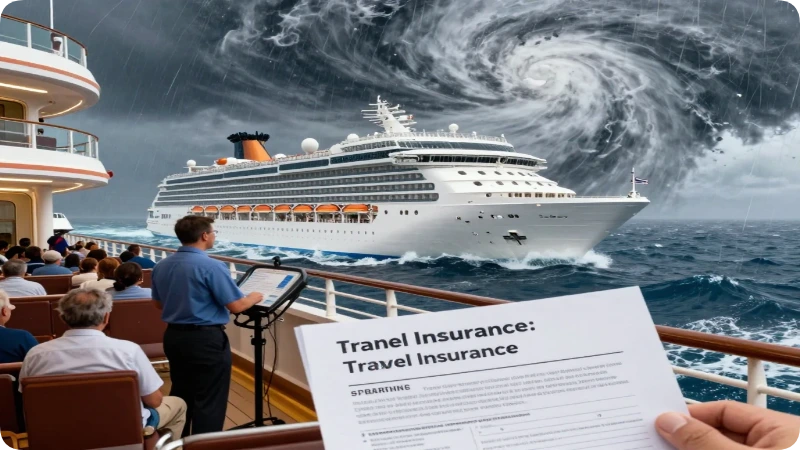
Cruises deserve their own mention because they combine several moving pieces: flights to the port, prepaid excursions, and the cruise fare itself. If a hurricane forces a cruise line to delay, reroute, or cancel a sailing, a comprehensive policy bought before the storm was named can reimburse non refundable cruise costs, connecting flights, and pre booked shore excursions.
Keep in mind that cruise lines often offer their own future cruise credits for storm related itinerary changes, which is different from and sometimes less flexible than what your travel insurance policy provides. Comparing the two before deciding how to file a claim can save you money.
Who Needs Hurricane Travel Insurance Most
Best for:
- Travelers booking Caribbean, Florida, Gulf Coast, or Hawaii trips between June and November
- Cruise passengers with high value, non refundable bookings
- Families with prepaid resort packages
- Anyone traveling from a hurricane prone home region, since damage at home can also trigger coverage
Might skip it:
- Trips booked with fully refundable flights and hotels, where cancellation carries little financial risk
- Very short domestic trips with minimal prepaid, non refundable costs
- Travelers already covered under a refundable “book now, pay later” reservation structure
Money Saving and Time Saving Tips
- Buy at first deposit, not at final payment. This single habit preserves your CFAR eligibility and guarantees no storm has been named yet.
- Compare “hurricane warning” triggers across plans. Some policies let you cancel once a warning is issued for your destination within a set window of arrival a feature worth prioritizing if you’re accepting some storm risk.
- Check the delay time threshold. Cheaper plans sometimes require a longer wait (say, 12+ hours) before delay benefits pay out; better plans trigger sooner.
- Bundle policies for multi leg trips rather than buying separate coverage for each segment, which can reduce overall premium costs.
- Document everything. Screenshots of NOAA advisories, airline cancellation notices, and hotel closure emails make claims process faster and smoother.
Honest Drawbacks to Consider
Hurricane travel insurance isn’t flawless. CFAR only reimburses a portion of costs, never the full amount. Standard policies won’t pay simply because you’re nervous about a forecast. And claims documentation requirements can be strict, so a policy is only as good as your ability to prove what happened. None of this makes coverage a bad idea it just means reading the certificate of insurance matters as much as buying the policy itself.
FAQs
Does travel insurance cover hurricane cancellations?
Yes, if you purchase your policy before the storm is officially named. Standard trip cancellation, interruption, and delay benefits typically apply to hurricane related disruptions, but coverage stops applying to any storm that already has a name at the time of purchase.
What does it mean when a storm becomes a “known peril”?
Once the National Hurricane Center names a storm, insurers consider it a foreseeable, trackable event rather than an unexpected one. New policies purchased after that point exclude claims tied to that specific storm.
Can I cancel my trip just because I’m worried about a hurricane?
Not under standard trip cancellation coverage. Fear of travel alone isn’t a covered reason. Cancel For Any Reason (CFAR) coverage is the only add on that allows cancellation without an official warning or documented disruption.
When should I buy travel insurance for hurricane season?
Ideally the same day you make your first non refundable trip deposit. This locks in the widest possible protection and keeps you eligible for CFAR, which must typically be added within 14 21 days of that deposit.
Does travel insurance cover a hurricane hitting my home instead of my destination?
Often yes. If a storm makes your primary residence uninhabitable before your trip, many policies allow trip cancellation reimbursement, since you’re unable to travel through no fault of your own.
Is Cancel For Any Reason worth the extra cost?
For travelers booking well ahead of peak season, or who want maximum flexibility, CFAR can be worth it since it’s the only coverage that responds to a storm forecast alone. It typically reimburses 50 75% of costs, so it’s a partial safety net rather than full protection.
Does travel insurance cover cruise cancellations from hurricanes?
Most comprehensive plans reimburse non refundable cruise fares, associated flights, and excursions if a hurricane forces a cancellation, delay, or itinerary change provided the policy was purchased before the storm was named.
Final Takeaways
Three things matter more than anything else when it comes to travel insurance and hurricane season: buy early, know your cutoff, and read the fine print on what counts as a covered event.
A policy purchased the same day as your first deposit protects you against storms that haven’t even formed yet, while waiting until the forecast looks ominous almost always means it’s too late for standard coverage.
Hurricane season runs a long six months, but the decision that protects your trip usually happens in a matter of minutes the moment you book. Do that one thing early, and the rest of your vacation planning can go back to being about sunscreen and restaurant reservations instead of storm tracks.
Insurance terms, coverage windows, and pricing change often always confirm current policy details directly with your chosen provider or through your state’s department of insurance before purchasing.

Ben Fogle believes that true adventure begins where the pavement ends. After spending years documenting extreme environments, rowing across oceans, and trekking through frozen landscapes, he mastered the art of wilderness travel. For Travelmarse, Ben constructs highly detailed guides on deep-nature packing lists, wildlife safety, and sustainable eco-tourism. He breaks down intimidating, rugged expeditions into clear, step-by-step roadmaps so everyday travelers can safely connect with the natural world.