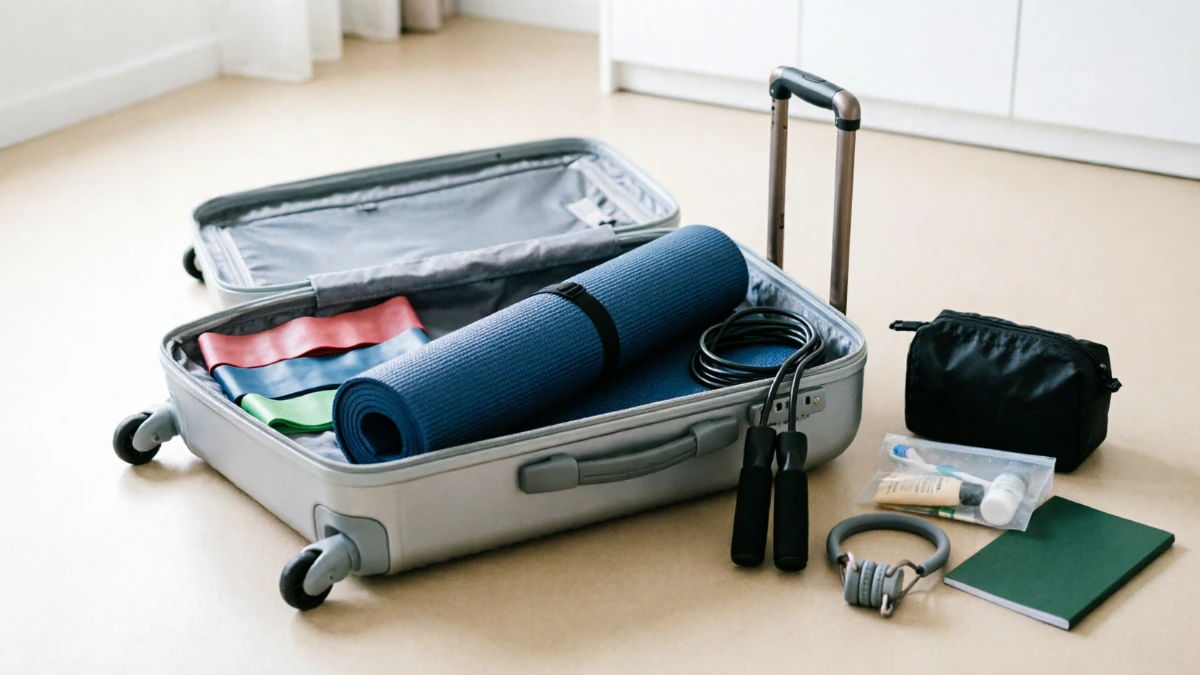
Featured Snippet: Travel exercise equipment includes compact, lightweight fitness tools like resistance bands, foldable yoga mats, suspension trainers, and portable pull-up bars. They are designed for hotel rooms, airports, and outdoor workouts.
The best options weigh under two pounds, fold flat, and need no power outlet. They are TSA-friendly for both carry-on and checked luggage.
Missing a workout on the first day of a trip can quickly turn into missing workouts for the rest of the journey.
Long flights, cramped car rides, and unfamiliar cities make it easy to lose your fitness routine. Many travelers return home feeling sluggish instead of refreshed.
The good news is that travel exercise equipment is now smaller, lighter, and more versatile. You no longer need a gym membership or a suitcase full of weights to stay active.
This guide explains the best portable fitness gear, how to pack it, and where to use it. You’ll also learn simple ways to stay active from the airport to your hotel room and throughout your trip.
Quick Facts Table
A quick overview helps travelers compare options before they pack. The table below summarizes weight, TSA status, and best use case for the most common types of travel exercise equipment.
| Equipment | Avg. Weight | TSA Carry On Friendly | Best For |
| Resistance bands | 4 8 oz | Yes | Strength training, small spaces |
| Foldable yoga mat | 1 2 lbs | Yes | Stretching, floor workouts |
| Suspension trainer (e.g., TRX style) | 1 2 lbs | Yes | Full body strength |
| Portable pull up bar | 2 4 lbs | Checked bag preferred | Upper body strength |
| Jump rope | 4 6 oz | Yes | Cardio in tight spaces |
| Inflatable balance/stability tools | 1 3 lbs (deflated) | Yes | Core, balance |
Why Pack Exercise Equipment for Travel
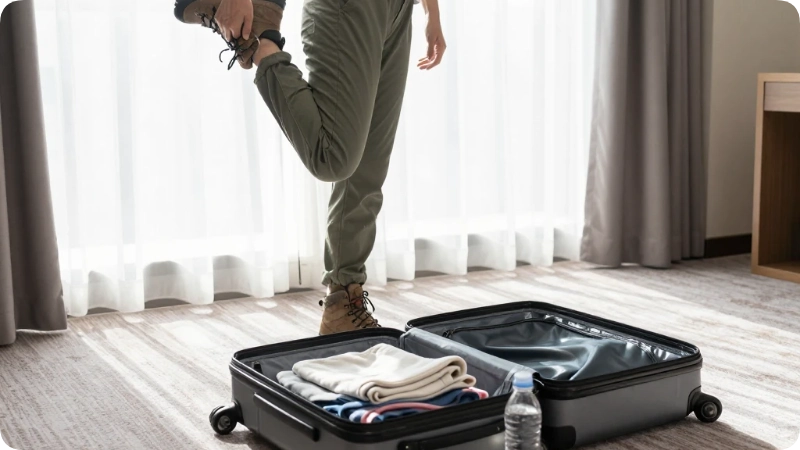
Even 15 minutes with a resistance band in a hotel room can help offset hours of sitting on a plane or in a car.
Portable fitness gear also saves money on local gym day passes. This is especially helpful for business travelers and families.Bringing along a few lightweight items helps maintain energy, sleep quality, and mood while away from home. It also removes the guesswork of finding a hotel gym that’s actually open or equipped.
Travel disrupts sleep, diet, and movement all at once, and exercise is one of the few variables travelers can control.Packing travel exercise equipment is important because routines can slip quickly. Even a few inactive days can undo months of steady progress.
This is especially true on trips that last longer than a week.
Best Time to Use Travel Exercise Equipment During a Trip
The most effective windows for a travel workout are early morning before sightseeing begins and evening after activities wind down. Morning sessions tend to combat jet lag and boost alertness, while evening sessions help with post flight stiffness and better sleep.
Travelers crossing multiple time zones often find a short morning routine resets their internal clock faster than caffeine alone. For road trips, a 10 minute stretch and resistance band session at a rest stop can prevent the stiffness that builds up over long highway stretches.
Resistance Bands: The Most Pack able Strength Tool
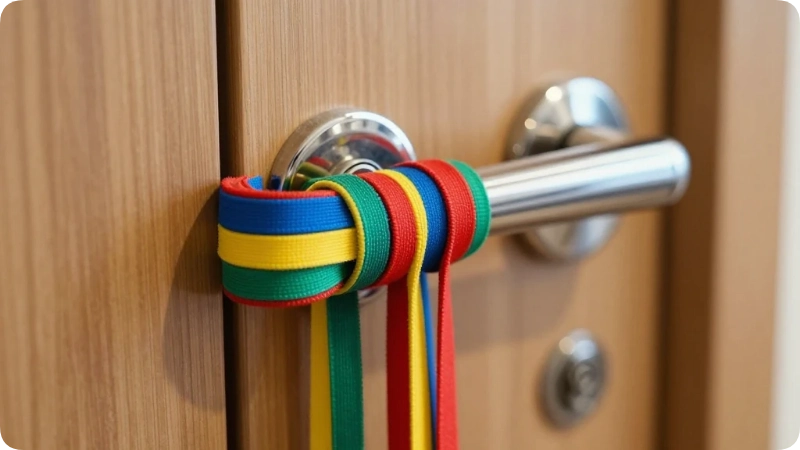
Resistance bands are the single most popular piece of travel exercise equipment because they weigh only a few ounces, fold into a pocket, and work every major muscle group. A set of three to five bands with varying resistance levels can replace an entire home gym for most travelers.
How to Use Resistance Bands on the Road
- Loop the band around a hotel door handle, bed frame, or sturdy railing.
- Perform rows, squats, presses, and lateral walks in 3 sets of 12 15 reps.
- Store bands in the small mesh pouch most sets include to avoid tangling in a suitcase.
Insider tip: choose fabric covered bands over latex tubing they’re quieter for early morning hotel workouts and less likely to snap with repeated stretching in dry airplane cabin air.
Foldable Yoga Mats and Travel Mats
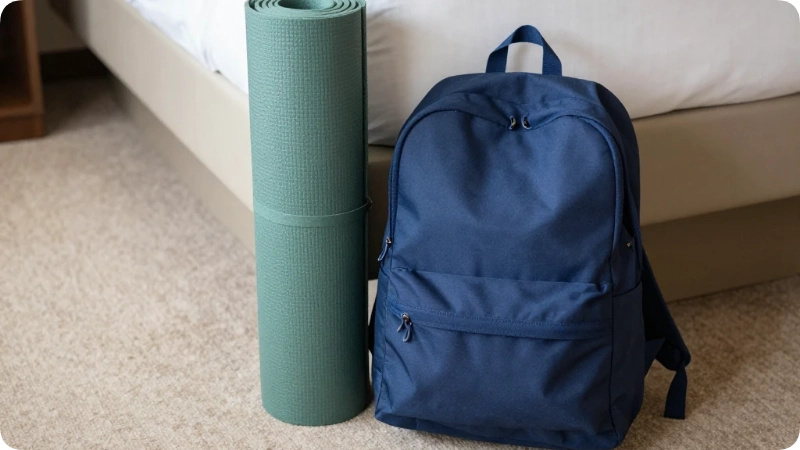
A foldable or rollable travel yoga mat typically weighs one to two pounds and folds down to the size of a paperback book, making it easy to slide into a backpack or carry on. These mats provide a clean, padded surface for stretching, yoga, or floor based bodyweight exercises in hotel rooms with hard flooring.
Look for mats labeled “travel” or “foldable” rather than standard studio mats, since standard mats are often too bulky for checked or carry on luggage. Microfiber suede mats are a popular choice because they double as a quick dry towel for outdoor stretching sessions at a park or beach.
Suspension Trainers for Full Body Workouts
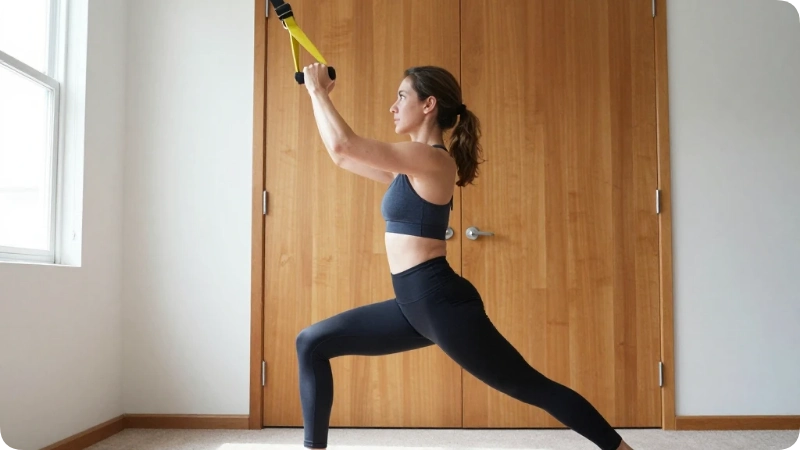
Suspension trainers, often sold under brand names similar to TRX, use adjustable straps anchored to a door, tree branch, or railing to enable bodyweight strength training. They typically weigh one to two pounds and pack into a small drawstring bag, making them one of the most efficient tools for a complete workout in a hotel room.
These trainers are especially useful for travelers staying in vacation rentals or smaller hotel rooms where floor space is limited, since most exercises are performed standing or at an angle rather than lying flat. A 20 minute suspension trainer circuit covering rows, presses, and squats can match the intensity of a full gym session.
Portable Pull Up Bars and Doorframe Equipment
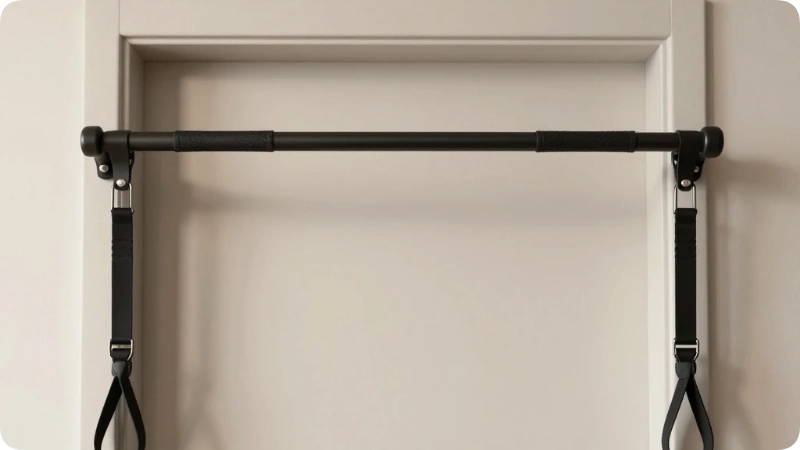
Portable pull up bars that mount in a doorframe without screws offer a way to maintain upper body strength while traveling, though they are bulkier than bands or trainers and often fit better in checked luggage than a carry on. Most models weigh two to four pounds and adjust to fit standard doorframe widths.
Before packing one, check the door dimensions of upcoming accommodations when possible, since some hotel doorframes (particularly in older properties) may not accommodate certain bar models. An underrated alternative is a removable bar with suction cups, which avoids any doorframe pressure concerns entirely.
Jump Ropes for Compact Cardio
A jump rope weighs just a few ounces, rolls up to fit in a small pocket of a suitcase, and delivers a high intensity cardio workout in a fraction of the space a treadmill would require. Ten minutes of jumping rope can burn a similar number of calories as a 20 minute jog.
This makes it ideal for travelers in dense cities or high rise hotels where outdoor running routes aren’t convenient. A foam or covered handle reduces noise on hard hotel floors, which matters for guests in rooms below.
Inflatable and Stability Tools
Inflatable balance discs, mini stability balls, and similar tools deflate to a fraction of their usable size, making them genuinely travel friendly despite looking bulky when inflated. They’re useful for core work, balance training, and physical therapy style exercises that don’t require much room.
These tools are often overlooked compared to bands and mats, but they add variety to a travel routine and are particularly helpful for travelers managing joint issues who need lower impact options.
Packing Advice: Fitting Gear Into a Carry On or Checked Bag
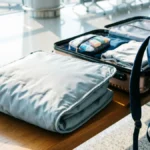
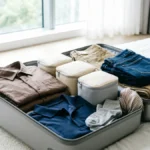
Most travel exercise equipment fits into the gaps around clothing rather than needing dedicated suitcase space, since items like bands, jump ropes, and folded mats are flexible and lightweight. Packing them in a designated mesh or zippered pouch keeps gear separated from clothes and easy to find at security or in a hotel room.
- Roll resistance bands and tuck them inside rolled clothing to save space.
- Use a mat as a protective layer along the spine of a suitcase, where heavier items might otherwise crush soft sided bags.
- Keep a small microfiber towel with gear for sweat after hotel room workouts.
- Place a jump rope in a shoe to use otherwise wasted space.
Money saving tip: A $20 $40 set of bands often replaces a hotel gym day pass that can cost more per use on a multi day trip.
TSA and Airline Rules for Exercise Equipment
According to TSA guidelines, resistance bands, yoga mats, jump ropes, and suspension trainers are allowed in both carry-on and checked baggage. They contain no liquids, gels, or sharp parts that usually require extra screening.
Small dumbbells and kettlebells are different. They are generally better packed in checked baggage because of their weight and dense appearance on X-ray scans.
Always check the latest TSA guidance before you travel. You should also review your airline’s baggage policy, as weight limits and rules can vary by carrier.
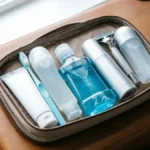
Packing your fitness gear in a clear or easy-to-open pouch can speed up security screening. It also makes manual inspections quicker if your bag is selected.
Where to Use Travel Exercise Equipment
Hotel rooms, vacation rentals, airport terminals, and local parks are popular places to use portable fitness gear. Long layovers also create good opportunities for a quick workout.
Many airports now have walking paths or small fitness areas in some terminals. These spaces work well with resistance bands or a jump rope.
National and state parks across the U.S. often offer flat, open spaces near visitor centers. They are ideal for a short stretching session before or after a hike.
Always check with your hotel’s front desk about quiet hours. This helps you avoid disturbing other guests during early morning or late evening workouts.
Common Mistakes Travelers Make With Fitness Gear
Many travelers either overpack heavy equipment that goes unused or underpack and end up improvising with bad form using furniture. Three common mistakes and their fixes:
Bringing a full set of dumbbells Fix: choose resistance bands that mimic the same strength benefits at a fraction of the weight.
Skipping a workout plan entirely Fix: download a simple bodyweight or band based routine before departure so there’s no guesswork once on the road.
Ignoring hotel room layout Fix: pick gear like bands or mats that don’t require fixed anchor points, since not every room has a sturdy door or railing.
Family Tips for Staying Active While Traveling
Families can pack one set of resistance bands and a jump rope. This shared gear keeps both kids and adults active without needing separate equipment.
Short, game-style circuits are often more fun for children than structured workouts. Try jump rope relay races or balance disc challenges to keep them engaged.
Hotel pools also provide an easy way to stay active. Walkable places like boardwalks and park trails offer free, equipment-light exercise between planned activities.
Solo Traveler Tips
Solo travelers often have more flexibility when scheduling workouts. They can also use quieter hotel gyms or common areas during the early morning.
A compact fitness kit is all most solo travelers need. Resistance bands, a foldable mat, and a jump rope provide strength, flexibility, and cardio workouts. No workout partner or spotter is required.
Keep workouts short, around 15 to 20 minutes. This leaves more time for sightseeing while helping you stay consistent with your fitness routine.
Accessibility Considerations
Inflatable stability tools and resistance bands with adjustable resistance levels are generally easier to modify for travelers with mobility limitations or joint concerns than fixed equipment like pull up bars. Many resistance band brands include illustrated guides for seated or low impact variations of standard exercises.
Travelers managing specific medical conditions should consult a physician or physical therapist before starting a new travel fitness routine, particularly after surgery or with chronic joint issues.
Responsible Travel and Gear Use
Choose durable, reusable fitness gear instead of disposable products. This reduces waste while you travel. Many travel fitness brands also use recycled materials in their resistance bands and mats.
Be mindful of noise when exercising in shared spaces. This is especially important when using jump ropes or portable pull-up bars in hostels, hotels, or vacation rentals.
When working out outdoors, stay on designated paths and approved surfaces. This helps protect local ecosystems and natural habitats. It also follows the Leave No Trace principles promoted by the National Park Service.
Alternatives to Packing Equipment
Travelers who prefer not to pack any gear still have options for staying active without dedicated equipment.
- Bodyweight workouts using stairs, hotel furniture, or open floor space.
- Hotel gyms, when available, though equipment quality varies widely by property.
- Local fitness studios or gyms offering day passes in many major U.S. cities.
- Walking or running outdoors, using city sidewalks, beach boardwalks, or park trails.
Each alternative trades convenience for either cost, availability, or weather dependency, so a small piece of personal equipment often remains the most reliable backup.
Sample 3 Day Travel Workout Itinerary
This sample plan uses only resistance bands, a mat, and a jump rope, all packable in a single small pouch.
- Day 1: Start with a 5-minute jump rope warm-up, followed by a band-based upper body circuit featuring rows, presses, and curls. Finish with a 10-minute mat stretching session.
- Day 2: Boost your heart rate with 10 minutes of jump rope cardio intervals, then perform band squats and lateral walks. End the workout with a 5-minute cool-down stretch.
- Day 3: Complete a full-body resistance band circuit that combines upper and lower body exercises. Wrap up with a 15-minute mat-based core and flexibility routine.
Worth It, Overrated, and Underrated: An Honest Take
Packing a small set of travel exercise equipment is generally worth it for trips longer than three or four days, where missed movement adds up. Bulky equipment like portable pull up bars is often overrated for short trips, since the same upper body benefits can come from resistance bands.
Inflatable stability tools are underrated, since they take up almost no space deflated but add valuable variety beyond basic strength and cardio work. The most honest drawback of any travel gear is simply motivation even the lightest equipment does nothing if it stays zipped in a bag.
FAQs
Is travel exercise equipment allowed in carry on luggage?
Most travel exercise equipment, including resistance bands, foldable mats, jump ropes, and suspension trainers, is allowed in carry on luggage under current TSA guidelines. Bulkier items like small dumbbells are usually better suited for checked bags. Always verify current rules on TSA.gov before flying.
What is the lightest travel exercise equipment available?
Resistance bands and jump ropes are typically the lightest options, often weighing under eight ounces combined. Both fold or roll into a small pouch and fit easily into a carry on without adding noticeable weight to a bag.
Can I get a full workout with only resistance bands while traveling?
Yes, a set of three to five bands with varying resistance levels can target every major muscle group, including legs, back, chest, and arms. Many travelers combine bands with bodyweight moves like squats and push ups for a complete routine.
Do hotel rooms have enough space for travel workouts?
Most standard hotel rooms have enough floor space for mat based stretching, band exercises, or suspension trainer circuits, especially when furniture is pushed aside temporarily. Suites and vacation rentals typically offer even more room.
How much does travel exercise equipment usually cost?
Resistance band sets, jump ropes, and foldable mats are generally affordable compared to gym memberships or day passes, with many starting in the budget range for basic sets. Prices vary by brand and material quality, so checking current retailer listings is recommended.
What’s the best travel exercise equipment for long flights?
Compression friendly stretching tools like resistance bands work well after long flights to loosen stiff muscles, while a foldable mat allows for floor stretches in a hotel room shortly after arrival. Avoid bulky equipment that’s better suited for multi day strength routines.
Should families bring exercise equipment on vacation?
Families can benefit from packing one shared, lightweight kit like a jump rope and resistance bands rather than individual equipment for each person. This keeps packing simple while still giving everyone a way to stay active during downtime.
Final Takeaways
Travel exercise equipment doesn’t need to be heavy or complicated to be effective resistance bands, a fordable mat, and a jump rope cover strength, flexibility, and cardio in well under three pounds combined.
Packing smart, checking current TSA and airline guidelines, and planning a simple routine before departure makes it far easier to stick with fitness goals on the road.
If it’s a short stretch session after a flight or a full circuit before a day of sightseeing, a few minutes of movement can make the rest of a trip feel noticeably better.
Pack light, move often, and let the destination be the reward at the end of the workout, not the reason to skip it.

Ben Fogle believes that true adventure begins where the pavement ends. After spending years documenting extreme environments, rowing across oceans, and trekking through frozen landscapes, he mastered the art of wilderness travel. For Travelmarse, Ben constructs highly detailed guides on deep-nature packing lists, wildlife safety, and sustainable eco-tourism. He breaks down intimidating, rugged expeditions into clear, step-by-step roadmaps so everyday travelers can safely connect with the natural world.