
Picture this: pintos and Rojas in a sun warmed Madrid plaza, then two hours later, custard tarts and port wine cooling in a Lisbon cellar.
Two countries, one unforgettable Iberian adventure and most travellers assume it takes a month and a small fortune to pull off.
It doesn’t. Spain and Portugal share a border, a time zone, and an easy rail and flight network that makes combining them one of the smartest moves in European travel.
Yet plenty of first timers overspend, over pack their itinerary, or miss the new 2026 entry rules that are changing how Americans cross into Europe.
This guide walks USA travelers through everything needed to travel to Spain and Portugal with confidence: when to go, how to string the two countries together, what things really cost, where to stay, and the mistakes that trip up even experienced globetrotters. If it’s a honeymoon, a solo adventure, or a family trip, the plan below turns two countries into one seamless journey.
Quick answer:
The best way to travel to Spain and Portugal is a 10 14 day trip combining Madrid or Barcelona with Lisbon and Porto, connected by a 1 hour flight or scenic train. Visit April June or September October for mild weather, fewer crowds, and lower prices than peak summer.
Quick Facts Table
A fast reference for planning purposes before diving into the details below.
| Category | Spain | Portugal |
| Capital | Madrid | Lisbon |
| Currency | Euro (€) | Euro (€) |
| Language | Spanish (Catalan, Basque, Galician regionally) | Portuguese |
| Flight time from NYC | ~7.5 hours | ~7 hours |
| Best entry airport | Madrid Barajas (MAD), Barcelona El Prat (BCN) | Lisbon Portela (LIS), Porto (OPO) |
| Time zone | Central European Time | Western European Time (1 hour behind Spain) |
| Ideal trip length | 5 7 days solo | 5 7 days solo |
| Combined trip length | 10 14 days | 10 14 days |
| Tipping culture | Modest, not obligatory | Modest, not obligatory |
Prices and entry requirements change; always verify current details on official government and airline sites before booking.
Best Time to Visit Spain and Portugal

The best time to visit both countries is April to June or September to October, when temperatures stay comfortable, crowds thin out, and hotel rates drop compared to July and August. These shoulder season months also align with regional festivals in both countries.
Summer (July August) is Spain and Portugal’s most crowded and hottest stretch, with inland cities like Seville and Madrid regularly topping 95°F. Coastal areas like the Algarve and Costa Brava stay more bearable but book up fast and cost more.
Winter (November March) brings the lowest prices and thinnest crowds, along with mild weather in the south. It’s a smart pick for travelers prioritizing budget over beach days, though some coastal towns quiet down considerably.
Seasonal Comparison Table
| Season | Weather | Crowds | Price Level | Best For |
| Spring (Mar May) | Mild, occasional rain | Moderate | Moderate | Sightseeing, walking tours |
| Summer (Jun Aug) | Hot, dry inland | Peak | Highest | Beaches, nightlife |
| Fall (Sep Nov) | Warm, sunny | Moderate | Moderate | Wine harvest, hiking |
| Winter (Dec Feb) | Cool, mild in south | Low | Lowest | Budget travel, city breaks |
How to Get There: Flights and Entry Requirements
Most U.S. travellers fly nonstop to Madrid, Barcelona, or Lisbon, then continue by regional flight or train to explore both Spain and Portugal. Direct flights from major hubs such as New York, Miami, and Boston usually take 7 8 hours, while connecting through another European city adds about 2 4 hours.
Delta, United, American, TAP Air Portugal, and Iberia all offer seasonal or year-round nonstop service to Madrid, Barcelona, or Lisbon. Booking three to five months in advance often provides the best fares for summer travel.
Visa and Entry Rules for 2026
As of mid-2026, U.S. citizens can visit Spain and Portugal for up to 90 days within a 180-day period using a valid passport, with no visa required. However, new entry requirements are expected later in 2026.
The European Union plans to introduce the European Travel Information and Authorization System (ETIAS) in the fourth quarter of 2026. ETIAS is not a visa but an online travel authorization similar to the U.S. ESTA system.
Here are the key details:
- The application fee is €20 (about $22) and is valid for three years or until your passport expires, whichever comes first.
- Travelers under 18 or over 70 are exempt from the fee.
- ETIAS does not change the existing 90-day within 180-day Schengen stay limit for Americans.
- Apply only through the official EU ETIAS website, as some third-party sites charge unnecessary service fees.
One important note: ETIAS applications are not yet open. The European Union has not confirmed an exact launch date and has said it will announce the opening several months in advance. Before traveling, check the official EU ETIAS website for the latest updates so you know whether the new authorization will be required for your trip.
Transport Options: Getting Between Spain and Portugal
By air: Budget airlines such as Vueling, Ryanair, and TAP Air Portugal connect major cities in under 90 minutes, with one-way fares often ranging from $50 120. Train travel: There is still no high-speed rail link between Madrid and Lisbon, so the journey requires regional connections or an overnight service. Since schedules can change seasonally, check current routes before booking. Driving: The trip from Madrid to Lisbon takes about 6 hours on well-maintained highways, making it a great choice for road trippers who want to stop in Extremadura or the Algarve. Bus services: Companies like ALSA and FlixBus operate affordable routes between major cities in Spain and Portugal. Most journeys take 7 8 hours, making buses the most budget-friendly option for flexible travelers.
Where to Stay: Neighborhoods and Regions Worth It
The best home bases are Madrid or Barcelona in Spain and Lisbon in Portugal, with day trip stays in Seville, Porto, or the Algarve for travelers with extra time. Choosing a central, walkable neighborhood cuts down on taxi costs and maximizes sightseeing hours.
In Madrid, the Sol and Malasaña districts put travelers within walking distance of the Prado, Retiro Park, and the city’s best tapas bars. Barcelona’s Eixample and Gothic Quarter balance proximity to Gaudí landmarks with easy metro access to the beach.
In Lisbon, Baixa and Chiado offer flat, walkable streets near the waterfront, while Alfama delivers the classic hilltop, fado soundtracked charm (with more stairs). Porto’s Ribeira district puts travelers steps from the Douro River and port wine cellars across the water in Vila Nova de Gaia.
Budget Breakdown (Per Person, Per Day)
| Travel Style | Spain | Portugal |
| Budget (hostels, self catering) | $60 90 | $50 80 |
| Mid range (3 star hotels, sit down meals) | $120 180 | $100 150 |
| Luxury (4 5 star, fine dining) | $250+ | $220+ |
Portugal generally runs 15 25% cheaper than Spain for comparable hotels and meals, making it a smart way to stretch a combined trip budget without sacrificing quality.
Top Attractions in Spain

Spain’s biggest draws blend architecture, history, and food culture across just a handful of cities, making it possible to hit the highlights without constant repacking.
Madrid anchors the “Golden Triangle” of museums the Prado, Reina Sofía, and Thyssen Bornemisza alongside the Royal Palace and lively Mercado de San Miguel. Barcelona is defined by Antoni Gaudí’s unfinished Sagrada Família and the winding lanes of the Gothic Quarter. Seville offers the Alcázar palace, a soaring Gothic cathedral, and flamenco performances rooted in Andalusian tradition. Granada’s Alhambra, a Moorish fortress complex overlooking the city, is one of Europe’s most visited monuments and requires advance ticket reservations.
Top Attractions in Portugal
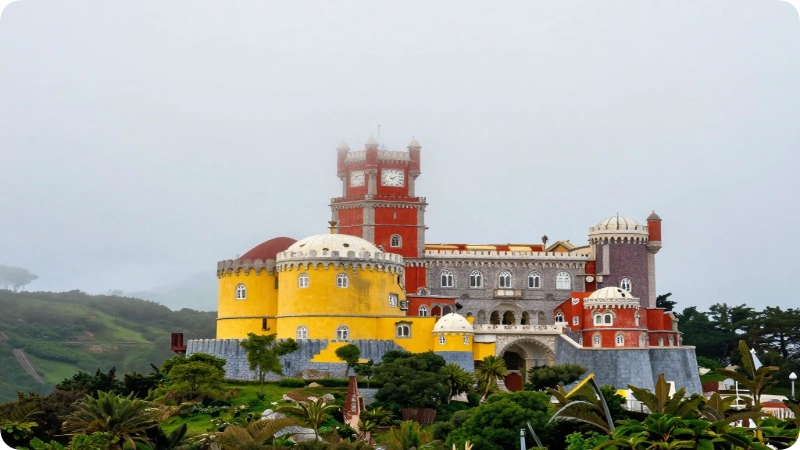
Portugal’s highlights lean coastal and historic, with Lisbon and Porto serving as anchor cities for day trips into wine country and beach towns.
Lisbon’s Belém district houses the Jerónimos Monastery and Belém Tower, both UNESCO World Heritage Sites, while the hilltop trams and viewpoints (miradouros) define the city’s character. Porto pairs riverside charm with port wine cellar tours in Vila Nova de Gaia. Sintra, a short train ride from Lisbon, is packed with colorful palaces like Pena Palace, best visited early to beat tour bus crowds. The Algarve region delivers dramatic cliffside beaches, particularly around Lagos and Benagil Cave.
Hidden Gems Worth the Detour
- Cáceres, Spain A perfectly preserved medieval old town with a fraction of Toledo’s crowds.
- Ronda, Spain A dramatic cliffside town split by a deep gorge, an easy day trip from Málaga.
- Óbidos, Portugal A walled hilltop village known for its cherry liqueur served in chocolate cups.
- Aveiro, Portugal Often called Portugal’s “Venice,” with colorful canal boats and Art Nouveau buildings.
These lesser known stops offer authentic local atmosphere and dramatically shorter lines than the marquee sites.
Food and Dining: What to Try in Each Country

Spain and Portugal share a love of seafood, olive oil, and long, social meals, but each country has its own signature dishes worth planning around.
In Spain, don’t miss jamón ibérico, patatas bravas, and regional paella (best enjoyed in Valencia, its birthplace). Evening tapas hopping is a cultural ritual, not just a meal locals typically eat dinner after 9 p.m.
In Portugal, try pastéis de nata (custard tarts), bacalhau (salt cod prepared dozens of ways), and fresh grilled sardines, especially during Lisbon’s June festivals. Port wine tastings in Porto’s Gaia cellars are a must for wine lovers, and vinho verde offers a lighter, budget friendly alternative.
Culture and Etiquette Tips
Meals run later than in the U.S. lunch around 2 p.m. and dinner after 8:30 or 9 p.m. is standard in both countries, so restaurants often don’t open for dinner until 7:30 or 8.
Tipping is appreciated but modest: rounding up or leaving 5 10% for good service is standard, not the 18 20% expected in the U.S. Greetings typically include a light kiss on each cheek among friends, though a handshake is fine for first meetings. Many shops and some restaurants close for a few hours midafternoon, especially in smaller Spanish towns, so plan sightseeing accordingly.
Safety Tips
Spain and Portugal both rank among Europe’s safer destinations for tourists, though petty theft in crowded areas is the top concern. Pickpocketing is most common on Barcelona’s Las Ramblas, Madrid’s metro, and Lisbon’s Tram 28 keep bags zipped and in front, and avoid back pockets for phones or wallets.
Solo travelers, families, and groups generally report feeling comfortable walking in central tourist areas after dark. As with any international trip, registering with the <cite index=”2 1″>U.S. Department of State’s Smart Traveler Enrollment Program (STEP)</cite> and checking the State Department’s country specific advisories before departure is a smart, low effort precaution.
Sample 10 Day Spain and Portugal Itinerary
| Day | Location | Highlights |
| 1 2 | Madrid | Prado Museum, Royal Palace, tapas crawl |
| 3 | Toledo (day trip) | Cathedral, medieval old town |
| 4 5 | Barcelona OR Seville | Sagrada Família / Alcázar and flamenco |
| 6 | Fly to Lisbon | Settle in, Alfama sunset walk |
| 7 | Sintra (day trip) | Pena Palace, Quinta da Regaleira |
| 8 | Lisbon | Belém Tower, Jerónimos Monastery |
| 9 | Porto | Ribeira district, port wine tasting |
| 10 | Departure | Fly home from Porto or Lisbon |
This route minimizes backtracking and pairs well with a 1 hour Madrid to Lisbon or Barcelona to Lisbon flight to bridge the two countries.
Common Mistakes First Time Visitors Make
Mistake 1: Trying to see too many cities in one trip. Spreading 10 days across five cities leaves little time to actually enjoy any of them. Fix: Pick two or three anchor cities and use day trips for the rest.
Mistake 2: Booking Alhambra or Sagrada Família tickets last minute. Both sell out days or weeks ahead in peak season. Fix: Reserve timed entry tickets as soon as travel dates are confirmed.
Mistake 3: Assuming Spain and Portugal run on the same clock and schedule. Portugal is one hour behind Spain, and meal times shift slightly between the two. Fix: Double check local time when booking transport connections between countries.
Underrated Alternatives to Consider
Travelers set on Barcelona might also love Valencia, which offers beaches, City of Arts and Sciences architecture, and the original home of paella at a lower price point. In Portugal, Coimbra, a historic university city between Lisbon and Porto, offers fado music and medieval streets without Lisbon’s crowds.
Is It Worth It? Honest Pros and Cons
Worth it for: food lovers, history buffs, architecture fans, and travelers who want two distinct cultures in one manageable trip.
Consider skipping combined travel if: the total trip is under a week splitting under 7 days between two countries usually means rushing both.
What’s overrated: Barcelona’s Las Ramblas, which is crowded and touristy compared to nearby neighborhood streets.
What’s underrated: Porto, which offers Lisbon level charm with noticeably smaller crowds and lower prices.
Packing Advice
Pack for variable weather with breathable layers, a light rain jacket for spring/fall trips, and comfortable walking shoes suited to cobblestone streets. A universal European plug adapter (Type C/F) is essential, as is a portable phone charger for long museum and walking days. Modest clothing (covered shoulders) is recommended for visiting cathedrals like Seville’s or Lisbon’s monasteries.
FAQs
How many days are needed to see both Spain and Portugal?
Ten to 14 days allows a comfortable pace covering 2 3 anchor cities in each country. A week or less is possible but means picking just one city per country and limiting day trips.
Do U.S. citizens need a visa to travel to Spain and Portugal?
No visa is currently required for stays under 90 days. <cite index=”7 1″>Starting in Q4 2026, U.S. citizens will need ETIAS authorization, a €20 online pre travel screening, before entering.</cite>
What is the cheapest way to travel between Spain and Portugal?
Budget bus services like FlixBus and ALSA offer the lowest fares, typically running 7 8 hours between major cities, while low cost flights on Vueling or Ryanair often cost only slightly more and save significant time.
Is it safe to travel to Spain and Portugal right now?
Yes, both countries are considered safe for tourists, with petty theft in crowded tourist zones as the primary risk. Checking current U.S. State Department advisories before departure is recommended.
What’s the best month to visit Spain and Portugal?
May and September consistently offer the best balance of warm weather, manageable crowds, and moderate pricing in both countries.
Can I use the same currency in Spain and Portugal?
Yes, both countries use the euro, which simplifies budgeting and eliminates the need to exchange currency when crossing the border.
Is renting a car necessary for this trip?
Not necessary for a city focused itinerary, since trains, buses, and budget flights cover major routes well. A car adds value for travelers wanting to explore rural regions like the Algarve coast or Extremadura at their own pace.
Final Takeaways
Spain and Portugal reward travellers who slow down: two or three anchor cities beat five rushed stops, shoulder season beats peak summer for both if and price, and Portugal stretches a budget noticeably further than Spain. Start with flights into Madrid or Lisbon, build in day trips to nearby gems like Toledo or Sinatra, and bridge the two countries with an easy hour long flight.
Keep an eye on the ETIAS rollout before booking a 2026 trip, and always confirm current entry requirements on the official EU travel portal closer to departure.
With a little planning, this Iberian pairing delivers two unforgettable countries without the stress of an overpacked schedule pack light, book those timed entry tickets early, and let Madrid’s tapas bars and Lisbon’s hilltop views do the rest.

Stephen Fry brings an insatiable curiosity for history, language, and global heritage to the Travelmarse team. Having spent decades traveling the globe to study regional storytelling and ancient civilizations, he excels at uncovering the hidden narratives of modern destinations. Stephen anchors the cultural vertical on Travelmarse, where he writes deep-dive guides on architectural history, museum crawl strategies, and local customs. His vivid, engaging writing helps travelers look past the surface and truly understand the heritage of the places they visit.