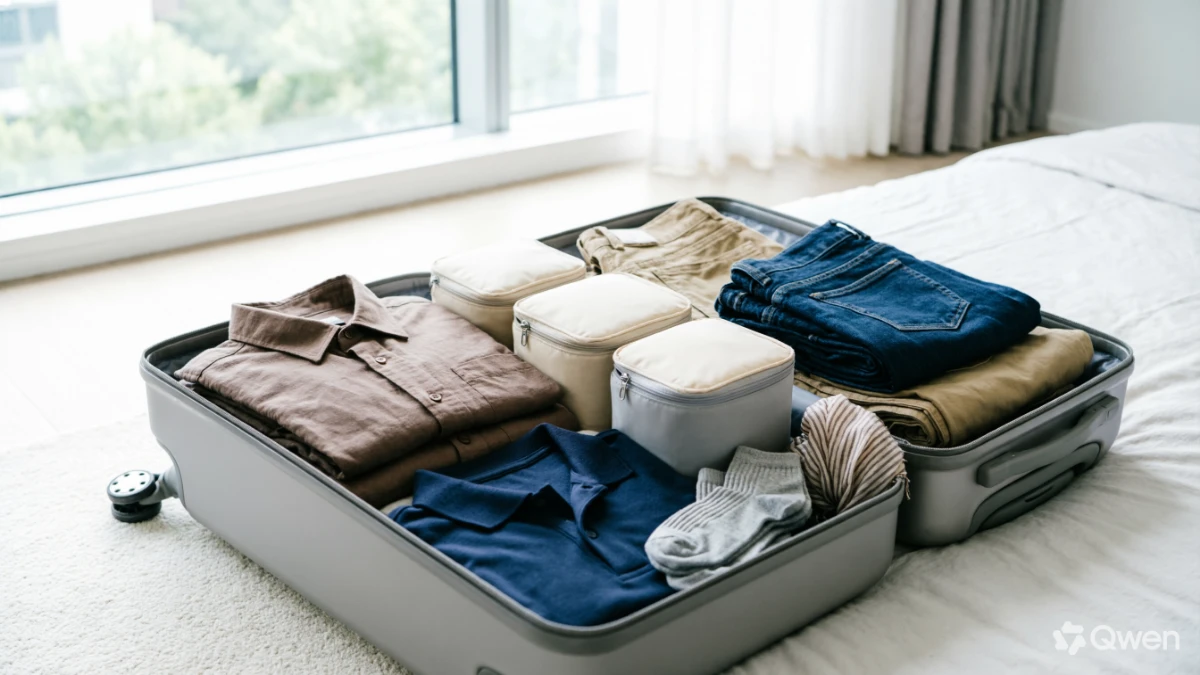
Overpacked suitcases and wrinkled shirts ruin the first day of any trip. A messy bag makes it hard to find anything, and stiff, crumpled clothes look unprofessional at a meeting or a nice dinner. Folding clothes for travel the right way solves both problems at once.
This guide breaks down every proven folding method, including the Japanese KonMari fold, the ranger roll, and the bundle wrap. Readers will learn how to fold shirts, jeans, and pants so they take up less room and land at the destination wrinkle-free. Video-style step breakdowns, a side-by-side comparison table, and packing gear tips round out the guide so any traveler, from weekend warriors to overseas backpackers, can pack smarter.
Featured Snippet:
The best way to fold clothes for travel is to lay each item flat, fold the sleeves or legs inward, then fold in thirds from bottom to top. This method saves space, resists wrinkles, and fits neatly into packing cubes or suitcase compartments for any trip length.
Folding Methods at a Glance
Before choosing a method, it helps to compare them side by side. Each folding style trades off speed, space savings, and wrinkle resistance differently, so the right choice depends on the trip.
| Method | Best For | Wrinkle Resistance | Space Saved | Time Needed |
| Standard Fold | Dress shirts, suits | High | Low | Fast |
| Ranger Roll | T-shirts, casual wear | Medium | High | Medium |
| KonMari Fold | Drawers, packing cubes | Medium | High | Medium |
| Bundle Wrap | Mixed wardrobes, suits | Very High | Medium | Slow |
| Compression Roll | Jeans, bulky items | Medium | Very High | Fast |
Best Folding Clothes for Travel: Top Methods Compared
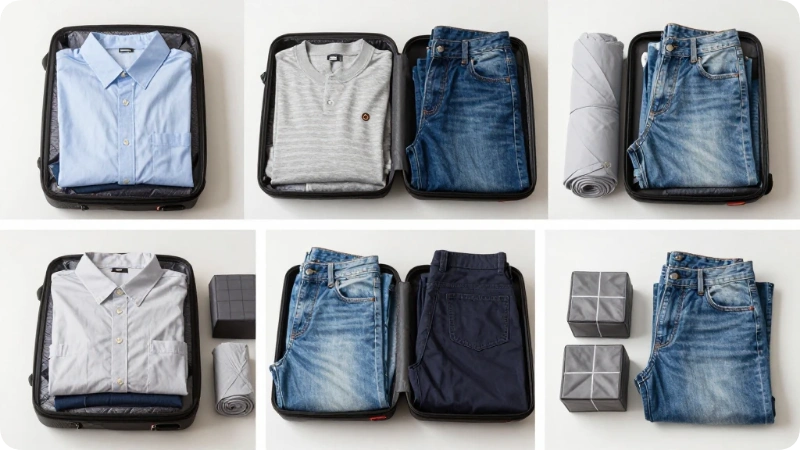
The best folding method for travel depends on the clothing type and trip length. Rolling works well for casual cotton items, while flat folding protects structured pieces like blazers. Most experienced travelers mix two or three methods in the same suitcase.
For short trips of two to four days, the ranger roll saves the most time. It compresses shirts and shorts into tight cylinders that stand upright in a bag.
For longer trips or business travel, a combination approach works better. Dress shirts and suits go in the standard flat fold or bundle wrap to prevent creases, while casual wear like T-shirts and workout gear gets rolled.
Packing cubes make any method more effective. They hold folded clothes in place so items do not shift and unravel mid-flight.
Japanese Folding Clothes for Packing (KonMari Method)
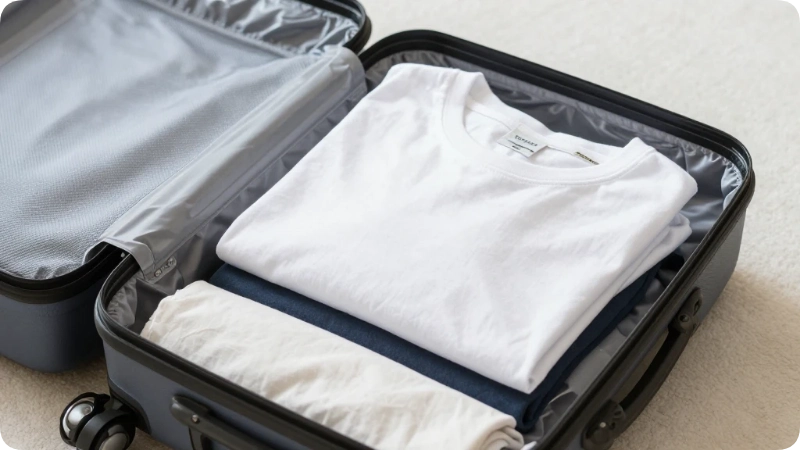
The Japanese KonMari folding method, popularized by organizing consultant Marie Kondo, folds each garment into a small rectangle that stands upright on its own. This makes every item visible in a drawer or suitcase, so nothing gets lost or crushed at the bottom of the bag.
To do the KonMari fold, lay the shirt flat and fold in both sides toward the center, including the sleeves. Fold the bottom hem up to the collar in two or three even sections until it forms a compact, freestanding rectangle.
This method shines for packing cubes and carry-on bags because items stack like files instead of a pile. It works especially well for T-shirts, underwear, socks, and light knitwear.
Insider tip: Pack KonMari-folded items on their sides, spine up, the same way books sit on a shelf. This keeps everything visible without unpacking the whole cube.
How to Fold a Shirt for Travel Wrinkle-Free
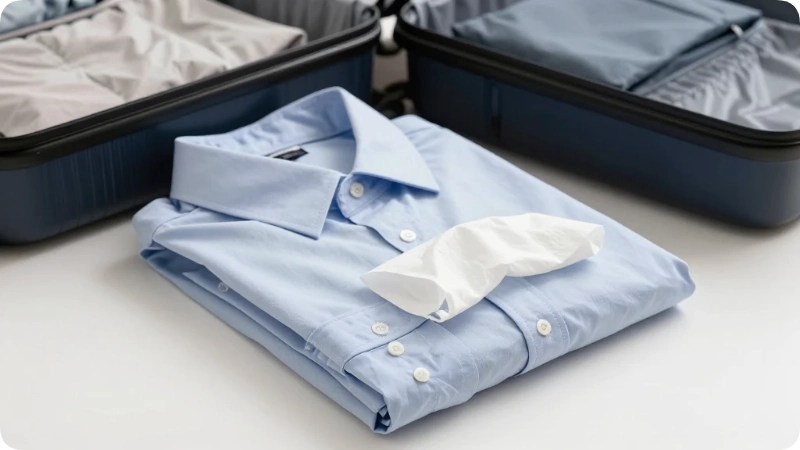
The wrinkle-free way to fold a shirt for travel is to button the top buttons, lay it face down, fold both sides in toward the spine including the sleeves, then fold from the bottom up in two sections. Smoothing each fold by hand before moving to the next step prevents deep creases.
Dress shirts need extra care. After the sides are folded in, tuck a sheet of tissue paper or a plastic dry-cleaning bag between the folds. The slick surface reduces friction, which is the main cause of wrinkles in transit.
For everyday cotton shirts, the standard fold is usually enough. Placing heavier items like shoes or toiletry bags on top adds pressure that can flatten out small creases naturally during the flight.
Common mistake: Folding a shirt with buttons undone. The fabric shifts inside the fold and creates wrinkles across the chest. Buttoning at least the collar and two middle buttons keeps the shape locked in.
How to Fold Pants for Travel
Pants for travel fold best when laid flat, folded in half lengthwise so the legs align, and then folded into thirds starting from the cuff. This flat method protects creases in dress trousers and keeps casual pants compact enough for a carry-on.
For dress pants or suit trousers, matching the seams before the lengthwise fold keeps the crease sharp. Draping the pants over a folded shirt or jacket, with the legs hanging outside the stack, is another trick tailors use for garment bags. Folding the legs back over the stack at the very end locks everything into place.
Casual pants like chinos or joggers can skip the seam-matching step. A simple fold in half followed by a roll from the waistband down saves more space for trips where crease-free trousers are not a priority.
How to Fold Jeans for Travel to Save Space
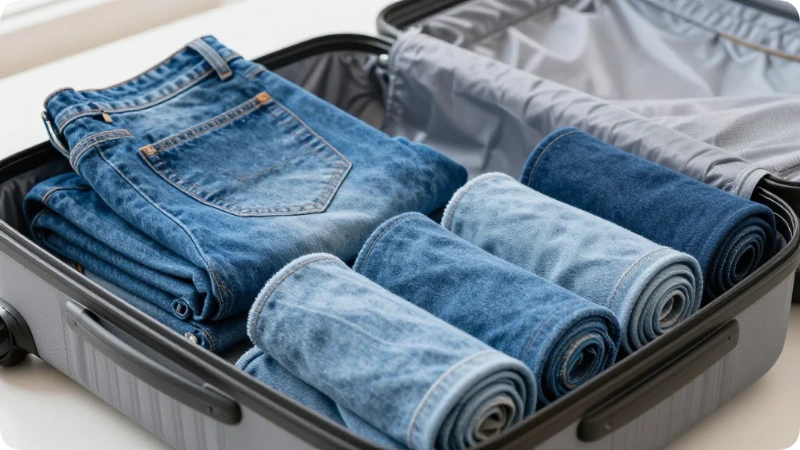
Jeans take up more space than any other clothing item because of their thick denim. The best way to fold jeans for travel to save space is to fold them in half lengthwise, then roll tightly from the waistband to the ankle hem, using the compression roll method instead of a flat fold.
Denim does not wrinkle the way dress shirts do, so rolling is almost always the better choice for jeans. A tight roll can reduce the space a single pair takes up by nearly half compared to a flat fold.
Packing two pairs of jeans rolled together, one inside the other, saves even more room. This nesting trick works well for travelers who need denim for both daytime and evening wear.
Money-saving tip: Wearing the bulkiest pair of jeans on travel days, instead of packing them, frees up significant suitcase space without paying for checked luggage.
How to Fold Pants and Shirts for Travel Together
Packing pants and shirts together works best when heavier, sturdier items go on the bottom of the suitcase,, and lighter, wrinkle-prone items go on top. Jeans and structured pants act as a stable base layer, while folded dress shirts sit above them, protected from crushing.
A layered system keeps outfits organized by day. Some travelers fold a shirt and its matching pants together as one unit, wrapped in a single fold, so entire outfits come out ready to wear.
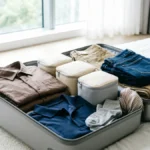
Packing cubes make this pairing system even more effective. One cube can hold rolled jeans and pants, while a second, flatter cube holds folded shirts, keeping wrinkle-sensitive fabric separate from denim’s rougher texture.
Rolling Clothes for Packing No Wrinkles: Rolling vs Folding
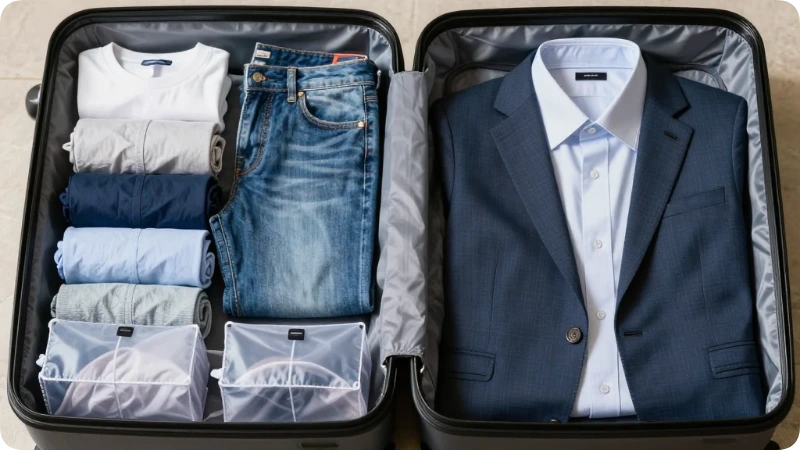
Rolling clothes for packing helps prevent deep, sharp wrinkles by avoiding the hard crease lines caused by folding. This method works best for casual fabrics such as cotton T-shirts, athletic wear, and jeans. For structured pieces like blazers and dress shirts, flat folding provides better protection and helps maintain their shape.
The science is simple: folds create pressure points along a single line, and that pressure, combined with time in a suitcase, sets a crease. Rolling spreads the same pressure evenly around a cylinder shape, so no single line gets crushed.
However, rolling is not perfect for everything. Structured jackets, blazers, and collared dress shirts can lose their shape when rolled tightly. For these items, a flat fold or bundle wrap still outperforms rolling.
Honest drawback: Rolled clothes take up an oddly shaped, cylindrical space that does not always stack efficiently in square suitcase corners, unlike flat folds.
Folding Clothes for Travel Video: Visual Step-by-Step Resources
Watching a video is often the fastest way to learn a new folding technique, since hand movements are hard to describe in text alone. Searching for terms like “ranger roll tutorial” or “KonMari fold demonstration” on video platforms pulls up short, step-by-step demonstrations from packing experts and flight attendants.
Many airlines and travel gear brands publish their own short folding tutorials as part of packing guides on their websites. These often demonstrate the exact fold that works best with their specific packing cubes or garment bags.
For hands-on learners, practicing a new fold with an old T-shirt at home, pausing a video every few seconds, builds muscle memory faster than reading instructions alone.
Packing Advice: Tools That Make Folding Work Better
The right travel gear multiplies the space-saving benefits of any folding method. Packing cubes, compression bags, and garment folders each solve a different packing problem, and combining two or three tools usually outperforms using folding technique alone.
Packing cubes group folded items by category, such as tops, bottoms, or workout gear, and compress them slightly when zipped. Compression bags use a valve or roll-to-seal design to remove excess air, which works especially well for bulky items like jackets and jeans.
A garment folder, sometimes called a shirt folding board, is a rigid plastic template that guarantees a perfectly even fold every time. It is a small, lightweight tool that removes the guesswork for travelers who fold clothes often.
Time-saving tip: Pre-folding an entire week’s outfits using a garment folder before a trip, then storing them in a drawer, cuts morning packing time down to minutes.
Common Packing Mistakes to Avoid
Even experienced travelers repeat a few folding mistakes that lead to wrinkled clothes and wasted suitcase space. Fixing these three habits solves most common packing complaints.
- Mistake 1: Packing shoes first. Shoes are bulky and misshapen, so packing them before clothes wastes usable space around them. Fix: Fill shoes with rolled socks or small accessories, and pack them along the suitcase’s outer edge last.
- Mistake 2: Folding wrinkle-prone fabrics too tightly. Linen and silk crease permanently under pressure. Fix: Use the bundle wrap method or place these items on top of the stack, unfolded flat.
- Mistake 3: Not accounting for the return trip. Many travelers pack a suitcase perfectly on the way out but forget to leave folding-friendly space for souvenirs. Fix: Pack slightly looser than the bag’s full capacity, or bring a foldable packing cube for the return leg.
Alternatives to Folding: Bundle Wrapping and Compression Packing
Folding is not the only way to organize a suitcase. The bundle wrapping method wraps soft items like T-shirts around a rigid core, such as a folded sweater or toiletry bag, layer by layer, which nearly eliminates hard crease lines.
Bundle wrapping takes longer than a standard fold, which makes it a better fit for longer trips where wrinkle-free suits and dresses matter more than packing speed. Compression sacks, which use a valve to push out air, are another alternative worth considering for bulky winter clothing.
For travelers who prefer not to fold at all, vacuum-sealed packing bags shrink a stack of clothes to a fraction of its original size, though items often need re-folding once unpacked at the destination.
FAQs
What is the best way to fold clothes for travel?
The best way to fold clothes for travel combines methods: use the standard flat fold for dress shirts and suits, the ranger roll or KonMari fold for casual t-shirts, and a tight roll for jeans. Packing cubes help keep each folded style organized and prevent shifting during transit.
Is rolling or folding better for packing?
Rolling generally prevents wrinkles better and saves more space for casual fabrics like cotton and denim. Folding protects structured items such as blazers and dress shirts from losing their shape. Most travelers get the best results by using both methods for different clothing types in the same bag.
How do Japanese people fold clothes for travel?
The Japanese KonMari method folds clothing into a small, upright rectangle that stands on its own, similar to a file in a drawer. This technique, developed by Marie Kondo, keeps every item visible in a packing cube so nothing gets buried or crushed at the bottom.
How do I fold a dress shirt so it doesn’t wrinkle?
Button the shirt, lay it face down, fold both sides and sleeves toward the spine, then fold from the bottom up in two even sections. Adding a sheet of tissue paper between folds reduces friction, which is the main cause of travel wrinkles.
How do I pack jeans without taking up too much space?
Fold jeans in half lengthwise, then tightly roll them from the waistband to the ankle using a compression roll. This can reduce the space jeans take up by nearly half compared to a flat fold, and nesting two pairs together saves even more room.
Should I fold or roll pants for a carry-on?
Dress pants should be flat-folded to protect the crease, while casual pants like chinos or joggers can be rolled to save extra space in a carry-on. Rolling works best when wrinkle resistance matters less than fitting more items into a limited bag.
What is the ranger roll method?
The ranger roll, borrowed from military packing techniques, folds a shirt in half, tucks the sleeves in, then rolls it tightly from the bottom hem upward into a compact cylinder. It saves space and resists wrinkles better than a loose, standard fold.
Do packing cubes really save space?
Packing cubes save space by compressing folded clothes slightly when zipped and by preventing loose items from shifting and expanding into unused gaps. They also make it easier to see and access specific outfits without unpacking the entire suitcase.
How can I keep folded clothes from wrinkling in a suitcase?
Placing tissue paper or a plastic dry-cleaning bag between folded layers reduces the friction that causes wrinkles. Packing heavier items on top of folded clothes also adds even pressure, which can smooth out small creases during the flight instead of deepening them.
What’s the fastest way to fold clothes for a short trip?
For short trips, the ranger roll is the fastest method because it takes only a few seconds per item and requires no special tools. It works especially well for T-shirts, shorts, and casual wear packed for two to four days.
Can I use the bundle wrapping method for suits?
Yes, bundle wrapping is one of the most effective methods for suits and other structured garments. Wrapping the suit jacket and trousers around a soft core, layer by layer, avoids the sharp crease lines that a standard fold creates.
How many clothes should I pack using folding methods for a week-long trip?
A week-long trip typically needs five to seven tops, two to three bottoms, and one layering piece, since folding methods like the KonMari fold and ranger roll allow outfits to be reworn or mixed. Packing cubes help fit this amount into a single carry-on for most travelers.
Final Takeaways
Folding clothes for travel well comes down to three things: matching the method to the fabric, using packing cubes to keep everything organized, and layering heavier items beneath wrinkle-prone ones. The KonMari fold and ranger roll save space for casual wear, while the standard fold and bundle wrap protect structured pieces like shirts and suits.
There is no single “best” fold for every item. The most efficient travelers switch between two or three methods in the same suitcase, using rolls for jeans and T-shirts and flat folds for anything that needs to look sharp on arrival.

Stephen Fry brings an insatiable curiosity for history, language, and global heritage to the Travelmarse team. Having spent decades traveling the globe to study regional storytelling and ancient civilizations, he excels at uncovering the hidden narratives of modern destinations. Stephen anchors the cultural vertical on Travelmarse, where he writes deep-dive guides on architectural history, museum crawl strategies, and local customs. His vivid, engaging writing helps travelers look past the surface and truly understand the heritage of the places they visit.