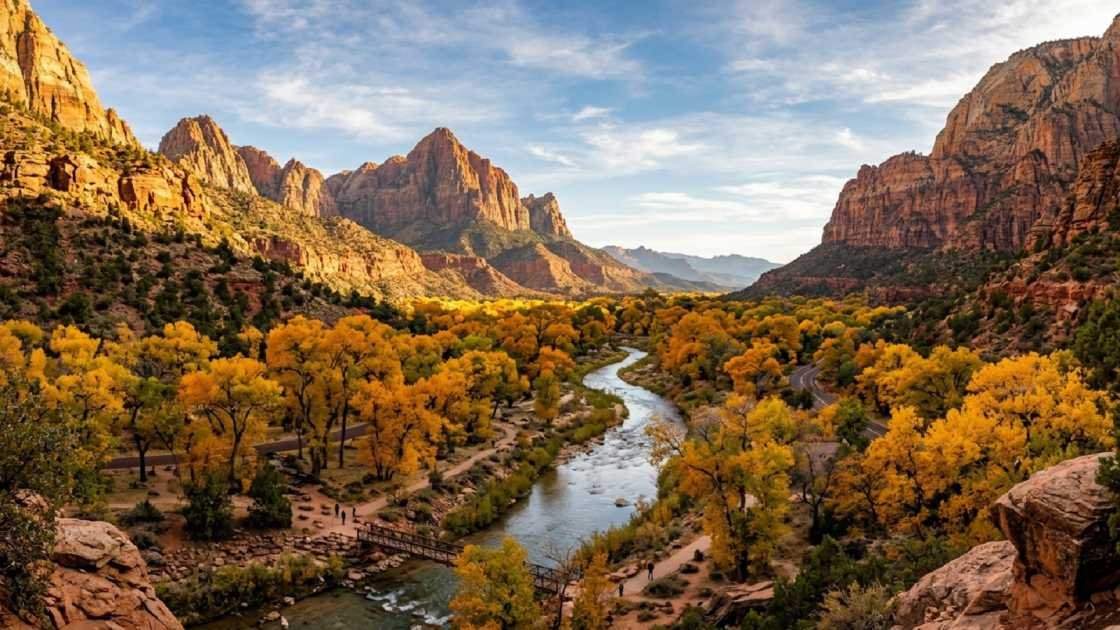
The best places to travel in October in the USA offer an ideal mix of comfortable weather, smaller crowds, and stunning seasonal scenery.
October is one of the best months to explore America, whether you’re looking for colorful fall foliage, scenic national parks, vibrant cities, or relaxing coastal escapes.
From the mountains of New England to the deserts of the Southwest, the best places to travel in October in the USA provide unforgettable experiences for every type of traveler.
Hotel prices often drop after the busy summer season, popular attractions become less crowded, and outdoor adventures become much more enjoyable.
If you’re planning an autumn getaway, this guide highlights the best places to travel in October in the USA, including iconic destinations and hidden gems. You’ll discover where to find peak fall colors, ideal hiking conditions, seasonal festivals, and some of the most beautiful landscapes America has to offer.
Quick Facts: October Travel in the USA
| Factor | Details |
| Peak foliage states | Vermont, New Hampshire, Maine, New York |
| Best Southwest weather | Arizona, Utah, New Mexico |
| Hurricane risk areas | Southeast coast (risk drops after mid-October) |
| Shoulder season savings | Up to 30 40% off summer hotel rates |
| Average October temps | 30°F (Maine) to 85°F (Florida Keys) |
| Major October events | Albuquerque Balloon Fiesta, Salem Haunted Happenings, Napa harvest festivals |
Always verify prices, hours, and entry requirements directly with parks and tourism boards, as these details change seasonally.
Why October Is One of the Best Months to Travel in the USA
October hits a sweet spot that few other months can match. Summer crowds have cleared out, but most attractions are still fully open. Temperatures across much of the country drop into a comfortable range cool enough for hiking, warm enough for beaches in the South.
Fall foliage peaks across the Northeast and Mid-Atlantic, while the Southwest enters its most pleasant travel season after a brutal summer.
Airfare and accommodation costs often dip noticeably compared to July and August. National Park visitation numbers fall sharply after Labor Day, which means shorter lines at trailheads, easier parking, and a much quieter experience overall.
October also brings a wave of regional festivals harvest celebrations, Halloween events, and food-and-wine weekends that add cultural depth to any trip.
The one downside worth knowing: foliage timing is never guaranteed. Peak color depends on temperature and rainfall patterns each year. Checking real-time foliage trackers from state tourism boards before you book is a smart move.
New England: The Classic October Destination
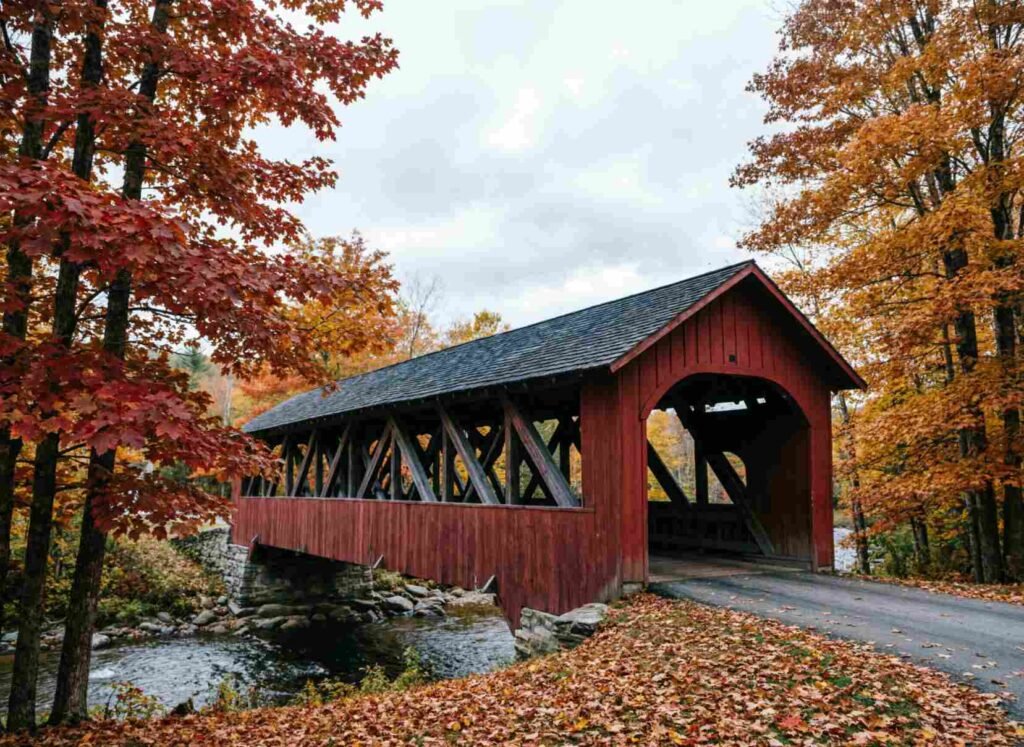
No list of the best places to travel in October in the USA is complete without New England. Vermont, New Hampshire, Maine, and western Massachusetts deliver some of the most dramatic fall foliage on earth, and October is exactly when it happens.
Vermont’s Green Mountains and the Connecticut River Valley typically reach peak color between late September and mid-October. Route 100, running the length of the state, is one of the most celebrated fall drives in the country.
The towns of Woodstock and Stowe are popular bases expect charming inns, apple orchards, and covered bridges at every turn.
New Hampshire’s Kancamagus Highway (Route 112) through the White Mountain National Forest is a 34.5-mile scenic road that many consider the single best fall foliage drive in the country. No traffic lights, no billboards just mountains, rivers, and color. Stop at Sabbaday Falls and the Lower Falls swimming hole along the way.
Maine adds a coastal dimension that Vermont and New Hampshire can’t match. Acadia National Park on Mount Desert Island sees October as a shoulder month foliage is still going, summer crowds are mostly gone, and the rocky coastline takes on a dramatic, moody character.
Jordan Pond House, famous for its popovers and lawn tables overlooking the water, stays open through October (verify current dates with the park).
Insider tip: Drive on weekdays if you can. Fall foliage weekends in Vermont and New Hampshire draw significant traffic on popular routes like Route 100 and the Kancamagus. Tuesday through Thursday visits give you the same scenery with far less company.
The Hudson Valley, New York: Foliage Without the Crowds
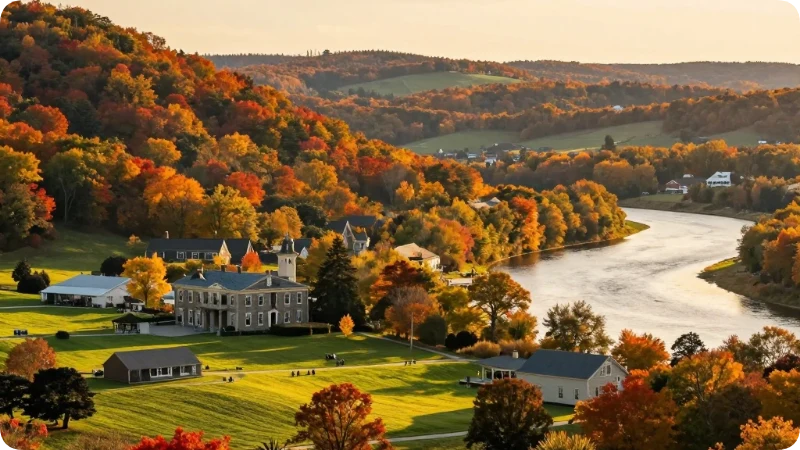
The Hudson Valley sits within a two-hour drive of New York City and offers spectacular fall scenery without the full-scale New England price tag. The region runs roughly from Yonkers north to Albany, with the Catskill Mountains to the west and the Berkshires to the east.
Storm King Art Center in Cornwall-on-Hudson is one of the most underrated October destinations in the entire Northeast. It’s a 500-acre outdoor sculpture museum where massive steel works sit against rolling hills turning orange and gold.
The combination of art and landscape is genuinely striking and much less crowded than peak leaf-peeping spots farther north.
Rhinebeck and Cold Spring are two small Hudson Valley towns worth a slow weekend. Both have strong independent restaurant scenes, farmers markets running into fall, and easy access to hiking trails with river and mountain views. The Mohonk Preserve near New Paltz offers miles of carriage roads and cliff-top trails through classic Catskill terrain.
Hidden gem: Visit the Olana State Historic Site near Hudson the Persian-inspired mansion of painter Frederic Church sits on a hillside with panoramic views of the Hudson River and Catskills that Church himself designed into the landscape.
Sedona, Arizona: The Southwest’s October Sweet Spot
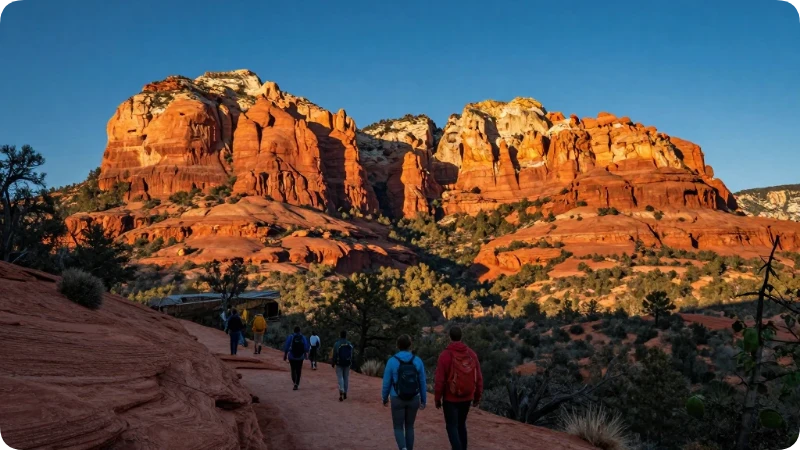
Sedona transforms in October. Daytime temperatures fall from brutal summer highs into the 70s and low 80s°F perfect hiking weather. The red rock formations don’t change color the way forests do, but the contrast between the sandstone buttes and the deep blue October sky creates a different kind of beauty that photographers particularly love.
The town sits within the Coconino National Forest and sits at around 4,350 feet elevation, which keeps it noticeably cooler than Phoenix (about 2 hours south). Cathedral Rock, Bell Rock, and Devil’s Bridge are the most-visited trails. For something less trafficked, Soldier Pass Trail takes you past natural sinkholes and into quieter canyon terrain.
Sedona also has a well-developed wellness and spa scene that suits an October weekend perfectly many visitors combine hiking mornings with afternoon spa visits and evenings at restaurants on the creek.
Tourist mistake to avoid: Don’t skip the Forest Road 525 (Schnebly Hill Road) drive. Most visitors stick to the main trails, but this unpaved road climbs above the red rocks to an overlook that rivals anything you’ll see from the valley floor. A high-clearance vehicle helps but isn’t always required check conditions before going.
Zion and Bryce Canyon, Utah: National Park Gold in October
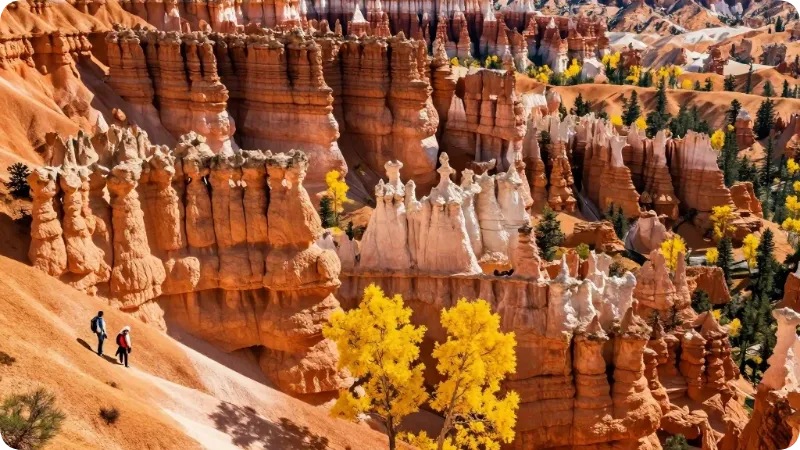
Utah’s national parks hit their absolute best in October. Zion National Park sees significantly lower visitation than summer, the shuttle system is less crowded, and temperatures in the canyon drop to genuinely comfortable levels (highs in the 60s°F). The cottonwood trees along the Virgin River turn gold and yellow, adding warmth to the already-dramatic red canyon walls.
Angels Landing Zion’s most famous hike requires a permit obtained through a lottery system managed by the National Park Service. Apply well in advance through recreation.gov. The less-famous Narrows hike (wading up the Virgin River through a slot canyon) is actually better in October than summer because water levels are typically lower and temperatures make the cold water more manageable.
Bryce Canyon National Park sits about 90 minutes northeast of Zion and operates at elevations between 8,000 and 9,000 feet, which means it can see early snowfall in October but that’s often a feature rather than a bug. A light dusting of snow on Bryce’s orange and pink hoodoos is one of the most photographed natural scenes in the American West. Sunset Point and Sunrise Point offer the classic hoodoo views; Fairyland Loop is a longer, less-crowded alternative for serious hikers.
Insider tip: The Zion-Mount Carmel Highway (Route 9) through the park’s east side gets far less traffic than the main canyon floor. The landscape up top slickrock, checkerboard mesa, pine forests is completely different from the canyon below and worth at least a half-day.
Albuquerque, New Mexico: The Balloon Fiesta
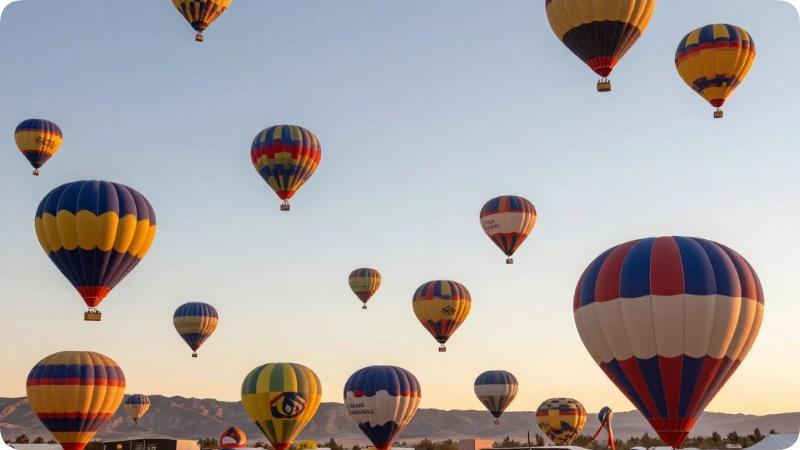
The Albuquerque International Balloon Fiesta runs for nine days in early October and is the largest hot air balloon festival in the world. In 2024, more than 500 balloons participated, with morning “mass ascensions” filling the sky at dawn. The event draws around 900,000 visitors each year, so accommodation books up many months in advance.
Beyond the festival, Albuquerque offers genuine character that many first-time visitors underestimate. Old Town Albuquerque preserves Spanish Colonial architecture dating to the city’s founding in 1706. The New Mexico Museum of Natural History and Science, the Indian Pueblo Cultural Center, and the Petroglyph National Monument all sit within easy reach.
The Sandia Mountains rise 10,000 feet on the city’s east edge, accessible by the Sandia Peak Tramway one of the world’s longest aerial trams. October temperatures at the summit hover around 40°F, so bring layers even if it’s 70°F in the city.
Money-saving tip: The balloon fiesta’s best-value ticket is the early-morning entry for the mass ascension. Avoid the evening “balloon glow” if budget is a concern it’s impressive but the morning experience is what makes the fiesta special.
Napa and Sonoma, California: Harvest Season
California’s wine country reaches its most exciting moment in October. Harvest runs roughly September through November, and October sits right in the middle grapes are being crushed, the vineyards still have their leaves (turning gold and red by mid-month), and the weather settles into warm, dry days and cool evenings.
Both Napa Valley and Sonoma County offer wine tasting, but they feel noticeably different. Napa tends toward formal tasting rooms, higher prices, and a more polished experience. Sonoma feels more relaxed farmstands alongside wineries, more casual outdoor tastings, and a wider range of price points.
Castello di Amorosa in Calistoga (Napa) is an actual 13th-century-style Tuscan castle built stone by stone and is worth visiting for the architecture alone, even if wine isn’t your primary interest. In Sonoma, the small town of Healdsburg serves as a beautiful base with walkable restaurants and easy access to the Dry Creek Valley and Alexander Valley wine appellations.
October weekends in wine country are busy book tasting appointments well ahead. Weekday visits give you more personal attention and sometimes complimentary tastings that weekend crowds don’t get.
Great Smoky Mountains, North Carolina and Tennessee: Appalachian Fall
Great Smoky Mountains National Park is the most-visited national park in the country, welcoming around 12 13 million visitors per year. October is its most popular month and for good reason. Appalachian hardwood forests cover the mountains in layers of color, from the lower valleys through the upper ridges, creating a gradient effect that’s different from New England’s more uniform foliage.
Clingmans Dome, the highest point in the park at 6,643 feet, offers 360-degree views when skies are clear. The observation tower at the summit requires a half-mile paved but steep walk from the parking area. Alum Cave Trail to Mount LeConte is one of the best moderate-to-difficult hikes in the park dramatic rock formations, arch rock, and sweeping ridge views.
The gateway towns of Gatlinburg and Pigeon Forge on the Tennessee side bring a distinctly commercial flavor that some visitors love and others find jarring. Asheville, North Carolina, on the park’s eastern edge, offers a very different vibe a thriving arts scene, an exceptional restaurant culture, and the Biltmore Estate, America’s largest private home, which runs elaborate October programming.
Hidden gem: Cataloochee Valley on the North Carolina side of the park is where the NPS reintroduced elk in 2001. The herd now numbers around 200 animals, and dawn and dusk in October when elk rut is happening offer wildlife viewing that rivals anything in the American West. The valley is remote enough that most Smokies visitors never get there.
Savannah, Georgia: Southern Gothic in Its Best Light
Savannah in October is close to perfect. Summer humidity has broken, temperatures sit in the low-to-mid 70s°F, and the city’s Spanish moss-draped squares and antebellum architecture take on an atmospheric quality that suits the season.
The historic district contains 22 public squares laid out in the original 1733 city plan by founder James Oglethorpe. Forsyth Park, with its famous cast-iron fountain, turns into a gathering spot on weekend mornings when a farmers market fills the northern end. The Mercer Williams House, Owens-Thomas House, and Davenport House are three of the best-preserved historic homes open for tours.
Savannah’s food scene centers on comfort food done right shrimp and grits, fried chicken, Low Country boil. The relatively recent emergence of a serious chef-driven restaurant scene adds contemporary options alongside the classics.
Halloween in Savannah is notably atmospheric. Ghost tours of the historic district run every evening in October, drawing on a city that genuinely has one of the most documented ghost-tourism scenes in the country. The city often appears on lists of “most haunted” destinations, and October leans into it with energy.
Olympic Peninsula, Washington: Rain Forests and Wild Coast
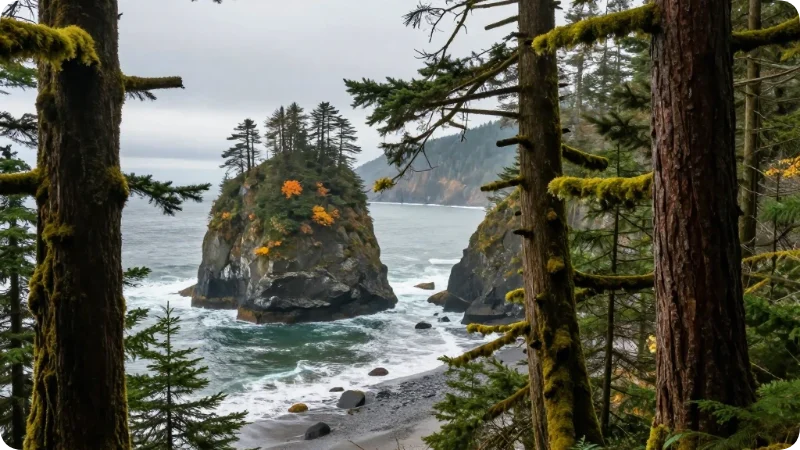
Most visitors to the Pacific Northwest skip the Olympic Peninsula, especially in October. That’s a mistake. Olympic National Park covers a remarkable range of ecosystems temperate rain forests, alpine meadows, glaciated peaks, and more than 70 miles of wild Pacific coastline and October brings all of it to life with a moody, green-saturated atmosphere that summer can’t replicate.
The Hoh Rain Forest receives an average of 12 14 feet of rain per year, and its Hall of Mosses a short, 0.8-mile loop through old-growth Sitka spruce and big-leaf maples draped in club moss is one of the most otherworldly landscapes in the United States. October rain makes it even more vivid.
Ruby Beach and Rialto Beach on the park’s coast offer dramatic sea stacks, driftwood-choked shores, and almost total solitude in October. Bring rain gear, accept that it will rain, and embrace the experience this stretch of coast was never meant to be experienced in sunshine.
Port Angeles serves as the main gateway town. The Olympic Discovery Trail, a multi-use trail system stretching 130 miles across the peninsula, is excellent for cycling when dry stretches allow.
Charleston, South Carolina: History and Coast
Charleston in October offers the best version of a genuinely great American city. Summer heat and humidity which can make the historic district genuinely uncomfortable gives way to temperatures in the low-to-mid 70s°F. The fall Southeastern Wildlife Exposition doesn’t hit until February, but October sees lower hotel rates and more room to breathe on the peninsula’s cobblestone streets.
The Battery, Rainbow Row, and the French Quarter give Charleston its iconic visual identity. Fort Sumter National Monument in Charleston Harbor where the Civil War’s first shots were fired in 1861 remains one of the most historically significant sites in the country. Boats to the fort depart from Liberty Square (verify current schedules with the National Park Service at nps.gov).
Folly Beach, Sullivan’s Island, and Isle of Palms are all within 30 minutes of downtown and still warm enough in October for beach walks, if not full summer swimming.
Tourist mistake: Don’t treat Charleston as a one-day stop. The city rewards slow exploration two to three days allows time to get beyond the obvious tourist circuit and into neighborhoods like Wagener Terrace, North Central, and the Upper King Street corridor where the city’s actual daily life happens.
Colorado Rocky Mountains: Aspen Gold
Colorado’s aspen trees are arguably the most visually striking element of fall in the American West. Unlike the mixed-color palette of New England, aspen groves turn an intense, pure gold entire mountainsides going yellow almost simultaneously, typically in late September through mid-October depending on elevation.
The San Juan Skyway in southwestern Colorado is a 236-mile National Scenic Byway that loops through Ouray, Silverton, Telluride, and Durango. The combination of Victorian mining-era towns, 13,000-foot mountain passes, and aspen-covered slopes makes this one of the best fall road trips in the country.
Maroon Bells near Aspen the two 14,000-foot peaks reflected in Maroon Lake generate more photographs than almost any other Colorado landscape. October visitation requires checking NPS access rules, as the road to the lake has seasonal closures and a reservation system during peak periods.
Telluride itself is worth a trip regardless of leaf color. The town sits in a box canyon reachable only by two narrow mountain roads or a free gondola from the adjacent Mountain Village. In October, after the summer festival season ends and before ski season begins, hotel rates drop substantially and the town takes on a quieter, more local character.
New Orleans, Louisiana: The Best Month to Visit
New Orleans regulars will tell you October is the single best month to be in the city. The brutal summer heat and humidity which regularly reaches heat-index values above 105°F finally breaks. Temperatures settle into the high 70s°F by day and low 60s°F by night. Hurricane season is still technically active through November 30, but risk diminishes significantly by mid-October.
The French Quarter, Garden District, and Treme neighborhood all reward exploration. The New Orleans Jazz & Heritage Foundation’s fall concert series and numerous neighborhood festivals fill October weekends with live music. The New Orleans Museum of Art in City Park, the National WWII Museum (one of the finest history museums in the country), and the Ogden Museum of Southern Art are all worth dedicated time.
Food in New Orleans requires no sales pitch. But October specifically brings the Crescent City Blues & BBQ Festival, typically a free outdoor event in Lafayette Square.
Underrated alternative: The Bywater and Marigny neighborhoods, east of the French Quarter, offer a more residential New Orleans experience fewer tourist-facing establishments, excellent neighborhood bars and restaurants, and the Frenchmen Street live music scene, which many locals prefer to Bourbon Street.
Death Valley National Park, California: Extreme Landscape, Perfect Temperature
Death Valley in summer is genuinely dangerous ground temperatures can exceed 200°F. In October, the park transforms. Daytime highs drop into the 90s°F at low elevations, which sounds warm but feels manageable compared to the 120°F+ of July. The extreme landscape salt flats, sand dunes, volcanic craters, and canyon narrows is best experienced in October when you can actually spend meaningful time outside.
Badwater Basin, at 282 feet below sea level, is the lowest point in North America. Mesquite Flat Sand Dunes catch warm afternoon light beautifully. Zabriskie Point, accessible by a short walk from a parking area, offers panoramic views of eroded badlands that are particularly dramatic at sunrise and sunset.
Death Valley is remote the nearest town of any size is Las Vegas, about 120 miles away. Fuel up before entering the park and carry extra water. Cell service is limited to the Furnace Creek area. The park’s visitor center, managed by the NPS, has current road conditions and safety information.
Lake Tahoe, Nevada and California: After Summer, Before Ski Season
October at Lake Tahoe occupies a genuine sweet spot. Summer boat traffic has ended, ski resorts haven’t opened (typically not until November or December depending on snowfall), and the lake itself 22 miles long, 12 miles wide, and over 1,600 feet deep takes on a deep blue clarity in the fall light.
The Tahoe Rim Trail, a 165-mile loop circling the lake at elevations between 6,300 and 10,338 feet, is excellent for day hiking in October before snow closes higher sections. Emerald Bay State Park and Eagle Falls are among the most photogenic spots on the lake’s western shore. D.L. Bliss State Park nearby offers easy hiking with dramatic lake views.
South Lake Tahoe has a casino strip straddling the California-Nevada border, which generates controversy among visitors. If you prefer a quieter atmosphere, Tahoe City and Truckee on the north shore offer better restaurant scenes and access to some of the best mountain biking in the region which October weather often makes ideal.
Cape Hatteras National Seashore, North Carolina: The Outer Banks Off-Season
The Outer Banks in October become a completely different destination than the crowded summer resort scene. Most rental cottages and hotels drop prices by 40 60% after Labor Day, and October still delivers mild temperatures (low-to-mid 70s°F) and some of the best surf fishing on the East Coast.
Cape Hatteras National Seashore stretches 70 miles along a barrier island chain, encompassing beaches, marshes, and maritime forests managed by the NPS. The Cape Hatteras Lighthouse the tallest brick lighthouse in the United States at 198 feet is open for climbing in season, though visitors should verify current hours with the park.
Ocracoke Island, accessible by free ferry from Hatteras, is one of the most genuinely isolated communities on the East Coast 900 year-round residents, no traffic lights, and a village character that hasn’t fundamentally changed in decades. October is one of the best times to experience it.
Portland, Oregon: Food, Culture, and Fall Color
Portland in October delivers consistently the city’s famous food scene is operating at full capacity, fall color hits the Japanese Garden and the park system with real impact, and the rain that defines Portland’s reputation hasn’t yet reached its winter intensity.
The Japanese Garden in Washington Park is one of the finest Japanese gardens in North America. October brings fall color to its maple and cherry trees in a composition designed specifically to be beautiful in autumn. The Hoyt Arboretum, adjacent to the Japanese Garden, contains one of the most diverse tree collections in the Pacific Northwest.
Portland’s food scene centers on a combination of serious chef-driven restaurants and a thriving street food culture. The city has more food carts per capita than almost anywhere in the country. The Hawthorne, Alberta Arts District, and Mississippi Avenue neighborhoods offer the most rewarding exploration beyond downtown.
Insider tip: Powell’s Books, the famous independent bookstore occupying an entire city block, is best visited on a rainy Tuesday or Wednesday morning when crowds thin to a manageable level. Weekend afternoons can feel claustrophobic.
Common October Travel Mistakes (and How to Avoid Them)
Mistake 1: Assuming foliage timing is predictable. Peak fall color shifts by weeks depending on summer rainfall and early fall temperatures. Check real-time foliage maps from state tourism boards (Vermont’s fall foliage tracker and the US Forest Service both publish updates) rather than relying on last year’s dates.
Mistake 2: Underestimating shoulder-season closures. Some attractions, particularly in resort towns and national parks, operate on reduced hours or close entirely after Columbus Day weekend. Call ahead or check current hours on official websites before building your itinerary around a specific site.
Mistake 3: Skipping travel insurance for shoulder-season mountain travel. October weather at elevation can shift fast early snowstorms in Colorado and the Rockies are genuinely common. A non-refundable mountain lodge booking can be a costly lesson without coverage.
Sample October Itinerary: Southwest Road Trip (10 Days)
Day 1 2: Arrive Las Vegas. Use as a base for Death Valley day trip. Day 3 4: Drive to Zion National Park, Utah. Hike Angels Landing (permit required) and the Narrows. Day 5: Drive the scenic Route 89 corridor to Bryce Canyon. Sunset Point at dusk. Day 6: Full day at Bryce Canyon. Fairyland Loop hike. Day 7 8: Drive south through Kanab to Page, Arizona. Antelope Canyon and Horseshoe Bend. Day 9 10: Sedona, Arizona. Cathedral Rock hike, Schnebly Hill Road drive, and a spa afternoon.
This loop covers roughly 900 miles and showcases the full range of Southwest October scenery. Book Zion permits, Antelope Canyon tours, and accommodation well in advance October is busy in the Southwest.
Where to Stay: October Options by Budget
Budget travelers will find the best value in national park gateway towns during shoulder season Springdale (Zion), Moab (Arches), and Gatlinburg (Smokies) all see rates drop noticeably after Labor Day. Camping remains an option through October in most of these areas, with cooler temperatures making it more comfortable than summer.
Mid-range travelers have the widest selection in October. New England inns, Southwest lodge properties, and Pacific Northwest boutique hotels all offer competitive pricing compared to summer peaks. Booking 4 6 weeks ahead typically secures good availability without premium last-minute rates.
For those seeking a memorable splurge, October is an excellent time for properties that would be out of reach in peak season wine country estate hotels in Napa and Sonoma, Asheville boutique properties near the Biltmore, and Sedona’s upscale spa resorts all see more competitive pricing in October.
Verify cancellation policies carefully if booking around Columbus Day weekend, which sees a short surge in some markets.
Packing for October Travel in the USA
October packing varies more by destination than almost any other month. The Southwest in October calls for light layers temperatures swing from 40°F at night to 80°F by afternoon in places like Sedona and Zion. New England requires a full range: a fleece midlayer, a waterproof shell, and sturdy hiking shoes for trail exploration.
Regardless of destination, pack:
- A lightweight waterproof jacket (Pacific Northwest and New England in particular)
- Layers you can add and remove throughout the day
- Comfortable walking shoes broken in before the trip
- Sunscreen October sun at altitude and in the desert is still strong
- A small daypack for hiking and city days
Avoid overpacking October’s best experiences often involve active movement, and a heavy bag makes everything harder.
FAQ:
What is the best state to visit in October in the USA?
Vermont stands out for fall foliage, Utah delivers world-class national park experiences in ideal temperatures, and Louisiana offers the best city travel of the year in October. The “best” state depends on If you’re chasing fall color, outdoor adventure, or cultural experiences this guide covers all three.
Where in the USA has the best weather in October?
The Southwest particularly southern Utah, Arizona, and New Mexico offers the most reliably pleasant October weather, with warm days and cool evenings. Southern California also delivers consistent conditions. The Northeast has beautiful fall scenery but brings variable weather and the possibility of early cold snaps.
Is October too cold to go to the beach in the USA?
Not everywhere. The Florida Keys, Gulf Coast beaches (Clearwater, Destin, Gulf Shores), and Hawaii remain warm and beach-ready in October. South Carolina and Georgia beaches are pleasant for walks and lighter swimming. East Coast beaches north of the Carolinas are typically too cold for comfortable swimming by October.
When does fall foliage peak in the USA?
Peak timing varies significantly by location and elevation. Northern Vermont and the White Mountains of New Hampshire typically peak in early-to-mid October. The Hudson Valley and Catskills peak mid-to-late October. The Smokies peak late October through early November. Western mountain foliage (aspens in Colorado) peaks late September through mid-October. Always check real-time foliage trackers before finalizing travel dates.
What national parks are best to visit in October?
Zion, Bryce Canyon, and Arches in Utah are exceptional in October crowds thin, temperatures moderate, and fall color appears in the canyon cottonwoods. Acadia in Maine and Great Smoky Mountains offer dramatic foliage. Death Valley becomes accessible after a dangerous summer. Most western parks benefit from October’s stable weather and reduced visitation compared to summer.
Is October a good time to travel in the USA for families?
October is one of the best family travel months. School is in session for most families, which means significantly lower crowds at theme parks, national parks, and major attractions. Many Halloween and harvest-themed activities pumpkin patches, corn mazes, apple orchards are specifically appealing for kids. Temperatures across most of the country are comfortable for outdoor activity without summer heat.
How far ahead should I book October travel in the USA?
For popular fall foliage destinations (Vermont, New Hampshire), book accommodation 2 3 months ahead for the best selection and rates, especially for Columbus Day weekend. For national parks requiring permits (like Angels Landing at Zion), check the recreation.gov lottery system several months in advance.
Three Takeaways for October Travel in the USA
First, flexibility on timing beats locking into specific dates. Fall foliage, festival schedules, and weather all shift year to year, and the travelers who adjust based on real-time conditions consistently have better experiences than those who planned around averages.
Second, October rewards going slightly off the beaten path. The difference in crowds, prices, and experience quality between the most popular spots and their lesser-known neighbors is often dramatic.
Cape Hatteras instead of the Outer Banks’s busiest towns. Cataloochee Valley instead of the main Smoky Mountains visitor circuit. These choices cost little and return a great deal.
Third, the Southwest in October deserves more attention than it typically gets. Zion, Bryce, Sedona, and the Colorado Plateau are legitimate world-class destinations, and October with its moderate temperatures and reduced summer visitor numbers is the optimal time to experience them.
The USA in October covers an enormous range of experiences. Pick what calls to you, plan a little, leave room for detours, and go.

Maya Lin inspires travelers to explore the globe with absolute confidence and independence. Armed with a background in digital media and a decade of independent solo travel experience, she knows exactly how to navigate unfamiliar cities smoothly and safely. For Travelmarse, Maya curates the solo travel and hidden-gem verticals. She reviews charming boutique hotels, designs smart neighborhood walking routes, and shares practical language-learning hacks, giving readers the exact tools they need to travel solo without the stress.