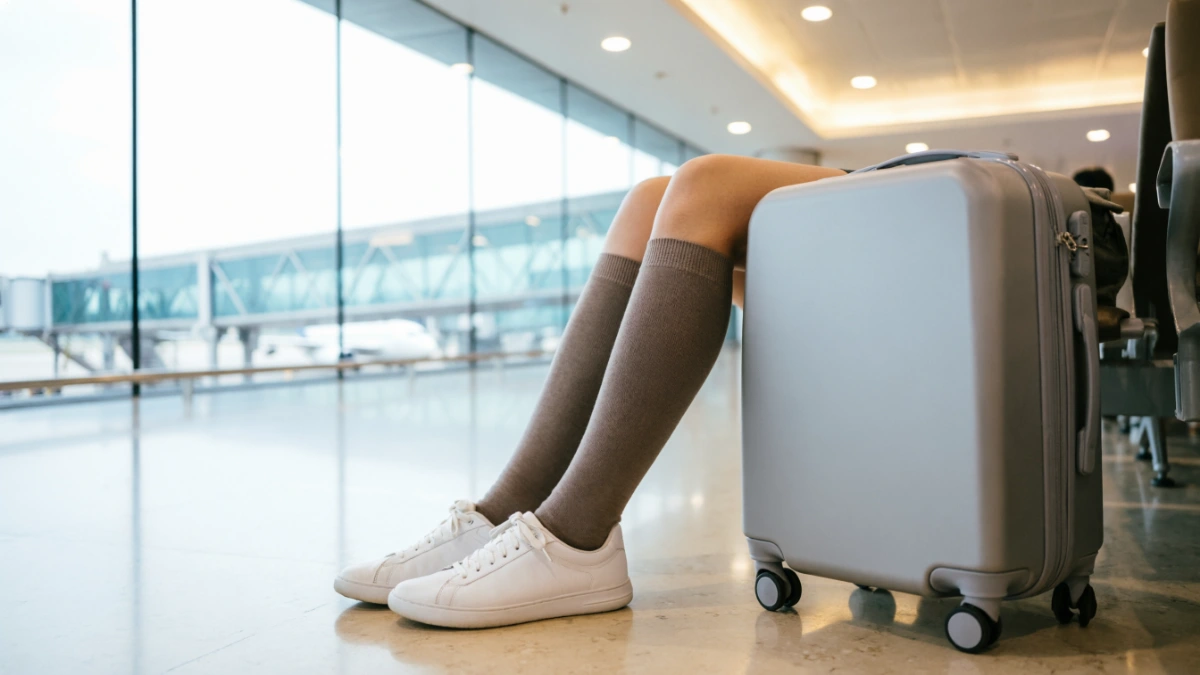
You board a long flight feeling fine. Six hours later, your ankles feel tight, your shoes feel small, and your legs feel heavy. Sitting still for hours slows blood flow in your lower legs, and that is why so many travelers now pack compression socks.
But the choices can feel confusing. Levels, sizes, fabrics, and brands all compete for your attention. Some socks squeeze too hard, while others do almost nothing.
This guide cuts through the noise. You will learn how to choose the best compression socks for air travel, what level works for long flights, and when to put them on. You will also see where to buy them, including options for readers in Pakistan. Along the way, you will get honest drawbacks and simple fixes, so you can land comfortable and ready to explore.
Quick Answer:
The best compression socks for air travel are knee-high, graded 15–20 mmHg, and snug without pinching. Pick a breathable fabric such as cotton, merino, or bamboo blend. Put them on before you board, and take them off after landing. If you have circulation problems, ask your doctor first.
Quick Facts: Compression Socks for Flying
Compression socks are snug socks that press gently on your legs, with the most pressure at the ankle. Most flyers choose mild 15–20 mmHg socks. This table gives you the key points at a glance.
| Topic | Quick Answer |
| Best level for most flyers | 15–20 mmHg |
| Firmer option | 20–30 mmHg (ask a doctor) |
| Best length | Knee-high |
| Best fabrics | Cotton blend, merino, bamboo blend |
| When to wear | Before boarding |
| Flights that matter most | About 4 hours or longer |
| Who should check first | People with heart, nerve, or artery issues |
The unit “mmHg” simply measures pressure. A higher number means a tighter squeeze. Always verify product details on the seller’s page, since brands label things differently.
What Level of Compression Socks for Long Flights
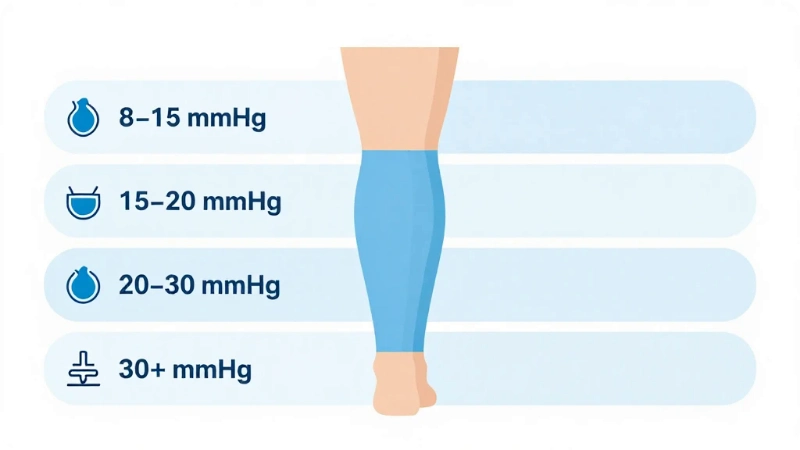
For most long flights, 15–20 mmHg is the usual choice. This mild level boosts comfort without feeling tight. Some travelers with higher risk use 20–30 mmHg, but a doctor should guide that choice, especially for medical needs.
Think of it like a gentle hug, not a squeeze. If socks hurt, leave marks, or tingle, they are too tight.
Here is a simple way to choose:
- 8–15 mmHg: Very light. Good for short trips and mild swelling.
- 15–20 mmHg: Best all-around for long-haul flights.
- 20–30 mmHg: Firm. Often chosen for medical reasons.
- 30+ mmHg: Usually prescribed. Do not choose this on your own.
The CDC advises travelers on trips of four hours or more to move often, stretch their calves, and consider graded compression stockings. Therefore, socks work best with movement, not instead of it.
When to Put On Compression Socks for Flying
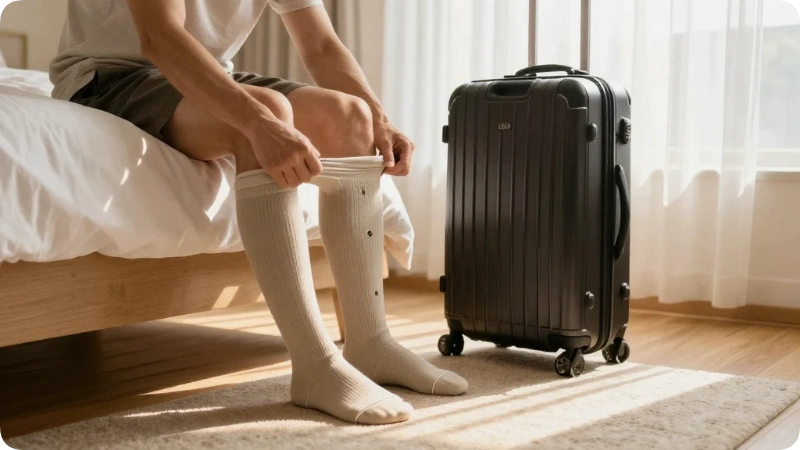
Put compression socks on before you leave for the airport, ideally in the morning. Your legs swell less early in the day, so socks go on easier and work better. Wear them for the whole flight, then remove them once you settle in.
Many travelers wait until they are in their seat. Unfortunately, that is a mistake, because swelling may already have started. Plus, struggling with tight socks in a cramped row is no fun.
Try this routine:
- Put socks on at home or the hotel, before swelling starts.
- Smooth out wrinkles, since folds can dig into skin.
- Walk the aisle and flex your ankles every hour or so.
- Take the socks off at the end of the day.
On a Lahore-to-London style flight with a layover, keep them on the entire trip. Just check your skin for red marks when you change seats.
Best Compression Socks for Air Travel Reddit
On travel and health forums, flyers often praise socks that are soft, easy to put on, and not too tight. Common advice includes sizing by calf measurement, trying socks before a trip, and skipping novelty pairs with no listed mmHg rating.
Forum threads can be helpful, but they are opinions, not medical advice. Brands and quality change, so read recent reviews before buying.
Here are themes that come up again and again:
- Fit matters more than brand. A good size beats a fancy label.
- Test them first. Wear a pair for a full day at home.
- Pack a spare. Wet or sweaty socks feel awful on a long trip.
- Watch the toe seam. A bulky seam can bother you for hours.
A smart move is to compare several recent reviews and look for details such as calf size, flight length, and comfort after eight hours. Be careful with reviews that sound like ads.
TRTL Compression Socks
TRTL is mostly known for travel pillows. If you see TRTL compression socks, treat them like any other pair: check the listed mmHg level, size chart, fabric blend, and return policy before you buy. A trusted name does not replace a proper fit.
Because product lines change, verify what TRTL currently sells on its official website or a major retailer. Do not assume a travel brand makes medical-grade socks.
Use this quick checklist for any brand:
- Does the listing show a clear mmHg range?
- Is there a size chart based on calf and ankle measurements?
- Is the fabric breathable?
- Can you return them if they do not fit?
If the answer to any question is “no,” keep shopping.
Best Compression Socks for Flying Women
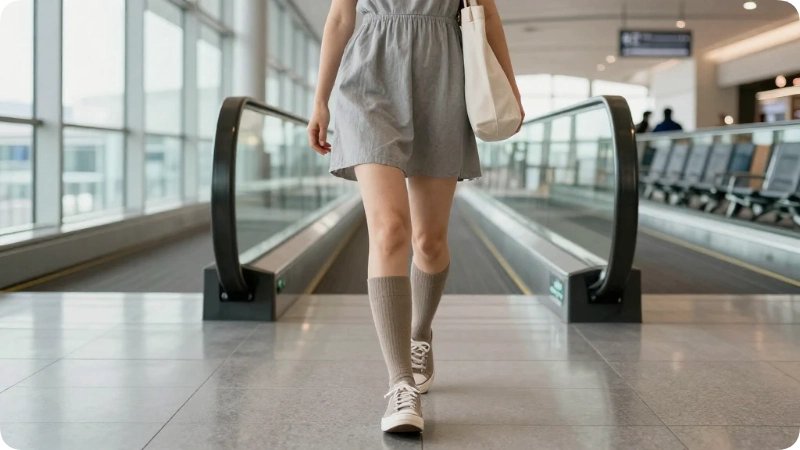
Women should look for 15–20 mmHg socks sized by calf and ankle measurements, with a soft top band that does not dig in. Many brands offer women’s fits, which can feel better on narrower legs. Pregnant travelers should talk to a doctor before flying.
Fit problems are the top complaint. Socks that are too big slide down, while socks that are too small cut off comfort. So measure your ankle and widest calf in the morning, then match the brand’s size chart.
Helpful features include:
- Cushioned soles for airport walking
- Moisture-wicking blends for warm cabins
- Stylish colors that work with sneakers or flats
- Wide calf options if standard sizes feel tight
If you have varicose veins, swelling, or past blood clots, a doctor can recommend the right strength.
Bamboo Compression Socks for Travel
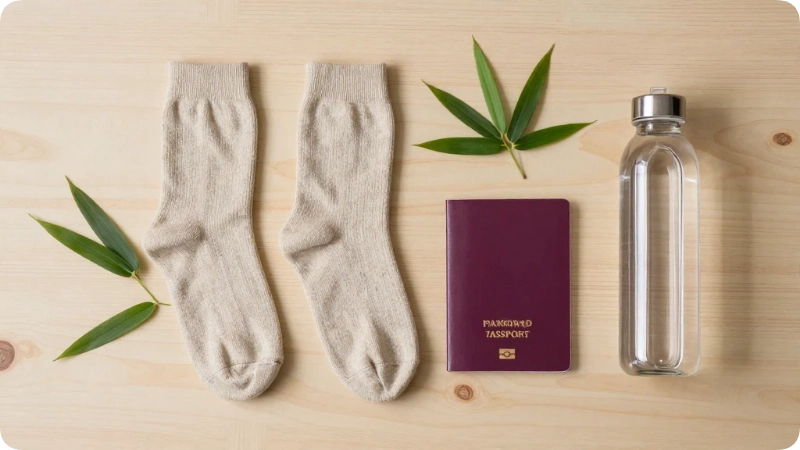
Bamboo compression socks feel soft, breathe well, and may wick moisture, which suits warm cabins. However, bamboo fabric is usually blended with nylon and spandex, so check the mmHg rating. Softness does not guarantee proper compression.
The main perk is comfort. Many people with sensitive skin find bamboo blends gentler than rough synthetics. They can also feel cooler during long flights.
On the other hand, there are drawbacks:
- Some bamboo socks lose their squeeze faster after many washes.
- Prices vary, and “bamboo” on a label may mean a small fabric share.
- Thick pairs can feel hot in tight shoes.
Read the fabric tag. Then wash them gently and air dry when possible, since high heat can wear down elastic.
Best Compression Socks for Air Travel in Pakistan
For flights from Pakistan, choose breathable, knee-high 15–20 mmHg socks, since airports and cabins can be warm. Look for cotton, merino, or bamboo blends. Buy from a pharmacy, medical supply shop, or trusted online seller, and confirm sizes before long trips.
Many Pakistani travelers fly long routes from Lahore, Karachi, and Islamabad to the UK, North America, and the Gulf region. Those long journeys, plus layovers, make comfort gear worthwhile.
Tips for readers in Pakistan:
- Check mmHg ratings and return rules, since labels can vary.
- Ask a pharmacist or doctor if you have diabetes, vein problems, or heart conditions.
- Pack lightweight pairs for summer departures.
- Avoid tight socks if you notice numbness or color changes.
Stock and prices change, so always verify with the seller.
Where to Buy Compression Socks for Flying

You can buy compression socks at pharmacies, medical supply stores, sporting goods shops, and big online retailers. Pharmacies often help with sizing, while online stores offer more choices. Whichever you choose, check mmHg levels and return policies.
In the USA, options include local pharmacies, chains like CVS and Walgreens, and online marketplaces. Airport shops may carry a pair, although the choice is limited and prices can run high.
Quick comparison:
| Where | Pros | Cons |
| Pharmacy | Staff can help with fit | Fewer styles |
| Online store | Huge choice, reviews | Cannot try on |
| Sports store | Comfortable designs | Levels may differ |
| Airport shop | Last-minute fix | Costly, small selection |
Buy at least one week before your trip. That way, you have time to test the fit and exchange if needed.
Who Should Skip Compression Socks
People with severe peripheral artery disease, serious nerve damage, skin infections, or certain heart conditions should not use compression socks without medical advice. Tight socks can cause harm in some cases, so speak to a doctor if you are unsure.
Also stop wearing them if you feel:
- Numbness or tingling
- Strong pain
- Skin that turns pale or blue
- Deep cuts or sores under the fabric
Sudden calf pain, swelling in one leg, chest pain, or trouble breathing needs urgent medical care. Do not wait for landing.
Common Mistakes and Easy Fixes
The biggest mistakes are buying the wrong size, wearing them too late, and expecting socks to do everything. Fix these by measuring your legs, dressing early, and moving often during the flight.
- Wrong size. Measure in the morning and follow the chart.
- Rolled-down tops. Choose socks with a soft band, and pull them up smoothly.
- Skipping movement. Walk when the seat belt sign is off, and do calf raises while seated.
Also avoid trying a brand-new pair for the first time on a 14-hour flight. A short test at home can save you real discomfort.
Underrated Alternatives and Helpful Extras
Compression socks are not the only tool. Walking, drinking water, and choosing an aisle seat all help with comfort. For some travelers, compression sleeves or loose, supportive socks are also useful, though they do not replace medical advice.
Three underrated ideas:
- Aisle seat: Makes walking easier.
- Ankle circles and calf raises: Simple and free.
- Water over alcohol: Cabin air is dry.
Travel insurance may also matter on long trips. Review what your policy covers, and verify details with your insurer or airline.
FAQs
Are compression socks worth it for flying?
Yes, for many travelers on flights of about four hours or longer. They can ease swelling and leg heaviness. They work best along with walking and stretching. People with health conditions should check with a doctor before using them.
How long can you wear compression socks on a plane?
Most people wear them for the full flight and the trip to their destination. Remove them at night or when you rest. If you feel pain, numbness, or color changes, take them off right away.
Can compression socks be worn with sandals or sneakers?
Compression socks fit best inside closed shoes like sneakers. Sandals can show seams and cause rubbing. If you do wear sandals, pick thin socks, and check for pressure spots around your toes.
Do compression socks help with jet lag?
No. Compression socks target leg comfort, not your body clock. For jet lag, try adjusting your sleep schedule, getting sunlight at your destination, and drinking water.
How tight should compression socks feel?
They should feel snug and supportive, especially at the ankle, but never painful. You should be able to wiggle your toes. Marks that stay for a long time mean the size may be wrong.
Can kids wear compression socks on flights?
Usually not unless a doctor recommends them. Most compression socks are made for adults. Kids can stay comfortable by walking, stretching, and drinking water.
How do you wash compression socks?
Wash them gently in cool or warm water, and air dry them. Skip fabric softener and high heat, since both can weaken the elastic. Rotate two or three pairs to extend their life.
Conclusion
Compression socks can make long flights feel much better, but only if you choose well. Remember these three takeaways:
- Choose 15–20 mmHg knee-high socks for most long flights.
- Put them on before boarding, and test the fit ahead of time.
- Move often, and ask a doctor if you have health concerns.
Good gear plus smart habits will help you step off the plane ready for the adventure ahead. Before your next booking, measure your legs, shop early, and pack your favorite pair in your carry-on. Your future self will thank you.
Note: Prices, brands, and product details change. Please verify details with official sellers, airlines, and your healthcare provider.

Stephen Fry brings an insatiable curiosity for history, language, and global heritage to the Travelmarse team. Having spent decades traveling the globe to study regional storytelling and ancient civilizations, he excels at uncovering the hidden narratives of modern destinations. Stephen anchors the cultural vertical on Travelmarse, where he writes deep-dive guides on architectural history, museum crawl strategies, and local customs. His vivid, engaging writing helps travelers look past the surface and truly understand the heritage of the places they visit.