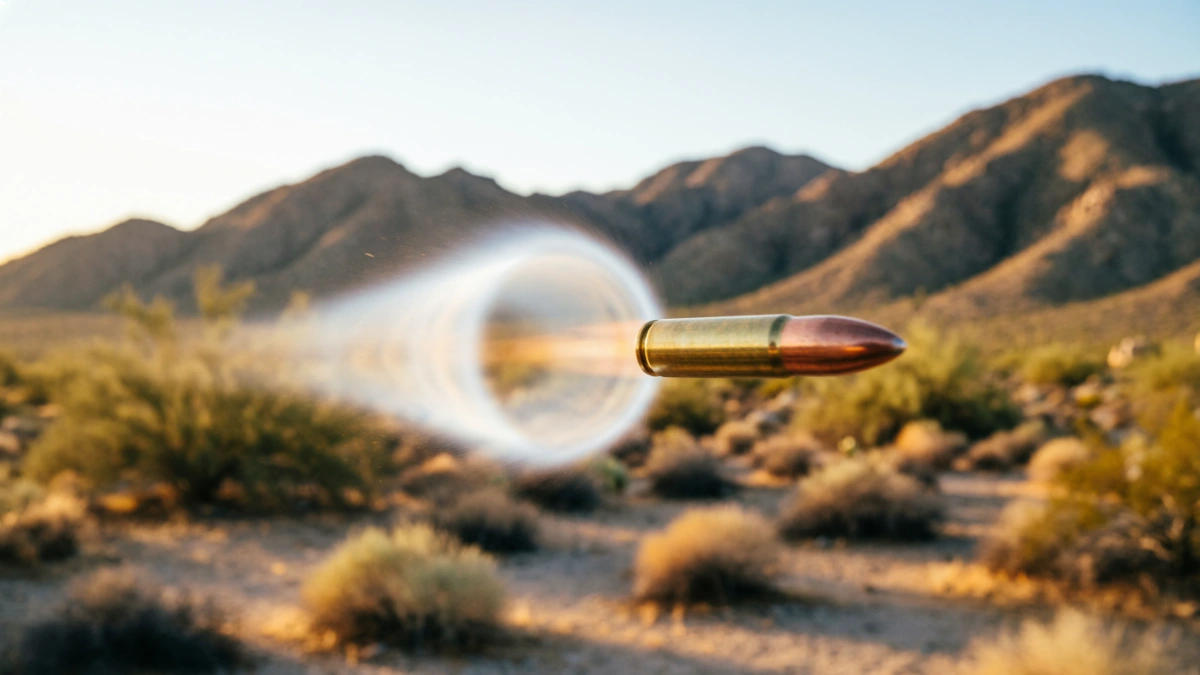
You hear a sharp crack at an outdoor range in Texas or Arizona. A friend says the bullet already passed you before the bang reached your ears. Is that true? Many people wonder if bullets really travel faster than sound, and the answer surprises them.
Questions like this pop up on road trips, at shooting ranges, in museums, and even in airport lines. Travelers want clear facts, not confusing physics. Some also need to know how speed ties into safety and travel rules.
This guide gives plain answers in simple words. You will learn how fast pistol and sniper bullets fly, what a “sonic boom” really is, and how bullets compare with jets and light. A quick speed table, a travel-rules section, and a full FAQ round it out. Let’s start with the big answer.
Featured Snippet:
Yes, most bullets travel faster than sound. Sound moves about 767 mph (1,235 km/h) at sea level. A typical 9mm pistol bullet flies at roughly 800 mph, and a rifle bullet can top 2,000 mph. Slow subsonic loads, like some .45 ACP rounds, stay below that speed.
Do Bullets Travel Faster Than Sound?
Most bullets do travel faster than sound. Sound moves about 767 mph (1,235 km/h) at sea level on a 68°F day. Rifle bullets, many pistol bullets, and even some small .22 rounds beat that speed. Only slow, subsonic loads, such as many .45 ACP rounds, stay below it.
Speed depends on the bullet type and the gun. A short-barrel pistol sends a bullet out slower than a long rifle does. Because of this, “faster than sound” is common but not universal.
Key takeaway: Supersonic means faster than sound. Subsonic means slower than sound. Both kinds exist in everyday ammunition.
Quick Speed Comparison Table
This table shows rough speeds so you can compare everything at a glance. Real numbers change with the load, barrel length, and weather. Treat these as typical figures, not exact promises.
| Object | Speed (mph) | Speed (km/h) |
| Speed of sound (68°F, sea level) | 767 | 1,235 |
| .45 ACP pistol (~900 fps) | ~614 | ~988 |
| 9mm pistol (~1,200 fps) | ~818 | ~1,317 |
| .357 Magnum (~1,400 fps) | ~955 | ~1,536 |
| 5.56 rifle (~3,000 fps) | ~2,045 | ~3,292 |
| AWM sniper round (~2,900 fps) | ~1,977 | ~3,182 |
| Airliner cruising | ~560 | ~900 |
| Light | ~670,616,629 | ~1,079,252,849 |
Always check the maker’s data sheet for exact speeds on a given load.
Do Pistol Bullets Travel Faster Than Sound?
Many pistol bullets do travel faster than sound, but not all of them. A standard 9mm bullet leaves the barrel at roughly 1,100 to 1,300 feet per second, which is about 750 to 890 mph. That beats the 1,125 feet per second speed of sound. Many .45 ACP loads stay slower.
Here are common pistol speeds:
- 9mm: about 1,100–1,300 fps, usually supersonic
- .357 Magnum: about 1,200–1,500 fps, supersonic
- .22 LR: about 1,000–1,300 fps, depending on the load
- .45 ACP: about 830–950 fps, often subsonic
Why do makers build subsonic rounds on purpose? Slower bullets avoid the sharp crack and are quieter with a suppressor. This matters most for hunters and range users who want less noise.
Do Bullets Break the Sound Barrier?
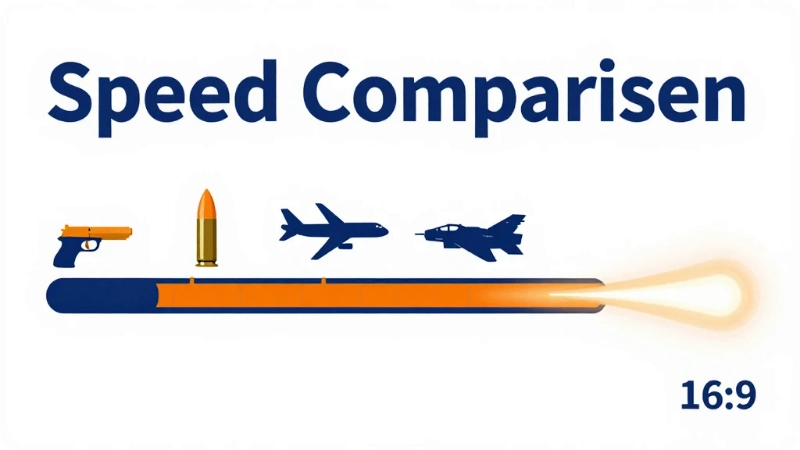
Yes, a bullet breaks the sound barrier the moment it passes Mach 1, which is the speed of sound. Any supersonic bullet does this as it leaves the barrel. The “barrier” is not a wall. It is simply the speed at which a moving object outruns its own sound waves.
People once feared this barrier was impossible to cross. On October 14, 1947, test pilot Chuck Yeager flew the Bell X-1 past Mach 1 over the Mojave Desert in California. Bullets, however, crossed the line centuries earlier. Even a bullwhip’s tip breaks the barrier, and that famous “crack” is a tiny sonic boom.
Speed also fades. A bullet slows down because of air drag, so it may start supersonic and drop below Mach 1 farther downrange.
Do Bullets Make a Sonic Boom?

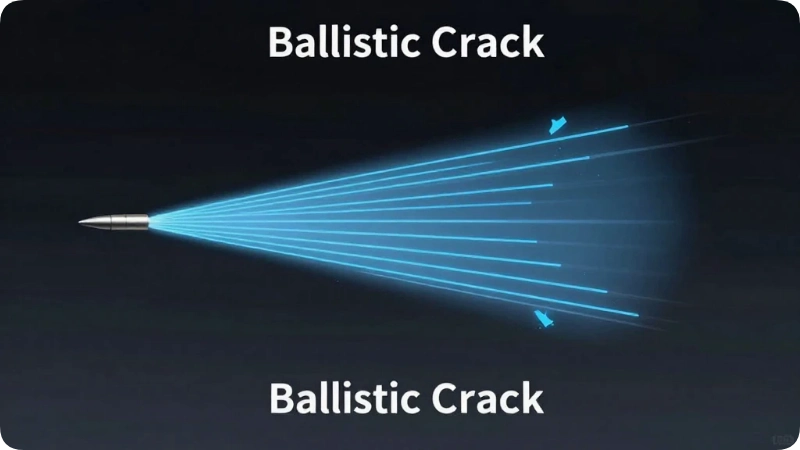
Supersonic bullets make a small shockwave, but not the huge boom you hear from a jet. This sharp snap is called a ballistic crack. It happens along the bullet’s whole path, so a person near the flight line hears a crack before or with the muzzle blast.
A jet is much bigger, so its shockwave carries far more energy. A bullet’s crack is tiny by comparison, though it still sounds loud up close. A suppressor can quiet the muzzle blast, but it cannot remove the crack from a supersonic bullet.
Travelers at a range should always wear proper hearing protection. Sound from even small calibers can hurt ears over time.
How Fast Does a Sniper Bullet Travel in MPH?
A typical sniper bullet travels about 1,800 to 2,050 mph when it leaves the barrel. That equals roughly 2,700 to 3,000 feet per second, or about Mach 2.4 to 2.7. Speed depends on the cartridge, the barrel length, and the weight of the bullet.
For example, rifles chambered in .300 Winchester Magnum and .338 Lapua Magnum are known for high muzzle speeds. These rounds can stay supersonic over very long distances, often well past a mile for some loads. Eventually, however, drag slows every bullet.
Always read the official ammunition data for exact numbers. Online charts often mix test conditions, so figures can differ by source.
AWM Sniper Bullet Speed in KM/H
The AWM sniper rifle fires bullets at roughly 2,900 to 3,300 km/h (about 1,800 to 2,050 mph). The AWM, short for Accuracy International Arctic Warfare Magnum, uses magnum rounds such as .300 Winchester Magnum and .338 Lapua Magnum. Those loads fly well above Mach 2.
Here is a simple conversion trick. Multiply feet per second by 1.097 to get km/h. So a 2,900 fps bullet moves at about 3,182 km/h.
Keep in mind that this speed applies at the muzzle. Farther downrange, the bullet slows down gradually.
Is a Bullet Faster Than a Jet?
A bullet leaves the barrel faster than most jets fly, but it slows quickly. Commercial airliners cruise around 560 mph, so even a 9mm bullet beats them for a moment. Fighter jets like the F-22 pass Mach 2, which is close to a rifle bullet’s starting speed.
The real difference is stamina. A jet holds its speed for hours. A bullet loses speed in seconds as air pushes against it.
So who wins a race? Over a short sprint, a rifle bullet wins. Over any long trip, the jet wins easily. 🛩️
Do Bullets Travel Faster Than Light?
No, bullets do not travel faster than light, and nothing with mass can. Light moves about 186,282 miles every second. A fast sniper bullet moves about half a mile per second. That makes light more than 300,000 times faster.
Here is a simple way to picture it. Light could circle Earth roughly seven times in one second. A bullet would need many hours to go that far, if it could even fly that long.
According to Einstein’s theory of relativity, light sets the universe’s top speed. Science agencies such as NASA explain this limit in simple terms on their education pages.
Do Bullets Travel at the Speed of Light?
No, bullets do not travel at the speed of light. A bullet moves at about 0.0003% of light’s speed. Even the fastest rifle round feels like a crawl next to a beam from a flashlight.
Why does this question come up so often? Movies show bullets as streaks, and a bullet does look instant to the human eye. Yet a camera that shoots thousands of frames per second can capture one in flight. In those clips, bullets look slow and bendy as they move.
Bullets are fast, but they are nowhere near light speed.
Does Weather Change How Fast Sound and Bullets Travel?
Yes, temperature changes the speed of sound, and it affects bullets a little too. Sound moves faster in warm air and slower in cold air. At 32°F, sound travels about 1,086 feet per second. At 68°F, it travels about 1,125 feet per second.
This means a bullet near Mach 1 may be supersonic on a hot day and subsonic on a cold one. Altitude matters as well, because thin mountain air changes drag and sound speed.
For travelers visiting ranges in Nevada, Colorado, or Florida, these swings can feel big. Hot desert air and cool mountain air really do change the numbers.
Traveling With Ammunition: What the TSA Says

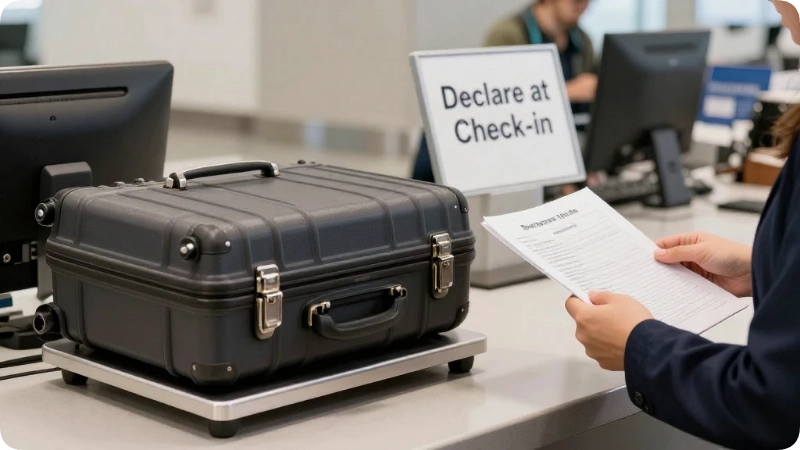
Ammunition must go in checked baggage, never in a carry-on. The TSA says firearms must travel unloaded, in a locked, hard-sided case, and must be declared at the airline counter. Ammunition needs sturdy packaging, and airlines may set their own limits.
Rules can change, so always verify before you fly. Check tsa.gov and your airline’s policy page, and look up state laws at your arrival airport. Local rules in states like New York, California, and Illinois can differ from federal guidance.
Plan extra time at check-in. Ask an agent if you feel unsure, and keep your paperwork handy.
Visiting a Shooting Range: Safety Tips for Travelers
First-time visitors should choose a licensed range, listen to the range officer, and wear eye and ear protection. Good ranges give a safety briefing before any shooting starts. They also explain rules on lanes, handling, and cease-fire commands.
Here are a few practical tips:
- Book ahead, especially on weekends and holidays.
- Bring photo ID, since many ranges require it.
- Wear closed-toe shoes and a snug shirt, because hot brass can bounce.
- Ask about age rules if you travel with family.
- Confirm prices and hours on the official website.
Ranges can be loud, so earplugs plus earmuffs give the best protection. Families with kids should check the age policy first.
Common Mistakes Travelers and Curious Readers Make
Three myths cause most confusion. Each has a simple fix.
Mistake 1: “All bullets are supersonic.”
Fix: Many subsonic rounds exist, such as common .45 ACP loads.
Mistake 2: “A bullet hits before you hear the shot.”
Fix: For a supersonic bullet, this is often true at long range. For a subsonic bullet, the sound arrives first.
Mistake 3: “Bullets move at light speed.”
Fix: Light is hundreds of thousands of times faster.
Another common slip is trusting one speed number. Always check the maker’s data for your exact ammunition.
Underrated Alternatives: Learn About Speed at U.S. Museums
If this topic fascinates you, a museum visit is a safe and fun way to learn more. Three underrated stops teach the story of Mach 1.
- Smithsonian National Air and Space Museum (Washington, D.C.): Displays the Bell X-1 that Yeager flew.
- National Museum of the U.S. Air Force (Dayton, Ohio): A huge free collection of fast aircraft.
- Edwards Air Force Base area (California): Home to a flight test history that shaped supersonic flight.
Hours, tickets, and exhibits change, so verify everything on the official sites before you go. Weekday mornings are usually calmer, and the best photos often come from the main galleries just after opening.
FAQs
How fast is the speed of sound in mph?
The speed of sound is about 767 mph (1,235 km/h) at sea level when the air is 68°F. It changes with temperature and altitude. Warm air makes it faster, while cold air slows it down. Scientists call this speed Mach 1.
What does subsonic ammunition mean?
Subsonic ammunition fires bullets slower than the speed of sound, which is about 1,125 feet per second. Because these bullets avoid the sharp crack of a shockwave, they are quieter, especially with a suppressor. Many .45 ACP loads and special 9mm loads are subsonic.
Can you hear a bullet before it hits you?
It depends on the bullet’s speed. A supersonic bullet outruns its own sound, so the shot’s bang arrives after the bullet. A subsonic bullet arrives after its sound. That is why people near a supersonic shot hear a crack first.
How far can a sniper bullet stay supersonic?
Many high-power sniper loads stay supersonic for a mile or more, though it varies by cartridge, bullet design, and weather. Heavier, streamlined bullets hold speed longer. Thin, hot air also helps. Check the maker’s ballistic charts for exact figures.
What is the fastest bullet speed ever recorded?
Specialty rounds and lab tests can go far beyond normal ammunition, but speeds differ by source and test method. Common hunting and military rifle rounds usually fall between 2,500 and 4,000 fps. Check trusted ballistics sources before you cite a record number.
Is a bullet faster than a speeding train or race car?
Yes, by a lot. A high-speed train in the U.S. or abroad moves at a few hundred mph at most. Even a slow pistol bullet outruns it. Race cars top out near 250 to 300 mph, far below a bullet’s starting speed.
Can you fly with ammunition in the USA?
Yes, but only in checked baggage and with proper packaging. Firearms must be declared, unloaded, and locked in a hard-sided case. Rules vary by airline and state, so confirm everything on tsa.gov and with your airline before you travel.
Conclusion
Here are the three big takeaways:
- Most bullets are faster than sound. Only subsonic loads stay below about 767 mph.
- Sniper bullets reach around Mach 2.4–2.7, but they slow down fast.
- No bullet comes close to light speed. Light is hundreds of thousands of times faster.
Understanding bullet speed makes the world of ranges, museums, and flight history easier to enjoy. It also helps you plan smarter and travel with confidence. Before any trip, double-check official rules from the TSA and your airline.
Curious to see supersonic history up close? Add a museum stop to your next U.S. road trip, and let real speed stories fuel your travels. ✈️

Maya Lin inspires travelers to explore the globe with absolute confidence and independence. Armed with a background in digital media and a decade of independent solo travel experience, she knows exactly how to navigate unfamiliar cities smoothly and safely. For Travelmarse, Maya curates the solo travel and hidden-gem verticals. She reviews charming boutique hotels, designs smart neighborhood walking routes, and shares practical language-learning hacks, giving readers the exact tools they need to travel solo without the stress.