
ER RN travel jobs are short term emergency room nursing contracts, usually 8 13 weeks, that let registered nurses work in hospitals across the country while earning competitive pay, housing stipends, and travel benefits.
These roles suit experienced ER nurses who want flexibility, higher earning potential, and the chance to explore new cities between assignments.
What Are ER RN Travel Jobs?

ER RN travel jobs place emergency room nurses into hospitals facing short term staffing gaps, usually through a staffing agency rather than direct hire.
Contracts typically run 13 weeks, though 8 week and 26 week options exist depending on hospital need.
Pay packages often combine a taxable hourly wage with non taxed stipends for housing, meals, and travel, which is why many ER RNs earn more on assignment than in permanent staff roles.
Who Should Consider ER RN Travel Nursing

This path fits ER nurses with at least one to two years of recent, hands on emergency department experience, since most hospitals want someone who can hit the ground running with minimal orientation. Nurses who enjoy variety, adapt quickly to new electronic health record systems, and don’t mind moving every few months tend to thrive. Those who value deep roots, predictable routines, or live in single income households with school age kids may find the lifestyle harder to sustain long term.
Pros and Cons at a Glance
| Pros | Cons |
| Higher pay through stipends and bonuses | Income can fluctuate between contracts |
| See new cities and regions for free | Frequent moving and packing |
| Build a broad, resume boosting skill set | Licensing paperwork across states |
| Flexible scheduling between assignments | Less job security than permanent roles |
| Housing often covered or stipended | Harder to maintain local relationships |
How to Get Started: A Quick Reference Table
| Step | What’s Involved | Typical Timeline |
| 1. Gain experience | 1 2 years recent ER RN experience | Before applying |
| 2. Choose a state license path | Nursing Compact License or single state | 2 8 weeks |
| 3. Pick a staffing agency | Compare pay packages and support | 1 2 weeks |
| 4. Submit credentials | Resume, certifications, references | 1 2 weeks |
| 5. Interview with hospital | Phone or video call with unit manager | Days |
| 6. Start assignment | Orientation, then floor work | Typically within 2 4 weeks of offer |
Pay rates, bonus amounts, and stipend policies change frequently always confirm current numbers directly with staffing agencies or hospital HR before signing a contract.
Licensing: The Nursing Compact and State Requirements
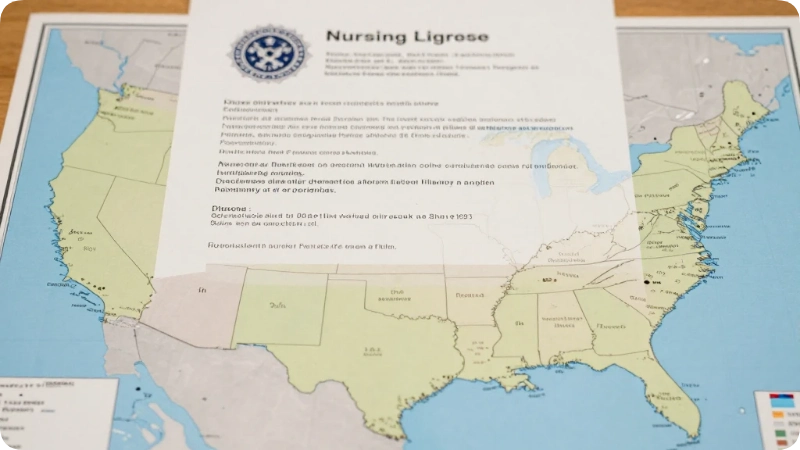
A Registered Nurse license recognized through the Nursing Licensure Compact (NLC) allows an RN to work in any of the more than 40 participating compact states without applying for a separate license in each one. Nurses based in non compact states like California, New York, or Oregon must apply individually for each state’s board of nursing, which can add weeks to the process. Checking current compact status directly with the National Council of State Boards of Nursing (NCSBN) before committing to an assignment is essential, since participating states occasionally change.
Certifications That Open More ER Doors
Most ER travel contracts require Basic Life Support (BLS), Advanced Cardiac Life Support (ACLS), and Pediatric Advanced Life Support (PALS) as baseline certifications. Trauma Nursing Core Course (TNCC) certification and Certified Emergency Nurse (CEN) credentials make a candidate noticeably more competitive for Level I and Level II trauma centers. Keeping certification cards current and digitized avoids last minute scrambles when an agency needs proof within 24 48 hours of an offer.
Choosing a Staffing Agency: What Actually Matters

The right agency does more than find assignments; it negotiates pay packages, handles housing logistics, and supports nurses through credentialing headaches. Look for agencies with transparent pay breakdowns, a dedicated recruiter (not a rotating call center), and verifiable reviews from current travel nurses on independent forums. Asking how an agency handles canceled contracts or low census situations before signing reveals a lot about how they’ll treat nurses when things don’t go smoothly.
Questions to Ask Before Signing With an Agency
- How is the pay package broken down between taxable wage and stipends?
- What happens if the hospital cancels the contract early?
- Is housing provided, or is it a stipend I arrange myself?
- Who handles license and certification renewals during the contract?
Understanding ER Travel Nurse Pay Packages
Pay packages combine a base hourly rate with tax free stipends for housing and meals, calculated using GSA per diem rates tied to the assignment’s location. Nurses taking assignments in higher cost of living cities, like those in California or the Northeast, typically see larger stipends to offset rent and groceries. Total weekly pay can vary significantly by specialty demand, location, shift type, and current hospital staffing crises, so comparing multiple agency offers for the same assignment is one of the smartest moves a new travel nurse can make.
Where ER RN Travel Jobs Are in High Demand

Emergency departments in fast growing Sun Belt states like Texas, Florida, and Arizona regularly post travel openings due to rapid population growth outpacing local staffing. Rural hospitals in states such as Montana, Wyoming, and parts of the Midwest also recruit travel ER nurses heavily, since smaller communities struggle to maintain full time emergency staff. Coastal and tourist heavy regions, including parts of Hawaii and Florida, see seasonal spikes in ER demand tied to visitor volume and weather events like hurricane season.
Best Time of Year to Start a Travel Contract
Winter months, especially January through March, tend to bring a surge in ER travel openings tied to flu season, respiratory illness, and holiday related injuries. Summer months bring demand spikes in tourist destinations and Sun Belt states as population swells with seasonal residents and visitors. Nurses with flexible schedules often find more negotiating leverage by applying just before these seasonal surges rather than during peak crunch, when hospitals are desperate and agencies have less room to negotiate on a nurse’s behalf.
Housing Options While on Assignment
Many agencies offer a choice between agency arranged housing and a monthly stipend the nurse manages independently. Taking the stipend often nets more money for nurses willing to find roommates, short term rentals, or extended stay hotels on sites built for travel professionals. Furnished, short term housing geared toward traveling healthcare workers has become increasingly available in major metro areas, making the independent stipend route more practical than it once was.
Packing and Moving Tips Between Assignments
Packing light and modular makes moving every 13 weeks far less exhausting than packing for a permanent move. Many experienced travel nurses keep a core “go bag” of scrubs, compression socks, and a reliable stethoscope packed separately from seasonal clothing that rotates based on the next assignment’s climate. Shipping a small box of non essentials ahead to the next location, rather than carrying everything in one trip, saves both time and vehicle space.
Five Insider Packing and Lifestyle Tips
- Pack a portable medical bag with backup ID badges, certification copies, and a phone charger for first day orientation chaos.
- Research the hospital’s EHR system in advance when possible; familiarity with Epic or Cerner shortens the learning curve dramatically.
- Join local Facebook or Reddit groups for traveling nurses in the new city to find roommates and avoid housing scams.
- Set up mail forwarding through USPS before each move to avoid missing renewal notices for licenses or certifications.
- Build a simple budget spreadsheet tracking stipends separately from taxable wages, since this matters at tax time.
Tax Considerations for Travel Nurses
Tax free stipends are only legitimate when a nurse maintains a genuine “tax home,” meaning a permanent residence they return to and pay for even while on assignment. Nurses without a verifiable tax home risk having stipends reclassified as taxable income during an audit, which can mean owing significant back taxes. Consulting a tax professional who specifically works with travel healthcare workers, rather than a general preparer, is one of the most valuable investments a new travel ER nurse can make.
Common Mistakes New ER Travel Nurses Make
Mistake 1: Accepting the first offer without comparing agencies. The same hospital assignment can be staffed through several agencies at different pay rates and always get a second quote.
Mistake 2: Underestimating the orientation gap. Many ER units offer minimal orientation, so nurses who don’t ask detailed questions about unit flow and charting beforehand often feel blindsided on day one.
Mistake 3: Ignoring the cancellation policy. Low census cancellations can leave a nurse with a partial paycheck and sudden free time, so understanding guaranteed hours upfront protects against income surprises.
Safety and Workplace Considerations
Emergency departments rank among the higher risk hospital units for workplace violence, so confirming a facility’s security staffing and de escalation training policies before accepting an assignment is worth the extra question. The Occupational Safety and Health Administration (OSHA) publishes guidelines on healthcare workplace violence prevention that can help nurses evaluate If a facility takes safety seriously. Reading recent online reviews from past travelers at the same facility often reveals safety culture details that recruiters won’t volunteer.
Alternatives to Full Time ER Travel Nursing
PRN (per diem) local shifts offer flexibility without relocating, appealing to nurses who want variety without the moving logistics of true travel contracts. Local travel contracts, sometimes called “local travelers,” let a nurse work a 13 week contract rate within commuting distance of home, often without housing stipends but with similar hourly pay boosts. Crisis or rapid response contracts pay a premium for very short assignments, typically two to four weeks, ideal for nurses testing the travel lifestyle before committing to a full quarter away from home.
Is ER Travel Nursing Worth It?
For nurses craving variety, higher pay, and the chance to build a versatile clinical resume, ER travel nursing is often genuinely worth the adjustment period. The lifestyle is less worth it for those with significant local obligations, like co parenting custody schedules or aging family members needing regular in person care. Most travel nurses report the first assignment carries the steepest learning curve, while later contracts feel far smoother once licensing, packing, and agency relationships are established.
What’s Overrated and What’s Underrated
The signing bonus is often the most overrated part of an offer, since a slightly lower bonus paired with a stronger weekly stipend usually nets more total money over a 13 week contract. Agency support during a contract, not just at the signing stage, is consistently underrated recruiters who answer calls during a tough shift week matter far more than flashy marketing. Smaller community hospitals are also underrated assignments, often offering gentler patient ratios and warmer staff cultures than high volume trauma centers.
Sample 13 Week Assignment Timeline
| Week | Focus |
| Week 1 | Orientation, EHR training, unit shadowing |
| Weeks 2 4 | Building rapport with charge nurses, settling into housing |
| Weeks 5 10 | Full independent shifts, exploring the local area off shift |
| Weeks 11 12 | Deciding on contract extension or next assignment search |
| Week 13 | Final shifts, paperwork close out, transition planning |
FAQs
What qualifications do I need for ER RN travel jobs?
Most hospitals require an active RN license, BLS, ACLS, and PALS certification, plus at least one to two years of recent emergency department experience. TNCC and CEN certifications improve competitiveness for trauma heavy facilities.
How much do ER travel nurses typically earn?
Pay varies widely by location, demand, and shift type, combining a taxable hourly wage with tax free stipends. Rates change often, so confirming current numbers with multiple agencies before signing is the most reliable approach.
Do I need a compact nursing license?
A compact license simplifies working across many states without separate applications, but it isn’t required everywhere. Non compact states still require individual licensing applications, which can extend timelines by several weeks.
How long are typical ER travel contracts?
Most contracts run 13 weeks, though 8 week and 26 week options exist. Crisis or rapid response contracts can run as short as two to four weeks during acute staffing shortages.
Is housing included with ER travel nursing jobs?
Many agencies offer a choice between arranged housing and a monthly stipend managed independently. Choosing the stipend often allows more flexibility and sometimes more savings for budget conscious nurses.
Can new ER nurses become travel nurses right away?
Most hospitals prefer at least one to two years of direct emergency department experience before considering a travel candidate. Building this foundation first leads to smoother, less stressful first assignments.
What happens if a hospital cancels my contract early?
Cancellation terms vary by contract and agency, often tied to a minimum guaranteed hours clause. Reviewing this section closely before signing protects against unexpected income gaps.
Final Takeaways
ER RN travel jobs offer genuine financial upside, professional growth, and the chance to experience new corners of the country but they reward preparation.
Securing the right certifications, comparing agency pay packages, and understanding tax home rules before the first assignment makes the entire transition smoother.
With the groundwork in place, ER travel nursing becomes less of a leap and more of a well planned next chapter for emergency nurses ready for change.
If you’re an ER RN weighing this path, start by getting licensing and certifications in order, then request quotes from two or three reputable agencies for the same assignment to see how pay packages compare side by side.

Stephen Fry brings an insatiable curiosity for history, language, and global heritage to the Travelmarse team. Having spent decades traveling the globe to study regional storytelling and ancient civilizations, he excels at uncovering the hidden narratives of modern destinations. Stephen anchors the cultural vertical on Travelmarse, where he writes deep-dive guides on architectural history, museum crawl strategies, and local customs. His vivid, engaging writing helps travelers look past the surface and truly understand the heritage of the places they visit.