
Featured Snippet:
The best areas to stay in Porto, Portugal are Ribeira (historic riverfront, best for first-timers), Baixa (central downtown, close to shops and transit), Cedofeita (trendy, artsy, budget-friendly), Foz do Douro (upscale beachfront, quiet), and Vila Nova de Gaia (port wine cellars, river views). Ribeira and Baixa suit most visitors best.
Porto rewards travelers who pick the right base, but with steep cobbled hills, a winding river, and neighborhoods that each feel like a different city, choosing where to sleep can shape your entire trip. Book in the wrong spot and you’ll spend your vacation climbing stairs to catch a bus. Book the right one, and you’ll wake up to church bells, tiled facades, and the smell of fresh bread, all within walking distance of everything worth seeing.
This guide breaks down where to stay in Porto, Portugal, neighborhood by neighborhood, matched to who you’re traveling with, what you want to do, and how much you want to spend. If you’re visiting for the first time, traveling as a couple, bringing kids, or hunting for something unique, you’ll find a clear, honest recommendation below, plus the areas experienced travelers quietly avoid.
Quick Facts Table: Porto Accommodation at a Glance
| Neighborhood | Best For | Vibe | Walkability | Price Level |
| Ribeira | First-timers, sightseeing | Historic, riverside, lively | Excellent (steep) | |
| Baixa (Downtown) | Central base, transit access | Urban, commercial | Excellent (flat-ish) | $$ |
| Cedofeita | Couples, young travelers | Trendy, artsy, local | Good | $ |
| Foz do Douro | Relaxation, luxury | Upscale, beachfront | Moderate | $$$ |
| Vila Nova de Gaia | Wine lovers, views | Scenic, touristy | Good | $$ |
| Boavista | Business, families | Modern, spacious | Moderate (needs transit) | $$ |
| Cais de Gaia | Photo-hunters, romance | Postcard riverfront | Good | $$$ |
Prices and availability change seasonally; always confirm current rates directly with hotels or booking platforms before finalizing plans.
What Is the Best Area to Stay in Porto?

The best area to stay in Porto is Ribeira, the UNESCO-listed riverside quarter, because it puts you within walking distance of the Dom Luís I Bridge, Porto Cathedral, and the Douro riverfront. For a slightly calmer and more affordable option with equally strong access to attractions, Baixa is the top runner-up.
Ribeira’s narrow streets, colorful facades, and waterfront cafés make it the emotional heart of Porto. It gets busy and noisy during peak season, but nothing beats stepping out of your hotel directly into the postcard view.
Best for: First-time visitors, couples, photographers, anyone prioritizing atmosphere over quiet.
Which Area to Avoid Staying in Porto
Avoid basing yourself far from the historic center in outlying residential zones like Campanhã or the industrial edges near Paranhos without checking transit access first, since these areas require longer commutes and offer little tourist infrastructure after dark.
They aren’t dangerous so much as inconvenient; you’ll spend valuable vacation time on buses instead of exploring. First-time visitors especially should prioritize proximity over a slightly cheaper nightly rate.
Quick fix: Filter accommodation searches by “walk score” or check the distance to São Bento train station; anything over a 20-minute walk from there usually means extra transit planning.
Where Is the Centre of Porto for Tourists? The Most Central Place to Stay
The tourist center of Porto sits around São Bento Station and the Baixa district, radiating out to Ribeira along the river. Staying within this triangle puts you within a 10–15 minute walk of Livraria Lello, Clérigos Tower, Porto Cathedral, and the riverfront.
This is the single most central place to stay in Porto for travelers without a car, since it connects easily to the metro, buses, and the historic core on foot.
Insider tip: Booking near São Bento Station also gives you an easy 25-minute train ride to the coastal town of Matosinhos for fresh seafood, a favorite local day trip.
Where to Stay in Porto for First-Timers
First-timers should stay in Ribeira or Baixa, since both neighborhoods put every major landmark within walking distance and eliminate the need to rely heavily on public transport during a short visit.
- Ribeira: immersive, scenic, closer to the river and bridge.
- Baixa: slightly more practical, better transit links, marginally lower prices.
Traveler scenario: A couple with three days in Porto and no rental car will get the most value staying in Baixa, walking to Ribeira each evening for dinner and sunset views over the Douro.
Where to Stay in Porto for Couples
Couples looking for romance should consider Ribeira for riverfront sunset views, or Foz do Douro for a quieter, beach-adjacent escape with upscale dining.
Ribeira delivers candlelit dinner terraces overlooking the water, while Foz trades bustle for coastal walks, ocean air, and a more relaxed pace ideal for a honeymoon or anniversary trip that isn’t only about sightseeing.
Alternative: Cais de Gaia, directly across the river from Ribeira, offers the same iconic view minus the crowds, plus easy access to port wine cellar tours.
Where to Stay in Porto with Kids
Families should prioritize Boavista or Baixa, both of which offer wider streets, easier stroller access, and proximity to parks, over the steep cobblestone hills of Ribeira.
Boavista is more residential and modern, with larger hotel rooms and easy metro access to the airport and city center, practical for families managing luggage and tired kids.
Family tip: Palácio de Cristal Gardens, with its peacocks and open lawns, is a short walk from Baixa and gives children room to run after a day of museum visits.
Unique Places to Stay in Porto, Portugal
For something memorable, consider a converted port wine lodge in Gaia, a boutique guesthouse in a restored townhouse in Ribeira, or a design hotel repurposed from a historic azulejo-tiled building in Baixa.
Porto has increasingly leaned into adaptive reuse; old merchant houses, former convents, and industrial buildings now operate as characterful small hotels rather than chain properties.
Underrated alternative: Staying on a houseboat or riverside apartment along the Gaia bank offers a genuinely different perspective on the city skyline that most visitors never see.
Ribeira Porto: Where to Stay in This Iconic Riverside Neighborhood
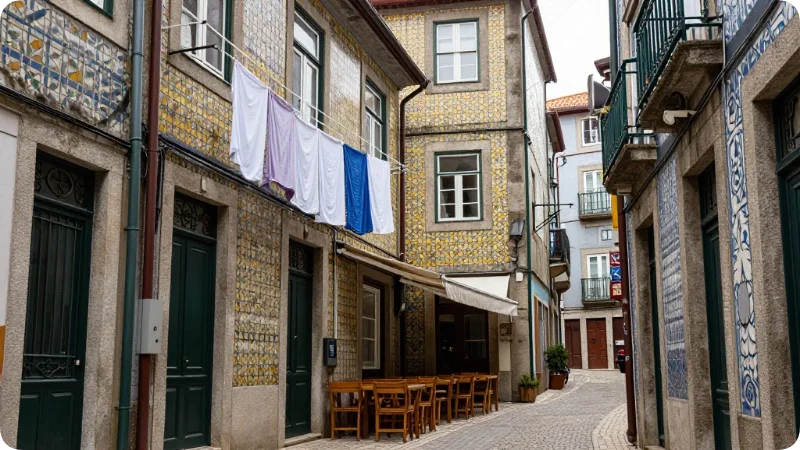
Ribeira is Porto’s oldest and most photographed district, a UNESCO World Heritage Site built along steep terraces facing the Douro River. Staying here means narrow medieval streets, laundry strung between balconies, and immediate access to the waterfront promenade.
Accommodation in Ribeira ranges from small family-run guesthouses to boutique riverfront hotels. Because streets are narrow and often pedestrian-only, expect to walk the final stretch with luggage; confirm with your accommodation if vehicle drop-off is possible.
Honest drawback: Ribeira can be loud at night in peak summer, with restaurant terraces and street musicians active until late. Light sleepers should request a room facing away from the main square.
Baixa Porto: Neighborhood Map & Guide
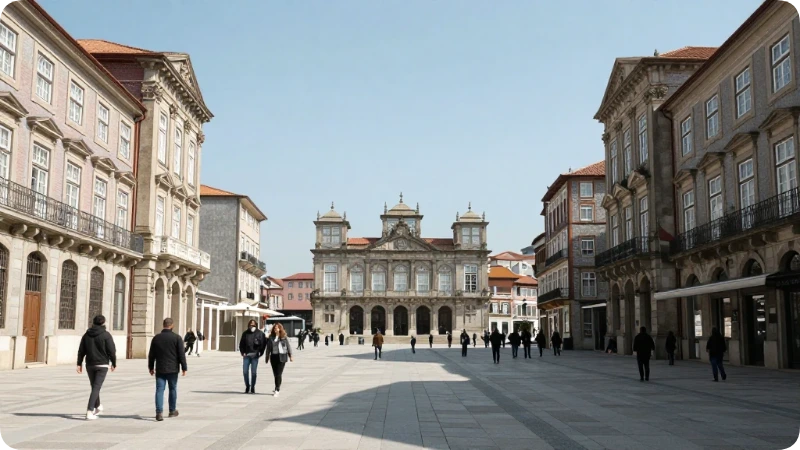
Baixa is Porto’s central downtown district, bordered roughly by São Bento Station to the south, Aliados Avenue to the north, and Clérigos Tower to the west, making it the most walkable base for reaching major landmarks.
The neighborhood mixes 19th-century architecture, shopping streets, and government buildings, with flatter terrain than Ribeira, making it easier on the legs. It also connects directly to Porto’s metro system.
Where it sits on the map: Baixa forms a rough triangle between Avenida dos Aliados, Rua de Santa Catarina, and the Douro riverbank; everything inside that triangle is walkable within 20 minutes.
Best Hotels to Stay in Porto, Portugal
The best hotels in Porto span a wide range, from centuries-old palaces converted into five-star properties to small boutique guesthouses run by local families. The right pick depends on budget and neighborhood preference more than brand name.
When comparing hotels, prioritize three factors: proximity to São Bento or Ribeira, guest reviews mentioning noise levels, and whether breakfast and Wi-Fi are included, since both vary widely between properties.
Money-saving tip: Boutique guesthouses in Cedofeita or Bonfim often match Ribeira’s charm at 20–30% lower rates, with a 10–15 minute walk into the historic center.
Because hotel pricing and availability shift constantly, always confirm current rates and reviews directly on official booking platforms before reserving.
Is Porto a Walkable City?
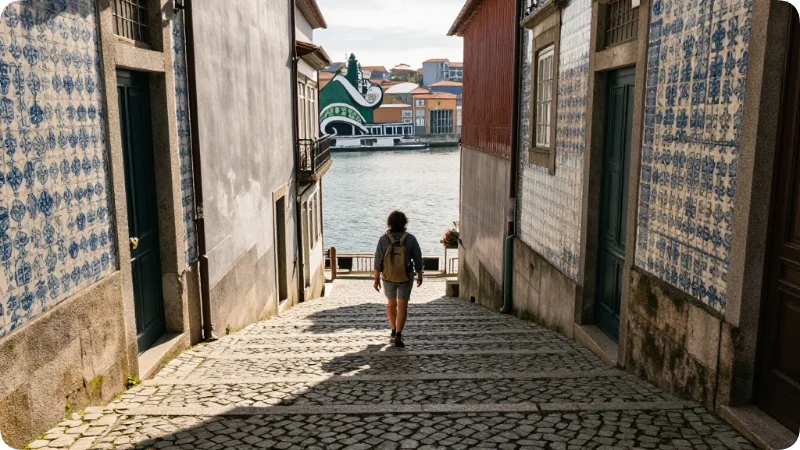
Yes, Porto is highly walkable, especially within the historic center, though its terrain is famously hilly and includes steep staircases connecting the upper city to the riverfront.
Comfortable, grippy shoes are essential; cobblestones get slippery when wet, and many of Porto’s best views require climbing. Travelers with mobility concerns should look into the funicular connecting Ribeira to the upper city as an alternative to stairs.
Time-saving tip: The Porto metro and tram network fills gaps between hilly districts, so you don’t need to walk every incline manually.
What Is the Prettiest Neighborhood in Porto?
Most travelers and photographers agree Ribeira is Porto’s prettiest neighborhood, thanks to its colorful stacked houses, medieval alleys, and unobstructed river views framed by the Dom Luís I Bridge.
Underrated alternative: Miragaia, just west of Ribeira, offers nearly identical charm with far fewer crowds and better photo opportunities without tourists in every frame.
Is It Safe to Walk in Porto at Night?
Porto is generally considered safe to walk at night, particularly in central tourist areas like Baixa and Ribeira, which stay lively with pedestrian traffic well into the evening. As with any city, standard precautions apply in quieter side streets.
Petty theft, rather than violent crime, is the primary concern in busy tourist zones; keep bags secured and be alert around crowded transit stops and popular squares.
Safety tip: Stick to well-lit main routes after dark, and avoid isolated stretches of the riverfront late at night, especially outside peak tourist season when fewer people are around.
Is Porto Safer Than Lisbon?
Porto and Lisbon are both considered relatively safe European capitals for tourists, with similar risk profiles centered on petty theft in busy areas rather than violent crime. Porto’s smaller size means tourist zones are easier to navigate and monitor personally.
Neither city should raise significant safety concerns for typical travelers who take standard precautions, though travelers should always check current government travel advisories before departure, since conditions can change.
When Not to Visit Porto
Avoid visiting Porto during the peak heat of July and August if you dislike crowds and higher prices, or during November through February if you want to avoid the region’s heaviest rainfall.
| Season | Months | Pros | Cons |
| Peak | Jun–Aug | Warm, lively festivals | Crowded, pricier lodging |
| Shoulder | Apr–May, Sep–Oct | Mild weather, fewer crowds | Some rain possible |
| Off-season | Nov–Mar | Lowest prices, local pace | Cold, frequent rain |
Best overall window: Late April through June or September through mid-October offers the best balance of pleasant weather, manageable crowds, and reasonable accommodation prices.
How Many Days Are Sufficient for Porto?
Three to four days is sufficient to see Porto’s main sights, including Ribeira, the port wine cellars in Gaia, Livraria Lello, and a day trip to the Douro Valley or coastal Matosinhos.
Two days covers only the historic core without day trips; five or more allows a slower pace with time for the Douro Valley wine region, an easy train or tour excursion from the city.
Worth it? Yes, a short stay delivers a distinct cultural experience, but travelers with wine-tasting or Douro Valley plans should budget at least one extra day.
Lisbon or Porto: Which City Is Nicer?
Neither city is objectively “nicer.” Lisbon offers a larger, more cosmopolitan capital feel with hillside trams and broader nightlife, while Porto delivers a more intimate, riverside charm with a stronger wine-country connection.
Travelers who prefer walkable, compact destinations with a slower pace tend to favor Porto; those wanting bigger-city energy, more neighborhoods, and beach access typically lean toward Lisbon.
Traveler scenario: If choosing just one city on a short USA-to-Portugal trip, history and wine lovers should pick Porto, while first-time Portugal visitors wanting variety often choose Lisbon.
What Should You Not Miss in Porto?
Don’t miss the Dom Luís I Bridge, Livraria Lello bookstore, a port wine cellar tour in Vila Nova de Gaia, the Ribeira riverfront, and Porto Cathedral (Sé do Porto); these five sights capture the city’s core identity.
Overrated: Long queue-only attractions like Livraria Lello during midday peak hours; book timed tickets in advance or visit at opening time instead.
Underrated: The Crystal Palace Gardens (Jardins do Palácio de Cristal) offer some of the city’s best sunset river views with a fraction of the crowds.
What Is the Coolest Street in Porto, Portugal?
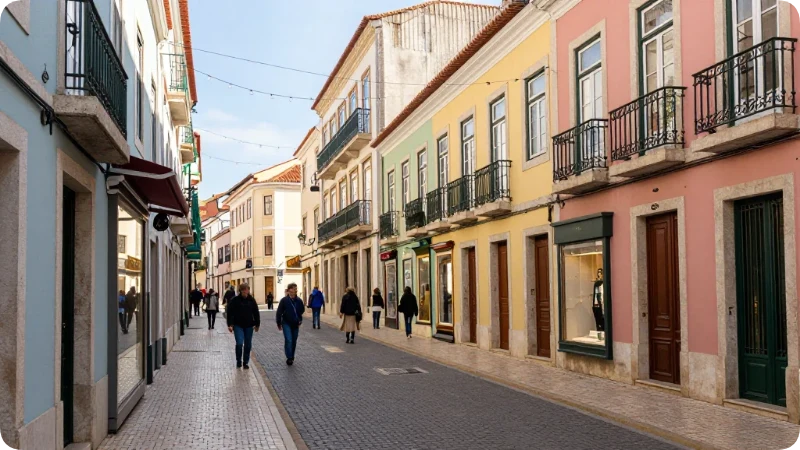
Rua das Flores is widely considered Porto’s coolest street, known for its pastel facades, independent boutiques, specialty coffee shops, and pedestrian-friendly stretch connecting Baixa to the riverfront.
Hidden gem alternative: Rua Miguel Bombarda, Porto’s arts district street, is packed with independent galleries and vintage stores that see far fewer tourists than the historic center.
Common Mistakes When Choosing Where to Stay in Porto
- Booking based only on price without checking the walk to São Bento or Ribeira fix by filtering by distance to landmarks, not just star rating.
- Ignoring the hills: fix by checking elevation on maps before booking, especially with luggage or mobility concerns.
- Assuming all central areas are quiet: fix by reading recent reviews specifically mentioning nighttime noise.
How to Get There & Transport Options
Most USA travelers fly into Francisco Sá Carneiro Airport (OPO), connected to central Porto by metro (Line E, violet) in about 30–45 minutes, or by taxi/rideshare in roughly 20–25 minutes depending on traffic.
Within the city, the metro, tram lines, buses, and the Ribeira-to-upper-city funicular cover most tourist needs, though the historic core is compact enough to explore largely on foot once you’re settled.
Booking consideration: If your hotel is in Ribeira or Baixa, confirm if the property offers luggage assistance for the final cobblestone stretch, since taxis often cannot access the narrowest streets directly.
FAQs
What is the best area to stay in Porto for sightseeing?
Ribeira and Baixa are the best areas for sightseeing, since both put you within walking distance of Porto Cathedral, Livraria Lello, and the Dom Luís I Bridge without relying on transit.
Is Vila Nova de Gaia a good place to stay instead of Porto?
Yes, Vila Nova de Gaia is a strong alternative, offering the same iconic river views as Ribeira, easy access to port wine cellar tours, and often slightly lower accommodation prices.
How far in advance should I book accommodation in Porto?
Book at least 2–3 months ahead for summer travel (June–August), and 4–6 weeks ahead for shoulder or off-season visits, since central neighborhoods sell out fastest during festivals.
Do I need a car to explore Porto and stay outside the center?
No, a car isn’t necessary for exploring Porto itself, since the metro, trams, and walkable core cover most attractions; a car becomes useful only for Douro Valley day trips.
What’s the difference between staying in Ribeira and Vila Nova de Gaia?
Ribeira sits on Porto’s side of the river inside the historic core, while Gaia sits directly across, home to the port wine lodges. Gaia often offers better skyline views of Ribeira itself.
Are there budget-friendly areas close to central Porto?
Yes, Cedofeita and Bonfim offer budget-friendly stays within a 10–15 minute walk of Baixa and Ribeira, combining lower prices with genuine local neighborhood atmosphere.
Is it better to stay near the airport or in central Porto?
Central Porto is better for most travelers, since airport-area hotels save little time (the airport is only 30–45 minutes from downtown) while sacrificing walkability to major attractions.
What should first-time visitors avoid when picking a Porto hotel?
First-time visitors should avoid booking without checking walking distance to São Bento Station or Ribeira, since even nearby-looking hotels can mean steep, inconvenient climbs with luggage.
Is Porto expensive compared to other European destinations?
Porto is generally more affordable than Lisbon, London, or Paris for accommodation and dining, though prices rise significantly during peak summer months and major festivals. Always verify current rates before booking.
Can I easily walk between Ribeira and Baixa??
Yes, Ribeira and Baixa are directly connected and typically a 10–15 minute walk apart, though the route includes noticeable hills and stairs between the riverfront and upper city.
What’s the best neighborhood for a short layover stay in Porto?
For a short layover or one-night stay, Baixa is ideal, since it sits closest to transit connections, is flat enough for quick movement with luggage, and remains walkable to Ribeira’s highlights.
Conclusion
Choosing where to stay in Porto comes down to three honest trade-offs: Ribeira for atmosphere and river views, Baixa for central convenience and easier walking, and Cedofeita or Gaia for value without sacrificing access.
First-timers do best in Ribeira or Baixa, couples lean toward riverfront charm, and families gain the most from Boavista’s wider, flatter streets.
Porto isn’t a city that punishes a wrong choice severely; every central neighborhood puts you within a manageable walk of the next, but the right base turns a good trip into an effortless one. Check current availability and reviews before booking, pack shoes ready for hills, and let Porto’s river light guide the rest of your itinerary.

Ben Fogle believes that true adventure begins where the pavement ends. After spending years documenting extreme environments, rowing across oceans, and trekking through frozen landscapes, he mastered the art of wilderness travel. For Travelmarse, Ben constructs highly detailed guides on deep-nature packing lists, wildlife safety, and sustainable eco-tourism. He breaks down intimidating, rugged expeditions into clear, step-by-step roadmaps so everyday travelers can safely connect with the natural world.