A Travel Humidors Guide is essential for anyone who enjoys cigars while traveling.If you’re taking a weekend getaway, a business trip, or a longer vacation, protecting your cigars is important.
Changes in temperature and humidity can quickly affect cigar quality. Without proper storage, even premium cigars can dry out, crack, lose flavor, or become difficult to smoke.
Many cigar enthusiasts have experienced the same frustration.
You carefully pack a few favorite cigars for a golf trip to Pinehurst, a fishing weekend in the Florida Keys, or a bourbon-and-cigar evening in Louisville.
Everything seems fine until it’s time to light up. Instead of a smooth and flavorful smoke, you discover a cigar that is dry, damaged, or over-humidified.
What should have been a relaxing experience becomes a disappointment.
Fortunately, these problems are usually preventable. A quality travel humidor helps maintain proper humidity and protects cigars from damage during travel.
Ifr you’re carrying one cigar for a special occasion or bringing several for a vacation, the right storage solution keeps them fresh and ready to enjoy.
Many travelers don’t realize that travel humidors come in several styles. Some are built for rough handling in checked luggage.
Others focus on portability and convenience. Options include compact cigar tubes, leather pouches, hard-shell cases, and humidors with built-in humidity control.
Choosing the right type can greatly improve your travel experience.
This Travel Humidors Guide explains everything you need to know before making a purchase.
You’ll learn how travel humidors work and which types suit different travel situations. You’ll also discover important features, packing tips, TSA regulations, and common mistakes to avoid.
If you’re an occasional smoker, a frequent traveler, a golf enthusiast, or a serious cigar collector, this guide will help you protect your cigars. By the end, you’ll know how to keep them fresh, flavorful, and ready to enjoy wherever your journey takes you.
What Makes a Travel Humidor Different from a Desktop Humidor
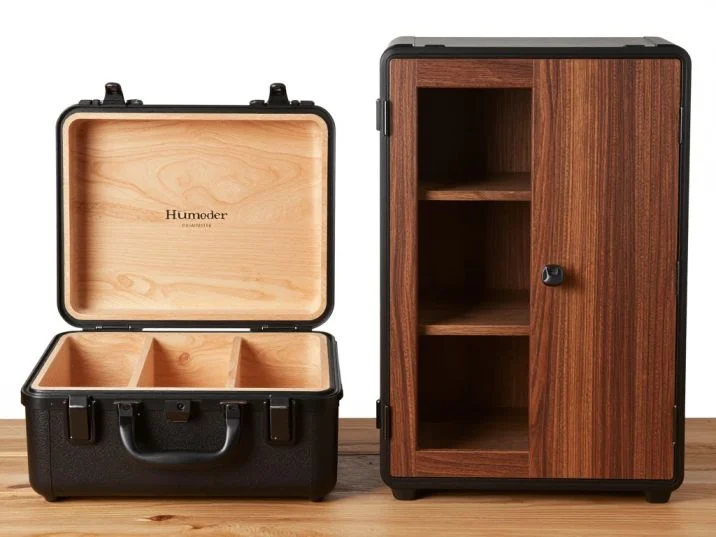
A travel humidor prioritizes portability and durability over capacity, while still maintaining the core function of humidity control.
Desktop humidors if small countertop boxes or large cabinet units use passive Spanish cedar lining and traditional humidification devices in a stable indoor environment.
Travel humidors face a different set of challenges: pressure changes in aircraft cabins and cargo holds, temperature swings between climate-controlled interiors and outdoor conditions, physical impact from bags being thrown and stacked, and the reality that they get opened frequently in non-ideal conditions.
The best travel humidors address these challenges through airtight seals (often silicone gaskets), rugged exterior materials (hard-shell ABS plastic, aluminum, or reinforced composites), and compact humidification systems sized for short-term use. Most quality travel humidors hold cigars for 1 14 days without active humidification beyond what you add at the start of your trip. For longer travel, active humidification solutions become more important.
Spanish cedar lining matters in a travel humidor for the same reason it matters in a desktop unit cedar absorbs and releases moisture to buffer humidity swings, repels tobacco beetles, and enhances the aging and flavor profile of cigars resting against it. Not all travel humidors include cedar lining, and the ones that don’t are at a meaningful disadvantage for anything beyond a day trip.
Types of Travel Humidors: Which One Fits Your Trip
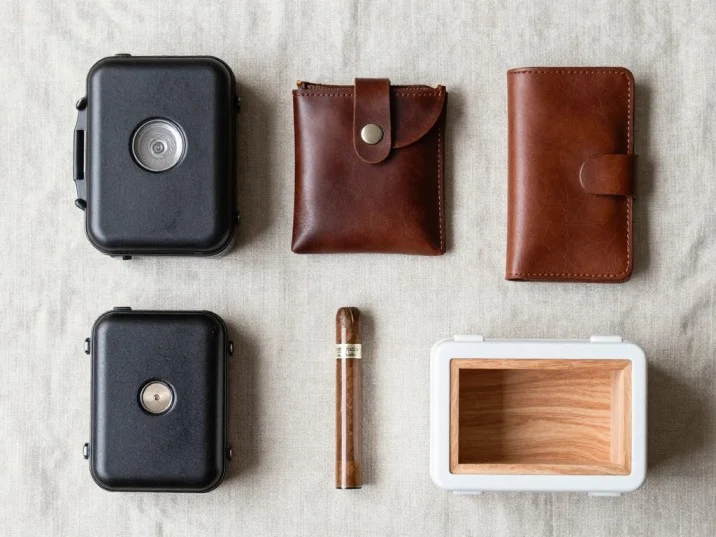
The travel humidor market includes five main categories. Each serves a different travel style and cigar storage need.
Hard-shell travel humidors provide the highest level of protection. They feature crushproof construction and airtight seals. These cases work well for checked luggage, outdoor trips, and rough travel conditions. They maintain humidity effectively and shield cigars from impact and moisture. The downside is their larger size and heavier weight.
Leather cigar pouches and soft cases emphasize portability and style. Most hold two to five cigars and fit easily into a pocket, briefcase, or carry-on bag. They are ideal for business trips, dinners, and weekend travel. However, they offer little active humidity control. As a result, they work best for short trips when cigars are already properly humidified.
All-in-one travel humidors balance protection, portability, and humidity management. Most include a built-in humidifier or space for humidity packs. They can keep cigars fresh for several days or longer. For many travelers, this is the most practical and versatile option.
Cigar tubes and individual cases are designed for carrying a single cigar. Their compact size makes them perfect for golf outings, weddings, or special occasions. They provide basic protection and help slow moisture loss. However, they are not intended for long-term storage.
Cooler-based humidors, often called “coolerdors,” are a popular DIY solution. They use a small insulated cooler with humidification accessories. This setup can store dozens of cigars at a relatively low cost. It is especially useful for cigar-focused trips that require extra storage capacity.
The best travel humidor depends on your trip length, storage needs, and desired level of protection. Choosing the right type helps keep your cigars fresh and ready to enjoy.
Quick Reference: Travel Humidor Types Compared
| Type | Capacity | Best For | Humidity Control | Portability |
| Hard-shell crushproof | 5 50 cigars | Checked luggage, outdoor travel | Excellent | Moderate |
| Leather/soft pouch | 2 5 cigars | Short trips, carry-on elegance | Minimal | Excellent |
| All-in-one with humidifier | 5 20 cigars | Most trip types, carry-on | Good | Good |
| Single cigar tube | 1 cigar | Day trips, single occasions | Fair | Excellent |
| Coolerdor (DIY) | 20 100+ cigars | Long trips, cigar destination travel | Excellent | Moderate |
Verify product specifications directly with manufacturers, as capacity and performance vary significantly by model.
How to Prepare a Travel Humidor Before Your Trip
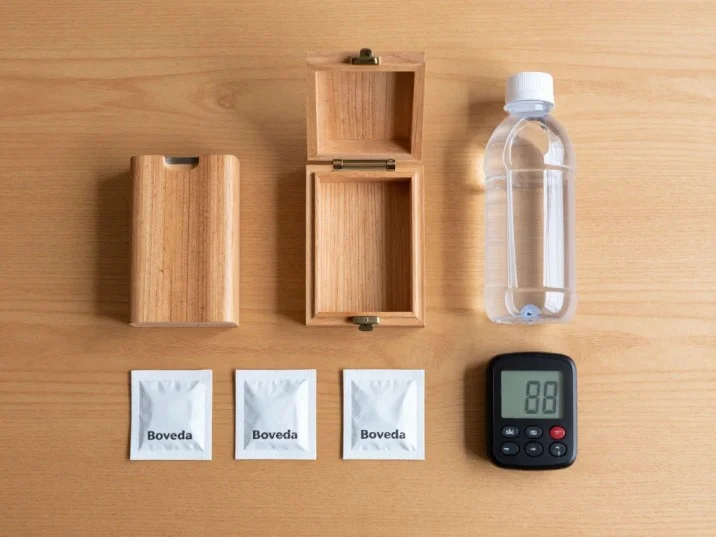
Preparation is where most travel humidor failures begin, and the process is straightforward once yoBefore storing cigars, create a stable humidity environment inside the humidor rather than relying on the humidifier to catch up later.
1. Season the Humidor
If the travel humidor is new or hasn’t been used recently, lightly wipe the cedar interior with a clean cloth dampened with distilled water. Avoid tap water, which can damage cedar and clog humidification devices. Leave the humidor open for about 24 hours.
2. Prepare the Humidification Device
Boveda packs come pre-charged and can be placed directly inside the humidor. Foam humidifiers should be saturated with distilled water or propylene glycol solution and allowed to stabilize for several hours.
3. Stabilize Humidity
Place the charged humidification device inside the empty humidor, close the lid, and let it sit for 12–24 hours. Check the humidity level with a hygrometer. A small digital hygrometer is a worthwhile upgrade if your humidor does not include one.
4. Add Your Cigars
Once humidity reaches the target range of 65–70% RH, place your cigars inside. Avoid overpacking, as airflow helps maintain consistent humidity throughout the case.
5. Store Properly
Ensure the seal is secure and keep the humidor away from direct sunlight, heat, and extreme temperature changes until your trip.
Pro Tip: Use a Boveda pack sized for your humidor’s volume. Oversized packs in small, airtight travel humidors can raise humidity above the ideal range.
Flying with Cigars: What TSA Rules Actually Say
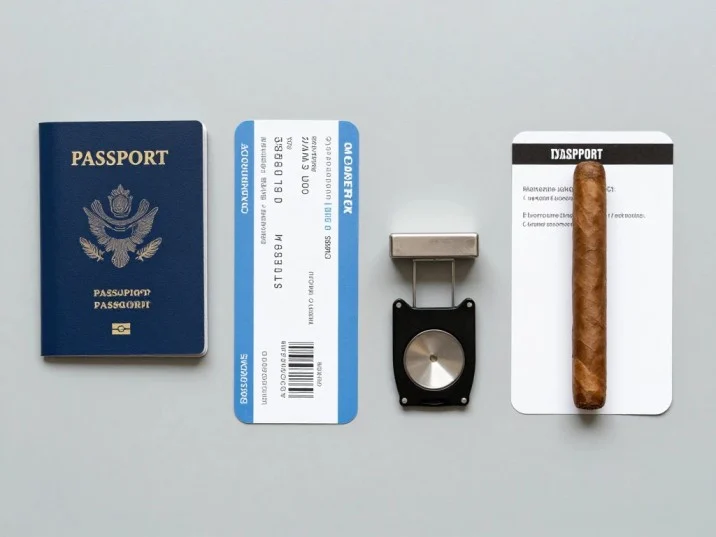
TSA does not restrict cigars in either carry-on or checked luggage for domestic US flights, but several related items require attention. According to TSA guidance (verify current rules at tsa.gov before travel, as policies update), cigars themselves are permitted, but cutters and lighters have specific rules that catch travelers off guard.
Cigar cutters with blades guillotine cutters, V-cutters are not permitted in carry-on bags but are allowed in checked luggage. Punch cutters, which have no exposed blade, are generally permitted in carry-on bags. Verify with TSA directly if you’re uncertain about a specific cutter style.
Torch lighters (butane jet flame lighters) are not permitted in carry-on bags or checked luggage on US domestic flights under federal regulations enforced by the DOT’s Pipeline and Hazardous Materials Safety Administration (PHMSA). Standard disposable lighters are permitted in carry-on bags (one per passenger) and in checked luggage if placed in a DOT-approved case. If you travel with a torch lighter regularly, the practical solution is to purchase butane at your destination most tobacconists and hardware stores stock it.
Butane fuel canisters are not permitted on flights in any form carry-on or checked. Don’t pack butane for aircraft travel.
For international travel, research destination-specific rules around tobacco import limits. US Customs allows returning travelers to bring back 100 cigars duty-free (verify current allowances at cbp.gov). Cuba-specific rules for US travelers regarding cigars have changed multiple times always verify current US Customs and State Department guidance before a Cuba trip.
Always verify all travel regulations directly with TSA (tsa.gov), DOT, and CBP (cbp.gov) before your trip, as rules change and enforcement varies.
Humidity Control: Understanding the Numbers That Keep Cigars Alive
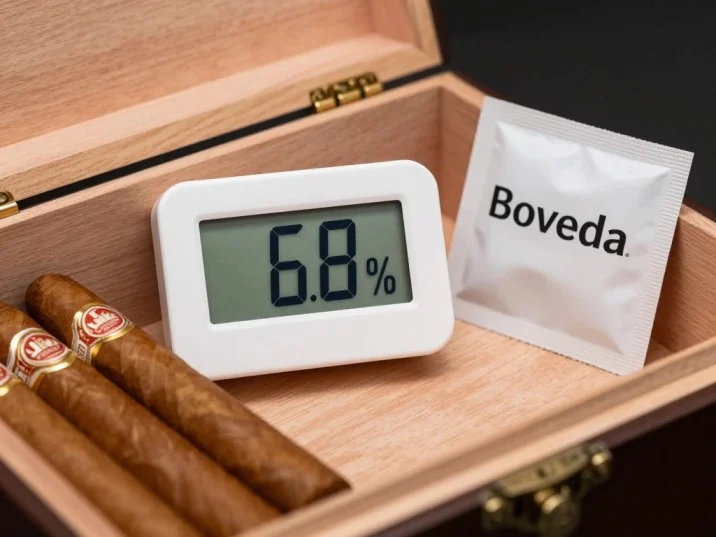
Cigars require a relative humidity (RH) range of 65 72% to remain in optimal smoking condition. Below 65%, they dry out the wrapper becomes brittle and prone to cracking, the draw opens up too much, and the burn becomes harsh and hot. Above 72% in a closed environment, they become over-humidified the draw tightens, they may resist lighting, and mold becomes a real risk on longer trips.
Temperature is equally important and more often overlooked. The ideal storage temperature for cigars is 65 70°F. Above 73°F, tobacco beetles microscopic larvae that can exist dormant in any premium cigar can hatch and tunnel through your cigars, destroying them. This is why leaving a travel humidor in a hot car or in direct sun is genuinely damaging, not just uncomfortable.
The interplay of humidity and temperature is what makes travel humidor selection and preparation a real skill. A humidor that maintains 68% RH at 68°F in your living room may run significantly drier in the low-humidity environment of a pressurized aircraft cabin, or significantly wetter in the humid outdoor air of coastal Florida in August.
Passive humidification systems like Boveda work through a two-way process they release moisture when humidity drops below their rated level and absorb excess moisture when humidity rises above it. This self-regulating quality makes them particularly well-suited for travel humidors, where conditions fluctuate more than in a stable home environment.
Best Humidification Systems for Travel Humidors
Three humidification systems dominate the travel humidor market, and they differ enough to be worth understanding before you buy or restock.
Boveda packs are the gold standard for most travel cigar enthusiasts. They’re pre-charged with a saturated salt solution calibrated to a specific RH level (the company makes 62%, 65%, 69%, 72%, and 75% versions), require no maintenance during a trip, and work reliably in airtight containers. A single Boveda pack typically lasts one to three months depending on how frequently the humidor is opened and ambient conditions. They’re available at most tobacconists and online retailers. For travel, the 69% version suits most cigar types and most travel conditions.
Foam-based humidifiers (often included with entry-level and mid-range travel humidors) require charging with distilled water or a 50/50 propylene glycol and distilled water solution before use. Propylene glycol solution self-regulates to approximately 70% RH and resists mold growth better than water alone. Foam humidifiers are less precise than Boveda and require monitoring on longer trips, but they work adequately for weekend travel when properly prepared.
Polymer crystal humidifiers absorb and release moisture similarly to foam but with greater capacity per unit volume. They suit larger travel humidors and cooler-style setups better than small pocket cases.
Insider tip: Carry one or two extra Boveda packs in a sealed zipper bag on any multi-week trip. If you’re buying cigars at your destination at a tobacconist in New Orleans, a cigar lounge in Miami’s Little Havana neighborhood, or a factory in the Dominican Republic a fresh Boveda pack ensures those new acquisitions have proper humidity for the journey home.
Traveling with Cigars by Car vs. Plane vs. Boat: Key Differences
The mode of travel affects how you manage your travel humidor in ways that aren’t always obvious.
Car travel gives you the most control. Temperature is the primary concern a closed car in summer can reach interior temperatures above 120°F within minutes, which is damaging for cigars and dangerous for tobacco beetles. Keep your travel humidor in the passenger cabin where the air conditioning keeps it at a reasonable temperature, never in the trunk or on a dashboard in direct sunlight. Road trips through the arid Southwest across New Mexico, Arizona, and Nevada will stress your humidification system more than travel in the humid Southeast, so check your humidor’s internal state at each stop.
Air travel introduces pressure changes and very low cabin humidity (aircraft cabins typically maintain 10 20% relative humidity far below what cigars need). The sealed nature of a quality travel humidor handles this well, but the low ambient humidity means any seal failure or frequent opening will cause rapid moisture loss. Pack your travel humidor in your carry-on when possible the cargo hold experiences more dramatic pressure and temperature swings than the passenger cabin, particularly on longer flights. When your humidor must go in checked luggage, use a hard-shell crushproof case with an O-ring seal.
Boat and cruise travel presents the opposite challenge high ambient humidity, particularly in tropical waters. Over-humidification is a real risk on Caribbean cruises or offshore fishing trips in Florida or the Gulf Coast. Boveda packs at 65% rather than 69% may better suit extended maritime travel in humid conditions, and keeping your humidor out of direct ocean spray is obviously essential.
TSA-Friendly Travel Humidor Accessories to Pack
Beyond the humidor itself, a few accessories make cigar travel significantly more organized and enjoyable.
A digital hygrometer small enough to fit inside your travel humidor eliminates guesswork about current humidity levels. Models with a remote probe allow you to check internal conditions without opening the humidor and disturbing the humidity environment inside.
A cigar rest or ashtray designed for travel compact, non-breakable, and easy to clean is worth packing for outdoor smoking. Portable ashtrays fold flat and weigh almost nothing.
A travel-sized cigar cutter that uses a punch design (no exposed blade) passes TSA carry-on inspection without issue. For those who prefer a guillotine cut, packing the cutter in checked luggage and keeping a backup punch cutter in your carry-on handles both preferences.
Cedar travel sheets or strips placed inside the humidor between cigars absorb excess moisture, transfer cedar aroma gently to the cigars, and protect individual sticks from direct contact damage during transport. Several brands sell these specifically for travel humidors in pre-cut sizes.
A small notebook or cigar journal fits easily in any travel bag and helps you track which cigars you’ve smoked, where, and with what rating. Serious cigar enthusiasts who travel specifically to sample regional offerings in places like Ybor City (Tampa’s historic cigar district), Miami’s Calle Ocho, or Dominican Republic cigar country find a journal adds genuine value to the experience.
Three Common Travel Humidor Mistakes (and How to Fix Them)
Mistake 1: Not seasoning a new travel humidor before the trip. An unseasoned cedar interior acts like a sponge it pulls moisture from your cigars to satisfy the wood’s own humidity needs, leaving your cigars dry within days even with a functioning humidifier. Fix: Always season any new cedar-lined humidor at least 48 hours before packing cigars. If your trip starts in two days and the humidor arrived today, use Boveda packs (which require no seasoning to function) as a bridge solution.
Mistake 2: Overpacking the humidor. Tightly packed cigars restrict air circulation, create uneven humidity distribution, and can cause pressure damage to wrappers over time. The visual impulse to fit as many cigars as possible into a limited space is understandable, but the practical result is often uneven conditioning across the cigars. Fix: Leave room for air movement a humidor rated for ten cigars performs best with seven or eight. If you need more capacity, step up to the next size.
Mistake 3: Opening the humidor repeatedly in variable conditions. Every time you open your travel humidor in low-humidity conditions a dry hotel room, an airplane cabin, a desert environment you lose conditioned air and expose your cigars to ambient conditions. Frequent partial openings are a major driver of humidity loss over a long trip. Fix: Remove the cigars you plan to smoke that day all at once in the morning rather than opening the humidor multiple times throughout the day. A cigar tube for your daily selection keeps them accessible while the main humidor stays sealed.
Underrated Alternatives to Traditional Travel Humidors
Three options that serious cigar travelers use but rarely make it into mainstream buying guides:
The Tupperdor method. A food-grade airtight container a Tupperware or Ziploc container with a proper seal combined with Boveda packs and a cedar sheet creates an inexpensive and highly effective short-term travel humidor. It won’t win any elegance competitions, but a two-day golf trip to Pebble Beach doesn’t require a $200 leather case. A properly sealed food container with Boveda packs maintains humidity surprisingly well and costs almost nothing.
Cigar cases from high-end luggage brands. Some premium luggage companies including brands whose heritage includes travel accessories produce cigar cases that function as effective travel humidors with elegant design. These often fly under the radar compared to dedicated cigar brand travel cases, suit travelers who want their accessories to match the quality of their bags, and sometimes appear at significant discounts through outlet and sample sale channels.
Tobacconist rental and storage at your destination. Several high-end cigar lounges and tobacconists in major US cities particularly in New York, Miami, Las Vegas, and Houston offer storage lockers or “cigar clubs” where members can keep a personal stock on premises. For regular visitors to a particular city, this eliminates the travel humidor problem entirely: your cigars are already there, properly stored, waiting for you.
Buying Cigars While Traveling: Humidor Considerations for the Return Trip
One of the best arguments for a quality travel humidor is what happens when you find remarkable cigars during your trip. The tobacconist in Ybor City stocking hand-rolled cigars from the last traditional Tampa factory. The factory shop in Santiago de los Caballeros selling seconds at a fraction of retail price. The small-batch Nicaraguan puros available only at the farm. Getting them home in proper condition requires planning.
The return journey typically means cigars that haven’t been in your travel humidor from the start they come from the shop’s storage conditions, which may be different from your preference. Allow newly purchased cigars to equalize in your humidor for at least an hour before sealing everything up for travel, if conditions allow. This helps the fresh acquisitions adapt to your humidor’s humidity level rather than bringing in air with dramatically different moisture content.
For significant purchases several boxes rather than a few sticks consider shipping rather than carrying. Many international tobacconists and some domestic retailers offer shipping services. Within the US, shipping cigars is straightforward. For international shipping, customs regulations apply and vary by country; research the current rules for your destination before purchasing in bulk.
US Customs allows returning travelers to bring back a reasonable quantity of cigars for personal use (verify current allowances at cbp.gov, as policies change). Declaration is required for quantities above the duty-free limit. Honest declaration and proper documentation makes the re-entry process straightforward.
FAQ:
What is the best travel humidor for flying?
The best travel humidor for flying depends on If your cigars go in carry-on or checked luggage. For carry-on, an all-in-one hard-shell travel humidor with an airtight gasket seal and Boveda packs handles cabin pressure and low humidity effectively. For checked luggage, a crushproof hard-shell case with an O-ring seal similar to Pelican-style protection cases provides the physical impact resistance that baggage handling demands. Always verify current TSA rules at tsa.gov before travel.
How long can cigars stay in a travel humidor?
Properly prepared cigars in a quality sealed travel humidor with active humidification (Boveda packs or equivalent) stay in excellent condition for 1 2 weeks without attention. Cigars in a well-conditioned cedar-lined hard-shell case can maintain acceptable humidity for up to 30 days if the seal is intact and the humidor isn’t opened frequently. Beyond two weeks, refresh or add humidification at your destination to prevent gradual humidity decline.
Can I bring a humidor on a plane?
Yes, you can bring a travel humidor on a plane in carry-on luggage. Cigars have no TSA restrictions. However, torch lighters and cigar cutters with exposed blades are not permitted in carry-on bags only in checked luggage. Standard disposable lighters are permitted in carry-on (one per passenger). Always verify current rules at tsa.gov before your flight, as regulations update and enforcement can vary by airport.
What humidity level should I maintain in a travel humidor?
Most premium cigars maintain best quality at 65 70% relative humidity. For travel humidors, 65 68% is a practical target slightly on the drier side of the ideal range because sealed travel conditions can tip toward over-humidification in warm, humid environments. Boveda 65% packs suit travel in humid climates and maritime environments; Boveda 69% suits dry climates and most standard travel conditions. A small hygrometer inside the humidor lets you monitor actual conditions.
Are travel humidors worth it compared to just using a Ziploc bag?
A quality travel humidor is worth it for trips longer than two days or for protecting premium cigars. A Ziploc bag with a Boveda pack maintains humidity adequately for very short trips it’s the “tupperdor” method many experienced travelers use but offers no physical protection. Hard-shell travel humidors protect against the crushing and impact that luggage handling causes. Leather pouches add no meaningful humidity control. For a $200 box of cigars on a week-long trip, the investment in a proper travel humidor is logical.
What’s the difference between a 65% and 69% Boveda pack for travel?
Boveda packs are calibrated to maintain a specific relative humidity level the number on the pack. A 65% pack maintains 65% RH inside a sealed humidor; a 69% pack maintains 69% RH. For travel, the choice depends on your climate and cigar preferences. Drier travel environments (the Southwest, high altitude, airconditioned environments) benefit from 69% to counteract ambient moisture loss. Humid environments (Caribbean travel, coastal summer conditions) benefit from 65% to prevent over-humidification. Many travelers keep both on hand.
Can I take cigars to Cuba as a US traveler?
Current US regulations permit American citizens to travel to Cuba under specific authorized categories (verify current rules with the US State Department and Treasury’s OFAC at home.treasury.gov/policy-issues/ofac). US Customs allows returning travelers to bring back Cuban cigars for personal use within the standard duty-free allowance (verify current quantities at cbp.gov, as policies have changed multiple times). The legal landscape around Cuba travel for US citizens shifts with administrations always check current State Department and OFAC guidance before planning a Cuba trip.
Three Things That Make the Difference Between a Good Cigar Trip and a Great One
First, preparation happens before you pack, not at the airport. A properly seasoned, charged, and sealed travel humidor loaded with cigars that have been stored at the right humidity for days before departure gives you the best possible starting conditions.
Last-minute packing of a dry humidor with un-conditioned cigars almost guarantees disappointment.
Second, the right humidor for your trip type matters more than brand name or price. A $30 airtight container with Boveda packs often outperforms a $150 leather pouch for a week-long trip in dry conditions.
Match the tool to the travel: crushproof for checked bags, all-in-one with gasket for carry-on, leather pouch for a single-night occasion.
Third, know the regulations before you go. TSA rules, customs limits, and destination-specific tobacco restrictions are all verifiable in advance and getting any of them wrong wastes money, time, or both.
A few minutes at tsa.gov and cbp.gov before any cigar travel trip eliminates the most common and most avoidable frustrations.
The best travel humidor is the one you trust completely the one that delivers your cigars to the moment you’ve been looking forward to in exactly the condition they deserve.

Maya Lin inspires travelers to explore the globe with absolute confidence and independence. Armed with a background in digital media and a decade of independent solo travel experience, she knows exactly how to navigate unfamiliar cities smoothly and safely. For Travelmarse, Maya curates the solo travel and hidden-gem verticals. She reviews charming boutique hotels, designs smart neighborhood walking routes, and shares practical language-learning hacks, giving readers the exact tools they need to travel solo without the stress.