Why Booking Croatia Through an Agency Is Different Than You’d Expect
Croatia looks simple on a map, but the logistics catch first-timers off guard. The coastline runs over 1,100 miles, the best islands are ferry-only, and Dubrovnik’s old town nearly doubles in price and crowd size the moment a cruise ship docks.
A good Croatia travel agency solves those problems before they happen. Instead of you juggling ferry schedules, national park timed-entry tickets, and a dozen small hotels, one advisor builds the whole route and fixes it if something goes wrong.
This guide breaks down what these agencies actually do, what a trip realistically costs, how to tell a great one from a mediocre one, and when booking everything yourself makes more sense.
Quick answer:
A Croatia travel agency plans and books your trip flights, hotels, guides, and transport for a service fee built into the package price. Choose a US-based advisor for hand-holding and phone support, a local Croatian ground operator for insider access and lower costs, or a hybrid agency (US sales team + Croatian staff) for the best of both. Budget $2,500 $6,000+ per person for a 7 10 day trip.
Quick Facts Table
| What You’re Comparing | Typical Range or Detail |
| Agency service fee | Usually built into package price, 10 20% markup |
| Average 7 10 day trip cost | $2,500 $6,000+ per person, mid-range |
| Best months to book | 4 8 months ahead for summer travel |
| US visa requirement | None for stays under 90 days |
| Currency | Euro (€) Croatia adopted the euro in 2023 |
| Schengen status | Full member since January 2023 |
| Peak season | Late June through August |
| Best value season | May, June, and September |
What Does a Croatia Travel Agency Actually Do?
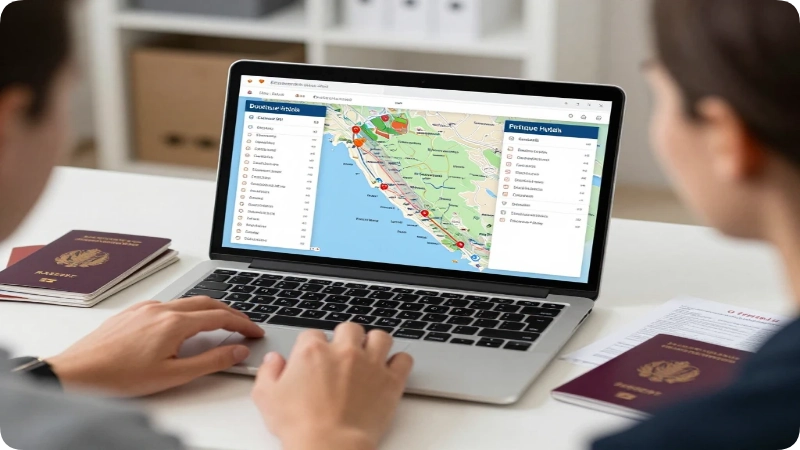
A Croatia travel agency handles the planning work that eats up hours of research: matching flights to ferry connections, booking centrally located hotels, arranging private drivers or guides, and reserving timed tickets for places like Plitvice Lakes National Park.
Most agencies fall into three categories. US-based advisors sell the trip and coordinate by phone or email, often subcontracting the ground logistics to a Croatian partner. Local Croatian ground operators run everything in-country, which usually means better pricing and faster fixes if plans change mid-trip. Hybrid agencies combine a US sales team with year-round staff in Zagreb, Split, or Dubrovnik, giving travelers both easy communication and local muscle.
For a first Croatia trip, the hybrid model tends to offer the smoothest experience you get someone who speaks your time zone and someone who can meet you at the dock.
Best Time to Book and Travel: Seasonal Comparison
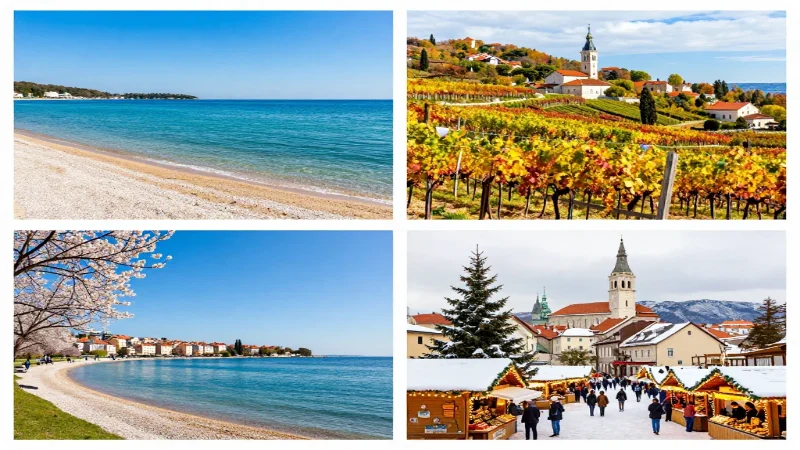
Croatia’s tourism calendar swings hard between seasons, and agency pricing follows it closely. Booking outside peak summer often saves 20 35% on the same itinerary.
| Season | Months | Weather | Crowds | Best For |
| Peak | Late June Aug | Hot, 80 95°F | Very heavy, cruise ships daily | Beach time, nightlife |
| Shoulder (best value) | May, June, Sept | Warm, 70 85°F | Moderate | First-timers, sailing, hiking |
| Shoulder (cool) | April, Oct | Mild, 60 70°F | Light | Budget trips, wine regions |
| Off-season | Nov March | Cool, rainy, 45 55°F | Minimal | City breaks, Zagreb, skiing nearby |
Bottom line: Late May through mid-June and the first three weeks of September deliver swimmable water, functioning ferry schedules, and roughly half the crowds of August. Most experienced agencies push clients toward these windows first.
How Much Does a Croatia Trip Through an Agency Cost?

Prices vary widely by season, accommodation style, and how much of the trip is private versus group-based. Below is a realistic range for a 7 10 day itinerary covering Zagreb, the Dalmatian Coast, and at least one island.
| Trip Style | Per-Person Cost (7 10 days) | What’s Included |
| Budget/small-group tour | $1,800 $2,800 | Shared coach transport, 3-star hotels, some meals |
| Mid-range custom trip | $2,800 $5,000 | Private drivers, boutique hotels, curated activities |
| Luxury private trip | $5,500 $12,000+ | Private guides throughout, 5-star/villa stays, yacht days |
Flights from the US typically run $700 $1,400 round-trip and are usually not included in package pricing unless specifically requested. Ask any agency for a clear breakdown of what’s bundled versus what you’ll pay separately gratuities, entrance fees, and travel insurance are common add-ons that get left out of headline prices.
Types of Croatia Travel Agencies to Consider
Not every agency fits every traveler. Matching the agency type to your trip style saves both money and frustration.
Custom private-trip specialists build a fully personalized route around your interests, pace, and budget. These work best for couples, families, and multigenerational groups who want flexibility and don’t mind paying a premium for it.
Small-group tour operators run scheduled departures with a set itinerary and a group of 10 16 travelers. They’re typically the most affordable option and suit solo travelers or anyone who enjoys built-in social time.
Sailing and yacht-based operators combine island-hopping with life aboard a boat, which solves Croatia’s ferry-logistics headache in one move. This style suits travelers prioritizing beaches and coastline over museums and cities.
Local destination-marketplace platforms connect travelers directly with independent, vetted local agents in Croatia rather than a single company useful if you want to compare multiple planners before committing.
How to Choose the Right Croatia Travel Agency
A few checks separate a reliable agency from one that will leave you stranded mid-trip.
- Confirm they have staff physically based in Croatia. A US call center with no local presence can’t help you if a ferry cancels or a hotel double-books.
- Ask how disruptions are handled. Storms cancel island ferries several times a year a solid agency has a rebooking plan, not just an apology.
- Read recent reviews, not just star ratings. Look for specific mentions of communication speed and how problems were resolved, not just “beautiful trip.”
- Check what’s genuinely custom versus templated. Some “custom” itineraries are the same fixed route with a different cover page ask for a sample day-by-day plan before paying a deposit.
- Verify cancellation and payment terms in writing. Reputable operators disclose deposit amounts, final payment dates, and refund policies clearly, before you commit.
Who agencies are best for: first-time visitors, travelers short on planning time, families coordinating multiple ages, and anyone wanting islands and coastal towns without ferry-schedule stress.
Who might skip one: confident independent planners, budget backpackers comfortable booking hostels and buses solo, and repeat Croatia visitors who already know the region.
DIY Booking vs. Using a Travel Agency

Both approaches work the right one depends on your time, budget, and tolerance for logistics.
| Factor | DIY Booking | Travel Agency |
| Time investment | 15 30+ hours of research | 1 3 planning calls |
| Cost | Usually lower, no service fee | 10 20% markup, but often offsets mistakes |
| Local access | Limited to public reviews | Insider restaurants, private guides |
| Problem-solving | On you, real-time | Agency handles disruptions |
| Best for | Confident solo/couple travelers | First-timers, families, complex routes |
A middle path many travelers use: book flights and one or two hotels independently, then hire an agency only for the trickiest segment usually the island-hopping and ferry connections.
Sample 8-Day Itinerary a Croatia Agency Might Build
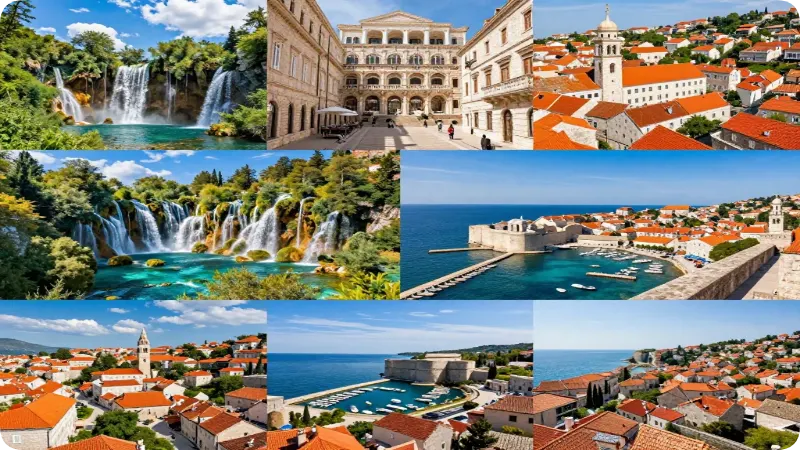
This is the kind of route a mid-range custom agency typically designs for a first visit, blending cities, national parks, and coastline.
- Days 1 2 Zagreb: Arrive, explore the Upper Town, museums, and café culture.
- Day 3 Plitvice Lakes National Park: Guided walk through the terraced waterfalls, then transfer toward the coast.
- Days 4 5 Split: Explore Diocletian’s Palace, day-trip to the Blue Cave or Krka waterfalls.
- Day 6 Hvar: Ferry to the island for beach time and old-town wandering.
- Days 7 8 Dubrovnik: City walls, cable car views, and a final coastal dinner before departure.
Agencies typically build in a buffer day or two for weather-dependent ferry travel a detail solo planners often miss until it’s too late.
Croatia Travel Packages: Which Option Fits Your Travel Style?
Croatia travel packages range from budget-friendly group tours to luxury private vacations. The best choice depends on your budget, travel pace, and the experiences you want. While some packages include only hotels and transportation, others cover guided sightseeing, ferry tickets, meals, airport transfers, and even local experiences such as wine tastings or sailing excursions.
Here are the most common package types:
- Budget Group Tours: Shared transportation, 3-star hotels, and scheduled sightseeing. Best for solo travelers and first-time visitors.
- Custom Vacation Packages: Personalized itineraries with boutique hotels, private transfers, and flexible schedules.
- Island-Hopping Packages: Combine Split, Hvar, Korčula, and Dubrovnik using ferries or catamarans.
- Luxury Packages: Five-star hotels, yacht charters, private guides, and gourmet dining.
- Family Packages: Include child-friendly activities, larger accommodations, and slower-paced itineraries.
Before booking, compare what is included. Flights, travel insurance, park entrance fees, and gratuities are often priced separately.
Do US Travelers Need a Visa for Croatia?
No visa is required for US citizens visiting Croatia for tourism or business for stays of up to 90 days within any 180-day period, since Croatia is a full member of the Schengen Area. A valid passport is currently all that’s needed at the border.
Starting in late 2026, visa-exempt travelers, including Americans, will need to apply online for ETIAS, a simple travel authorization similar to the US ESTA system not a visa, but a required pre-approval linked to your passport. Because rollout timing has shifted before, confirm the current requirement on the official EU ETIAS site or Croatia’s tourism board page before you fly.
Common Mistakes Travelers Make When Booking
Mistake 1: Underestimating ferry logistics. Island connections run less frequently outside summer, and weather can cancel them entirely. Fix: build a buffer day into any island-hopping segment.
Mistake 2: Booking Dubrovnik without checking cruise ship schedules. The old town gets overwhelming when two or three ships dock at once. Fix: ask your agency (or check the port authority’s public schedule) and plan sightseeing around the gaps.
Mistake 3: Assuming all-inclusive means all-inclusive. Many packages exclude flights, travel insurance, and entrance fees. Fix: request an itemized cost breakdown before paying a deposit.
Hidden Gems Agencies Often Recommend
Beyond Dubrovnik and Split, experienced planners frequently steer clients toward Rovinj, a pastel-colored Istrian fishing town with a fraction of Dubrovnik’s crowds, and Vis, a former military-restricted island that stayed refreshingly undeveloped. Inland, the Istrian truffle region near Motovun is consistently underrated for food-focused travelers who assume Croatia is only about beaches.
Travel Insurance and Booking Considerations
Most reputable agencies either require or strongly recommend travel insurance, and it’s worth taking seriously given the number of moving parts, ferries, flights, and multi-city routing in a typical Croatia itinerary. Coverage for trip interruption and emergency medical care matters most, since US health insurance often doesn’t extend overseas.
Before booking, confirm cancellation windows, deposit amounts, and what currency final payment is due in. Prices and fees change, so verify current terms directly with the agency rather than relying on marketing pages.
FAQs
Is it worth using a travel agency for Croatia?
It’s worth it for first-time visitors, families, or anyone island-hopping, since ferry logistics and seasonal crowding are easy to get wrong. Confident solo travelers on a simple city-only route can often manage without one.
How far in advance should I book a Croatia trip?
Book 4 8 months ahead for summer travel, since boutique hotels and small-group tours sell out early. Shoulder-season trips (May, September) can often be booked 2 3 months out.
Do Croatia travel agencies book flights too?
Some do, but many focus only on in-country logistics and let travelers book flights separately for more flexibility on airline and price. Always confirm what’s included before assuming flights are covered.
Is Croatia expensive compared to other European destinations?
Croatia sits in the mid-range for Europe, pricier than the Balkans inland, but generally cheaper than Italy or France for comparable quality, especially outside Dubrovnik.
What’s the biggest overrated Croatia experience?
Dubrovnik’s old town at midday during peak summer is often overrated for the crowding alone; the same walls and views feel completely different at sunrise or after 6 p.m.
What’s underrated that agencies rarely push?
Istria’s inland hill towns and truffle-region restaurants get far less attention than the coast but consistently rank among the most memorable parts of well-planned trips.
Can I use a Croatia travel agency for just part of my trip?
Yes, many travelers book flights and one or two hotels themselves, then hire an agency only for the harder segments, like island ferries or a multi-day sailing trip.
Final Takeaways
A Croatia travel agency earns its fee by absorbing the logistics that trip up first timers most: ferry timing, seasonal crowding, and matching accommodations to an efficient route. The right type of agency depends on how hands-on you want to be and how much of the coastline you’re planning to cover.
Start by nailing down your season and rough budget, then compare two or three agencies against the checklist above before committing a deposit. Croatia rewards travelers who plan ahead the payoff is waterfall hikes, island afternoons, and old-town sunsets that live up to the photos.

Ben Fogle believes that true adventure begins where the pavement ends. After spending years documenting extreme environments, rowing across oceans, and trekking through frozen landscapes, he mastered the art of wilderness travel. For Travelmarse, Ben constructs highly detailed guides on deep-nature packing lists, wildlife safety, and sustainable eco-tourism. He breaks down intimidating, rugged expeditions into clear, step-by-step roadmaps so everyday travelers can safely connect with the natural world.