The best travel hat shields you from sun, wind, and rain while being compact enough to pack without ruining its shape.
For most travelers, a wide-brim hat with UPF 50+ sun protection, a packable or crushable design, and a chin strap for windy conditions covers nearly every travel scenario from beach resorts to mountain hikes.
Sunburned scalps, squinting through glaring afternoon light, and realizing halfway through a canyon hike that you forgot a hat these are the tiny travel disasters that stick with you.
A great travel hat may sound small, but the right one can genuinely change how comfortable a full day of exploring feels.
The Mostvelers either grab whatever’s closest before heading to the airport or overthink it and bring three hats that take up half a bag. Neither strategy works well.
The best travel hat is the one that fits your specific trip, packs down small, protects your skin, and still looks decent when you walk into a café or a museum.
Featured Snippet:
The best hats for travel are wide-brim, packable hats with UPF 50+ sun protection, breathable fabric, and a chin strap. Look for crushable designs that fit easily in luggage while protecting your face, neck, and scalp from UV rays. For hiking, beaches, and warm-weather trips, a lightweight sun hat or safari hat is ideal; for cooler destinations, choose a packable wool or insulated hat.
What Makes a Hat “Travel Ready”?
A hat earns the “travel ready” label when it checks four boxes: sun protection, packability, durability, and versatility. A hat that protects you from UV rays but crushes into a weird shape after two days in a bag isn’t a travel hat; it’s just a hat. The ideal travel companion does all four things without compromise.
UPF (Ultraviolet Protection Factor) is the key sun protection rating for hats and clothing. The Skin Cancer Foundation recommends UPF 50+ for maximum protection, which blocks 98% of UV rays. Wide-brim hats with a brim of at least 3 inches offer the most coverage for your face, neck, and ears. Baseball caps, while popular, leave the back of the neck exposed and provide far less protection on bright days.
Packability comes down to materials. Hats made from nylon, polyester, or treated cotton can be rolled or crushed and spring back to shape. Straw hats and structured wool felt hats look great but crack under pressure and take up serious luggage space.
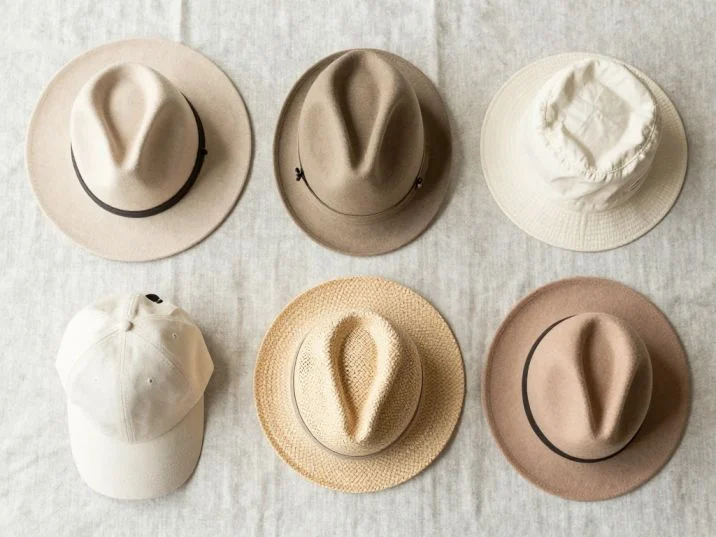
The 6 Best Travel Hat Styles (and When to Choose Each)
Wide Brim Sun Hat
This is the gold standard for outdoor travel. A brim of 3 to 5 inches gives full face and neck coverage, and most quality versions fold flat or roll into a tube without permanent damage. These are ideal for beach destinations, desert hikes, tropical climates, and anywhere with long stretches of direct sun.
Packable Baseball Cap
The most versatile option for urban travel. A packable baseball cap tucks into any bag pocket, looks appropriate in most casual settings, and provides decent forehead coverage. Look for caps with moisture-wicking sweatbands and UPF ratings if sun protection matters.
Bucket Hat
Once associated with fishing trips and 1990s streetwear, the bucket hat has made a strong comeback as a legitimate travel choice. The all-around brim covers more of the head than a baseball cap, and modern versions in nylon or polyester pack flat and dry fast.
Boonie Hat
The boonie is the workhorse of the group. Originally military gear, it features a full brim, a chin strap, and ventilation eyelets all the features that actually matter when you’re out in the elements.
Straw Hat
Beautiful, breathable, and completely impractical for packing. Straw hats are best purchased at your destination if you want one, or brought only if you’re checking luggage and can protect them in a hat box.
Wool Felt Fedora
The fedora works best for cooler climates and urban destinations. Wool felt repels light rain naturally, looks polished in cities and on wine country drives, and adds style points.
Flat Cap
The flat cap is a good choice for cool-weather city breaks, particularly in the UK, Ireland, and Northern Europe, where it fits right in. Wool, tweed, and waxed cotton versions handle drizzle and pack flatter than a fedora.
Flat caps suit most face shapes, though a slightly rounded crown flatters broader faces and a softer, deeper crown works well on narrower ones. They offer little sun protection beyond the forehead, so they work best as an urban accessory rather than a primary sun hat.
Which Travel Hat Style Is Most Popular Right Now?
Bucket hats, relaxed-fit baseball caps, and packable wide-brim hats lead the popularity charts for travel in 2026. Bucket hats remain cool because they’ve moved beyond streetwear into technical fabrics with UPF ratings and adjustable cords.
Neutral baseball caps in washed cotton or nylon are the most widely worn style overall, while the wide-brim sun hat is the clear leader for beach and resort trips. If you want one hat that goes with nearly everything, a tan, khaki, or navy bucket hat or cap is the safest pick.
Sun Protection Ratings Explained: UPF vs. SPF
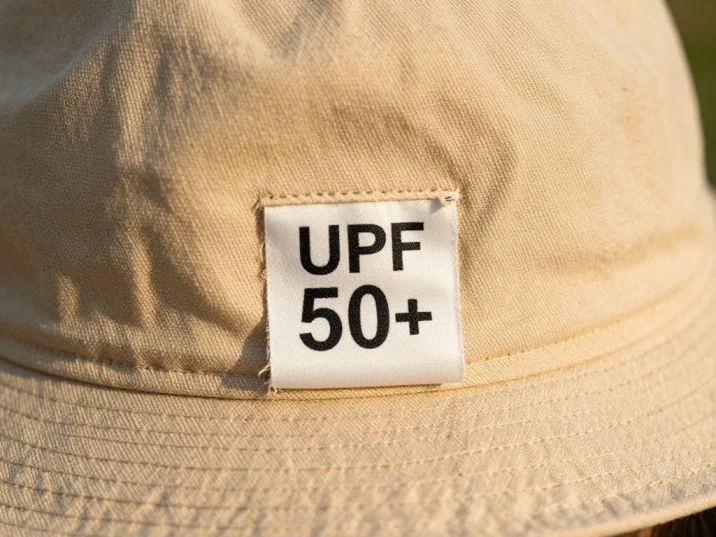
Many travelers confuse UPF and SPF, and the distinction matters when you’re choosing a hat. SPF refers to sunscreen applied to skin. UPF refers to fabric protection for clothing and hats. A UPF 50 hat blocks 98% of both UVA and UVB rays, making it significantly more reliable than sunscreen alone, which sweats off and needs reapplication.
The Skin Cancer Foundation recommends UPF 50+ as the highest protection tier. UPF 15 to 24 is considered “good,” UPF 25 to 39 is “very good,” and UPF 40 to 50+ is “excellent.” Most basic cotton hats, including many standard baseball caps, have a natural UPF of around 5 to 15 depending on weave tightness and color.
Dark colors and tighter weaves generally mean higher UPF ratings. A white loosely woven sun hat may look summery but offer surprisingly little protection. When in doubt, look for hats marketed specifically as UPF 50+ and check that the rating appears on the label or product specifications, not just in marketing copy.
Best Travel Hats by Trip Type
Best Travel Hats for Men
For men, the most practical travel hats are a boonie hat for hiking and safari, a bucket hat or packable baseball cap for city trips, and a wide-brim hat for beaches and long days in direct sun. Men who spend long hours outdoors, including construction workers, anglers, and trail hikers, should prioritize a full 360-degree brim, a neck flap or a brim of at least 3 inches, and a verified UPF 50+ rating over style. Sizing matters too: many men’s hats come in S/M and L/XL, while others use a fixed circumference in centimeters, so check the brand’s size chart before ordering.
Lightweight Travel Hats for Hot Weather
The coolest hats to wear in summer are made from breathable, quick-dry fabrics such as ripstop nylon, lightweight polyester, or woven paper straw, with mesh panels or ventilation eyelets. Light but tightly woven fabrics offer the best balance, because very pale, loose weaves let UV through. For hot weather, tan, light gray, and sage green stay cooler than black while still hiding sweat and dirt better than white. Moisture-wicking sweatbands and a slightly vented crown keep heat from building up during long days of walking.
Best Hat for European Travel
For European city trips, a packable baseball cap, flat cap, or slim felt fedora fits in at cafés, museums, and wine regions without looking like outdoor gear. Southern Europe in summer, including Spain, Italy, and Greece, calls for something with real sun coverage, so a lightweight wide-brim or bucket hat in a neutral tone works better. In spring and autumn, a rain-resistant wool-blend cap handles unpredictable weather and flattens easily in a daypack. Remember that some cathedrals and mosques expect head coverings to be removed or adjusted, so a hat you can quickly take off and stow is more useful than a rigid one.
Best Travel Hats for Women
Women’s travel hats work best when they combine a wide brim, adjustable sizing, and a design that stays put in the wind. Packable wide-brim sun hats are the strongest all-round choice for beaches, cruises, and sightseeing, while bucket hats and relaxed caps suit city days. Look for hats with an inner drawcord or sizing toggle that can accommodate a ponytail, bun, or braids, and choose a brim that sits level rather than drooping, which keeps your face shaded without blocking your view.
Choosing a hat based on destination type makes the decision much cleaner than trying to find one hat for every scenario.
| Trip Type | Best Hat Style | Key Features to Look For |
| Beach / Tropical | Wide brim sun hat | UPF 50+, chin strap, packable |
| City / Urban | Packable baseball cap or bucket hat | Compact, stylish, moisture wicking |
| Hiking / Adventure | Boonie hat | Chin strap, ventilation, UPF 50+ |
| Safari / Desert | Boonie or wide brim | Full brim, breathable, chin strap |
| Europe / Cultural | Fedora or baseball cap | Stylish, packable, rain resistant |
| Winter / Mountain | Wool beanie or fleece hat | Wind resistance, insulation |
| Cruise | Wide brim or bucket | Salt air resistant, packable |
How to Pack a Hat Without Ruining It
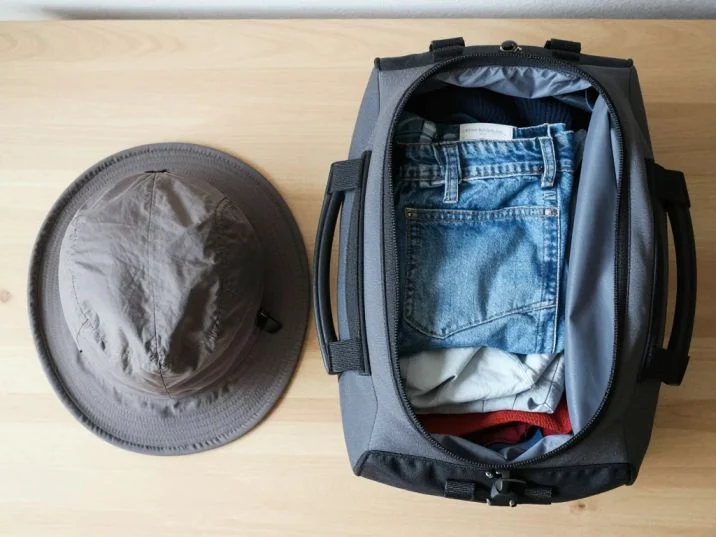
Packing a hat correctly is one of those skills that takes five minutes to learn and saves multiple hats over a lifetime of travel. The approach depends entirely on the hat’s material and structure.
For packable nylon or polyester hats, rolling works well. Start from the brim, roll tightly toward the crown, and secure with a rubber band or the hat’s own packing sleeve if it comes with one. Slot this roll into a corner of your bag, ideally around a curved object like a water bottle to help it hold its shape.
For structured hats like fedoras or stiffened sun hats, stuff the crown with socks or underwear to hold the dome shape, then set the hat upside down (crown down, brim up) in your bag. Pack softer items around the brim. Never place heavy items on top.
Baseball caps pack best by tucking them into shoes. Slip the cap inside a sneaker, with the brim following the curve of the shoe opening. This uses dead space efficiently and protects the cap’s structure.
If you’re genuinely worried about a more expensive hat, a hat travel case essentially a rigid or semi-rigid cylinder, is worth the investment. They protect the structure completely, and some double as storage for other accessories.
Climate and Destination Matching: The Insider’s Guide
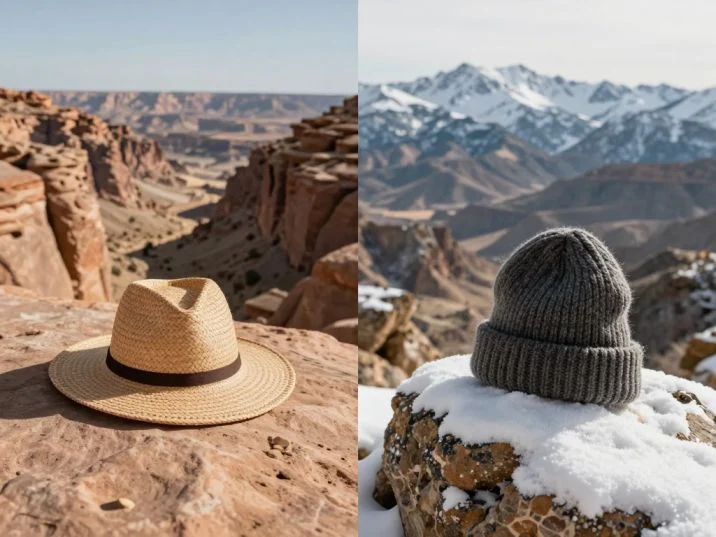
Experienced travelers know that the wrong hat for a climate can be worse than no hat at all. A heavy wool felt fedora in humid Costa Rica will be miserable. A straw hat in a rainy Scottish summer will be ruined within days.
For tropical and humid destinations Hawaii, Florida, the Caribbean, Southeast Asia prioritize breathability above everything else. Look for hats with ventilation holes or mesh panels, moisture-wicking inner bands, and quick dry materials. Nylon and moisture-wicking polyester work far better than cotton in humidity.
For dry and high-altitude destinations such as the American Southwest and Peru, the Atacama, n intensity increases dramatically at elevation. UV exposure can be 25 to 50% higher at altitude compared to sea level, according to the World Health Organization. A UPF 50+ wide-brim hat isn’t optional here; it’s genuinely protective gear.
For coastal and windy destinations like Cape Cod, the Oregon Coast, and Patagonia, a chin strap is essential. A beautiful hat lost to a harbor gust is a frustrating memory from nearly every beach traveler’s story. Any hat you plan to wear near open water should have a chin strap or the ability to attach one.
For cold and mountain destinations, the sun hat becomes a wool or fleece beanie. Merino wool beanies are the gold standard for cold weather travel: naturally odor-resistant, surprisingly warm even when damp, and thin enough to pack without bulk.
5 Insider Tips for Buying the Right Travel Hat

These tips come from the kind of hard-won experience that only multiple trips and a few bad hat decisions can teach.
First, always try a hat on before buying it, even when shopping online. Hat sizing is not standardized across brands, and the difference between a hat that fits perfectly and one that needs constant adjusting all day is enormous for comfort. If buying online, measure your head circumference in centimeters and compare it to the brand’s specific size chart.
Second, check the chin strap before you need it. Many packable hats include a chin strap, but the cord quality varies widely. Cheap cords fray or break after a season. A hat with a solid adjustable chin strap, ideally one that tucks away when not needed, is worth paying more for.
Third, consider buying a hat at your destination for longer trips. Local markets in Mexico, Peru, Ecuador, and throughout Southeast Asia sell regionally appropriate hats at reasonable prices. A genuine Panama hat bought in Cuenca, Ecuador costs a fraction of what the same hat sells for in a US boutique, and you get the story to go with it.
Fourth, opt for neutral colors over white or bright colors for versatility. A tan, khaki, olive, or navy hat pairs with almost anything in a travel wardrobe and shows dirt less than white options. This matters on longer trips where you’re wearing the same hat every day.
Fifth, wash your travel hat more often than you think you need to. Sweat and salt build up in hat bands and brims and weaken materials over time. Most nylon and polyester travel hats can be hand washed in cool water and air dried in an hour.
3 Tourist Mistakes and How to Fix Them
Bringing a hat you’d never actually wear. Many travelers pack a wide-brim sun hat for the beach and leave it in the hotel room because they feel self conscious wearing it in public. The fix: buy a hat you genuinely like the look of. Sun protection you won’t use is no protection at all. Try hats on before the trip, not at the store checkout out of obligation.
Skipping the chin strap because it “looks dorky.” A gust of wind on a boat, at a canyon rim, or on a busy city street has sent a lot of expensive hats into places they can’t be retrieved. Chin straps look dorky in photos and sensible everywhere else. Most modern travel hats have straps that tuck neatly away until needed.
Buying cheap without thinking about longevity. A $15 straw hat from a beach vendor might seem like a smart buy, but after two or three days of sweat, sun, and saltwater, it’s often warped and fragile. A $60 to $80 packable nylon travel hat from a quality brand can last a decade of trips. On a per-trip basis, the math favors quality significantly.
How to Choose a Travel Hat
Start with your destination and the activities planned, because these decide how much brim, ventilation, and weather resistance you need. Next, check the fit: the hat should sit snugly without leaving a mark on your forehead and shouldn’t shift when you turn your head quickly. Then look at the material, favoring nylon or polyester for packability and wool or waxed cotton for cooler, damp climates. Finally, think about versatility. A neutral color, a modest brim, and a clean shape make a hat easy to wear with almost any outfit, which is how you get a single hat that works from a hike in the morning to dinner in the evening.
How to Pick a Hat Color for Hot Weather
Lighter colors reflect heat and keep the hat itself cooler, but darker colors generally block more UV. The best compromise is a mid-tone such as tan, khaki, sage, or light gray in a tightly woven fabric with a UPF 50+ label. Many hats also feature a dark underbrim, which reduces glare reflected from sand, water, or pavement, helping your eyes as much as your skin.
3 Underrated Hat Options Most Travelers Overlook
The Sunday Afternoons Ultra Adventure Hat is widely beloved among outdoor enthusiasts but barely known outside that community. It features a 3-inch brim, UPF 50+ rating, a chin cord, a moisture-wicking sweatband, and a subtle mesh back panel for ventilation. It packs flat and springs back reliably.
The Patagonia Quandary Brimmer is another underrated choice, lighter than most wide-brim hats, made with recycled materials, and styled in a way that reads as outdoorsy without looking like gear catalog cosplay. It works equally well on a trail and in a small town.
For urban travel, the Brixton Tremont hat is an affordable felt wool option that looks genuinely stylish without requiring careful packing. It’s not fully packable, but it’s slim enough to slip between a jacket and the side of a roller bag without damage.
What to Look for at Each Price Point
Budget, mid-range, and premium hats each have real trade-offs worth understanding before you buy.
At the budget level under $30 you can find decent packable baseball caps and bucket hats that handle casual urban trips well. Quality control is inconsistent, chin straps are usually thin cord, and UPF ratings may not be verified. These work fine for one or two trips.
In the mid-range, $30 to $80 is where most serious travelers land. Brands like Columbia, REI Co op, Sunday Afternoons, and Outdoor Research offer verified UPF 50+ ratings, quality construction, adjustable fits, and materials that hold up over years of use. This is the sweet spot.
At the premium level, $80 and above, you’re paying for craftsmanship, materials, and often significant brand heritage. Tilley Hats, based in Canada, offer a lifetime guarantee and have been a go-to for serious travelers for decades. Their E3 Wanderer and LTM5 Airflo are consistently recommended by adventure travelers and outdoor guides. Akubra hats from Australia, genuine Panama hats from Ecuador, and quality wool felt hats from Stetson all fall in this range and deliver value over many years of use.
Durable Hat Brands for Travel and Adventure
Several brands have built their reputations on hats that hold up over years of use. Tilley is known for its lifetime guarantee and durable cotton and nylon designs. Sunday Afternoons, Outdoor Research, Columbia, and REI Co-op make verified UPF 50+ hats at mid-range prices, and Patagonia and Rab offer lighter, more modern styles. For heritage and craftsmanship, Akubra from Australia, Stetson, and hand-woven Panama hats from Ecuador remain the benchmarks. When comparing brands, look at stitching quality, brim stiffness, the strength of the chin cord, and whether the UPF rating is listed on the product label rather than only in marketing copy.
TSA and Airport Considerations for Hats
Hats create a small but real friction point at airport security that most travelers don’t think about until they’re in line. The TSA requires hats to be removed and placed in a bin for X-ray screening at standard checkpoints. If you’re wearing a structured hat, having it in your carry-on bag rather than on your head speeds things up.
TSA PreCheck members can leave hats on in most cases, though individual officers may still ask for removal. Always confirm current TSA guidelines at tsa.gov, as security procedures do change.
For international travel, the same general rules apply hats need to be screened. Packable hats have a clear advantage here because they fit easily into a bin or can be tucked into a bag pocket immediately before the checkpoint.
Sample Hat Packing Strategy for a 10-Day Trip
For most 10-day trips covering a mix of outdoor and urban activities, one hat is enough if you choose correctly. Here’s a practical packing strategy that works across multiple trip types.
Choose a packable boonie or wide brim sun hat as your primary hat if the trip involves any significant outdoor time. It handles hiking, beach days, city sightseeing, and boat excursions. If the trip is purely urban and you’re not expecting much sun, a packable baseball cap or bucket hat is lighter and less conspicuous.
Pack the hat in a dedicated exterior pocket of your carry-on or in the top layer of your personal item. This way, you can grab it without unpacking and put it on immediately after landing.
If you tend to wear hats indoors at restaurants or sites that require head coverings for religious reasons, many churches and mosques in Europe and the Middle East confirm the appropriate style before you go. Baseball caps are sometimes considered too casual in formal religious settings, while a neutral-toned wide-brim or simple sun hat is usually fine.
FAQs
What is the best travel hat for women?
The best travel hat for women combines sun protection, packability, and style. Wide-brim packable sun hats from brands like Sunday Afternoons, Eric Javits, and Helen Kaminski consistently rank highest for outdoor trips, while packable fedoras and bucket hats work better for urban destinations. Look for UPF 50+ ratings, a chin strap for windy conditions, and a brim of at least 3 inches for real sun protection. Fit matters more than style: a hat that stays in place all day is more valuable than one that looks great but shifts constantly.
What is the most packable travel hat?
The most packable travel hats are made from nylon or lightweight polyester that can be rolled, crushed, or folded without losing their shape. The Sunday Afternoons Ultra Adventure Hat, Columbia Bora Bora Booney, and various bucket hats from REI Co op are consistently praised for packability. Many come with their own small stuff sacks. A hat that rolls into a cylinder roughly the size of a water bottle fits in nearly any bag without sacrificing luggage space.
Are straw hats good for travel?
Straw hats are stylish and breathable but not ideal for packing. They crack, warp, and lose shape under pressure, making them poor choices for carry-on luggage. They work best if you’re checking luggage with enough space to protect them, or if you plan to buy one locally at your destination. For most travelers prioritizing practicality, a packable nylon or polyester hat is a better long term investment.
What hat is best for hiking and outdoor travel?
A boonie-style hat with a full brim, UPF 50+ rating, chin strap, and ventilation eyelets is the best choice for hiking and outdoor travel. The REI Co op Sahara Shade Hat, Columbia Bora Bora Booney, and Sunday Afternoons Charter Hat are frequently recommended by hikers and outdoor guides. For desert or high-altitude trips, the chin strap becomes especially important, and a 3 to 4-inch brim ensures full neck and face coverage during long sun exposure.
How do I keep a hat from getting smelly on a long trip?
Sweat and sun exposure break down hat materials and create odors over time. Hand washing your hat every few days in cool water with a small amount of gentle soap prevents buildup. Focus on the inner band where sweat accumulates. Allow the hat to air dry completely; a hat stuffed back into a bag while damp develops odor quickly. Many nylon and polyester travel hats also dry in under an hour when hung near a window or fan.
Can I wear a hat through airport security?
Yes, but you will need to remove it for X-ray screening at standard TSA checkpoints. TSA PreCheck members can often keep hats on, though individual officers may still request removal. Packable hats are easier to manage through security because they fit neatly into a bin or bag pocket. Always check current TSA guidance at tsa.gov, as procedures update periodically.
What is a UPF 50+ hat and why does it matter?
UPF stands for Ultraviolet Protection Factor. A UPF 50+ hat blocks 98% of UV radiation, covering both UVA and UVB rays. This is the highest protection tier recognized by standards organizations and recommended by the Skin Cancer Foundation for extended outdoor sun exposure. Unlike sunscreen, a UPF 50+ hat doesn’t sweat off or require reapplication. For travelers spending extended time outdoors hiking, at the beach, on safari, or at high altitude, a verified UPF 50+ rating is a meaningful safety feature, not just a marketing claim.
Are bucket hats still in style in 2026?
Yes. Bucket hats remain popular in 2026, though the style has become more refined. Current versions favor neutral colors, structured brims, and technical fabrics rather than loud prints. For travel, they’re one of the easiest hats to justify because they pack flat, dry quickly, and cover more of the face and neck than a baseball cap.
What hat goes with everything?
A neutral baseball cap or bucket hat in navy, tan, olive, or black goes with almost any travel outfit. For dressier trips, a plain wool flat cap or slim felt fedora in charcoal or brown works across casual and smart-casual settings. Choose a color that matches the majority of your wardrobe and a shape that suits your face, and you’ll have a hat that works with nearly everything you pack.
Which hat is best for summer travel?
For summer travel, a lightweight wide-brim hat or bucket hat made from breathable, UPF 50+ fabric is the best choice. These styles cover your face, ears, and neck, and vented panels keep your head from overheating. A mid-tone color like tan or khaki balances heat reflection with UV protection, and a chin strap keeps it secure in wind near water or open terrain.
Are flat caps in style in 2026?
Flat caps are still in style, particularly for cool-weather city travel and for people who prefer a more classic look. Wool, tweed, and corduroy versions are the most popular, usually in earthy tones like brown, charcoal, and forest green. They pair well with jackets, knitwear, and tailored trousers, and they flatten easily in a coat pocket or daypack.
How do I choose a travel hat?
Match the hat to your destination first, then check brim width, UPF rating, fit, and how well it packs. For sunny or outdoor trips, choose a wide brim or boonie style with UPF 50+. For cities, a packable cap, bucket hat, or flat cap is usually enough. Always try the hat on, or measure your head and compare it to the brand’s size chart, before buying.
What is the best hat for sun protection for men and women?
The best sun-protection hat for both men and women is a wide-brim or boonie hat with a brim of at least 3 inches, a verified UPF 50+ rating, and a chin strap. Neck flaps or a longer rear brim give extra protection for hikers, anglers, and outdoor workers. Women often prefer packable wide-brim styles with adjustable inner bands, while men often favor boonie and bucket styles, but the protective features that matter are the same for everyone.
Final Thoughts
Choosing the right travel hat comes down to three things: matching the hat to your climate, prioritising packability without sacrificing protection, and spending enough to get something that lasts more than a season.
A quality wide-brim or boonie hat with UPF 50+ protection and a reliable chin strap covers the majority of travel scenarios most people encounter.
The best travel hat is the one that earns a permanent spot in your packing list rather than getting left behind because it seemed like too much trouble to bring.

Maya Lin inspires travelers to explore the globe with absolute confidence and independence. Armed with a background in digital media and a decade of independent solo travel experience, she knows exactly how to navigate unfamiliar cities smoothly and safely. For Travelmarse, Maya curates the solo travel and hidden-gem verticals. She reviews charming boutique hotels, designs smart neighborhood walking routes, and shares practical language-learning hacks, giving readers the exact tools they need to travel solo without the stress.