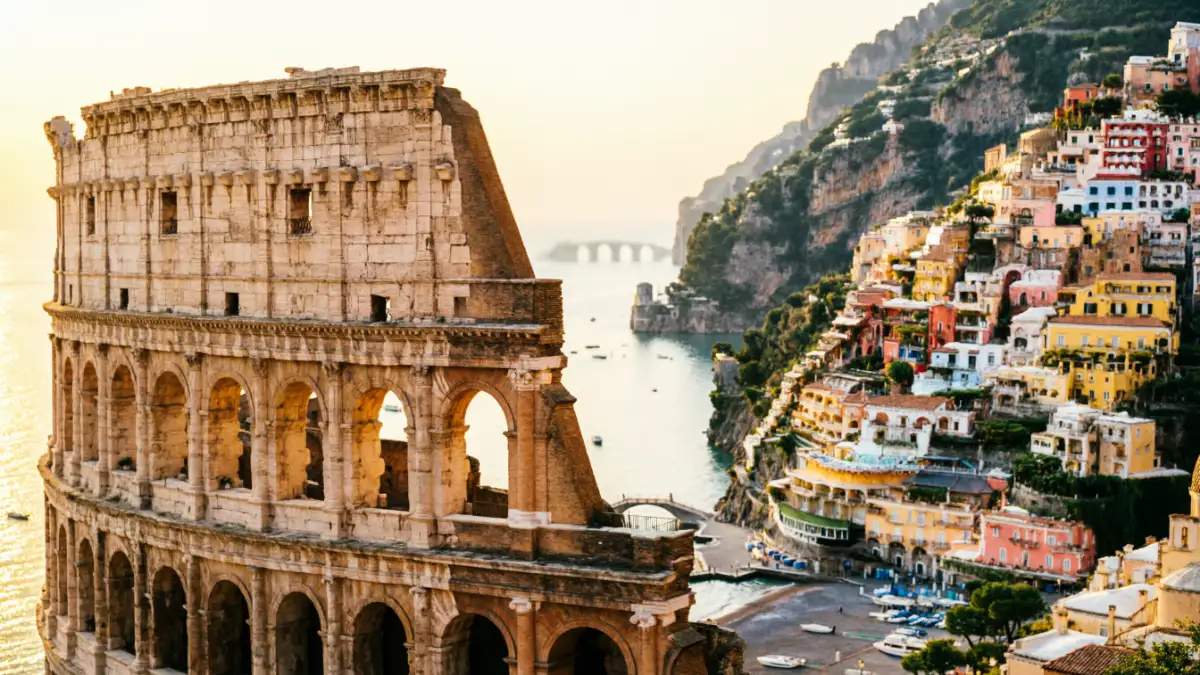
Picture standing beneath the dome of St. Peter’s Basilica, then two days later watching the sun drop behind pastel houses stacked above the Tyrrhenian Sea.
That’s the promise of Italy and also the problem. With thousands of towns, ruins, coastlines, and food regions competing for attention, most first-time visitors from the USA end up overwhelmed, over-scheduled, or stuck seeing only the crowded highlights.
This guide cuts through that noise. It’s built for American travelers planning their first (or next) trip to Italy, covering the must-see cities, the regions locals actually recommend, honest pros and cons, budget tips, seasonal advice, and the mistakes that trip up nearly every visitor. If you have 5 days or 3 weeks, you’ll leave with a clear, realistic plan, not just a bucket list.
Featured Snippet:
The top must-see places in Italy are Rome, Florence, Venice, the Amalfi Coast, and Cinque Terre. Rome offers the Colosseum and Vatican, Florence delivers Renaissance art, Venice has its canals, the Amalfi Coast has cliffside villages, and Cinque Terre has colorful seaside towns.
Quick Facts Table
| Category | Details |
| Best first-time cities | Rome, Florence, Venice |
| Best time to visit | April–June, September–October |
| Currency | Euro (€) |
| Main international airports | Rome Fiumicino (FCO), Milan Malpensa (MXP), Venice Marco Polo (VCE) |
| Recommended trip length | 7–14 days |
| Budget per day (mid-range) | Roughly $150–$250 per person; verify current pricing before booking |
| Language | Italian (English widely spoken in tourist areas) |
Prices, hours, and entry requirements change often; always confirm current details on official sites like Italy’s national tourism board (ENIT) or individual site websites before you travel.
Top 5 Must-See Things in Italy
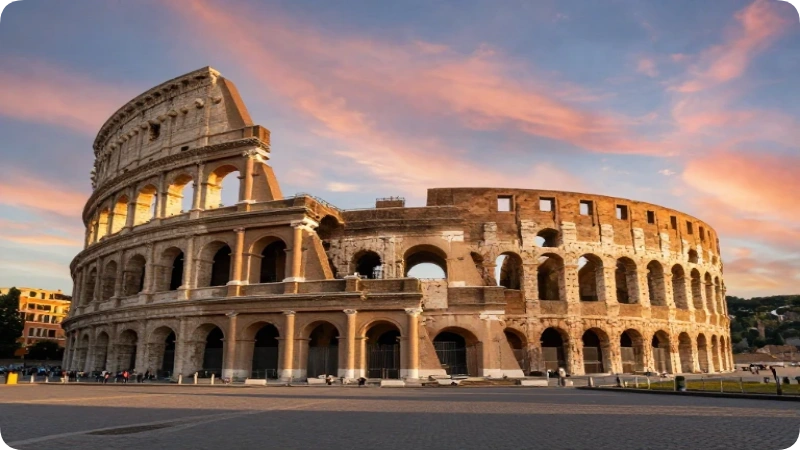
The five most essential experiences in Italy are the Colosseum and Roman Forum in Rome; Florence’s Uffizi Gallery and Duomo; Venice’s Grand Canal and St. Mark’s Square; the Amalfi Coast’s cliffside towns; and the colorful villages of Cinque Terre.
These five cover Italy’s ancient history, Renaissance art, unique geography, and coastal beauty in one trip. Together they represent the country’s three strongest travel regions: central Italy (Rome, Florence), the northeast (Venice), and the southern/coastal stretch (Amalfi, Cinque Terre).
If you only have one week, prioritizing three of these five is more realistic than rushing through all of them.
What Part of Italy Is a Must-See?
Central Italy, specifically Tuscany and Rome, is the most essential region for first-time visitors, since it combines ancient Roman history, Renaissance art, and classic countryside scenery in a compact, easy-to-travel area.
Beyond central Italy, the Amalfi Coast in the south and Venice in the northeast round out the country’s most iconic landscapes. Northern Italy (Milan, the Dolomites, Lake Como) appeals more to travelers focused on fashion, mountains, or lakes rather than classic postcard Italy.
For a single-region trip, Tuscany offers the best mix of cities, countryside, food, and wine without requiring long-distance travel.
Big 3: Rome, Florence & Venice
Italy’s “Big 3” cities are Rome, Florence, and Venice the classic first-timer route that covers ancient ruins, Renaissance masterpieces, and canal-side charm in roughly 7–10 days.
Rome anchors the trip with the Colosseum, Roman Forum, Pantheon, and Vatican City. Florence is the walkable heart of the Renaissance, home to Michelangelo’s David and the Uffizi Gallery. Venice is unlike anywhere else on Earth, built entirely on canals with no cars.
These three cities connect easily by high-speed train (Trenitalia or Italo), making them the backbone of most first-time itineraries.
What Not to Miss in Italy
Don’t leave Italy without seeing the Colosseum, Vatican Museums with the Sistine Chapel, Florence’s Duomo, Venice’s Grand Canal, and at least one coastal town like Positano or Cinque Terre’s Vernazza.
Beyond the icons, don’t skip a proper Italian meal that isn’t rushed; a two-hour dinner is normal, not a delay. Also don’t miss a smaller town alongside the big cities; places like Siena, Lucca, or Orvieto show a quieter, less touristy side of the country.
Skipping regional food specialties is another common miss; each region (Tuscany, Emilia-Romagna, Campania, Sicily) has its own distinct cuisine worth seeking out.
What Should I See in Italy for the First Time?
First-time visitors should focus on Rome, Florence, and Venice, adding one coastal stop like the Amalfi Coast or Cinque Terre if time allows; this combination covers history, art, and scenery without overloading a short trip.
Trying to add Milan, Sicily, and the Dolomites on a first 7-day trip usually backfires, leading to more time on trains than in destinations. A realistic first-timer pace is 2–3 nights per stop.
For a 10–14 day trip, adding the Amalfi Coast or Cinque Terre as a fourth stop rounds out the experience without feeling rushed.
Top 10 Places to Visit in Italy
- Rome ancient ruins, Vatican City
- Florence Renaissance art and architecture
- Venice canals and island culture
- Amalfi Coast Positano, Ravello, Amalfi town
- Cinque Terre five cliffside fishing villages
- Tuscany countryside Siena, San Gimignano, vineyards
- Milan fashion, the Last Supper, Duomo
- Naples pizza’s birthplace, gateway to Pompeii
- Sicily Greek ruins, beaches, Mount Etna
- Lake Como alpine lake scenery near Milan
This list balances the classic must-sees with regions that reward travelers who have more than a week to explore.
Top 3 Places to Visit in Italy
The top three places to visit in Italy are Rome, Florence, a nd Venice,r forming the country’s most efficient and rewarding introduction for first-time travelers.
Rome delivers over 2,000 years of history in a single city. Florence is compact enough to explore mostly on foot while housing some of the world’s greatest art. Venice offers scenery found nowhere else, though it’s best visited with 2 full days to see past the crowded main square.
Top 3 Places to Visit in Italy for First-Timers
For first-timers specifically, Rome, Florence, and either Venice or the Amalfi Coast make the strongest trio, depending on whether you prefer canals or coastline.
Choose Venice if train travel and classic architecture matter more; choose the Amalfi Coast if beaches, cliffside drives, and slower days matter more. Both pair naturally with Rome and Florence on a south-to-north or north-to-south route.
Top 5 Tourist Places in Italy
The five most-visited tourist destinations in Italy are Rome, Venice, Florence, Milan, and the Amalfi Coast, based on consistent traveler demand and flight/train connectivity.
Milan often gets skipped by first-timers focused on classic Italy, but it’s a practical entry or exit point thanks to Malpensa Airport, and it offers world-class shopping and the Last Supper fresco at Santa Maria delle Grazie.
Prettiest Places in Italy (Most Beautiful Spots)
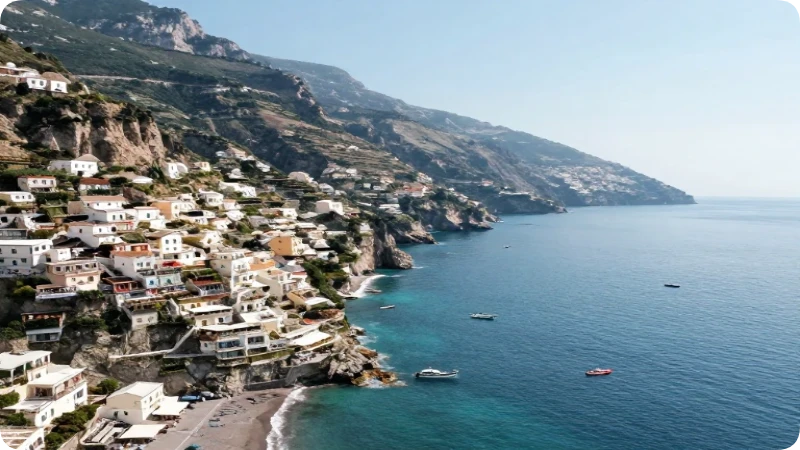
Italy’s prettiest places include Positano and the Amalfi Coast, the five villages of Cinque Terre, Lake Como, the Dolomites, and the Tuscan countryside around Val d’Orcia, each offering a distinct kind of natural beauty.
- Positano cliffside pastel houses above the sea
- Cinque Terre Vernazza and Manarola’s colorful harbors
- Lake Como alpine peaks framing calm blue water
- Val d’Orcia, Tuscany rolling hills and cypress-lined roads
- The Dolomites dramatic jagged peaks in northern Italy
- Matera ancient cave dwellings carved into stone
- Alberobello unique cone-roofed trulli houses in Puglia
These spots reward travelers willing to go beyond the Big 3 cities, and several like Matera and Alberobello remain relatively uncrowded compared to Venice or the Amalfi Coast.
Top 10 Most Beautiful Cities in Italy
- Venice
- Florence
- Rome
- Verona
- Siena
- Bologna
- Matera
- Lecce
- Naples
- Palermo
Smaller cities like Verona, Siena, and Lecce offer the same historic charm as the Big 3 with far fewer crowds, making them ideal for travelers on a second or third trip to Italy.
Venice vs. Amalfi Coast: Which Is Better?
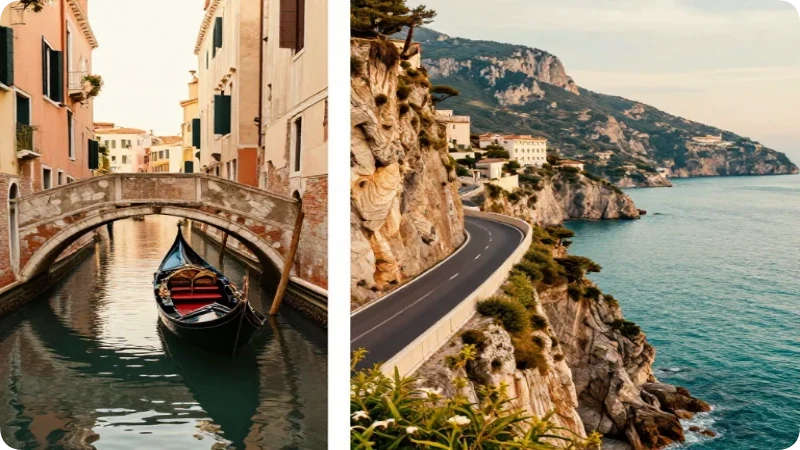
Venice is better for architecture, history, and efficient train travel, while the Amalfi Coast is better for scenery, beaches, and relaxed coastal pacing. The right choice depends on whether you want a city or a coastline.
Choose Venice if: you want canals, historic palaces, and easy connections to Florence or Milan. Choose the Amalfi Coast if: you want cliffside views, swimming, and slower, scenic days, though it requires a car, bus, or ferry rather than trains.
Neither is objectively better; they serve different kinds of trips and can both be included on a 10+ day itinerary.
Best Places to Visit in Italy on a Budget
Budget-friendly Italian destinations include Naples, Bologna, Sicily, and Puglia, where food, lodging, and attractions cost noticeably less than in Venice, Florence’s city center, or the Amalfi Coast.
- Naples cheap, excellent pizza and easy access to Pompeii
- Bologna affordable food capital of Italy
- Sicily lower lodging costs and free or low-cost ancient sites
- Puglia budget-friendly coastal towns without Amalfi’s price tag
Traveling in shoulder season (April, May, September, October) and booking regional trains instead of high-speed routes also cuts costs significantly. Always check current fares, since regional train and hotel pricing shifts seasonally.
Where Not to Go in Italy (Or Visit With Caution)
There’s no part of Italy tourists should entirely avoid, but some spots are widely considered overrated or overcrowded relative to the experience: central Venice at midday in summer, the most Instagrammed Cinque Terre viewpoints, and heavily touristed restaurants directly beside major landmarks.
These aren’t unsafe; they’re simply oversaturated. Visiting early morning or late afternoon, or choosing a less-photographed neighboring town, usually solves the crowding problem without sacrificing the experience.
For safety specifically, Italy is generally safe for tourists; the main risks are pickpocketing in crowded tourist zones and train stations, so standard city precautions apply.
Best Time to Visit Italy (Seasonal Comparison)
| Season | Months | Pros | Cons |
| Spring | April–June | Mild weather, blooming countryside | Rising prices near Easter |
| Summer | July–August | Long days, festivals | Peak crowds, high heat |
| Fall | September–October | Warm days, fewer crowds, harvest season | Shorter days by late October |
| Winter | November–March | Lowest prices, few crowds | Cold, some coastal towns partly closed |
The best overall months to visit Italy are April–June and September–October, balancing comfortable weather with manageable crowds. Summer suits travelers who prioritize beach time over avoiding heat and lines; winter suits budget travelers focused on Rome, Florence, or Milan rather than coastal regions.
Best City in Italy for First-Timers
Rome is the best city in Italy for first-timers, offering the highest concentration of iconic sites: the Colosseum, Roman Forum, Pantheon, Trevi Fountain, and Vatican City, all reachable on foot or by short metro rides.
Florence is a strong second choice for travelers who prefer a smaller, walkable city centered on art rather than sprawling ruins. Both cities have major airports or fast train connections, making them logical starting points.
Which Two Cities Should I Visit in Italy?
If choosing only two cities, Rome and Florence offer the most efficient first-time trip, combining ancient history with Renaissance art in cities just 90 minutes apart by high-speed train.
For travelers who want scenery over city sightseeing, Rome and Venice or Florence and the Amalfi Coast are strong alternate pairings.
Best Place to Stay in Italy
For first-time visitors, staying in Rome’s Centro Storico or Florence’s city center provides the easiest walking access to major sites, while Venice’s San Marco or Dorsoduro districts balance convenience with slightly fewer crowds.
For a coastal base, Sorrento is a practical hub for the Amalfi Coast and Pompeii, often cheaper and easier to reach than staying directly in Positano. Booking accommodations close to a train station also simplifies multi-city itineraries.
Nicest Region of Italy
Tuscany is widely considered Italy’s nicest all-around region, combining historic hill towns like Siena and San Gimignano, rolling countryside, and world-class food and wine within a compact, easily driven area.
For coastal beauty specifically, the Amalfi Coast or Cinque Terre rank higher; for dramatic mountain scenery, the Dolomites lead. The “nicest” region ultimately depends on whether a traveler prioritizes countryside, coast, or mountains.
Suggested Itinerary Order: Should You Start or End in Rome?
Starting in Rome is generally more practical, since it’s a major international gateway with frequent direct flights from the USA, letting you travel north afterward toward Florence, Venice, or Milan for departure.
Ending in Rome also works well if flying out of Fiumicino fits your schedule better, or if you’d rather ease into slower-paced towns before tackling Rome’s busier pace at the trip’s start. Either direction is workable; the deciding factor is usually flight availability and cost.
Sample 10-Day Itinerary
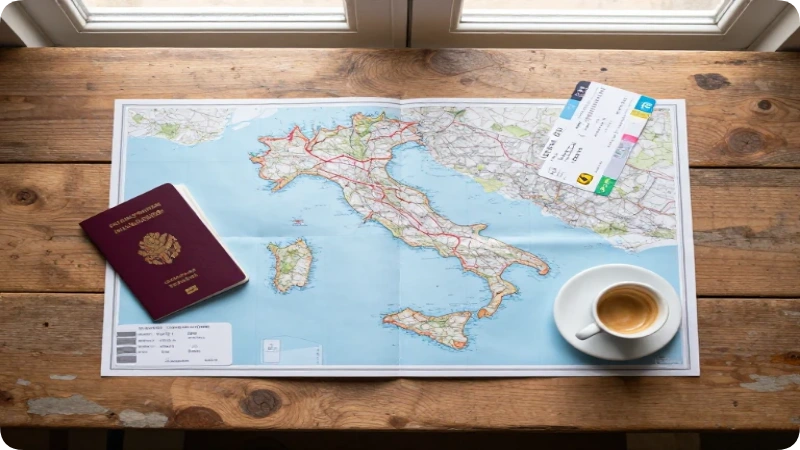
| Days | Location | Focus |
| 1–3 | Rome | Colosseum, Vatican, Pantheon |
| 4–5 | Florence | Uffizi, Duomo, day trip to Siena |
| 6–7 | Cinque Terre or Venice | Coastal villages or canals |
| 8–10 | Amalfi Coast | Positano, Ravello, boat day |
This route uses high-speed trains between Rome and Florence, then either a train to Venice or a transfer south toward the coast, keeping travel days to a minimum.
Common Tourist Mistakes to Avoid in Italy
- Trying to see too many cities too fast Fix: limit to 2–3 nights minimum per stop.
- Skipping reservations for major sites Fix: book the Colosseum, Vatican, and Uffizi tickets online in advance.
- Eating right next to major landmarks Fix: walk two or three streets away for better food at lower prices.
- Assuming Italy is one uniform experience Fix: expect regional food, pace, and culture to shift noticeably between north and south.
- Not validating regional train tickets Fix: check current Trenitalia rules, since unvalidated tickets can result in fines.
Avoiding just the first two mistakes alone tends to make the biggest difference in how relaxed a first trip feels.
Culture & Etiquette: Do Ladies Wear Jeans in Italy?
Yes, jeans are completely normal and common daily wear for women throughout Italy, including in cities like Rome, Florence, and Milan; here’s no cultural restriction against them.
The one exception is church etiquette: many churches and basilicas, including St. Peter’s Basilica, require shoulders and knees to be covered for both men and women, so jeans are fine b, but shorts, tank tops, or short skirts may not be permitted inside. Carrying a light scarf or cover-up solves this easily.
What’s Famous in Italy to Buy
Italy is famous for leather goods (bags, shoes, jackets), Murano glass from Venice, high-end fashion in Milan, ceramics from the Amalfi Coast and Sicily, and food products like olive oil, balsamic vinegar, and regional wine.
- Leather goods Florence’s leather markets are especially known for this
- Murano glass authentic pieces come from Venice’s Murano island
- Ceramics Amalfi Coast towns like Vietri sul Mare specialize in hand-painted pottery
- Food & wine olive oil, Parmigiano-Reggiano, and regional wines travel well when packed correctly
Always buy from established shops rather than street vendors when purchasing leather or glass, since counterfeit goods are common in tourist areas.
Must-Try Italian Food
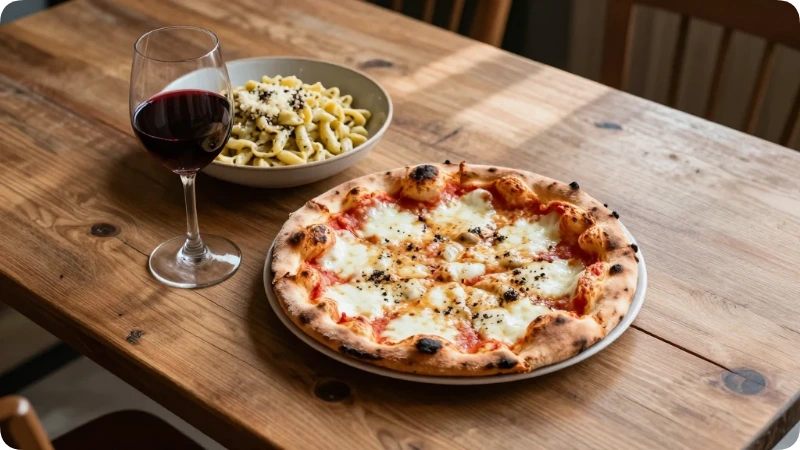
Italy’s must-try dishes vary by region: Roman classics like carbonara and cacio e pepe, Neapolitan pizza in Naples, fresh seafood on the Amalfi Coast, and Tuscan dishes like ribollita and bistecca alla fiorentina.
- Rome carbonara, cacio e pepe, supplì
- Naples Neapolitan pizza, sfogliatella pastry
- Florence/Tuscany bistecca alla fiorentina, ribollita soup
- Venice cicchetti (small plates), fresh seafood risotto
- Sicily arancini, cannoli, fresh citrus dishes
Eating according to region rather than ordering the same dish everywhere is the best way to experience Italy’s food culture authentically.
Packing Advice
Pack comfortable walking shoes, layers for variable weather, a lightweight scarf or cover-up for church visits, and a compact daypack. Cobblestone streets and long walking days make comfort more important than formal dressing.
Summer travelers should pack breathable fabrics and sun protection; spring and fall travelers should bring a light jacket for cooler mornings and evenings. Italy is more casual than many expect, though very casual gym wear is uncommon outside of active pursuits.
FAQs
How many days do you need to see the must-see parts of Italy?
Most travelers need at least 7–10 days to comfortably see Rome, Florence, and one additional region like Venice or the Amalfi Coast without rushing between cities.
Is Italy expensive to visit from the USA?
Italy can be visited on a range of budgets; major cities like Venice and coastal towns like Positano cost more, while Naples, Sicily, and Puglia offer noticeably lower daily costs for food and lodging.
Do you need a visa to visit Italy from the USA?
US citizens don’t currently need a visa for short tourist stays in Italy, though entry requirements change periodically, so travelers should verify current rules on the U.S. State Department or Italian consulate website before booking.
Is it better to rent a car or use trains in Italy?
Trains work best for city-to-city travel between Rome, Florence, Venice, and Milan, while a rental car is more useful for exploring Tuscany’s countryside or driving the Amalfi Coast at your own pace.
What is the most overrated tourist spot in Italy?
The most commonly cited overrated experience is crowded midday visits to Venice’s St. Mark’s Square in peak summer; visiting early morning or in shoulder season significantly improves the experience.
What is the most underrated place to visit in Italy?
Puglia, Matera, and Bologna are frequently named as underrated compared to Rome, Florence, or Venice, offering similar historic charm and food culture with far fewer crowds.
How far in advance should I book major Italy attractions?
Book tickets for the Colosseum, Vatican Museums, and Uffizi Gallery at least 2–4 weeks in advance during peak season (May–September), since same-day tickets often sell out.
Can you see Italy’s must-see sites without speaking Italian?
Yes, English is widely spoken in hotels, restaurants, and major tourist sites across Italy’s main cities, though learning a few basic Italian phrases is appreciated and useful in smaller towns.
What should first-time visitors to Italy avoid packing?
Avoid overpacking formal wear and multiple pairs of shoes; Italy’s walking-heavy itinerary and cobblestone streets favor a light bag with versatile, comfortable clothing over bulky luggage.
Is Italy safe for solo female travelers?
Italy is generally considered safe for solo female travelers, particularly in well-touristed cities, though standard precautions around crowded areas, train stations, and late-night transport are recommended, as in any major destination.
What’s the best way to travel between Rome, Florence, and Venice?
High-speed trains (Trenitalia’s Frecciarossa or Italo) connect Rome, Florence, and Venice in roughly 1.5–3.5 hours each way, making rail the fastest and most reliable option over driving or flying between them.
Conclusion
Italy’s must-see list doesn’t have to mean an exhausting sprint through every famous name at once. The strongest trips lean on three ideas: start with Rome, Florence, and one standout region like Venice, Cinque Terre, or the Amalfi Coast; slow down enough to enjoy 2–3 nights per stop instead of one-night hops; and leave room for at least one lesser-known town, since Italy’s smaller cities often outshine the crowded highlights.
If it’s a first trip built around the Big 3 or a return visit chasing Puglia’s coastline or Sicily’s ruins, Italy rewards travelers who plan with intention rather than trying to see everything. Start mapping your route, book those must-see attraction tickets early, and let the rest of the trip breathe.

Ben Fogle believes that true adventure begins where the pavement ends. After spending years documenting extreme environments, rowing across oceans, and trekking through frozen landscapes, he mastered the art of wilderness travel. For Travelmarse, Ben constructs highly detailed guides on deep-nature packing lists, wildlife safety, and sustainable eco-tourism. He breaks down intimidating, rugged expeditions into clear, step-by-step roadmaps so everyday travelers can safely connect with the natural world.