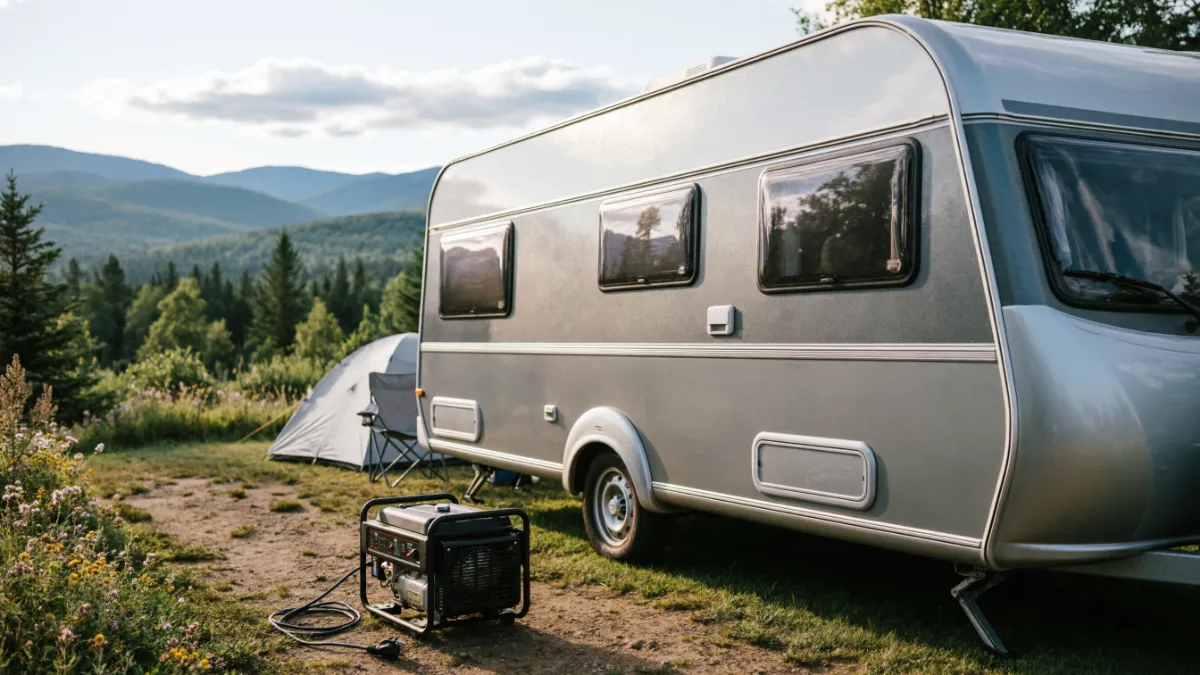
Quick Answer: The best generator for a travel trailer is a portable inverter generator between 2,000 and 3,500 watts, such as the Honda EU2200i, Champion 2500 Watt, or Westinghouse iGen series.
These models run quiet, produce clean power safe for sensitive electronics, and supply enough output to run an air conditioner, refrigerator, and small appliances on the road.
Nothing ends a peaceful boon docking trip faster than a dead battery, a warm fridge, or a generator so loud it draws complaints from every campsite within earshot.
Choosing the best generator for travel trailer use is one of the most important decisions an RV owner makes, yet many travelers buy based on price alone and regret it the first time they try to run an air conditioner off grid.
This guide walks through wattage needs, fuel types, noise ratings, and the specific models that perform well for travel trailers of different sizes. If parked at a national park campground or dry camping in the desert, the right generator keeps the lights on, the fridge cold, and the trip stress free.
What Size Generator Does a Travel Trailer Need?
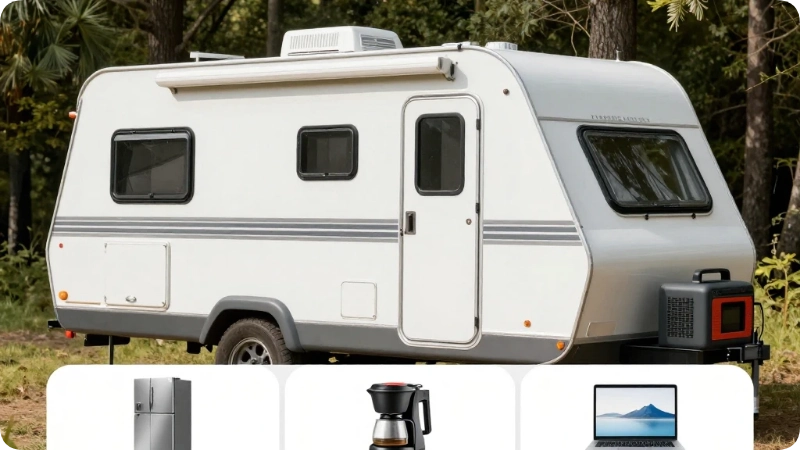
Most travel trailers need a generator between 2,000 and 3,500 watts to comfortably run a single air conditioner, refrigerator, microwave, and charging devices. Smaller trailers without A/C can often get by with 1,000 2,000 watts. Larger trailers with two A/C units or an electric water heater may need 3,500 4,000 watts or a pair of generators wired together.
To size correctly, add up the starting watts (not just running watts) of every appliance likely to run at once. Air conditioners and compressors draw a large surge when they start, so this number matters more than most buyers expect.
| Appliance | Running Watts | Starting Watts |
| 13,500 BTU RV A/C | 1,500 | 3,000 3,500 |
| RV Refrigerator (gas/electric) | 150 | 600 |
| Microwave | 1,000 | 1,000 |
| Coffee Maker | 1,000 | 1,000 |
| Laptop/Phone Charging | 60 | 60 |
Inverter vs. Conventional Generators
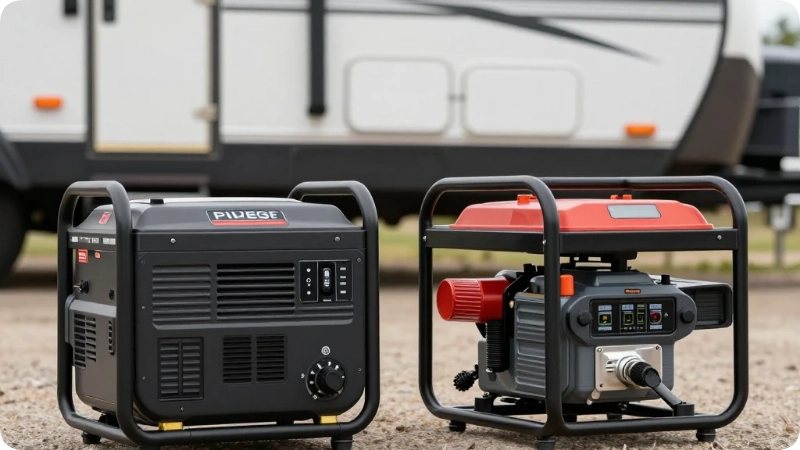
Inverter generators are the better choice for travel trailers because they produce cleaner, more stable power that protects sensitive electronics like laptops, TVs, and the trailer’s onboard converter. Conventional generators are usually cheaper and more powerful per dollar but produce “dirtier” electricity and run louder.
Conventional generators still have a place for travelers who only need to run basic lights and charge batteries, or who are working with a tighter budget. For anyone running a residential refrigerator, CPAP machine, or smart TV, an inverter model is worth the extra cost.
Top Generator Picks for Travel Trailers
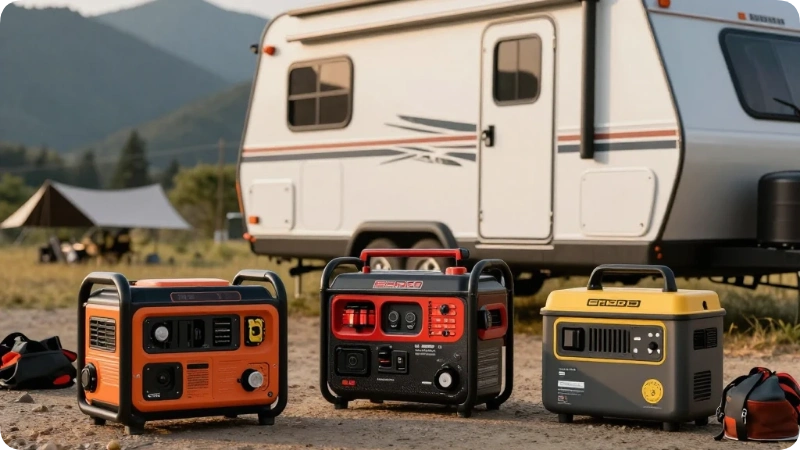
The best generators for travel trailers balance wattage, noise level, fuel efficiency, and weight. Below are widely used models across different budgets and power needs, based on specs and owner reported performance rather than promotional claims.
Honda EU2200i (2,200 Watts)
The Honda EU2200i is one of the most trusted names in RV generators, prized for its reliability and a noise rating around 48 57 decibels depending on load. It’s a favorite for small to mid size trailers and pairs well in tandem with a second unit for added power.
Champion 3500 Watt Dual Fuel
This model runs on either gasoline or propane, giving travelers flexibility when one fuel source is hard to find. It produces enough power for a single A/C unit and is a solid mid range pick for traveler budgets.
Westinghouse iGen2200
A budget friendly inverter option that’s notably quiet and lightweight, the Westinghouse iGen2200 suits smaller travel trailers and pop ups that don’t need to run high draw appliances simultaneously.
Generac GP3500iO
Built with a sealed, weather resistant design, this generator is a good option for travelers who camp in more exposed or rugged conditions and want extra durability built in.
Noise Levels: What’s Acceptable at a Campground?
Most national and state park campgrounds enforce generator noise limits around 60 decibels measured from 50 feet away, and many require generators to be turned off during specific quiet hours, typically 10 p.m. to 6 a.m. or 8 a.m. Always check individual campground rules, since limits vary by location and operator.
Inverter generators in the 48 58 decibel range are generally the safest choice for staying within these limits without drawing complaints from neighboring campsites.
Fuel Type: Gasoline, Propane, or Dual Fuel
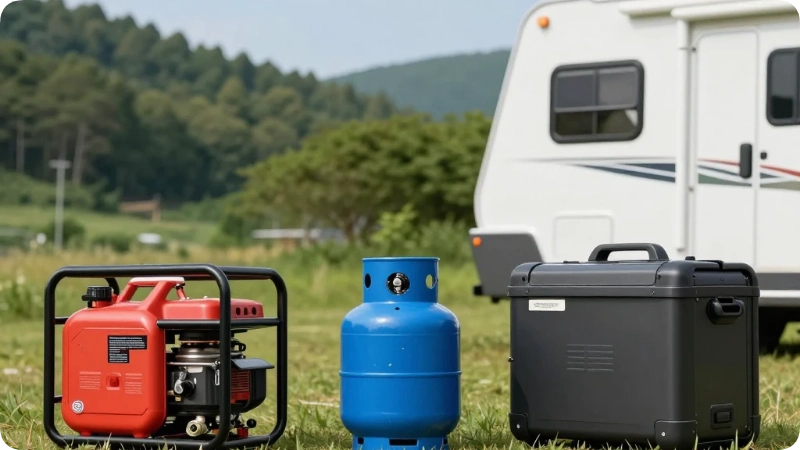
Gasoline generators are the most common and widely available but require carrying extra fuel safely and can degrade if left sitting unused. Propane generators burn cleaner and store longer, while dual fuel models offer flexibility for travellers who switch between camping styles.
For long road trips through remote areas, propane or dual fuel models reduce the hassle of finding gas stations in a pinch, since many trailers already carry propane tanks for cooking and heating.
Running an Air Conditioner Off a Generator
Running a single RV air conditioner typically requires a generator rated at least 3,000 starting watts, even though the unit only draws around 1,500 watts once running. A soft start device, sold separately, can reduce that surge and allow a smaller generator to handle the A/C.
Travelers planning to dry camp in hot climates such as the Southwest in summer should prioritize generator wattage and a soft start kit over price when budgeting for equipment.
Solar Power as a Generator Alternative
Solar panels paired with a battery bank provide a quiet, fuel-free alternative for travelers who mainly need to run lights, charge devices, and keep a refrigerator cold. However, this setup usually cannot handle the heavy power demands of an air conditioner. Because of that, most full-time RVers use solar alongside a generator rather than relying on it as a complete replacement.
This combination works particularly well in sunnier regions such as Arizona, Nevada, and parts of California, where consistent daylight hours support reliable charging.
Budget Breakdown: What to Expect to Spend
Generator prices vary by wattage, brand, and fuel type, and travelers should always check current retailer pricing since costs change frequently. As a general range, smaller inverter generators (1,000 2,200 watts) tend to sit at the lower end of the market, while higher wattage dual fuel or dual unit setups cost more.
Budget conscious travelers can also consider buying a single smaller unit and adding a second matching generator later through a parallel kit, spreading the cost over two purchases.
Common Mistakes Travelers Make
Mistake 1: Buying based on running watts only. Fix: Always size for starting watts, especially for A/C units and compressors.
Mistake 2: Ignoring campground quiet hours. Fix: Research the specific campground’s generator policy before arrival, since rules differ by park and season.
Mistake 3: Skipping maintenance before a trip. Fix: Run the generator and check oil levels a few days before departure, not the morning of.
Insider Tips for RV Generator Use
- Run generators under load, not idle, to keep the engine healthy over long storage periods.
- Store fuel stabilizer in the tank if the generator sits unused between trips.
- Match generator brands when buying a second unit for parallel capability; mixed brands often won’t sync properly.
- Test before departure, not at the first remote campsite, to catch issues early.
- Carry a spare air filter and spark plug for gasoline models on long, dusty routes through places like Utah’s backcountry roads.
Hidden Gems: Underrated Generator Setups
Many travelers overlook propane only conversions, which eliminate the need to store gasoline and burn notably cleaner over a season of use. Another underrated option is a small solar plus generator hybrid, using solar for daily needs and the generator only as backup. Lastly, used commercial grade inverter generators from RV resale groups often offer more value than buying new entry level models.
Safety Tips for Generator Use
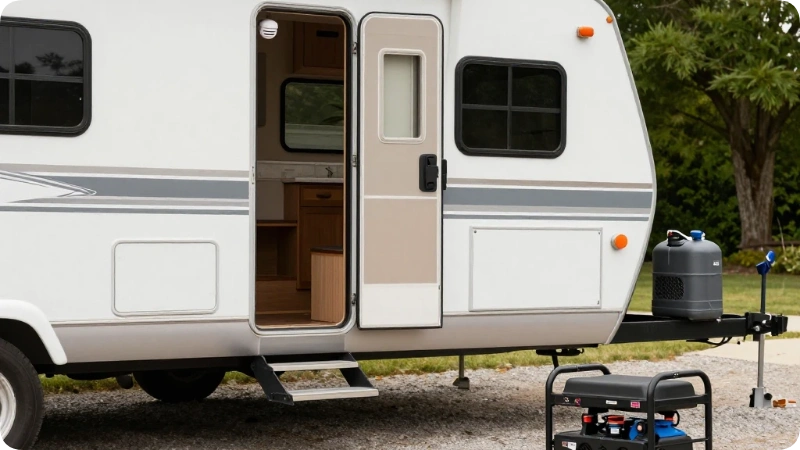
Always run generators outdoors, at least 20 feet from the trailer, and never inside an enclosure or under an awning where exhaust can accumulate. Carbon monoxide detectors inside the trailer are essential, and the CDC recommends testing them regularly during travel season.
Refuel only after the generator has fully cooled, and store extra gasoline in approved containers away from living spaces.
Is a Generator Worth It for Travel Trailer Owners?
A generator is worth it for any traveler who plans to camp off grid, in campgrounds without electrical hookups, or wants backup power during outages at full service sites. Travelers who exclusively stay at hookup campgrounds may not need one at all, making this a key question to answer honestly before buying.
Overrated: The biggest, loudest, highest wattage model on the shelf — most trailers don’t need it. Underrated: A properly sized 2,200 watt inverter generator, which handles the majority of real world RV power needs quietly and efficiently.
FAQs
What size generator do I need for a 30 foot travel trailer?
A 30 foot trailer with one A/C unit typically needs a 3,000 3,500 watt generator. Trailers with two A/C units or an electric water heater may need a higher wattage or dual generator setup.
Can I run my travel trailer A/C on a generator?
Yes, most RV air conditioners can run on a generator rated for at least 3,000 starting watts. A soft start device can reduce this requirement for smaller generators.
Are inverter generators worth the extra cost for an RV?
Yes, for most travelers. Inverter generators protect sensitive electronics and run quieter, which matters most at campgrounds with strict noise rules and quiet hours.
How long can a generator run continuously?
Most portable generators run 8 12 hours on a full tank at moderate load, though this varies by model and fuel type. Always check the manufacturer’s specifications.
Do national parks allow generators at campgrounds?
Many do, but with restrictions on hours and noise levels. Always verify current rules through the National Park Service or individual campground websites before arrival.
What’s the quietest generator for RV camping?
Inverter models like the Honda EU2200i and Westinghouse iGen series rank among the quietest, typically operating between 48 and 58 decibels depending on load.
Can solar panels replace a generator for a travel trailer?
Solar can replace a generator for light loads like lighting and charging, but most setups can’t handle air conditioning. Many RVers use solar and a generator together.
Final Takeaways
Choosing the right generator comes down to three things: matching wattage to actual appliance needs, prioritising inverter technology for sensitive electronics, and respecting campground noise rules wherever the road leads.
A well matched generator turns off grid camping from a gamble into a reliable, comfortable part of the journey.
Before the next trip, take time to size the load correctly, test equipment at home, and pack the right fuel and safety gear.
The freedom of dry camping anywhere from desert overlooks to forest clearings is worth getting this one detail right.

Stephen Fry brings an insatiable curiosity for history, language, and global heritage to the Travelmarse team. Having spent decades traveling the globe to study regional storytelling and ancient civilizations, he excels at uncovering the hidden narratives of modern destinations. Stephen anchors the cultural vertical on Travelmarse, where he writes deep-dive guides on architectural history, museum crawl strategies, and local customs. His vivid, engaging writing helps travelers look past the surface and truly understand the heritage of the places they visit.