
Surgical technologist travel jobs let certified surge techs take short term hospital contracts usually 8 to 26 weeks in cities and states across the country.
These assignments typically pay more than permanent staff roles, cover housing or a stipend, and give techs the chance to build experience in different operating room settings while exploring new parts of the USA.
Moving between operating rooms in different states sounds exciting until the paperwork, licensing rules, and packing logistics pile up.
Many surgical techs want the higher pay and fresh scenery a travel contract offers, but stall out because they don’t know where to start.
This guide walks through every step from choosing an agency to settling into a new city so a first contract feels like an adventure instead of a gamble.
What Is a Surgical Technologist Travel Job?
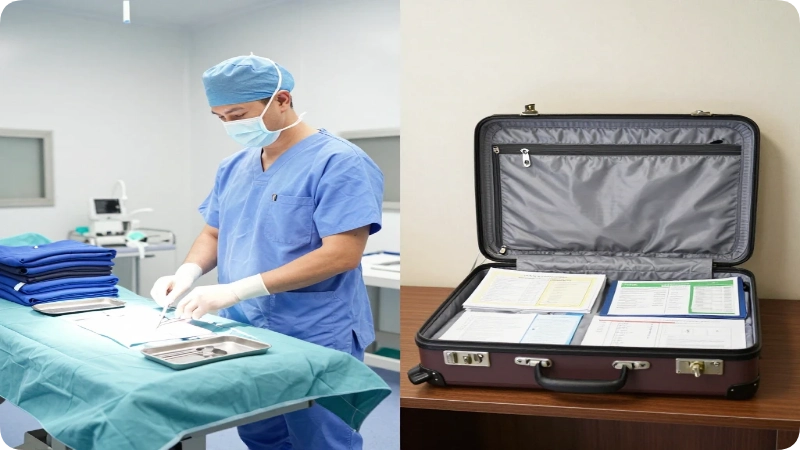
A surgical technologist travel job is a temporary staffing contract where a certified surg tech works at a hospital or surgery center outside their home area, usually through a healthcare staffing agency. Contracts commonly run 13 weeks, with options to extend or transfer to a new facility. Pay packages often combine an hourly wage with a tax free housing or meal stipend, and agencies typically handle credentialing paperwork, travel reimbursement, and license coordination between assignments.
Quick Facts Table
| Detail | Typical Range |
| Contract length | 8 26 weeks (13 weeks most common) |
| Certification required | CST (Certified Surgical Technologist) via NBSTSA, or state recognized equivalent |
| Common specialties | General surgery, orthopedics, cardiovascular, neuro, robotics |
| Housing | Agency provided or stipend based |
| License type | State license or registration, varies by state |
Pay rates, stipend amounts, and license rules change often, so always confirm current numbers directly with a staffing agency or the relevant state board before signing a contract.
Who Travel Surg Tech Jobs Are Best For
Travel contracts suit surg techs who are flexible about location, comfortable adapting quickly to new OR teams, and motivated by higher pay or new experience rather than long term workplace stability. Techs with at least one to two years of hands on OR experience are usually the most competitive candidates for agencies and hospitals.
Best fit: early career techs building a varied resume, experienced techs chasing higher pay, or anyone wanting to test drive a city before relocating. Less ideal for: brand new graduates with no OR experience, or techs who need a fixed schedule due to family or caregiving responsibilities. Some agencies do accept newer techs for certain specialties, so it’s worth asking directly.
How to Get Started With a Travel Contract

- Confirm active CST certification and any required state license or registration.
- Build a resume highlighting OR specialties, case volume, and EMR systems used.
- Research and contact two or three reputable healthcare staffing agencies.
- Interview with a recruiter and clarify pay, housing, and contract terms in writing.
- Complete facility credentialing (background check, titers, skills checklist).
- Confirm start date, housing, and licensing before travel.
Each step matters skipping the credentialing details is one of the most common reasons a contract gets delayed at the last minute.
Choosing a Staffing Agency
Reputable staffing agencies act as the middleman between surgical techs and hospitals, handling contracts, pay, and sometimes housing arrangements. Look for agencies that are transparent about pay breakdowns, have Joint Commission certification, and can share verifiable reviews from current travelers rather than only marketing copy.
Ask any agency for a full pay package breakdown (hourly rate plus stipends) rather than just a bundled weekly number, since bundled figures can hide lower base pay. It’s also reasonable to work with more than one agency at once to compare openings and rates.
Licensing and Legal Requirements by State

Surgical technologist licensing rules vary significantly: some states require formal licensure or registration, others require certification only, and a few have no state level requirement at all. Because rules change, techs should verify current requirements directly with the state’s health licensing board before accepting an assignment there.
States with formal licensing or registration processes may require submitting proof of CST certification, background checks, and sometimes continuing education documentation ahead of a start date. Building in a few extra weeks before a contract begins gives enough buffer for paperwork to clear.
Best Specialties and Facilities for Travel Assignments
Hospitals most frequently request travel surg techs for general surgery, orthopedics, cardiovascular, neurosurgery, and robotics assisted procedures, since these services often see the highest patient volume or staffing gaps. Level I and II trauma centers and larger regional hospitals tend to post the most travel openings.
Techs comfortable in multiple specialties are usually the most in demand and have more choice over location and pay. Building robotics or cardiovascular experience, even part time, can open up assignments in cities that otherwise have fewer openings.
Where Surgical Techs Travel Most in the USA

Travel surg tech demand tends to run highest in states with large hospital systems and growing populations, including Texas, Florida, California, Arizona, and North Carolina, though openings shift with seasonal patient volume and local staffing gaps. Warmer states often see a hiring bump in winter, when part time or seasonal residents increase local healthcare demand.
Smaller regional hospitals in college towns or coastal areas sometimes offer contracts with less competition than major metro hospitals, which can mean better negotiating room on pay or start dates.
Hidden Gem: Mountain and College Town Hospitals
Regional hospitals near national parks or university towns think areas near the Blue Ridge Mountains or college hubs in the Midwest often have lighter competition for travel contracts and can double as a scenic home base for hiking or exploring on days off.
Where to Stay During a Contract

Travel surg techs typically choose between agency arranged housing, a stipend to book their own short term rental, or extended stay hotels near the hospital. Extended stay hotels and furnished short term rental platforms are common choices since they allow flexible lease lengths matching a 13 week contract.
Money saving tip: comparing the stipend amount against local extended stay rates before committing to self booked housing can prevent overpaying in high cost cities. Choosing housing 15 20 minutes from the hospital, rather than directly downtown, often cuts costs significantly without adding much commute time.
Budget Breakdown for a Travel Assignment
A realistic travel surg tech budget includes housing or stipend use, transportation to and from the facility, license or credentialing fees, scrubs and required gear, and day to day living costs in the new city. Tax advantaged stipends assume the tech maintains a genuine permanent tax home, so it’s worth confirming eligibility with a tax professional familiar with travel healthcare workers.
Time saving tip: batching credentialing paperwork (background check, immunization records, skills checklist) into one folder saved in advance speeds up onboarding for every future contract, not just the first one.
Packing Advice for Traveling Surg Techs
Pack scrubs, comfortable supportive shoes, a stethoscope if used, and copies of certification and immunization records in both digital and printed form. Many hospitals require proof of specific titers and a recent TB test, so keeping these documents easily accessible avoids delays at check in.
A compact filing folder or scanned document app for licenses, CPR cards, and background check results saves time at every new facility, since credentialing offices often ask for the same documents repeatedly.
Common Mistakes First Time Travelers Make
- Signing a contract without a full pay breakdown always ask for hourly rate plus itemized stipends in writing.
- Underestimating licensing timelines some state licenses take several weeks to process, so apply early.
- Booking housing before confirming the exact hospital address commute times can vary widely within the same city.
Fixing these early, before the first shift, prevents most of the stress travelers report in their first 30 days.
Safety Tips for New Cities
Researching neighborhood safety near potential housing, keeping copies of important documents in cloud storage, and confirming hospital security or badge access policies ahead of arrival all help a transition go smoothly. Local hospital HR or current staff can usually offer honest, specific safety guidance for the immediate area.
It’s also worth confirming parking arrangements and night shift transportation options in advance, since these details vary a lot between hospital campuses.
Solo Travel Tips for Surg Techs
Traveling alone for a contract works well for techs who build a routine quickly: scouting the hospital route on day one, finding a grocery store and gym nearby, and connecting with other travel staff on the unit for local recommendations. Online travel healthcare communities can be a fast way to find city specific tips before arrival.
Underrated move: asking the unit’s charge nurse or lead tech for restaurant and grocery recommendations on day one often surfaces better local spots than any online search.
Alternatives to Traveling as a Surgical Tech
Surg techs who want variety without full relocation might consider local per diem shifts, float pool positions within a larger hospital system, or short local contracts that avoid a full state license transfer. These options offer some flexibility and pay bump without the logistics of moving across state lines.
Worth it? For techs who enjoy new environments and want higher pay, travel contracts are generally worth it. For those who value routine or have location constraints, a local float pool role may be the better fit.
Sample First Contract Timeline
A realistic runway from decision to first shift usually looks like: 6 8 weeks out, contact agencies and confirm certification status; 4 6 weeks out, interview and accept an assignment; 3 4 weeks out, finish credentialing and confirm housing; 1 2 weeks out, travel and complete facility orientation. Building in buffer weeks avoids a rushed, stressful start.
FAQs
How long are surgical technologist travel contracts?
Most contracts run 13 weeks, though 8 week and 26 week options exist depending on the facility’s need. Extensions are common if both the tech and hospital want to continue the arrangement.
Do I need a state license to work as a travel surg tech?
It depends on the state some require licensure or registration, others accept national certification alone. Always confirm directly with the state’s licensing board before accepting a contract there.
How much experience do I need before traveling?
Most agencies prefer at least one to two years of OR experience, though requirements vary by specialty and facility. Newer techs may still find openings in less competitive markets.
Is housing included in travel surg tech contracts?
Many agencies offer either provided housing or a stipend to book housing independently. Comparing both options against local rental costs helps decide which is more cost effective.
Can I work with more than one staffing agency at a time?
Yes, working with multiple agencies is common and can widen access to openings and pay comparisons. Just confirm you’re not double booked for the same facility or dates.
What specialties are most in demand for travel surg techs?
General surgery, orthopedics, cardiovascular, and robotics assisted procedures tend to see the highest demand. Techs with cross specialty experience typically have more location options.
Is it hard to adjust to a new OR team each contract?
It takes an adjustment period, but most facilities provide orientation and pair new travelers with an experienced staff member for the first few shifts. Being proactive about asking questions early speeds up the transition.
Final Takeaways
Surgical technologist travel jobs offer higher pay, new experience, and the chance to explore different parts of the USA but success depends on choosing a transparent agency, confirming state licensing requirements early, and budgeting realistically for housing and credentialing costs.
A little upfront planning turns a first contract into a smooth, confidence building start to a travel career.
For techs ready to combine career growth with a change of scenery, a well researched first assignment can be the start of a genuinely rewarding path one operating room, and one new city, at a time.

Maya Lin inspires travelers to explore the globe with absolute confidence and independence. Armed with a background in digital media and a decade of independent solo travel experience, she knows exactly how to navigate unfamiliar cities smoothly and safely. For Travelmarse, Maya curates the solo travel and hidden-gem verticals. She reviews charming boutique hotels, designs smart neighborhood walking routes, and shares practical language-learning hacks, giving readers the exact tools they need to travel solo without the stress.