Nobody plans a vacation around a 2 a.m. thud and a crying toddler on a hotel carpet. Yet it happens constantly that unfamiliar beds are higher, softer, and less predictable than the crib or toddler bed a child sleeps in at home.
For families transitioning a child out of a crib, or for adult children traveling with aging parents who are unsteady on their feet, that first night in a new bed can feel like a gamble.
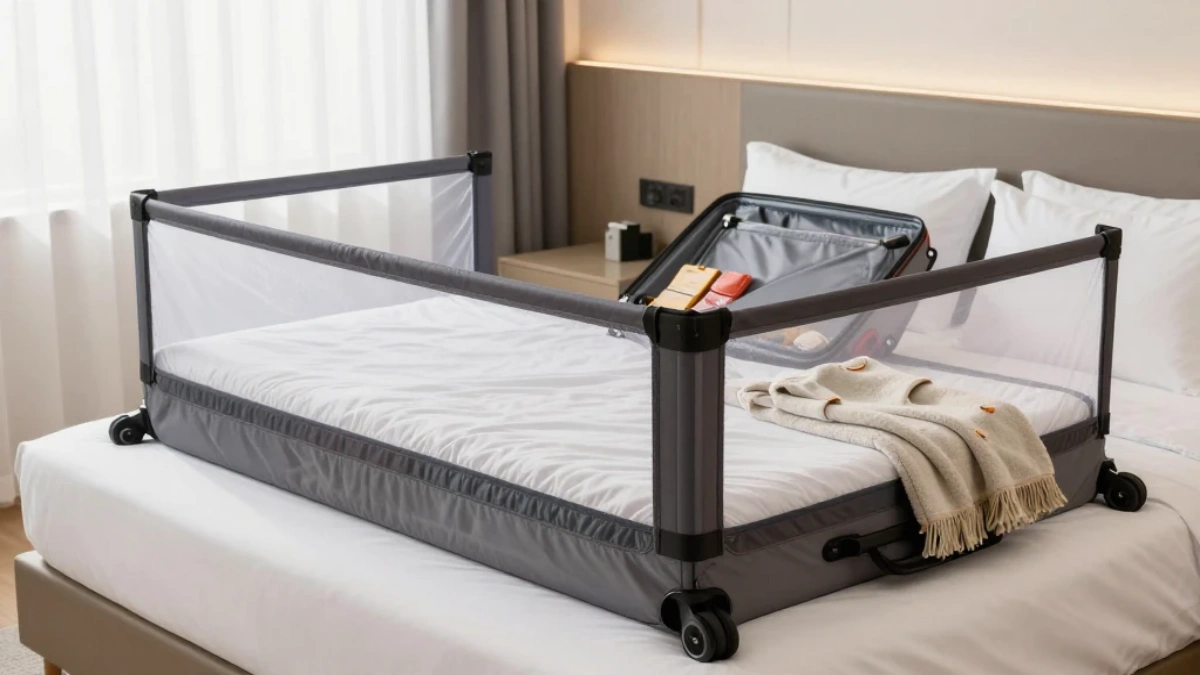
A travel bed rail solves this without bulky gear or a stressful setup. These portable rails tuck under the mattress or strap to the bed frame, creating a simple barrier that prevents rolls and falls. They’re a small addition to a packing list that can mean the difference between a restful trip and a night spent hovering by the bedside.
This guide covers how travel bed rails work, how to pick the right one, where they’re most useful, and the mistakes even experienced travelers make when using them for the first time.
Quick Answer:
Travel bed rails are lightweight, portable safety barriers that attach to hotel beds, Airbnbs, or grandma’s guest rooms to stop toddlers, young kids, or unsteady sleepers from rolling off during the night. Most fold flat, weigh under 5 pounds, fit in a suitcase, and set up in under two minutes without tools.
What Is a Travel Bed Rail and How Does It Work?
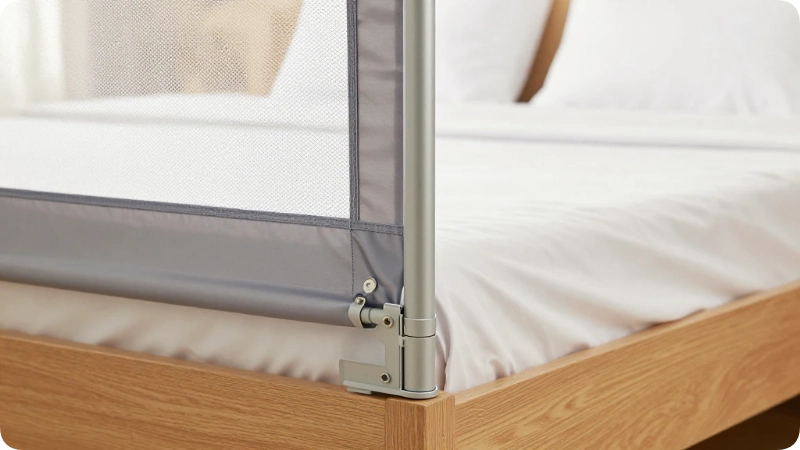
A travel bed rail is a fabric covered mesh or metal framed barrier that slides between the mattress and box spring, or straps around the mattress, to create a raised edge along the side of the bed.
It works like a temporary crib rail, giving a sleeping child or adult something to bump into instead of rolling off the edge. Setup typically takes one to two minutes with no tools required.
Most models fold down to the size of a laptop and weigh two to five pounds, making them easy to slip into a suitcase or diaper bag.
They differ from the wooden or metal bed rails built into some furniture; travel versions are designed specifically for portability, quick anchoring, and use on beds the traveler doesn’t own.
Who Actually Needs One?
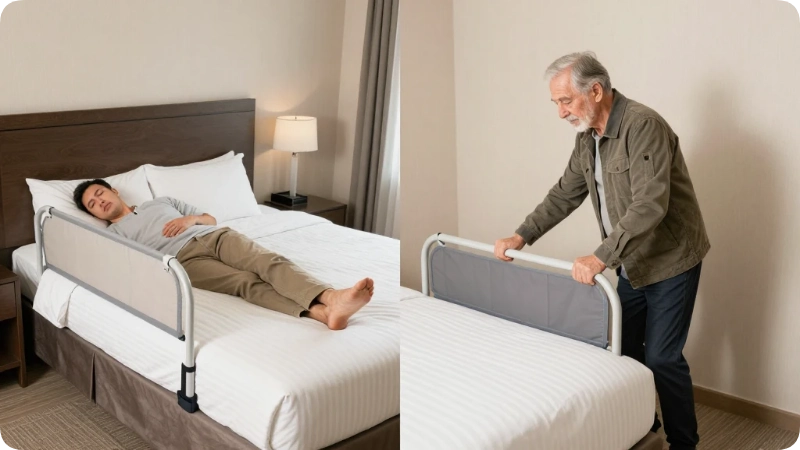
Travel bed rails are most useful for three groups: toddlers who recently transitioned from a crib, young children who still roll a lot in their sleep, and older adults who are at higher risk of falls due to balance or mobility issues. They’re also handy for anyone recovering from surgery or an injury who needs extra stability getting in and out of bed.
Best for:
- Toddlers ages 2 5 transitioning from a crib to a bed
- Kids who are active sleepers or new to sleeping without rails at home
- Elderly travelers with balance concerns
- Anyone temporarily unsteady due to injury or medication side effects
Probably not needed for:
- Infants under 2 (a travel crib or pack and play is safer)
- Healthy adults with no mobility concerns
- Very short stays where a couch cushion barrier or extra pillows are sufficient
Types of Travel Bed Rails
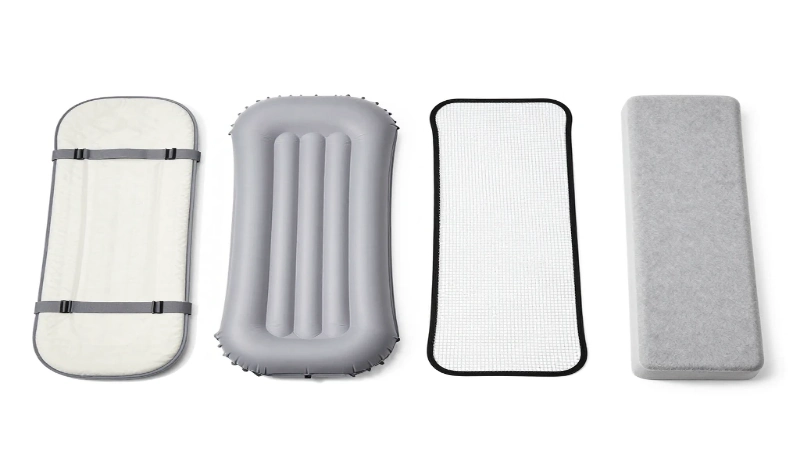
There are three common styles, and the right one depends on the bed setup and the sleeper’s age. Under mattress rails anchor with straps tucked beneath the mattress, inflatable rails use an air pump for cushioning, and mesh sided rails offer breathable visibility for toddlers. Each has tradeoffs in weight, setup time, and how securely it holds on unfamiliar mattresses.
| Type | Best For | Setup Time | Pack Size |
| Under mattress strap rail | Toddlers, hotel beds | 1 2 minutes | Small, folds flat |
| Inflatable bed rail | Kids age 3+, thick mattresses | 3 5 minutes | Small when deflated |
| Mesh sided rail | Toddlers who like to see out | 1 2 minutes | Small to medium |
| Foam bumper rail | Light rollers, short trips | Under 1 minute | Very compact |
How to Choose the Right Travel Bed Rail
Choosing the right rail comes down to mattress compatibility, weight limits, and how the child or adult actually sleeps. A rail that only anchors under a thin mattress won’t hold on a thick hotel pillow top, and a lightweight foam bumper won’t stop a determined toddler who tends to climb.
Check these details before buying:
- Mattress thickness compatibility many rails only work on mattresses up to a certain depth (commonly listed in the product specs).
- Weight capacity confirm it’s rated for the child’s or adult’s current weight, with some room to grow.
- Anchoring method under mattress straps tend to hold more securely than surface only designs, especially on hotel beds with fitted sheets that shift.
- Breathability mesh panels help parents keep an eye on toddlers and reduce overheating.
- Packed size for carry on travel, a rail that folds under 20 inches long saves space.
Are Travel Bed Rails TSA Approved for Carry On or Checked Bags?
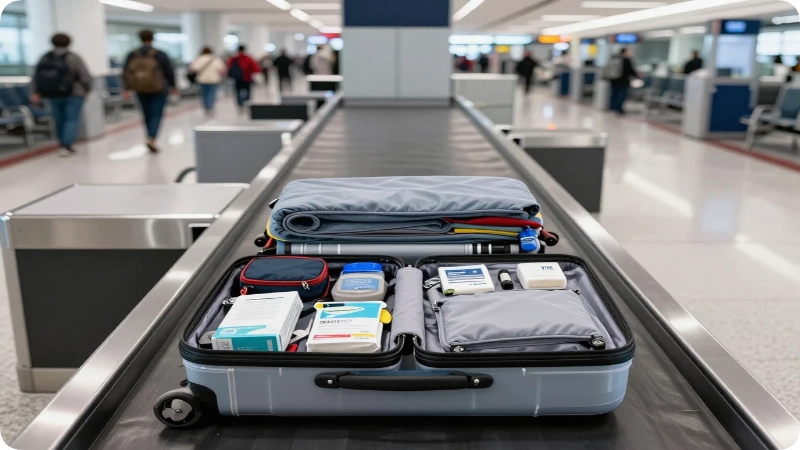
Travel bed rails are allowed in both carry on and checked luggage under current TSA guidelines, since they contain no restricted materials. Inflatable versions may need to be deflated before flying, and it’s worth checking the TSA’s official “What Can I Bring?” tool before departure, since policies can be updated.
Because rules can shift, always verify directly on tsa.gov close to the travel date rather than relying solely on the packaging or older reviews.
Packing Tips for Travel Bed Rails
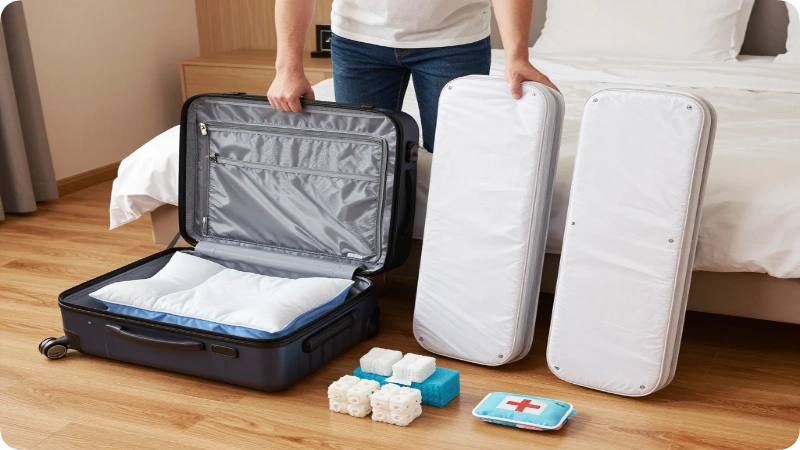
Packing a travel bed rail efficiently means folding it flat against the largest side of the suitcase and using it as a rigid layer to protect breakable items. Most fabric covered rails compress easily, while inflatable ones should be packed deflated to save the most space.
- Roll straps separately and secure with a rubber band so they don’t tangle in transit.
- Pack it near the top of checked luggage for quick access at hotel check in.
- Bring a small flashlight or phone light to see mattress edges when setting up in a dim hotel room.
- Consider a dedicated packing cube so the rail doesn’t shift against clothing.
Setting Up a Travel Bed Rail in a Hotel Room
Setting up a travel bed rail in a hotel room takes about two minutes once the sheets are pulled back. Lift the mattress corner slightly, slide the anchoring straps underneath, lower the mattress back down, and pull the fitted sheet over the top so the rail sits flush against the mattress edge.
Insider tip: Test the rail’s stability by pressing firmly on it before letting a child climb into bed hotel mattresses vary widely in thickness, and a rail that worked perfectly at home may need repositioning on a deeper mattress.
Common Mistakes Travelers Make With Bed Rails
The most common mistake is assuming one rail size fits every mattress, which leads to a loose or unstable setup on unfamiliar beds. Travelers also frequently forget to check the gap between the rail and headboard, where a small child can slip through and become trapped.
- Mistake: Not checking mattress depth before the trip. Fix: Measure or check hotel bed specs in advance when possible, or bring an adjustable strap model.
- Mistake: Leaving a gap at the headboard end. Fix: Push the rail flush against the headboard or use a rolled towel to fill any gap.
- Mistake: Skipping the stability test. Fix: Press down firmly on the rail before the child gets in bed for the night.
Hidden Gem Alternatives Worth Knowing About
Beyond standard travel bed rails, a few underrated options work well for specific situations. A rolled up bath towel tucked under the fitted sheet along the bed’s edge can add a low profile barrier for very light sleepers. A portable travel crib, such as those from brands sold at most major retailers, remains the safer choice for children under two. For older kids who resist rails altogether, positioning the bed against a wall and using pillows on the open side is a simple no gear fallback.
- Hidden gem 1: Some hotel chains will provide a portable crib or rail on request at check in always ask the front desk before packing extra gear.
- Hidden gem 2: Pool noodles wrapped in a pillowcase and tucked under the fitted sheet make a improvised soft barrier in a pinch.
- Hidden gem 3: Booking a room with the bed already against a wall (visible in most hotel photos or floor plans) cuts the need for a rail on one side entirely.
Safety Tips for Using Bed Rails Away From Home
Safety comes first when using any bed rail on an unfamiliar mattress, since hotel and rental beds aren’t designed with rails in mind the way a home crib or toddler bed is. Always supervise the first night’s setup, check for gaps, and remove the rail if the child seems to be using it to climb rather than staying contained.
- Never use a bed rail on a bunk bed’s top mattress unless it’s specifically designed for that use.
- Keep the rail’s straps tucked away from where a child could pull on them.
- Recheck the rail’s position each night, since sheets and mattresses shift with movement.
- If traveling with an elderly parent, confirm the rail height suits their mobility needs too high can make getting out of bed harder, not easier.
Is a Travel Bed Rail Worth Packing?
For families with toddlers or trips involving older adults with balance concerns, a travel bed rail is generally worth the small amount of luggage space it takes up. For solo adult travelers or families with older kids who sleep soundly, it’s often unnecessary and better left at home.
How long is it needed? Most families use a bed rail until around age 5, or until the child consistently sleeps through the night without rolling.
What’s overrated? Bulky inflatable rails that take up more suitcase space than the safety benefit justifies for short trips.
What’s underrated? Simple under mattress strap rails, which are inexpensive, compact, and work on the widest range of mattress types.
Accessibility and Elderly Travel Considerations
Bed rails offer two important benefits for elderly travelers. They help prevent falls and provide extra support when getting in and out of bed.
Choose a rail with a padded handle or sturdy grip. These models offer better support than mesh-only rails designed for toddlers.
Families traveling with older adults should ask about accessible hotel rooms. Lower beds and bathroom grab bars can reduce the need for a bed rail.
Under the Americans with Disabilities Act (ADA), most hotels provide accessible rooms. You can request one when making your reservation
Family Tips for a Smoother First Night
The first night in a new bed goes more smoothly when the setup mirrors home as closely as possible, including bringing a familiar blanket or stuffed animal alongside the bed rail. Kids adjust faster to unfamiliar sleep environments when small, predictable details stay the same.
- Set up the rail before the child sees the room, so it feels like a normal part of the bed rather than something new to fuss over.
- Do a practice “climb in” together to show how the rail works.
- Keep the nightlight or sound machine consistent with the home routine.
Responsible and Budget Friendly Travel With Kids
Packing a travel bed rail can save money during family trips. It helps you avoid paying for a crib rental or a more expensive hotel room.
Some hotels charge daily fees for portable crib delivery. Bringing your own rail helps you avoid these extra costs.
Many travel bed rails also work well at home. This means you won’t need to buy a separate rail just for travel.
Money-saving tip: Check whether your hotel offers free bed rails or cribs before your trip. Many family-friendly hotels provide them at no extra cost with advance notice.
Sample Packing Checklist for Traveling With a Bed Rail
- Travel bed rail (folded or deflated)
- Fitted sheet clip or extra sheet, if the rail requires tucking
- Small flashlight for nighttime setup
- Familiar blanket or comfort item
- Printed or saved confirmation of any hotel crib/rail request
FAQs
Are travel bed rails safe for hotel beds?
Yes, when properly anchored and matched to the mattress thickness. Always test stability by pressing on the rail before the child sleeps, and check for gaps near the headboard where a small child could slip through.
What age is too young for a travel bed rail?
Most manufacturers recommend against use for children under two, since a portable crib or pack and play offers safer, fully enclosed sleep for infants and young toddlers.
Can travel bed rails go in a carry on bag?
Yes, most fold flat and fit easily in a carry on, though inflatable versions may need to be deflated. Always verify current rules on tsa.gov before flying, since policies can change.
Do hotels provide bed rails on request?
Some do, especially larger chains with family friendly amenities, but availability isn’t guaranteed. It’s best to call ahead or request one during online check in rather than assuming it will be available.
How do I know if a bed rail will fit my hotel mattress?
Check the rail’s listed mattress depth range against typical hotel mattress thickness, which tends to run deeper than home mattresses. When unsure, a strap style rail with adjustable length is the most flexible option.
Are inflatable bed rails as safe as mesh or foam ones?
Inflatable rails can work well for older toddlers but require careful inflation checks each night, since a slow leak reduces the barrier’s effectiveness. Mesh or foam versions need less maintenance for overnight use.
What’s a good alternative if I forget to pack a bed rail?
A rolled towel or blanket tucked under the fitted sheet along the bed’s edge, or pushing the mattress against a wall, can serve as a temporary barrier until a proper rail is available.
Final Takeaways
A travel bed rail is a small, inexpensive item that solves a real problem: keeping toddlers and unsteady sleepers safe in unfamiliar beds. The right choice depends on the sleeper’s age, the mattress type, and how much luggage space is available but in most cases, a compact strap style rail covers the widest range of trips.
Packing one means fewer interrupted nights, more confidence at bedtime, and one less thing to worry about while exploring somewhere new. Before the next trip, take a few minutes to check mattress compatibility, confirm TSA guidelines, and pack it where it’s easy to grab at check in, then let the rest of the vacation planning take center stage.

Ben Fogle believes that true adventure begins where the pavement ends. After spending years documenting extreme environments, rowing across oceans, and trekking through frozen landscapes, he mastered the art of wilderness travel. For Travelmarse, Ben constructs highly detailed guides on deep-nature packing lists, wildlife safety, and sustainable eco-tourism. He breaks down intimidating, rugged expeditions into clear, step-by-step roadmaps so everyday travelers can safely connect with the natural world.