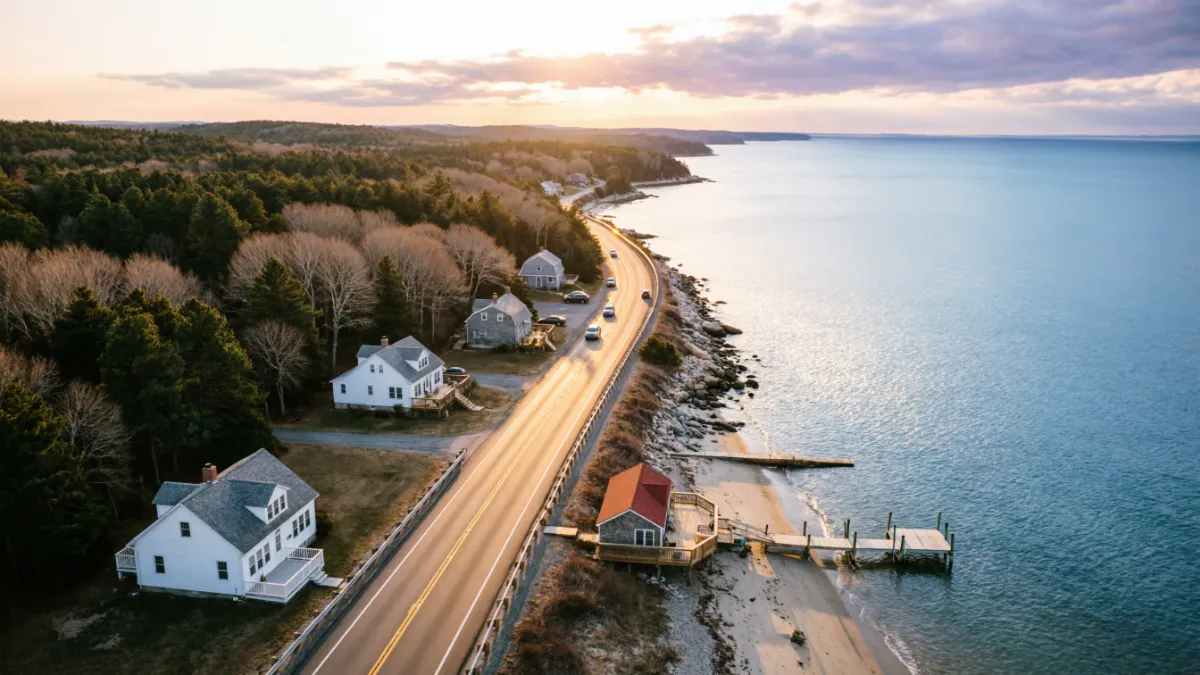
The Ultimate East Coast Travel Guide: Cities, Coastlines, and Hidden Gems Worth Exploring
The East Coast of the United States stretches roughly 1,500 miles from the rocky shores of Maine down to the sun-soaked beaches of Florida.
It packs in some of the most iconic cities in the world, centuries of American history, stunning natural landscapes, and a food scene that shifts dramatically from state to state.
If you’re planning a weekend getaway or a month-long road trip, this guide covers everything you need to know to travel the East Coast smart, save money, and see what most visitors miss.
Quick Facts: East Coast Travel at a Glance
| Fact | Detail |
| Total coastline length | Approx. 2,069 miles (NOAA) |
| States covered | 14 states + D.C. |
| Major airports | JFK, BOS, PHL, DCA, MIA, ATL |
| Peak season | June through August |
| Best shoulder months | April May and September October |
| Driving length (Maine to Florida) | Approx. 1,500 miles via I-95 |
| Best for | History, food, beaches, city culture, outdoor adventure |
When Is the Best Time to Visit the East Coast?
The best time to visit the East Coast depends on where you’re headed and what you want to do. Spring (April May) and fall (September October) offer the most comfortable temperatures, thinner crowds, and lower hotel rates across most of the region. Summer is peak season for beaches and outdoor activities, but it comes with heat, humidity, and higher prices. Winter works well for budget travelers hitting southern destinations like Miami or Savannah.
Seasonal Comparison
| Season | Pros | Cons |
| Spring (Apr May) | Mild weather, blooming scenery, fewer crowds | Can be rainy in the Northeast |
| Summer (Jun Aug) | Beach season, long days, all attractions open | Crowded, expensive, humid |
| Fall (Sep Oct) | Stunning foliage, great festivals, cooler temps | Popular leaf-peeping areas get busy |
| Winter (Nov Mar) | Low prices, quiet cities, warm in Florida | Cold in the Northeast, some closures |
Insider tip: The Acadia National Park region in Maine draws enormous summer crowds. Visit in late September for fall foliage and a fraction of the traffic.
How to Get to the East Coast
Flying into the East Coast is straightforward, with major hubs serving every part of the region. Boston Logan International (BOS), New York’s John F. Kennedy International (JFK), Philadelphia International (PHL), Ronald Reagan Washington National (DCA), and Miami International (MIA) are among the busiest. Budget airlines including Spirit, Frontier, and Breeze frequently offer low fares into secondary airports like Providence (PVD) and Baltimore-Washington International (BWI), which can save significant money over flying into major hubs.
For travelers already on the East Coast, Amtrak’s Northeast Corridor is one of the most useful train routes in the country. It runs from Boston through New York, Philadelphia, and Washington D.C., with Acela service cutting travel time between cities considerably. Greyhound and FlixBus also offer low-cost bus service between major cities.
Road-tripping along I-95 is the classic East Coast experience. The highway connects the entire coastal corridor, and with a car you can detour to barrier islands, small coastal towns, and national parks that trains and buses simply don’t reach.
The Best Cities for East Coast Travel
The East Coast is home to many of America’s most iconic cities, each offering a unique experience. Most travelers choose two or three cities as the foundation of their trip.
New York City is often the first stop. Known for world-famous attractions, hundreds of museums, Central Park, and a 24-hour subway system, it offers endless things to see and do. Beyond Manhattan, neighborhoods in Brooklyn, Queens, and the Bronx provide outstanding food, culture, and local experiences.
Washington, D.C. is a favorite for history and culture lovers. Many of the Smithsonian museums are free, including the National Air and Space Museum and the National Museum of Natural History. Visitors can also explore the National Mall, home to famous monuments and government landmarks.
Boston combines rich American history with a vibrant modern atmosphere. The Freedom Trail connects many of the city’s most important historic sites, while its large student population keeps the dining and entertainment scene lively year-round.
Philadelphia deserves more attention than it often receives. Historic landmarks such as the Liberty Bell and Independence Hall sit alongside renowned museums and one of the East Coast’s best food scenes. Reading Terminal Market is a highlight for local specialties and fresh produce.
Savannah offers a slower pace with beautiful historic streets, shaded public squares, and Southern charm. Its walkable downtown, historic architecture, and popular ghost tours make it one of the region’s most distinctive destinations.
Miami blends beach culture with art, food, and nightlife. South Beach attracts visitors with its famous shoreline and Art Deco buildings, while neighborhoods like Wynwood and Little Havana showcase the city’s diverse cultural identity. Miami also serves as a gateway to Everglades National Park, one of America’s most unique natural areas.
Together, these cities showcase the diversity, history, culture, and energy that make an East Coast trip unforgettable.
Top East Coast Road Trip Routes
A road trip gives you full control over pacing and the ability to stop at places that never appear on a highlight reel. Several classic routes stand out for scenery, variety, and sheer enjoyment.
The Classic I-95 Corridor (Boston to Miami, approx. 1,500 miles) is the most comprehensive East Coast road trip. Budget at least two weeks to do it justice, stopping in Portland, Maine; Boston; Providence; New York City; Philadelphia; Baltimore; D.C.; Richmond; the Outer Banks of North Carolina; Charleston; Savannah; and St. Augustine before finishing in Miami.
The Blue Ridge Parkway runs 469 miles from Shenandoah National Park in Virginia to Great Smoky Mountains National Park in North Carolina. The National Park Service manages it, and the road is deliberately free of commercial development. Fall color peaks here from mid-October to early November, and the views from overlooks like Craggy Gardens are extraordinary.
The Acadia Loop in Maine takes you through Acadia National Park, Bar Harbor, and the rugged coastline of Mount Desert Island. The 27-mile Park Loop Road inside the park includes the summit of Cadillac Mountain, which sits at 1,530 feet and offers the first sunrise views in the continental United States from October through March.
East Coast Beaches Worth Planning a Trip Around
The East Coast contains hundreds of beaches, but a relative handful rise above the rest in terms of scenery, character, and access.
Cape Cod, Massachusetts offers 40 miles of protected National Seashore shoreline, with some of the most dramatic dunes and clearest water in the Northeast. The Cape Cod National Seashore, established in 1961, protects over 43,500 acres and keeps a significant portion of the cape in its natural state.
The Outer Banks of North Carolina stretch 200 miles along a string of barrier islands. The area holds both the Wright Brothers National Memorial at Kitty Hawk and Cape Hatteras National Seashore. The beaches here are wide, uncrowded compared to resort beaches farther north, and remarkably wild for a region that’s only a few hours from major cities.
Assateague Island, straddling Maryland and Virginia, is home to a population of wild ponies that have lived on the island since the 17th century. The Assateague Island National Seashore sees far fewer visitors than comparable beach destinations. Camping here puts you within earshot of the Atlantic and occasionally within arm’s reach of curious ponies.
Amelia Island, Florida, sits at the state’s northeastern tip and offers a quieter alternative to the crowded resort strips farther south. The island contains one of the best-preserved Victorian downtown districts in Florida, 13 miles of Atlantic beach, and Fort Clinch State Park, which dates to the Civil War era.
East Coast National Parks and Natural Areas
The East Coast holds some of the most visited national parks in the entire National Park System. Planning ahead, especially for summer visits, makes a significant difference.
Acadia National Park in Maine recorded over 4 million visits in recent years, making it one of the ten most visited national parks in the country. The park covers portions of Mount Desert Island and offers hiking, sea kayaking, cycling on 45 miles of carriage roads, and wildlife watching. Timed entry reservations are required for the Park Loop Road during summer peak season; check the NPS website at nps.gov for current requirements.
Shenandoah National Park in Virginia stretches along the Blue Ridge Mountains for 105 miles. Skyline Drive, the 105-mile road through the park, connects 75 overlooks above the Shenandoah Valley. The park sits within a three-hour drive of Washington D.C., making it one of the most accessible wilderness escapes for East Coast city dwellers.
Great Smoky Mountains National Park, shared by North Carolina and Tennessee, is the most visited national park in the United States consistently seeing over 12 million visits per year, according to the NPS. No entry fee is charged, which contributes to its popularity. The park protects one of the most biodiverse temperate forests on Earth, with over 19,000 documented species.
Everglades National Park covers the southern tip of Florida and protects a slow-moving river of grass that is unlike any other landscape in North America. The park is a UNESCO World Heritage Site and an International Biosphere Reserve. Winter (December through April) is the best time to visit: water levels are lower, wildlife concentrates around accessible areas, and mosquitoes are far less intense than in summer.
Hidden Gems Most East Coast Visitors Miss
The East Coast’s most famous destinations get enormous attention, but several remarkable places sit just outside the main tourist circuits.
Tangier Island, Virginia sits in the middle of the Chesapeake Bay and is accessible only by ferry or small plane. The island has a population of fewer than 500 people, a distinct dialect that some linguists trace to 17th-century English, and a blue crab fishing economy that dates back generations. The ferry from Crisfield, Maryland takes about 2.5 hours each way.
Portsmouth, New Hampshire is one of the most underrated small cities on the East Coast. It holds more than 100 historic buildings from the colonial era, a lively craft brewery scene, and access to the Isles of Shoals a cluster of small islands about 10 miles offshore with a fascinating history. Despite all of this, it sees a fraction of the tourists that flock to nearby Boston or Portland, Maine.
Cumberland Island, Georgia is the largest and southernmost of Georgia’s barrier islands and can only be reached by a National Park Service ferry from St. Marys. The island has no paved roads, no cars except for those belonging to a handful of private landowners, wild horses, and the ruins of Dungeness, a Gilded Age Carnegie mansion. The contrast with mainland Georgia is striking. Book ferry reservations well in advance, as capacity is strictly limited.
Where to Stay on the East Coast: Options for Every Budget
Accommodation options along the East Coast range from national park campgrounds charging under $30 a night to luxury hotels in New York City charging well over $500. Most travelers mix accommodation types depending on the destination.
In major cities, boutique hotels in emerging neighborhoods often deliver better value than large chain hotels in prime tourist areas. For example, travelers visiting New York can save significantly by staying in Brooklyn or Long Island City instead of Midtown while still enjoying easy access to major attractions through the subway system. Meanwhile, in Washington, D.C., accommodations in neighborhoods such as Logan Circle and Shaw are often more affordable than hotels located near the National Mall.
Vacation rentals work especially well for beach destinations and road trips where cooking some meals saves money over eating out three times daily. Properties in towns adjacent to popular beach areas often cost less than beachfront options while remaining within a short drive of the water.
For outdoor-focused trips, the NPS campground reservation system (recreation.gov) books sites in national parks. Reservations for popular parks like Acadia and Shenandoah open months in advance and fill quickly for summer weekends.
East Coast Food: What to Eat and Where
The East Coast’s food culture shifts dramatically as you move from north to south, and some of the best eating happens far from famous restaurant districts.
In Maine and Massachusetts, lobster rolls are non-negotiable. The debate between the Connecticut-style warm buttered version and the Maine-style cold mayo version is real and worth investigating personally. Shacks and dockside restaurants near working harbors tend to offer better value than tourist-area spots.
Philadelphia’s cheesesteak is a legitimate culinary institution rather than just a tourist novelty. Both Pat’s King of Steaks and Geno’s Steaks operate within a block of each other in South Philadelphia, but many locals prefer spots away from the tourist cluster.
In the Mid-Atlantic, Chesapeake Bay blue crabs are the regional staple. Maryland’s crab houses serve them steamed with Old Bay seasoning, and the protocol involves mallets, newspaper-covered tables, and no silverware. The experience is as much ritual as meal.
Charleston and Savannah represent the best of Lowcountry cuisine. Shrimp and grits, red rice, and she-crab soup all trace their roots to West African culinary traditions brought to the region centuries ago. Charleston’s restaurant scene in particular has attracted national attention, with multiple James Beard Award-winning chefs operating within a few blocks of each other.
Miami’s food scene reflects its demographics. Calle Ocho in Little Havana serves Cuban food that rivals anything in Havana itself. The Design District and Wynwood have drawn sophisticated restaurants from around the world. Coconut Grove and Coral Gables offer a quieter, more neighborhood-oriented dining experience.
East Coast Travel Mistakes to Avoid
Three planning errors consistently derail East Coast trips, and all three are easy to avoid.
The first is underestimating distances. Looking at a map, Boston and Washington D.C. appear close together. The drive is actually 7 to 8 hours with moderate traffic, and traffic around New York City can add 2 hours or more to any trip that passes through. Build buffer time into any road trip itinerary.
The second is visiting major cities without a transit plan. Driving and parking in New York City, Boston, and D.C. is expensive and frustrating. Using public transit the NYC Subway, the MBTA in Boston, or the DC Metro saves money and time in all three cities. If you’re road-tripping, consider parking your car at a suburban transit station and taking the train into the city center.
The third mistake is skipping shoulder season to chase perfect beach weather. July and August on the East Coast are hot, humid, and expensive. September brings warm ocean water, cooler air temperatures, and significantly thinner crowds at every beach destination from Cape Cod to the Outer Banks. Many beach towns also extend their seasons with fall festivals and lower rates.
Sample East Coast Itinerary: 10 Days
This itinerary covers the Northeast corridor efficiently without feeling rushed.
Days 1 2: Boston. Walk the Freedom Trail, visit Faneuil Hall, eat a lobster roll in the North End, and take a day trip to Cape Cod or Salem depending on the season.
Day 3: Providence, Rhode Island. Stop for half a day to walk Benefit Street’s mile of history and eat at a Federal Hill Italian restaurant before driving to New York.
Days 4 5: New York City. Spend one day in Manhattan covering Central Park, the High Line, and the neighborhood of your choice. Use the second day for Brooklyn the Brooklyn Bridge walk, DUMBO, and Prospect Park.
Day 6: Philadelphia. The Liberty Bell, Independence Hall, Reading Terminal Market, and the Philadelphia Museum of Art fit comfortably into one day.
Day 7: Washington D.C. Three to four Smithsonian museums plus a walk along the National Mall.
Days 8 9: Shenandoah National Park. Drive Skyline Drive, hike one or two trails, and spend a night at a lodge or campground inside the park.
Day 10: Return north or continue south. Charlottesville, Virginia makes a good stopping point the University of Virginia campus, designed by Thomas Jefferson, is an architectural landmark, and the surrounding wine country along the Monticello Wine Trail has grown considerably in quality and reputation.
East Coast Travel Safety Tips
The East Coast is generally safe for travelers, and basic awareness keeps most trips trouble-free.
In major cities, tourist-heavy areas like Times Square in New York and the National Mall in D.C. are heavily patrolled and well-lit. Exercise the same awareness you would in any crowded public space: keep bags zipped and close, stay aware of surroundings, and use your phone’s map discreetly rather than walking with it raised.
Hurricane season runs from June 1 through November 30, with peak activity between August and October. The National Hurricane Center (nhc.noaa.gov) tracks active storms in real time. Travel insurance that covers trip cancellation due to weather is worth considering for trips planned during peak hurricane months, particularly for beach destinations in the Carolinas, Georgia, and Florida.
Beach safety varies by location. Always check for posted flags indicating water conditions. Rip currents cause the majority of ocean drownings on U.S. beaches; if caught in one, swim parallel to shore rather than fighting it.
Tick-borne illnesses including Lyme disease are present throughout the Northeast and Mid-Atlantic. The CDC recommends using EPA-registered insect repellent and checking for ticks after time in wooded or grassy areas. The tick season peaks between May and October.
Practical Packing Tips for the East Coast
What to pack depends heavily on the time of year and the specific destinations. A few consistent recommendations apply across most East Coast trips.
Comfortable walking shoes are essential regardless of season. Cities like New York, Boston, and Philadelphia reward walkers, and natural areas involve trail surfaces that punish poor footwear.
Layers matter more than heavy single-use pieces. Coastal weather at any time of year can shift quickly, and having a light rain jacket and a mid-layer covers most scenarios without adding bulk.
For beach trips, sun protection goes beyond sunscreen. A rash guard, a wide-brimmed hat, and UV-blocking sunglasses reduce long-term exposure on full beach days.
A reusable water bottle is worth the space in any bag. Major cities have water refill stations throughout their transit systems and parks, and reducing single-use plastic is increasingly expected and in some cases mandated across Northeast municipalities.
FAQs
How long does it take to drive the East Coast from Maine to Florida?
Driving the full length of the East Coast from Calais, Maine to Key West, Florida covers roughly 1,600 miles and takes about 24 hours of pure driving time. Most travelers plan 10 to 14 days minimum to make meaningful stops along the way. Trying to rush it in under a week means sacrificing most of what makes the trip worthwhile.
What is the best East Coast city for a first-time visitor?
Washington D.C. is arguably the best starting point for first-time East Coast visitors. The Smithsonian museums are free, the Metro system is easy to navigate, and the concentration of historical landmarks per square mile is unmatched. New York City is more exciting but has a steeper learning curve and a higher daily cost.
Is it better to fly or drive on an East Coast trip?
Flying makes sense if you’re visiting one or two anchor cities. Driving or taking Amtrak works better if you want flexibility and access to smaller destinations between major cities. The Northeast Corridor Amtrak route between Boston and Washington D.C. is competitive with flying once you factor in airport transit time and security.
What are the cheapest months to travel the East Coast?
January and February bring the lowest prices for hotels and flights throughout the region, with the exception of Florida, which stays popular with northern visitors during winter. Late November and March also offer lower rates before and after the holiday surge.
Are East Coast national parks worth visiting?
Yes places like Acadia, Shenandoah, and the Great Smoky Mountains rank among the most impressive natural areas in the entire country. The key is planning ahead. Summer weekends at these parks are extremely crowded. Visiting on weekdays or during shoulder season reduces both crowds and the stress of finding parking and campsites.
What should I not miss on the East Coast?
A few experiences stand out as genuinely irreplaceable: walking the Freedom Trail in Boston, visiting the Smithsonian museums in D.C., crossing the Brooklyn Bridge on foot, exploring the Outer Banks by car, watching sunrise from Cadillac Mountain in Acadia, and eating blue crabs at a Maryland crab house. These aren’t tourist traps they earn their reputation.
How much does an East Coast trip cost per day?
Daily costs vary widely. Budget travelers can manage $100 to $150 per day by using free attractions, cooking some meals, and staying in hostels or budget motels. Mid-range travelers spending on hotels, restaurants, and paid attractions typically budget $200 to $350 per day. Major city costs especially New York skew these numbers higher. Always verify current prices directly with accommodations and attractions, as rates change frequently.
Final Takeaways for Planning Your East Coast Trip
Three ideas are worth holding onto as you plan.
First, depth beats breadth two or three destinations explored well will stay with you longer than a rushed drive through ten.
Second, shoulder season is almost always better than peak summer: lower prices, real crowds, and weather that’s comfortable for walking and exploring rather than just sitting on a beach.
Third, the East Coast’s strength is variety within a single week of travel you can move from Revolutionary War history to wild Atlantic shoreline to Blue Ridge Mountain wilderness without ever feeling like you’ve doubled back.
Start with what genuinely interests you history, food, beaches, hiking, cities and build your trip outward from there. The East Coast will meet you wherever you start.

Maya Lin inspires travelers to explore the globe with absolute confidence and independence. Armed with a background in digital media and a decade of independent solo travel experience, she knows exactly how to navigate unfamiliar cities smoothly and safely. For Travelmarse, Maya curates the solo travel and hidden-gem verticals. She reviews charming boutique hotels, designs smart neighborhood walking routes, and shares practical language-learning hacks, giving readers the exact tools they need to travel solo without the stress.