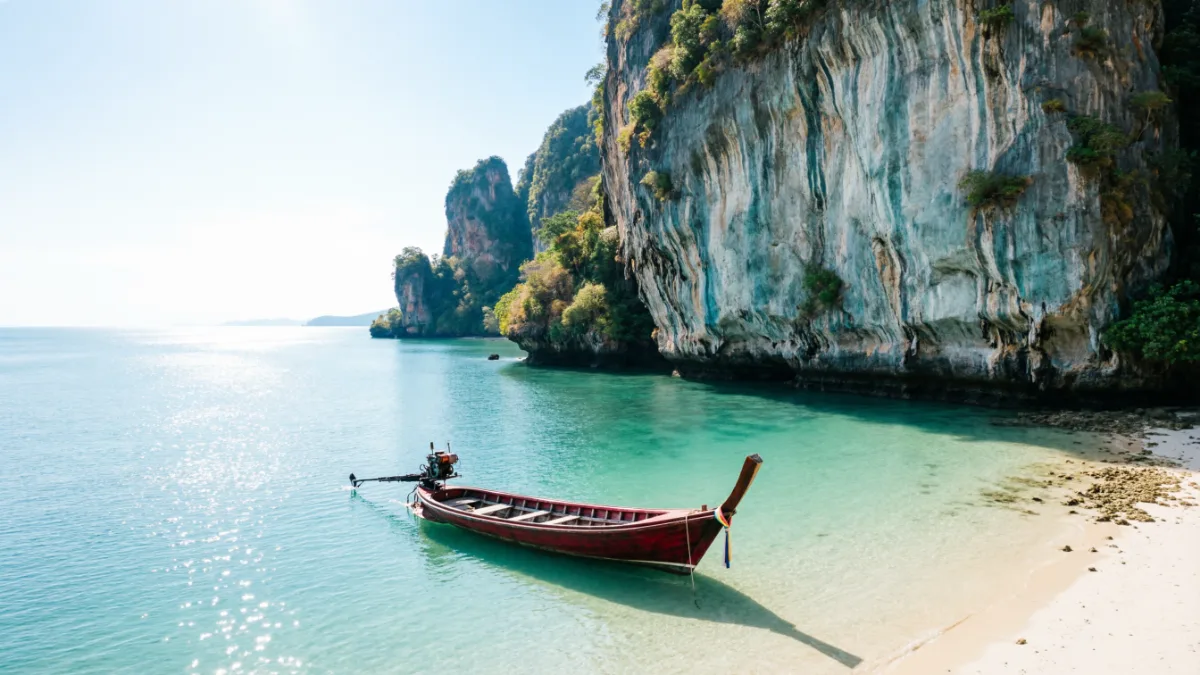
Thailand delivers an almost unfair combination of ancient temples, white-sand beaches, jungle mountains, and some of the world’s most celebrated street food, all at a price point that stretches an American travel budget further than almost anywhere else on earth.
It remains one of the best places to travel in Thailand for first-time visitors and returning travelers alike.
The best places to travel in Thailand range from vibrant cities and tropical islands to remote mountain retreats and historic cultural centers. Few destinations offer the same diversity, affordability, and accessibility for American travelers.
Whether you’re drawn to the golden temples of Bangkok, the turquoise waters of Koh Samui, or the misty hills near Chiang Rai, the best places to travel in Thailand showcase the country’s remarkable blend of culture, adventure, food, and natural beauty.
Every region offers a different experience, making Thailand a destination worth visiting more than once.
Many first-time visitors are surprised by how easy it is to move between destinations. Exploring the best places to travel in Thailand can mean island hopping in the south, discovering ancient ruins in the center of the country, or trekking through lush northern landscapes.
This guide highlights the best places to travel in Thailand, from world-famous attractions to lesser-known gems. If you’re planning your first trip or returning for another adventure, these destinations will help you experience the very best of the Land of Smiles.
Quick Facts About Thailand
| Category | Details |
| Capital City | Bangkok (Krung Thep Maha Nakhon) |
| Currency | Thai Baht (THB); $1 USD ≈ 35 36 THB (verify before travel) |
| Language | Thai; English widely spoken in tourist areas |
| Time Zone | UTC+7 (11 14 hours ahead of US time zones) |
| Flight Time from USA | ~17 22 hours (East Coast with one stop) |
| Main Entry Airport | Suvarnabhumi (BKK) or Don Mueang (DMK), Bangkok |
| Visa for US Citizens | Visa exempt for up to 60 days (verify current policy at the Royal Thai Embassy) |
| Driving Side | Left |
| Power Outlets | Type A, B, C bring a universal adapter |
Best Time to Visit Thailand
The best time to visit Thailand is November through February, when temperatures are cooler (75 85°F), skies are mostly clear, and rainfall is low across most regions. This is peak season, so prices and crowds rise accordingly.
Thailand’s climate divides into three broad seasons:
Cool/Dry Season (November February): This is the sweet spot for most travelers. Bangkok and Chiang Mai feel genuinely comfortable, the Andaman coast (Phuket, Krabi) is sunny, and the Gulf coast (Koh Samui, Koh Phangan) enters its dry stretch after a November transition. Book accommodations early this is when American and European tourists arrive in the largest numbers.
Hot Season (March May): Temperatures push past 95°F in Bangkok and inland cities. Beaches remain beautiful, and this is actually a good time to visit northern Thailand before the rains arrive. Songkran, Thailand’s massive water festival, falls in mid April and is worth planning around.
Rainy/Monsoon Season (June October): The southwest monsoon drenches the Andaman coast (Phuket, Krabi) hardest. The Gulf coast (Koh Samui, Koh Tao) stays drier through this window, making it a smarter beach bet. Waterfalls are at their best, crowds are thin, and prices drop significantly often 30 50% less than peak season rates. Pack accordingly and embrace it.
Seasonal Comparison Table
| Season | Months | Avg Temp | Rain Level | Crowd Level | Budget Level |
| Cool/Dry | Nov Feb | 75 85°F | Low | High | High |
| Hot | Mar May | 88 98°F | Low Med | Medium | Medium |
| Rainy | Jun Oct | 82 90°F | High | Low | Low |
How to Get to Thailand from the USA
Most US travelers fly into Bangkok’s Suvarnabhumi International Airport (BKK), which handles the bulk of international arrivals. There are no direct nonstop flights from the continental USA to Thailand as of 2025 nearly all routes connect through Asian hubs including Tokyo (Narita or Haneda), Seoul (Incheon), Hong Kong, Taipei, or Singapore.
Airlines commonly used from major US cities include EVA Air, Korean Air, Cathay Pacific, Japan Airlines, and Singapore Airlines. From the West Coast (LAX, SFO), total travel time runs about 17 19 hours with one connection. From the East Coast (JFK, ORD), expect 21 23 hours.
Insider tip: Don Mueang Airport (DMK), Bangkok’s secondary airport, handles most budget airline traffic within Southeast Asia. If you plan to fly within Thailand to Chiang Mai, Phuket, or Koh Samui you may arrive at BKK and depart domestically from DMK. Give yourself at least three hours between flights and factor in a 30 45 minute taxi transfer between airports.
Check the Transportation Security Administration (TSA) website for current carry on and checked baggage rules before you fly, and confirm your passport has at least six months of validity beyond your intended travel dates, which Thai immigration requires.
Bangkok: Temples, Chaos, and the World’s Best Street Food
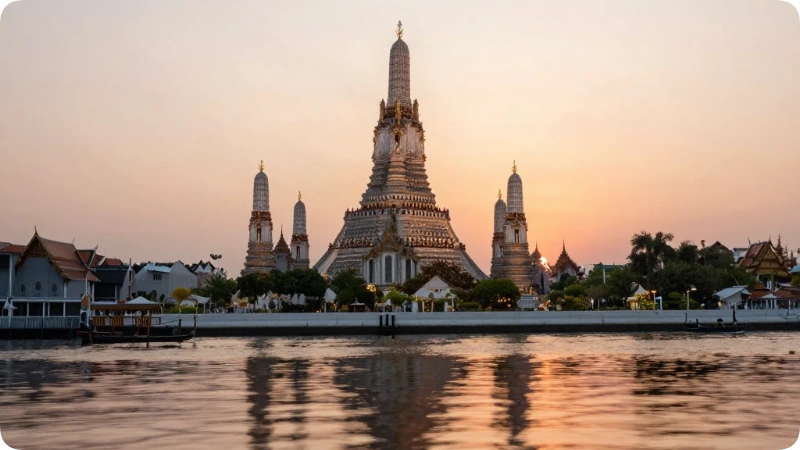
Bangkok is the gateway to Thailand and a city where ancient culture meets modern life. Home to more than 10 million people, it can feel busy at first, but it rewards travelers with incredible temples, world-class food, vibrant markets, and diverse neighborhoods.
The city’s top attractions include the Grand Palace and Wat Phra Kaew, home to the revered Emerald Buddha. Nearby, Wat Arun rises above the Chao Phraya River and offers some of Bangkok’s most iconic views. Another lesser-known highlight is Wat Paknam Phasi Charoen, a beautiful temple featuring a massive green Buddha and impressive glass tower, yet attracting far fewer visitors.
Bangkok is also a paradise for food lovers. From affordable street food stalls to upscale restaurants, visitors can enjoy authentic Thai cuisine throughout the city. For shopping, Chatuchak Weekend Market is one of the world’s largest markets, offering everything from clothing and souvenirs to local crafts and food.
Each neighborhood has its own character. Khao San Road is famous for backpacker nightlife and budget accommodations, while Silom, Sathorn, and Sukhumvit offer a more modern atmosphere with rooftop bars, shopping centers, and excellent dining options. Travelers can also explore floating markets, with Amphawa Floating Market often providing a more authentic experience than the busier Damnoen Saduak.
Getting around Bangkok is easy thanks to the BTS Skytrain and MRT subway, which are affordable, efficient, and air-conditioned. Ride-hailing services like Grab are also widely available.
Whether you’re interested in culture, food, shopping, or nightlife, Bangkok delivers an unforgettable introduction to Thailand and remains one of Southeast Asia’s most exciting destinations.
Chiang Mai: Culture, Cooking Schools, and Mountain Escapes
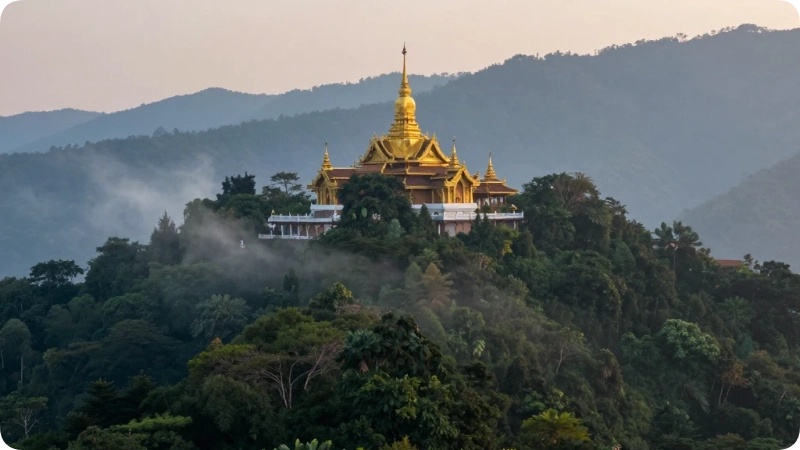
Chiang Mai, Thailand’s second-largest city, offers a peaceful alternative to Bangkok. Surrounded by mountains and rich in history, it is famous for its temples, outdoor adventures, and relaxed atmosphere. The historic Old City alone contains more than 300 temples, making it one of Thailand’s most important cultural centers.
One of the region’s top attractions is Doi Inthanon National Park, home to Thailand’s highest peak. Visitors can explore waterfalls, scenic hiking trails, cloud forests, and the beautiful twin royal pagodas while enjoying cooler mountain temperatures.
For ethical wildlife experiences, Elephant Nature Park is a popular choice. This rescue sanctuary allows visitors to observe and learn about rescued elephants in a responsible setting. Because spaces are limited, booking ahead is recommended.
Chiang Mai is also one of Thailand’s best destinations for food lovers. Local cooking schools offer hands-on classes where visitors can learn to prepare traditional Thai dishes after exploring local markets for fresh ingredients.
Another highlight is Wat Phra That Doi Suthep, a stunning golden temple perched on a mountainside overlooking the city. The temple provides beautiful architecture, cultural significance, and panoramic views of the surrounding countryside.
The city’s vibrant markets add to its appeal. The Night Bazaar and weekend walking streets are excellent places to shop for handmade crafts, local art, clothing, and authentic street food.
For those with extra time, a day trip to nearby Chiang Rai offers the chance to visit the famous White Temple, Blue Temple, and Black House Museum. An overnight stay can make the experience more enjoyable.
The best time to visit Chiang Mai is from November to February, when temperatures are cooler and ideal for outdoor activities. With its blend of culture, nature, food, and adventure, Chiang Mai remains one of Thailand’s most rewarding travel destinations. (292 words)
Phuket: Thailand’s Most Famous Beach Destination
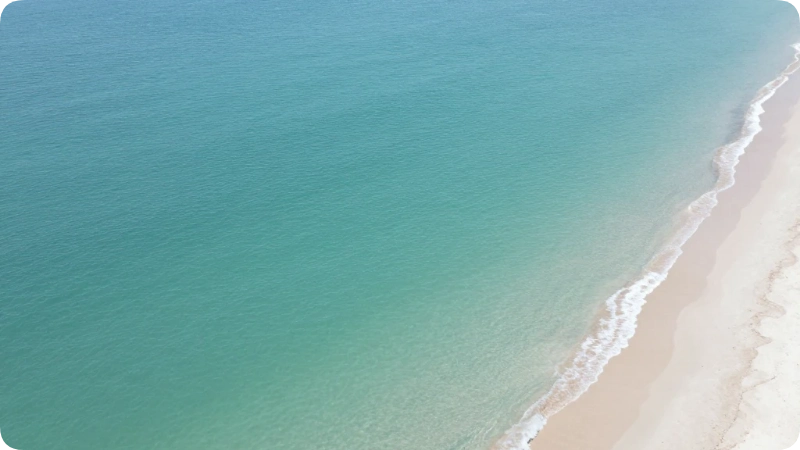
Phuket, Thailand’s largest island, is the country’s best-known beach destination, attracting visitors with its white-sand beaches, turquoise waters, and vibrant nightlife. While it offers excellent tourist facilities, it is also one of Thailand’s busiest and most developed destinations.
For a relaxing beach experience, Kata Beach and Kata Noi Beach are popular choices, offering calm waters and a quieter atmosphere than many other areas. Surin Beach is another favorite, known for its upscale yet laid-back vibe. Travelers seeking more seclusion often head to Freedom Beach, a beautiful cove accessible mainly by boat.
On the other hand, Patong Beach is Phuket’s entertainment hub. Packed with restaurants, bars, shopping, and nightlife, it is ideal for visitors looking for excitement, though it can feel crowded during peak seasons.
Beyond the beaches, Phuket Old Town is worth exploring for its colorful Sino-Portuguese architecture, local markets, cafés, and authentic Thai restaurants. It offers a more cultural side of the island and often better value than beachfront resort areas.
Many visitors also take trips to the nearby Phi Phi Islands, famous for their stunning scenery. However, staying overnight is often a better experience than joining a crowded day tour.
Getting around Phuket is easiest with ride-hailing services like Grab. Scooter rentals are common but require caution, as road accidents involving tourists are not uncommon. Always check local regulations and ensure your travel insurance covers scooter use before renting.
With its mix of beautiful beaches, cultural attractions, and lively entertainment, Phuket remains one of Thailand’s most popular destinations for travelers seeking both relaxation and adventure.
Krabi: Limestone Cliffs, Clear Water, and a Laid Back Vibe
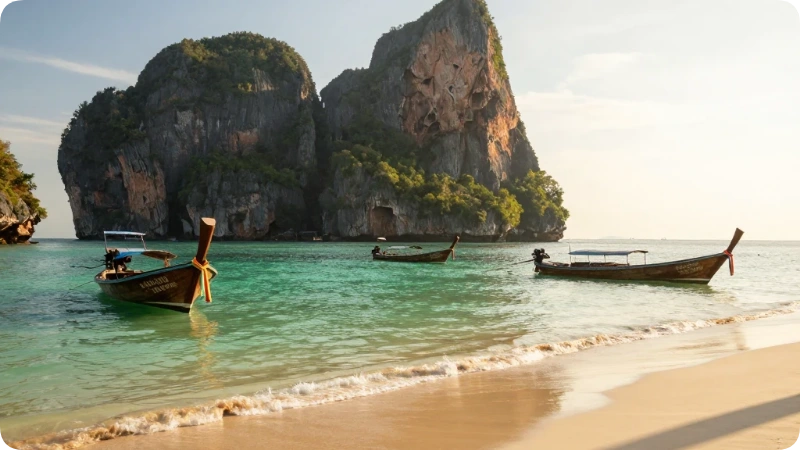
Krabi Province, on Thailand’s Andaman coast about 50 miles east of Phuket, offers some of the country’s most dramatic scenery dramatic karst limestone formations rising from emerald green water with a noticeably calmer atmosphere than its famous neighbor. Ao Nang serves as the main base, and from there, longtail boats connect to beaches and islands inaccessible by road.
Must do experiences in Krabi:
- Railay Beach: Accessible only by boat, Railay sits on a peninsula surrounded by cliffs. The East Railay side has mangroves and a long tail dock; West Railay and Phra Nang Beach deliver the postcard scenery. Rock climbers from around the world come specifically for the limestone walls here.
- Four Islands Tour: A full day longtail boat trip typically visits Tup, Chicken, Mor, and Poda islands. Snorkeling conditions are best from November through April.
- Tiger Cave Temple (Wat Tham Suea): Climb 1,237 steps to the summit for panoramic views over Krabi Town and the surrounding mountains. It’s genuinely strenuous but worth every step.
- Kayaking through mangroves: Half and full day kayak tours wind through Ao Thalane bay’s mangrove channels a peaceful contrast to beach hopping.
Hidden gem: Klong Thom hot springs and the Emerald Pool (Sa Morakot), about 45 minutes inland from Krabi Town, are two natural wonders most visitors skip entirely. The Emerald Pool is a naturally warm, turquoise freshwater pool in the middle of a jungle. Go before 9 AM to beat the crowds.
Insider tip: Fly into Krabi International Airport (KBV) rather than routing through Phuket if you plan to spend most of your time in Krabi Province. The airport is small but served by Bangkok Air and AirAsia from both Bangkok airports.
Koh Samui and the Gulf Islands: Tropical Luxury and Full Moon Parties
The Gulf of Thailand’s island trio Koh Samui, Koh Phangan, and Koh Tao offers something for every beach traveler, from spa resorts and family friendly shorelines to world class diving and the legendary Full Moon Party.
Koh Samui is the largest and most developed of the three. Chaweng Beach handles the tourist crowds and the nightlife. Bophut Fisherman’s Village (on the north coast) delivers a quieter, more charming alternative with boutique restaurants and a weekly walking street market. Koh Samui has its own airport served by Bangkok Airways from Bangkok.
Koh Phangan beyond the Full Moon Party is more serene and nature focused than most visitors expect. The north and west coasts have quiet beaches, healthy coral reefs, and yoga retreats. The Full Moon Party itself draws 20,000 30,000 people to Haad Rin beach monthly exhilarating and exhausting in equal measure. Check the lunar calendar when planning.
Koh Tao is one of Southeast Asia’s most affordable places to get PADI dive certified, with dozens of dive schools operating along the western coast. The island is small enough to walk across in a couple of hours, and the snorkeling right off the beach at Shark Bay named for the harmless nurse sharks frequently spotted there is excellent.
Important: The Gulf of Thailand’s east coast has a different monsoon pattern than the Andaman coast. The worst weather for the Gulf islands runs October through December, while the Andaman (Phuket, Krabi) is typically dry and beautiful during those same months. Plan accordingly if your dates are flexible.
Chiang Rai: The Artistic North and Golden Triangle
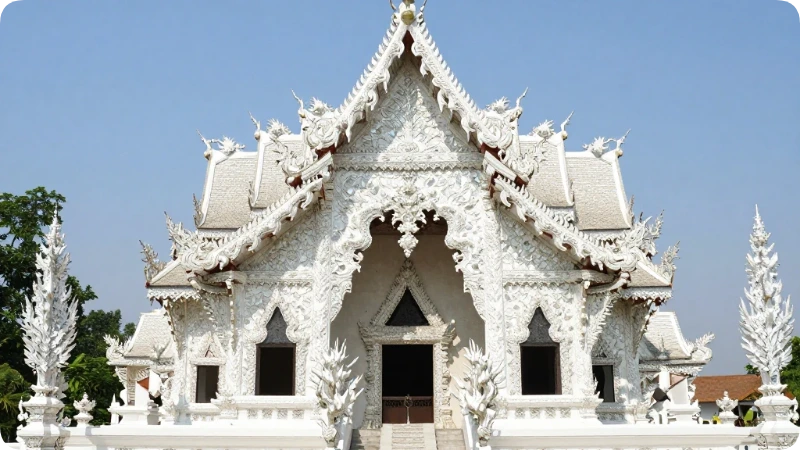
Chiang Rai, Thailand’s northernmost major city, sits close to the borders of Myanmar and Laos and delivers a quieter, more artistic experience than Chiang Mai with far fewer tourists. The city is famous for three extraordinary temples designed by contemporary Thai artists and each one is unlike anything else in the country.
Top attractions in Chiang Rai:
- Wat Rong Khun (White Temple): Designed by artist Chalermchai Kositpipat and still under construction, the all white temple encrusted with mirror glass is one of Thailand’s most photographed landmarks. Arrive before 10 AM to beat tour buses. There’s a small entry fee for foreigners.
- Baan Dam (Black House Museum): Artist Thawan Duchanee’s life’s work a sprawling compound of dark, dark structures filled with animal bones, skins, and horns. It’s unsettling and utterly fascinating.
- Wat Rong Suea Ten (Blue Temple): A more recently completed temple covered in vivid cobalt blue and gold, with intricate dragon sculptures. It sees fewer tourists than the White Temple and is completely free.
- Golden Triangle: The famous confluence of the Mekong and Ruak rivers, where Thailand, Myanmar, and Laos meet. The viewpoint is more symbolic than spectacular, but the area’s history once the heart of Southeast Asian opium trade makes it worth a half day.
- Doi Tung Royal Villa and Gardens: In the hills north of Chiang Rai, this garden project developed by the late Thai Princess Mother transformed former opium growing hillside communities. The gardens are beautiful year round.
Kanchanaburi: History, Waterfalls, and the River Kwai
Kanchanaburi, about three hours northwest of Bangkok by train or bus, holds some of Thailand’s most sobering and important World War II history alongside natural landscapes that most American tourists entirely overlook. It’s genuinely one of the most underrated destinations in the country.
What to see and do:
- Bridge on the River Kwai: The original bridge (partly rebuilt after Allied bombing) still stands and still carries trains twice daily. Walking across it is free. The WWII Museum and Thailand Burma Railway Centre nearby provide detailed, moving context about the Death Railway and the prisoners of war who built it.
- Erawan National Park: Seven tiered emerald waterfalls with natural swimming pools at each level possibly the most beautiful waterfall system in Thailand. The third and fourth tiers are the most famous, but hiking to the upper tiers rewards the effort. Arrive early; the park gets busy on weekends.
- Hellfire Pass Memorial: A 45 minute drive from Kanchanaburi town, this Australian managed memorial marks the most brutal section of the Death Railway cutting. The walking trail through the original pass is open and deeply affecting.
Insider tip: Take the two hour train from Bangkok’s Thonburi station to Kanchanaburi on a Saturday or Sunday it’s the slowest, most scenic, most Thai way to arrive, and costs less than $2 one way. The State Railway of Thailand runs the service; check schedules directly on their website.
Sukhothai: Thailand’s Ancient Capital
Sukhothai Historical Park, a UNESCO World Heritage Site in north central Thailand, preserves the ruins of the 13th century kingdom widely considered the birthplace of Thai civilization. Unlike Angkor Wat in Cambodia, which draws enormous international crowds, Sukhothai remains refreshingly uncrowded and renting a bicycle to ride between temple ruins on quiet paths through a lotus filled landscape might be the most peaceful few hours you spend in Thailand.
The park divides into five zones. The Central Zone holds the most important structures, including Wat Mahathat, a massive complex with dozens of chedi (stupas) and Buddha images. Entry to each zone requires a separate ticket (verify current prices with the Fine Arts Department of Thailand).
Practical note: Sukhothai is typically visited as a stop between Bangkok and Chiang Mai by bus or train, or via a short flight on Bangkok Airways to Sukhothai Airport (THS). It pairs well with nearby Si Satchanalai Historical Park, a second UNESCO site with even fewer visitors.
Pai: The Hippie Mountain Town in Mae Hong Son
Pai, a small mountain town in Mae Hong Son Province about three hours north of Chiang Mai by road (or 30 minutes by Kan Air flight), has built a devoted following among slow travelers, digital nomads, and anyone who wants to do nothing productive for a week surrounded by green hills. The road between Chiang Mai and Pai crosses 762 curves genuinely so if you’re prone to motion sickness, fly.
The town itself is tiny. Most of the appeal is in what surrounds it: hot springs, waterfalls, canyon viewpoints, coffee farms, and a night market that leans more locally authentic than its Chiang Mai equivalents. Pai Canyon (Kong Lan) at sunset is a favorite, low key spot narrow ridges above red earth canyons with views of the surrounding mountains.
Who it’s best for: Travelers who want to slow down, couples looking for a romantic mountain retreat, and anyone who finds the major tourist hubs overwhelming. Pai is not ideal for first time Thailand visitors who want to hit the highlights quickly.
Food and Dining Guide for Thailand
Thai cuisine is one of the world’s great food traditions, and eating well in Thailand requires almost no effort but knowing where to look makes the experience dramatically better. The most memorable meals rarely happen in restaurants attached to hotels.
Key dishes to seek out:
- Pad Thai: Available everywhere, but a plate from a specialist street cart beats any tourist restaurant version.
- Khao Soi: A Chiang Mai specialty rich, coconut curry noodle soup with crispy noodles on top. Don’t leave the north without eating it multiple times.
- Som Tum (Green Papaya Salad): Northeastern Thai in origin, fiery and bright. Ask for “pet nit noi” (a little spicy) if you want a gentler version.
- Massaman Curry: The rich, peanut laced southern curry is a long cooked masterpiece.
- Mango Sticky Rice: The definitive Thai dessert best with in season mangoes from March through May.
Street food safety: Thailand’s street food is generally safe to eat from stalls with high turnover. Opt for cooked food, avoid anything sitting at room temperature for extended periods, and peel your fruit. The CDC recommends drinking only bottled or purified water in Thailand; ice in modern tourist establishments is typically safe but verify locally.
Budgeting for food: A street food meal in Thailand costs $1 3. A mid range restaurant meal runs $5 12. A fine dining tasting menu at Bangkok’s best restaurants runs $50 100+. Most travelers eat happily on $15 25/day in food costs outside Bangkok.
Culture and Etiquette for American Travelers
Thai culture operates on social norms that differ significantly from American norms, and respecting them makes a meaningful difference in how locals receive you.
Key etiquette rules:
- The monarchy is sacred. Negative comments about the king or royal family are not just offensive they’re illegal under Thailand’s lèse majesté laws, which carry prison sentences. Extend this respect to currency (the king’s face appears on all Thai baht), postage stamps, and public images.
- Shoes off at temples and homes. Remove footwear before entering any temple building or someone’s home. Look for a pile of shoes at the entrance that’s your signal.
- Dress modestly at temples. Shoulders and knees must be covered. Sarongs and scarves are often available to borrow at major temples, but carrying a light scarf in your bag is more reliable.
- Don’t touch heads. The head is considered the most sacred part of the body in Thai culture. Don’t pat adults or children on the head, even affectionately.
- The wai greeting: Pressing palms together at chest level and bowing slightly is the traditional Thai greeting. When a Thai person wais you, return the gesture it’s a sign of respect.
- Bargaining: Expected at markets and street vendors; not appropriate at established restaurants or fixed price shops.
- Monks: Buddhist monks in orange robes follow strict codes of conduct. Women must not touch monks or hand objects directly to them.
Safety Tips for Travelers to Thailand
Thailand is generally safe for American tourists, but several consistent issues warrant attention:
- Road safety is the most significant risk. Thailand has one of the world’s highest road fatality rates. Scooter and motorbike accidents involving tourists are extremely common. If you rent a scooter, wear a helmet (it’s legally required), drive slowly, and ensure your travel insurance specifically covers motorbike accidents. Many policies do not, particularly without a valid motorcycle license.
- Tuk tuk and taxi scams: Common scams involve friendly strangers who approach tourists, claim a major temple or attraction is “closed today,” and offer to take them to a gem shop or tailor instead. Walk away from anyone who approaches you unprompted near major tourist sites.
- Sunscreen and heat: Thailand’s UV index regularly hits 11 12 (extreme). Dehydration and heat exhaustion are real risks, particularly for visitors not used to tropical humidity.
- Travel insurance: Medical care at Thailand’s international hospitals (Bumrungrad International and Bangkok Hospital are widely respected) is excellent but can be expensive. Comprehensive travel insurance that covers medical evacuation is strongly recommended. Verify what activities your policy covers.
- Tap water: Drink bottled or purified water throughout Thailand.
Emergency numbers in Thailand: Tourist Police: 1155 | General Emergency: 191 | Ambulance: 1669
The US Embassy in Bangkok is located at 95 Wireless Road, Bangrak. Register your trip with the State Department’s Smart Traveler Enrollment Program (STEP) before departure.
Budget Breakdown: Thailand Travel Costs for Americans
Thailand delivers exceptional value but costs vary significantly by region and travel style.
| Expense Category | Budget Traveler | Mid Range Traveler | Comfort/Luxury |
| Accommodation (per night) | $15 30 | $50 100 | $120 300+ |
| Meals (per day) | $10 20 | $25 45 | $60 120+ |
| Local Transport | $5 10 | $15 25 | $30 60 |
| Activities (per day) | $10 20 | $30 60 | $80 200+ |
| Daily Total (approx) | $40 80 | $120 230 | $290 680+ |
Prices are estimates only and subject to change. Peak season (November February) commands higher accommodation rates, especially in beach destinations. Always verify current costs through booking platforms before making financial plans.
Money tips:
- ATMs in Thailand dispense baht and charge a per transaction fee (currently around 220 baht per withdrawal at most banks check with your bank about international ATM policies). Use ATMs attached to major banks (Bangkok Bank, Kasikorn, SCB) at reputable locations.
- Notify your US bank and credit card companies before departing to avoid fraud flags.
- Avoid currency exchange booths at airports rates are consistently poor. Exchange at banks or licensed exchange counters (SuperRich is a reliable Bangkok chain) for better rates.
Common Tourist Mistakes and How to Avoid Them
Mistake 1: Over scheduling the itinerary. Thailand is a country that rewards spontaneity and slowness. Travelers who pack six destinations into 10 days spend most of their trip in transit and leave exhausted. A better approach: pick two or three regions, go deep, and leave one or two days unscheduled.
Fix: If this is your first visit, anchor in Bangkok (3 4 days), Chiang Mai (3 4 days), and one beach destination (4 5 days). That’s a solid 10 12 day trip.
Mistake 2: Visiting Koh Phi Phi without planning. The Phi Phi Islands are genuinely beautiful, but the main beach area on Phi Phi Don has become excessively developed and noisy. Day trippers from Phuket and Krabi arrive by the thousands, making the main pier area chaotic from mid morning to late afternoon.
Fix: Stay overnight on Phi Phi Don and visit Phi Phi Leh and Maya Bay on the first boat out, before the day trip crowd arrives. Alternatively, explore the Koh Lanta or Koh Yao islands for similar scenery with a fraction of the crowds.
Mistake 3: Visiting Bangkok temples without checking dress code. Tourists turned away at the Grand Palace entrance because of shorts or sleeveless shirts is a daily occurrence. Some travelers end up buying cover ups from nearby vendors at inflated prices.
Fix: Pack a light scarf and a pair of lightweight pants in your daypack when temple hopping. It takes no space and saves significant hassle.
Sample 14 Day Thailand Itinerary
Days 1 4: Bangkok Arrive, recover from jet lag, explore the Old City temples (Wat Pho, Wat Phra Kaew, Wat Arun), take a Chao Phraya river boat, wander Chatuchak Weekend Market (if arriving Saturday/Sunday), and explore Chinatown (Yaowarat) for evening street food.
Days 5 8: Chiang Mai and Northern Thailand Fly north (45 minute flight on AirAsia or Thai Lion Air). Take a cooking class, visit Doi Suthep, explore the Sunday Walking Street, and take a day trip to Doi Inthanon National Park. Day 7 or 8: optional day trip to Chiang Rai for the White, Blue, and Black temples.
Days 9 13: Beach Region (choose one) Option A (November April): Fly to Phuket or Krabi for Andaman beaches, island hopping, and sea kayaking. Option B (May October): Fly to Koh Samui for Gulf of Thailand beaches. Take a ferry to Koh Tao for diving or snorkeling.
Day 14: Bangkok Departure Domestic flight back to Bangkok. Allow a full day before your international flight. Suvarnabhumi Airport (BKK) is large arrive at least three hours before departure.
Responsible Travel in Thailand
Thailand’s popularity creates real pressure on natural sites and local communities. A few choices make a meaningful difference:
- Choose ethical elephant experiences. Avoid any elephant attraction offering rides, performances, or chains. Look for sanctuaries accredited by the Asian Elephant Foundation or recommended by organizations like the Global Federation of Animal Sanctuaries (GFAS). Elephant Nature Park (Chiang Mai) and Boon Lott’s Elephant Sanctuary (Sukhothai area) are well regarded options.
- Don’t buy wildlife products. Sea turtle products, tiger claw jewelry, coral, and ivory are still sold in tourist markets. Purchasing these is illegal under Thai law and US customs regulations (CITES protected species cannot be imported into the USA).
- Respect temple photography rules. Many sacred inner sanctuaries prohibit photography. Obey posted signs and note the behavior of locals.
- Support locally owned businesses. Choosing locally run guesthouses, restaurants, and tour operators over large international chains keeps more money in Thai communities.
Frequently Asked Questions
Is Thailand safe for solo American travelers?
Yes, Thailand is considered one of Asia’s most travel friendly countries for solo visitors, including solo women travelers. The main safety concerns are road accidents, petty theft in crowded tourist areas, and occasional scams targeting tourists. Stay aware, use Grab instead of hailing random taxis, and trust your instincts. Solo travel is extremely common throughout the country, and infrastructure for independent travelers hostels, tour agencies, transport connections is excellent.
How many days do you need in Thailand?
A first time visit benefits from at least 10 14 days to cover Bangkok, one northern destination (Chiang Mai), and one beach region without feeling rushed. Two weeks is the sweet spot. With three weeks, you can add a second beach area or slower paced stops like Pai, Kanchanaburi, or Sukhothai. Thailand rewards return visits enormously most travelers come back.
Do US citizens need a visa for Thailand?
As of 2025, US passport holders can enter Thailand visa free for up to 60 days. However, visa and entry policies change always verify current requirements directly through the Royal Thai Embassy website (thaiembdc.org) and the Thai Ministry of Foreign Affairs before booking travel.
What’s the best beach in Thailand for families?
Koh Lanta (Krabi Province) and Koh Samui (Gulf coast) are consistently recommended for families. Both offer calm, gentle sloped beaches safe for children, good resort infrastructure, and family friendly activities beyond the beach. Phuket’s Kata Beach and Kamala Beach are also solid family options. Avoid the crowded party beaches of Patong (Phuket) and Haad Rin (Koh Phangan) for family trips.
Is Thailand expensive for Americans?
By US standards, Thailand is very affordable. Budget travelers can live comfortably on $50 80 per day. A couple traveling mid range decent hotels, occasional nice dinners, occasional tours can budget $150 250 per day total. International flights are the largest expense; once you’re in Thailand, daily costs are low. Chiang Mai and Kanchanaburi are notably cheaper than Bangkok or Phuket.
What should I pack for Thailand?
Pack light, breathable clothing linen, cotton, or moisture wicking fabrics. Include at least two outfits suitable for temple visits (covered shoulders and knees). Bring strong sunscreen (SPF 50+, as Thai pharmacy sunscreens can be expensive), insect repellent, a small first aid kit, a universal power adapter, and a reusable water bottle with a filter. A lightweight day pack serves well throughout. If you’re trekking in the north, add a light rain jacket.
When should you avoid Thailand?
March through May brings serious heat and, in northern Thailand, significant smoke from agricultural burning that affects air quality substantially. The absolute peak of monsoon season (September October) makes some island destinations inaccessible and others frankly unpleasant. However, no month is universally “bad” across the entire country the regional variation in climate means that when one coast is rainy, another is often fine.
Final Takeaways
Thailand rewards almost every type of American traveler the history lover, the beach chaser, the food obsessive, the adventure seeker, and the slow traveler who just wants somewhere beautiful and affordable to exhale for two weeks.
The three things that will make your trip better than most: slow down your itinerary, get away from the most obvious tourist trail at least once, and eat from the street. Bangkok’s temples, Chiang Mai’s mountains, and whichever coastline suits your season each deliver experiences that hold up long after you’re home.
Start planning early if you’re aiming for peak season (November February) flights and accommodations in beach destinations book months in advance. Travel insurance is worth every dollar. And if two weeks feels too short after you arrive it will Thailand is one of the easiest countries in the world to return to.
Maya Lin inspires travelers to explore the globe with absolute confidence and independence. Armed with a background in digital media and a decade of independent solo travel experience, she knows exactly how to navigate unfamiliar cities smoothly and safely. For Travelmarse, Maya curates the solo travel and hidden-gem verticals. She reviews charming boutique hotels, designs smart neighborhood walking routes, and shares practical language-learning hacks, giving readers the exact tools they need to travel solo without the stress.