
Travel delay coverage is the part of your travel insurance policy that pays you back or pays ahead when your trip gets disrupted by delays outside your control.
It typically covers meals, lodging, transportation, and essential purchases when a common carrier delay keeps you stranded for a set trigger period (usually 3 12 hours).
Coverage limits range from $150 to $2,000 per person depending on your plan.
Picture this: you’re sitting in a packed terminal at O’Hare International Airport, staring at a departure board full of red “DELAYED” notices.
Your connection in Dallas is already gone. The hotel you booked in Cancún is non-refundable. And the airline rep is handing out $12 meal vouchers like they solve the problem.
For millions of American travelers, this scene is painfully familiar. The U.S. Department of Transportation (DOT) reported that in 2023, nearly 20% of all domestic flights arrived late, and weather-related delays alone stranded hundreds of thousands of passengers each year.
What separates the travelers who absorb that loss quietly from the ones who walk away mostly whole? Travel delay coverage.
Change block type or style
Move Paragraph block from position 10 up to position 9
Move Paragraph block from position 10 down to position 11
Change alignment
Change text alignment
Displays more block tools
blob:https://travelmarse.com/24a9a531-e1a4-40a6-a2f0-17f5cadfca61Meta Boxes
Use up and down arrow keys to resize the meta box pane.PostBlock
Paragraph
Start with the basic building block of all narrative.
Color
Text
Background
Typography
Font size
Advanced
Skip to the selected blockOpen save panel
- Post
- Paragraph
Notifications
1 block added.
This guide breaks down exactly how travel delay coverage works, what it pays for, which plans are worth your money, and the insider moves that experienced travelers use to maximize their protection.
If you’re flying cross-country for Thanksgiving or heading to a Caribbean resort, you’ll leave this article knowing precisely what to look for and what to avoid.
Change block type or style
Move Paragraph block from position 7 up to position 6
Move Paragraph block from position 7 down to position 8
Change alignment
Change text alignment
Displays more block tools
blob:https://travelmarse.com/24a9a531-e1a4-40a6-a2f0-17f5cadfca61Meta Boxes
Use up and down arrow keys to resize the meta box pane.PostBlock
Paragraph
Start with the basic building block of all narrative.
Color
Text
Background
Typography
Font size
Advanced
Skip to the selected blockOpen save panel
- Post
- Paragraph
Notifications
1 block added.
What Is Travel Delay Coverage and How Does It Work?
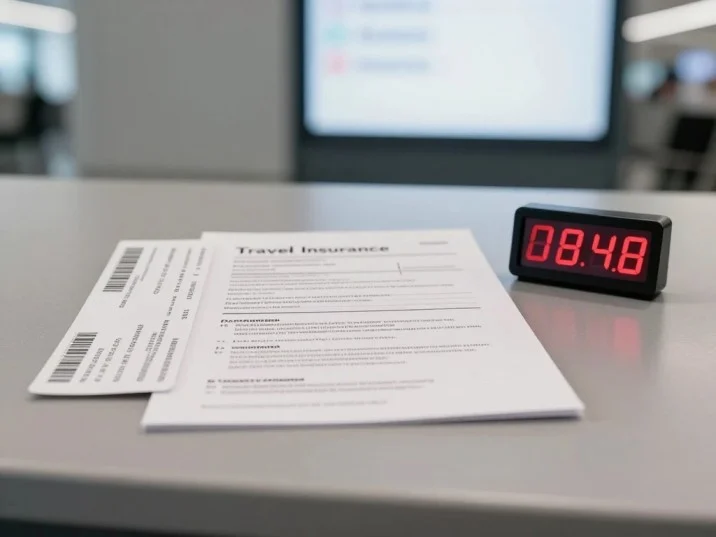
Travel delay coverage kicks in when a covered common carrier an airline, cruise ship, train, or bus delays your trip beyond a set threshold, typically between 3 and 12 hours depending on your policy. Once that threshold is crossed, your insurer reimburses reasonable out-of-pocket expenses you incur while waiting: meals, hotel stays, ground transportation, and sometimes toiletries or clothing if your bags are delayed too.
Most standard travel insurance plans bundle delay coverage as one benefit within a larger policy alongside trip cancellation, emergency medical, and baggage protection. A few specialized credit cards also include delay benefits automatically when you book travel with that card. The key difference is that insurance reimburses you after the fact, while some premium credit cards offer protections that activate with less paperwork.
How the claim process typically works:
- Your departure is delayed by the carrier.
- You confirm the delay time meets your policy’s trigger threshold.
- You keep all receipts for meals, hotel, and transportation.
- You obtain written confirmation of the delay from the carrier.
- You file your claim within the insurer’s required timeframe (usually 20 90 days).
- The insurer reviews, approves, and reimburses up to your policy maximum.
Always document everything in real time. Waiting until you’re home to reconstruct expenses leads to denied or underpaid claims.
Why Travel Delay Coverage Matters More Than Most Travelers Realize
Most people underestimate how expensive a single delay can become, fast. A one-night hotel near a major airport averages $180 $250 in most U.S. cities. Add two meals, a rideshare or shuttle, and a phone charger because your bag went ahead without you and you’re easily looking at $350 $500 out of pocket for one disruption.
According to the Bureau of Transportation Statistics (BTS), weather-related and NAS (National Airspace System) delays accounted for more than 65% of all flight delays in recent years. These are exactly the categories that most travel delay insurance covers. Mechanical delays and airline-caused disruptions are also typically covered. What’s usually not covered? Delays you caused yourself by missing a flight due to oversleeping or traffic.
The financial case is straightforward: A comprehensive travel insurance plan for a $3,000 vacation typically costs 4 10% of your trip cost, or $120 $300. A single overnight delay without coverage can wipe out that entire buffer. For frequent travelers, an annual travel insurance plan often pays for itself after one meaningful delay.
What Travel Delay Insurance Actually Covers (And What It Doesn’t)
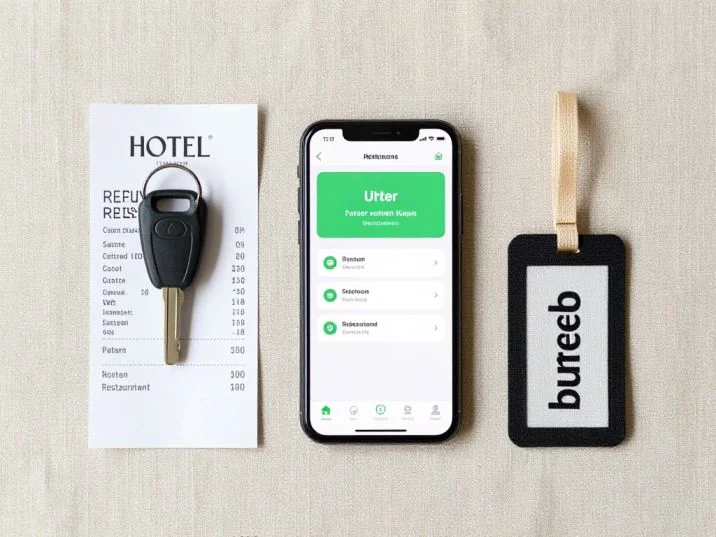
Understanding the scope of coverage prevents nasty surprises at claim time. Most standard travel delay policies cover the following expenses when your delay meets the time threshold:
Typically covered:
- Meals and non-alcoholic beverages (reasonable amounts, not a Michelin-star dinner)
- Hotel or motel accommodations near the departure or connecting airport
- Ground transportation to and from your temporary lodging
- Essential personal items if your checked baggage was delayed separately
- Phone calls to notify family, hotels, or tour operators
- Rebooking fees in some comprehensive plans
Typically not covered:
- Delays you caused (missed connection due to oversleeping, personal error)
- Delays shorter than your policy’s trigger threshold
- Pre-existing medical conditions that caused you to miss a flight
- Delays due to a government travel ban or border closure (these fall under “cancel for any reason” provisions)
- Alcohol, entertainment, or non-essential upgrades during your wait
- Delays from carriers not listed as “common carriers” in your policy
Read your policy’s definitions section carefully. The term “common carrier” can be defined narrowly in budget policies, sometimes excluding certain charter operations or small regional carriers.
Travel Insurance Delay Compensation: What Compensation Can You Get for a Delayed Flight?
The amount of compensation you receive for a delayed flight depends on whether the reimbursement comes from your airline, travel insurance policy, or credit card travel benefits.
Travel delay insurance typically reimburses reasonable expenses incurred during a covered delay, including:
- Hotel accommodations for overnight delays
- Meals and refreshments
- Transportation between the airport and hotel
- Essential toiletries and personal items
- Certain rebooking expenses in comprehensive plans
Most travel insurance plans provide between $150 and $2,000 per traveler, although limits vary by policy.
In some regions, travelers may also be entitled to airline compensation under passenger-rights regulations. For example, flights covered by European passenger protection rules may qualify for additional compensation directly from the airline. In the United States, compensation is generally more limited and often depends on the airline’s policies.
The key distinction is that airline compensation is intended to address carrier-related disruptions, while travel insurance focuses on reimbursing your out-of-pocket expenses during a covered delay. Many travelers use both when available to reduce their overall financial loss.
Travel Delay Coverage vs. Trip Cancellation: Key Differences
These two terms confuse a lot of travelers, and mixing them up can leave you expecting reimbursement you won’t receive.
| Feature | Travel Delay Coverage | Trip Cancellation Coverage |
| When it applies | Trip has started, you’re mid-journey | Before departure, trip can’t happen |
| What it pays | Meals, hotel, transport during delay | Non-refundable prepaid trip costs |
| Trigger | Carrier delay meets time threshold | Covered reason (illness, death, weather) |
| Typical limit | $150 $2,000 per person | 100% of insured trip cost |
| Documentation needed | Receipts + delay confirmation | Medical records, death certificates, etc. |
Both benefits matter. A trip cancellation policy alone won’t help you when you’re stranded in Atlanta at 11 p.m. that’s where delay coverage earns its keep.
How Credit Card Travel Delay Benefits Compare to Insurance Plans
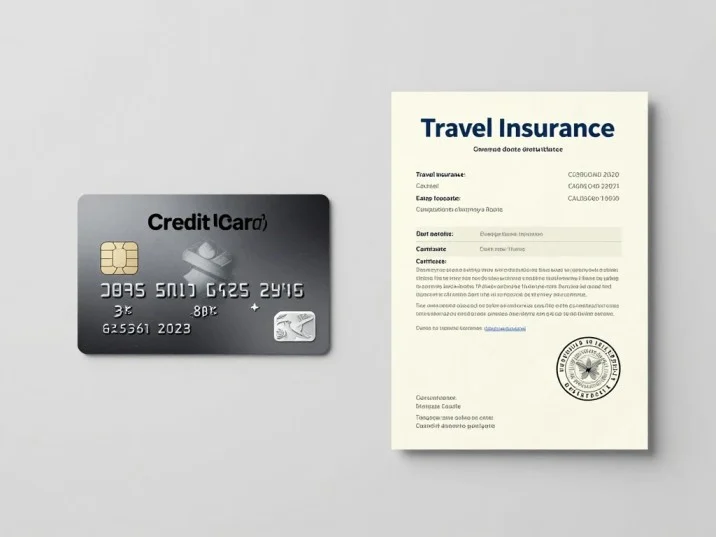
Several major U.S. credit cards include automatic travel delay protection when you pay for your trip with that card. Cards like the Chase Sapphire Reserve, The Platinum Card from American Express, and the Capital One Venture X offer delay benefits that can be competitive with standalone insurance sometimes better for shorter trips.
Credit card delay benefits tend to offer:
- Trigger thresholds of 6 12 hours (some cards require an overnight delay)
- Reimbursement limits of $500 $1,000 per ticket, per trip
- No separate premium cost it’s built into your annual card fee
- Relatively simple claim process through the card’s benefit administrator
Where standalone travel insurance wins:
- Higher coverage limits for longer or more expensive trips
- Better medical and emergency evacuation coverage
- Broader covered reasons
- Coverage for all travelers on the policy, not just the cardholder
Insider tip: Stack both when the stakes are high. Pay for your trip with a card that has built-in delay coverage, and also purchase a comprehensive travel insurance plan. Most insurers allow you to claim from each source for different expenses, up to your actual costs.
How to Choose the Right Travel Delay Coverage for Your Trip
Not all travel delay coverage is created equal. The best plan for a solo weekend trip to Miami looks different from the right plan for a multi-city international itinerary with a cruise connection.
Step 1: Assess your trip’s vulnerability.
Trips with connections, cruises, or international legs carry more delay risk. A nonstop domestic flight to visit family is lower risk. More connections = more exposure.
Step 2: Check what you already have.
Review your credit cards’ benefits guides at benefitsgateway.com or through each card issuer directly. Some travelers already have more protection than they realize.
Step 3: Calculate your out-of-pocket exposure.
Add up non-refundable hotel bookings, prepaid tours, and any costs you’d absorb if you arrived 24 hours late.
Step 4: Compare trigger thresholds.
A 3-hour trigger is significantly more valuable than a 12-hour trigger for domestic travel. Focus on plans with shorter triggers.
Step 5: Look at per-person daily limits.
A $150/day limit sounds fine until you’re stranded in New York City, where a one-night hotel alone exceeds that amount. Aim for at least $200/day per person for U.S. travel; $250+ for international.
Step 6: Verify covered causes.
Confirm that weather delays, mechanical issues, and airline-caused delays are all explicitly listed in your policy’s covered reasons.
The Best Times to Buy Travel Delay Coverage
The timing of your purchase matters more than most travelers know. For maximum protection, buy your travel insurance including delay coverage within 14 21 days of making your first trip deposit. That window unlocks several additional benefits in most comprehensive plans:
- Pre-existing medical condition waivers
- “Cancel for any reason” add-ons (usually available only within the early purchase window)
- Higher coverage for financial default of a travel supplier
You can still purchase coverage up to the day before departure in most cases, but you’ll lose those early-purchase perks. For trips purchased 10+ months in advance, buying early also protects you if something changes in your life before departure.
Insider tip: If you travel more than three times per year, compare the cost of an annual multi-trip plan against buying per-trip coverage. Annual plans from insurers like Allianz Travel, AIG Travel Guard, and IMG often cover an unlimited number of trips of up to 30 45 days each for a flat yearly fee.
Filing a Travel Delay Claim: Step-by-Step
- Your departure is delayed by the carrier.
- You confirm the delay time meets your policy’s trigger threshold.
- You keep all receipts for meals, hotel, and transportation.
- You obtain written confirmation of the delay from the carrier.
- You file your claim within the insurer’s required timeframe (usually 20 90 days).
- The insurer reviews, approves, and reimburses up to your policy maximum.
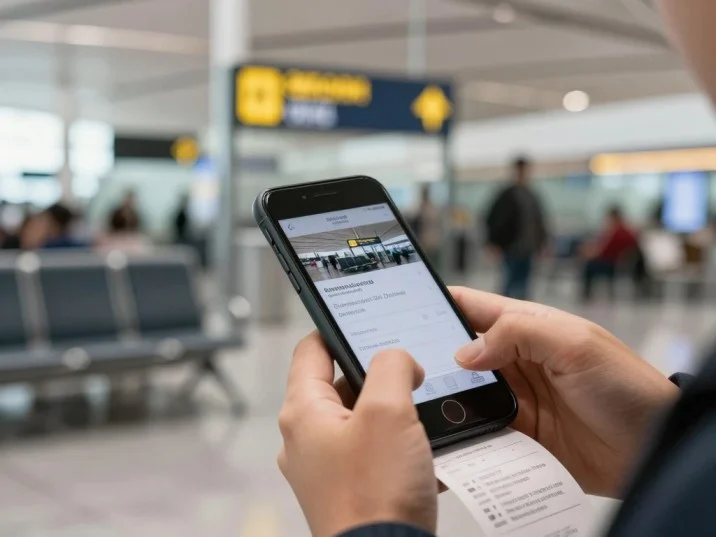
The claim process is where many travelers lose money they’re legitimately owed simply because they didn’t document properly in the moment.
At the airport or station, do these things immediately:
- Get official written confirmation of the delay from the airline, train, or cruise line. Ask a gate agent for a written statement or request one through the airline’s app.
- Screenshot the departure board showing the delay.
- Keep every receipt. Take a photo of each one right away with your phone.
- Note the exact time your delay was announced.
- Call your insurer’s 24/7 assistance line many insurers prefer you notify them before you incur major expenses.
When submitting:
- Complete the claim form through your insurer’s app or website
- Include all receipts, your policy number, and the delay documentation
- Submit within your policy’s claim window typically 20 90 days after return
- Keep copies of everything you submit
Most straightforward delay claims are processed within 7 15 business days. If a claim is denied, you have the right to appeal. The National Association of Insurance Commissioners (NAIC) provides resources for travelers whose claims are improperly denied.
Common Mistakes Travelers Make With Delay Coverage
Even experienced travelers trip over these. Here’s what to watch for:
Mistake 1: Assuming the airline will cover it. Airlines are only required to provide compensation for delays under specific circumstances, and U.S. law (unlike EU Regulation 261/2004) doesn’t mandate cash compensation for most domestic delays. The DOT’s dashboard outlines what airlines have voluntarily committed to but voluntary isn’t guaranteed. Don’t count on it. That’s what your insurance is for.
Fix: Treat airline compensation as a bonus, not a plan. File with your insurer regardless of what the airline offers.
Mistake 2: Losing receipts. Many travelers shove paper receipts in a pocket and lose them. Photos work just as well.
Fix: Create a dedicated folder in your phone’s photos app labeled with your trip name. Drop every receipt photo in there immediately.
Mistake 3: Not reading the trigger threshold. Travelers assume their coverage activated when it hasn’t yet. A 6-hour delay feels like forever, but if your policy’s trigger is 12 hours, you’re not covered yet.
Fix: Screenshot your policy’s key terms before your trip and save it in your travel folder.
Travel Delay Coverage for Families: What Changes
Traveling with kids adds urgency to every delay. A five-hour wait in a terminal with a toddler isn’t a minor inconvenience it’s a logistical ordeal. The good news is that most family travel insurance policies cover all immediate family members traveling together under one plan, often at a lower per-person rate.
Look for family plans that include:
- Per-person delay limits (not a single shared maximum)
- Coverage for emergency childcare costs in some premium plans
- 24/7 assistance lines that help rebook multiple passengers simultaneously
- Medical coverage for children that extends to the destination
Practical family tip: When you check in for a flight with a high delay risk (morning bank of flights in winter, tight connections), notify your hotel and tour operators preemptively. Rescheduling before a delay is confirmed is often easier and free than scrambling after.
Travel Delay Coverage for Cruises: Extra Considerations
Cruise travel is uniquely vulnerable to delay problems because missing a ship’s departure is a non-negotiable hard deadline. Unlike a delayed flight where the airline might rebook you, a cruise that’s left port simply cannot wait.
Most comprehensive travel insurance plans include “cruise miss” or “missed connection” coverage that specifically addresses this scenario. If a covered delay causes you to miss your cruise departure, the plan typically covers:
- Transportation to the next port of call to rejoin the ship
- Meals and lodging while you’re catching up
- Prepaid, non-refundable cruise costs in some policies
Insider tip: Cruise lines and travel agents often sell their own branded travel protection. These plans are typically less comprehensive than third-party insurance from providers like Travel Insured International or Seven Corners. Compare both before you buy.
Hidden Gems of Your Travel Delay Policy Most People Ignore
Your policy likely contains benefits you’ve never noticed. These three are frequently overlooked:
1. Trip interruption coverage
This is separate from delay coverage and often worth more. If you have to cut a trip short due to a covered reason, trip interruption typically reimburses unused, non-refundable trip costs AND the additional transportation cost to get home early. Limits often reach 150% of your insured trip cost.
2. Missed connection coverage
Distinct from general delay coverage, this specifically activates when you miss a connecting flight or cruise due to a covered delay. It often kicks in with a shorter trigger (3 hours) than general delay coverage.
3. Travel delay for baggage
Some policies separate “baggage delay” as its own benefit with its own limit. If your checked bags are delayed 12+ hours, this coverage pays for essential clothing and toiletries independent of If your flight itself was delayed.
Seasonal Considerations: When Delay Risk Is Highest
Delay risk isn’t equal throughout the year. Planning around high-risk periods or buying stronger coverage during them is a smart move.
| Season | Peak Delay Risk | Primary Causes |
| December February | Highest | Winter storms, de-icing, freezing fog |
| June August | High | Afternoon thunderstorms, air traffic congestion |
| March April | Moderate | Spring storms, wind events |
| September November | Lower | Least disruption on average |
The busiest travel days the Wednesday before Thanksgiving, the Friday before Memorial Day, the Sunday after Christmas see delay rates spike regardless of weather, simply due to the volume of aircraft and passengers in the system.
Time-saving tip: Book morning departure flights. The aircraft and crew are fresh, and there’s no cascading delay from earlier in the day. Evening flights carry the highest delay risk because any disruption from that morning has had all day to compound.
Quick Reference: Travel Delay Coverage Facts
| Factor | Detail |
| Typical trigger threshold | 3 12 hours (varies by plan) |
| Average coverage limit | $150 $2,000 per person |
| Common covered causes | Weather, mechanical, airline-caused delays |
| Common exclusions | Self-caused delays, delays under threshold |
| Best time to buy | Within 14 21 days of first deposit |
| Claim window | Usually 20 90 days after return |
| Key documentation | Receipts, written delay confirmation, screenshots |
FAQs
What qualifies as a covered delay for travel insurance purposes?
A covered delay is any disruption to a scheduled common carrier airline, train, cruise, or bus that exceeds your policy’s trigger threshold and results from a covered cause such as weather, mechanical failure, or airline operational issues. Personal reasons like missing a flight due to traffic typically don’t qualify. Always check your specific policy’s “covered reasons” list, as this varies by insurer.
Does travel delay coverage pay for hotel rooms during a delay?
Yes, most travel delay insurance covers reasonable hotel or motel costs when your delay requires an overnight stay or extends long enough that lodging is necessary. Keep your receipts and get written confirmation of the delay from the carrier. Policies typically set a per-day limit, so verify that your plan’s limit is realistic for the destination where you might be stranded.
How is travel delay coverage different from trip cancellation insurance?
Trip cancellation coverage applies before your trip departs and reimburses non-refundable costs if you must cancel entirely. Travel delay coverage applies once your trip has begun and covers expenses you incur while waiting out a delay mid-journey. Most comprehensive travel insurance plans include both benefits, but they serve different purposes and have separate limits.
Can I claim travel delay benefits from both my credit card and travel insurance?
Yes, you can generally file claims with both your credit card’s built-in delay benefit and a separate travel insurance policy, as long as your total reimbursement doesn’t exceed your actual out-of-pocket expenses. This is called “coordination of benefits.” Submit your credit card claim first, then submit remaining unreimbursed expenses to your travel insurer, or vice versa depending on each provider’s rules.
What documentation do I need to file a travel delay claim?
You’ll typically need: receipts for all expenses (meals, hotel, transportation), written confirmation of the delay from the carrier (gate agent letter, airline app screenshot, or email), your policy number and claim form, and the dates and times of your original itinerary versus what actually happened. Some insurers also request your original booking confirmation. Gather everything at the airport reconstructing it later is harder and may result in a reduced payout.
Does travel delay insurance cover delays on international flights?
Yes, comprehensive travel delay coverage applies to international flights, cruises, and train journeys the same way it applies domestically. International delays often carry higher financial consequences airport hotels near major international hubs can run $250 $400 per night so verify that your policy’s per-person limits are adequate. EU Regulation 261/2004 may also entitle U.S. travelers on European flights to additional compensation directly from the airline, which you’d receive on top of your insurance benefits.
Is travel delay coverage worth buying for short domestic trips?
It depends on your risk tolerance and what you’ve prepaid. For a nonstop weekend flight with no non-refundable bookings on the other end, standalone delay coverage may not be worth buying separately. But if your credit card already includes it at no extra cost, there’s no reason not to have it. For trips with connections, cruise departures, or prepaid tours, delay coverage earns its cost quickly one disrupted overnight easily exceeds a year’s premium for an annual plan.
Can I Claim for a 2-Hour Flight Delay?
Most travel delay insurance policies do not cover a 2-hour flight delay because the delay usually does not meet the policy’s minimum trigger threshold. Most plans require a delay of 3 to 12 hours, depending on the insurer and coverage level.
However, some airlines may provide assistance such as meal vouchers or rebooking options for shorter delays. If your delay exceeds your policy’s required threshold and results from a covered reason such as weather, mechanical issues, or airline operational problems, you may then qualify for reimbursement of eligible expenses.
Before traveling, always check your policy’s trigger period so you know exactly when your travel delay coverage begins.
Final Thoughts: Make Travel Delay Coverage Part of Every Trip Plan
Three things every traveler should take away from this guide: First, travel delay coverage is not a luxury it’s a reasonable financial tool for anyone whose trip includes a connection, a cruise departure, or any non-refundable booking on the other end of a flight. The DOT’s own data shows that delays are a near-certainty over enough trips, not a remote possibility.
Second, the coverage you already have through credit cards may be more powerful than you realize. Check your card benefits before you spend a dollar on a separate policy. Then layer in a comprehensive travel insurance plan if your trip’s financial exposure justifies it.
Third, documentation wins claims. The difference between a paid claim and a denied one often comes down to a missing receipt or the absence of a carrier delay confirmation. Take two minutes at the gate to gather that paperwork. It’s the most valuable travel habit you can build.
Your next trip deserves a plan that handles the unexpected gracefully. Travel well, document everything, and let the coverage work the way it was designe.

Ben Fogle believes that true adventure begins where the pavement ends. After spending years documenting extreme environments, rowing across oceans, and trekking through frozen landscapes, he mastered the art of wilderness travel. For Travelmarse, Ben constructs highly detailed guides on deep-nature packing lists, wildlife safety, and sustainable eco-tourism. He breaks down intimidating, rugged expeditions into clear, step-by-step roadmaps so everyday travelers can safely connect with the natural world.