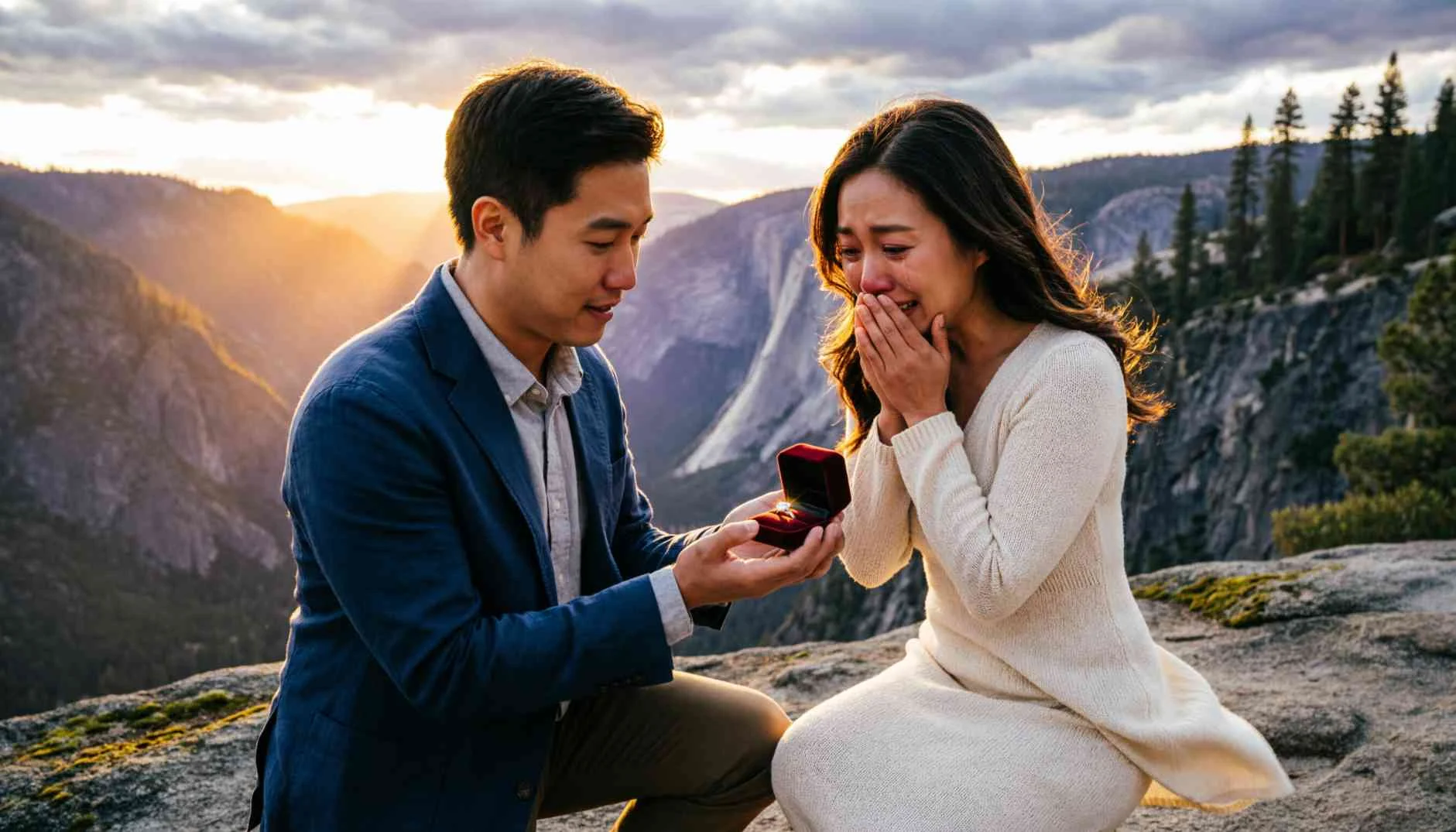
Proposing in a foreign city, on a mountain summit, or beside a glittering coastline sounds like a dream and it absolutely can be.
But travel engagement rings come with a set of real, practical challenges that most couples never think about until something goes wrong.
If you are shopping for a ring designed for adventure or figuring out how to travel safely with one, this guide covers everything: customs rules, TSA tips, insurance, ring styles built for active travel, and the most breathtaking proposal destinations across the USA and beyond.
What Is a Travel Engagement Ring?
A travel engagement ring is either a ring specifically designed to withstand active, on-the-go lifestyles think low-profile settings, durable metals, and secure stone mounts or it refers to the process of traveling with an engagement ring to propose at a destination.
Both meanings matter. The right ring for a hiking trail proposal looks different from one suited to a candlelit rooftop in Paris. Knowing which type you need shapes every decision that follows.
Quick Facts: Travel Engagement Rings at a Glance
| Topic | Key Detail |
| TSA rules | Rings can go in carry-on; no special declaration needed |
| Customs declaration | Required if ring value exceeds $800 (US re-entry) |
| Best ring metal for travel | Platinum or titanium scratch-resistant and durable |
| Best setting style for adventure | Bezel or flush setting (stone fully protected) |
| Travel insurance | Separate jewelry rider recommended; standard policies often exclude rings |
| Average proposal trip planning time | 3–6 months for international, 4–6 weeks for domestic |
| Most popular US proposal destinations | Grand Canyon, New York City, Maui, Savannah, Napa Valley |
Should You Bring the Ring in Your Carry-On or Checked Bag?
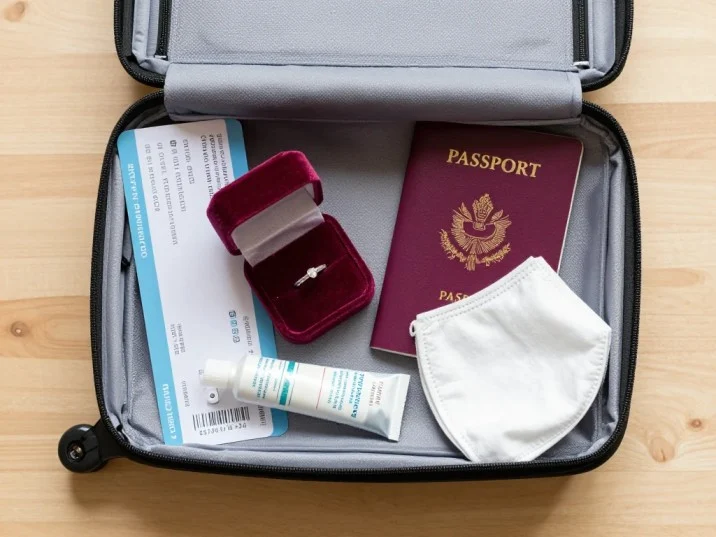
Always carry the ring with you in your carry-on bag. Never put it in checked luggage. Airlines lose, delay, and damage checked bags more often than most travelers realize. The Transportation Security Administration (TSA) does not require you to declare jewelry at security checkpoints, and a ring box will pass through X-ray without issue. If you are worried about the box shape tipping off your partner, slip the ring into a small pouch inside your toiletry bag or jacket pocket.
One insider tip: if your ring has a large diamond or gemstone, the X-ray image may catch a TSA agent’s eye. This rarely causes delays, but if it does, simply step aside for a brief bag check. The ring will not be confiscated.
Visit the TSA website at tsa.gov to review the latest carry-on guidelines before your trip, as policies can change.
Understanding US Customs Rules for Engagement Rings
Bringing a ring you purchased in the USA out of the country and back again is generally straightforward, but buying a ring abroad adds a layer of complexity. US Customs and Border Protection (CBP) allows each returning traveler a duty-free exemption of $800 on goods purchased abroad. If your ring exceeds that value which most engagement rings do you will owe duty on the amount above $800.
To avoid paying duty on a ring you already own, register it with CBP before you leave the USA. You can do this at any international airport using a CBP Form 4457 (Certificate of Registration). This document proves the ring was yours before you left, so you will not be taxed on it when you return. This step takes about ten minutes and saves real money.
Always verify current CBP regulations at cbp.gov before your trip, as exemption limits and duty rates are subject to change.
How to Insure an Engagement Ring for Travel
Standard travel insurance policies typically do not cover high-value jewelry. Before you travel with an engagement ring, take these steps to protect yourself.
Get a professional appraisal. Have the ring appraised by a certified gemologist and keep a copy of the document in both digital and printed form.
Add a jewelry rider to your homeowner’s or renter’s insurance. This is the most cost-effective option for most people. A jewelry rider typically costs 1–2% of the ring’s value annually and covers loss, theft, and damage worldwide.
Consider a standalone jewelry insurance policy. Companies that specialize in jewelry insurance often offer more comprehensive coverage, including mysterious disappearance (meaning if you simply lose it). Jewelers Mutual is one well-known option, though you should compare several providers.
Document the ring. Before you leave home, photograph the ring from multiple angles, including close-ups of the setting and any hallmarks. Store these photos in a cloud account.
Best Ring Styles for Active Travel and Adventure Proposals
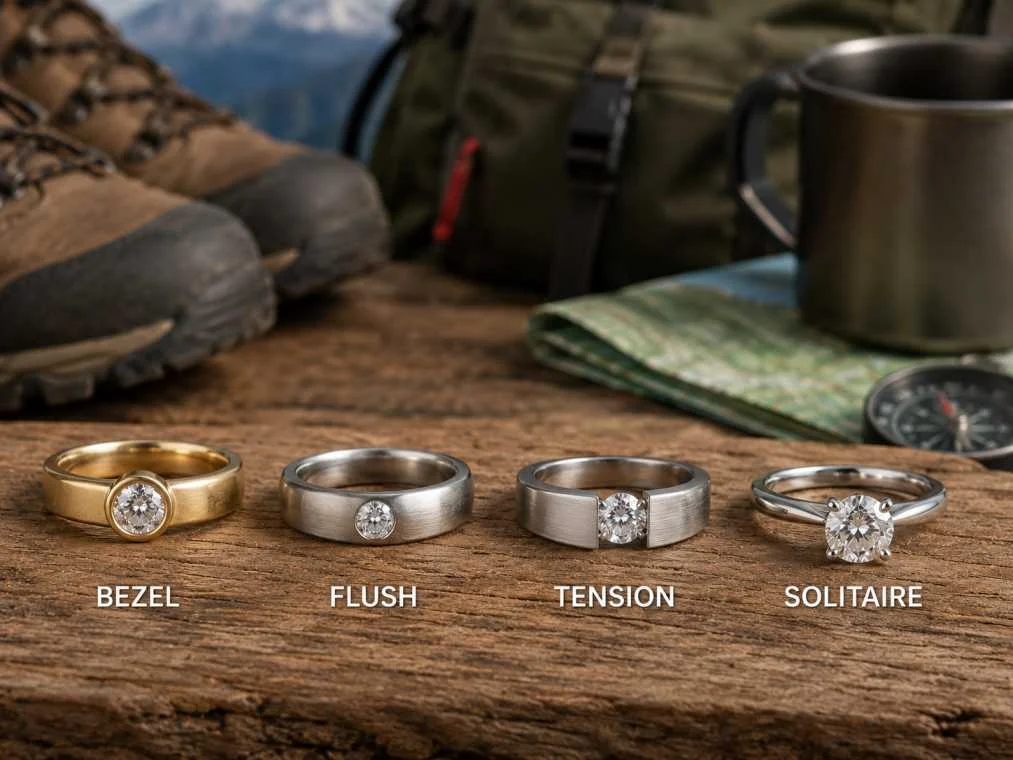
The setting style matters more than most people expect when a ring travels through airports, hikes trails, and dips into ocean water. Here are the settings that hold up best.
Bezel setting. A metal rim wraps completely around the stone, protecting it from chips and making it nearly impossible for the stone to snag or fall out. This is the top choice for hikers, climbers, and anyone with an outdoor-heavy lifestyle.
Flush or gypsy setting. The stone sits level with the band surface. There is no prong to catch on gear or clothing, and the low profile makes it comfortable under gloves.
Tension setting. The metal band grips the stone on both sides using pressure. It looks dramatic and modern, though some jewelers advise against it for very active lifestyles since a hard impact could theoretically shift the stone.
Avoid high-prong solitaires for adventure travel. Classic four- or six-prong solitaires are stunning, but prongs can bend or break against rocks, gym equipment, or even luggage zippers. If the proposal ring has a high-prong setting, consider a silicone travel band for active days and save the real ring for special occasions.
Best Metals for a Travel Engagement Ring
| Metal | Durability | Weight | Hypoallergenic | Best For |
| Platinum | Excellent | Heavy | Yes | Everyday luxury, long-term wear |
| Titanium | Excellent | Very light | Yes | Active travelers, hikers |
| Palladium | Very good | Light | Yes | Warm climates, budget-conscious |
| 14k White Gold | Good | Medium | Sometimes | Most proposals, classic look |
| 18k Yellow Gold | Moderate | Medium | Mostly | Vintage or statement rings |
| Sterling Silver | Poor | Light | Mostly | Fashion rings only, not for proposals |
Platinum and titanium win for travel because they resist scratching, do not tarnish in salt water or humidity, and maintain their structural integrity under pressure.
Top US Destinations for a Destination Proposal

The USA offers some of the world’s most spectacular proposal backdrops, and many of them require no passport. Here is a closer look at the best options by region.
Grand Canyon National Park, Arizona
Standing at the South Rim at sunrise, with the canyon painted in shades of copper and gold, creates a moment that does not need embellishment. The Grand Canyon draws around 6 million visitors annually, so crowd strategy matters. Propose at Mather Point before 7 a.m. or head to the quieter Desert View Watchtower on the East Rim for a more private setting. The North Rim, open May through mid-October, sees a fraction of the South Rim crowds and offers equally stunning views.
The National Park Service (NPS) manages Grand Canyon National Park. Check nps.gov/grca for current entry fees, road conditions, and permit requirements before your visit.
Maui, Hawaii
Maui combines tropical beauty with genuine seclusion in ways that few other US destinations match. The Road to Hana offers dozens of waterfall pullouts where a proposal feels both spontaneous and cinematic. For a sunset proposal, the Haleakalā National Park summit provides a view above the clouds that is genuinely unlike anything on the US mainland. Book the sunrise permit well in advance they sell out months ahead.
Savannah, Georgia
Savannah is one of the most romantically beautiful cities in the American South, with Spanish-moss-draped squares, gas-lit cobblestone streets, and antebellum architecture at every turn. Forsyth Park at dusk gives you a fountain backdrop that photographs beautifully without requiring a hike or a special permit. The city is walkable, affordable, and genuinely charming a strong choice for couples who prefer culture and history over natural landscapes.
Napa Valley, California
A vineyard proposal during harvest season (September through November) puts you in golden afternoon light surrounded by rolling hills covered in grapevines. Many Napa estates welcome private picnics and will help you arrange a surprise with some coordination. Contact individual wineries directly, since policies vary widely. Spring (March through May) offers wildflowers and fewer crowds at a slightly lower price point.
New York City, New York
Central Park’s Bethesda Fountain, the Brooklyn Bridge walkway at dusk, and the Top of the Rock observation deck at Rockefeller Center all deliver that unmistakable New York backdrop. The city has something for every couple, If they love art museums, Broadway shows, or rooftop bars with skyline views. The One World Observatory offers a permit system for proposals check their official website for current availability and pricing, as these change seasonally.
Hidden Gem Proposal Spots in the USA
Crater Lake, Oregon. This impossibly blue volcanic lake in southern Oregon sits at 6,178 feet and sees a fraction of the visitors that more famous parks receive. Rim Village at sunrise is almost always quiet. The Cleetwood Cove Trail leads down to the water’s edge one of the only places in the park where you can touch the lake.
Cumberland Island National Seashore, Georgia. Accessible only by a passenger ferry from St. Marys, Georgia, this barrier island has wild horses, ruined Carnegie mansions, and beaches so remote that some sections see only a handful of people per day. The National Park Service limits daily visitors, so book ferry tickets through nps.gov/cuis well ahead.
Maroon Bells, Colorado. Located near Aspen in the White River National Forest, the Maroon Bells are two 14,000-foot peaks reflected in Maroon Lake. The scene is famous among photographers but still feels genuinely wild. Access is managed by shuttle from Aspen Highlands during peak season, which actually reduces crowds at the lake itself.
How to Plan a Destination Proposal: A Practical Timeline
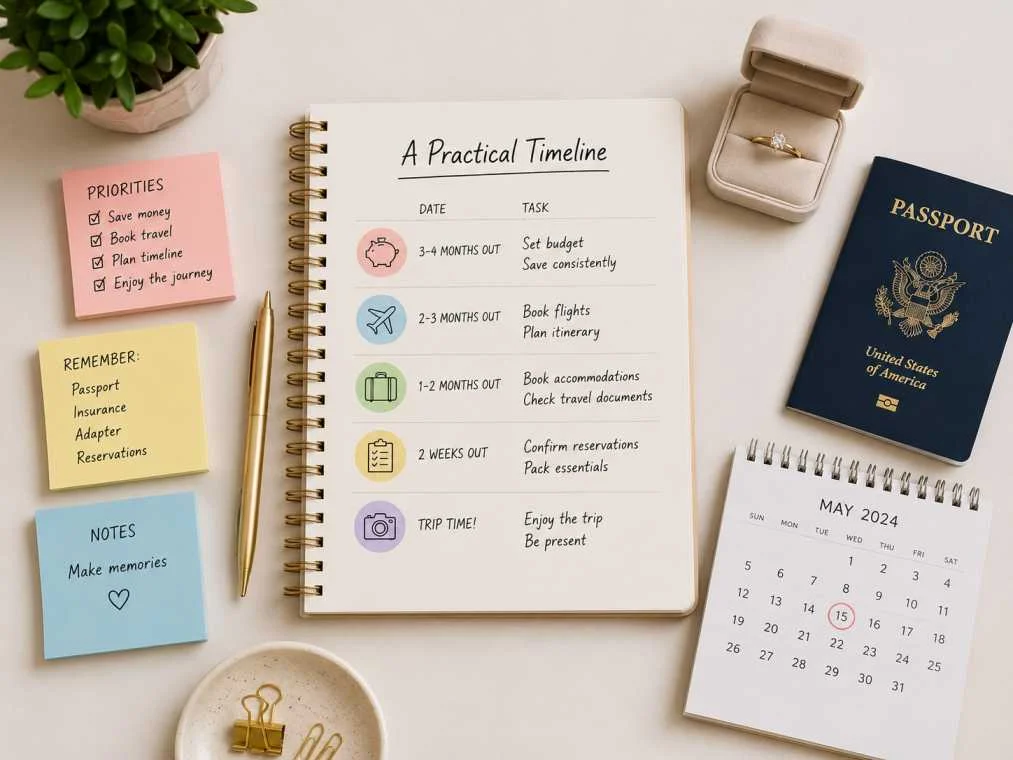
Planning a destination proposal well reduces stress and increases the chances that everything goes the way you imagined. Here is a timeline that works for most domestic proposals. Adjust international timelines by adding 4–6 additional weeks for passport, visa, and currency logistics.
Three to four months out: Choose the destination and book flights and accommodation. Research the specific spot where you plan to propose and identify backup options in case of weather.
Two months out: Purchase and insure the ring. Register it with CBP if traveling internationally. Research local photographers a surprise proposal photographer is one of the most memorable additions you can make, and good ones book up fast.
Four to six weeks out: Book any special reservations dinner tables, helicopter tours, permit-required viewpoints. Purchase travel insurance that includes trip cancellation coverage.
One to two weeks out: Confirm all bookings. Brief any hotel staff, restaurant managers, or photographers who are in on the plan. Pack the ring in your carry-on.
Day of: Have a loose plan, not a rigid script. The best proposals feel spontaneous even when they are thoroughly planned.
Hiring a Surprise Proposal Photographer
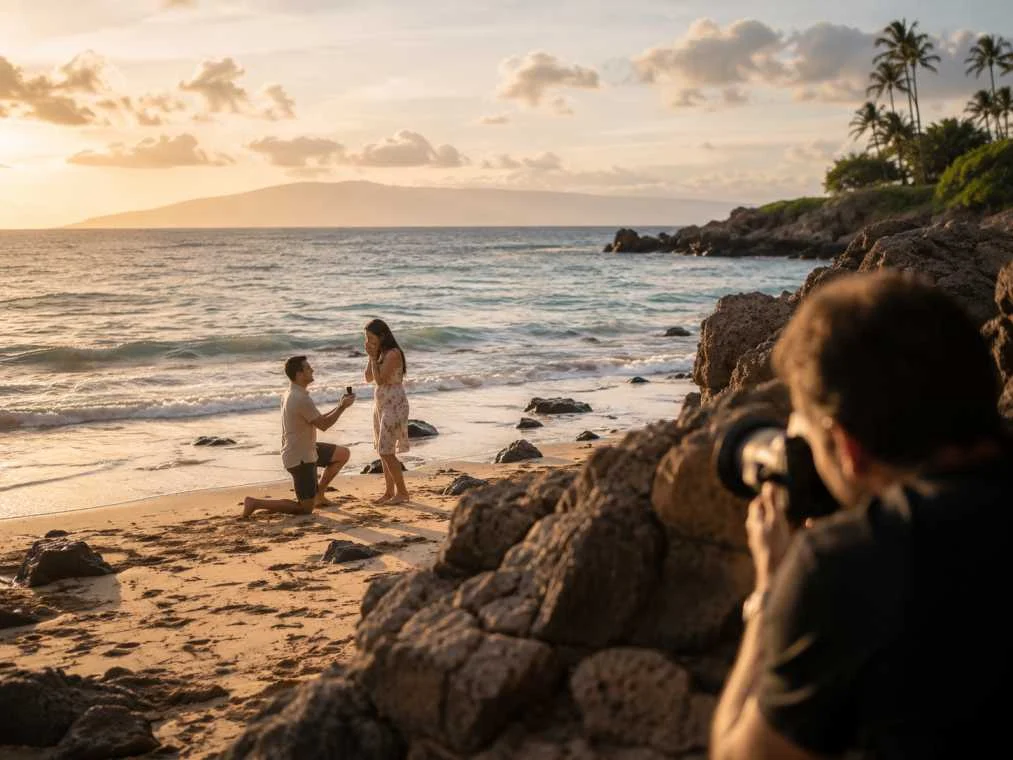
A surprise photographer is arguably the single best investment in a destination proposal. You will be overwhelmed with emotion in the moment, and having someone capture it means you will actually have photos of the experience rather than just the ring.
Search for photographers through platforms like Flytographer, which specializes in travel photography and has vetted photographers in cities across the USA and internationally. Local photography Facebook groups and destination wedding photographer directories are also strong sources. Expect to pay between $250 and $600 for a one-hour session, though prices vary significantly by location and photographer experience.
Brief your photographer on the exact location, your partner’s preferred side for photos, and any specific moments you want captured. Provide a photo of yourself so the photographer can spot you in a crowd.
Common Mistakes Travelers Make with Engagement Rings
Putting the ring in checked luggage. As covered above, this is the most common and most avoidable mistake. Always carry the ring with you.
Skipping insurance. A ring lost in a foreign country with no insurance is simply gone. The cost of a jewelry rider is minimal compared to the replacement value of most engagement rings.
Choosing a setting that does not suit the lifestyle. Buying a high-prong solitaire for a partner who kayaks, climbs, or works with her hands will result in either a damaged ring or a ring that sits in a drawer. Match the setting to the life, not just the aesthetic.
Not researching permit requirements. Several of the most beautiful proposal spots in the USA including Haleakalā summit and Hanging Rock in North Carolina require advance permits or reservations. Check the NPS website and local tourism boards well before your trip.
Proposing at a tourist hotspot during peak hours. The Eiffel Tower at noon, Times Square on New Year’s Eve, and the Hollywood Sign overlook at midday are all crowded, loud, and difficult to photograph. Go early morning or just before sunset at any popular spot.
Responsible Travel for Proposal Trips
Leave No Trace principles apply even at romantic moments. Do not carve initials into natural rock, pick flowers from national parks, or leave decorations (like flower petals or lanterns) in protected natural areas. Several national parks have explicit rules against proposal-related setups that require permits always check with the relevant NPS visitor center before planning anything that involves props, candles, or structures.
Support local economies by booking local guides, eating at locally owned restaurants, and staying at independently owned accommodations rather than chain hotels. A destination proposal is an opportunity to invest meaningfully in the communities that maintain these beautiful places.
Packing Tips for Traveling with an Engagement Ring
Keep the ring in a hard-sided ring box inside a small, padded pouch. Soft fabric pouches alone offer little protection against impact. Store the pouch in a part of your carry-on that you can access quickly at security but that stays secure during the flight.
If you are carrying the ring in your jacket pocket during the proposal, use a pocket with a zipper or button. Losing a ring out of an open pocket during a hike or a boat ride is more common than you would expect.
Some travelers find it useful to carry a printed copy of the ring’s insurance documentation and appraisal certificate not because you will typically need it, but because having it eliminates a layer of worry.
Sample 4-Day Proposal Trip Itinerary: Maui, Hawaii
Day 1 Arrival and West Maui Fly into Kahului Airport (OGG). Settle into your accommodation in Lahaina or Ka’anapali. Walk Front Street at sunset and have dinner at a waterfront restaurant. Keep the ring safely in the hotel safe tonight.
Day 2 Road to Hana Start early. Pack the ring. Drive the Road to Hana, stopping at Twin Falls, Wai’anapanapa State Park (black sand beach), and Oheo Gulch. Choose a waterfall pullout that feels private and right this could be your proposal moment, or you can save it for Day 4.
Day 3 Haleakalā Sunrise Book the sunrise permit through recreation.gov well in advance. Rise at 2 a.m. Drive to the summit (10,023 feet). Watch the sun rise above the clouds. This is one of the most extraordinary natural experiences in the USA and a genuinely unforgettable proposal backdrop for the right couple.
Day 4 Beach Day and Celebration Snorkel at Molokini Crater via a morning boat tour. Spend the afternoon at a quiet beach. Have a celebratory dinner at a restaurant that knows you are celebrating call ahead and let them in on the plan.
Budget Breakdown: What a Destination Proposal Really Costs
Prices vary widely by destination, season, and personal choices. These figures represent general ranges for US domestic proposals and are meant as planning guides only. Verify current pricing through official channels before booking.
| Expense | Estimated Range |
| Flights (round trip, domestic) | $200–$800 per person |
| Accommodation (3–4 nights) | $150–$500 per night |
| Ring (varies widely) | $2,000–$15,000+ |
| Ring insurance (annual) | $30–$200+ depending on value |
| Surprise photographer | $250–$600 |
| Celebratory dinner | $100–$400 |
| Activities and tours | $100–$500 |
| Travel insurance | $50–$200 |
| Total (excluding ring) | $1,200–$5,000+ |
FAQs
Can I bring an engagement ring through TSA security?
Yes. The TSA does not require you to declare jewelry at security checkpoints. Place the ring box in your carry-on, not your checked bag. It will pass through the X-ray machine without issue. If an agent asks about an unusual shape in your bag, you can explain it is a ring box. Agents do not open ring boxes to check inside, and the ring will not be confiscated.
Do I need to declare an engagement ring at US Customs?
If you bought the ring abroad and it is worth more than $800, you must declare it upon re-entering the USA and may owe duty on the excess. If you already owned the ring before leaving the USA, register it with CBP using Form 4457 before departure to prove prior ownership and avoid any duty charge. Check cbp.gov for the latest exemption amounts.
What is the best type of ring for an active traveler?
A bezel-set ring in platinum or titanium suits active lifestyles best. The bezel setting wraps the stone in a protective metal rim, eliminating exposed prongs that can snag or break. Titanium is especially light and durable. Avoid high-prong solitaires if your partner hikes, climbs, or works with her hands regularly.
Should I tell the hotel about the proposal?
Yes, in most cases. Hotels are experienced with proposals and can add meaningful touches champagne in the room, flower arrangements, or a preferred table at the restaurant. Contact the hotel’s concierge directly and keep the communication channel separate from any shared bookings or email accounts.
How do I find a surprise proposal photographer while traveling?
Flytographer is one of the most widely used platforms for travel proposal photography, with vetted photographers in hundreds of cities. You can also search destination wedding photography directories or local photography groups on social media. Book at least four to six weeks in advance, and share the exact location and your partner’s description so the photographer can blend into the background.
What happens if I lose the ring during a trip?
Report the loss immediately to local police and obtain a written report this is required for most insurance claims. Contact your jewelry insurance provider as soon as possible. If you have a standalone jewelry insurance policy with mysterious disappearance coverage, you may be fully covered. Standard travel insurance generally does not cover lost jewelry, which is why a dedicated jewelry rider matters.
Is it better to propose before or after arrival at a destination?
Propose after you have both settled in and are relaxed. Proposals immediately after long flights, before check-in, or during stressful travel moments tend to feel rushed. Give yourselves a day to arrive, rest, and enjoy the destination before the moment. The exception is if a specific timed event like a sunrise at a national park is central to the proposal.
Conclusion
A destination proposal with a thoughtfully chosen travel engagement ring creates a memory that belongs entirely to the two of you.
The practical side carrying the ring safely, understanding customs rules, insuring it properly, and choosing a setting built for the life you actually live takes a few hours of planning and saves a lifetime of potential headaches.
The emotional side takes care of itself when you choose a place that means something, plan with care, and stay present in the moment.
Three things to take away from this guide: carry the ring in your carry-on, insure it before you leave, and match the ring style to your partner’s real lifestyle. Do those three things, and the rest is just details.
Now go plan the trip.

Stephen Fry brings an insatiable curiosity for history, language, and global heritage to the Travelmarse team. Having spent decades traveling the globe to study regional storytelling and ancient civilizations, he excels at uncovering the hidden narratives of modern destinations. Stephen anchors the cultural vertical on Travelmarse, where he writes deep-dive guides on architectural history, museum crawl strategies, and local customs. His vivid, engaging writing helps travelers look past the surface and truly understand the heritage of the places they visit.