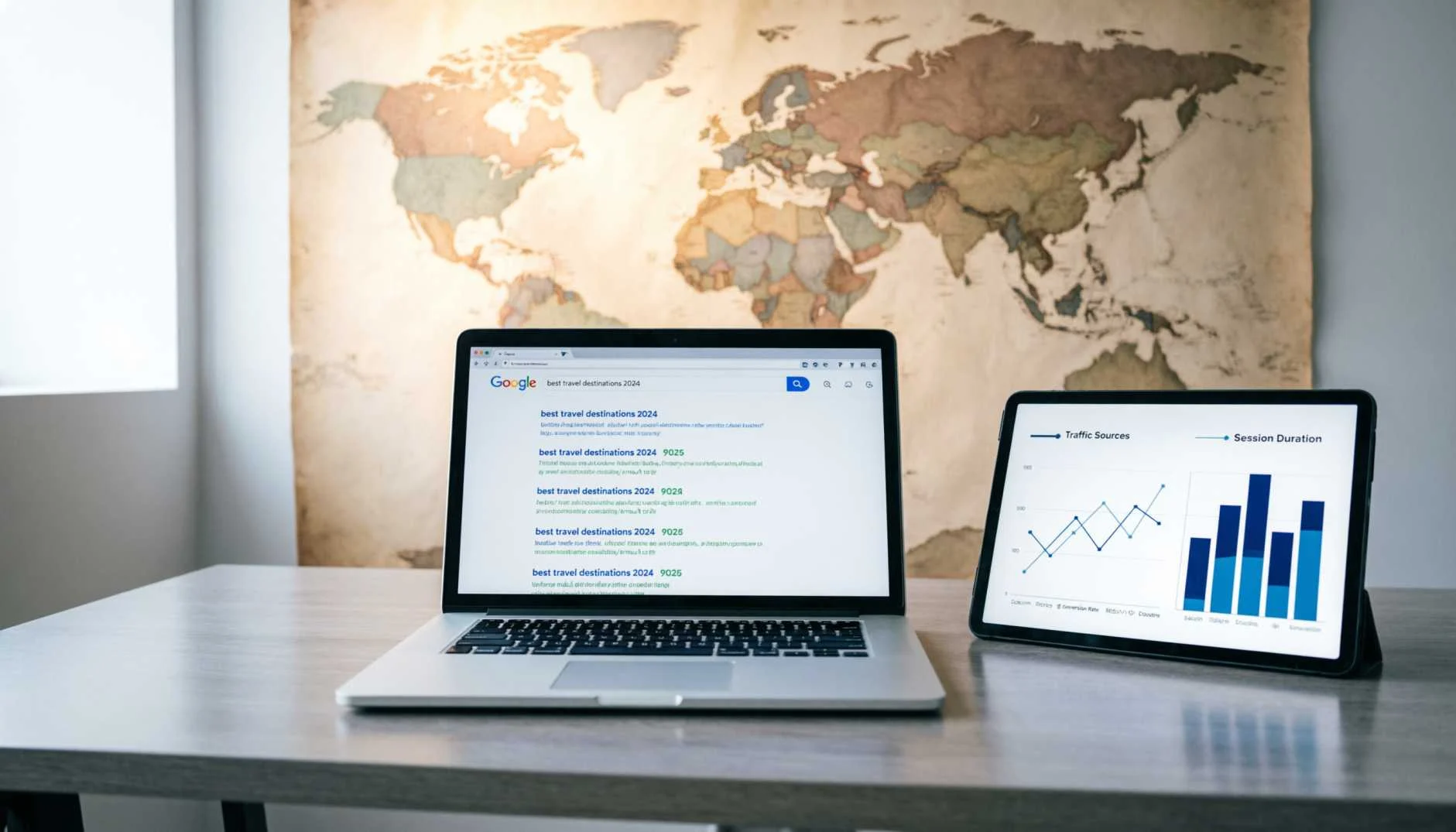
The travel industry relies heavily on search engines, making SEO a key strategy for attracting travelers and increasing bookings. A well-planned Travel Industry SEO Guide helps hotels, airlines, tour operators, travel websites, destination guides, and booking platforms improve search visibility and connect with people actively researching or planning trips.
Travel SEO combines technical optimization, quality content, local SEO, and user experience improvements to drive organic traffic and conversions. Travelers typically begin with broad searches such as travel ideas or destination recommendations before moving to high-intent searches for hotels, tours, flights, and transportation. Ranking throughout this journey helps businesses capture valuable traffic at every stage.
Although travel SEO is highly competitive due to search features like flight listings, hotel results, maps, and destination panels, there are still significant opportunities. Businesses that focus on niche markets, specific destinations, and long-tail keywords can often compete successfully and attract highly targeted visitors.
Content remains one of the most important elements of travel SEO. Destination guides, itineraries, seasonal travel advice, local recommendations, and FAQ pages help travelers find useful information while building authority in search results. Technical SEO factors such as site speed, mobile friendliness, structured data, and crawlability also play a major role in improving rankings and user satisfaction.
Local SEO further strengthens visibility through optimized Google Business Profiles, local citations, and location-specific content. In addition, a smooth user experience with clear navigation, fast-loading pages, and simple booking processes can improve engagement and increase conversions.
By following the strategies outlined in a Travel Industry SEO Guide, travel brands can generate sustainable organic growth, attract qualified visitors, increase reservations, and reduce reliance on paid advertising while staying competitive in the evolving travel market. (≈245 words)
Why Travel Industry SEO Is Different from General SEO
Travel SEO faces unique challenges that shape every strategy. Unlike many industries, the travel buying journey is long and rarely follows a straight path. A traveler may start by searching for inspiration months before a trip, then gradually move toward flights, accommodations, and activities before finally making a booking. Because of this, top-of-funnel content such as destination guides, travel ideas, and planning articles plays a major role in influencing future conversions, even when bookings happen much later.
Seasonality is another major factor. Travel demand changes throughout the year based on weather, holidays, events, and school schedules. Search interest for destinations rises and falls predictably, but unexpected events such as economic changes, natural disasters, or safety concerns can also affect demand. As a result, travel businesses need ongoing content updates and seasonal planning rather than a one-time SEO strategy.
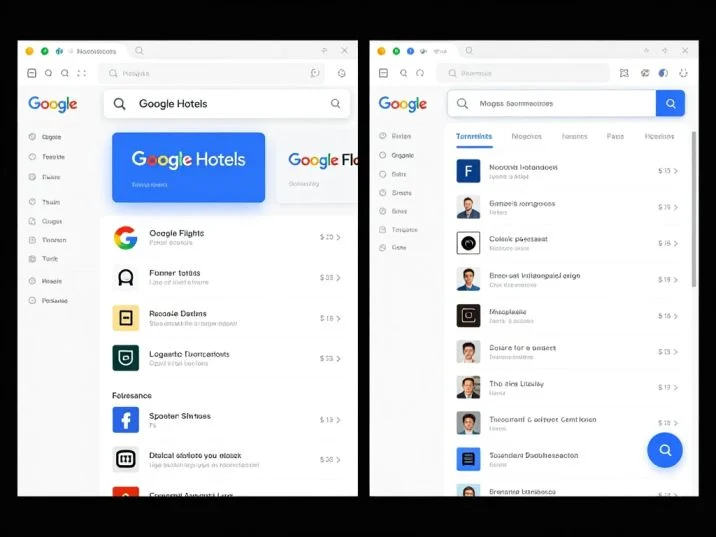
Competition in search results is also more intense because Google increasingly provides travel information directly on its platform. Features such as hotel listings, pricing, availability, maps, and travel planning tools often appear above traditional organic results. Travel brands must optimize not only for organic rankings but also for visibility within Google’s travel-related features.
Trust is equally important in travel SEO. Travelers spend significant amounts of money and make decisions that can affect their safety and overall experience. Because travel content falls under Google’s Your Money or Your Life (YMYL) category, websites are held to higher standards of expertise, authority, and trustworthiness. Accurate information, experienced authors, transparent sourcing, and regularly updated content are essential for strong rankings. Websites that rely on thin content, outdated advice, or anonymous authors are more likely to struggle in search results.
Together, these factors make travel SEO more complex than many other industries and require a strategy focused on user intent, seasonality, visibility, and trust.
Keyword Research for Travel: How to Find the Searches That Actually Convert

Effective travel keyword research focuses on the traveler’s journey rather than search volume alone. High-volume keywords may attract traffic, but long-tail keywords with stronger booking intent often deliver better conversions and revenue.
Travel searches usually fall into four intent categories. Inspirational keywords attract people looking for destination ideas or seasonal travel inspiration, though they often have low commercial value. Research-focused searches come from travelers gathering information about destinations, attractions, and trip planning. Commercial investigation keywords show that users are comparing hotels, tours, or travel services and are closer to making a decision. Transactional keywords indicate the highest purchase intent because travelers are ready to book accommodations, experiences, or flights.
Many travel businesses focus heavily on broad informational terms because they bring large amounts of traffic. However, smaller, targeted keyword groups often produce better results because they attract users who are closer to booking.
A strong keyword strategy starts by understanding the questions travelers ask at each stage of their journey. Google Autocomplete, People Also Ask, and related searches reveal how people naturally search for travel information. Competitor analysis can uncover content gaps and opportunities that top-ranking pages may have overlooked.
Travel brands should prioritize keyword clusters where ranking is realistic, especially when competing with larger websites. Seasonality also plays a major role in travel SEO because demand shifts throughout the year. Creating content around seasonal trends helps businesses gain visibility when travelers are actively planning trips.
Tools such as Ahrefs, Semrush, Google Search Console, and Google Trends help identify opportunities and monitor performance. Google Trends is particularly useful for spotting seasonal patterns and emerging destinations. A balanced keyword strategy that addresses every stage of the traveler journey supports stronger visibility, engagement, and long-term growth.
Content Strategy: What Google Actually Rewards in Travel

Content remains the core of travel SEO, but Google now prioritizes genuinely helpful information over generic articles. Through its Helpful Content system, Google rewards travel content that offers unique insights, real expertise, and answers travelers’ specific questions better than competing pages.
Successful travel content goes beyond listing popular attractions. Instead of creating another generic “Top Things to Do” article, travel brands should provide practical details that travelers cannot easily find elsewhere. Local recommendations, insider tips, firsthand observations, and destination-specific advice create valuable information gain that benefits both users and search rankings.
Strong travel content also demonstrates Experience, Expertise, Authoritativeness, and Trustworthiness (EEAT). This includes content written by experienced travelers or industry professionals, detailed and verifiable information, references to authoritative sources such as tourism boards, government agencies, and travel health organizations, and regular updates to keep information accurate. Practical details like prices, opening hours, transportation options, and entry requirements should be reviewed frequently to maintain reliability.
User engagement signals also play an important role. Content that keeps visitors engaged, encourages return visits, and satisfies search intent is more likely to perform well over time.
One of the most effective optimization tools for travel websites is Google Search Console. By reviewing the Queries report and sorting keywords by impressions, site owners can identify topics where their pages already appear in search results but attract few clicks. Improving title tags, meta descriptions, and content relevance for these pages often delivers faster SEO gains than creating entirely new content.
In 2026, the most successful travel content is original, experience-driven, and highly useful. Travel websites that focus on authentic insights, trustworthy information, and traveler needs are far more likely to earn visibility, engagement, and long-term search success.
Technical SEO for Travel Websites: The Infrastructure That Makes Content Work

Technical SEO is especially important for travel websites because they often contain thousands of destination pages, location guides, and dynamic content. These large sites face unique challenges that many general SEO guides overlook.
One of the biggest priorities is page speed. Travel websites rely heavily on high-quality images, which can slow loading times if not optimized properly. Improving Core Web Vitals by using modern image formats, responsive image sizing, lazy loading, and a content delivery network (CDN) helps create a faster user experience and supports search rankings.
A clear URL structure also plays a major role. Organizing content into logical categories helps search engines understand relationships between destinations while making navigation easier for users. Well-structured URLs improve crawl efficiency and site organization.
For larger travel websites, crawl budget management is essential. Dynamic filters, date selections, and other URL parameters can create thousands of duplicate pages that waste search engine resources. Proper use of canonical tags, robots.txt rules, and parameter controls helps ensure search engines focus on the most important pages.
Structured data is another valuable SEO tool for travel brands. Schema markup for hotels, attractions, tours, events, FAQs, and reviews can enhance search listings with rich results, improving visibility and click-through rates.
International travel websites must also pay close attention to hreflang implementation. Correct hreflang tags help search engines show the appropriate language or regional version of a page to users in different countries, improving user experience and preventing duplicate-content issues.
Overall, successful travel SEO depends on strong technical foundations. Fast-loading pages, organized site architecture, efficient crawling, structured data, and proper international targeting help travel websites improve visibility, user experience, and long-term organic growth.
Local SEO for Travel Businesses: Hotels, Tours, and Attractions
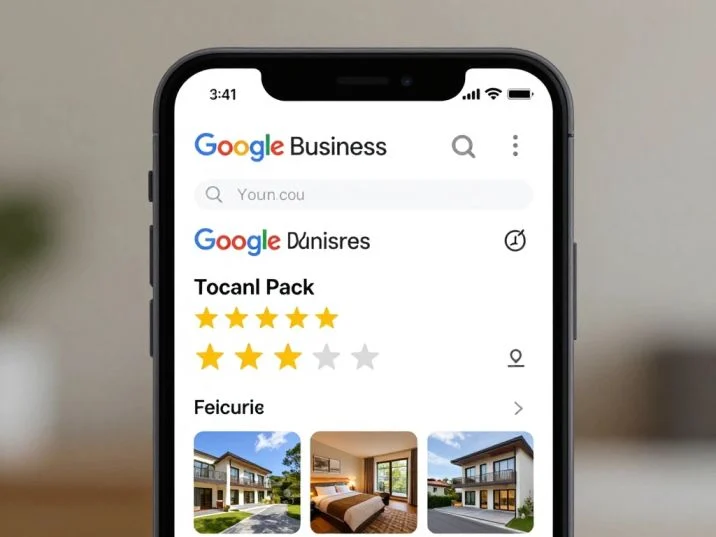
Local SEO is the most directly revenue-linked component of travel industry SEO for hotels, tour operators, restaurants, and attractions. When someone searches “hotels in Asheville NC” or “guided tours Sedona,” Google’s local results Maps pack, Knowledge Panel, Google Business Profile appear prominently in results, often above traditional organic listings.
Google Business Profile (GBP) optimization is the foundation of local travel SEO. For a hotel, tour company, or attraction, a complete and active GBP profile contributes to local pack rankings and drives direct traffic through maps, phone calls, and website clicks. Key optimization elements include: accurate NAP (Name, Address, Phone) consistency across all directories, complete category selection, regular photo uploads (Google’s own research shows profiles with photos receive significantly more clicks and direction requests), and active management of Q&A and reviews.
Reviews are a local ranking signal and a direct conversion factor in travel. Star rating, review volume, recency, and owner response rate all influence both local rankings and traveler booking decisions. Travel brands that systematically request reviews from guests at checkout, via post-stay email, through in-app prompts build review velocity that compounds over time. Responding to reviews, including negative ones, signals active management and builds trust.
Citation consistency identical business name, address, and phone number across Google, TripAdvisor, Yelp, Expedia, Booking.com, and hundreds of smaller directories is a foundational local ranking factor that many travel businesses neglect. Services like BrightLocal and Yext audit and manage citations at scale.
Insider tip: For hotels and tour operators, the “attributes” section of Google Business Profile is significantly underoptimized across the travel industry. Attributes like “LGBTQ+ welcoming,” “accessible parking,” “guided tours available,” and “women-led” appear in local search results and filter options. Completing the full attributes checklist takes less than an hour and improves both ranking and qualified click-through rate.
Link Building in Travel SEO: What Still Works and What Doesn’t
Backlinks remain one of Google’s strongest ranking factors, especially in the travel industry. The best links come naturally from useful, original, and destination-focused content that travelers and publishers find valuable.
For smaller travel businesses, effective link-building strategies include creating original research or local data that journalists and tourism organizations can reference, partnering with destination marketing organizations (DMOs) and tourism boards for directory listings and exposure, and contributing high-quality articles to reputable travel publications. Another proven tactic is broken link building, where businesses replace outdated or dead links on travel resource pages with relevant content.
The most successful travel backlinks come from trusted, relevant sources that provide real value to travelers. In contrast, tactics such as paid link schemes, link exchanges, low-quality directories, and mass-produced AI content often fail to deliver lasting results and can harm a site’s search visibility. Focusing on authority, relevance, and genuine relationships remains the safest and most sustainable approach to travel SEO.
Seasonal SEO Strategy: Planning Travel Content Around Search Demand
Seasonality is the defining characteristic of travel search behavior, and travel SEO strategy must account for it explicitly. The critical mistake that travel brands make consistently is publishing seasonal content too late a piece about “best places to travel in October” published in late September has almost no time to rank before the relevant search volume peaks and falls.
Search volume for seasonal travel queries begins climbing 6 8 weeks before the target period. A well-optimized piece about fall foliage travel in New England should be published, or at minimum refreshed and re-promoted, by early August to build rankings before September traffic surges. Holiday travel content should be live and indexed by October. Summer travel planning queries peak in March and April for many destinations.
Evergreen vs. seasonal content serves different strategic functions. Evergreen destination guides comprehensive, regularly updated articles about a destination’s best activities, accommodations, and practical logistics build authority over years and rank across seasonal cycles. Seasonal content captures specific demand spikes. A strong travel SEO content calendar maintains a foundation of evergreen pillar content while layering seasonal articles and updates on top.
Content calendar framework for travel brands:
- 6+ months ahead: Identify seasonal content gaps and assign research/writing
- 3 4 months ahead: Publish or substantially update seasonal destination and travel tip content
- 6 8 weeks ahead: Promote seasonal content through social, email, and internal linking from high-traffic evergreen pages
- 4 weeks ahead: Review performance and optimize underperforming seasonal content titles and meta descriptions
- Post-season: Analyze performance data and note what to improve for the following year
Google Search Console’s performance data filtered by query and date range makes it possible to map exactly when your seasonal content peaks and how rankings progress from publication through peak demand. This data should drive publishing schedules, not intuition.
Google’s Travel Products and How to Work With Them
Google Hotels, Google Flights, and destination knowledge panels represent Google’s direct entry into the travel industry, and they create a complex competitive environment for travel brands. These products occupy the top of search results for many high-value travel queries, pushing organic results further down the page.
Rather than viewing Google’s travel products purely as competition, forward-thinking travel brands integrate them into their SEO strategy. Hotels that list on Google Hotel Ads through direct integration or a channel manager appear in the Google Hotels interface alongside Booking.com and Expedia. This direct competition with OTAs for placement in Google’s own product gives hotels a way to capture bookings without paying OTA commission rates.
For content publishers and destination guides, understanding what type of content Google does not replicate in its knowledge panels is strategic. Google’s destination panels cover high-level information: what to see, broad categories of activities, major hotels. They don’t cover the specific, nuanced, experience-based content that travel writers and destination experts produce the best neighborhood for a first-time visitor, the less-known hike that beats the crowded famous one, the restaurant that a local would actually recommend. This content gap is exactly where independent travel publishers and boutique operators can build organic visibility that Google’s own products don’t displace.
Featured snippets and AI Overviews represent another dimension of this landscape. Google’s AI-generated summaries now appear for many informational travel queries, pulling content from top-ranked pages. Optimizing for AI Overview inclusion by writing clear, factual, well-structured answers to specific questions is a newer but increasingly important element of travel content strategy.
Travel Blogging vs. Travel Brand SEO: Different Goals, Different Tactics
Travel blogging and travel brand SEO share many tactical elements but serve fundamentally different business goals, and confusing them leads to misaligned strategy.
A travel blog’s primary revenue model typically relies on advertising, affiliate commissions (from booking platforms like Booking.com, Airbnb, and travel insurance affiliates), and sponsored content. The SEO goal is volume maximizing organic traffic across a wide range of informational queries. Content breadth, publishing frequency, and social sharing matter significantly.
A travel brand’s primary goal is converting potential customers into paying ones hotel guests, tour bookings, activity reservations. The SEO goal is qualified traffic at the right stage of intent, not raw volume. A boutique hotel in Savannah, Georgia, that ranks on page one for “boutique hotels Savannah historic district” captures travelers who are actively comparing and ready to book. That single ranking is worth more to the business than thousands of visitors to a general “things to do in Savannah” article.
This distinction shapes every content decision. Travel brands should build deep, authoritative content around their specific location and service category enough to become the clear expert resource for travelers in that specific intent cluster rather than trying to compete with large travel publications across broad informational categories.
Common Travel SEO Mistakes (and How to Fix Them)
Mistake 1: Publishing thin destination content at scale. Many travel brands and agencies produce high volumes of destination articles that cover the same top-10 format with no specific information gain. Google’s Helpful Content systems increasingly identify and discount this type of content, and it rarely earns the backlinks needed to rank competitively. Fix: Audit existing content with Google Search Console performance data. Identify your lowest-traffic pages and either substantially improve them with specific, original details or consolidate them into stronger pillar pages.
Mistake 2: Ignoring internal linking structure. Travel sites often have excellent individual pieces of content that don’t rank because they receive no internal links from higher-authority pages on the same site. Internal links pass PageRank and help Google understand content relationships. Fix: When publishing any new piece of content, identify three to five existing pages on your site that should link to it. For large sites, conduct a quarterly internal link audit using a tool like Screaming Frog to identify orphaned pages and linking opportunities.
Mistake 3: Treating all destination queries as interchangeable. “Hotels in Sedona” and “best hotels Sedona hiking” are technically both hotel queries, but they reflect different traveler priorities and should target different content. The first is broad; the second signals a traveler who prioritizes trail access and likely cares about location relative to specific trailheads. Fix: Build keyword clusters that map intent nuances within your destination category and create content or landing pages that specifically address each variation.
Measuring Travel SEO Performance: The Metrics That Matter
Most travel brands track too many metrics and act on too few. The metrics that actually connect SEO activity to business outcomes in travel are narrower than most dashboards suggest.
Organic search metrics by funnel stage:
| Metric | Stage | Tool |
| Impressions and average position | Awareness/discoverability | Google Search Console |
| Click-through rate by query type | Interest/engagement | Google Search Console |
| Organic sessions to booking funnel pages | Consideration | Google Analytics 4 |
| Assisted organic conversions | Revenue attribution | Google Analytics 4 |
| Direct organic revenue | Bottom-line impact | GA4 + booking platform |
Share of Voice the percentage of clicks your site captures across a defined set of target keywords is a more meaningful competitive metric than rankings alone for travel brands operating in competitive destination markets. Tools like Semrush and Ahrefs calculate Share of Voice across keyword sets.
Google Search Console’s Core Web Vitals report tracks technical performance issues. Page Experience signals including mobile usability, HTTPS, and Core Web Vitals all feed into rankings and deserve regular monitoring, particularly after site updates that could inadvertently degrade performance.
Insider tip: Segment your Google Analytics 4 organic traffic by landing page category. A travel brand with destination content, booking pages, and blog content serving different intents should measure conversion rates separately for each segment. Measuring all organic traffic against a single booking conversion rate masks which content actually drives revenue and which drives traffic without commercial value.
The Role of User Experience in Travel SEO Rankings
User experience signals how visitors behave on your site after arriving from search influence rankings through what Google measures as “quality signals.” Travel sites face specific UX challenges: high-resolution imagery that slows load times, complex booking flows that create friction, mobile experiences that don’t match what desktop users see, and content that buries practical information under promotional copy.
Mobile optimization is non-negotiable in travel SEO. Google uses mobile-first indexing, meaning it primarily crawls and indexes the mobile version of travel sites. More importantly, research consistently shows that travel searches are increasingly mobile travelers searching for activities, restaurants, and local directions while already at a destination. A mobile experience that requires excessive pinch-and-zoom or delivers pages that load slowly over a cell connection costs both rankings and conversions.
Navigation clarity and site architecture directly affect how effectively Google crawls and understands a travel site, and how efficiently users find what they need. Travel sites should follow a clear hierarchy Country → Region → Destination → Category → Specific page with breadcrumb navigation that helps both users and bots understand content relationships.
Exit rate and dwell time, while not direct ranking factors, correlate with content quality signals. Travel content that immediately answers the specific question behind a search query rather than requiring users to scroll through irrelevant background information keeps visitors engaged. Formatting matters: headers that let readers scan for relevant sections, practical tables for information like transportation options or seasonal comparisons, and specific numbered recommendations that facilitate decision-making all improve content performance.
FAQ:
What is travel industry SEO and why does it matter?
Travel industry SEO is the optimization of travel-related websites hotels, tour operators, airlines, destination guides, and booking platforms to rank in search engine results. It matters because organic search drives a significant portion of travel research and bookings. Travelers conduct dozens of searches before booking, and appearing at the right moment in that journey drives both direct bookings and brand awareness that converts over time.
How long does it take to see results from travel SEO?
Travel SEO results typically take 3 6 months to materialize for new or recently optimized content, and 6 12 months to build competitive rankings in high-volume destination categories. Technical improvements and local SEO optimizations can show results faster. The travel industry’s high competition means that compounding investments building authority, earning links, improving content depth over time outperform short-term campaign approaches.
What is the biggest SEO challenge for travel websites?
Competition from Google’s own travel products and large OTAs (Expedia, Booking.com, TripAdvisor) is the most significant structural challenge. These players have massive authority and Google’s own products occupy premium SERP real estate. The strategic response is to target specific long-tail queries, build deep local and destination-specific authority, and create content with genuine information gain that generic, high-authority sites don’t produce.
How important are reviews for travel SEO?
Reviews are a direct local ranking factor and a major conversion signal in travel. For hotels, tours, and attractions, Google Business Profile star ratings and review volume influence local pack rankings. Review recency matters a consistent stream of recent reviews outperforms a large volume of older ones. TripAdvisor reviews, while not a direct Google ranking factor, influence brand trust and appear prominently in search results for many destination queries.
Should travel brands focus on Google or other search engines for SEO?
Google dominates travel search in the United States, accounting for approximately 90% of search engine market share. Bing holds meaningful share in specific demographics and deserves inclusion in travel SEO through Bing Webmaster Tools. Pinterest functions as a search engine for travel inspiration content and drives meaningful referral traffic for visual travel brands. For international travel markets, Baidu (China), Naver (South Korea), and Yandex (Russia) warrant consideration for brands targeting those audiences.
What’s the difference between travel SEO and travel content marketing?
Travel SEO and travel content marketing overlap significantly but start from different perspectives. SEO strategy starts with search demand data what travelers are searching for and creates content to meet that demand. Content marketing starts with brand narrative and storytelling, then distributes it across channels including search. The most effective travel brands integrate both: using SEO research to identify high-opportunity topics and content marketing principles to make that content genuinely compelling and shareable.
How do small travel businesses compete with large OTAs in SEO?
Small travel businesses compete by going narrow and deep rather than broad. A boutique hotel in Savannah, Georgia, can’t outrank Booking.com for “hotels USA,” but it can build strong organic visibility for “historic boutique hotels Savannah Garden District,” “pet-friendly hotels Savannah,” and “Savannah hotels near Forsyth Park” queries where specific local expertise and content depth create a real advantage. Local SEO, Google Business Profile optimization, and destination-specific content strategy are the core tools.
Three Principles That Separate Effective Travel SEO from the Rest
First, match your content depth to the competitive reality of each query. Thin, generic content doesn’t rank against established players in travel anymore Google’s Helpful Content systems specifically target this type of content. The travel brands that gain and hold organic rankings in 2026 invest in specificity: real details, genuine expertise, and content that answers the actual question behind a search rather than a generalized version of it.
Second, think in seasons and plan ahead. The single most common and most costly travel SEO mistake is publishing seasonal content too late to rank. Seasonal content planning publishing or refreshing destination-specific articles 8 12 weeks before their relevant search demand peaks is the operational habit that separates travel brands with consistent seasonal organic traffic from those that chase trends after they’ve already passed.
Third, local SEO is the highest-ROI component of travel SEO for most destination-based businesses. A fully optimized Google Business Profile, active review management, and citation consistency don’t require large content budgets they require attention and consistency. For hotels, tours, and attractions, these optimizations drive direct revenue through Maps and local search placements that compete favorably with OTA traffic at zero commission cost.
Travel industry SEO is a long game. The brands that invest in it systematically building content depth, technical infrastructure, local authority, and link equity over time build an organic search presence that generates compounding returns. Start with the fundamentals, measure what moves the needle, and build from there.

Maya Lin inspires travelers to explore the globe with absolute confidence and independence. Armed with a background in digital media and a decade of independent solo travel experience, she knows exactly how to navigate unfamiliar cities smoothly and safely. For Travelmarse, Maya curates the solo travel and hidden-gem verticals. She reviews charming boutique hotels, designs smart neighborhood walking routes, and shares practical language-learning hacks, giving readers the exact tools they need to travel solo without the stress.