
A travel vaccine clinic is a specialized medical facility that provides destination-specific immunizations, health consultations, and preventive medications for international travelers.
To find one near you, search the CDC’s clinic locator at wwwnc.cdc.gov/travel, check with your local health department, or contact your primary care provider. Most travelers should book at least 4 6 weeks before departure.
Planning an international trip brings a lot of excitement and then reality hits. You’re deep in research about flights and hotels when you remember that some destinations require proof of vaccination just to enter, and others carry disease risks that can genuinely ruin a trip or cause serious harm.
Finding a travel vaccine clinic near you isn’t just a checkbox it’s one of the most practical things you can do before leaving the country.
The problem is that most people wait too long, go to the wrong type of provider, or don’t realize their destination requires specific vaccines that a regular doctor’s office may not stock.
This guide walks through everything: how to find a legitimate travel clinic, what happens during your visit, which vaccines are commonly needed, how much it costs, and the timing mistakes that catch travelers off guard every year.
If you’re heading to Southeast Asia, sub-Saharan Africa, Central America, or somewhere closer, this is the information that protects your health and your trip.
What Is a Travel Vaccine Clinic and How Is It Different from a Regular Doctor?
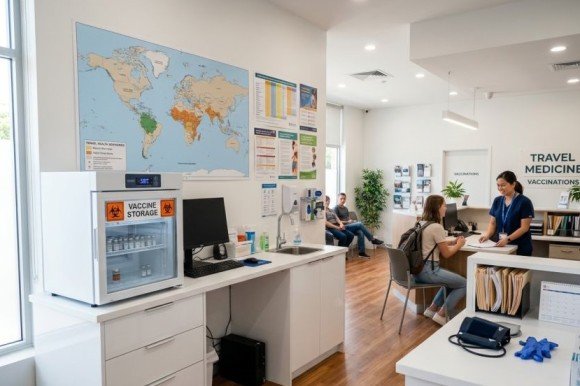
A travel vaccine clinic specializes in travel medicine a distinct field that focuses on destination-specific health risks, required and recommended vaccines, malaria prevention, altitude sickness, food and water safety, and traveler’s diarrhea.
General practitioners and urgent care centers can administer some vaccines, but they typically don’t stock the full range of travel-specific immunizations or have staff trained in current disease outbreak data by region.
Travel medicine providers follow guidance from the CDC’s Travelers’ Health program, the World Health Organization, and professional organizations like the International Society of Travel Medicine (ISTM).
Clinics certified through these organizations or staffed by physicians and nurses with travel medicine credentials offer a higher level of destination-specific expertise. When you’re traveling to a country with yellow fever, Japanese encephalitis, or typhoid risk, that expertise matters.
How to Find a Legitimate Travel Vaccine Clinic Near You

The most reliable starting point is the CDC’s travel clinic locator, available at wwwnc.cdc.gov/travel. This directory lists clinics that specialize in travel medicine across the United States. The American Society of Tropical Medicine and Hygiene (ASTMH) and the ISTM also maintain searchable directories of certified travel medicine providers.
Beyond those official resources, several types of providers typically offer travel vaccination services:
- Dedicated travel medicine clinics (often affiliated with hospitals or university health systems)
- CVS MinuteClinic and Walgreens Health locations (for common travel vaccines; always call ahead to confirm specific vaccine availability)
- County or city health departments (often lower-cost for certain vaccines, including yellow fever)
- Primary care physicians with travel medicine training
- University student health centers (for student travelers)
When evaluating a clinic, ask If the provider holds certification in travel medicine, If they have access to a comprehensive formulary of travel vaccines, and If they track current outbreak data. A good travel clinic will ask detailed questions about your itinerary, activities, and health history not just hand you a standard set of shots.
Quick Reference: Common Travel Vaccines by Region
| Region | Commonly Recommended Vaccines |
| Sub-Saharan Africa | Yellow fever, typhoid, hepatitis A & B, meningitis, rabies (if at risk) |
| Southeast Asia | Hepatitis A & B, typhoid, Japanese encephalitis, rabies |
| Central & South America | Yellow fever (country-specific), typhoid, hepatitis A & B |
| South Asia (India, Nepal) | Hepatitis A & B, typhoid, Japanese encephalitis, rabies |
| Middle East | Hepatitis A & B, typhoid, meningitis (for Hajj/Umrah) |
| Mexico & Caribbean | Hepatitis A, typhoid (for adventure/rural travel) |
This table reflects general guidance only. Your specific itinerary, activities, accommodations, and health history will determine what a travel medicine provider recommends for you. Always consult a qualified travel health professional and verify current requirements at travel.state.gov and wwwnc.cdc.gov/travel.
How Early Should You Visit a Travel Vaccine Clinic Before Your Trip?
Most travel medicine providers recommend visiting at least 4 6 weeks before your departure date. Some vaccines require multiple doses spread over weeks hepatitis B, for example, follows a three-dose schedule over six months, though accelerated schedules exist. Rabies pre-exposure prophylaxis requires three doses over 21 28 days. Japanese encephalitis vaccine requires two doses at least a week apart.
The 4 6 week minimum also allows your immune system time to build protection after vaccination. Some vaccines take 10 14 days to reach full effectiveness. If your departure is sooner than four weeks away, don’t skip the clinic visit a travel medicine provider can prioritize the most critical vaccines and suggest preventive medications to fill the gap.
Insider tip: Schedule your travel clinic appointment as soon as your itinerary is confirmed, even if your trip is months away. Vaccine supply issues particularly for yellow fever can affect availability at smaller clinics, and some health departments have limited appointment slots.
What to Expect During Your Travel Clinic Appointment

A first visit to a travel vaccine clinic typically runs 45 minutes to an hour. The appointment begins with a detailed health intake your medical history, current medications, allergies, and any chronic conditions. The provider then reviews your specific travel itinerary, asking about your destination countries, the type of travel (urban hotel vs. rural homestay vs. adventure trekking), planned activities (freshwater swimming, animal contact, healthcare work), and trip duration.
Based on that assessment, the provider recommends a combination of required vaccines (those mandated by your destination country or required by US entry on return), recommended vaccines (based on your specific risk exposure), and preventive medications (such as antimalarials or altitude sickness medication). You’ll also receive destination-specific advice about food and water safety, insect protection, and traveler’s diarrhea management.
Some vaccines can be administered at that first visit; others require follow-up appointments. Ask the provider to give you a written vaccination record the International Certificate of Vaccination or Prophylaxis (ICVP), the yellow card which some countries require to be presented at the border.
Required vs. Recommended Travel Vaccines: Understanding the Difference
Required vaccines are those that a destination country mandates for entry. Yellow fever is the most common example more than 40 countries require proof of yellow fever vaccination, particularly for travelers arriving from or passing through yellow fever-endemic regions.
Saudi Arabia requires meningococcal vaccination for pilgrims attending Hajj or Umrah. These aren’t optional without the correct documentation, you may be denied entry or vaccinated at the border under conditions you’d prefer to avoid.
Recommended vaccines are those that your travel medicine provider suggests based on your specific destination and travel style. They’re not required to enter the country, but they protect you from real health risks.
Hepatitis A is recommended for virtually all international travel because contaminated food and water transmit it globally, and even travelers staying in higher-end accommodations can be exposed. Typhoid is recommended for travelers to South Asia, Africa, and parts of Latin America, especially those eating street food or traveling in rural areas.
Understanding this distinction matters for two reasons: insurance coverage and planning. Some travel vaccines are covered by health insurance when deemed medically necessary; others particularly recommended rather than required vaccines may be billed out of pocket. Always call your insurer before your appointment to understand what’s covered.
How Much Do Travel Vaccines Cost Without Insurance?
Travel vaccine costs vary significantly by vaccine type, location, and provider. Without insurance, here’s a general range though you should always verify current pricing directly with your clinic, as costs change frequently:
| Vaccine | Approximate Cost Range (per dose) |
| Hepatitis A | $80 $150 |
| Hepatitis B | $70 $140 |
| Typhoid (injectable) | $80 $120 |
| Yellow fever | $150 $350 |
| Japanese encephalitis | $300 $400 per dose |
| Rabies pre-exposure | $300 $500 per dose |
| Malaria medication (course) | $30 $400+ depending on type |
A full pre-travel health package for a trip to sub-Saharan Africa or South Asia can cost several hundred to over a thousand dollars out of pocket. However, treating malaria, typhoid, or hepatitis A abroad including medical evacuation if necessary costs far more.
Travel health insurance policies, including those with emergency medical coverage, are worth considering alongside vaccinations. Verify all pricing directly with your provider and insurer.
Money-saving tip: County health departments often offer yellow fever vaccine and other travel immunizations at significantly lower cost than private clinics. The trade-off is typically longer wait times for appointments.
Does Insurance Cover Travel Vaccines?
Health insurance coverage for travel vaccines is inconsistent and depends on your specific plan. Many private insurance plans cover vaccines that are considered routine or preventive under the Affordable Care Act including hepatitis A, hepatitis B, and certain others but may not cover travel-specific vaccines like yellow fever, typhoid, Japanese encephalitis, or rabies prophylaxis.
Medicare Part D may cover some travel vaccines depending on the plan. Medicaid coverage varies by state. FSA (Flexible Spending Account) and HSA (Health Savings Account) funds can typically be used for travel vaccines and prescription antimalarial medications.
Call your insurance provider before your appointment and ask specifically which travel vaccines are covered under your plan, If you need a referral, and If the clinic you’re considering is in-network. Keep all receipts for vaccines not covered these are generally FSA/HSA eligible expenses.
Yellow Fever Vaccine: What Makes It Different
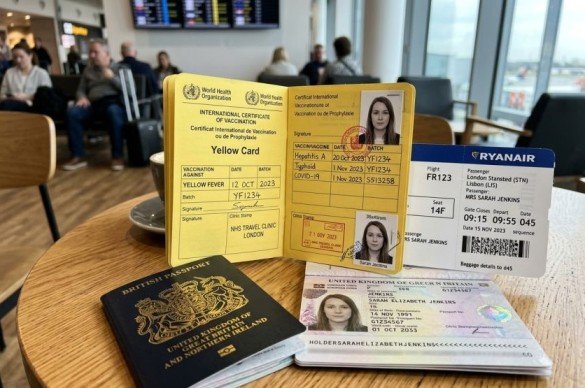
Yellow fever vaccine occupies a special category in travel medicine. Only clinics certified by state health departments as Yellow Fever Vaccination Centers can legally administer the vaccine and issue the official ICVP documentation (the yellow card) recognized by countries at the border. You cannot get a valid yellow fever certificate from a non-certified provider.
The CDC maintains a state-by-state directory of certified yellow fever vaccination centers. The vaccine is live-attenuated, meaning it uses a weakened form of the virus which makes it highly effective but also contraindicated for some groups, including infants under 9 months, pregnant women, people with thymus disease, and those who are severely immunocompromised. A travel medicine provider will review your health history before administering the vaccine.
Yellow fever vaccination now confers lifelong immunity in most recipients the CDC and WHO updated their guidance in 2016, and the yellow card is valid for life for most vaccinations. Some countries still specify a 10-year validity window, so always check entry requirements at the destination’s official government health authority.
Malaria Prevention: Beyond Vaccines

Malaria has no approved vaccine for general traveler use in the United States as of this writing, though research is ongoing. Prevention relies on prescription antimalarial medications combined with insect protection measures. The four main antimalarial options atovaquone-proguanil (Malarone), doxycycline, mefloquine, and primaquine differ in their dosing schedules, side effect profiles, regional resistance patterns, and cost.
A travel medicine provider will recommend the right medication based on your specific destination, the type of malaria prevalent there (Plasmodium falciparum vs. vivax), any medication sensitivities, and your personal health history. Self-prescribing antimalarials based on online research is a common mistake resistance patterns and regional recommendations change, and the wrong drug can provide false security.
In addition to medication, CDC guidance on malaria prevention emphasizes: using EPA-registered insect repellents containing DEET, picaridin, or oil of lemon eucalyptus; sleeping under insecticide-treated bed nets; wearing long-sleeved clothing at dusk and dawn when Anopheles mosquitoes are most active; and staying in air-conditioned accommodations where available. Visit wwwnc.cdc.gov/travel for destination-specific malaria risk maps.
Travel Vaccines for Children: What Parents Need to Know
Children traveling internationally need the same destination-specific risk assessment as adults, with additional considerations. Some vaccines have age minimums yellow fever is not approved for infants under 9 months, and Japanese encephalitis is approved for children 2 months and older in the US. Some routine childhood vaccines may need to be given on an accelerated schedule if travel predates the standard recommended age.
Pediatric travel medicine consultations are worth seeking out specifically not all travel clinics have strong pediatric experience. Children’s Hospital systems and academic medical centers often have pediatric travel medicine specialists.
Parents should also consider that children face higher risk of exposure to certain diseases through behaviors like playing on the ground, touching animals, and putting hands to their mouth. Rabies pre-exposure prophylaxis is something a travel medicine provider will discuss for families traveling in regions with high rabies prevalence, even for short trips.
Family planning tip: Schedule the whole family’s travel clinic appointments together, early. Children may need a longer vaccine series, and coordinating multiple schedules gets complicated as departure approaches.
Three Common Travel Vaccine Mistakes (and How to Avoid Them)
Mistake 1: Going to a regular urgent care or pharmacy and assuming they can handle everything. While CVS MinuteClinic and Walgreens Health locations administer some travel vaccines hepatitis A, hepatitis B, and a few others they typically don’t stock yellow fever vaccine, Japanese encephalitis vaccine, or rabies prophylaxis, and they may not offer the comprehensive travel health consultation that matches vaccines to your specific itinerary and activities. Always call ahead and confirm.
Mistake 2: Booking the appointment too close to departure. A traveler heading to rural India in three weeks who visits a travel clinic for the first time has already missed the window for a full typhoid vaccine series, the standard hepatitis B schedule, and ideally the rabies series. A travel medicine provider can work with compressed timelines, but your protection will be incomplete. Book early.
Mistake 3: Assuming past vaccinations are still valid. Hepatitis A booster, for example, provides long-term protection after two doses but many people only remember getting one dose years ago and assume they’re covered.
Typhoid vaccine (injectable) requires a booster every two years for those with ongoing exposure. Bring your complete vaccination record a personal immunization history card, your state’s immunization registry record, or your childhood health records to your travel clinic appointment so the provider can assess gaps accurately.
What to Bring to Your Travel Vaccine Appointment
Arriving prepared makes your travel clinic visit more efficient and ensures the provider can give you the most accurate recommendations. Bring:
- Your complete vaccination history (personal records, state immunization registry printout, or childhood health records)
- A detailed itinerary including all destination countries, specific regions within those countries, and planned activities
- A list of current medications including over-the-counter supplements (some interact with antimalarials)
- Your health insurance card and information about coverage
- Your passport (some providers record passport numbers for the ICVP yellow card)
If you’ve traveled internationally before and received travel vaccinations, bring those records too. The ICVP yellow card, if you have one from a previous trip, is particularly important.
Underrated Alternatives to Traditional Travel Clinics
For travelers in areas with limited travel clinic access, or those looking for lower-cost options, three alternatives are worth knowing:
County and city health departments frequently offer travel vaccination services, including yellow fever, at reduced cost compared to private clinics. Wait times for appointments may be longer, but the cost savings can be substantial. Search your county health department’s website for travel health or immunization services.
Federally Qualified Health Centers (FQHCs), which operate on a sliding-scale fee structure, sometimes offer travel medicine services. The Health Resources and Services Administration (HRSA) maintains a locator at findahealthcenter.hrsa.gov.
Telehealth travel medicine consultations have expanded significantly since 2020. Several platforms now offer remote travel health consultations with certified travel medicine providers who can prescribe antimalarials, issue written vaccine recommendations, and advise on destination-specific risks though actual vaccines must still be administered in person.
This is a genuinely useful option for travelers in rural areas who can then take a prescription to a local pharmacy or health department.
Traveler’s Diarrhea: The Most Common Travel Health Problem
Traveler’s diarrhea affects an estimated 30 70% of international travelers, according to CDC data, making it the most common travel-related illness. It doesn’t require a vaccine to prevent it requires preparation. A travel medicine provider will discuss safe food and water practices and can prescribe antibiotics to carry for self-treatment if symptoms develop.
Azithromycin and rifaximin are two commonly prescribed options for treating traveler’s diarrhea. Bismuth subsalicylate (Pepto-Bismol) taken as a preventive measure before and during travel has evidence supporting modest protective benefit. Oral rehydration salts are worth packing for any trip to high-risk regions.
Insider tip: Ask your travel clinic provider to prescribe a stand-by antibiotic course before you leave. Self-treating a severe episode of traveler’s diarrhea in a rural area with medication you already have is far better than trying to navigate a foreign medical system while sick.
Travel Health Insurance vs. Medical Evacuation Coverage
Vaccines protect you from specific diseases, but they don’t cover every health emergency that can happen abroad. Two types of coverage fill that gap: international health insurance and medical evacuation insurance.
International health insurance covers medical treatment abroad doctor visits, hospitalization, and prescription costs.
Medical evacuation coverage pays for transport back to the United States or to a higher-level medical facility if you’re seriously ill or injured in a location where adequate care isn’t available. Evacuation costs can reach $50,000 $100,000 or more without coverage.
Travel medicine providers often raise these topics during consultations. Organizations like IAMAT (International Association for Medical Assistance to Travellers) provide directories of vetted medical facilities abroad.
The U.S. Department of State’s Smart Traveler Enrollment Program (STEP) at step.state.gov is a free registration service that connects travelers to the nearest U.S. embassy in an emergency. Always verify the terms of any travel insurance policy directly with the insurer.
FAQ:
How do I find a travel vaccine clinic near me?
Start with the CDC’s travel clinic locator at wwwnc.cdc.gov/travel, which lists clinics specializing in travel medicine across the United States. The ISTM and ASTMH also maintain professional directories. Your local county health department and major pharmacy chains like CVS MinuteClinic can administer some common travel vaccines, though they may not stock the full range needed for high-risk destinations.
How far in advance should I visit a travel vaccine clinic?
Visit at least 4 6 weeks before your departure date. Some vaccines require multiple doses spread over days or weeks to complete, and your immune system needs time to build protection after vaccination. If your trip is less than four weeks away, visit the clinic anyway a travel medicine provider can prioritize the most important vaccines and suggest preventive medications to reduce your risk.
Do I need a travel vaccine clinic appointment or can I walk in?
Most travel vaccine clinics require appointments, particularly because the consultation requires a thorough itinerary review. Some county health departments and pharmacy-based clinics accept walk-ins for common vaccines, but appointment availability is more reliable. Call ahead to confirm what’s available and what specific vaccines the clinic stocks before making a special trip.
Are travel vaccines covered by health insurance?
Coverage varies significantly by insurance plan. Routine vaccines like hepatitis A and hepatitis B may be covered under preventive care benefits. Travel-specific vaccines like yellow fever, typhoid, Japanese encephalitis, and rabies pre-exposure prophylaxis are less consistently covered and often billed out of pocket. FSA and HSA funds can typically be used for vaccines and prescription antimalarials. Always call your insurer before your appointment to understand your coverage.
What is the yellow card and do I need one?
The yellow card is the International Certificate of Vaccination or Prophylaxis (ICVP), the official WHO documentation of your vaccinations. More than 40 countries require proof of yellow fever vaccination in the form of the yellow card to enter, particularly if you’re arriving from or transiting through a yellow fever-endemic region. Only CDC-authorized Yellow Fever Vaccination Centers can issue a valid yellow card. Check entry requirements for your destination at travel.state.gov.
Can I get travel vaccines at CVS, Walgreens, or Costco?
Yes, for a limited range of vaccines. Major pharmacy chains can typically administer hepatitis A, hepatitis B, typhoid (oral), and some other travel-relevant immunizations. They generally cannot administer yellow fever vaccine (which requires special certification), Japanese encephalitis, or rabies prophylaxis, and they don’t offer the comprehensive travel health consultation that a dedicated travel medicine clinic provides. Always call ahead to confirm availability.
What vaccines do I need to travel to Mexico or the Caribbean?
Most healthy adults with current routine vaccinations (MMR, tetanus-diphtheria-pertussis, varicella, influenza) are covered for tourist travel to Mexico and the Caribbean. A travel medicine provider may recommend hepatitis A for travelers eating street food or drinking local water, and hepatitis B for longer stays. Specific destinations with higher disease risk, or travelers planning adventure or rural travel, may need additional recommendations. Always consult a travel medicine provider based on your specific itinerary.
Three Takeaways Before You Book
First, timing is everything in travel medicine. A clinic visit four to six weeks before departure or earlier gives you the full range of options and lets vaccines reach their peak effectiveness before you land.
Book your travel health appointment early—waiting until the last week can limit your options.
Choose a certified travel medicine clinic for destination-specific vaccines and expert advice. The CDC Travel Clinic Locator is a great place to start.
Remember, vaccines are only part of travel protection. Medications, food and water safety, insect protection, and travel insurance are equally important.
Plan ahead, get expert guidance, and travel with confidence.

Stephen Fry brings an insatiable curiosity for history, language, and global heritage to the Travelmarse team. Having spent decades traveling the globe to study regional storytelling and ancient civilizations, he excels at uncovering the hidden narratives of modern destinations. Stephen anchors the cultural vertical on Travelmarse, where he writes deep-dive guides on architectural history, museum crawl strategies, and local customs. His vivid, engaging writing helps travelers look past the surface and truly understand the heritage of the places they visit.