Standing at the security bin, digging through a toiletry bag while a line grows behind you, is a stress no traveller wants. A forgotten 6 ounce shampoo bottle can mean losing a favourite product right at the checkpoint. The right travel size bottle turns that scramble into a non event.
This guide breaks down exactly what counts as a travel size bottle, how the TSA 3 1 1 rule works in 2026, which bottle types actually hold up on the road, and how to pack them so nothing leaks into your favourite jacket. If flying out of a small regional airport or a major hub like Atlanta or Los Angeles, these tips apply the same way.
By the end, packing liquids will feel routine instead of risky.
Quick answer:
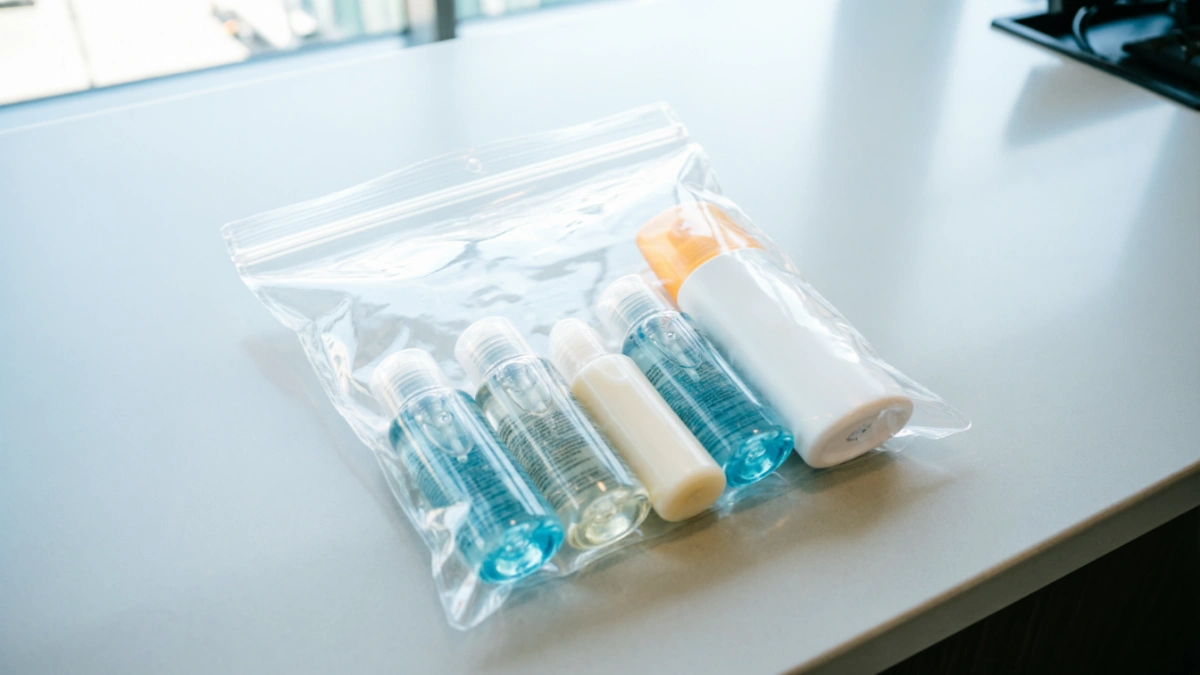
A travel size bottle holds 3.4 ounces (100 milliliters) or less, the maximum TSA allows in carry on luggage under the 3 1 1 rule. All travel size bottles must fit inside one clear, quart size resealable bag, and each passenger gets one bag. Leak proof, refillable silicone or PET bottles are the top choice for frequent flyers.
What Is a Travel Size Bottle?
A travel size bottle is any container designed to hold 3.4 ounces (100 milliliters) or less of liquid, gel, cream, or paste, matching the maximum size the Transportation Security Administration allows in carry on bags. These small bottles let travelers bring shampoo, lotion, and other essentials through security without checking a bag.
Travel size doesn’t just mean small; it means compliant. A bottle labeled “travel size” by a retailer isn’t automatically TSA approved if it holds more than 3.4 ounces.
Quick Facts Table
| Detail | Requirement |
| Max container size | 3.4 oz / 100 ml |
| Bag type required | 1 clear, quart size, resealable bag |
| Bags allowed per traveler | 1 |
| Rule applies to | Liquids, gels, aerosols, creams, pastes |
| Measured by | Container size, not amount inside |
| Common exemptions | Medications, baby formula, breast milk |
The TSA 3 1 1 Rule, Explained
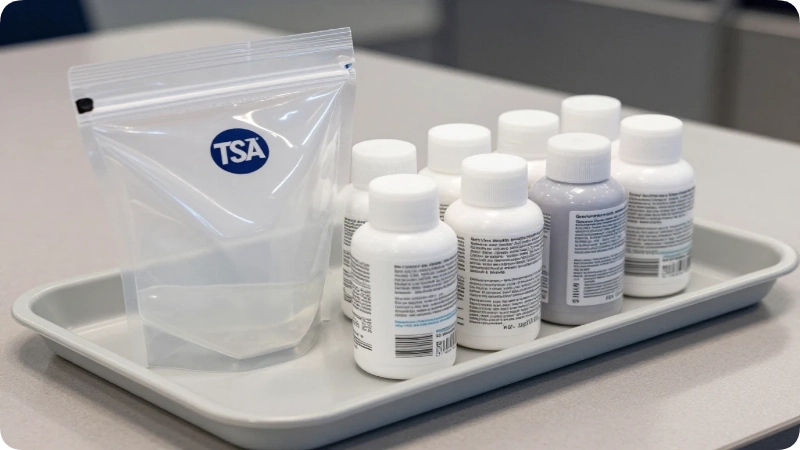
The TSA 3 1 1 rule limits carry on liquids to containers of 3.4 ounces or less, requires all containers to fit in one quart size clear bag, and allows one bag per passenger. This federal standard has stayed consistent since 2006 and still applies at every U.S. airport in 2026.
TSA measures the printed capacity on the bottle, not how much product remains inside. A half empty 6 ounce conditioner bottle still gets pulled at the checkpoint, even if only an ounce is left.
Newer computed tomography (CT) scanners are changing the screening process at some major hubs, letting travelers occasionally leave liquids bags inside their carry on. However, the 3.4 ounce limit itself has not changed, and enforcement still varies by airport and checkpoint. Always follow the posted signage and the officer’s instructions on the day you fly.
What Counts as a Liquid?
TSA defines “liquid” broadly, covering anything that pours, spreads, sprays, or smears, which trips up travelers who don’t expect certain items to count. Toothpaste, peanut butter, hummus, hair gel, and even snow globes fall under the 3 1 1 rule.
Items travelers frequently pack wrong include:
- Sunscreen and lotion – both count as liquids or creams
- Deodorant – only gel or spray forms count; solid sticks do not
- Spreadable foods – peanut butter, jam, and dips need travel size containers
- Makeup – liquid foundation, mascara, and lip gloss all apply
- Beverages – any drink, including water, must be empty or purchased past security
📸 Insider tip: pack a small dropper bottle of contact solution and a travel size bottle of makeup remover together in one clear pouch inside the liquids bag, so nothing gets left behind during the last minute repack at the checkpoint.
Best Types of Travel Size Bottles
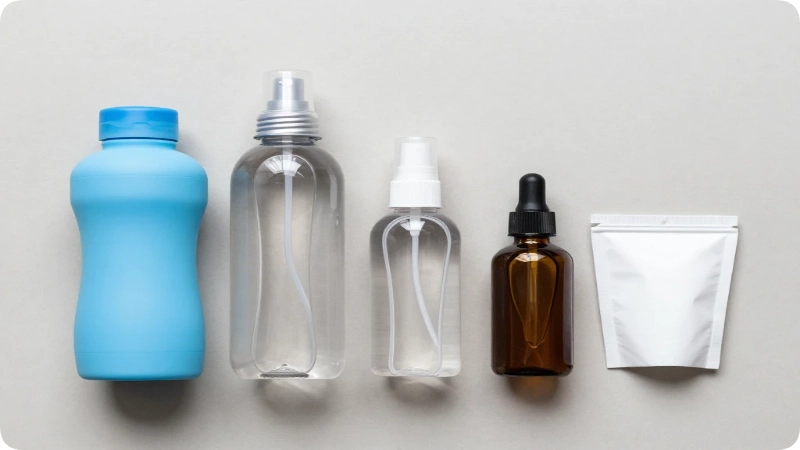
Not every mini bottle performs the same way in a suitcase. The best travel size bottles balance leak resistance, refillability, and ease of dispensing, since checked and carry on bags both face pressure changes and rough handling.
Comparison Table: Travel Bottle Types
| Bottle Type | Best For | Leak Resistance | Reusable |
| Silicone squeeze bottles | Shampoo, conditioner, lotion | High | Yes |
| Screw top PET bottles | Toner, liquid soap | Medium | Yes |
| Spray bottles | Perfume, setting spray, sunscreen | High (with lock) | Yes |
| Dropper bottles | Serums, essential oils | Medium | Yes |
| Disposable minis | One time trips, samples | Low Medium | No |
Silicone bottles with a locking flip top generally perform best for checked bags because the flexible material absorbs pressure changes better than rigid plastic. Spray bottles with a lock switch prevent the accidental triggers that ruin a packing cube full of clothes.
How to Fill and Label Travel Size Bottles
Fill each bottle to about 90% capacity, squeeze out excess air before sealing, and label it with a small piece of tape so ingredients aren’t a mystery mid trip. Leaving headspace matters because cabin pressure changes can force liquid out of an overfilled bottle.
A short, practical filling routine:
- Clean and fully dry the bottle before adding product
- Fill to just below the shoulder of the bottle, not the very top
- Wipe the threads clean before capping to help the seal hold
- Test the cap upside down over a sink before packing
- Label with masking tape and a permanent marker
This process takes about five minutes per trip and prevents the single most common travel size bottle failure: a cap that wasn’t seated correctly before takeoff.
Leak Proof Packing Tips
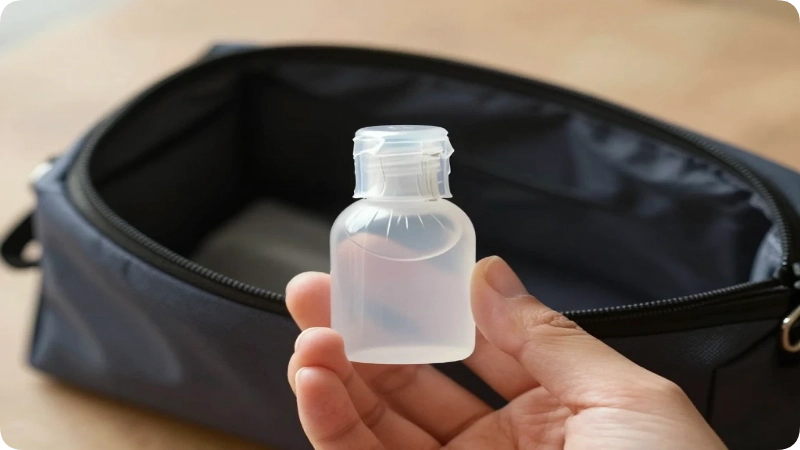
Wrapping each travel size bottle’s cap with a strip of plastic wrap before screwing it shut adds a second seal that catches most leaks before they start. This trick works especially well for bottles that get tossed around in a backpack’s outer pocket.
Additional leak prevention steps that make a real difference:
- Store bottles cap up whenever possible
- Use a dedicated waterproof pouch, separate from clothing
- Avoid overpacking the quart bag, which stresses seals
- Choose bottles with a locking mechanism over simple flip tops for anything you’re checking
Key takeaway: most “leaky bottle” disasters trace back to trapped air or a cap that wasn’t tightened after the last use, not a faulty bottle.
Solid Alternatives to Liquid Toiletries
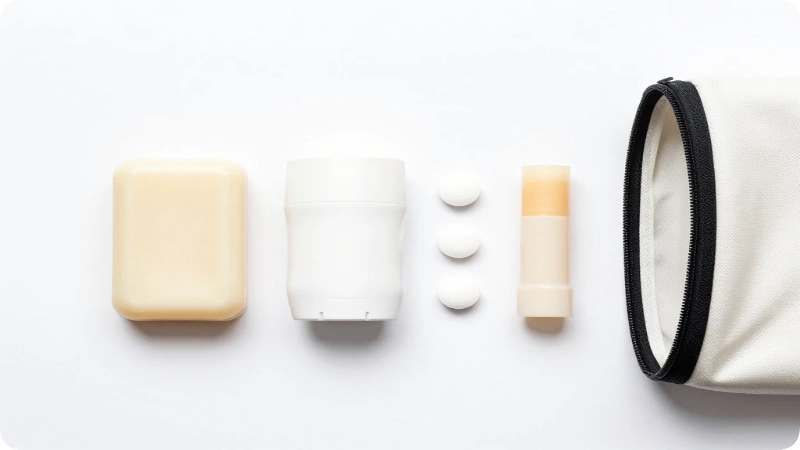
Solid shampoo bars, conditioner bars, solid deodorant, toothpaste tablets, and sunscreen sticks skip the 3 1 1 rule entirely because they aren’t classified as liquids, gels, or pastes. Switching even a few items to solid form frees up space in the quart bag for products that only come in liquid form.
Solids also tend to last longer per ounce than their liquid counterparts and hold up better to temperature swings in a checked bag, since there’s no leak risk at all.
Common Mistakes Travelers Make
Mistake 1: Judging a bottle by what’s left inside. TSA checks the container’s printed size, not the remaining product, so a nearly empty 5 ounce bottle still gets confiscated. Fix: transfer any product into a properly sized travel size bottle before leaving home.
Mistake 2: Forgetting food items count as liquids. Peanut butter, salsa, and similar spreads are treated as gels under the rule. Fix: buy travel size versions or pack them in checked luggage.
Mistake 3: Skipping the quart bag entirely. Loose bottles rattling in a carry on slow down screening and often trigger extra checks. Fix: keep all liquids together in one clear, resealable bag at the top of the carry on for quick access.
Medical and Baby Exceptions
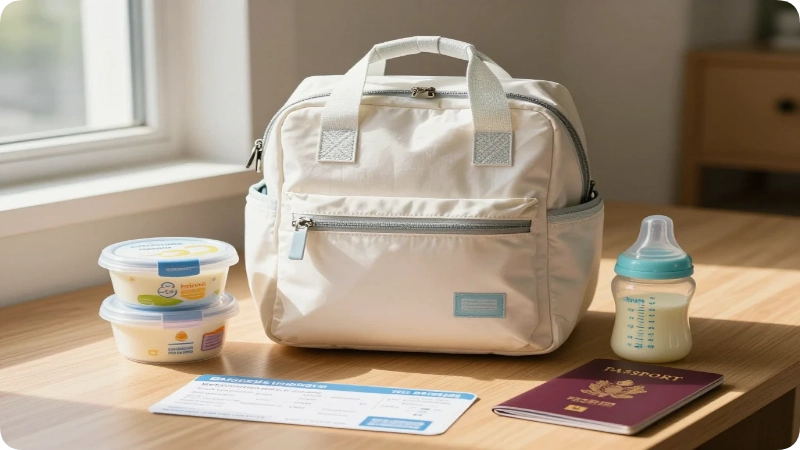
Prescription and over the counter liquid medications are exempt from the 3.4 ounce limit and don’t need to fit inside the quart bag, though they should be declared to the officer at the start of screening. Baby formula, breast milk, and toddler drinks are allowed in reasonable quantities beyond the standard limit as well.
Travelers carrying these exempt items should keep them separate from the regular liquids bag, since officers typically screen them individually. A printed prescription label speeds up the process, and parents don’t need to be traveling with a child to carry breast milk or formula.
Because policies around exemptions can shift, confirm current details on the official TSA website before a trip involving medical liquids.
International Travel Size Bottle Rules
Liquid limits vary by country, and a bottle that clears a U.S. checkpoint might not pass through a connecting international airport. Several major European airports have raised limits up to 2 liters thanks to newer CT scanners, while most airports across Asia and the Middle East still enforce the traditional 100ml standard.
For any itinerary with a connection abroad, check the departure airport’s specific liquid policy rather than assuming U.S. rules apply everywhere. A trip that starts at a U.S. airport with relaxed rules can still require standard size travel bottles for a connecting flight overseas.
Where to Buy Travel Size Bottles in the US
Most major pharmacy chains, big box retailers, and airport shops in the United States carry a basic travel bottle set, though selection and durability vary widely. For frequent flyers, investing in a higher quality reusable set from an outdoor or travel goods retailer tends to pay off within just a few trips compared to replacing disposable minis every time.
Airport gift shops are the most convenient option in a pinch but usually charge a premium, so packing bottles ahead of time from home is the more budget friendly route.
Eco Friendly and Reusable Options
Reusable silicone travel bottles cut down on plastic waste compared to buying single use minis before every trip, and most last for years with basic care. Look for BPA free materials and bottles that can be fully disassembled for a deep clean between uses, since residue buildup is the top reason reusable bottles start to smell over time.
Solid toiletry bars pair naturally with this eco conscious approach, since they need no bottle at all.
Budget Breakdown
| Option | Approximate Cost | Reusable |
| Basic disposable minis (4 pack) | $5–$10 | No |
| Silicone squeeze bottle set | $12–$20 | Yes |
| Leak proof spray bottle set | $15–$25 | Yes |
| Solid toiletry bars (shampoo, deodorant, soap) | $8–$15 each | N/A |
Worth it? A reusable silicone set pays for itself within two to three trips compared to repeatedly buying disposable minis, making it the better long term value for anyone who flies more than occasionally.
FAQs
What size is considered a travel size bottle?
A travel size bottle holds 3.4 ounces or 100 milliliters or less, matching the TSA’s carry on liquid limit. Anything larger must go in a checked bag or be replaced with a properly sized container before heading to the airport.
Can I bring more than one travel size bottle through security?
Yes, as long as every bottle fits inside a single quart size, clear, resealable bag. There’s no cap on the number of small containers, only on the total space they take up in that one bag.
Do travel size bottles need to be in a clear bag?
Yes, TSA requires all liquids in containers of 3.4 ounces or less to be packed inside one clear, quart size resealable bag for screening. This applies If the bottles are reusable or disposable.
Can I refill travel size bottles at home before a trip?
Yes, refilling reusable bottles at home is common practice and often cheaper than buying new minis each trip. Fill to about 90% capacity and check the seal before packing.
Are travel size bottles allowed in checked luggage without limits?
Checked bags aren’t subject to the 3 1 1 rule, so larger bottles are generally fine there. Still, pack liquids in a sealed bag inside checked luggage to protect clothing from pressure related leaks.
Do solid toiletries count as travel size liquids?
No, solid shampoo bars, deodorant sticks, and toothpaste tablets are not classified as liquids, gels, or pastes, so they skip the 3 1 1 rule entirely. They can be packed in any quantity in a carry on.
Is TSA PreCheck exempt from travel size bottle rules?
No, TSA PreCheck speeds up the checkpoint process but does not change the 3.4 ounce container limit or the quart bag requirement. Some PreCheck lanes with CT scanners simply let travelers leave the bag inside their carry on during screening.
Final Takeaways
Packing travel size bottles correctly comes down to three things: keep every container at 3.4 ounces or less, fit them all into one clear quart size bag, and double check seals before flying. Reusable silicone or spray bottles hold up better than disposable minis for anyone who travels often, and solid alternatives sidestep the rule entirely.
Rules around exemptions and screening technology continue to shift, so it’s worth confirming current policy on the official TSA site before a trip with medical liquids or an international connection.
Pack smart, seal tight, and that checkpoint line becomes one less thing to worry about on the way to the gate.

Stephen Fry brings an insatiable curiosity for history, language, and global heritage to the Travelmarse team. Having spent decades traveling the globe to study regional storytelling and ancient civilizations, he excels at uncovering the hidden narratives of modern destinations. Stephen anchors the cultural vertical on Travelmarse, where he writes deep-dive guides on architectural history, museum crawl strategies, and local customs. His vivid, engaging writing helps travelers look past the surface and truly understand the heritage of the places they visit.