Milan doesn’t hand over its charm as easily as Rome or Florence do. There’s no single postcard piazza that sums up the whole city, and that can make picking a home base feel harder than it should.
Book the wrong neighborhood and you might spend your trip riding trams past attractions instead of walking to them.
The good news: Milan is compact, the metro is fast, and once you understand how the neighbourhood differ, choosing where to stay in Milan becomes simple.
This guide breaks down the safest zones, the most convenient areas, the best picks for shopping, short trips, and tight budgets, plus what locals and past visitors on Reddit actually say about staying here.
If you have two nights or a full week, you’ll walk away knowing exactly which corner of Milan fits your trip.
Featured Snippet:
The best areas to stay in Milan are Centro Storico (Duomo) for first time visitors, Brera for couples, Porta Nuova for modern hotels and nightlife, Navigli for budget friendly stays, and CityLife for families. Each neighborhood offers excellent metro access, making it easy to reach Milan’s top attractions, shopping districts, and restaurants.
Quick Facts: Where to Stay in Milan at a Glance
| Neighborhood | Best For | Vibe | Metro Access | Relative Price |
| Centro Storico / Duomo | First timers, sightseeing | Iconic, busy, central | M1, M3 (Duomo) | High |
| Brera | Couples, boutique stays | Artsy, romantic, quiet streets | M2 (Lanza), M3 (Montenapoleone) | High |
| Porta Nuova / Garibaldi | Business travelers, modern design | Sleek skyscrapers, nightlife | M2, M5 (Garibaldi) | Mid High |
| Navigli | Budget travelers, nightlife lovers | Canal side, lively evenings | M2 (Porta Genova) | Mid |
| Porta Venezia | Shopping, quieter city stay | Residential, leafy, fashionable | M1 (Porta Venezia) | Mid |
| CityLife | Families, quiet modern stay | Green space, contemporary | M5 (Tre Torri) | Mid High |
| San Siro | Football fans, budget stays | Local, low key, further out | M5, M1 | Low Mid |
Prices and availability change with seasons and events like Milan Fashion Week; always verify current rates directly with hotels or booking platforms before finalizing plans.
Best Areas to Stay in Milan for First Time Visitors
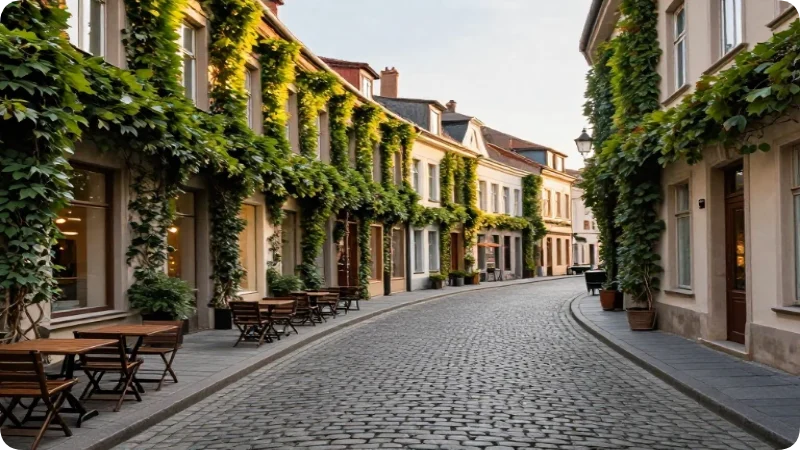
First time visitors do best in Centro Storico (around the Duomo) or Brera, since both put nearly every major landmark within a 10 15 minute walk. You skip complicated transfers, see more in less time, and can always retreat to a quiet hotel room after a full day of sightseeing.
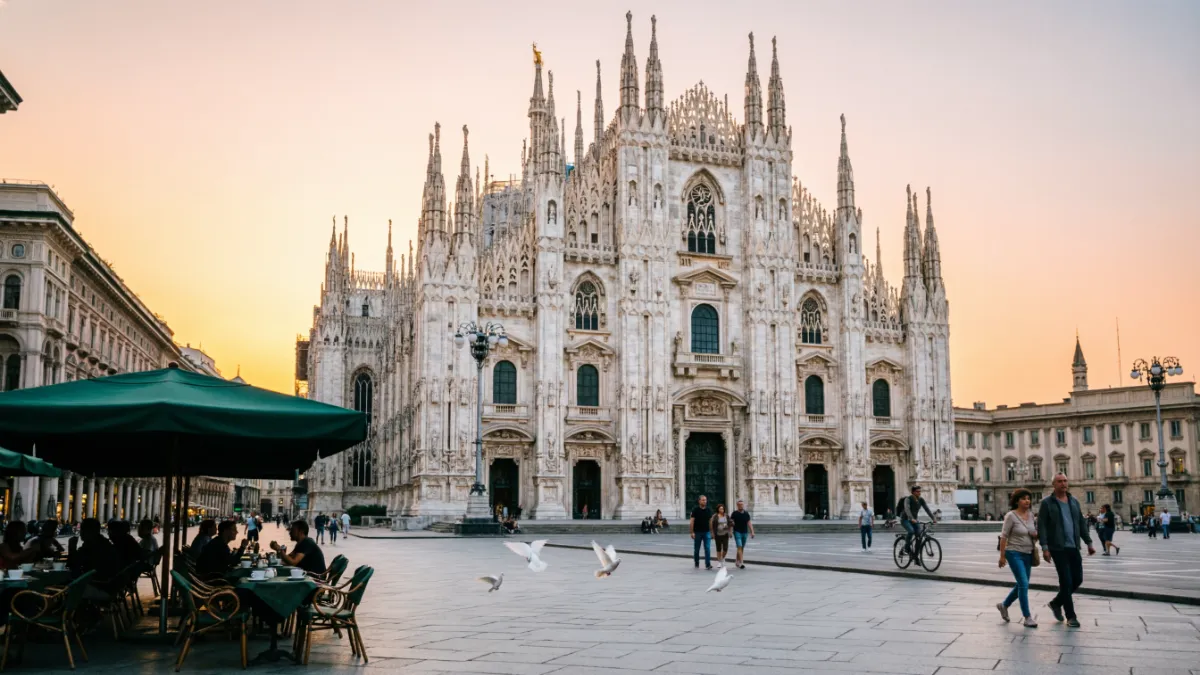
Centro Storico is Milan’s historic heart, wrapped around Piazza del Duomo, the Galleria Vittorio Emanuele II shopping arcade, and La Scala opera house. It’s the most touristy pocket of the city, but that’s exactly the point for a first trip: everything from the fashion district to Sforza Castle sits within easy walking distance.
Brera, just north of the Duomo, offers the same convenience with a calmer, more residential feel. Cobblestone streets, small art galleries centered on the Pinacoteca di Brera, and evening aperitivo terraces give first timers a taste of local life without sacrificing proximity to the sights.
Insider tip: Book a hotel between the Duomo and Brera (near Via Manzoni or Via Montenapoleone) to get the convenience of both neighborhoods in a single, highly walkable stretch.
Which Zone Is Best to Stay in Milan? (Neighborhood Comparison)
The best zone depends on your travel style: Centro Storico wins for convenience, Brera for atmosphere, Porta Nuova for modern comfort, Navigli for nightlife and value, and CityLife for a quieter, family oriented stay. There isn’t one universal “best” zone, only the best zone for your trip.
- Want to walk to everything? Choose Centro Storico or Brera.
- Traveling for work or wanting new architecture? Choose Porta Nuova/Garibaldi.
- On a tighter budget and love nightlife? Choose Navigli.
- Traveling with kids or want peace and quiet? Choose CityLife.
- Visiting for a match at San Siro Stadium? Stay near San Siro or take the metro in from a central zone.
Milan’s four metro lines (M1 red, M2 green, M3 yellow, M4 blue, plus M5 purple) connect all of these zones to the center in roughly 15 25 minutes, so no choice leaves you truly stranded.
Where to Stay in Milan Safe: Safest Zones for Travelers
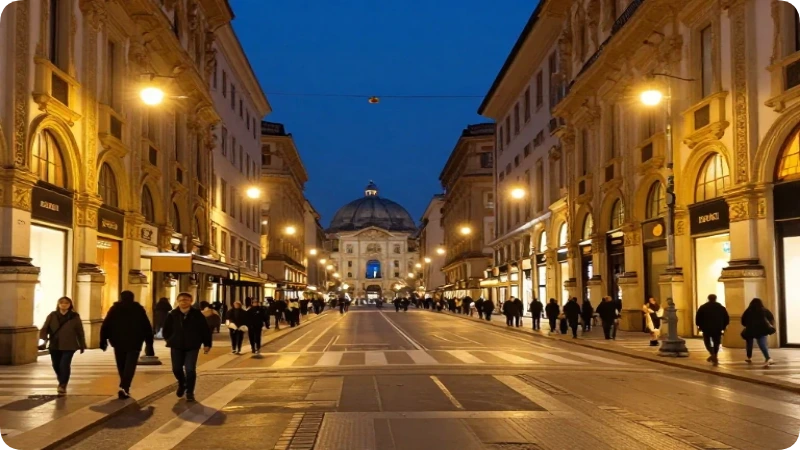
The safest areas to stay in Milan are Brera, Centro Storico/Duomo, Porta Venezia, and CityLife, all of which benefit from heavy foot traffic, strong lighting, and a visible police presence. Violent crime is rare across Milan; the main risk for visitors is pickpocketing in crowded tourist spots rather than personal safety after dark.
The area right around Piazza del Duomo is generally considered the most heavily policed and safest part of the city, though it’s also a pickpocketing hotspot precisely because it’s so crowded. Keep bags zipped and in front of you, especially inside the Galleria Vittorio Emanuele II and on busy metro cars.
Navigli is safe by day and lively by night, though its late night bar crowds mean it’s wise to stick to well lit main streets after midnight rather than wandering into side alleys.
Practical safety tips for your stay:
- Avoid displaying phones and cameras carelessly near Central Station and the Duomo.
- Use licensed taxis or verified ride share apps late at night rather than unmarked cars.
- Keep valuables in a hotel safe, not in a backpack worn on your back in crowds.
- Solo female travelers generally report Milan as comfortable, with catcalling far less common than in some other major European cities though the same big city precautions still apply.
Areas to Avoid When Staying in Milan
Most visitors will never encounter Milan’s higher crime pockets, since they sit well outside the tourist core, but it’s worth knowing them before you book. Quarto Oggiaro, Corvetto, Rogoredo, and the immediate perimeter of Stazione Centrale after dark are the areas most frequently flagged for petty crime and drug related activity.
Quarto Oggiaro sits in the far northwest of the city and has little reason to appear on a typical visitor’s itinerary. Corvetto and Rogoredo, in the southeast, are mixed neighborhoods that are fine to pass through during the day but are best avoided late at night. The blocks directly surrounding Stazione Centrale including Via Sammartini and Piazza Duca d’Aosta see more solicitation and petty theft after dark, even though the station itself is a major, well used transit hub.
Common mistake: Booking a “cheap hotel near Central Station” without checking the exact address. Some budget listings sit just outside the safer, well lit blocks. Always check a map and recent reviews before booking anything near the station.
Where to Stay in Milan for Shopping
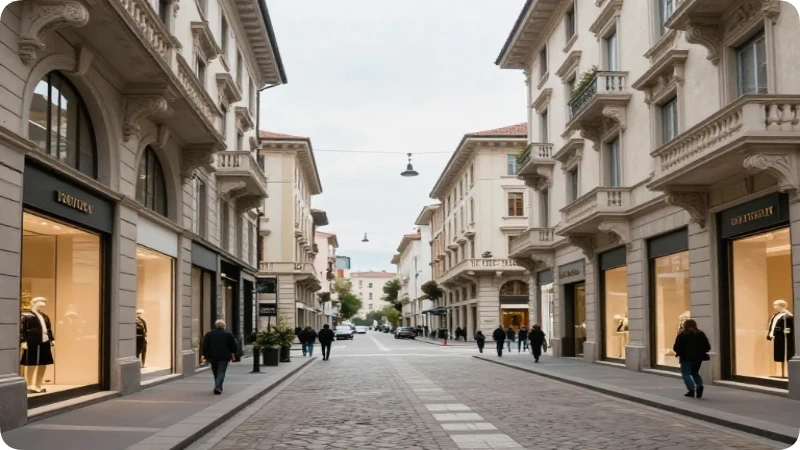
Shopaholics should base themselves in Porta Venezia or the Quadrilatero della Moda (Fashion Quadrilateral) near Via Montenapoleone, which puts you within walking distance of both designer boutiques and everyday high street shopping.
The Quadrilatero della Moda bordered by Via Montenapoleone, Via della Spiga, Via Sant’Andrea, and Corso Venezia is Milan’s luxury shopping heart, home to Italy’s top fashion houses. Staying here means rolling out of bed and into window displays, though hotel rates reflect the exclusivity.
For a more affordable shopping base, Porta Venezia sits just beside the Quadrilatero and offers direct access to Corso Buenos Aires, one of Europe’s longest shopping streets, lined with hundreds of mid range and high street stores. It’s quieter, more residential, and a favorite of savvy travelers who want proximity to the fashion district without the luxury price tag.
Money saving tip: Stay in Porta Venezia and simply walk 10 15 minutes into the Quadrilatero for window shopping you get the same views without paying Quadrilatero hotel rates.
Best Area to Stay in Milan for Tourists
For sightseeing focused trips, Centro Storico remains the best area to stay in Milan for tourists, since the Duomo, Galleria Vittorio Emanuele II, La Scala, and Sforza Castle are all within a 15 minute walk of each other. Brera is a close second, offering the same access with a softer, less crowded atmosphere in the evenings.
Travelers who want a slightly more local experience while still staying central often choose Porta Romana or the Brera/Centro Storico border, both of which offer walkability without feeling like a theme park of tour groups.
Underrated alternative: Porta Romana, south of the Duomo, gives tourists a 10 15 minute tram ride into the center while offering better value and a genuinely residential, food focused neighborhood to return to each evening.
Where to Stay in Milan Hotels: Top Picks by Neighborhood
Milan’s hotel scene spans everything from grand historic properties to sleek design hotels and budget friendly aparthotels, so the right pick depends on both your neighborhood and your travel style rather than one “best” hotel for everyone.
By neighborhood, look for:
- Centro Storico: Historic five star properties and mid range hotels within steps of the Duomo ideal if proximity matters more than price.
- Brera: Boutique and design hotels tucked into converted historic buildings, popular for romantic getaways.
- Porta Nuova/Garibaldi: Modern high rise hotels and international chains, popular with business travelers and those who want contemporary rooms.
- Navigli: Independent guesthouses, aparthotels, and budget chains some of the best value per night in the city.
- CityLife: Newer, family friendly hotels near green space and the CityLife shopping district.
Because exact property names, star ratings, and nightly rates change frequently especially around Milan Fashion Week and major trade fairs compare current listings on a trusted booking platform and check recent guest reviews before confirming a reservation.
Where to Stay in Milan for 2 Nights
With only two nights, prioritize location over everything else stay in Centro Storico or Brera so you can walk to major sights instead of losing precious hours on transit. A short stay leaves little room for commuting back and forth from outer neighborhoods.
A simple 2 night base strategy:
- Book a hotel within a 10 minute walk of the Duomo or Brera’s Pinacoteca.
- Use night one for the Duomo, rooftop terrace, and Galleria Vittorio Emanuele II.
- Use night two for Brera’s aperitivo scene or a short Navigli canal walk.
Staying central for a 2 night trip means you can fit in the Duomo, Sforza Castle, Brera, and a shopping stroll without ever needing more than a 15 minute walk or a single metro ride.
Where to Stay in Milan Map: Understanding the Layout
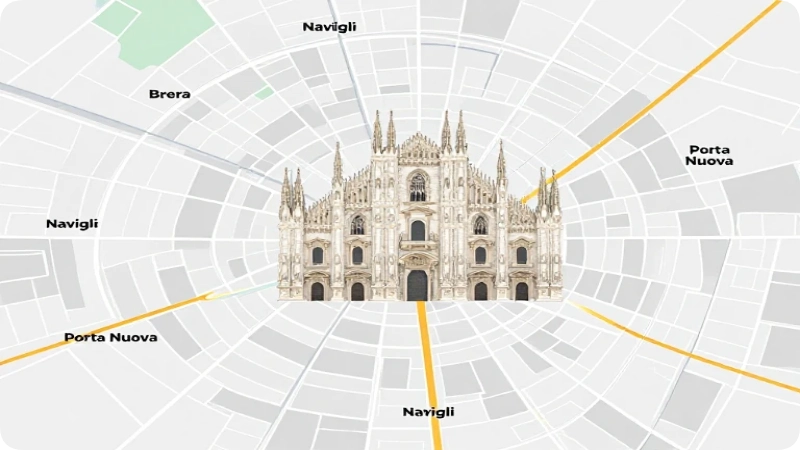
Milan is arranged in concentric rings around the Duomo, with the historic center at the middle, a ring of characterful neighborhoods (Brera, Porta Venezia, Navigli, Porta Romana) just beyond it, and business or residential districts (Porta Nuova, CityLife, San Siro) further out but still metro connected.
Picturing the city as a clock face around the Duomo helps:
- North: Brera and Porta Nuova/Garibaldi
- East: Porta Venezia and the Quadrilatero della Moda
- South: Navigli and Porta Romana
- West: Sforza Castle, Parco Sempione, and CityLife
Most attractions cluster within a roughly 3 kilometer radius of the Duomo, and the five metro lines cut straight through this circle, so no matter which “slice” of the clock you choose, you’re rarely more than 20 25 minutes from the center.
What Milan Travelers Say on Reddit
Frequent Reddit threads on r/travel and r/Milan tend to repeat the same advice: stay central (Duomo, Brera, or Porta Venezia) if it’s your first visit, and consider Navigli if nightlife and value matter more than being steps from the cathedral. Commenters often note that Milan’s metro makes almost any reasonably central neighborhood workable, so the “best” area comes down to atmosphere rather than access.
A recurring theme in these discussions is that Milan isn’t primarily a tourist city the way Rome or Florence is, so travelers are encouraged to base themselves somewhere walkable and simply use the metro for day trips to attractions further out, rather than trying to stay near every single sight.
Common Reddit sourced tip: Several threads suggest avoiding hotels advertised as “near Central Station” unless you’ve checked the exact street, since ratings can be excellent while the surrounding blocks are less pleasant after dark.
Is 2 Days Enough for Milan?
Two days is enough to see Milan’s headline attractions the Duomo, Galleria Vittorio Emanuele II, Sforza Castle, and either Brera or Navigli but it won’t leave much room for museums, day trips, or a slower pace. It’s a workable amount of time for a stopover, but most visitors leave wanting a third day.
With 2 days, prioritize:
- Day 1: Duomo (including rooftop access), Galleria Vittorio Emanuele II, La Scala exterior, Quadrilatero della Moda stroll.
- Day 2: Sforza Castle, Parco Sempione, Brera’s galleries and aperitivo, or an evening in Navigli.
If you can stretch to three days, you’ll have time to see Leonardo da Vinci’s The Last Supper (which requires advance reservations) or take a half day trip to Lake Como.
Is Milan a Walkable City?
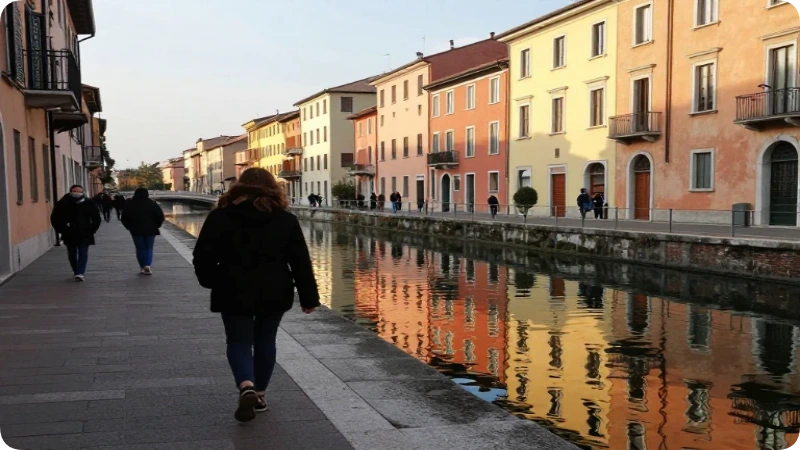
Milan’s historic core is highly walkable, with the Duomo, Brera, and Navigli forming a compact triangle you can cross on foot in under 30 minutes, but the wider city is spread out enough that the metro is essential for reaching outer neighborhoods. Comfortable shoes matter much of the center is cobblestone.
The smartest approach most travelers land on: stay in a walkable neighborhood, explore that area entirely on foot, and use the metro’s four color coded lines to jump between neighborhoods rather than walking the whole city. Some districts, like Lambrate or Città Studi, aren’t realistically walkable from the tourist core and require a metro ride regardless of your fitness level.
Is It Safe to Walk in Milan at Night?
Walking at night is generally safe in Milan’s central and well lit neighborhoods Brera, Centro Storico, Porta Venezia, and Navigli’s main streets but caution is warranted around Stazione Centrale and in outer areas like Corvetto after dark. Sticking to busy, well lit streets and avoiding isolated shortcuts is the simplest way to stay comfortable.
Milan runs a night bus network departing roughly every 30 minutes from the city center, which is a practical backup if you’re out late and don’t want to walk a long stretch alone. Taxis and verified ride share apps are widely available and a reasonable option after 1 a.m., particularly for solo travelers.
Budget Breakdown by Area
Accommodation costs in Milan vary significantly by neighborhood, with the Quadrilatero della Moda and central Duomo adjacent blocks commanding the highest rates, and Navigli or San Siro offering the best value for budget conscious travelers.
| Area | Typical Traveler Profile | Relative Cost | Why |
| Quadrilatero della Moda | Luxury travelers | €€€€ | Prime fashion district real estate |
| Centro Storico | First timers | €€€–€€€€ | Unbeatable proximity to landmarks |
| Brera | Couples, boutique lovers | €€€–€€€€ | High demand, limited inventory |
| Porta Nuova | Business travelers | €€€ | Newer builds, corporate demand |
| Porta Venezia | Value + shopping | €€–€€€ | Central but less touristy |
| Navigli | Budget + nightlife | €€ | Slightly further from Duomo |
| San Siro | Budget, football fans | €–€€ | Farther from center, metro dependent |
Exact nightly rates fluctuate with season and events (Fashion Week, trade fairs, the 2026 Winter Olympics period); check current pricing directly with hotels or booking sites before budgeting your trip.
Getting Around Milan: Transport Options
Milan’s public transportation runs on ATM’s network of five metro lines, trams, and buses, with a standard ticket valid for 90 minutes across all three, making it easy to combine walking with short transit hops between neighborhoods.
- Metro: Four core lines (M1 red, M2 green, M3 yellow, M4 blue) plus the newer M5 purple line connect all major neighborhoods and both city airports’ ground transport hubs.
- Trams: A scenic, slower way to move through the historic center useful if you’d rather watch the city go by than duck underground.
- Buses: Fill in the gaps where the metro doesn’t reach, including night routes for late arrivals.
- Walking: The best way to actually experience Brera, Navigli, and the Duomo area.
- Airport transfers: Malpensa connects via train and bus; Linate is now directly reachable by the M4 metro line, making it the more convenient airport for a car free stay.
Time saving tip: A multi day transport pass (typically valid 24 or 72 hours) is worth it if you’re taking more than two or three rides a day, since single tickets add up quickly.
Common Mistakes to Avoid When Booking Where to Stay
Even experienced travelers make avoidable mistakes when choosing accommodation in Milan. Here are three of the most common and how to fix them.
- Booking near Central Station without checking the exact address. Fix: Look up the specific street on a map and read recent reviews before booking anything advertised as “near Stazione Centrale.”
- Assuming all central neighborhoods are equally walkable. Fix: Confirm walking distance to your must see attractions rather than trusting a listing’s “city center” label alone.
- Overpaying for the Quadrilatero della Moda when Porta Venezia offers the same access at a lower price. Fix: Stay one neighborhood over and walk 10 15 minutes into the fashion district instead of paying to sleep inside it.
What’s overrated: Paying a premium purely to be inside the Quadrilatero della Moda when Porta Venezia or Brera offer nearly identical access.
What’s underrated: Porta Romana and Porta Venezia, both of which combine central access with a calmer, more residential feel most tourists overlook.
FAQs
What is the best area to stay in Milan for first time visitors?
Centro Storico (around the Duomo) or Brera are best for first timers, since both put major landmarks like the Duomo, La Scala, and Sforza Castle within easy walking distance, cutting down on transit time during a short trip.
Where should I avoid staying in Milan?
Avoid Quarto Oggiaro, Corvetto, and Rogoredo, along with the immediate area around Stazione Centrale at night. These zones see more petty crime and are far from the main attractions most visitors want to see.
Is 2 days enough for Milan?
Two days covers the Duomo, Galleria Vittorio Emanuele II, and either Brera or Navigli, but it’s tight. Three days allows time for museums, The Last Supper, or a half day trip to Lake Como.
What is the safest zone to stay in Milan?
Brera, Centro Storico, Porta Venezia, and CityLife are consistently ranked as the safest zones, thanks to heavy foot traffic, good lighting, and visible police presence, especially around the Duomo.
Is Milan a walkable city?
Yes, within the historic core. The Duomo, Brera, and Navigli form a walkable triangle, but outer neighborhoods require the metro, and cobblestone streets call for sturdy, comfortable shoes.
Is it safe to walk in Milan at night?
Central, well lit neighborhoods like Brera and Centro Storico are safe to walk at night. Use caution around Stazione Centrale and outer districts like Corvetto, and consider a taxi or the night bus after 1 a.m.
Which zone is best to stay in Milan for shopping?
Porta Venezia or the Quadrilatero della Moda near Via Montenapoleone. Porta Venezia offers similar access to the fashion district at a lower price, plus direct access to Corso Buenos Aires’ high street shopping.
How many nights should I book in Milan?
Two nights covers the essentials, but three to four nights lets you add museums, a day trip to Lake Como or Bergamo, and a slower pace through neighborhoods like Navigli and Porta Romana.
Is Milan more expensive to stay in than Rome or Florence?
Milan’s central hotel rates are broadly comparable to Rome’s and often higher than Florence’s, particularly during Fashion Week and major trade fairs, so booking early and comparing neighborhoods can meaningfully reduce costs.
What’s the best neighborhood in Milan for budget travelers?
Navigli and San Siro tend to offer the best value, with Navigli providing more nightlife and walkability, and San Siro offering lower rates in exchange for a longer metro ride into the center.
Do I need to rent a car to get around Milan?
No. Milan’s compact core, four line metro system, trams, and buses cover the entire city, and traffic restricted zones plus scarce, expensive parking make a car more of a hassle than a help for most visitors.
Final Takeaways
Milan rewards travellers who match their neighbourhood to their trip style rather than defaulting to the first “central” listing they find.
Three things to remember: stay in Centro Storico or Brera if walk ability and sightseeing matter most, choose Navigli or Porta Venezia if you’re watching your budget, and double check the exact address of anything advertised as “near Central Station.”
However you plan it, the right home base turns Milan from a checklist of sights into a city you actually get to experience cobblestones, aperitivo hour, and all. Compare a few neighborhoods against your itinerary, book early if you’re traveling during Fashion Week, and you’ll spend far more time enjoying Milan than figuring out how to get around it.

Maya Lin inspires travelers to explore the globe with absolute confidence and independence. Armed with a background in digital media and a decade of independent solo travel experience, she knows exactly how to navigate unfamiliar cities smoothly and safely. For Travelmarse, Maya curates the solo travel and hidden-gem verticals. She reviews charming boutique hotels, designs smart neighborhood walking routes, and shares practical language-learning hacks, giving readers the exact tools they need to travel solo without the stress.