
Best Travel Power Adapter: The Complete 2026 Buying Guide for USA Travelers
The best travel power adapter is a universal model with dual USB A and USB C ports, surge protection, and compatibility with at least 150 countries. Look for brands like EPICKA, BESTEK, or Ceptics, which combine plug types for the UK, EU, Australia, and beyond into one compact unit.
Most cost between $15 and $35 and weigh under half a pound, making them an easy carry on essential.
You’re standing in a hotel room in Lisbon, phone at 3%, and the outlet on the wall looks nothing like the one back home. It’s a frustrating, oddly common travel moment and it’s completely avoidable.
Picking the best travel power adapter before you leave home means your devices stay charged, your trip stays on schedule, and you never have to beg a front desk clerk for a spare converter.
This guide breaks down exactly what to look for, which mistakes to avoid, and how to choose the right adapter for your specific destination. If you’re headed to Europe, Asia, or a multi country backpacking trip, you’ll leave knowing precisely what to pack.
What Is a Travel Power Adapter (And Why You Need One)
A travel power adapter changes the physical shape of your device’s plug so it fits into a foreign wall outlet.
It does not change voltage that’s a separate function called a converter. Most modern electronics like phones, laptops, and cameras handle dual voltage automatically, so an adapter alone is usually all you need.
Countries use different plug shapes: Type A/B in North America, Type C/E/F in Europe, Type G in the UK, and Type I in Australia. Without the right adapter, your charger simply won’t physically connect to the outlet, no matter how compatible the voltage is.
Adapter vs. Converter: Know the Difference
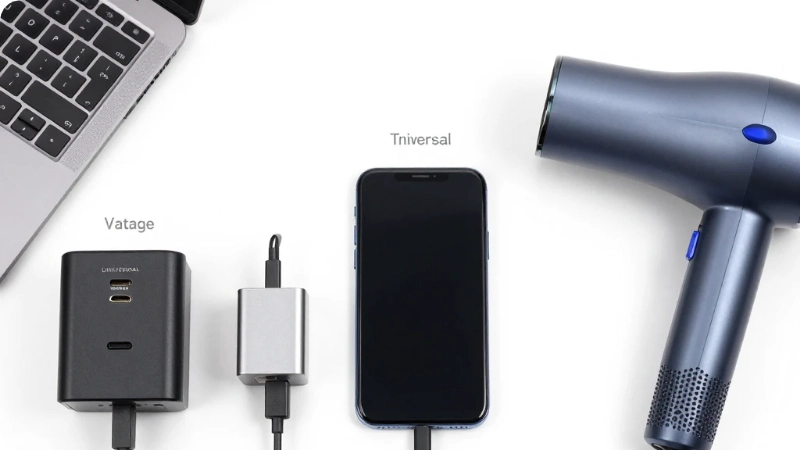
An adapter reshapes the plug; a converter changes the electrical voltage itself. Most US travelers only need an adapter because phones, laptops, and cameras are dual voltage (100–240V) by design. Hair dryers, straighteners, and other heating devices are the exception these often require a true voltage converter or a dual voltage travel version.
| Device Type | Needs Adapter Only? | Needs Converter Too? |
| Phone charger | Yes | No |
| Laptop charger | Yes | No |
| Hair dryer/straightener | Sometimes | Often, unless dual voltage |
| Electric razor | Yes | Rarely |
| CPAP machine | Yes | Check manufacturer specs |
Always check the label on your charger. If it says “Input: 100–240V,” you only need a plug adapter.
How to Choose the Best Travel Power Adapter
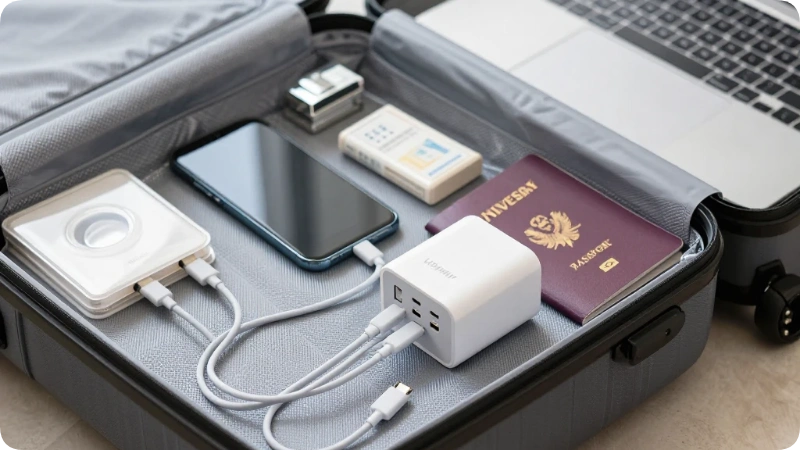
The right adapter depends on three things: where you’re going, how many devices you’re charging, and If you need extra protection. A good universal adapter covers 150+ countries, includes multiple USB ports, and has built in surge protection to guard against unstable foreign power grids.
Look for these features specifically:
- Universal plug coverage for the UK, EU, US, Australia, and Asia
- At least 2–4 USB A ports plus one USB C port for charging multiple devices at once
- Fuse or surge protection to prevent damage from voltage spikes
- Compact, lightweight design under 0.5 lbs for easy packing
- A grounded (3 prong) option if you’re traveling with laptops or medical devices
Top Plug Types by Region
Different regions use different plug standards, and knowing yours in advance saves time at the airport gift shop. Europe mostly uses Type C and Type E/F, the UK and Ireland use Type G, and most of Asia uses Type A or Type C depending on the country.
| Region | Common Plug Type | Voltage |
| Western Europe | C, E, F | 230V |
| United Kingdom/Ireland | G | 230V |
| Australia/New Zealand | I | 230V |
| Japan | A, B | 100V |
| China | A, I | 220V |
| Mexico/Canada | A, B (same as US) | 120V |
Single Country vs. Universal Adapters
A single country adapter is cheaper and lighter but only works in one region, while a universal adapter costs more upfront but adapts to nearly every country on Earth. For travelers visiting just one destination, a $10 single plug adapter is perfectly fine. For multi country trips or frequent flyers, a universal model pays for itself within a single itinerary.
Who should buy single country adapters: First time travelers going to one destination, like a single trip to Italy or the UK.
Who should buy universal adapters: Frequent international travelers, backpackers hitting multiple countries, and business travelers who need reliability.
Best Travel Power Adapter Picks by Traveler Type

Different trips call for different gear, and matching the adapter to your travel style avoids overspending or under preparing. Solo backpackers prioritize size and weight, families need multiple ports, and business travelers want surge protection for laptops.
- Best for solo travelers: A slim, single port universal adapter that fits in a daypack pocket.
- Best for families: A multi port hub style adapter with 4+ USB ports so everyone can charge devices simultaneously.
- Best for business travelers: A surge protected adapter with a grounded 3 prong plug for laptops and presentation equipment.
- Best for digital nomads: A power strip style adapter that lets you plug in a laptop, phone, and camera battery charger from one outlet.
Do You Need a Voltage Converter Too?
You need a voltage converter only if you’re bringing a single voltage device, which is increasingly rare with modern electronics. Most phones, tablets, laptops, and cameras manufactured in the last decade are dual voltage and only require a plug adapter, not a converter.
The main exceptions are older hair tools, some space heaters, and certain US only small appliances. If you’re unsure, check the small print on the charger brick it will list the voltage range it accepts.
Common Mistakes Travellers Make (And How to Fix Them)
The most common mistake is buying a cheap adapter without surge protection, which can damage electronics on unstable power grids in some countries. Another frequent error is assuming an adapter changes voltage, which can fry single voltage appliances like older hair dryers.
- Mistake: Packing only one adapter for a multi country trip. Fix: Bring a universal model or two single country adapters.
- Mistake: Plugging a US only hair tool into a 230V outlet. Fix: Check voltage compatibility first, or buy a dual voltage travel tool.
- Mistake: Forgetting USB C compatibility for newer laptops and phones. Fix: Choose an adapter with at least one USB C port rated for fast charging.
Hidden Gems: Lesser Known Adapter Features Worth Knowing
A few overlooked features can make a real difference on longer trips. Some adapters include a built in fuse that pops safely instead of damaging your device during a power surge a small detail that can save an expensive laptop.
Others include a USB C Power Delivery port capable of fast charging laptops directly, eliminating the need to pack a separate laptop brick. A handful of compact models also include a recessed plug design, which prevents the adapter from blocking the outlet next to it useful in hotel rooms with limited sockets.
Packing and Carry On Tips
Pack your adapter in your carry on, not checked luggage, since you may need it the moment you land for a phone or e reader. TSA permits power adapters and converters in both carry on and checked bags, but keeping it accessible saves you from digging through a suitcase at the airport.
- Keep your adapter in the same pouch as your chargers and cables.
- Bring a short charging cable, since hotel nightstands are rarely close to outlets.
- Consider a small portable power bank as backup for travel days with long layovers.
Safety Tips for Using Adapters Abroad
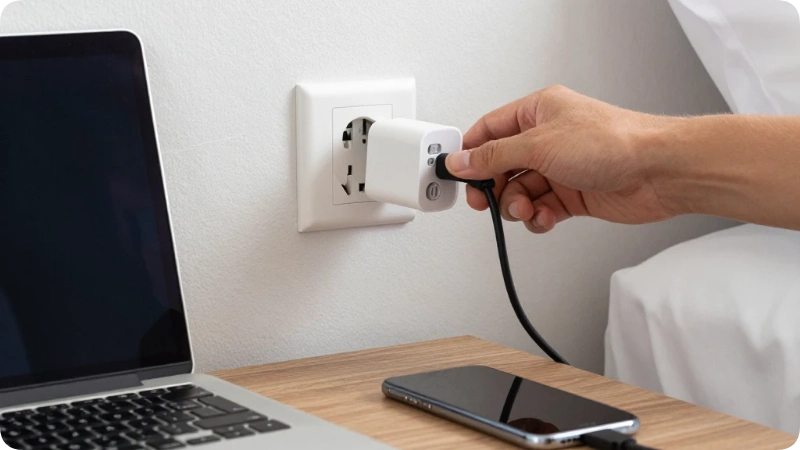
Always check the wattage of your device against the adapter’s rated capacity before plugging in, especially for laptops or hair tools. Overloading a basic adapter with a high wattage device is a leading cause of overheating.
- Avoid using off brand adapters bought from street vendors; quality control varies widely.
- Unplug adapters when not actively charging, especially overnight, as a basic safety habit.
- If an outlet feels loose or sparks slightly, use a different one and notify hotel staff.
Budget Breakdown: What to Expect to Pay
Quality travel adapters range from $10 for a basic single country plug to $35 for a full featured universal hub with surge protection and multiple USB ports. Spending slightly more on a surge protected model is generally worth it, since replacing a damaged phone or laptop charger costs far more than the adapter itself.
| Adapter Type | Typical Price Range |
| Single country, basic | $8–$15 |
| Universal, basic | $15–$25 |
| Universal with surge protection + USB hub | $25–$35 |
| Premium with USB C Power Delivery | $30–$45 |
Prices vary by retailer and change frequently, so check current listings before purchasing.
Worth It? Overrated vs. Underrated Features
A surge protected universal adapter is absolutely worth it for anyone traveling internationally more than once. The most overrated feature is excessive port count beyond what you’ll realistically use, which adds bulk without benefit for most travelers.
The most underrated feature is a built in fuse, since it’s invisible until the moment it saves your $1,000 laptop from a power surge. For most travelers, a mid range universal adapter with 2–3 ports and surge protection hits the sweet spot of price and function.
Alternatives to a Traditional Adapter
If you’re traveling light, some travelers skip a full adapter and instead pack a USB C wall charger plus a single small plug adapter, reducing both weight and bulk. This works well for trips where you’re only charging a phone and maybe a tablet.
Another alternative is a portable power bank with a built in international plug, which doubles as backup battery and adapter in one device useful for long flights or train rides between cities.
International Plug Types Guide
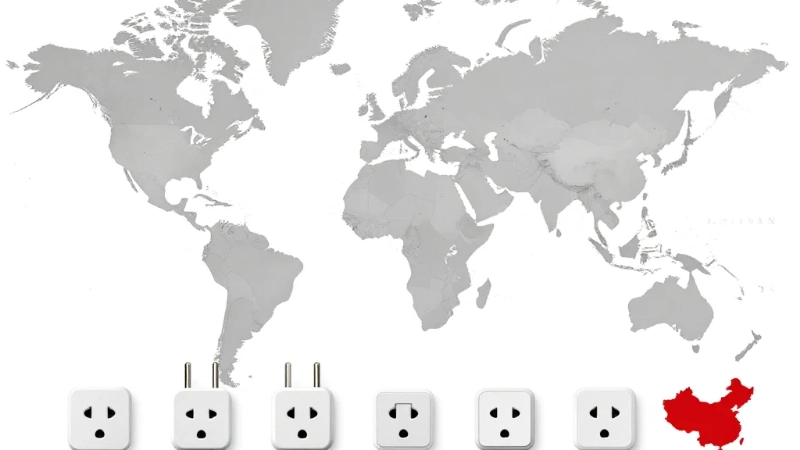
One of the most important things to check before traveling abroad is the plug type used in your destination country. Electrical outlets vary around the world, and a charger that works perfectly in the United States may not fit into a wall socket overseas.
North America primarily uses Type A and Type B plugs, while most European countries rely on Type C, E, and F plugs. The United Kingdom and Ireland use the distinctive Type G plug, known for its three rectangular pins. In Australia and New Zealand, travelers will encounter Type I outlets, while countries such as Japan commonly use Type A and B sockets similar to those found in the United States.
Understanding these differences helps you choose the right travel adapter before departure. A universal travel adapter is often the easiest solution because it supports multiple plug types and works across dozens of countries. This makes it ideal for multi-country vacations, business trips, and international backpacking adventures.
Before your trip, always verify both the plug type and voltage requirements for your destination. While most modern devices such as smartphones, tablets, and laptops are dual voltage, having the correct adapter ensures you can safely connect them to local outlets and stay powered throughout your journey.
Sample Pre Trip Checklist
- Confirm the plug type and voltage for your destination country.
- Choose a single country or universal adapter based on your itinerary.
- Verify surge protection if bringing a laptop or sensitive electronics.
- Pack the adapter in your carry on with your charging cables.
- Test the adapter at home with your actual devices before departure.
FAQs
Do I need a voltage converter for my phone?
No, most modern smartphones are dual voltage (100–240V) and only need a plug adapter, not a converter. Check the small print on your charger to confirm before you travel.
Can I use one universal adapter for an entire multi country trip?
Yes, a universal travel adapter typically covers 150+ countries and adjusts to different plug shapes with a sliding or interchangeable mechanism. It’s the most efficient option for travelers visiting several regions on one trip.
Is it safe to bring a travel adapter in carry on luggage?
Yes, TSA allows travel adapters and converters in both carry on and checked baggage without restriction. Keeping it in your carry on makes it accessible immediately after landing.
What plug type does Europe use?
Most of continental Europe uses Type C, E, or F plugs at 230V, while the UK and Ireland use the distinct three pin Type G plug. Always verify your specific destination, since plug types vary even within Europe.
Will a cheap adapter damage my electronics?
A low quality adapter without surge protection can pose a risk on unstable power grids found in some countries. Investing in a surge protected model significantly reduces that risk for laptops and other sensitive devices.
Do hotels abroad provide adapters for guests?
Some hotels offer adapters at the front desk, but availability is inconsistent and often limited to a few shared units. It’s safer to bring your own rather than rely on hotel stock.
Can I charge a laptop with a basic travel adapter?
Yes, as long as the adapter’s wattage rating matches or exceeds your laptop charger’s requirements. Adapters with USB C Power Delivery ports can even charge laptops directly without a separate brick.
Final Takeaways
A reliable universal adapter with surge protection and multiple USB ports solves nearly every international charging headache before it starts. Matching the adapter to your trip type solo, family, or business ensures you’re neither over packed nor under prepared.
Before your next departure, double check your destination’s plug type, test your adapter at home, and pack it where you can reach it fast. A few minutes of preparation now means one less thing to worry about once you land.

Ben Fogle believes that true adventure begins where the pavement ends. After spending years documenting extreme environments, rowing across oceans, and trekking through frozen landscapes, he mastered the art of wilderness travel. For Travelmarse, Ben constructs highly detailed guides on deep-nature packing lists, wildlife safety, and sustainable eco-tourism. He breaks down intimidating, rugged expeditions into clear, step-by-step roadmaps so everyday travelers can safely connect with the natural world.