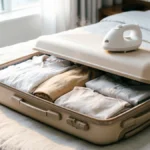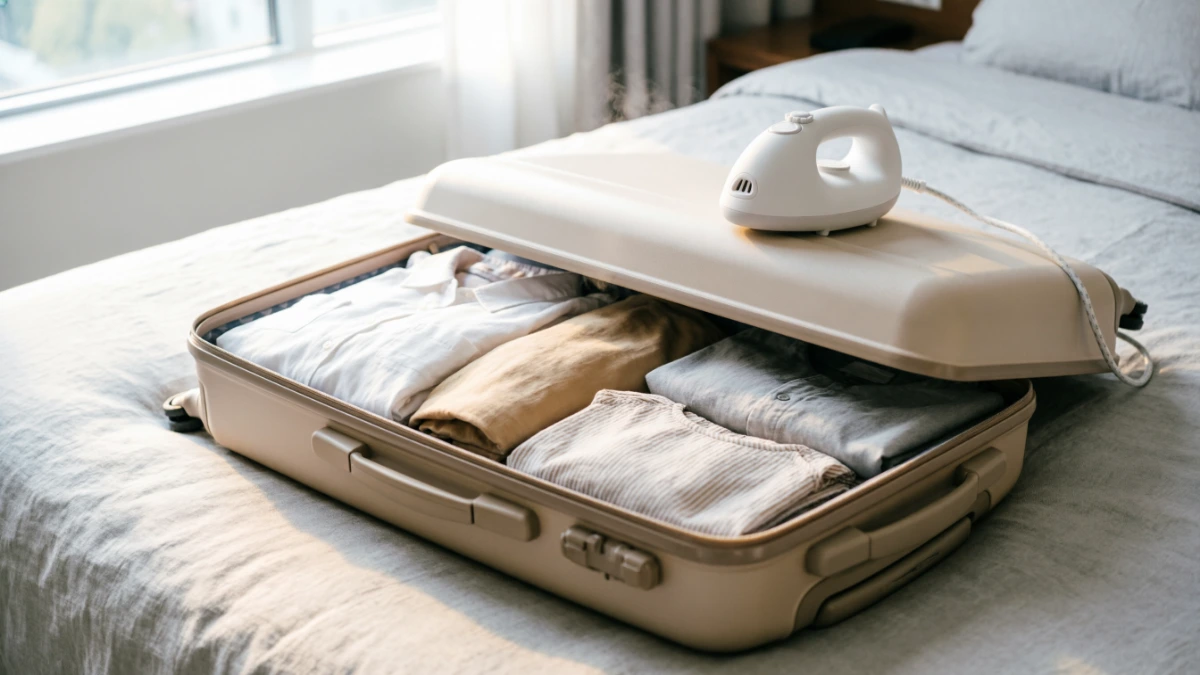
In minutes, without an ironing board, without a hotel iron that scorches fabric, and without adding real weight to your luggage.
This guide answers every practical question travelers ask before buying one, from how they work and what they cost to TSA rules, common breakdowns, and whether they’re even worth the suitcase space. If you’re comparing your first purchase or troubleshooting a steamer that won’t steam anymore, everything below is organized so you can jump straight to what you need.
Featured Snippet:
A good mini travel steamer heats up in under a minute, holds at least 100–150 ml of water, weighs under 1 pound, and folds flat for a carry-on bag. Look for dual voltage (100–240V) if you travel internationally, an auto-shutoff safety feature, and a continuous steam output of at least 5–8 minutes per fill.
Quick Facts Table
| Feature | Typical Range |
| Weight | 0.5–1.5 lbs |
| Heat-up time | 15–60 seconds |
| Water tank size | 60–200 ml |
| Continuous steam time | 5–15 minutes |
| Price (USD) | 15–70 |
| Voltage | Single (120V) or dual (100–240V) |
| Steam temperature | 175–212°F (approx.) |
Prices and specs vary by retailer and change often; always confirm current details on the manufacturer’s page before buying.
What Is a Mini Steamer Used For?
A mini steamer is a compact handheld appliance that heats water into steam and releases it through a small nozzle or plate to relax wrinkles in fabric. Travelers use it for shirts, dresses, suits, curtains in hotel rooms, and even light upholstery refreshing.
It works by loosening the fibers in fabric with moist heat, which lets gravity and gentle brushing pull the material smooth again. Unlike an iron, it never touches the fabric directly with a hot plate, so there’s far less risk of scorching.
What Is the Best Small Travel Steamer?
The best small travel steamer for most people balances fast heat-up, a decent water tank, and true portability rather than raw power. A steamer that heats in under 30 seconds, holds close to 150 ml, and includes an auto-shutoff switch covers nearly every travel scenario.
Well-known brands like Conair, Rowenta, PurSteam, and Steamery all make compact models built specifically for suitcases rather than closets. Compare wattage, tank size, and dual-voltage support side by side before choosing, since “small” doesn’t always mean “weak.”
What Is the Best and Smallest Travel Steamer?
The smallest usable travel steamers weigh under 12 ounces and fit in a jacket pocket or laptop sleeve, but they trade tank size and runtime for that size. These micro models suit quick touch-ups of a collar, a hemline, or a wrinkled pocket square rather than pressing a full suit.
If your trips mostly need spot fixes instead of full outfits, the smallest category is worth the tradeoff. If you travel with multiple garments per trip, a slightly larger mid-size mini steamer will save you refill stops.
What Is a Good Portable Travel Steamer?
A good portable travel steamer folds its handle flat, includes a spill-resistant tank, and comes with a soft pouch or hard case for the suitcase. Portability isn’t only about weight; it’s also about how safely the unit packs without leaking or cracking.
Look for a removable or lockable water reservoir, since screw-cap and slide-lock tanks travel far better than open-fill designs that can leak residual moisture into your clothes.
What Is a Good Portable Mini Garment Steamer?
A good portable mini garment steamer handles at least two fabric types, like cotton and silk, through adjustable steam settings, rather than blasting one fixed output. Fixed, high-heat-only steamers can damage delicate fabrics such as silk, chiffon, or sequined material.
Ceramic-coated soleplates or nozzles tend to distribute heat more evenly than plain plastic tips, which helps prevent water spotting on darker fabrics.
What Is a Good Mini Steamer for Travel?
Choose a mini travel steamer that matches your trip. Business travelers can benefit from dual-voltage 2-in-1 steamer/iron combos, while casual travelers can usually use a lightweight single-voltage handheld model.
Before buying, check the destination’s outlet voltage. A single-voltage 120V steamer used on a 220–240V outlet without a converter can damage the heating element or create a shock hazard.
What Is the Best Budget Clothes Steamer?
Budget clothes steamers generally range from 15–35 and still cover the core job of wrinkle removal on everyday cotton, linen, and polyester blends, without extra attachments or dual voltage. Expect a shorter tank life and possibly a longer heat-up time in this range.
Reading verified buyer reviews for leak complaints and short lifespan issues matters more at the budget tier than chasing the lowest price alone.
What Is the Best Small Portable Steam Cleaner?
A small portable steam cleaner covers more uses than a garment steamer. It handles hard surfaces, upholstery, and sanitizing tasks rather than clothing. Most models also produce hotter steam for cleaning and disinfecting. If your goal is only wrinkle removal, a garment-specific mini steamer is lighter and more efficient for travel.
If you want dual use occasional light surface cleaning plus clothes look for a model that explicitly lists both fabric and hard-surface attachments.
Do Travel Steamers Really Work?
Yes, travel steamers genuinely remove wrinkles from most fabrics, though they work more slowly than a full-size iron and can’t create sharp creases the way ironing can. They’re best understood as a “refresh” tool rather than a full pressing solution.
For deep-set wrinkles from days folded in a suitcase, expect to hold the fabric taut and pass the steamer over the same section two or three times for full results.
Are Travel Steamers Worth It?
Travel steamers are worth it for anyone who travels more than a couple of times a year and wants presentable clothing without hunting down a hotel iron or paying for pressing services. The upfront cost is usually recovered after just one or two avoided hotel laundry fees.
They’re less worth it for travelers who only pack wrinkle-resistant fabrics or who almost exclusively wear casual, unstructured clothing that doesn’t show creases.
Is It Worth Buying a Garment Steamer?
Buying a garment steamer is worth it if you regularly deal with delicate fabrics silk, wool blends, sequins, or pleats that an iron’s direct heat and pressure can scorch or flatten. Steaming is inherently gentler than pressing.
It’s less essential if your wardrobe is mostly knitwear, athleisure, or fabrics that naturally resist wrinkling and rarely need any treatment at all.
Is Steaming Better Than Ironing?
Steaming is gentler and faster for delicate fabrics and hanging garments, while ironing produces crisper, flatter results on structured items like dress shirts and trousers. Neither fully replaces the other; many travelers use steaming for touch-ups and ironing for formal pressing.
Quick comparison:
| Factor | Steaming | Ironing |
| Fabric safety | Safer for delicates | Riskier on delicates |
| Sharp creases | No | Yes |
| Speed for light wrinkles | Faster | Slower (needs board setup) |
| Equipment needed | Steamer only | Iron + board |
How to Use a Mini Clothes Steamer?
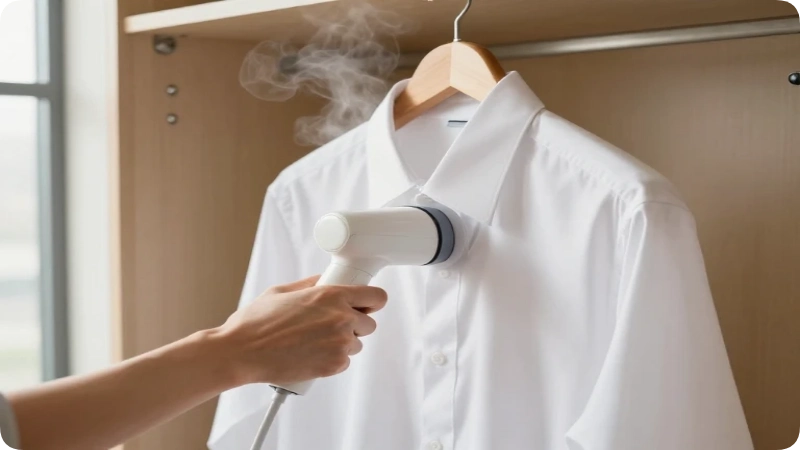
Using a mini clothes steamer correctly takes four basic steps: fill the tank with the recommended water type, wait for the heat indicator or the steady steam flow, hang the garment on a sturdy hanger, and glide the steamer top-to-bottom in slow, straight passes while pulling the fabric taut with your free hand.
Always keep the steam head moving; holding it still on one spot for too long can leave a wet patch or, on very delicate fabric, minor heat marks.
Can You Use Tap Water in a Steamer?
Tap water works in most mini steamers, but distilled or filtered water works better in hard-water areas. Minerals can build up inside the steamer and clog the heating element and nozzle over time. Manufacturers typically note this in the included manual.
If your steamer has visible white mineral flakes near the nozzle, that’s a sign it’s time to descale using a manufacturer-approved solution or a diluted white vinegar rinse (check your model’s instructions first).
What Clothes Should Not Be Steamed?
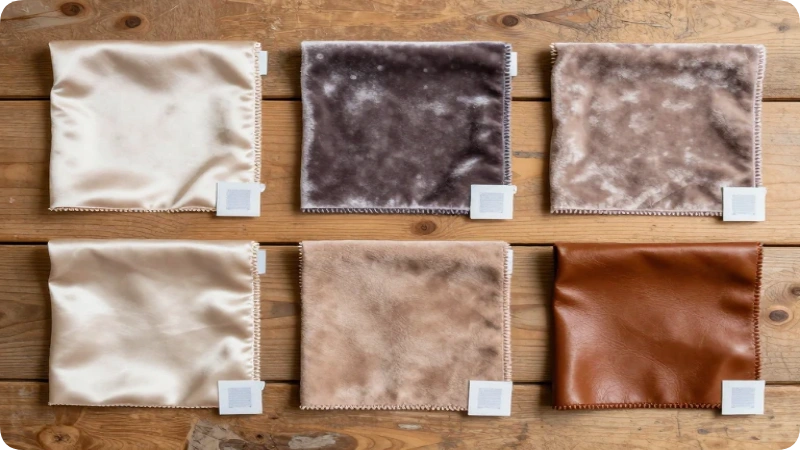
Avoid steaming certain fabrics and treatments directly. These include waxed or coated jackets, suede, leather, and velvet, which can lose their texture under direct moist heat. Also, keep the steamer away from garments with glued-on embellishments or heat-sensitive prints. Always check the garment’s care label first.
For anything unclear, test the steamer on an inside seam or hidden hem before steaming a visible area of the garment.
What Are Common Problems With Steamers?
The most common steamer problems are weak or no steam output, water leaking from the tank or seams, mineral buildup clogging the nozzle, and shorter-than-expected heat-up or run times after repeated use. Most of these stem from hard water mineral deposits or an incomplete seal on the tank.
Regularly emptying the tank after use and descaling every few weeks (depending on water hardness) prevents most of these issues before they start.
What Are the Disadvantages of Using a Steamer?
The main disadvantages of using a steamer are that it can’t produce sharp creases like an iron, it typically takes longer for heavily wrinkled garments, and small tanks require refilling mid-session for larger loads of clothing. It also needs the garment to hang freely, which isn’t always convenient in a cramped hotel room.
What Is One Disadvantage of Steaming?
One clear disadvantage of steaming is the lack of crisp, structured creases; a steamed dress shirt will look wrinkle-free but noticeably softer around the collar and cuffs compared to a pressed one. For formal events requiring sharp lines, ironing still outperforms steaming.
Why Isn’t My Handheld Steamer Steaming My Clothes?
A handheld steamer usually stops producing steam because of mineral buildup blocking the nozzle, an empty or improperly seated water tank, or a worn heating element after extended use. Start troubleshooting with the simplest cause first.
Quick fixes to try in order:
- Check that the tank is filled and properly clicked into place.
- Confirm it’s fully powered on and given enough time to heat.
- Descale the nozzle with a manufacturer-approved solution.
- Inspect the power cord and outlet for damage.
- If none of these work, check the warranty; most mini steamers carry a 1–2 year manufacturer warranty.
Are Travel Steamers Allowed on Planes?
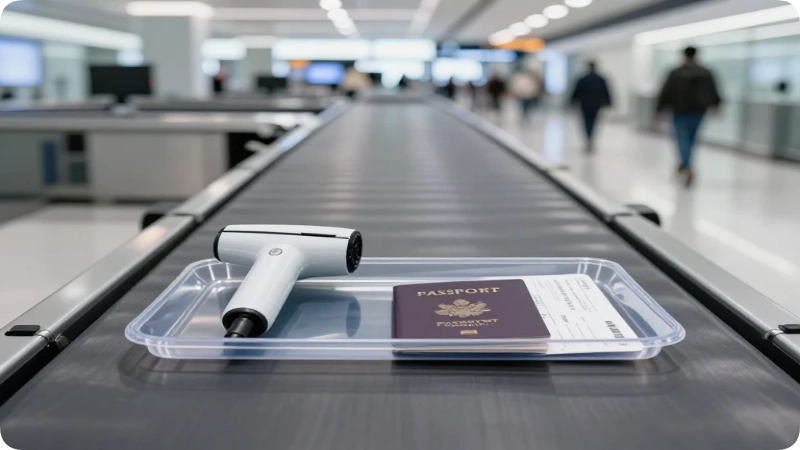
Yes, U.S. airports generally allow handheld travel steamers in both carry-on and checked luggage. Empty the water tank before you reach airport security to avoid screening issues. TSA screening officers may still pull the item for a closer visual check since dense electronics can look unusual on an X-ray scan.
Because appliance rules can shift and vary slightly by airline or destination country, always confirm current guidance directly through the TSA’s official site or the AskTSA social channels, and check your airline’s own carry-on policy before your trip. This is also a good moment to consider adjustable travel insurance if a checked steamer or other electronics could be damaged in transit.
What Is the Price of a Steamer?
Mini travel steamers in the U.S. typically range from about $15 to $70, depending on tank size, wattage, dual-voltage capability, and included attachments. Premium 2-in-1 steamer-and-iron combos can run higher, closer to 80–100.
Mini Travel Steamer Price
Mini travel steamer prices cluster into three general tiers: budget models around 15–30, mid-range dual-voltage steamers around 30–55, and premium multi-attachment or 2-in-1 combo units above $55. Prices shift with sales events like Black Friday and back-to-school travel seasons, so it pays to compare before booking a trip.
Mini Travel Steamer Price in Pakistan
Mini travel steamer prices in Pakistan generally fall in a broad range depending on import duties, brand, and where it’s purchased, with budget imported models typically starting lower and branded dual-voltage units priced noticeably higher. Currency fluctuations and import costs mean prices can shift quickly, so always check a current listing on a local marketplace before assuming a price is accurate.
Mini Travel Steamer Pakistan
Shoppers in Pakistan can typically find mini travel steamers through major online marketplaces and electronics retailers, with both local-brand and imported international options available. Because voltage standards in Pakistan run at 230V, always confirm a steamer is rated for local voltage or comes with dual-voltage support before purchasing, to avoid damaging a single-voltage 120V unit.
Mini Travel Steamer Karachi
In Karachi, mini travel steamers are commonly available through large electronics markets, appliance retail chains, and online delivery platforms serving the city. As with anywhere in Pakistan, comparing a few current listings side by side and checking seller ratings and return policies helps avoid overpaying for a basic model.
Packing Advice
Pack a mini steamer with the water tank fully drained and dried, the head wrapped in a thin cloth or the included pouch, and the cord loosely coiled rather than tightly wound. This prevents leaks, plate scratches, and cord stress during transit.
- Let it air-dry for a few minutes with the cap off before sealing it in your bag.
- Store it in an outer suitcase pocket for quick access, rather than buried at the bottom.
- If flying internationally, pack a compatible plug adapter alongside a dual-voltage unit.
Common Mistakes (and How to Fix Them)
- Using tap water in hard-water regions: switch to distilled or filtered water to prevent clogging.
- Packing the steamer while the tank is still wet: always drain and air-dry fully before zipping it into luggage.
- Using a single-voltage steamer abroad without checking the outlet: confirm dual-voltage support or bring a proper voltage converter, not just a plug adapter.
Alternatives to a Mini Travel Steamer
If a steamer isn’t the right fit for your trip, a few lighter alternatives can help in a pinch:
- Wrinkle-release spray: quick, no power needed, works on light creases.
- Hotel dry-cleaning or pressing service: convenient for one important outfit, though it adds cost and wait time.
- Rolling clothes instead of folding reduces deep creases before they form in the first place.
- A compact travel iron is better for sharp creases, though heavier and needs a flat surface.
Travel Gear Checklist for Steamer Users
- Mini travel steamer (dual voltage if flying internationally)
- Travel-size distilled water bottle or a hotel-bought bottle
- Plug adapter for your destination country
- Soft pouch or hard case to prevent tank leaks
- A sturdy hanger (many hotel hangers are too flimsy for steaming)
FAQs
How long does a mini travel steamer take to heat up?
Most mini travel steamers heat up in 15 to 60 seconds, depending on wattage and tank size. Budget models tend to sit at the higher end of that range, while premium units often heat in under 30 seconds.
Can I steam a full suit with a mini travel steamer?
You can, though a small tank means multiple refills for a full suit versus a single shirt. Work in sections: jacket first, then trousers, nd expect the process to take longer than steaming a single garment.
Do mini steamers work well on silk and other delicate fabrics?
Yes, steaming is generally safer for silk and other delicate fabrics than ironing, since there’s no direct hot-plate contact. Use a lower steam setting if your model offers one, and keep the nozzle a small distance from very fine or beaded fabric.
How much water do mini travel steamers typically hold?
Most mini travel steamers hold between 60 ml and 200 ml of water, giving roughly 5 to 15 minutes of continuous steam per fill. Larger tanks add weight, so travel models tend to favor smaller reservoirs.
Can I pack a mini travel steamer in checked luggage instead of carry-on?
Mini travel steamers are generally permitted in checked luggage when you empty the water tank and pack the unit securely to prevent damage. You can also carry a steamer in your carry-on bag, which may work better for fragile parts and quick access. Keeping it in your carry-on also helps you avoid rough handling in the cargo hold.
Conclusion
A mini travel steamer earns its spot in your suitcase by solving a problem no other lightweight item can: wrinkled clothes with no iron in sight. The right pick depends on matching tank size, voltage, and heat-up speed to how you actually travel; quick weekend trips need less than international business travel.
Keep it simple: drain the tank before every flight, use filtered water where possible, and match voltage carefully abroad. Do that, and a 20–50 gadget can save you far more in avoided pressing fees and last-minute wrinkle panic.
Ready to pack smarter for your next trip? Start by checking your destination’s voltage standard and choosing a steamer built for how and how often you actually travel.

Ben Fogle believes that true adventure begins where the pavement ends. After spending years documenting extreme environments, rowing across oceans, and trekking through frozen landscapes, he mastered the art of wilderness travel. For Travelmarse, Ben constructs highly detailed guides on deep-nature packing lists, wildlife safety, and sustainable eco-tourism. He breaks down intimidating, rugged expeditions into clear, step-by-step roadmaps so everyday travelers can safely connect with the natural world.